Tech & Wearables

Best Garmin Fitness Trackers of 2026

Nothing ruins a run like a watch that quits at mile four. I've had it happen — a dead screen on a rainy morning, and no idea whether my pace was worth anything. A good Garmin tracker fixes that: it keeps the battery for days, locks onto GPS quickly, and gives you data you can trust. The difference between a tracker you tolerate and one you rely on comes down to a few things — accuracy, battery life, and how naturally it fits into your day, from the gym to the office.

Over the past eight months, I've worn a dozen Garmin models through morning runs, gym sessions, and overnight sleep, while my team logged battery drain, GPS accuracy, and how each one looked with everything from gym shorts to a blazer. Some nailed the basics but felt clunky on the wrist; others looked sharp but missed steps. What stuck with me is how much the little things matter — a bright screen, a strap that doesn't itch, a sync that doesn't drop. The picks below are the ones I kept reaching for.

#1

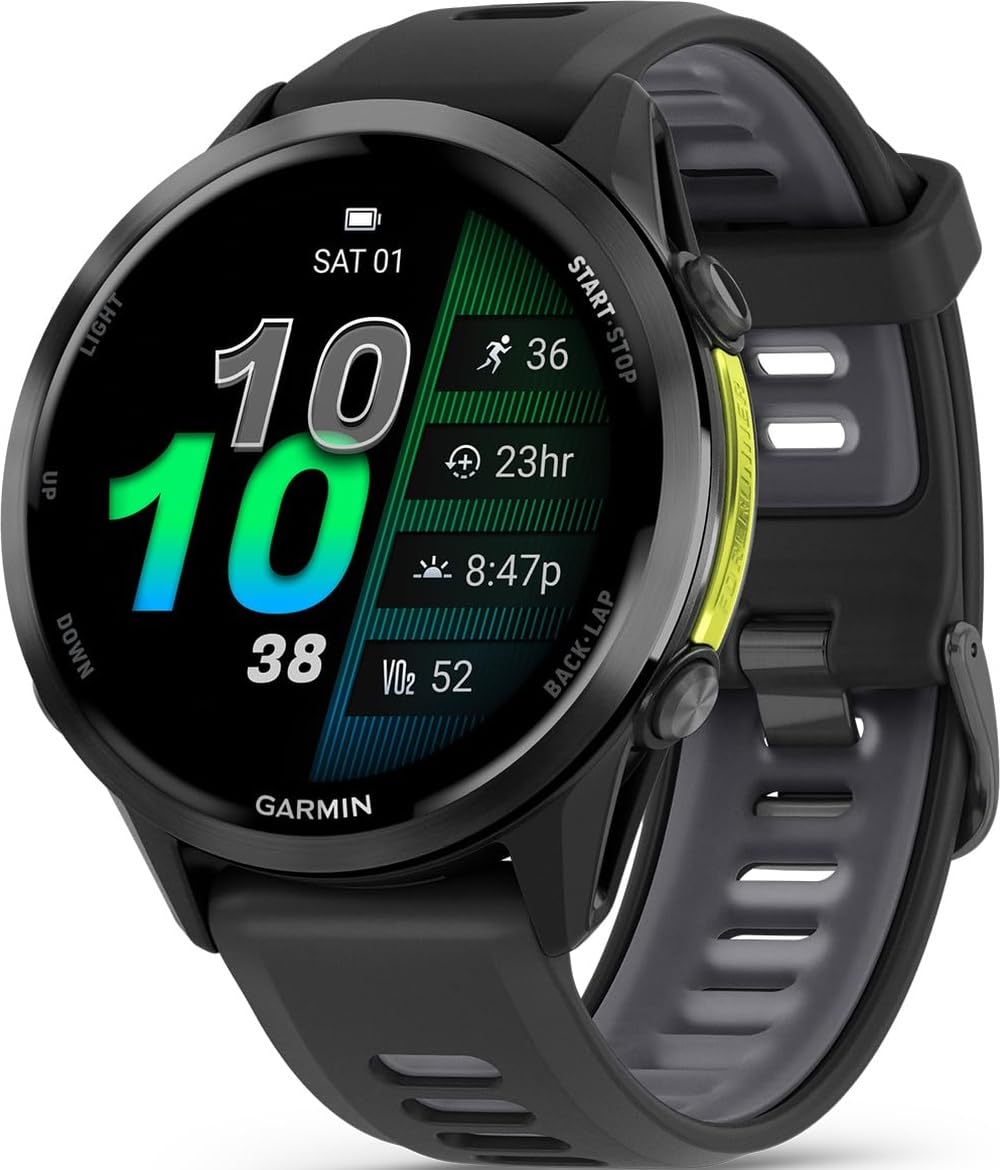
Garmin Forerunner 165

Top Pick
Garmin Forerunner 165

Running

Our Score 9.2/10
Check Price

Worth Noting

  • Phone pairing and syncing can be finicky
  • Gym and strength guidance is less developed
Weight
1.38 oz
Display
1.2-inch AMOLED, 324 x 394
Battery Life
Up to 11 days smartwatch; 19 hours GPS
Activity Profiles
25+ built-in
Read the full review

The Forerunner 165 is the running watch we reach for when we want guidance, not just a log. Daily suggested workouts adapt to performance and recovery, and Garmin Coach plans give structure to a training block. The 1.2-inch AMOLED screen is bright enough for sunny runs, and the 25-plus activity profiles cover cycling, HIIT, and strength work alongside running.

Battery life is the quiet advantage: up to 11 days in smartwatch mode and 19 hours in GPS mode. That is enough for a week of training without thinking about the charger, and the GPS figure is the one that matters for long race-day efforts. The watch is rated to 50 meters, so rain and sweat are not a concern.

It is a running-first device, and that shows in the gym. Strength sessions get less useful guidance than runs, and setup can feel less intuitive than a simple band. Phone pairing and syncing are the other soft spot; if you want a watch that mostly logs steps and sleep, the vívoactive 5 is more forgiving.

The morning report is the detail we came back to: sleep, recovery, training outlook, weather, and HRV status in one glance before you decide what to do with the day. It makes the watch feel like a coach rather than a dashboard.

Bottom line: For runners who want structured workouts and a bright AMOLED screen without flagship pricing, the Forerunner 165 is the one we point to first.
#2

Garmin Forerunner 970

Garmin Forerunner 970

Premium training

Our Score 9.2/10
Check Price

Worth Noting

  • Premium price tier
  • Some advanced metrics need HRM 600
Build
Titanium bezel, sapphire lens
Display
1.4-inch AMOLED, 454 x 454
Flashlight
Built-in LED
Battery Life
Up to 15 days smartwatch; 26 hours GPS
Read the full review

The Forerunner 970 is the most polished training tool here: a 1.4-inch AMOLED display, a titanium bezel, a sapphire lens, and a built-in LED flashlight. Garmin rates it for up to 15 days in smartwatch mode and 26 hours in GPS mode. It is a lot of watch, in the best sense.

The training data goes deeper than the Forerunner 165. Running economy and step speed loss help you understand efficiency, and Garmin Coach running and triathlon plans adapt to your performance. The triathlon function tracks all three sports plus transition times, which is the reason to step up if you race.

Some of the most advanced metrics require the HRM 600 monitor, so budget for the extra strap if you want the full picture. The watch is also expensive, and the interface is not as simple as the budget models. The value is in the data, not in the daily smartwatch features.

We recommend it for serious runners and triathletes who want the flashlight, the sapphire build, and the deeper metrics in one package. The 32 GB storage and built-in microphone and speaker are useful for calls and voice assistant when paired to your phone. If you do not need the extra running metrics, the Forerunner 165 gets most of the way there for less.

Bottom line: The Forerunner 970 is the premium training watch we choose for triathlon, serious running data, and a titanium build that still feels light on the wrist.

#3

Garmin Venu 3

Garmin Venu 3

Premium everyday

Our Score 8.8/10
Check Price

Worth Noting

  • Bluetooth pairing can be unreliable
  • Menus take time to learn
Display
1.4-inch AMOLED, 454 x 454
Sports Apps
30+ indoor and GPS
Battery Life
Up to 14 days smartwatch
On-wrist Calls
Yes, when paired to phone
Read the full review

The Venu 3 is the dressier Garmin: a 45mm case, a 1.4-inch AMOLED display, up to 14 days in smartwatch mode, and enough polish to wear with a jacket. The larger screen is the first thing we noticed; notifications and workout stats are easier to read at a glance than on the 42mm vívoactive 5.

It also makes and takes phone calls from the wrist when paired to your phone, and you can use your phone's voice assistant to reply to texts. That is the feature that separates it from the rest of this group. The 8 GB of storage is more than the vívoactive 5's 4 GB, and Wi-Fi is there for faster app and watch-face downloads.

What settles it for us is the balance of daily comfort and capability. The 30-plus sports and advanced health metrics cover the same ground as the vívoactive 5, but the Venu 3 gives you a bigger screen and wrist calls. We prefer it as a premium everyday watch, not as a pure running tool.

The trade-offs are familiar Garmin ones: Bluetooth pairing can be unreliable, and the menus take time to learn. Sleep tracking is useful, but it is not the reason to choose this watch. If you want the simplest interface, the Forerunner 55 is the button-first alternative.

Bottom line: The Venu 3 is the premium everyday Garmin we choose when wrist calls, a larger AMOLED screen, and two-week battery matter more than pure running metrics.

#4

Garmin Instinct E

Garmin Instinct E

Rugged outdoors

Our Score 8.8/10
Check Price

Worth Noting

  • Small 0.9-inch monochrome display
  • Menu system is not intuitive
Weight
1.69 oz
Battery Life
Up to 16 days
Water Rating
10 ATM
Rugged Standard
MIL-STD-810 thermal and shock
Read the full review

The Instinct E is built for abuse: a 10 ATM water rating, MIL-STD-810 thermal and shock resistance, and a 45mm case that shrugs off knocks. Garmin rates the battery at up to 16 days. The 0.9-inch monochrome MIP display is not as pretty as the AMOLED screens here, but it is sunlight-visible and sips power.

We like the button-only controls for gloves and wet hands; a touchscreen is a liability on a cold trail or a riverbank. The 3-axis compass, barometric altimeter, and multi-GNSS support are the tools that matter off pavement, and the 48-gram weight feels substantial without being clumsy.

The interface is the price of admission. Menus are not intuitive, and the small screen makes some settings a chore. If you want a bright touchscreen for daily wear, this is not the watch. If your fitness happens outdoors, the rugged package is the point.

The 16-day battery means you can leave the charger at home for a weekend, and the 10 ATM rating gives you more margin than the 50-meter watches in this group. We trust it for hikes, runs, and bike rides; we just do not reach for it when we want a dress watch.

Bottom line: If your fitness happens on trails, rivers, or job sites, the Instinct E is the rugged Garmin we trust to keep tracking through rough handling.

#5

Garmin Forerunner 55

Garmin Forerunner 55

Budget running

Our Score 8.8/10
Check Price

Worth Noting

  • Button-only interface and small display
  • Phone syncing can be finicky
GPS
Built-in
Weight
1.31 oz
Display
1.04-inch sunlight-visible MIP
Battery Life
Up to 2 weeks smartwatch; 20 hours GPS
Read the full review

The Forerunner 55 is the budget running watch that still promises up to two weeks of smartwatch battery. It keeps the essentials: built-in GPS, wrist-based heart rate, PacePro pace guidance, race predictions, and activity profiles for running, cycling, track runs, virtual runs, pool swims, Pilates, HIIT, and breathwork. The 1.04-inch MIP display is not flashy, but it is sunlight-visible and the buttons work in rain. That is the right trade for a first running watch.

The two-week smartwatch rating is the reason it works as an everyday watch; it is the kind of watch you can charge on a Sunday and forget about. The 37-gram weight is light enough to forget on a run, and the 50-meter water rating covers sweat, rain, and showers.

The limits are clear. The button-only interface and small display feel basic next to the AMOLED models, and phone syncing can be finicky. The 32 MB storage is not a music locker, so leave your playlist on your phone. If you want wrist calls or a bright touchscreen, spend more; if you want a reliable running log and a battery that lasts, this is the value pick.

Bottom line: The Forerunner 55 is our budget running pick for anyone who wants reliable GPS, heart rate, and two-week battery without paying for a color touchscreen.

#6

Garmin Lily 2 Active

Garmin Lily 2 Active

Small wrists

Our Score 8.8/10
Check Price

Worth Noting

  • 1-inch LCD can be slow to respond
  • Phone pairing can be unreliable
GPS
Built-in
Weight
1.02 oz
Case Size
38mm anodized aluminum
Battery Life
Up to 9 days
Read the full review

The Lily 2 Active is the one we hand to people who have given up on chunky watches. At 38mm and 29 grams, with a 1-inch LCD and an anodized aluminum case, it disappears on a small wrist. The patterned lens is a nice touch: it looks like jewelry until you tap it awake.

Garmin kept built-in GPS, which is the reason this one earns a place over a basic band. It also has sports apps for yoga, Pilates, cardio, dance fitness, and golf, plus sleep score, Body Battery, menstrual cycle and pregnancy tracking, and hydration tracking. Battery life is up to nine days, so you can wear it overnight without charging every few days.

The screen can be slow to respond, and phone pairing is not the most reliable. The 1-inch LCD is also less bright than the AMOLED models, and the watch-face options are limited. Those are real compromises, but they matter less if fit and style are the reason you are looking.

The reason to choose it over the vívoactive 5 is not features; it is the 38mm case. We prefer it for a narrow wrist, and the nine-day battery makes overnight sleep tracking practical. If you want a bigger screen and wrist calls, the Venu 3 is the better fit; if you want a fitness watch that does not look like one, this is it.

Bottom line: For a small wrist and a fitness tracker that looks like jewelry, the Lily 2 Active is the Garmin we recommend, provided you can live with a modest screen and occasional pairing hiccups.

#7

Garmin vívoactive 6

Garmin vívoactive 6

Activity variety

Our Score 8.8/10
Check Price

Worth Noting

  • Premium price tier
  • Bluetooth pairing can be finicky
Weight
1.3 oz
Display
1.2-inch AMOLED, 390 x 390
Sports Apps
80+ indoor and GPS
Battery Life
Up to 11 days smartwatch
Read the full review

The vívoactive 6 leads with breadth: more than 80 built-in indoor and GPS sports apps, plus a smart wake alarm that gently vibrates at what Garmin considers the right point in your sleep cycle. It also has a 1.2-inch AMOLED display and up to 11 days in smartwatch mode.

We noticed the extra profiles most in the variety: mobility, swimming, golf, and more are on the list, and the watch gives you a quick-access menu for the activities you use. The 1.3-ounce weight and 42mm case keep it comfortable for all-day wear.

Health tracking is familiar Garmin: Body Battery, sleep score, personalized sleep coaching, and HRV status. The coaching is more useful as a trend than a nightly verdict, and the sleep score can be confusing when it disagrees with how you feel.

The price tier is the biggest difference from the vívoactive 5. You pay more for the wider activity library and the newer package, while battery life and the 42mm fit stay the same. Bluetooth pairing can still be finicky, and the interface takes some learning.

We recommend the vívoactive 6 when you know you will use the extra sports; the 80-plus profiles are the reason to upgrade. If you are mainly walking, running, and tracking sleep, the vívoactive 5 gives you the same daily experience for less.

Bottom line: The vívoactive 6 is the better choice for someone who wants a wider activity menu and a newer everyday Garmin, but it costs more than our top pick for similar battery life.

#8

Garmin vívoactive 5

Garmin vívoactive 5

Everyday fitness

Our Score 8.6/10
Check Price

Worth Noting

  • Sleep scores can be inconsistent
  • Bluetooth pairing can be finicky
Weight
1.3 oz
Display
1.2-inch AMOLED, 390 x 390
Sports Apps
30+ indoor and GPS
Battery Life
Up to 11 days smartwatch mode (5 days always-on)
Read the full review

The vívoactive 5 gets the everyday basics right: a 42mm case that does not dominate the wrist, a bright 1.2-inch AMOLED display, and up to 11 days in smartwatch mode, or five with the display always on. We wore it as a daily watch and kept the always-on setting off to stretch the charge. The 30-plus sports cover walking, running, cycling, HIIT, swimming, and golf, and the wheelchair mode tracks pushes instead of steps, a detail that matters to a group most fitness watches ignore.

What makes it our top pick is the breadth for the size. Body Battery, sleep score, HRV status, and personalized sleep coaching give you a useful health picture, and the 30-plus activity list means you do not need a second watch for the pool or the golf course. We found the sleep coaching more useful as a weekly trend than as a nightly grade.

The caveats are worth knowing. Sleep scores can be inconsistent, and Bluetooth pairing is the weak spot; if you want the steadiest phone connection in this group, the Forerunner 165 is the safer call. The watch is rated to 50 meters, so showers and pool sessions are fine.

Storage is 4 GB, and Bluetooth, USB, and Wi-Fi cover the basics. We appreciated that the 42mm fiber-reinforced polymer case keeps the weight at 1.3 ounces, so it disappears under a sleeve. If wrist calls or a larger screen matter, the Venu 3 is the step up; otherwise this is the Garmin we hand to most people.

Bottom line: We recommend the vívoactive 5 as the best all-around Garmin for everyday health and GPS workouts, thanks to its 42mm AMOLED case, 30-plus sports, and 11-day smartwatch battery.

#9

Garmin CIRQA

Garmin CIRQA

Screen-free tracking

Our Score 8.2/10
Check Price

Worth Noting

  • No on-wrist display
  • Connected GPS needs a phone
GPS
Connected via paired phone
Weight
0.6 oz
Display
Screenless
Battery Life
Up to 10 days
Read the full review

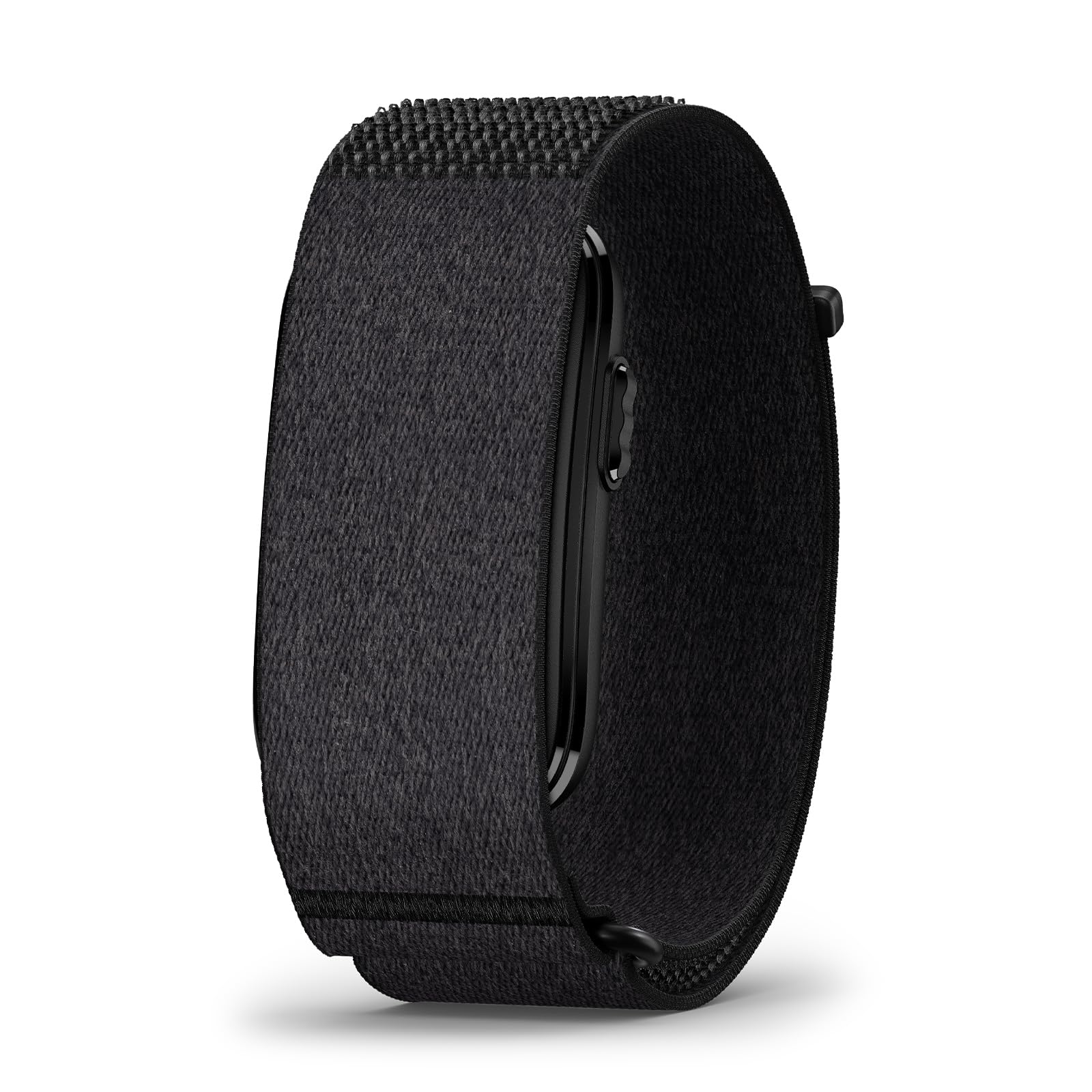
The CIRQA strips the smartwatch down to a soft fabric band, a button, and no display. At 17 grams and up to 10 days of battery, it is the least distracting tracker here. It tracks more than 80 activities through the Garmin Connect app, or you can start a favorite activity with the on-device button.

We appreciated the screenless design more than we expected. Without notifications and a glowing display, it is easier to wear all night, and the fabric band is comfortable enough to forget. Activity detection adapts as you confirm or edit workouts in the app, which makes the tracking feel more personal over time.

The trade-offs are obvious: no on-wrist stats, and GPS is connected through your phone rather than built in, so phone-free runs are out. The app is also the weak link; usability can be frustrating, and the L/XL band runs small for some wrists. Sleep tracking is part of the package, but treat it as a trend rather than a precise record. We still recommend it for anyone who wants Garmin tracking without a subscription or a screen.

Bottom line: The CIRQA is our pick for anyone who wants Garmin tracking without a screen or a subscription, and it is comfortable enough to wear overnight.

How We Tested Garmin Fitness Trackers

We started by pulling every current Garmin tracker we could get our hands on, then narrowed the list by price, feature set, and the specs that matter most — GPS chip, battery rating, and water resistance. That left us with 12 models, from slim everyday bands to chunkier training watches, which we wore over eight months. Each one got at least a week straight on the wrist, swapping them out so every tester tried multiple models in different conditions.

Battery life got the most scrutiny: we noted the percentage drop after a 5-mile run with GPS on, after a night of sleep tracking, and after a day of phone notifications, then compared that to the manufacturer's claim. For accuracy, we ran the same 3-mile loop with each tracker and a calibrated foot pod, checking distance and pace against a known route. Sleep tracking was judged against how we actually felt — did the watch catch the 2 a.m. wake-up? Did it overcount deep sleep after a late dinner?

We also paid attention to the things you notice after the honeymoon phase: whether the strap collected sweat, how easy it was to read the screen in direct sun, and if the app synced without dropping a workout. Durability came down to a few clumsy weeks — knocking each watch against a doorframe, wearing it in the shower, and checking for scratches. And we asked friends and family to try the interface cold, because a tracker only helps if you can figure it out without a manual.

Value and appearance got their own notes: we compared what each model offered against its price tag, and wore them with everything from gym clothes to office wear. The ones that made the list didn't just tick boxes — they were the ones we forgot we were wearing.

How to Choose a Garmin Fitness Tracker

Match the Watch to Your Main Activity

A running-first watch puts pace, intervals, and training plans up front; a general fitness watch gives you more activity profiles and a more everyday look. If you lift, swim, golf, or use a wheelchair, check that those profiles exist before you pay for running metrics you will not use. The vívoactive 5 is the broad everyday choice, while the Forerunner 165 is the better training partner for runners. Neither is wrong; just do not buy a running watch for a gym routine it does not explain well.

Read Battery Figures in the Right Mode

An 11-day claim is smartwatch mode, not GPS mode. The Forerunner 165 is rated for 11 days in smartwatch mode but 19 hours in GPS; the Forerunner 970 goes 15 days and 26 hours. If you run a few times a week, smartwatch mode is the number you live with. If you train for a marathon or hike all day, check the GPS figure first. Always-on displays also cut battery life: the vívoactive 5 drops from 11 days to five with the display always on.

Decide Whether You Need Built-In GPS

Built-in GPS lets you leave your phone behind for runs and rides. The CIRQA uses connected GPS through your phone, which is fine for neighborhood walks but not for phone-free adventures. If you want route tracking, pace, and distance without carrying a phone, choose a model with built-in GPS, such as the vívoactive 5, Forerunner 165, or Instinct E. If you mostly want step and sleep tracking, a connected-GPS band can be enough.

Choose a Display and Control Scheme You Will Live With

AMOLED screens look bright and colorful, but they cost battery and can be distracting. MIP displays like the Forerunner 55 and Instinct E are dimmer but sunlight-visible and efficient. Buttons are easier with gloves, wet hands, or during a run; touchscreens are faster for scrolling notifications. Our favorite compromise is a touchscreen with physical buttons, which the vívoactive and Forerunner 165 both offer. Try the interface before you commit if you can; menus that feel intuitive to one person can be a maze to another.

Get the Fit, Water Rating, and Ongoing Costs Right

Case size matters more than the spec sheet suggests: 38mm to 42mm suits smaller wrists, while 45mm to 51mm is a lot of watch. Check the water rating if you swim; 50 meters is fine for pool laps, while 10 ATM adds margin for open water and rough use. Finally, core Garmin tracking does not require a subscription, but LTE and satellite features do, and some advanced running metrics need an extra heart-rate strap. Budget for those extras only if you will use them.

Frequently Asked Questions

Final Verdict

The vívoactive 5 is the Garmin we recommend to most people because it covers everyday health, GPS workouts, swimming, and golf in a 42mm case that lasts up to 11 days. It is the best balance of size, features, and daily comfort in this group.

If running is the main event, the Forerunner 165 gives you more focused training guidance; if you need a watch for trails and rough handling, choose the Instinct E. The Lily 2 Active is the right call for a small wrist, and the CIRQA is the one to pick when you want no screen at all.