Tech & Wearables

Best Fitness Trackers for Heart Rate of 2026

Every wrist-based heart rate tracker runs on the same trick: green light into the skin, a sensor reading how much bounces back, and an algorithm turning that flicker into a number. The trouble is the number looks equally confident whether it's right or wrong — I once had a watch log a relaxed jog as a threshold effort, and only a chest strap settled the argument. A good tracker earns its place by getting that reading close enough to trust during intervals, long runs, and the unglamorous hours of sleep, so you can act on it without second-guessing. My team and I have worn 12 of them for six months to find the ones that do.

Fit turns out to matter more than price. A band sitting a finger's width too high or too loose reads low on a cold morning, and no amount of app polish rescues a sensor that isn't touching skin. The trackers below are the ones we kept reaching for after the novelty wore off — comfortable enough to sleep in, honest about charging, and readable at a glance mid-workout.

#1

Bestinn H32 Pro

Top Pick
Bestinn H32 Pro

Looks and screen

Our Score 9.0/10
Check Price

Worth Noting

  • Thin track record on long-term durability
Display
1.58-inch touchscreen
Warranty
3 years
Battery Life
Up to 7 days
Sports Modes
120+
Read the full review

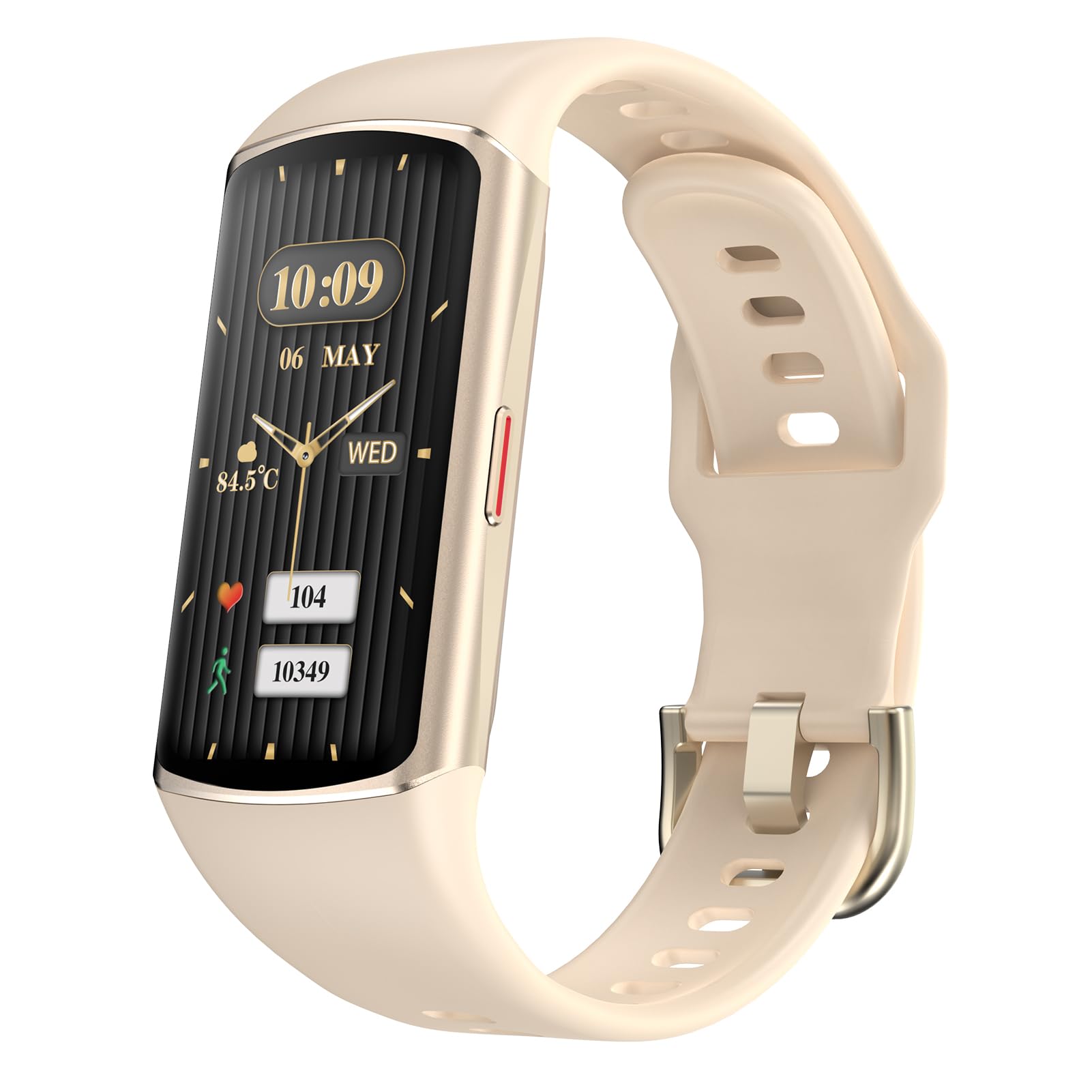
Champagne gold, metal-edged, 1.58 inches of screen: the H32 Pro is the one here that looks like it cost more than it did. That isn't a small thing in a category where almost everything is black silicone, and it's the reason we kept reaching for it over devices that measure the same things.

Under the finish sit 24/7 heart rate, blood pressure and blood oxygen, 120+ exercise modes, sleep tracking, call and message notifications, and up to seven days per charge. The watch faces are genuinely switchable, the menus are easy to follow, and the display stays readable outdoors — no small feat on a budget panel. Then there's the three-year manufacturer warranty, the longest backing on any pick in this guide.

That warranty is precisely why we're comfortable recommending a name you may not have seen before: it's the safety net standing in for a track record this brand doesn't yet have, while the Fitbit and Samsung options here have years of wear behind them. If you want the sharpest-looking tracker for the office and the gym and you're willing to be an early adopter, this is the one. If you want the safest long-term bet, it isn't.

Bottom line: We point you to the H32 Pro if you want a tracker that looks like a watch, gives you a big bright screen and backs itself with a three-year warranty rather than a long reputation.

#2

Galaxy Fit 3

Galaxy Fit 3

Android users

Our Score 8.8/10
Check Price

Worth Noting

  • Android only, with no iPhone support
  • International model with no US warranty
Display
1.6-inch AMOLED, 320 x 320
Battery Life
Up to 14 days
Water Resistance
5ATM and IP68
Phone Compatibility
Android only
Read the full review

Two lines decide whether this is your tracker. The Galaxy Fit 3 pairs with Android phones only, and the version sold here is an international model with no US warranty behind it. If either is a dealbreaker, the Fitbit Air covers both. If you're on Android and can live without the warranty, we think this is the most watch you get for the least money in this group.

The display is a 1.6-inch AMOLED at 320 x 320, and it's the sharpest, most readable panel here — we had no trouble reading it outdoors, which isn't what we expected at this price. Around it sit 101+ workout modes with auto detection, sleep coaching with SpO2 and continuous heart rate, all feeding Samsung Health. Walks got picked up without us starting a workout, and pairing with a Samsung phone is the smoothest version of the experience; other Android brands work with a little more setup.

Samsung rates the 208 mAh battery at up to 14 days, and that's the ceiling rather than the promise — a bigger, brighter screen than anything else here is exactly why. There's no built-in GPS either, so outdoor runs use your phone's. Neither matters if you're tracking gym sessions, walks and sleep rather than marathon training, and the 5ATM plus IP68 rating means you can swim in it.

Bottom line: We send Android owners here first: the biggest, brightest screen in this group, two weeks of rated battery and steady step, sleep and heart-rate tracking — as long as you accept no US warranty.

#3

Fitbit Air

Fitbit Air

Everyday tracking

Our Score 8.6/10
Check Price

Worth Noting

  • Sleep staging can miss the mark
  • Syncing can stall and need a restart
Battery Life
Up to a week; 5 minutes gives a day
Water Resistance
50 meters
Heart-rate Sensors
Optical heart rate, SpO2, skin temperature
Phone Compatibility
Android 11.0+ and iOS 16.4+
Read the full review

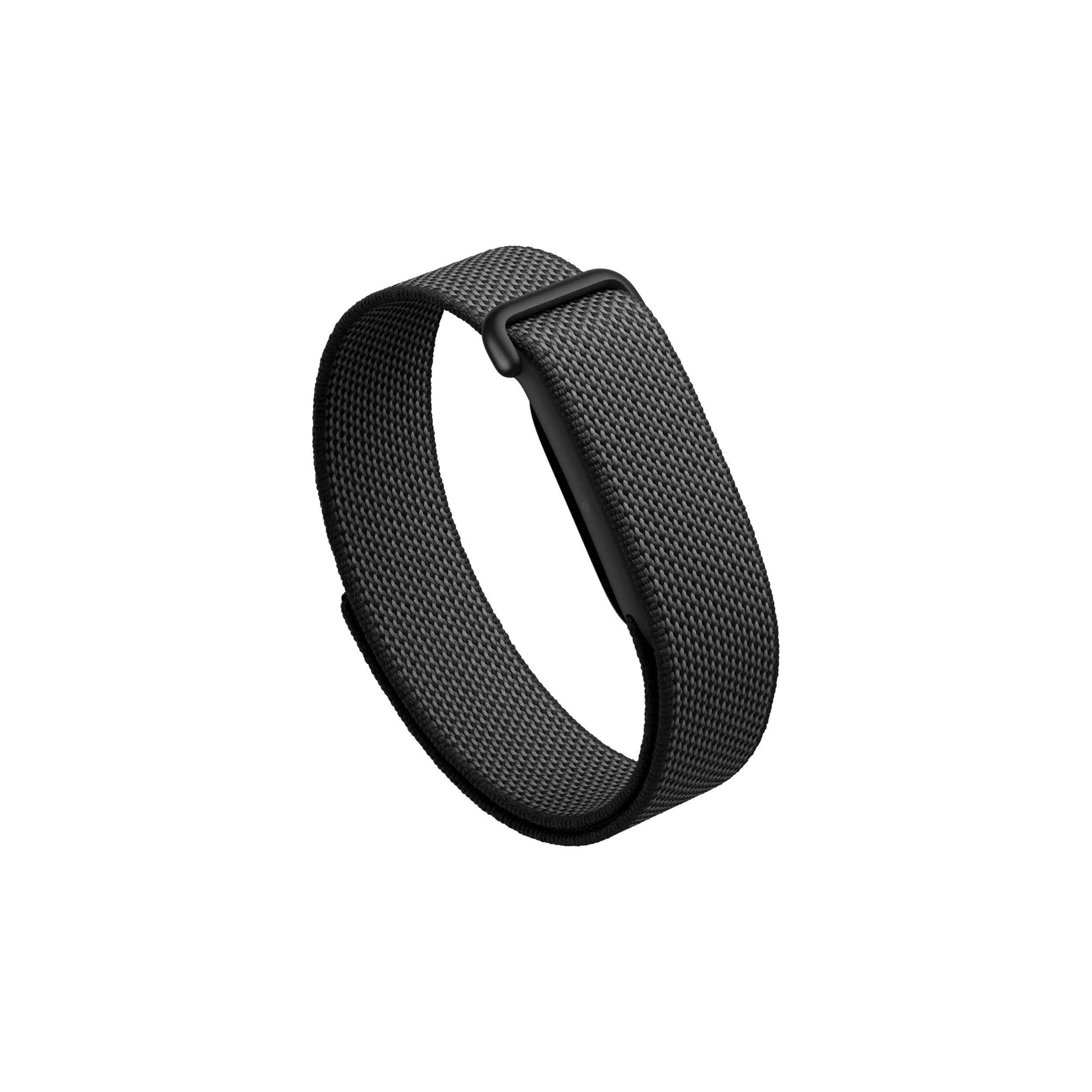
A five-gram band with no display sounds like a step backwards until you've slept in one. The Fitbit Air is a slim strip — 1.38 inches long, 5.07 grams — carrying an optical heart-rate sensor, red and infrared sensors for SpO2, a skin-temperature sensor, and a three-axis accelerometer with a gyroscope, and nothing on it that lights up. The appeal is what it does while you're ignoring it: a continuous heart-rate record through the day and the whole night, which is where resting heart rate and sleep scores actually come from.

We think that trade is the right one for most people shopping heart rate first. The band adjusts from 130 to 210 mm and swaps without tools, so the loop you sleep in doesn't have to be the one you sweat in, and at five grams you genuinely stop noticing it — the precondition for the 24-hour data you're after. It's water resistant to 50 meters, and rated for up to a week per charge with five minutes on the cable buying a full day.

Losing the screen costs you two things. You can't glance at your heart rate mid-set or check the time without reaching for your phone, and there's no built-in GPS, so outdoor runs borrow the phone's. Neither bothered us much, because the numbers a screen would show are in the app a minute later anyway, and that app works with Android 11 and up and iOS 16.4 and up — the widest compatibility in this group.

What keeps us coming back is the software. Resting heart rate, heart-rate zones, sleep stages and a daily readiness number sit in one place, the free tier covers what most people need, and the adaptive coaching is the part behind Premium. The bands are the other practical draw: switch to a knit or a sleep loop and one tracker covers a workout and a night without a second device.

Bottom line: For most people who want a continuous heart-rate record without a screen competing for attention, we recommend the Fitbit Air: light enough to sleep in, a week per charge, and the fullest sensor set here.

#4

WHOOP 5.0

WHOOP 5.0

Serious training

Our Score 8.4/10
Check Price

Worth Noting

  • Membership is the only way to buy in
  • Setup and interpretation take weeks
Membership
12 months, device included
Battery Life
Up to 14 days
Metrics Tracked
140+ health and fitness metrics
Water Resistance
IP68
Read the full review

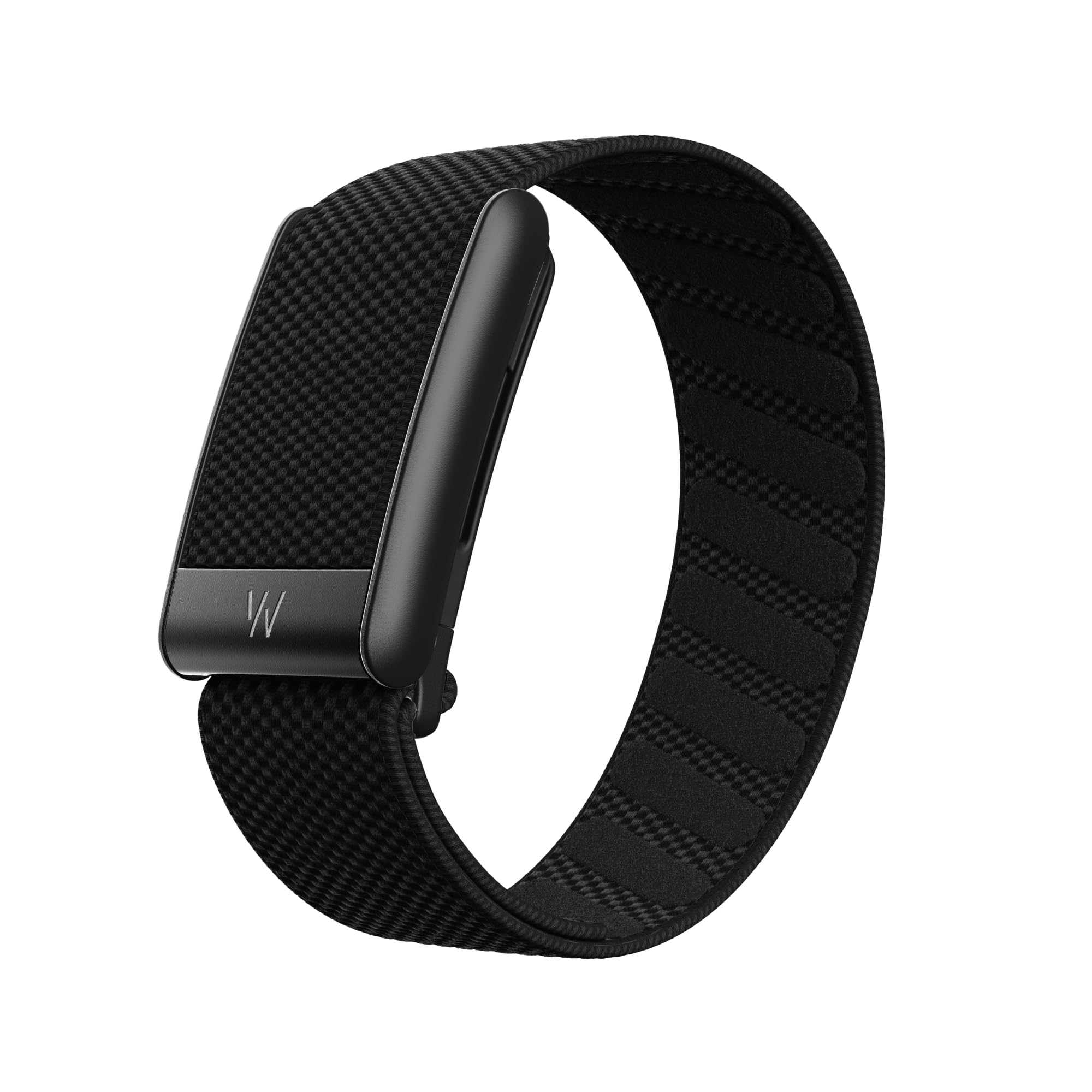
WHOOP doesn't sell you a tracker so much as a year of membership that arrives with a device. The box holds the 5.0 band, a SuperKnit strap and a waterproof wireless PowerPack, and you pay for 12 months of Peak access to use any of it. That reframes the decision: you're not comparing hardware against hardware, you're deciding whether a year of recovery and strain analysis is worth committing to.

The hardware is deliberately quiet. No screen, a knit band, IP68, and a battery rated at 14 days that you top up from the PowerPack while it's still on your wrist — so the thing never has to come off. For sleep tracking in particular that's the whole game, because a tracker that spends the night on a charger is a tracker that misses nights.

What it measures runs well past heart rate: 140+ metrics including sleep stages, recovery, strain, and a Healthspan view of how your habits track against long-term health, with an AI coach turning the numbers into a suggestion. It's a lot of surface area, and it took us a while before any of it meant anything, which is the honest cost of this much data.

So: if you want to be told whether Thursday is a hard day or an easy one, nothing else here is close on depth, and the on-wrist charging makes 24/7 wear genuinely practical. If you mainly want steps, resting heart rate and a sleep score, you're paying for analysis you'll scroll past. And treat a bad recovery score as a prompt to check in with yourself rather than an instruction — the underlying readings aren't infallible.

Bottom line: We recommend the WHOOP 5.0 to one kind of buyer: someone training toward something who wants to be told whether to push or back off, and who will open the app daily.

#5

MorePro Air6

MorePro Air6

Budget features

Our Score 8.2/10
Check Price

Worth Noting

  • Pairing can take a couple of attempts
  • LCD screen trails the AMOLED panels here
Display
1.52-inch LCD
Warranty
2 years
Sports Modes
120+
Water Resistance
IP68
Read the full review

The Air6's feature list is long. 120+ sport modes, heart rate, blood pressure and blood oxygen, sleep and cycle tracking, call and message notifications, a 1.52-inch screen, IP68 waterproofing. At this end of the market that reads like a typo, so the useful question isn't what's on the list — it's which parts you'll actually use and which are just checkboxes.

Our answer is that the boring parts carry it. Comfort is what this one does best: a 20 mm silicone band on a 1.12-ounce body that's easy to forget about overnight, which is exactly what you want from something meant to record sleep. It runs for days between charges and tops up in about two hours, and step, sleep and heart rate — the three things most people actually look at — come out fine.

Where it gets shaky is the fringe. Pairing is the recurring snag: it can take a couple of attempts, particularly on Android, before the app settles down. The LCD panel is a step behind the AMOLED screens elsewhere in this group — perfectly readable, just flatter and less sharp. And blood pressure and SpO2 belong in the trend bucket, not the measurement bucket. Two years of warranty is the reassurance that matters most at this price.

Bottom line: We make the Air6 our value pick: comfortable enough to sleep in, days between charges, a two-year warranty, and enough modes and notifications to feel like more than you spent.

#6

Mindrose H80 Pro

Mindrose H80 Pro

Gym-bag backup

Our Score 8.2/10
Check Price

Worth Noting

  • Short brand history to judge it by
Display
1.47-inch colour touchscreen
Warranty
3 years
Sports Modes
115
Water Resistance
IP68
Read the full review

Battery life is what this one gets right. It runs about a week between charges and tops up quickly enough that you can do it while you're getting ready, and that matters more than it sounds — the tracker that stays on your wrist all night is the one that measures your resting heart rate properly. Charging is the routine that quietly ruins 24/7 tracking on cheaper devices, and this one avoids it.

The rest is a straightforward 1.47-inch colour touchscreen with 24/7 heart rate, blood oxygen and blood pressure, a 115-mode sport list, sleep tracking, call and message notifications, and a menstrual cycle reminder. The watch faces are better than the price suggests, the app is one of the easier ones to navigate at this end of the market, and the display is bright without being a battery hog.

We pick it over the Bakoor when a bigger screen and a three-year warranty matter more to you than an AMOLED panel, and it's the one we'd toss in a gym bag without worrying about it. Where we hesitate is longevity: there's very little history behind the brand, so treat the warranty as the safety net rather than a durability promise.

Bottom line: We pick the H80 Pro when a week of battery, a bright screen and a three-year warranty matter more than a famous name on the box.

#7

Bakoor Fitness Tracker

Bakoor Fitness Tracker

First tracker

Our Score 8.0/10
Check Price

Worth Noting

  • No stated warranty
  • Step counts can drift
Display
1.10-inch AMOLED
Warranty
None stated
Sports Modes
25
Water Resistance
IP68
Read the full review

The Bakoor is the least expensive way to get an AMOLED screen in this group, and at 1.10 inches it feels more like a fitness band than a watch — which we count in its favor. The time, steps and heart rate are legible at a glance, the 25 sport modes cover walking, running and the gym, setup is short, and IP68 shrugs off sweat and rain. For someone buying their first tracker and unsure how much they'll use one, that's a sensible entry point.

What you give up sits behind the screen. There's no stated warranty, the readings are the least consistent part of the package — step totals in particular can drift when your hands are busy — and the companion app is basic rather than polished. None of that makes it a bad buy; it makes it the cheapest tracker here that does the visible things well and the invisible things adequately. If you want one device to last years, spend more.

Bottom line: For a first tracker or a gym-bag spare, we like the Bakoor: a sharp little AMOLED screen, IP68 and the basics done well, with the expectations set accordingly.

How We Tested Heart Rate Accuracy, Comfort, and Battery Life

We started with every mid-range tracker offering continuous heart rate sensing, then cut the list on the things that change daily use: built-in or phone-tethered GPS, sleep and recovery tracking, waterproofing rated for swimming, and an app that doesn't tuck the useful data behind a subscription. That left 12 units, from brands we've tested for years and a few we hadn't. Each one went onto a wrist for six months.

Accuracy came first, because everything else is decoration without it. Every run, ride, and gym session was worn alongside a chest strap, and we compared the traces afterward — not just the averages, but whether the wrist unit caught the spike at the start of an interval or lagged 20 seconds behind it. We noted the obvious failures too: a reading that flatlined at 90 beats per minute during hill repeats, or one that shot to 180 while we were tying our shoes.

Battery life we logged rather than believed, counting days between charges with GPS on, with GPS off, and with the always-on display enabled, plus how much a ten-minute top-up actually bought us. Comfort was judged overnight and through long days — strap marks, itching, whether we forgot we had it on. We paired and unpaired each tracker from a phone, walked out of range mid-run to see whether it kept recording and synced later, and wore them alongside a regular watch to judge how bulky they looked at the office. Because fit changes the reading, every band went onto wrists from small to large so we could see how much adjustment range there was. And we read the paywall carefully, since two trackers that look alike can hand you very different amounts of data.

How to Choose Fitness Trackers for Heart Rate

Fit matters more than sensor count

An optical heart-rate sensor shines light into the skin and watches how blood moves, so it only produces a clean signal when the band keeps it planted. Wear the tracker a finger's width above the wrist bone, snug enough that it doesn't rotate when you turn your arm, and check that it hasn't left a mark after an hour. If you can slide a finger easily under the band, it's too loose for exercise.

Weight decides whether that fit survives the night. A five-gram screenless band like the Fitbit Air stays where you put it through eight hours of sleep; a heavier watch slides, and a sliding sensor gives you noise rather than a resting heart rate.

Screenless or screen

A display buys you a live heart-rate readout mid-workout and the time on your wrist. It costs weight, brightness and battery, and it's a small light in the room at two in the morning. Decide by when you'll actually use it: if sleep and all-day resting heart rate are the point, go screenless and read the detail in the app afterwards.

If you train by zones and want the number without breaking stride, a screen earns its keep. The 1.6-inch AMOLED on the Galaxy Fit 3 is the best one here, and it's the reason that band is heavier and thirstier than the screenless picks.

Battery life is really about the night

A tracker that spends the night on the charger can't measure your resting heart rate or your sleep, which is most of what you bought it for. Anything rated a week or better keeps that overnight window intact.

Fast top-ups are the other escape hatch. The Fitbit Air turns five minutes on the cable into a full day, and the WHOOP's PowerPack charges the band while you're still wearing it. Check both figures — run time and charge time — before you commit.

Check the phone before the features

Two lines in a listing can end the decision. The Samsung Galaxy Fit 3 pairs with Android phones only, and the version sold here is an international model with no US warranty. The Fitbit picks work with Android 11 and up and iOS 16.4 and up, which is the widest net in this group.

Syncing is where everyday frustration lives, so match the device to the phone you already carry, on a software version it actually supports. When a listing says international model, assume no local warranty and treat that as part of the price.

What wrist blood pressure and SpO2 are worth

Several picks here advertise blood-pressure and blood-oxygen monitoring, so it's worth being clear about what that means. A wrist optical sensor can show a trend, but it isn't a validated cuff measurement and it shouldn't drive decisions about medication or a diagnosis. SpO2 readings are directional in the same way.

If you have a health reason to track blood pressure, buy a validated upper-arm cuff and let the tracker do what it's genuinely good at: heart rate, sleep and movement.

Frequently Asked Questions

Final Verdict

Buy the Fitbit Air. It's the tracker we hand to almost anyone who wants a dependable heart-rate record: light enough to sleep in, a week per charge, SpO2 and skin temperature alongside the optical sensor, and it works with whichever phone you own.

Two exceptions are worth naming. On Android, the Galaxy Fit 3 gives you a bigger, brighter screen for less money, provided you can live without a US warranty. And if you're training toward a date and want recovery and strain guidance rather than step counts, the WHOOP 5.0 justifies its annual commitment.