Strength & Weights

Best Weight Bench of 2026

A weight bench looks like the simplest thing in the gym: a pad, a frame, and a pin or two. What separates a good one from a bad one shows up mid-set, when the frame rocks sideways under a heavy press or an incline ladder slips a notch with the bar in your hands. Get it right and the bench disappears under you, then folds or rolls out of the way when the garage needs to be a garage again.

I've pressed on benches bolted to a gym floor and on a folding bench in a spare bedroom that made me nervous every rep, and the gap between them was rarely about price. My team and I spent six months building, lifting on, and stowing 11 benches, from bare-bones flat pads to adjustable rigs that fold in half. One thing I'd tell a first-time buyer: check pad width and the gap between the pad and the seat before anything else — narrow pads dig into your shoulders, and a wide gap pinches. Every pick below earned its spot under a loaded bar.

#1

Finer Form Flat Bench

Top Pick
Finer Form Flat Bench

Flat pressing

Our Score 9.4/10
Check Price

Worth Noting

  • Flat-only design rules out incline work
Frame
4-way steel frame
Item Weight
27.7 lb
Item Dimensions
45"D x 12"W x 18"H
Weight Capacity
1,000 pounds
Read the full review

If your training is flat pressing, there is no reason to pay for angles you will not use. The Finer Form flat bench is built to keep things simple: a 1,000-pound rating, a 4-way steel frame, and a thick pad on a 45-by-12-inch bench that folds for storage. It is the flat bench we point to first for bench press and dumbbell work.

The fold is what makes it practical. At 27.7 pounds, it is light enough to move aside, and the folding design lets it live under a bed or in a closet between sessions. We like the 4-way frame here; a flat bench has fewer joints than an adjustable, and this one keeps the load path direct. The 12-inch pad is the dimension to check if you have broad shoulders—it is narrower than the 13-inch seats on the adjustable picks.

For flat barbell pressing, dumbbell press, rows, and hip thrusts, it is the cleanest dedicated flat bench here. We also appreciate the 18-inch height; it helps you plant your feet, though it may feel low if you are used to a taller bench. The fold and the 27.7-pound weight make it easy to put away, which matters more than a long feature list in a small room.

Bottom line: For flat bench press and dumbbell work, the Finer Form is the flat bench we recommend: 1,000-pound capacity, a simple folding frame, and no angle hardware to wobble.
#2

Keppi Adjustable Bench

Keppi Adjustable Bench

Dedicated home gyms

Our Score 9.2/10
Check Price

Worth Noting

  • 59-pound frame is awkward to move
Item Weight
59 lb
Seat Positions
3
Weight Capacity
1,200 pounds
Backrest Positions
12
Read the full review

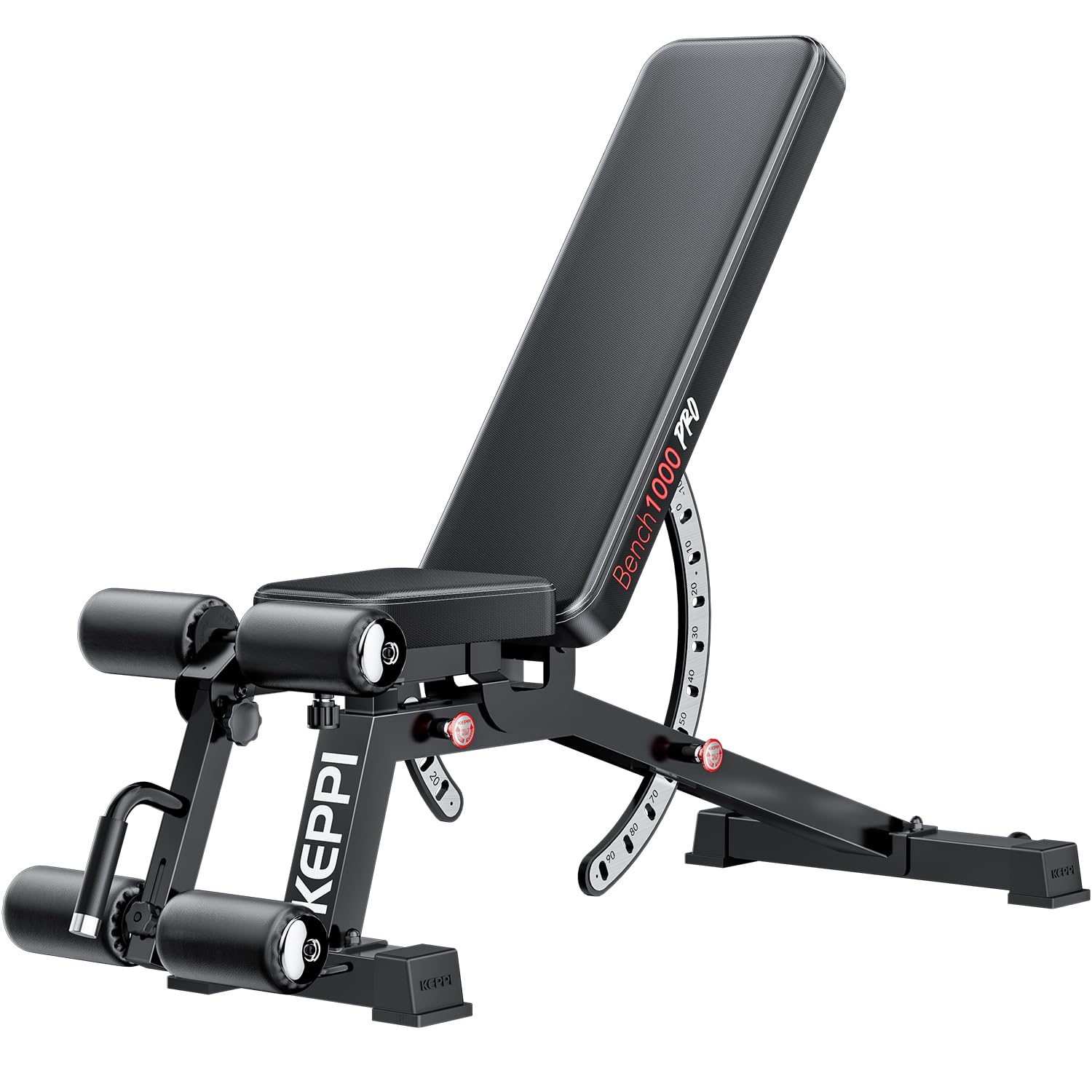
The 59-pound frame and 24-inch width are why this Keppi is our top pick. Most of the folding benches here trade stability for storage; this one is a dedicated-floor FID with a 1,200-pound rating, 12 backrest positions, and 3 seat positions. We like that combination because it covers flat, incline, and decline pressing without a lot of resetting, and the 2-by-3-inch steel frame is the most substantial in this group.

The wide pad is the part we appreciate most after the frame. A 24-inch width and extended backrest give more shoulder support than the narrow 12- to 13-inch benches in this set. The adjustable foot catch with three foam-roller positions is another useful detail: it gives your legs a place to brace on decline work and takes some of the guesswork out of longer sets.

The drawback is weight. At 59 pounds, it is a bench you leave where you train; moving it across a room is a chore. And at the top of its load range, the leg brace is the part to watch—the frame is serious, but that brace is the least settled piece when the load gets heavy. If your gym shares space with a car or a couch, the folders below make more sense.

Bottom line: The Keppi is our top pick for a dedicated home gym: a 1,200-pound FID with a wide, planted frame and enough positions for serious pressing.

#3

YOLEO Adjustable Bench

YOLEO Adjustable Bench

Small home gyms

Our Score 9.2/10
Check Price

Worth Noting

  • Light 23.2-pound frame suits moderate loads
Item Weight
23.2 lb
Backrest Length
28 inches
Weight Capacity
827 lb
Folded Dimensions
31.5"L x 12.6"W x 13"H
Read the full review

The YOLEO arrives almost ready: two pins, no tools, and a frame that folds down to roughly 31.5 by 12.6 by 13 inches. That is the kind of convenience that makes a home bench usable in a room that has to be something else the rest of the day. It carries an 827-pound rating and 84 positions across the back, seat, and legs.

We like the 13-inch seat and 28-inch backrest for dumbbell pressing; the seat is wider than some compact benches, and the range covers flat, incline, and decline without a separate bench. The adjustment pins are simple to move, and the fold is quick enough that you can put it away between sessions. The 23.2-pound frame is light enough to carry from room to room, which is the point of a bench like this.

The catch is size. The 41-inch frame and 28-inch backrest are compact, and taller users will feel their head run out of pad before the bench runs out of angle. That is the trade for a bench that stores in a closet. For a small room and a set of dumbbells, it is easy to accept.

Bottom line: The YOLEO is the folding bench we recommend for a small home gym: it arrives nearly assembled, covers 84 positions, and stores in a closet.

#4

NICEPEOPLE Adjustable Bench

NICEPEOPLE Adjustable Bench

Tiny spaces

Our Score 9.2/10
Check Price

Worth Noting

  • 29.3-inch backrest is short for taller users
Item Weight
17 lb
Backrest Angles
8
Backrest Length
29.3 inches
Weight Capacity
660 lb
Read the full review

At 17 pounds, the NICEPEOPLE is the bench that disappears into a closet and comes out for a dumbbell session. It is 46 inches long, 16.7 inches wide, and folds; the 660-pound capacity and 8 backrest angles put it in the light-duty home category rather than the heavy barbell one. We like it for a bedroom, a small apartment, or a corner where a full-size FID would be in the way.

The 29.3-inch backrest is a useful length for a compact bench, and the 8 angles cover flat and incline work without a complicated adjustment system. Assembly is minimal: two bolts and two spring pins, with the pins coming out when you want to fold it. That simplicity is the appeal; there is not much to go wrong, and the pad is easy to wipe down after a sweaty session.

The trade-off is size and load. A 17-pound frame and 660-pound rating are fine for dumbbells and bodyweight work, but this is not the bench for a heavy barbell press. The 16.7-inch width is also narrower than the Keppi's 24 inches, so bigger lifters will feel the difference in shoulder support. For a small space and lighter training, though, it is the easiest bench here to live with.

Bottom line: The NICEPEOPLE is the compact bench we recommend for a bedroom or small apartment, with a 17-pound frame, 8 backrest angles, and easy storage.

#5

Amazon Basics Flat Bench

Amazon Basics Flat Bench

Budget flat pressing

Our Score 9.2/10
Check Price

Worth Noting

  • Hardware kit can arrive incomplete
Item Weight
24.2 lb
Top Dimensions
41.5"L x 11"W
Item Dimensions
41.5"D x 18.2"W x 18.1"H
Weight Capacity
700 lb
Read the full review

The Amazon Basics flat bench is the no-drama option: a 700-pound steel frame, a PVC pad, and T-shaped legs that sit flat on the floor. It keeps to one job: a flat platform for dumbbell press, rows, and bodyweight work. That is enough for a lot of home lifters, and the simple frame is easier to check and tighten than an adjustable mechanism.

The 41.5-by-11-inch top is the number to check. That is narrower than the 12- and 13-inch pads on the adjustable benches here, so broad-shouldered lifters may feel the edges sooner. The 18.1-inch height and T-leg base make it easy to step over and stable in a straight line, but the same simple base is not as planted as a heavy four-leg frame when you shift side to side.

We recommend it for flat pressing and dumbbell work on a budget, not as an adjustable all-rounder. Once it is together, the low pad and simple frame are easy to live with, and the 700-pound rating leaves room for a lifter plus dumbbells. The 10.99-kilogram frame is light enough to move, though it is not the bench to drag around mid-session.

Bottom line: The Amazon Basics flat bench is the budget pick for flat pressing and dumbbell work, with a 700-pound rating and a simple, stable frame.

#6

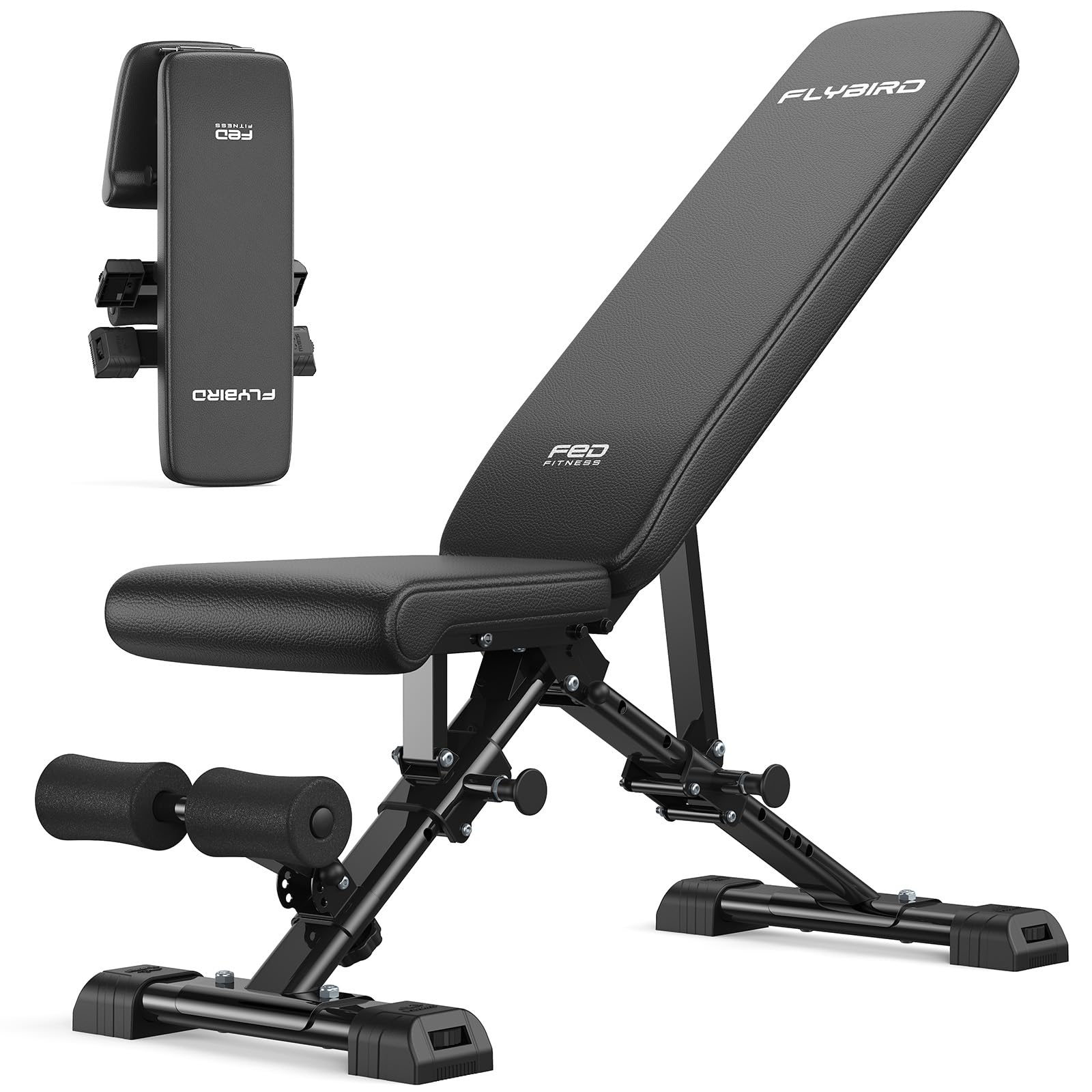
FLYBIRD WB5 Bench

FLYBIRD WB5 Bench

Incline work

Our Score 9.0/10
Check Price

Worth Noting

  • Hinge may develop flex under heavy pressing
Angle Range
-30° to 90°
Item Weight
28.5 lb
Backrest Length
30 inches
Weight Capacity
800 lb
Read the full review

The FLYBIRD is the angle collector of the group: 144 settings from -30 to 90 degrees, a 30-inch backrest, and an 800-pound rating on a frame that folds to a 46-by-13-inch footprint. We put it in the mix for incline and decline variety and for rooms where the bench has to disappear afterward. It is not the flat-pressing bench we choose first, and the reason is height.

The bench sits high off the floor, and that changes how you set up. A tall deck makes it harder to plant your feet and drive through a flat press; the same height is less of an issue for incline dumbbell work. We appreciate the 30-inch backrest for head support, and the 28.5-pound weight keeps it movable. The frame is a folding design, so it wants a level floor and a check that the hinge is locked before you load it.

If you want a folding FID for incline presses, shoulder work, and decline sit-ups, this is a strong option, and the 30-inch pad is longer than the YOLEO's. For flat barbell pressing with leg drive, the Keppi or Amazon Basics make more sense. It is the one here we recommend for angle variety first, not as an all-purpose flat-press bench.

Bottom line: The FLYBIRD is our pick for incline and decline variety in a folding bench, with 144 settings and a 30-inch backrest, as long as you do not need a low flat-press deck.

#7

Finer Form FID Bench

Finer Form FID Bench

Back extensions

Our Score 9.0/10
Check Price

Worth Noting

  • Premium price over simple pressing benches
Calf Positions
4
Weight Capacity
1,000 pounds
Backrest Positions
8
Support Pad Positions
8
Read the full review

The Finer Form FID is the most specialized bench here: a 1,000-pound adjustable bench that also works as a Roman chair. It has 8 backrest positions, 3 seat positions, 8 support-pad positions, and 4 calf positions, so it is built for back extensions and full-body work as much as for pressing. We like it for a home gym that wants one station for chest, lower back, and core.

The range is the point. A standard FID gives you flat, incline, and decline; this adds a back-extension setup and enough calf adjustment to fit different leg lengths. The 1,000-pound rating also puts it at the top of this set for stated capacity. It is a bench-and-Roman-chair station rather than a simple pressing platform, and the extra pads and rollers are the reason.

If back extensions are part of your program, it replaces a separate station and earns the space. The setup gives you more places to adjust than a plain FID, which is useful for fit but adds a learning curve. It is more bench than most flat-pressers need, and that is the honest boundary of who should buy it.

We recommend it for the home gym that already knows it will use the lower-back work; otherwise, the Keppi covers pressing with a simpler frame. The many adjustment points take a little learning, but they are what makes the back-extension fit work.

Bottom line: The Finer Form FID is the pick for a home gym that wants a 1,000-pound adjustable bench and a Roman chair in one, with the footprint and price to match.

How We Tested Weight Benches in Real Home Gyms

We started by pulling every bench we could find with a stated weight capacity, published pad dimensions, and a footprint that would fit a normal room, then cut anything with vague capacity claims, pads narrower than about 10 inches, or hardware that looked undersized in photos. That left 11 benches across a spread of prices, which we assembled ourselves with the tools in the box — timing each build and counting every bolt against the parts list before we ever touched a barbell.

Each bench then lived where a bench actually lives — a garage gym, a spare bedroom, a basement corner — for six months, and got used the way people use them: barbell presses, dumbbell work, incline and decline sets, seated rows, and the occasional step-up. We loaded the bar and watched for side-to-side rock on a rubber mat and on carpet, pressed with feet flat to see whether the pad height left us reaching for the floor, and measured each footprint and folded size against a tape mark on the floor. Folding benches got folded and unfolded one-handed, wheeled through a doorway, and stowed against a wall, with a stopwatch each way.

Adjustability got the most handling: we moved every incline position with the pad empty and again with weight on it, checking for pin slop and for ladders that jumped a notch under load. Over the six months we watched pads for compression and creasing, vinyl seams for splitting, and frames for chips and loosening bolts — the things that decide whether a bench is still steady in year three. Value we judged against build rather than price alone, because the cheapest benches that stayed solid scored as well as the expensive ones that didn't.

How to Choose the Right Weight Bench

Flat or adjustable first

Choose the bench by the exercises you actually do. A flat bench is simpler, has fewer joints to check, and usually costs less; the Finer Form flat bench is the cleanest example here. An adjustable bench adds incline and decline pressing, which is worth the extra hardware if chest and shoulder angles are part of your routine. The Keppi is the better fit for that job.

Do not buy an FID just for the angle count. The adjustment system has to lock firmly and fit your body. If you mostly press flat and use dumbbells for rows, a flat bench gives you less to think about between sets.

Match capacity to the load

The stated capacity includes you and the weight you lift, not just the plates on the bar. A 660-pound bench like the NICEPEOPLE is plenty for most dumbbell work and bodyweight exercises; a 1,200-pound bench like the Keppi is aimed at heavier barbell training and the bigger frame that comes with it.

Frame weight is part of the same decision. A 59-pound bench is harder to move but generally feels more settled under a hard press. A 17- to 23-pound folding bench is easier to live with, but it makes more sense for moderate loads and a room that has to change uses.

Stability and deck height

A folding bench puts a hinge in the middle of the load path, so check that the hinge locks and that the feet sit flat. Heavier fixed frames have fewer places to flex. That is why the Keppi is our first choice for a dedicated pressing setup and the folding picks are better for lighter or occasional work.

Deck height changes how you plant your feet. A tall bench can make flat pressing feel awkward because you cannot drive through the floor as easily; the FLYBIRD is the clearest example in this group. Height matters less for incline dumbbell work, so match the bench to the lift you care about most.

Fit: backrest, seat, and footprint

Backrest length and pad width matter as much as the number of settings. The YOLEO has a 28-inch backrest, the FLYBIRD has 30 inches, and the Keppi is 24 inches wide. Taller lifters should look at backrest length and total bench length; broader lifters should look at pad width before they look at angle count.

Measure the floor space, not just the bench. A 41-inch folding bench and a 58.5-inch fixed bench feel very different in a spare room. Leave room for your feet, a dumbbell drop zone, and the bar path if you press with a barbell.

Folding and assembly

A folding bench is only useful if the folded size fits where you plan to put it. Look for a stated folded footprint, not just the word compact. The YOLEO folds to roughly 31.5 by 12.6 by 13 inches, which is the kind of number that tells you whether it will slide under a bed or behind a door.

Check the hardware bag before you start. Missing bolts and unclear instructions are the most common assembly snags on budget benches, and a bench that cannot be completed safely is not a bargain. Give yourself a clear hour and tighten everything again after the first few sessions.

Frequently Asked Questions

Final Verdict

The Keppi is the weight bench we recommend first for a dedicated home gym. Its 1,200-pound rating, 24-inch width, 36 positions, and 59-pound frame make it the most convincing heavy-duty FID in this set, and the adjustable foot catch gives decline work a useful place to brace. The trade-off is that it stays put.

If your bench has to fold into a closet, choose the YOLEO; if you only press flat, the Finer Form flat bench is the cleaner spend.