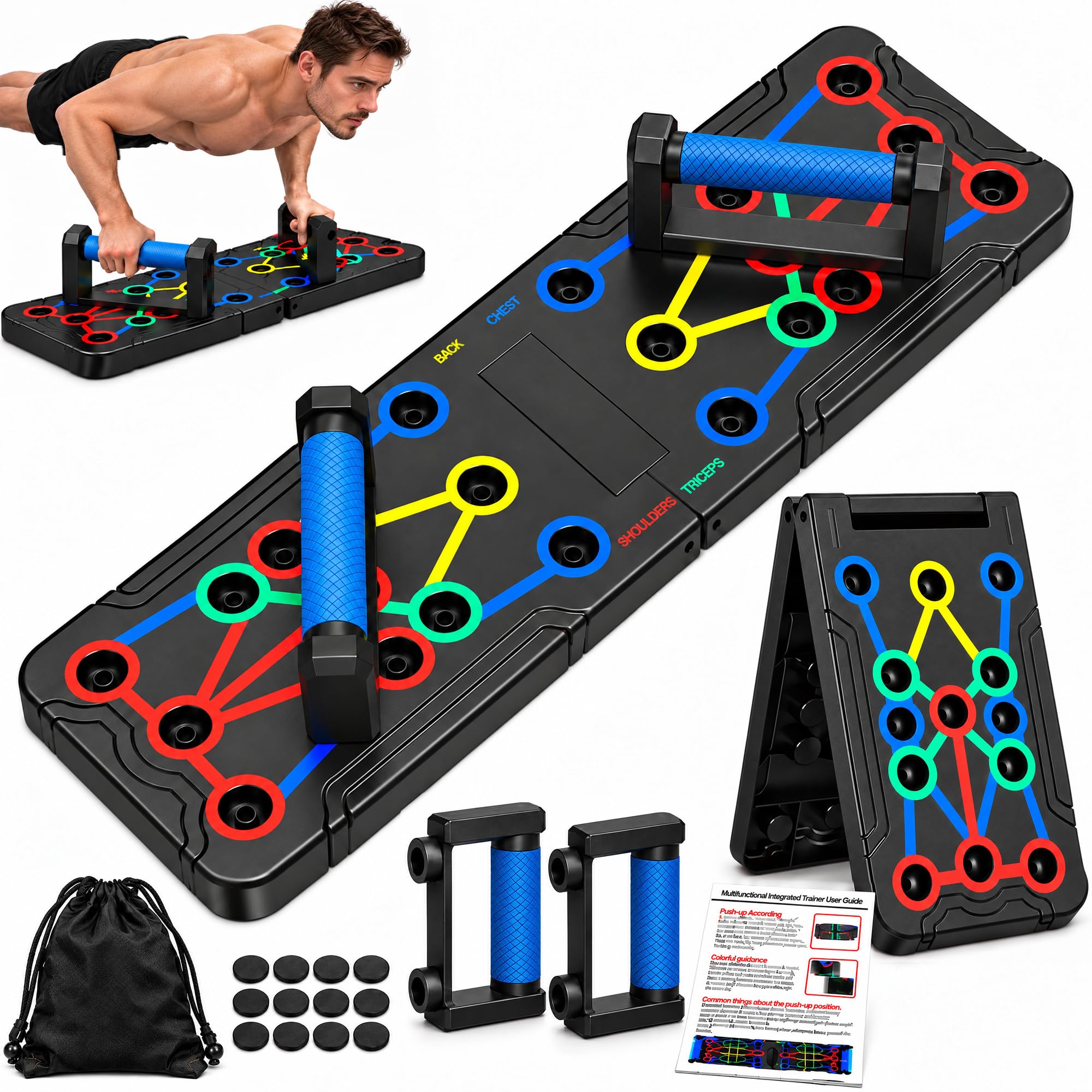
Strength & Weights

Best Push Up Board of 2026

Push-ups shouldn't hurt your wrists more than your chest. If that's the trade-off you've been making, a push-up board is the fix: it puts your palms in a neutral grip and gives you color-coded handle positions that shift the work between chest, shoulders, and triceps. The catch is that a cheap board can slide, flex, or crack at the handle slots, which makes the whole thing worse than the floor.

I've used everything from bare hands to cheap stands, and the board only earns its spot if the handles feel solid and the base stays planted. Over the past three months, my team and I tested 14 boards, and the differences came down to build quality, how quickly the handles swapped between slots, handle comfort, and whether the positions actually changed the exercise. A board that skates across the rug or pinches your palm is not a value at any price. The picks below are the ones we kept reaching for, whether you're chasing a chest pump, protecting a cranky wrist, or just trying to make push-ups less miserable.

#1

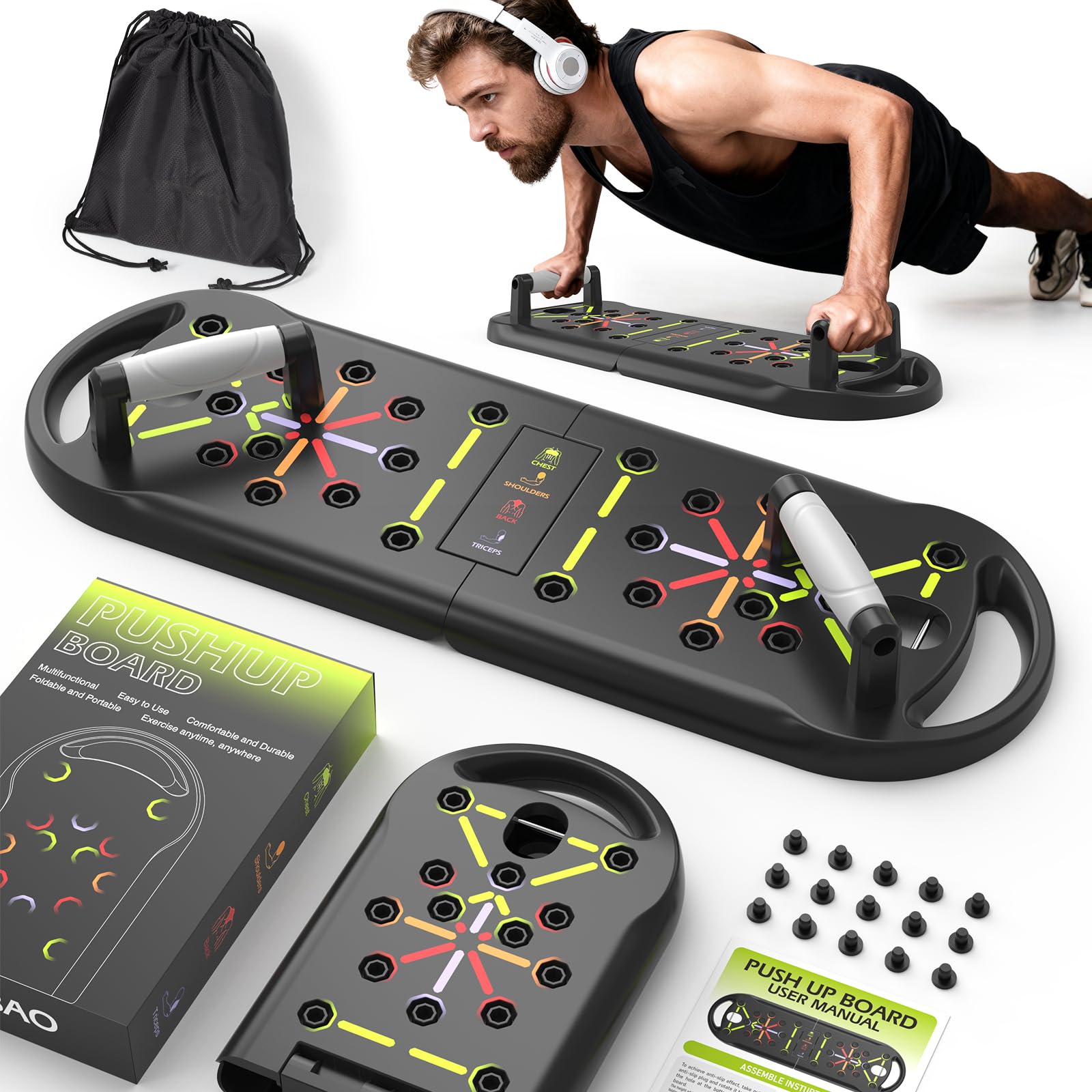
JLoibao Push Up Board

Top Pick
JLoibao Push Up Board

Higher weight loads

Our Score 9.4/10
Check Price

Worth Noting

Positions
20
Board Size
29.92" x 9.84"
Weight Limit
660 lb
Accessory Hole
2.27" x 1.68"
Read the full review

The JLoibao's headline number is 660 pounds, and it sits on a 29.92-inch deck that is longer than most of the boards here. The detail we did not expect is the accessory hole: a 2.27 by 1.68-inch opening that lets you anchor resistance bands, a Pilates bar, or an ab roller. That turns a push-up board into a small anchor point for other work.

The 20 positions are laid out for chest, shoulders, back, triceps, and core, and the board weighs 3.1 pounds, so the high capacity does not come with a heavy frame. We like the longer deck for neutral and wide grips, and the handles are thick enough to feel substantial in the palm. It is a simple board, not a kit, which makes it easier to keep in a corner and use without setup.

The 660-pound rating is a ceiling, not a promise that the plastic will feel rigid under every load; treat the extra capacity as margin, not as permission to overload it. The HOTWAVE remains the easier default for most homes because its handles store onboard and its deck is wider. We see the JLoibao as the choice for a heavier user who wants a longer deck and an accessory hole.

Bottom line: The JLoibao is the one we choose when weight capacity matters most: a 660-pound rating, a longer deck, and an accessory hole for bands and bars.

#2

Bbtops Push Up Board Kit

Bbtops Push Up Board Kit

Compact full kit

Our Score 9.2/10
Check Price

Worth Noting

  • 7.9 pounds is heavy for travel
  • Sturdiness is mixed under hard use
Warranty
2 years
Positions
25
Kit Includes
Pilates bar, ab roller, yoga mat
Item Dimensions
16.2" x 9.5" x 2.7"
Read the full review

The Bbtops kit comes with a two-year manufacturer warranty, which is unusual in a category where most boards promise little more than a return window. It also packs 21 pieces into a 16.2 by 9.5-inch package, including a Pilates bar, an ab roller, a yoga mat, and six resistance bands. That warranty is the detail that makes us look twice.

The 25-in-1 board has the usual color-coded positions, and the kit is aimed at someone building a small home gym rather than someone who only wants push-ups. We like that the yoga mat and ab roller are included, because those are the pieces people often buy separately and then store badly. The board folds, and the storage bag keeps the small parts together.

The Bbtops is the kit for someone who wants the mat and ab roller in the same box; if you already own those, the MQRW is the simpler bundle. It is the one we recommend when the warranty and the broader accessory set matter more than a bare-bones board.

Bottom line: The Bbtops is the compact kit we recommend for small spaces, with a two-year warranty and a 21-piece bundle that covers more than push-ups.

#3

HOTWAVE Push Up Board

HOTWAVE Push Up Board

All-round home use

Our Score 9.0/10
Check Price

Worth Noting

  • Plastic construction is the durability question
Positions
20
Board Size
30" x 10"
Item Weight
3.4 lb
Weight Limit
600 lb
Read the full review

The handle storage is the first thing we noticed on the HOTWAVE, and it is the detail that makes the board easy to live with. The two handles store on the board instead of rattling around in a drawer, and the whole thing folds into a 3.4-pound package that slides under a sofa or stands in a closet. At 30 by 10 inches, it gives you a useful deck without taking over the floor.

The 20 color-coded positions cover the usual spread for chest, shoulders, back, abs, and biceps, and we like that the layout lets you change grip without guessing which slot does what. The 600-pound weight rating is more than most households need, but it is the kind of ceiling that makes the board feel like a shared piece of equipment rather than a personal gadget. The handles also raise your palms off the floor, which takes some of the wrist bend out of the bottom position.

Against the IUT, the HOTWAVE has a wider deck and onboard storage, which makes it less fussy between sets. Against the MQRW kit, it keeps the focus on push-ups instead of accessories. That is why it is the one we recommend first for a home that wants one board to do the everyday work.

Bottom line: We recommend the HOTWAVE for most homes: it folds flat, stores its handles onboard, and makes 20 hand positions easy to use.

#4

IUT Push Up Board

IUT Push Up Board

Budget starter board

Our Score 9.0/10
Check Price

Worth Noting

  • Plastic handles can crack under load
Positions
30
Board Size
26" x 7.7"
Item Weight
2.07 lb
Weight Limit
600 lb
Read the full review

The IUT is the board we point to when the goal is spending as little as possible without giving up the multi-position idea. It packs 30 positions into a 26-inch deck and folds to 0.86 inch thick, so it disappears into a closet or a duffel. At 0.94 kg, it is the lightest board in this set, and that is immediately obvious when you pick it up.

The color-coded zones are straightforward, and the 600-pound rating gives it a higher ceiling than its light body suggests. We treat that number as a limit rather than a challenge, because a board this slim depends on the floor staying flat and the handles staying seated. The fixed handles are simple to use, and the fold is quick enough that we did not mind moving it between rooms.

The trade-off is the footprint: at 7.7 inches wide, the deck feels narrow for wide-grip push-ups, and on smooth laminate it can slide, so put it on a rug or a grippy mat. That is a workable fix for a budget board, but it is the reason we keep the IUT for lighter, more controlled sessions rather than as the default for a heavy user.

Bottom line: For a tight budget, we point to the IUT: it folds to 0.86 inch, offers 30 positions, and keeps the price low without feeling like a single-use gadget.

#5

MQRW Push Up Board Kit

MQRW Push Up Board Kit

Full-body home gym

Our Score 9.0/10
Check Price

Worth Noting

  • Accessory sturdiness is the weak point
Board Size
29.92" x 8.85" x 1.18"
Kit Includes
6 bands, ab roller, Pilates bar
Weight Limit
600 lb
Read the full review

The MQRW arrives as a small gym in a bag: the folding board, a three-section bar, six resistance bands, ankle straps, a door anchor, and an ab roller all pack around it. We see the appeal for someone who wants one purchase to cover upper body, core, and a little resistance work without turning a room into a gym.

The board itself is 29.92 by 8.85 inches and rated to 600 pounds, so it has a usefully long deck for a kit at this level. We like that the board needs no assembly, though the bar and bands take a moment to sort out the first time. The color-coded slots do the job of steering your hands toward chest, shoulder, back, and triceps positions, and the whole set packs back into the storage bag without much fuss.

The kit is more than a push-up board, so it only makes sense if you will actually use the bands and ab wheel. If you want a bare board to slide under the bed, the HOTWAVE is the cleaner choice. The MQRW earns its place when variety matters more than a single-purpose footprint.

Bottom line: We like the MQRW for anyone who wants a push-up board and a starter home gym in one bag, with enough accessories to keep workouts varied.

#6

AERLANG Push Up Board

AERLANG Push Up Board

Wide-grip push-ups

Our Score 9.0/10
Check Price

Worth Noting

  • 300-pound weight limit is the lowest here
Board Size
26.2" x 13.8"
Handle Type
Fixed
Item Weight
Under 3 lb
Weight Limit
300 lb
Read the full review

The AERLANG's 26.2 by 13.8-inch deck is the widest in this set, and that changes the feel of a push-up: you can set your hands wide without running out of board. At under 3 pounds, it is also easy to move from room to room or tuck beside a desk.

The color-coded layout gives you the usual chest, shoulder, back, and triceps options, and the extra width is the reason to choose this one over a narrower board. We like the surface area for wide-grip push-ups, where a 7- or 8-inch deck can feel cramped.

The handles are the sticking point. The hard plastic can dig into your palms during longer sets, and the handles are stiff to move between slots at first, so gloves or a little patience help. That is a real comfort trade-off, not a reason to avoid the board if you mainly want a wide platform.

Against the IUT, the AERLANG gives you a much wider surface for a similar budget position. It is the extra-large board we choose when hand room matters more than a compact fold, and it is the one we hand to someone who wants to feel the width of a push-up rather than fight a narrow deck.

Bottom line: We keep the AERLANG for wide-grip push-ups: its 26.2-inch deck gives your hands room, and the light body folds away easily.

#7

Amazon Basics Push Up Board

Amazon Basics Push Up Board

Simple daily training

Our Score 8.8/10
Check Price

Worth Noting

  • Narrow deck limits very wide grips
Positions
24
Board Size
27.17" x 7.87"
Item Weight
2.67 lb
Weight Limit
600 lb
Read the full review

There is no accessory bundle to sort through with the Amazon Basics board, and that is the point. You get the 24-position board and a carry bag, and the 27.17 by 7.87-inch footprint is easy to slide under a sofa or stand in a closet. We like that it does not ask you to store six bands and an ab wheel you may never touch.

The 24 positions are enough for the usual chest, shoulder, back, and triceps variations, and the oversized textured handles are a useful comfort touch on a board this simple. The 600-pound rating gives it a higher ceiling than its 1.21 kg body suggests, though we treat that as a limit rather than an invitation. The carry bag is basic, but the flat fold is quick and the board stores neatly.

If you want a board that doubles as a home gym, the MQRW kit is the better one-stop option; if you want the simplest thing to fold and put away, the Amazon Basics is the cleaner choice. It is the board we reach for when the workout is push-ups and nothing else.

Bottom line: When you want a board and nothing else, we reach for the Amazon Basics: 24 positions, a 600-pound rating, and a clean fold with no accessory clutter.

How We Tested Push-Up Boards for Grip, Stability, and Wrist Comfort

We started by pulling together every push-up board we could find from major fitness brands and smaller outfits, then narrowed the list by the specs that matter: handle diameter, board length, number of color-coded positions, and what comes in the box. We cut boards with sealed handles that couldn't be swapped, decks too short for a standard shoulder-width stance, and sets where the extras felt like filler. That left 14 boards, which we used for three months.

Testing happened where push-ups actually happen: living room floors, a garage gym, and a patch of carpet in my apartment. Each board went through the same circuit — standard, wide, narrow, and decline push-ups — with testers from a 120-pound beginner to a 220-pound former college athlete. We did sets with dry hands and sweaty hands, on hardwood and carpet, and noted whether the board crept forward, rocked at the corners, or bowed in the middle. We also timed how long it took to move both handles between slots and whether they clicked in or wobbled.

Build quality got its own pass: we flexed each board, inspected seams and handle collars, and dropped them from waist height onto concrete to see what cracked. For comfort, we noted whether the grips dug into the heel of the hand during a long set or spread the load, and whether the texture went slick with sweat. To judge value, we laid out everything in the box and asked whether the extras were useful or padding. Effectiveness came last: we cycled through every position and noted whether the shift from chest to shoulders to triceps was obvious or just color-coded marketing.

How to Choose a Push Up Board

Start With the Board, Not the Bundle

A push-up board's main job is to hold your hands in consistent positions while you move your bodyweight through a stable deck. Accessory kits can be useful, but they are secondary. We prefer a board that stays put and handles that move cleanly to a box with six bands and an ab wheel that never leaves the bag.

If you already own resistance bands or a mat, a dedicated board like the HOTWAVE or Amazon Basics is easier to store and quicker to set up. If you are starting from nothing, a kit such as the MQRW or Bbtops can save separate purchases, but only if you will use the extras.

Match the Deck to Your Grip

Deck width matters more than the position count. A 7.7- or 7.9-inch board is compact, but your hands can run out of room on wide-grip push-ups; the AERLANG's 13.8-inch deck gives you much more hand room. The trade-off is usually weight capacity, so check that number before you fall for the extra surface.

On smooth laminate or tile, a narrow board can slide. Use a rug or a grippy mat, and check that the base pads sit flat. If you train on carpet, a wider deck is usually more stable simply because it has more contact area.

Treat the Weight Rating as a Ceiling

A 600-pound rating is common in this category, even on boards that weigh less than 3 pounds. That number is the manufacturer's upper limit, not a promise that the plastic will feel rigid at the top of its range. We treat it as a ceiling and look for a reinforced base, wide feet, or a higher rating when the board will be shared.

If you are near the limit, choose a board with more margin, such as the JLoibao at 660 pounds, and inspect the deck and handles for cracks before each session. A board that flexes or clicks under load is not one to keep using.

Check Handle Comfort and Storage

Handles that dig into your palms or stick in their slots can turn a good workout into a chore. Look for textured or oversized grips, and think about how often you will change positions. A board with onboard handle storage, like the HOTWAVE, is easier to keep together; a slim folder like the IUT is easier to stash but has less room for your hands.

Measure the spot where the board will live before you buy. Folded thickness matters in a closet, and a kit with a Pilates bar and ab roller needs more shelf space than a bare board. The best storage solution is the one you will actually use between sessions.

Frequently Asked Questions

Final Verdict

For most homes, the HOTWAVE is the board we recommend: it folds flat, keeps its handles onboard, and gives you 20 positions without the bulk of a full gym kit.

If you are shopping on a tight budget, the IUT is the space-saving alternative, though its narrow deck and lighter plastic ask for more care. If you want one bag for push-ups, bands, and ab work, the MQRW kit is the better fit.