Strength & Weights

Best Compact Cable Machine for a Home Gym of 2026

A compact cable machine is supposed to bring the best part of a commercial gym—the endless pull, press, and rotation—into a corner of your home. The catch is that shrinking a cable system makes every compromise more obvious: a frame that walks across the floor during lat pulldowns, a cable that binds halfway through a row, or a pulley that runs out of travel just when your range of motion improves. The right one fixes all of that. It gives you smooth resistance, real exercise variety, and a footprint you can live with.

I’ve trained in enough cramped home setups to know that “compact” can mean flimsy, and that assembly is often the first test—if the instructions lose you, the machine never gets used. Over nine months, we put eight compact cable machines through the daily grind of home workouts, from slow warm-up sets to heavier pull days. The differences came down to sturdiness, smoothness, and whether the cable length and range of motion actually suited real exercises. The picks below earned their place.

#1

WFLGFT P436

Top Pick
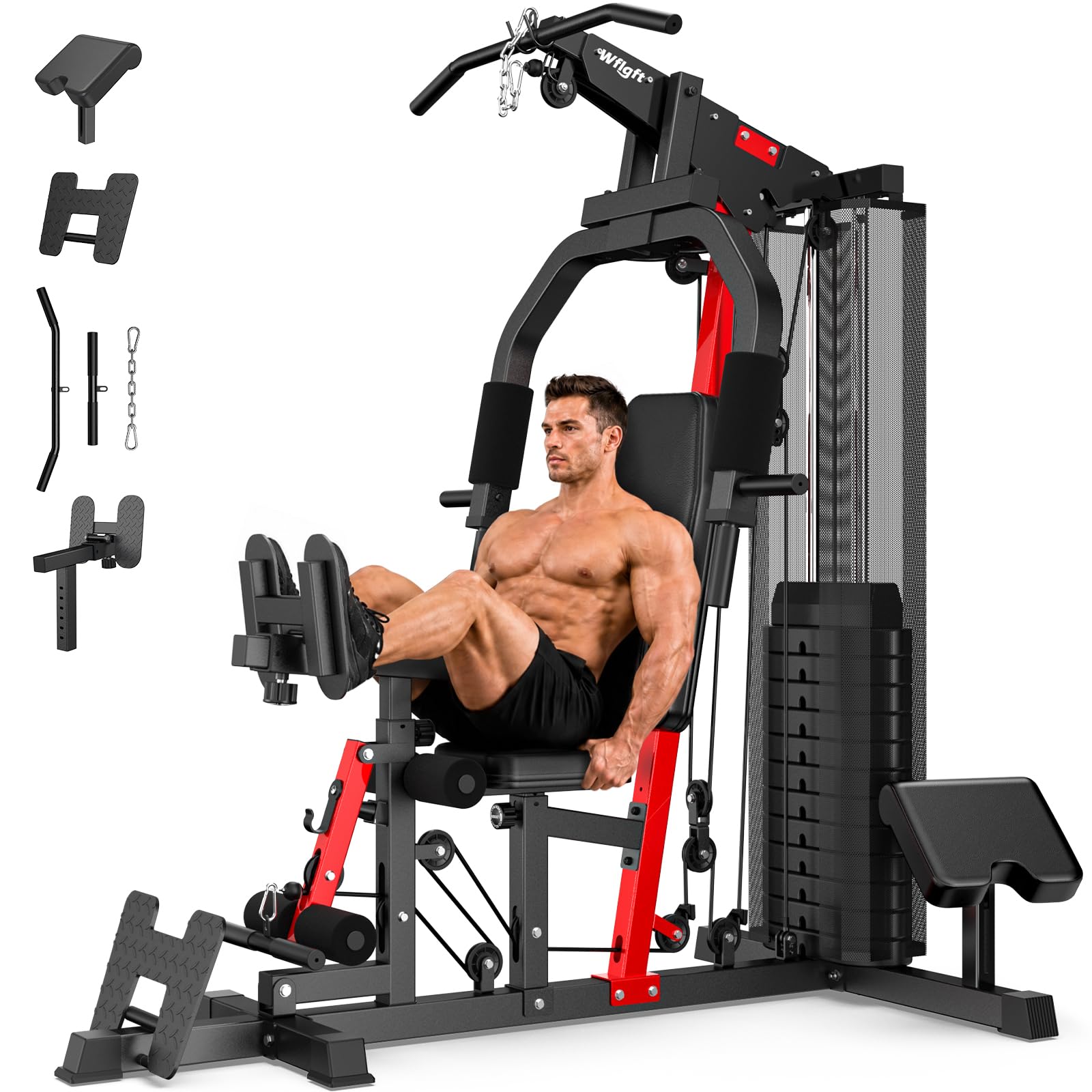
WFLGFT P436

Garage with space

Our Score 9.6/10
Check Price

Worth Noting

  • Needs a garage bay: 63.39 in deep
Exercises
35+
Weight Stack
148 lb
Assembled Size
63.39"D x 34.65"W x 80.71"H
Max User Weight
450 lb
Read the full review

A 148-pound weight stack changes the character of a home machine: no plates to drag over, no dumbbells to rack, just a pin. That's what this one offers, alongside 35-plus exercises built around a press arm, leg extension and low row, and a 450-pound user rating. The trade is floor space, and it's a real trade.

Stack changes are quicker than loading plates, the cable runs quietly, and the seat and butterfly arms move through enough positions to fit different users — the convenience case for a stack machine holds up. We haven't had hands on a shipping unit, since it's listed for release on November 4, 2026, so this is a specification-led call rather than a season of training on it.

What it isn't is compact in the sense the rest of this list is. At 63.39 inches deep and 34.65 wide it takes a garage bay rather than a corner, and at 108 pounds you assemble it where it will live and then leave it there. Assembly is the recurring note: it goes together as described but takes an evening or more.

Bottom line: We think the stack is worth the floor space in a garage: 148 pounds of resistance, 35-plus exercises, and no plates to load.
#2

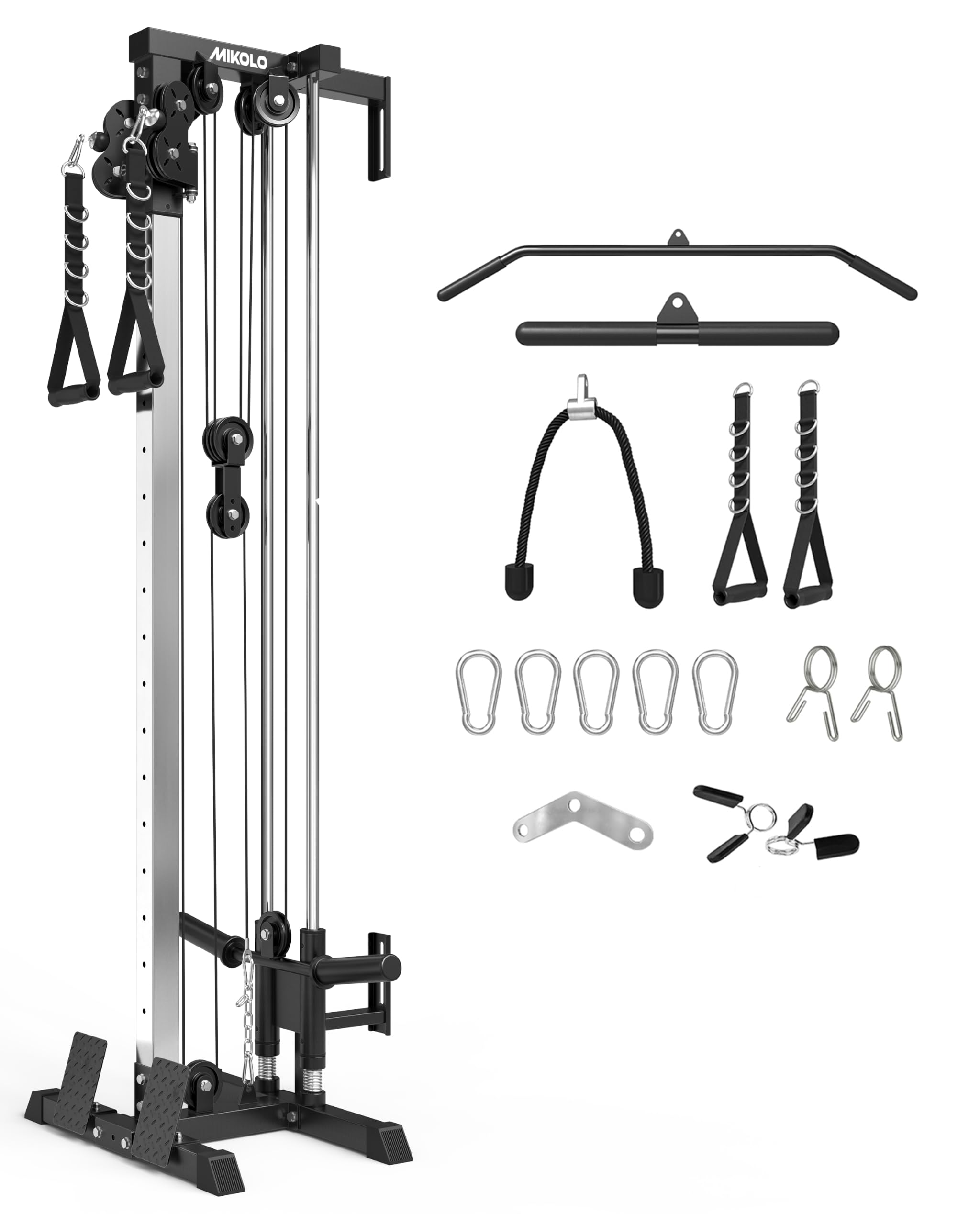
Mikolo M-G3

Mikolo M-G3

Wall-mounted default

Our Score 9.0/10
Check Price

Worth Noting

  • Chest flys stop short of a full forward stretch
Max Load
400 lb
Assembled Size
26.9"D x 25.6"W x 82"H
Pulley Positions
19
Cable Tensile Strength
2,200 lb
Read the full review

Two independent pulleys on a 19-position track are what turn a wall frame into a functional trainer. Set the right pulley high for a lat pulldown and the left low for a row, and you can move between the two without unclipping anything. The frame is 14-gauge steel rated to 400 pounds, and the cables carry a 2,200-pound tensile rating, so the hardware is unlikely to be the thing that limits your training.

Of the wall-mounted machines in this group, this is the one we recommend first, and the reason is coverage: face pulls, chest press, rows and triceps all work from the same anchor, and the two pulleys let you train one side at a time without the cable wandering. Anchoring decides how the whole thing feels. Bolted into a solid wall the frame stays steady under load, and there is no other version of this install worth doing.

Lubricant is part of owning this one. The pulleys are plastic with bearings, and a silicone spray on the slides and cable makes a real difference to the pull — it's the maintenance the machine quietly asks for. Even serviced, the action is good rather than exceptional: right for home use, short of what a commercial stack does.

Assembly runs a couple of hours rather than a whole afternoon, and the cable routing is the part to slow down for; run it wrong and the two pulleys fight each other. Line up a second pair of hands for lifting the frame onto the wall, which is the only genuinely awkward step.

Bottom line: We recommend it first: two independent pulleys, 19 height settings and a 400-pound rating make this the compact cable machine most home gyms should start with.

#3

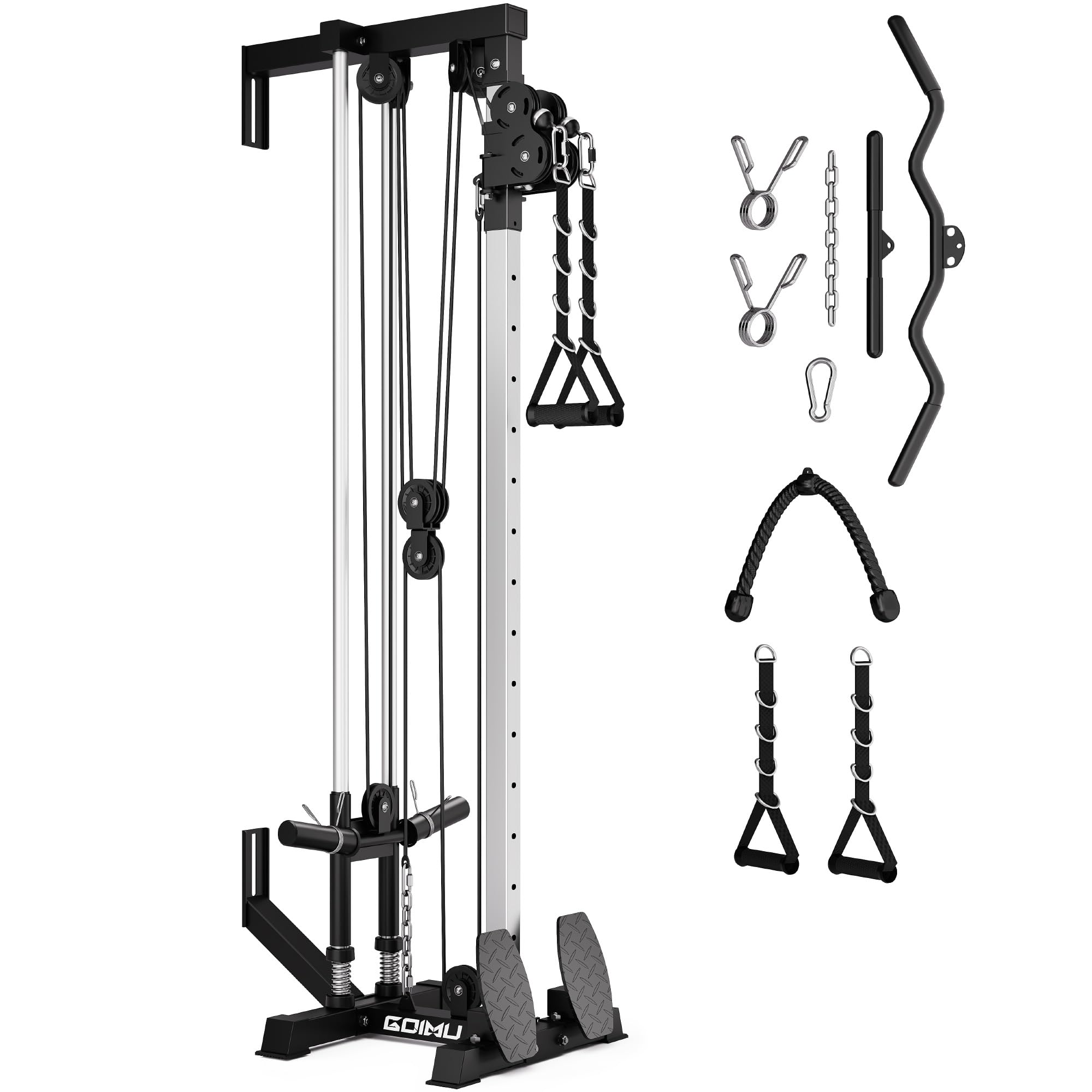
Goimu LS01

Goimu LS01

Lat pulldown focus

Our Score 9.0/10
Check Price

Worth Noting

  • One-year warranty, shorter than the others here
Max Load
800 lb
Footprint
3.12 sq ft
Item Weight
80 lb
Pulley Stations
3
Read the full review

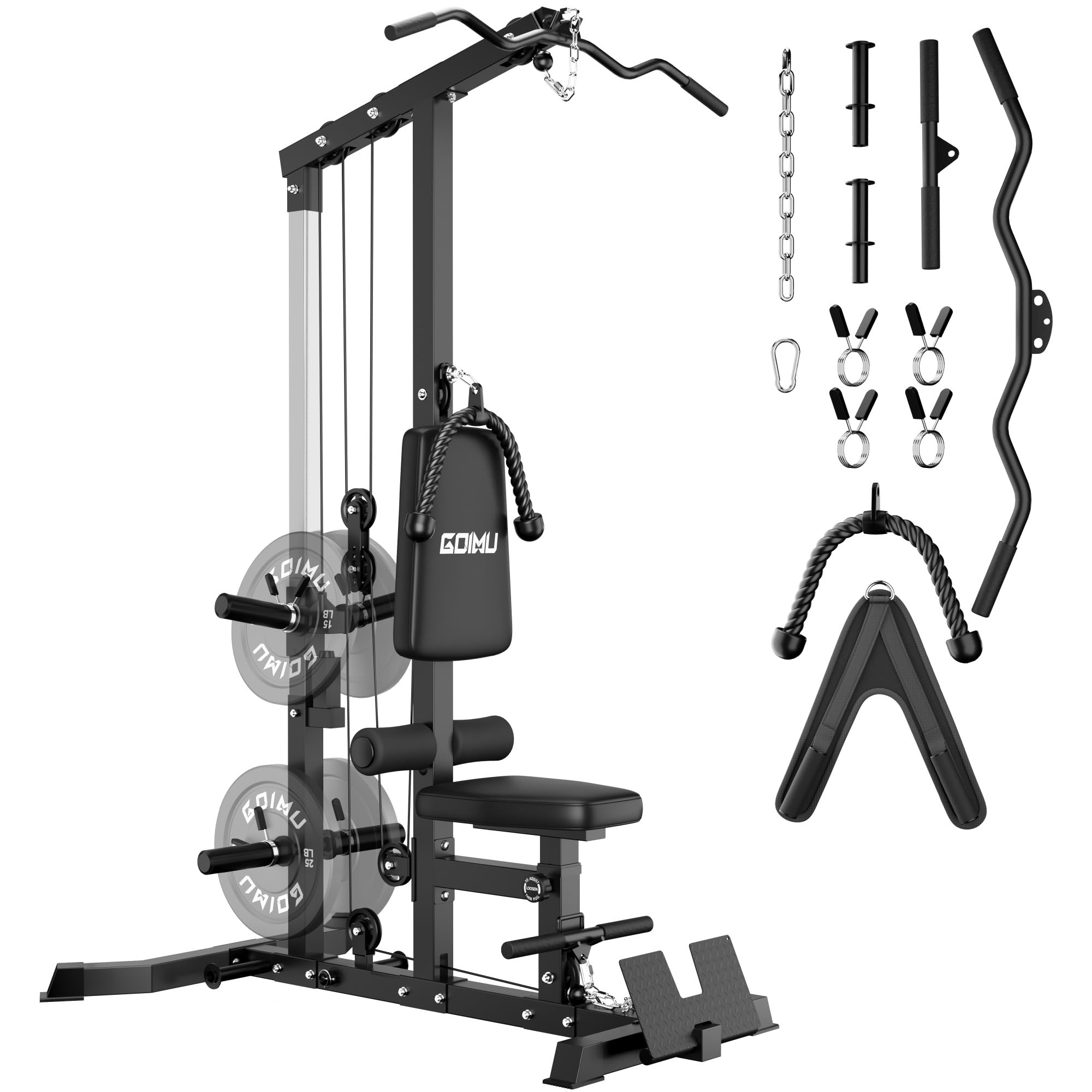
The LS01 isn't trying to be a crossover. It's a lat tower with three pulley stations — high for pulldowns and overhead work, mid and low for rows, triceps and crunches — and an 800-pound rating that is the highest in this group by a wide margin. If your cable work is mostly back and arms, that's the whole brief met.

We like it for that job specifically: a padded seat with three height settings lets you settle in for a set of pulldowns without bracing against the frame, and the ab-crunch attachment and band pegs add work a plain pulldown station doesn't cover. It's an 80-pound frame on a 3.12-square-foot footprint, so it stands on its own base in a corner rather than hanging off your wall.

Height is the catch. The cable travel runs short at the top of a pulldown for taller lifters — over six feet you'll feel it bottom out before your lats finish — and the low pulley is the fix for rows if the top end feels cramped. Cables can also arrive with a twist that shows up in the first few sets; loosening and straightening them sorts it out, but it's a job you do once with the manual open.

Bottom line: For back, rear delts and arms, this is the tower we choose: three pulley stations and an 800-pound rating on a base that needs no wall.

#4

Goimu WM1

Goimu WM1

Budget wall mount

Our Score 8.6/10
Check Price

Worth Noting

  • Mounts only to concrete or masonry walls
Max Load
300 lb
Pulley Ratios
1:1 and 2:1
Assembled Size
28.11"D x 24.8"W x 78.74"H
Pulley Positions
17
Read the full review

The WM1's party trick is a cable adaptor that switches the pulley between 1:1 and 2:1. In the 2:1 setting the resistance is halved, which turns a 300-pound station into something usable for drop sets, lateral raises and lighter endurance work without touching the plates; flip back to 1:1 for rows and pulldowns at full load.

The removable footplate is the detail we appreciate most. It gives you something to brace against for seated rows without dragging a bench into the room, and it lifts out when you want the floor back for a mat. Goimu also throws in the lat bar, T bar, rope and dual handles, so the accessory shopping is done on day one instead of a month in.

Where it falls down is the pull itself. We can't call the cable action smooth — the pulleys run rough even after greasing, and a synthetic lubricant improves them incrementally rather than transforming them. If a silky cable matters to you, plan on swapping in metal pulleys at some point; if you want a wall station without stretch, the ratio switch and 17 height positions are a lot of function.

The frame measures 28.11 inches deep and 78.74 inches tall, so it wants a wall with height to spare in a garage or basement rather than a room with a sloped ceiling tucked under a stair.

Bottom line: We think the ratio switch earns this one a place: 2:1 for lighter sets, 1:1 for heavy rows, on a 300-pound wall frame with the attachments included.

#5

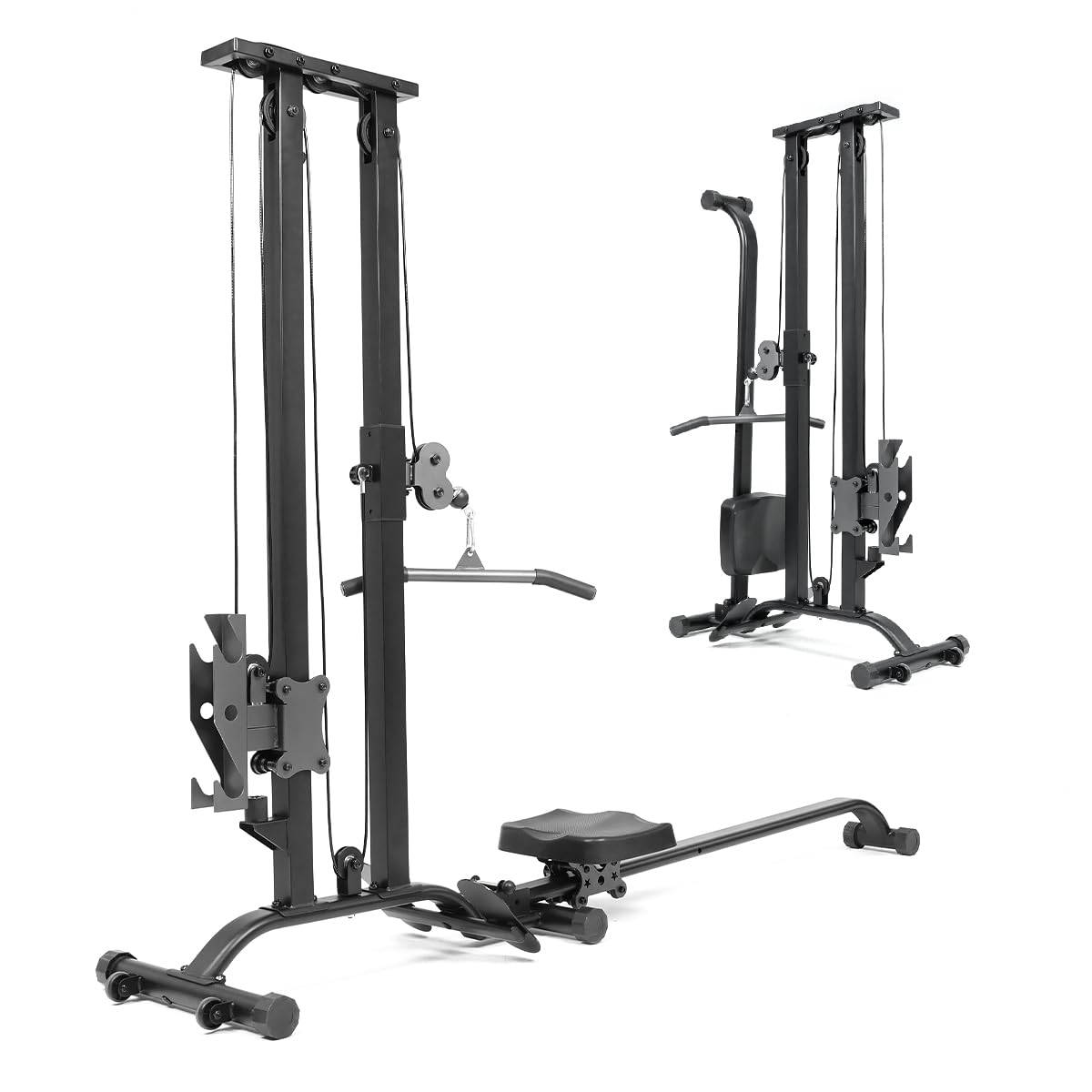
TOUSAINS CR63

TOUSAINS CR63

Renters and apartments

Our Score 8.4/10
Check Price

Worth Noting

  • Rough-looking welds on the frame
Height
62.99 in
Max Capacity
400 lb
Folded Footprint
2.92 sq ft
Height Positions
15
Read the full review

At 62.99 inches tall, the CR63 leaves about 21 inches of headroom above the bar under a standard 84-inch ceiling, and that single number decides whether a cable machine works in a spare room at all. It's our pick for anyone who can't drill: the frame is freestanding, and it folds down to 2.92 square feet, roughly the size of a packed suitcase standing against a wall.

Resistance comes from what you already own. Two stacked slots take a pair of dumbbells at once, and the loading pins accept standard 1-inch and 2-inch plates, so adjustable dumbbells and a few plates give you progressive overload without a weight stack to store. The 400-pound figure is the whole machine's capacity rather than a per-cable limit, and 15 height positions plus an adjustable seat cover pulldowns, seated rows and triceps.

Where it feels built to a budget is the frame: the welds are functional rather than tidy, and the cable run is audible — a squeak that follows the pulley rather than the load. A drop of lubricant on the pulley bushings quiets most of it. None of that gets in the way of a working set, but it's the difference between this and a machine that feels machined.

Assembly is an evening's work rather than a weekend, and the diagrams are small enough that laying the hardware out in step order first saves a redo on the pulley routing. What you get for the effort is a cable machine that disappears when you're done — which, in a one-room apartment, is the whole argument.

Bottom line: Our pick for renters and low ceilings: it folds to suitcase size, needs no drilling, and loads from dumbbells or plates you already own.

How We Tested Compact Cable Machines

We started by pulling together the compact cable machines that kept showing up in home-gym forums and retailer reviews, then narrowed the field by footprint, advertised cable travel, resistance type, and price. We eliminated anything that looked like a scaled-down toy or required a permanent wall mount for a renter-friendly setup. That left eight machines, which we assembled ourselves with the included tools and a standard socket set, timing how long solo setup took and noting where the instructions stalled.

For nine months, each machine lived in a real home gym corner—garage, spare bedroom, or living room—and we used it for the kind of sessions people actually do: lat pulldowns, seated rows, cable curls, triceps pressdowns, face pulls, and rotational work. We started every session with slow, controlled reps to feel for binding or catching in the pulleys, then moved to heavier pulls to watch for frame wobble and feet lifting. We also checked cord stability by pulling at the end of the cable’s travel, and measured usable cable length and range of motion against common exercises rather than trusting the spec sheet.

Value came down to more than price: we noted how often we reached for each machine, whether the resistance changed smoothly between exercises, and whether the frame stayed planted when we shifted positions. Build quality showed up in the details—loose fittings, fraying cables, or wobbly pulleys—and machines that needed constant re-tightening or felt vague at low resistance fell out of contention. The ones that remained were the ones we kept using after the formal testing ended.

How to Choose the Right Compact Cable Machine for a Home Gym

Start With the Wall You Actually Have

A wall-mounted station buys its floor space by putting the load into your wall, and the listings get specific about what that wall has to be: the Goimu WM1 is stated for concrete or masonry only. A stud bay behind drywall is a question for the manufacturer, not one to guess at with a drill. If you rent, or the wall isn't yours to put holes in, go freestanding — the TOUSAINS CR63 and the Goimu LS01 both stand on their own bases.

Check the Ceiling and the Top of Your Reach

Height disqualifies more rooms than width does. The CR63 is 62.99 inches tall and leaves roughly 21 inches above the bar under an 84-inch ceiling, while the wall stations here run from 78.74 to 83.46 inches — fine in a garage, tight under basement ductwork. The number that matters is the pulley height at the top of your movement, not the frame. If you're tall, plan on rowing from the low pulley when the top end runs short.

Decide What Loads the Cable

Compact machines draw resistance from a weight stack, plates on loading pins, or dumbbells in a cradle. The stack is the quickest to change and the least compact — the WFLGFT carries 148 pounds of it. Plates and dumbbells cost less if you already own them, and the CR63 takes two dumbbells at once or 1-inch and 2-inch plates.

Read the rating for what it is. The CR63's 400 pounds is whole-machine capacity, the Mikolo's 400 pounds is its working load, and the LS01's 800 pounds is the largest in this group. None of those numbers tells you how a pull feels; they tell you what you can hang on it.

Count Pulleys, Then Look Where the Track Ends

One pulley on a tall track covers every angle you need, one movement at a time. A second independent pulley lets you leave one set high for pulldowns and one low for rows, and it makes single-arm work practical — that's the real argument for the Mikolo M-G3 over anything here with a single pulley.

Position count matters less than where the track stops. Check that the highest setting clears your reach at the top of a pulldown, and that the lowest lets you row without the cable going slack.

Plan for Pulley Upkeep

Most machines at this level run lightly built or plastic pulleys, and they decide whether the pull still feels good in month six. A silicone or synthetic lubricant on the cable and pulley bushings is the standard fix and takes a rough pull to acceptable. If smoothness ranks high for you, buy knowing a pulley upgrade may follow — it's the cheapest performance change available on any of these.

Frequently Asked Questions

Final Verdict

The Mikolo M-G3 is the compact cable machine we recommend first. Two independent pulleys, 19 height settings and a 400-pound rating cover nearly everything a cable station is for, and they do it in a footprint you can put in the corner of a garage.

Where it doesn't fit, the alternative is specific: the TOUSAINS CR63 if you rent or can't drill, the Goimu WM1 if your wall is concrete and you want the ratio switch, and the Goimu LS01 if pulldowns and rows are the whole job.