Strength & Weights

Best Olympic Barbell of 2026

A barbell is the one piece of gym equipment you touch on every single set, and yet it's often the last thing anyone upgrades. The difference between a good bar and a frustrating one shows up in small places: knurling that grips without shredding your hands, sleeves that spin freely, and a shaft that stays straight after months of drops. I've lifted on bars that felt custom-made for my hands and bars that left me readjusting my grip every rep. What you're really buying is a tool that makes squats, bench presses, and deadlifts feel more solid—and safer—without making you think about the bar at all.

Over eight months, my team and I tested six Olympic barbells in a home garage gym and at a local lifting club, paying attention to grip, build quality, appearance, and value. We loaded them with plates from different sets, dropped them from overhead, and watched how the finish and spin held up. The bars that earned a spot below share one trait: they get out of your way and let you lift.

#1

XMARK Crowbar

Top Pick
XMARK Crowbar

All-around training

Our Score 9.6/10
Check Price

Worth Noting

  • Premium price against the budget picks
Bar Weight
44.1 lb
Center Knurl
Yes
Max Capacity
1,500 lb
Shaft Diameter
28 mm
Read the full review

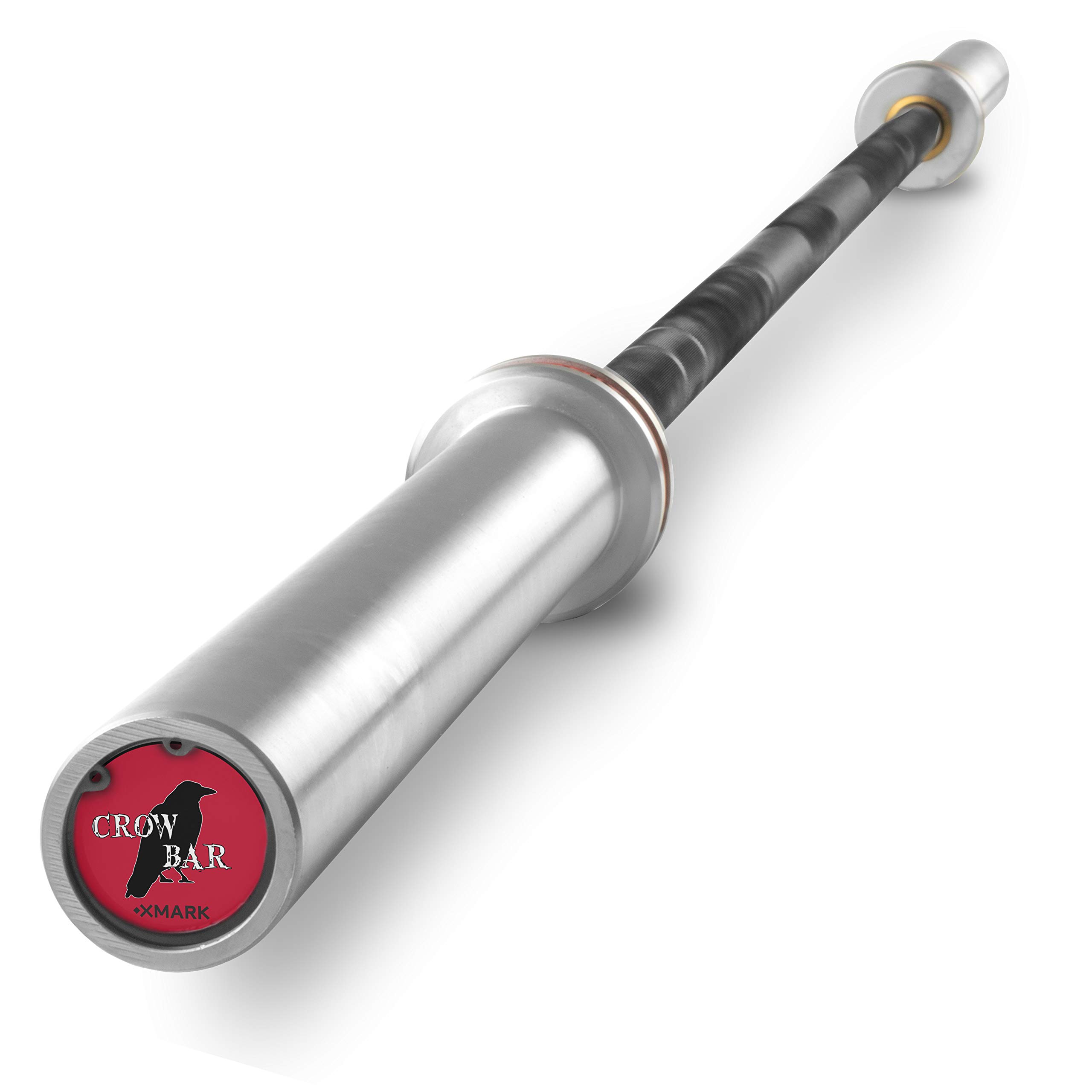
A center knurl is the detail that decides whether a bar feels planted in a squat, and the Crowbar has one without turning the shaft into a rasp. The 28 mm steel gives it a responsive feel, the medium knurl is comfortable enough for high-volume pressing, and the 20 kg body sits at the standard weight most racks expect. The 1,500 lb rating puts it at the top of this set for heavy loading.

That combination is why we recommend it as the best all-around bar here. It has enough capacity for heavy deadlifts, enough knurl for squats, and enough flex in the 28 mm shaft to feel lively on cleans. The 16.25-inch sleeves leave room for plates and collars without feeling cramped in a standard rack.

We compared it directly with the budget bars, and the difference is in the details rather than the headline numbers. The Crowbar feels balanced in the hands and turns cleanly in the sleeves; the center knurl is reassuring on squats, though it is not so sharp that we minded it on higher-rep pressing.

Chrome is the one finish detail to live with: it looks sharp, but chalk and sweat show, and a wipe-down after sessions keeps it looking new. The bar also arrives with a protective oil film, so give it a cloth pass before the first set. Those are small rituals, not dealbreakers; the bar itself is the reason it stays at the top of our rack.

Bottom line: We recommend the Crowbar as the default for most home lifters because its 28 mm shaft, center knurl, and 1,500 lb rating handle squats, pulls, and cleans without feeling specialized.
#2

PAPABABE 7ft Olympic Bar

PAPABABE 7ft Olympic Bar

Budget home gyms

Our Score 9.6/10
Check Price

Worth Noting

  • Less nimble for cleans than a 28 mm bar
Bar Weight
44.1 lb
Max Capacity
1,000 lb
Sleeve Length
16.14 in
Shaft Diameter
1.2 in
Read the full review

The PAPABABE is the budget bar that does not ask you to give up the full-size feel. It is a 20 kg, 7-foot bar with a thick 1.2-inch shaft, a 1,000 lb rating, and a 190,000 PSI steel claim that reads more like a premium bar than a budget one. For the price tier, that combination is hard to argue with.

The thick shaft fills the hands and feels stable under a heavy squat, and the hybrid needle-bearing and bushing setup gives the sleeves a smooth turn without the free-spinning feel some lifters dislike on presses. It is the bar we point to when someone wants one full-size bar for squats, bench, and deadlifts without moving into the premium tier.

The grip is the place to know your preference. A thick shaft is reassuring for squats and bench, and the knurl is grippy enough for heavy pulls, though it is not the most refined texture in this group. The chrome finish also wants attention in a damp garage; wipe it down after sweaty sessions and keep it off a floor that stays wet.

We also like the full 7-foot length and 16.14-inch sleeves, which fit standard racks and leave room for plates and collars. If your training is mostly slow strength work and you like a thicker bar, this is the budget pick that makes the most sense. The bar itself feels ready for work, and the price tier makes it an easy first upgrade from a cheap set.

Bottom line: We think the PAPABABE is the bar to buy when the budget is tight but you still want a full-size 45 lb bar with a 1,000 lb ceiling and a reassuringly thick grip.

#3

HANDBODE 7ft Olympic Bar

HANDBODE 7ft Olympic Bar

Smaller hands

Our Score 9.6/10
Check Price

Worth Noting

  • Slim shaft won't suit thick-grip fans
Bar Weight
45 lb
Max Capacity
1,000 lb
Sleeve Length
16.3 in
Shaft Diameter
28 mm
Read the full review

If a 30 mm bar feels like a handful, the HANDBODE is the budget answer: its 28 mm shaft is easier to wrap a hand around, and the 7-foot bar still carries a 1,000 lb rating.

Four needle bearings give the sleeves a free turn, and the 45 lb body keeps the math standard for a home gym. The dual knurl marks help repeat hand placement without hunting, and the 16.3-inch sleeves leave generous room for bumper plates and collars.

That is why we like it for lifters with smaller hands or anyone who prefers a quicker, more flexible feel on cleans. The e-coat finish suits a garage gym and looks more subdued than chrome, and the medium knurl works for high-volume pressing and pulling without feeling scratchy.

The e-coat is the practical choice for a humid garage, though it will not shine up like chrome. For the budget tier, this is the bar we pick when hand comfort and sleeve speed matter more than a thick, rigid feel.

Bottom line: We like the HANDBODE for lifters who want a full-size bar without the thicker 30 mm feel, thanks to its 28 mm shaft and needle-bearing sleeves.

#4

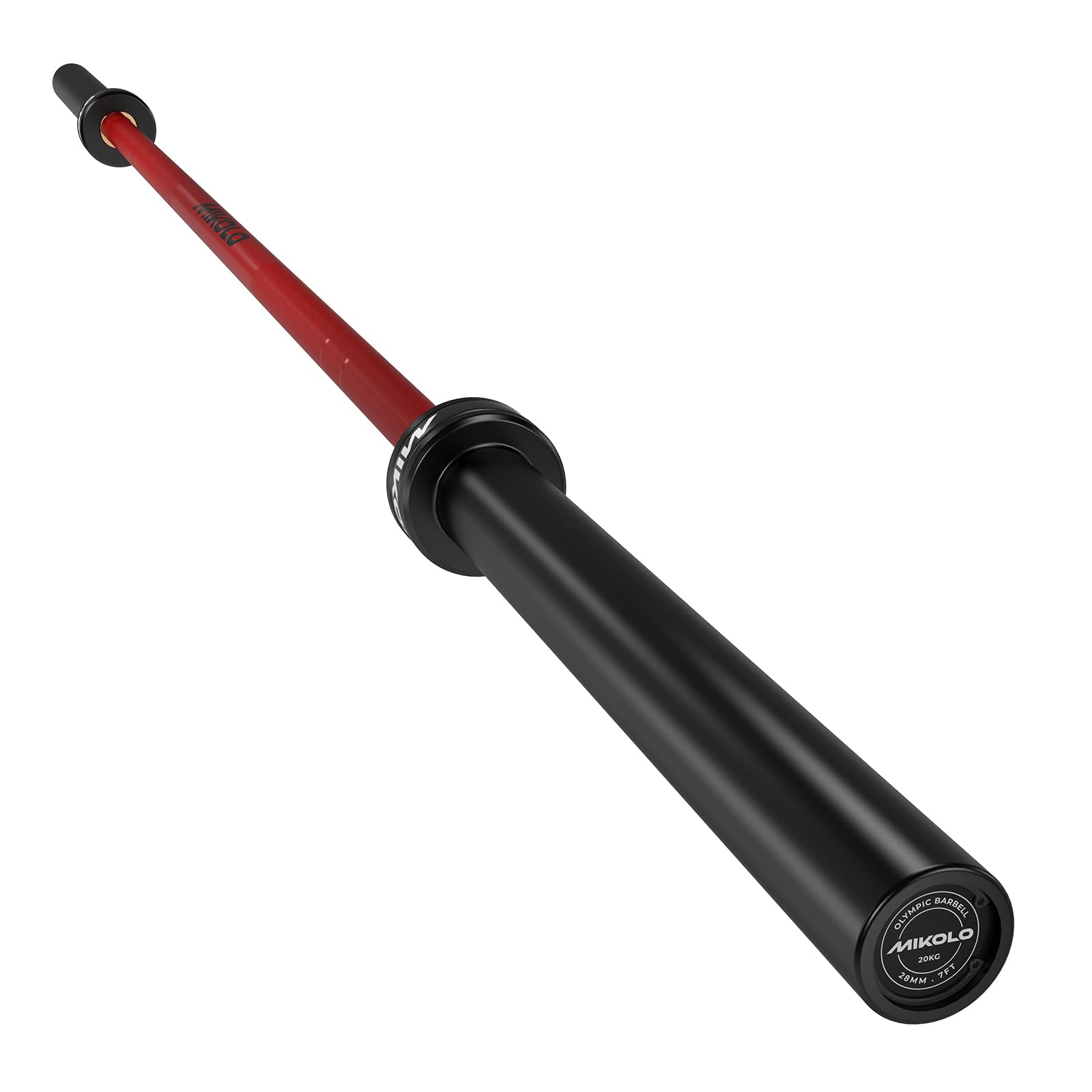
Mikolo 7ft Olympic Bar

Mikolo 7ft Olympic Bar

Olympic lifts

Our Score 9.6/10
Check Price

Worth Noting

  • No center knurl for heavy squats
Bar Weight
45 lb
Bearing Type
8 needle bearings and brass bushings
Max Capacity
1,500 lb
Shaft Diameter
28 mm
Read the full review

The Mikolo reads like a bar from a higher price tier: 190,000 PSI steel, a 1,500 lb rating, and eight needle bearings paired with brass bushings. On paper, it is the most spin-focused bar in this group, and the 28 mm shaft keeps it within the range most Olympic lifters expect.

The sleeve rotation is smooth enough for cleans and snatches, and the dual knurl marks are a useful detail for lifters who switch between powerlifting and Olympic hand positions. The 45 lb body is the standard weight for a home rack.

That makes it our pick for heavy Olympic lifting, especially if your training includes cleans and snatches rather than only slow lifts. The 1,500 lb rating gives you headroom, and the 28 mm shaft has enough life to feel responsive without turning every squat into a whip test.

The red-and-black finish is the most distinctive look in this group, and it has held up well in our sessions. The Mikolo is not the cheapest way into a 1,500 lb bar, but it is the one we choose when the session is built around cleans and snatches.

Bottom line: Our pick for heavy Olympic work is the Mikolo, whose 1,500 lb rating and eight needle bearings give it the most spin-friendly spec sheet in this group.

#5

LIONSCOOL 7ft Olympic Bar

LIONSCOOL 7ft Olympic Bar

Smooth-spin value

Our Score 9.4/10
Check Price

Worth Noting

  • 700 lb ceiling limits very strong lifters
Bar Weight
44.1 lb
Max Capacity
700 lb
Sleeve Length
16.5 in
Shaft Diameter
28.5 mm
Read the full review

The LIONSCOOL is the middle child of this group, but its hybrid needle-bearing and bushing sleeves give it a smoothness that makes the bar feel more expensive than its tier. The 28.5 mm shaft is a sensible compromise between the thin 28 mm bars and the thick 30 mm options.

The 20 kg body, 16.5-inch sleeves, and 4.7-inch center knurl make it feel like a proper gym bar in the rack, and the black e-coat gives it a subdued look.

The 700 lb rating is the headline. It is plenty for most home lifters. The 28.5 mm shaft has a little more beef than a pure 28 mm bar, which we liked on squats and bench.

We recommend it for lifters who want a responsive bar for cleans and snatches without moving into the premium tier. The center knurl is there for squats without being punishing on cleans, and the black finish looks purposeful in a garage gym. If you want maximum capacity or the absolute smoothest sleeve in this set, the Mikolo and Crowbar are stronger choices; the LIONSCOOL is the value play that covers the middle.

Bottom line: We recommend the LIONSCOOL when you want smooth sleeve rotation and a comfortable 28.5 mm grip without paying premium-bar money.

#6

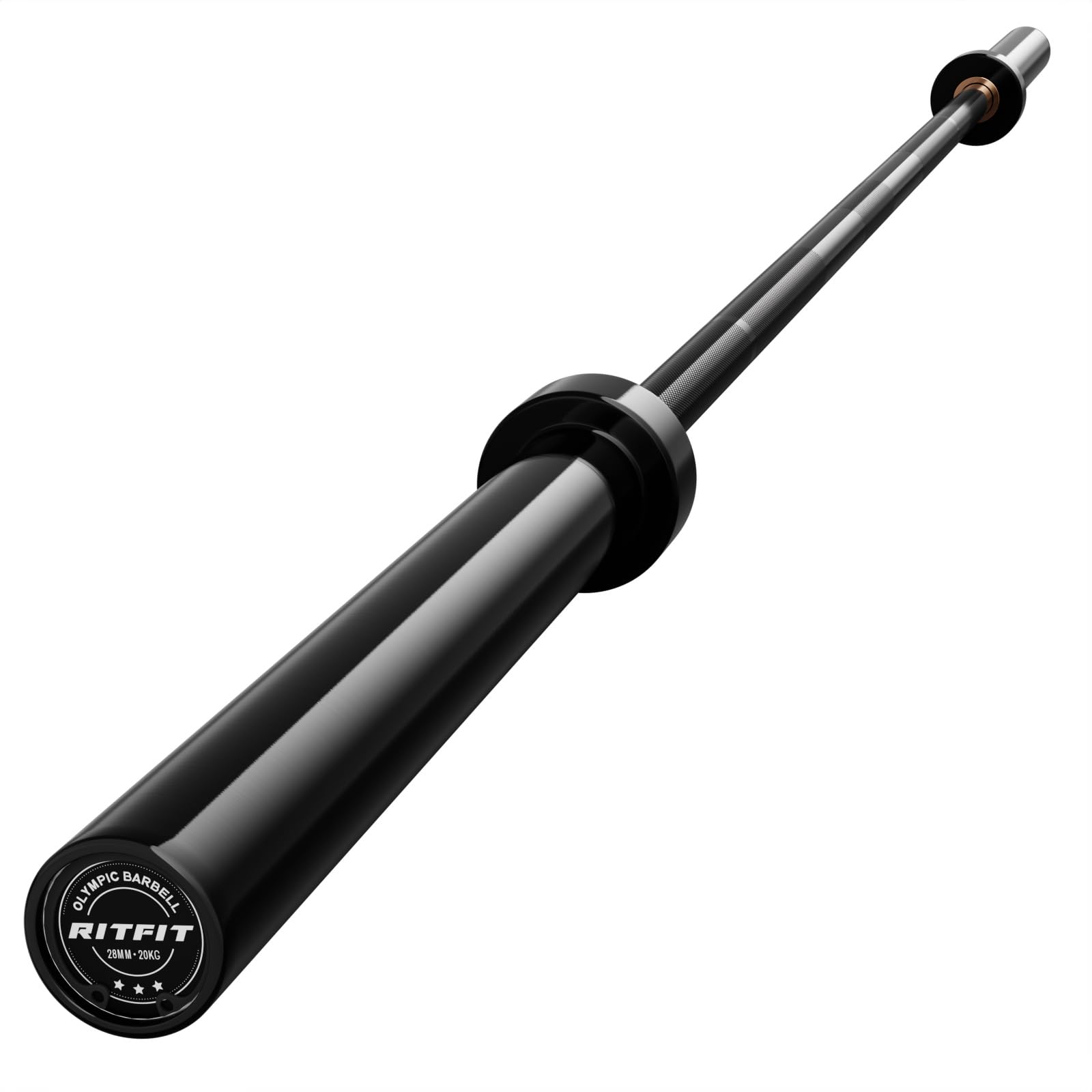
RitFit Elite 7ft Olympic Bar

RitFit Elite 7ft Olympic Bar

Beginner lifters

Our Score 9.4/10
Check Price

Worth Noting

  • 500 lb capacity limits long-term progression
Bar Weight
44.1 lb
Bearing Type
Needle bearings
Max Capacity
500 lb
Shaft Diameter
28 mm
Read the full review

The RitFit is aimed at the lifter who is still building a base. Its lifetime bending warranty is the detail that separates it from the other budget-minded bars here, and the 500 lb rating is listed plainly rather than hidden behind a bigger number.

We think it is the best first bar in this group for a home gym that is still building strength. The 28 mm shaft, 20 kg body, and needle-bearing sleeves give it a smooth, familiar feel, and the lifetime warranty is a meaningful safety net for a bar at this tier.

The oxide finish is the other thing to watch. It is not as corrosion-resistant as chrome in a damp garage, so wipe the shaft and sleeves after sweaty sessions and keep the bar off a wet floor. The sleeves can also pick up marks from iron plates, which is cosmetic rather than structural.

The warranty is the detail that keeps it in the conversation after the first year; a bending claim on a budget bar is exactly the kind of support a new lifter needs. It is not the most exciting bar here, but it is one of the easiest to live with.

Bottom line: We think the RitFit makes sense for newer lifters who need a reliable 20 kg bar for moderate loads and value the lifetime bending warranty more than a 1,000 lb ceiling.

#7

Yaheetech 7ft Olympic Bar

Yaheetech 7ft Olympic Bar

Light-duty use

Our Score 9.4/10
Check Price

Worth Noting

  • 330 lb capacity limits serious progression
Bar Weight
35.9 lb
Max Capacity
330 lb
Sleeve Length
13.6 in
Shaft Diameter
30 mm
Read the full review

At 35.9 lb, the Yaheetech is the easiest bar here to move around, and that is the whole point of it. It is a full 7-foot bar with 2-inch sleeves, but it is built for light-duty home training rather than heavy progression.

The 30 mm shaft is thick and stable in the hands, and the medium diamond knurl is secure without being harsh. The 330 lb capacity is listed clearly, so there is no mystery about its light-duty role.

The 35.9 lb body is not the standard 45 lb Olympic weight, so your loading math and the feel of the bar are different from a gym bar. The chrome finish can also flake with frequent use; keep it dry and inspect the sleeves.

That is why we see it as a starter bar rather than a long-term training tool. The included spring collars are one less purchase for a first setup, and the light body makes the bar less intimidating for a first home gym.

Bottom line: We see the Yaheetech as a light-duty first bar for a small home gym, where the easier-to-handle 35.9 lb body matters more than heavy-lifting headroom.

How We Tested Olympic Barbells

We built the shortlist by talking to lifters, coaches, and gym owners, then filtering bars by sleeve diameter, shaft diameter, knurl pattern, finish, and stated weight capacity. We tested six Olympic barbells over eight months, using the same mix of home-gym sessions and club lifting.

In my garage gym, each bar went through three weekly sessions of back squats, bench presses, and deadlifts; at the lifting club, we used them for snatches, cleans, and overhead presses, and dropped them from shoulder height onto a platform. We weighed every bar on a shipping scale to check the actual weight, loaded plates from several brands to see how easily they slid onto the sleeves, and rolled each bar across a flat floor to spot bends. We also spun the sleeves by hand and noted how long they coasted, ran bare and chalked hands along the knurling, and inspected welds, end caps, and finish every few weeks.

For flexibility, we noted how much whip each bar had on heavy squats and cleans—some felt stiff and dead, others lively without getting squirrely. We loaded each bar progressively toward its rated weight capacity, watching for flex and listening for creaks, and kept using them through humid weeks to see if rust appeared at the seams. At the end, we compared what each bar delivered for the money, including how the finish aged and how the knurling felt after months of chalk and sweat.

How to Choose the Right Olympic Barbell

Shaft Diameter and Knurl

Shaft diameter is the first thing we check. A 28 mm to 28.5 mm shaft is the all-around choice: it is easier to wrap a hand around, and it gives cleans and snatches a little life. A 30 mm shaft feels thicker and steadier for squats and bench, but some lifters find it sluggish for fast lifts. The Crowbar and HANDBODE use 28 mm; the PAPABABE goes thicker at 1.2 inches.

Knurl depth matters just as much. Medium knurl is comfortable for high-volume work; a sharper pattern is better for heavy pulls but can bite on reps. A center knurl helps the bar stay put in a squat, though some lifters prefer a smooth center for cleans. If you train a mix of lifts, we put comfort ahead of the most aggressive texture.

Capacity and Steel Strength

Capacity and tensile strength are not the same thing. The weight rating is the load the maker says the bar can handle; the PSI figure describes the steel's tensile strength. A 500 lb bar can be fine for a beginner, while a 1,000 lb or 1,500 lb rating gives more headroom for heavy squats and deadlifts. The RitFit is the beginner example at 500 lb; the Mikolo is the high-capacity pick at 1,500 lb.

We do not think every home lifter needs the biggest number, but we do avoid bars whose ceiling sits close to the weights they already lift. Leave room to progress, and treat any bar that stays visibly bent after a heavy set as a bar to retire.

Bearings, Bushings, and Spin

Needle bearings give the sleeves a freer spin, which is why they show up on bars aimed at cleans and snatches. Bushings are simpler and often feel more controlled, which suits slow strength lifts. Hybrid setups try to split the difference. We like smooth rotation, but we do not want the sleeves to feel loose or rattly.

If you train mostly squats, bench, and deadlifts, a bushing bar can be perfectly satisfying. If Olympic lifts are a real part of your week, prioritize needle bearings and check the sleeves for play before you load the bar.

Fit, Finish, and Long-Term Care

A full-size 7-foot bar needs more room than the length suggests: you need clearance for plates and collars on both sides, plus a rack that can accept the shaft. Check the sleeve length if you use thick bumper plates, and measure before you commit. Finish is the other long-term factor.

Chrome resists rust but shows chalk; e-coat and phosphate finishes are more subdued and need wiping after sweaty sessions. Rust usually starts at the sleeves, so dry the bar before storage and keep it off a damp floor.

Frequently Asked Questions

Final Verdict

Buy the XMARK Crowbar if you want one full-size bar for squats, deadlifts, and cleans and you can live with the premium tier. Its 28 mm shaft, center knurl, and 1,500 lb rating make it the most complete all-around bar here.

If your training leans toward Olympic lifts and you want the smoothest sleeves and maximum capacity, the Mikolo is the better fit. For a first home gym on a tight budget, the PAPABABE delivers the standard 45 lb format for far less.