Strength & Weights

Best Power Rack Smith Machine Combos of 2026

A power rack and a Smith machine solve two different problems: one gives you free-weight squats and presses, the other lets you push to failure without a spotter. Put both in one frame and you get a full gym without surrendering half the garage. What you don't automatically get is a rack that stays planted when you rack a heavy bar and a carriage that glides instead of grinding — and neither of those shows up on a spec sheet.

We built and trained on six of these combos over the past eight months, and the ones that earned a spot got the fundamentals right before the extras. Quick advice for a first-time buyer: the headline weight capacity is marketing, but the upright hole spacing and the feel of the Smith carriage are what you'll live with every session. Assembly is a weekend, not an afternoon, so budget for it. The picks below are sorted by what each one is actually good at.

#1

pooboo P43

Top Pick
pooboo P43

All-around home gym

Our Score 9.8/10
Check Price

Worth Noting

  • Cable system rated to 1,000 lb
  • Tall 82.6-inch frame needs ceiling check
Max Load
2,000 lb
Footprint
62.9"D x 43.3"W x 82.6"H
Cable Capacity
1,000 lb
Machine Weight
417 lb
Read the full review

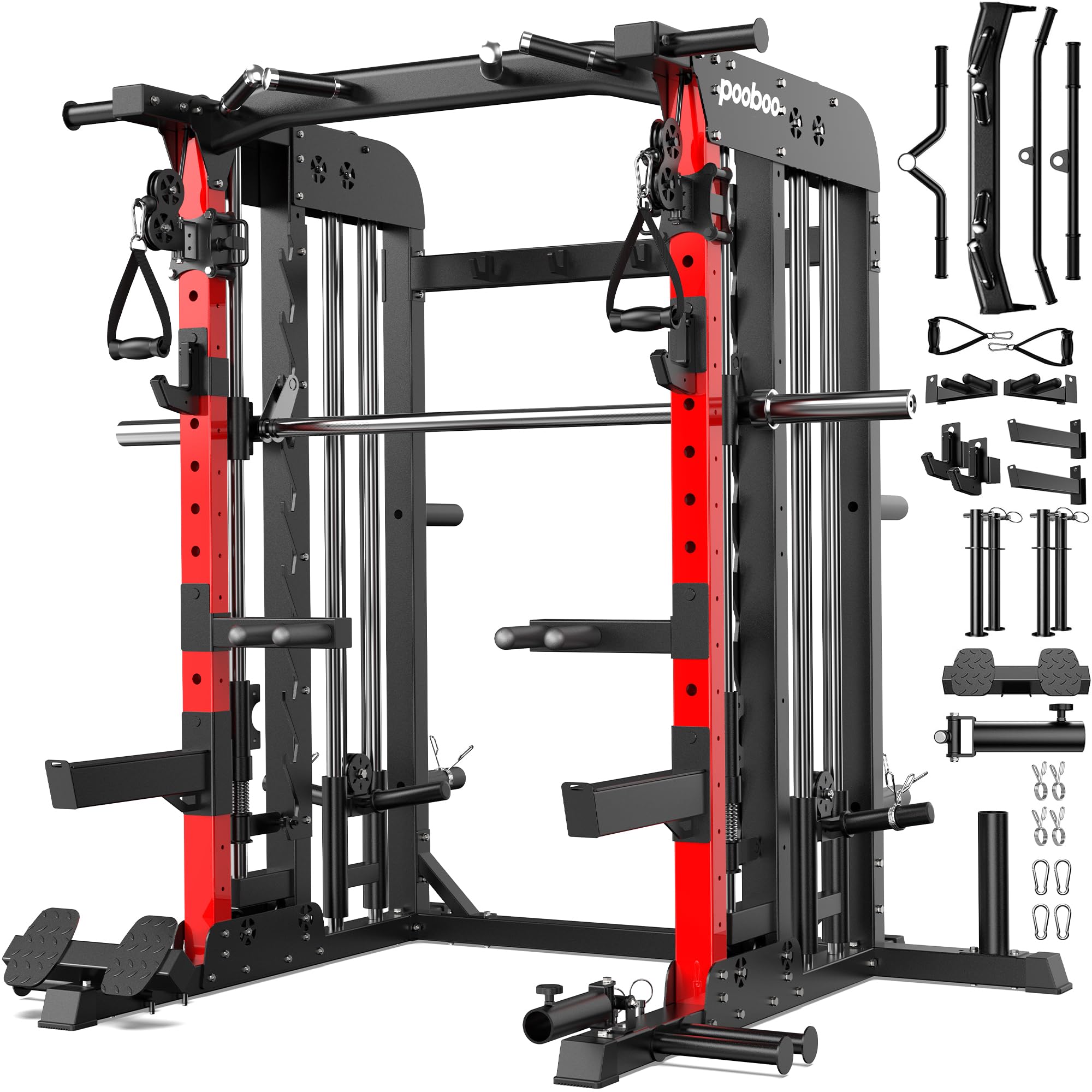
A 2,000-pound frame and a separately rated cable system in a 43.3-inch-wide package is the balance we want from an all-in-one, and the P43 is the combo we keep recommending because of it. The frame and pulley ratings are separated, which is the right way to read a machine like this: your squat load hangs on the rack, while your lat pulldowns and cable flies hang on the cables.

The attachment set is more than filler. You get J-hooks, safety spotter arms, dip bars, cable handles, and a lat bar, so the first week does not depend on another order. The dual-pulley crossover is the part we used most: it turns a squat rack into a cable station without making the footprint feel like a commercial gym.

At 417 pounds, the P43 feels planted, and the 62.9-inch depth is manageable for a full cage. Assembly is an afternoon project, not a 45-minute build; sort the hardware before you start and leave the frame loose until everything is lined up.

What earned it the top spot is the lack of a weak station. The Smith bar, the free-weight rack, and the cables all feel like they belong to the same machine, rather than one strong feature carrying two afterthoughts. The included dip bars and spotter arms mean you can start training the day it is built.

Bottom line: We recommend the pooboo P43 for most home lifters: it pairs a 2,000-lb rack and a compact 43.3-inch footprint with dual cables and a full attachment set.
#2

DONOW DN-DS938

DONOW DN-DS938

Two-lifter households

Our Score 9.2/10
Check Price

Worth Noting

  • 2:1 cable ratio limits heavy loads
Max Load
2,240 lb
Footprint
54.7"D x 78.58"W x 88"H
Cable Ratio
2:1
Weight Stacks
352 lb total
Read the full review

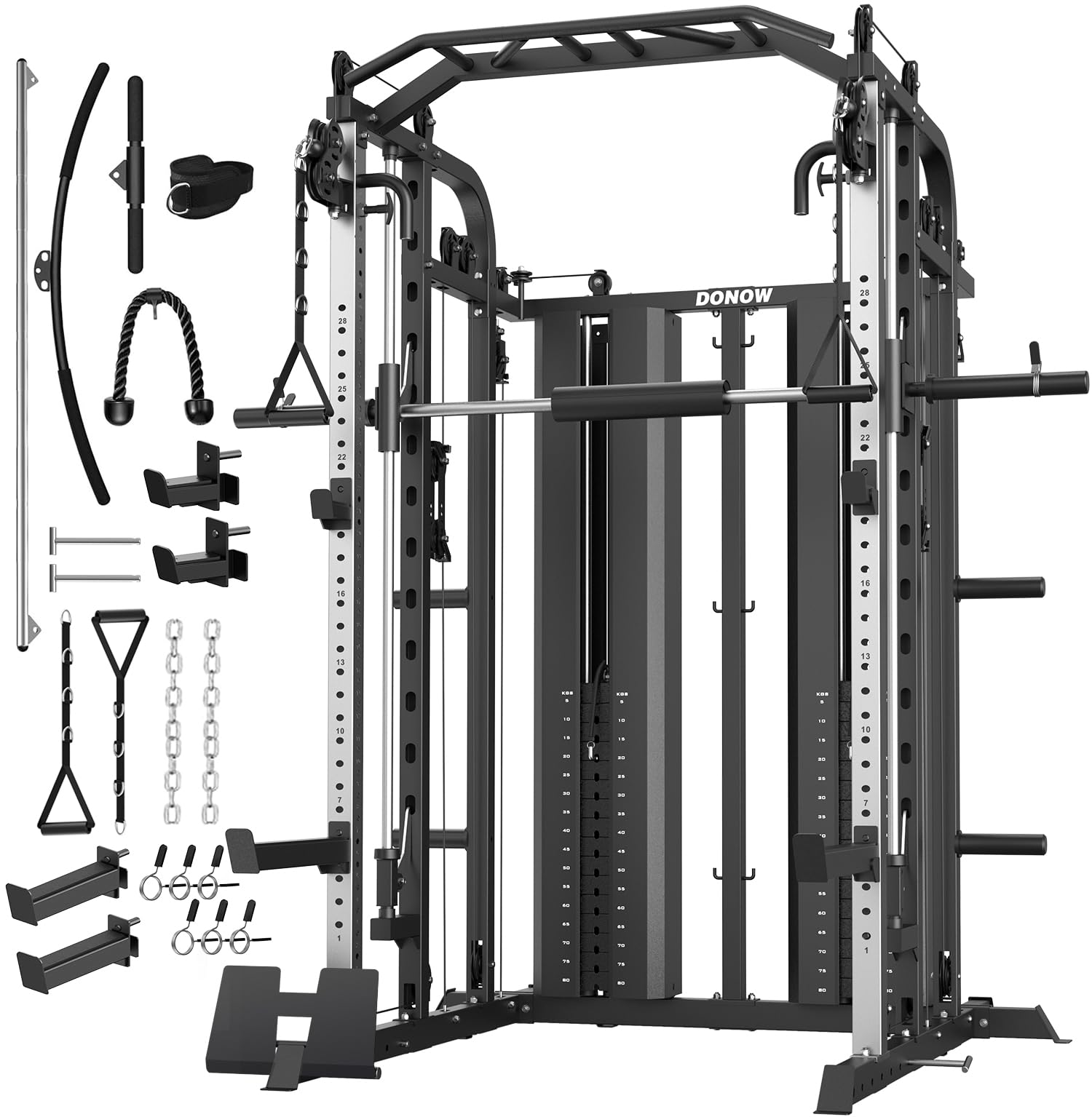
Two people, two cable stations, no plate stripping between sets. The DN-DS938 is built around that idea, with two independent 352-pound weight stacks and a Smith bar in one frame. That is a different job from most combos here, which are designed around one lifter moving between stations.

We like it most for couples or a busy garage gym because nobody has to wait for the other person to finish a set. The 2:1 cable ratio gives quick, smooth travel, and the stacks are enclosed in steel covers, so the machine looks tidier and keeps hands away from moving weight.

The 2,240-pound frame rating is the highest in this group, and the 54.7-inch depth is surprisingly manageable for a dual-stack machine. Width is the catch: 78.58 inches means a dedicated bay, not a corner you squeeze past. The Smith bar runs on linear bearings and feels stable under load, which matters when two people are sharing the rack.

For a household where training time overlaps, that shared station is worth more than another attachment. The shallow depth is the detail that makes the width easier to accept.

Bottom line: We recommend the DONOW DN-DS938 for households where two people train at once; its independent stacks and 2,240-lb frame make it the most capable shared machine here.

#3

Major Fitness Drone2

Major Fitness Drone2

Premium cable work

Our Score 9.0/10
Check Price

Worth Noting

  • Premium price versus midrange picks
Pulleys
Aluminum
Max Load
2,000 lb
Uprights
2" x 2" steel
Pulley Ratio
1:1
Read the full review

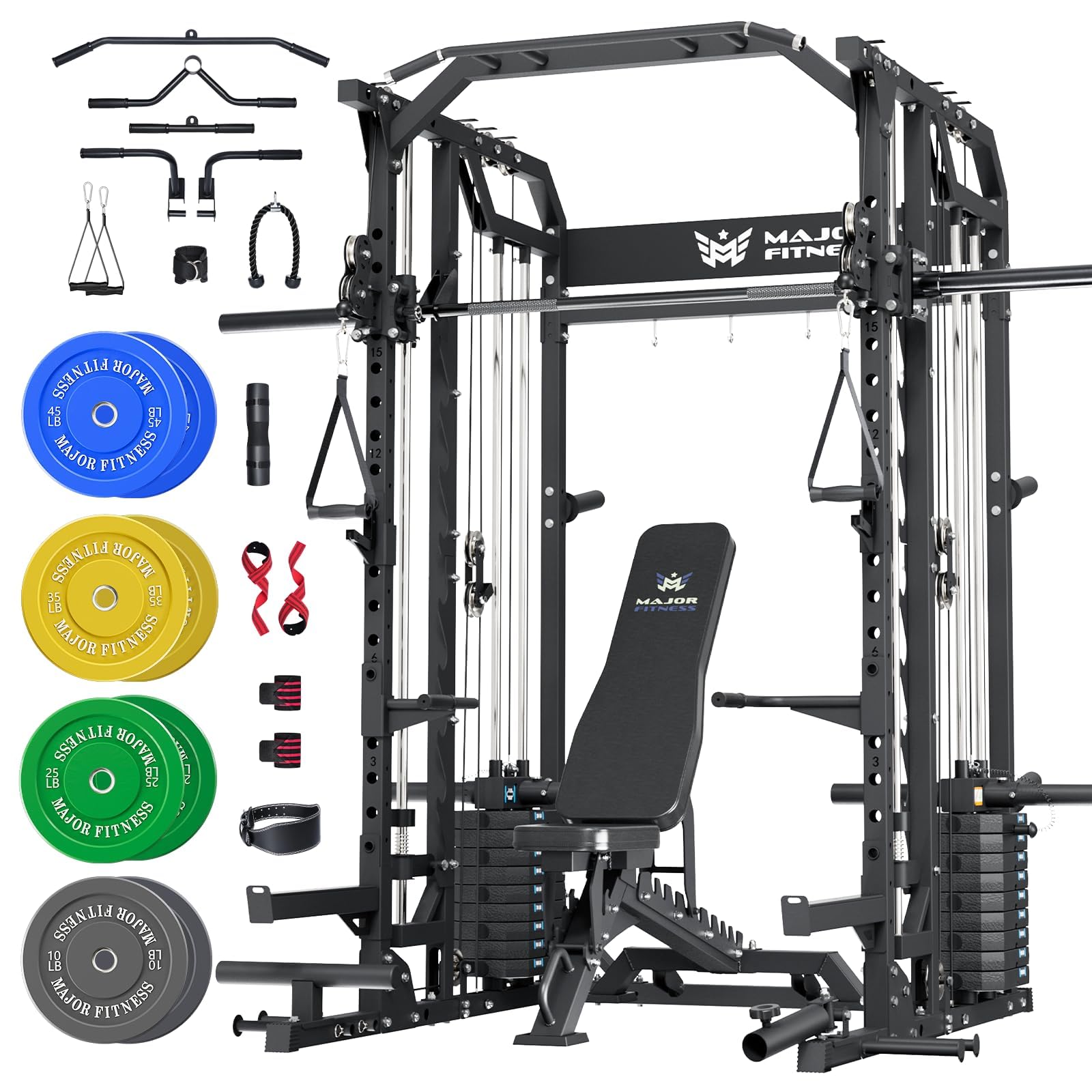
A 1:1 pulley ratio is the detail that separates the Drone2 from most of this group. The load you select is the load you feel, which makes it better suited to slow, heavy cable work than the 2:1 machines here. Add aluminum pulleys and 2-inch by 2-inch commercial-style uprights, and it has the most premium cable feel of the set.

That matters if you do cable presses, heavy lat pulldowns, or rows and want resistance to build immediately. The 2,000-pound frame gives you plenty of headroom, and the included dip handles and T-bar expand the rack beyond cable work. It is not the machine for someone chasing the lowest entry cost; it is for the lifter who will notice the difference every session.

The Drone2's published dimensions are not detailed enough to plan a tight bay, so confirm the assembled footprint with the seller before ordering. The rest of the package is straightforward: a strong frame, a smooth cable action, and a premium feel that justifies a closer look if cables are central to your training.

What we liked most is that the premium goes into the cable action, not just cosmetics. It is the rack we reach for when the session is built around cables rather than the Smith bar.

Bottom line: We recommend the Major Fitness Drone2 for lifters who want a premium 1:1 cable feel and a 2,000-lb rack, and who are willing to confirm the footprint before buying.

#4

Mikolo SM02

Mikolo SM02

Premium home bundle

Our Score 9.0/10
Check Price

Worth Noting

  • 128-lb stack per side limits heavy cable work
Warranty
2 years
Footprint
68"D x 56"W x 87"H
Cable Ratio
2:1
Weight Stacks
256 lb total
Read the full review

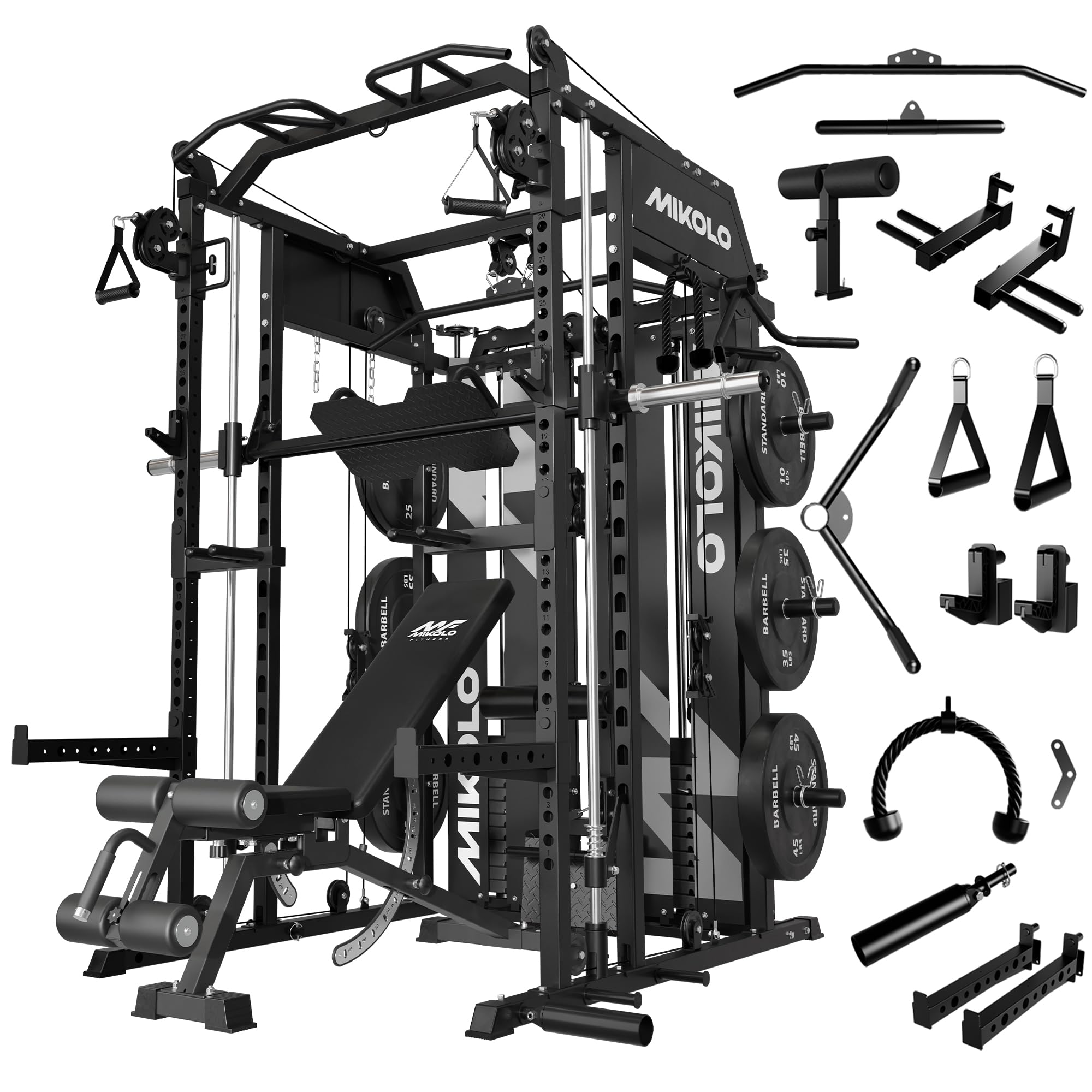
A rack, dual weight stacks, and a bench in one order is a tempting shortcut. The SM02 is the closest thing here to a complete home gym in one purchase, pairing a Smith rack and two 128-pound stacks with a weight bench. At premium money, that bundling is the pitch.

We think the dual-stack layout is the real draw. Two 128-pound stacks let you superset or train with a partner without moving plates, and the 2:1 pulley ratio gives smooth, quick cable travel. The 15-degree elevated cable path is a nice touch for lat pulldowns and rows; it puts the line of pull where you want it instead of forcing you to lean back.

The frame is built from 50x50mm steel, and the included bench makes the package feel finished. Assembly can be a long afternoon, and the manual is not the clearest; the machine rewards patience, not speed.

For a household that wants one order, one footprint, and a bench that matches the rack, the SM02 is the premium shortcut. The 15-degree cable path is the detail that makes lat pulldowns feel less like an afterthought.

Bottom line: We recommend the Mikolo SM02 for buyers who want a premium dual-stack combo with a matching bench included, and who do not need heavy cable resistance.

#5

Royal Fitness

Royal Fitness

Budget first rack

Our Score 9.0/10
Check Price

Worth Noting

  • Wide 78.7-inch footprint
Max Load
1,900 lb
Footprint
64.1"D x 78.7"W x 87.4"H
Plate Storage
4 holders
Pulley Settings
28 levels
Read the full review

Budget combos usually ask you to give up either the cable station or the storage. The Royal Fitness keeps both: a Smith bar, a power cage, dual pulleys with 28 height settings, and plate storage for budget money. We think that is the right way to spend a tight home-gym budget: start with the stations you will actually use, not the heaviest frame in the group.

The 1,900-pound frame rating is respectable for this class, and the 28-level adjustment gives you fine control over cable height. The storage is more generous than the price suggests, with four plate holders, a barbell post, and hooks for attachments. That keeps the floor clear in a garage where every square foot counts.

Cable glide is the weak spot. One side can feel less smooth than the other, and a little lubrication on the guide is the first fix. The rest of the machine feels sorted for the money, and the Smith bar locks in without drama.

If your space is tight, look at the narrower Mikolo M4. If you have the width and want a first rack that covers the basics, the Royal is an easy place to start. It is the combo we suggest when the alternative is another year of a commercial-gym membership.

Bottom line: We recommend the Royal Fitness for a first home gym on a tight budget: it covers Smith, rack, cables, and storage without the premium price.

#6

SunHome SH-999

SunHome SH-999

Budget heavy lifting

Our Score 8.8/10
Check Price

Worth Noting

  • Tall 90-inch frame limits low ceilings
  • Smith bar needs a firm shove to rerack
Footprint
72"D x 60"W x 90"H
Chest Station
Butterfly attachment
Plate Storage
6 posts + 1 bar post
Machine Weight
440 lb
Read the full review

Steel is the first thing you notice about the SunHome. The frame weighs 440 pounds, the heaviest machine weight here, and that mass is why it feels less like a folding rack and more like a gym fixture. This is not a machine you tuck into a closet, and the footprint reflects that.

We think the value case is strong, but not because it is the cheapest. It is because the SunHome includes a butterfly chest station, six plate posts, a barbell post, and storage hooks, so your plates and attachments have a home. The chest station is the unexpected bonus: it turns a rack into a chest-day station without another machine.

The pulley system uses rolling bearings, and the cables move with less grit than the budget category suggests. The Smith bar and safety arms do what they should. Assembly is a long afternoon, and the manual is more picture than text; plan for it.

For a garage gym where the rack stays put, the extra steel and storage do more for daily training than a lighter, fancier frame. Plan for a bench and plates on day one; the rack itself is ready to work.

Bottom line: We recommend the SunHome SH-999 for budget-minded lifters who want a heavy steel frame, a butterfly chest station, and serious storage in one package.

#7

Mikolo M4 2.0 Lite

Mikolo M4 2.0 Lite

Weight-stack training

Our Score 8.6/10
Check Price

Worth Noting

  • 117-lb stack per side limits heavy cable work
Max Load
2,200 lb
Footprint
70.86"D x 47.3"W x 87"H
Weight Stacks
117 lb per side
Height Settings
34 positions
Read the full review

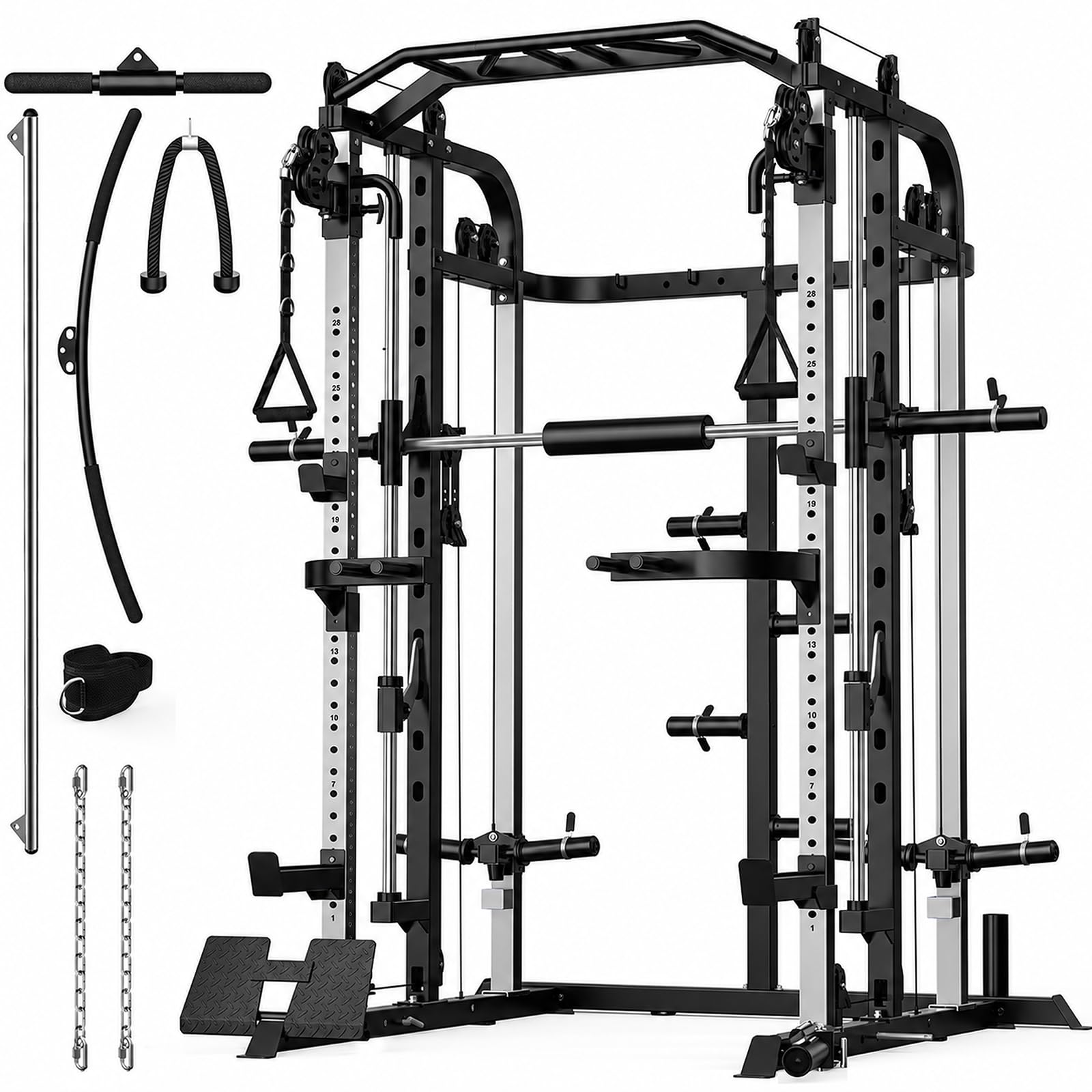
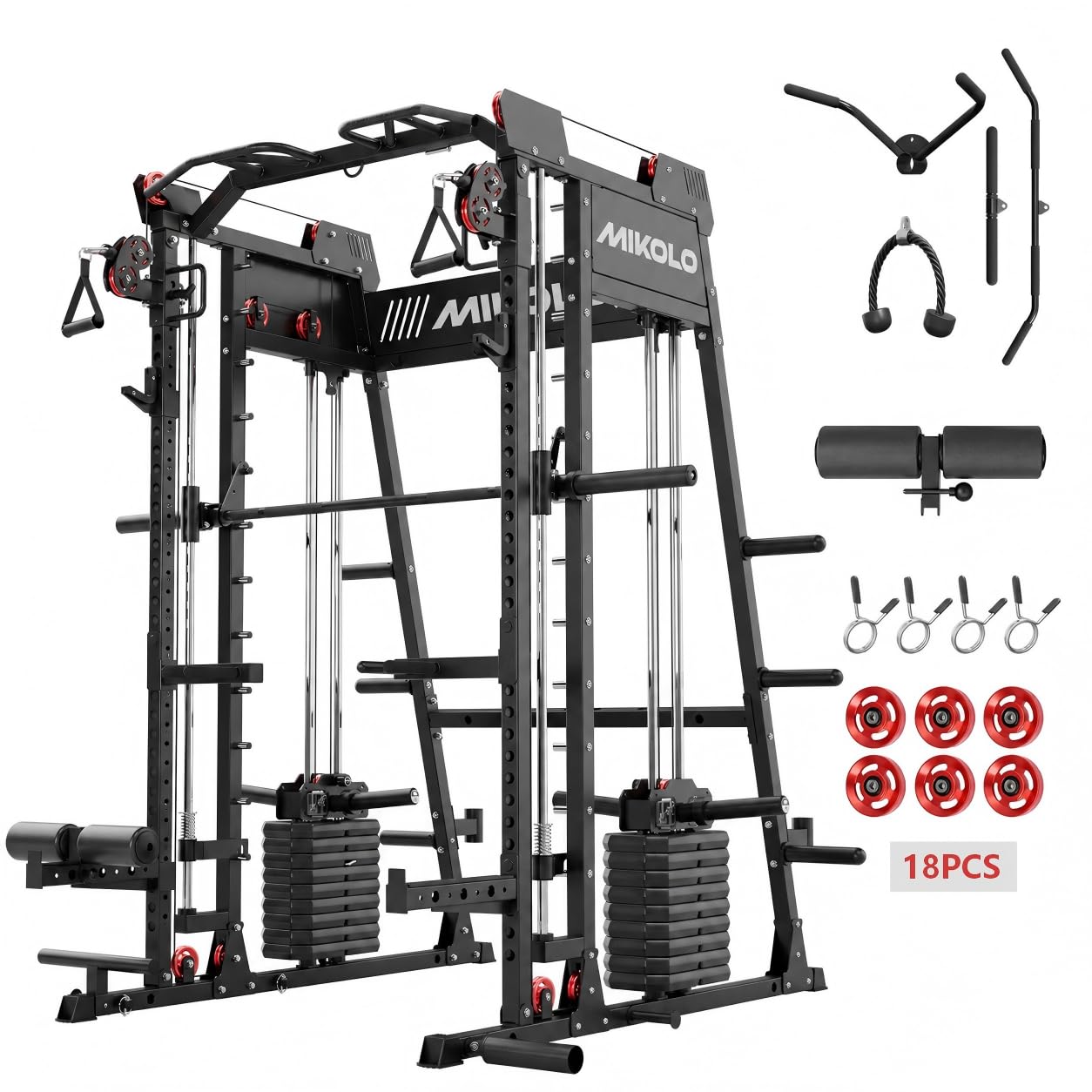
Pin-selector weight stacks change the rhythm of a home workout. Instead of dragging plates between cable sets, you move a pin. The M4 2.0 Lite pairs two 117-pound stacks with a 47.3-inch width, which is why it earns a spot: it is a serious Smith rack that also works as a fast cable station.

The 34-position adjustment is more than a spec-sheet nicety. With 2-inch hole spacing, you can set J-hooks and safety arms close to your groove for squats and bench presses, which matters more than another attachment you will use twice. The built-in attachment storage is a small thing that keeps the rack usable between sets.

The width is only half the fit story. The 70.86-inch depth means it still eats a long wall, and the 87-inch height needs checking before delivery. The cable action itself is smooth, and the pin changes are quick.

For a home gym where fast transitions matter, the M4 makes more sense than a plate-loaded crossover. It is the rack we point to when you want a Smith machine, a squat rack, and a cable station without turning the garage into a plate-storage room.

Bottom line: We recommend the M4 2.0 Lite for lifters who want fast selectorized cable work and a narrower footprint, provided 117 pounds per side is enough resistance.

#8

RitFit Buffalo

RitFit Buffalo

Tidy garage gyms

Our Score 8.4/10
Check Price

Worth Noting

  • 1,500-lb frame limits very strong lifters
  • Assembly takes an evening or more
Max Load
1,500 lb
Footprint
68"D x 48"W x 83"H
Plate Storage
4 quick-release sleeves
Frame Warranty
3 years
Read the full review

Barbells and plates end up on the floor in most garage gyms. The Buffalo is the storage-minded answer: dual Olympic barbell holders and four quick-release plate sleeves give your gear a place that is not underfoot, and the 3-year frame warranty is the longest structural coverage in this group. For a garage that doubles as a parking space, that organization matters.

We like the accessory set more than the spec sheet suggests: landmine, T-bar, dip handles, J-hooks, and safety spotter arms cover most of the training you might otherwise buy separately. The Smith system runs smoothly, and the pull-up bar has a comfortable grip. This is a rack that feels thought through rather than assembled from a parts bin.

The 68-inch depth and 48-inch width are manageable for a full cage, and the four plate sleeves make loading less of a shuffle. The pull-up bar and cable attachments are easy to reach without walking around the frame.

For a garage gym that has to stay tidy, the storage and frame coverage are worth more than another 500 pounds of capacity you may never use.

Bottom line: We recommend the RitFit Buffalo for garage gyms that need serious storage and a 3-year frame warranty, as long as 1,500 pounds covers your lifting.

How We Chose and Tested These Rack-and-Smith Combos

We started with every combo we could find that published its steel specs, then cut anything that didn't list upright size, gauge, or weight capacity, and anything too deep for a standard garage bay. That left six units, which we built and trained on for eight months.

Assembly came first. Two of us put each one together, then I rebuilt the frame solo and timed it to see whether the instructions held up without a second set of hands — noting whether hardware was bagged and labeled by step, whether the diagrams matched the parts in the box, and where the process stalled. Once upright, we dropped a loaded bar onto the safeties and watched the feet for creep, then marked their positions on the floor and checked the marks weekly.

Every session, we pushed the Smith carriage — empty and loaded — one-handed from the bottom stop to the top and back, listening for grind and feeling for a hitch at the crossover point. We tracked whether it drifted when parked, how much effort it took to unhook the bar, and how quickly we could switch between guided and free-weight work mid-set. Versatility got judged by use: incline presses, split squats, calf raises, pull-ups, landmine work, banded accessories.

Build quality and value came last. We looked at weld consistency, powder coat coverage at the joints, and whether the plastic on the J-cups would crack under repeated racking. Value meant what shipped in the box versus what we had to buy separately to make the rack usable.

How to Choose Power Rack Smith Machine Combos

Measure the bay before the rack

These machines are not furniture you slide around. The pooboo is 43.3 inches wide, while the DONOW runs 78.58 inches, and height ranges from 82.6 to 90 inches across this set. Mark the footprint with tape, then add room to load plates and walk around the rack.

Check ceiling height with the pull-up bar and your tallest overhead reach. A low ceiling can rule out a tall rack faster than any spec sheet. If the rack shares a garage with a car, measure the car door swing too, not just the machine.

Separate frame capacity from cable capacity

A 2,000-pound frame does not mean 2,000 pounds on the cables. The pooboo pairs a 2,000-pound frame with a 1,000-pound pulley rating, and that second number is the one that governs lat pulldowns, rows, and cable flies. Read the load limit for each station, not just the headline.

For most home lifters, a 1,500- to 2,000-pound rack is plenty. If you plan heavy cable presses or low rows, compare the cable system and its ratio first; the frame is rarely the limiting factor.

Choose stacks or plates for cable work

Selectorized stacks such as the Mikolo M4 and DONOW are fast to change and tidy, but they set a ceiling on resistance. Plate-loaded systems cost less and let you add plates you already own, though you will spend more time loading between sets.

The pulley ratio matters too. A 2:1 ratio gives quicker cable travel and a lighter feel, which suits pulldowns and isolation work; a 1:1 ratio puts more resistance on the cable, which suits slow, heavy cable presses. Neither is better in the abstract. Match the ratio to the work you do most.

Check the Smith bar and safety catches

The Smith bar is only as good as its lockout. Look for linear bearings, enough height settings to put the bar where you actually press or squat, and hooks that catch evenly on both sides. A 34-position rack gives finer setup than a 12-position model.

Set the safety spotter arms just below the bottom of your lift, so the bar stops before your chest or neck does. Practice reracking with an empty bar before you load it; a stiff hook is easier to learn when you are not tired.

Plan for assembly and storage

Treat assembly as a long session, not a quick build. These racks arrive in multiple boxes, and manuals range from clear to picture-only. Sort the hardware by step, build the frame loose, and tighten everything once it is square.

Storage matters more after assembly than it does on the product page. Six plate posts on the SunHome or four quick-release sleeves on the Buffalo keep plates off the floor. If the rack shares space with a car, storage is not a luxury; it is what makes the machine livable.

Frequently Asked Questions

Final Verdict

Most people should start with the pooboo P43. It gives you a 2,000-pound frame, a 1,000-pound cable system, dual pulleys, and a 43.3-inch width that fits more spaces than the wide dual-stack machines. If you need two people training at once, the DONOW DN-DS938 is the better shared machine; if you want pin-select stacks in a narrower footprint, the Mikolo M4 2.0 Lite is the compromise.

The P43 remains the default because it covers the widest range of training without demanding a dedicated room. That balance of rack, cables, and footprint is what makes it the one we recommend first.