Strength & Weights

Best Power Rack Attachments of 2026

The wrong power rack attachment makes itself known fast: a dip bar that flexes before you're halfway down, a landmine that creeps across the floor, a set of spotter arms that doesn't quite line up with your uprights. The right one disappears into your training. It clamps on solid, leaves your bar path alone, and makes the rack you already own feel more capable than it did yesterday. That's the real promise here, not more gear, but more useful sessions from the footprint you have.

I've lifted on enough improvised setups to be skeptical of bolt-on hardware, and my team has now spent eight months cycling 12 attachments through the racks in our garage gym and a basement setup. We loaded them, adjusted them, and lived with the small annoyances. The pattern was clear: the best attachments fit your uprights and hole spacing first, then earn their keep through sturdy welds, sensible width, and safe locking. A few looked impressive out of the box and lost their shine after a month; the keepers were the ones we stopped thinking about. The picks below reflect that.

#1

SELEWARE Dip Bar Attachment

Top Pick
SELEWARE Dip Bar Attachment

2x2 racks

Our Score 9.2/10
Check Price

Worth Noting

  • Only fits 2 x 2 racks with 1-inch holes
  • Grip width is fixed
Material
Alloy steel
Rack Fit
2 x 2 in tube, 1 in hole
Grip Positions
3
Weight Capacity
500 lb
Read the full review

The first thing we look for in a dip attachment is whether it gives us a reason to use the rack differently, and this one does: it turns a 2x2 cage into a dip station with three hand positions. The three grips change the angle of your hands, which let us shift between chest-focused and triceps-focused dips without moving the bars. We liked that variety more than we expected, because the narrowest position is the one we kept coming back to for triceps work.

The 500-pound rating is not the highest in this group, but it is plenty for most home gyms. What matters more is how the bars sit: the pin slides through the rack hole, the bar swings down to lock, and a safety pin keeps it from lifting out. We found the install quick enough to move the bars between heights, and the steel has no sharp edges or flex that we could detect. The 2-inch tube and 1-inch hole fit is the first thing to check before ordering.

For a 2x2 rack, that is an easy trade to accept. The bars are compact enough to leave on the rack between sets, and the swing-down lock is simple enough to move without a wrench. We came away thinking of it as the attachment that finally made dips part of our regular rotation.

Bottom line: For a 2x2 rack with 1-inch holes, these dip bars earn their place with three grip positions, a 500-pound rating, and a pin-in fit that feels solid.

#2

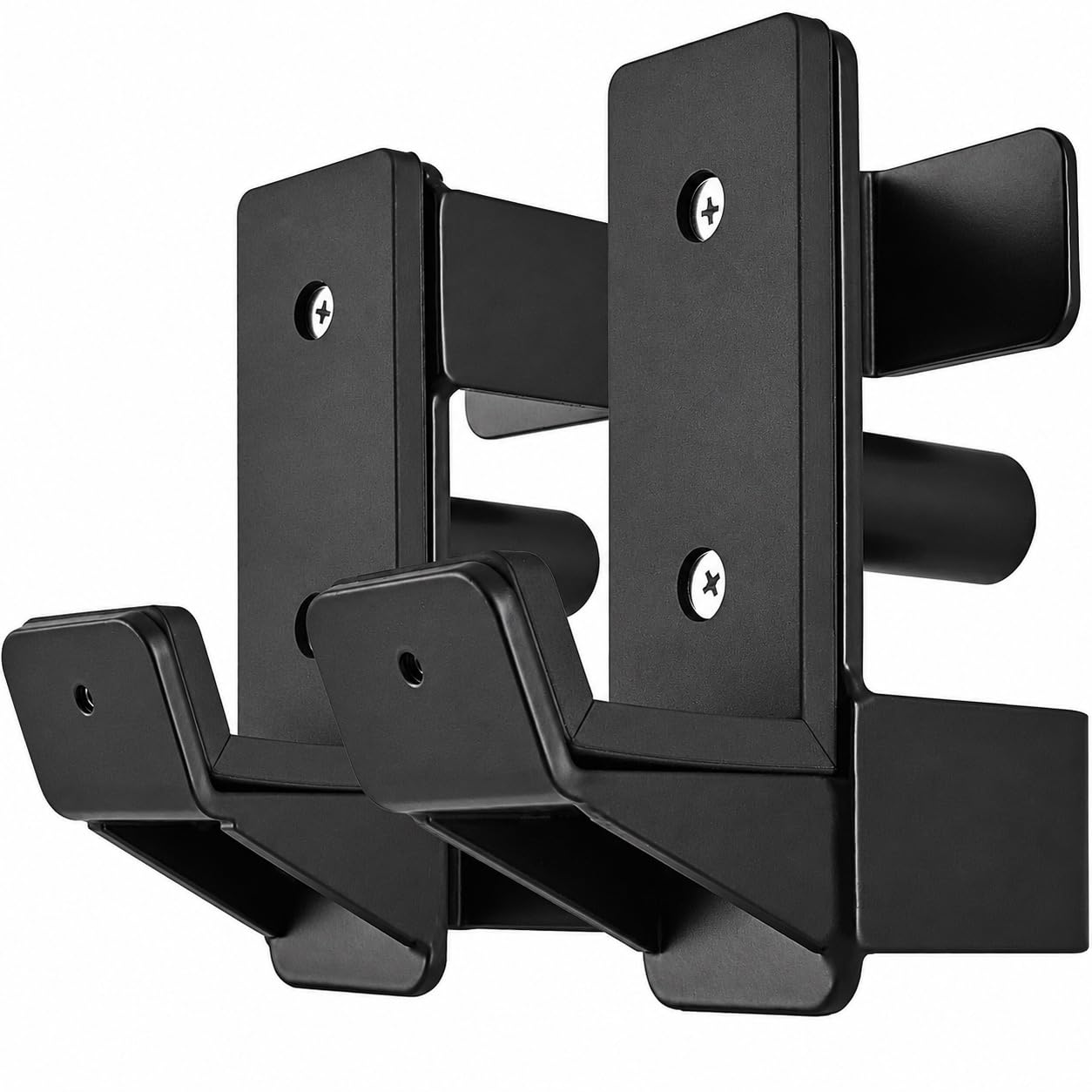
SYL Fitness J-Hooks

SYL Fitness J-Hooks

3x3 rack upgrades

Our Score 9.2/10
Check Price

Worth Noting

  • Can shift if the rack fit is loose
Frame
Alloy steel
Rack Fit
3 x 3 in rack
Pad Material
UHMW
Weight Capacity
1,000 lb
Read the full review

The UHMW pad is the first thing we check on a J-hook, because bare steel and worn plastic both leave marks on a barbell's knurling. These hooks cover the cup and the upright face, and the pad is thick enough that the bar settles into it rather than rocking on metal. That sounds like a small detail until you have a bar with fresh knurling and a rack with bare steel hooks.

We liked the 1,000-pound rating for the margin it gives, but the shape matters just as much. The cup is deep enough to catch the bar during a walkout, and the hook is stiff enough that we did not see it flex under a normal load. A loose fit can let the hook shift, so check that the pads are seated and the hardware is snug before you load. On a 3x3 rack with the right hole spacing, it stayed put for us.

The 3x3 fit is the boundary. If your rack is 2x2, this is not the pair for you. For a 3x3 rack, the UHMW pad and the deep cup make it an easy upgrade over stock hooks. The paint is plain, but the contact points are what matter, and those are the parts we paid attention to.

Bottom line: If you have a 3x3 rack and want a more protective J-hook, this 1,000-pound pair with UHMW pads is the upgrade we trust.

#3

Sunny Health & Fitness Dip Bars

Sunny Health & Fitness Dip Bars

Sunny rack fit

Our Score 9.2/10
Check Price

Worth Noting

  • 330-pound user limit
  • Model-specific rack fit
Grip
Knurled
Material
Alloy steel
Adjustability
Height and width
Weight Capacity
330 lb
Read the full review

The knurled grip is what sets these apart from the smooth bars in this group. It gives you a textured surface without the aggressive bite of a barbell knurl, and the bars adjust for height and width, which is more flexibility than most dip attachments offer.

We liked the knurling for sweaty hands, but the fit is the deciding factor. These are built around Sunny's own rack dimensions, and a different brand or model may not line up. The 330-pound rating is the other number to check; that is lower than the other dip bars here, and it includes your body weight plus any belt or vest.

For a Sunny rack that matches, the bars feel stable and the width adjustment helps you find a comfortable dip stance. The knurling is the detail we kept noticing, especially after a long set.

Bottom line: For a Sunny rack, these knurled dip bars add a secure, adjustable station, though the 330-pound limit and model-specific fit narrow the audience.

#4

SYL Fitness Plate Holder

SYL Fitness Plate Holder

Space-saving storage

Our Score 8.8/10
Check Price

Worth Noting

  • Paint can chip where plates slide on
Rack Fit
2 x 2 or 3 x 3 in tube
Plate Type
2 in Olympic
Sleeve Length
9.2 in
Weight Capacity
600 lb
Read the full review

Floor space is the first thing we notice in a home gym, and plate storage is usually the easiest place to reclaim it. These pegs slide into a rack hole and give you a place to hang Olympic plates instead of stacking them against a wall. The pair takes up almost no room, and because they mount on the uprights, the plates are at hand when you load the bar.

The 9.2-inch sleeve is long enough for a few plates, and the 600-pound total capacity is more than most home lifters need. We liked that the pair fits both 2x2 and 3x3 square tube, which is unusual; the pin-and-swing lock means you can move them without tools. The plates sit close to the rack, so check that they clear your spotter arms and any attachments below.

We think the storage benefit is worth the space it saves. If your plates live on the floor, this is the attachment that makes the rack feel like a complete station. Confirm the 2-inch Olympic plate fit before you order; bumper plates take more sleeve space than iron.

Bottom line: A pair of these turns dead rack uprights into off-floor plate storage, and the 600-pound capacity is enough for a typical home setup.

#5

AINAFIX J-Hooks

AINAFIX J-Hooks

2x2 rack fit

Our Score 8.6/10
Check Price

Worth Noting

  • ⚠️ Rubber pads can let the bar shift
Padding
Rubber
Rack Fit
2 x 2 in, 1 in hole
Construction
Double-bracket steel
Weight Capacity
1,200 lb pair
Read the full review

The 1,200-pound pair rating and rubber pads are what get these J-hooks in the door, and the pads are a nice touch for protecting knurling and cutting down the clang when you re-rack. We liked the double-bracket shape because it adds stiffness without making the hook hard to move.

The catch is the pad. Rubber is softer than UHMW, and a bar can bounce or shift if you do not set it down squarely. We kept these for lighter pressing and accessory work and checked the seat before every set; for heavy squats, the SYL hooks are the safer call. The 2x2, 1-inch-hole fit is the other boundary.

Bottom line: These 2x2 J-hooks are a good fit for lighter pressing and accessory work, but the rubber pads can let a bar shift under a heavy squat.

How We Tested These Power Rack Attachments

We started by sorting through the attachment options that actually fit common rack uprights and hole spacings, then narrowed the list by footprint, price, and whether the hardware could be replaced if a pin or bolt went missing. From that shortlist, we tested 12 attachments over eight months, mounting each on a garage rack and a basement rack during normal training blocks rather than a single photo shoot.

Fit came first: we measured pin diameters and upright compatibility, slid each attachment onto the rack, and checked whether it sat flush without shimming or wobble. Then we used them for dips, landmine presses, belt squats, leg curls, and spotter work, watching for flex at the welds, creeping across the floor, and any change in the bar path. Width mattered more than we expected: wide attachments crowded our plates and stance, while narrow ones sometimes felt tippy under uneven loading.

For safety, we checked locking pins, secondary retention, and whether anything shifted when we racked a loaded bar or failed a rep onto the safeties. We inspected welds and powder coat every few weeks, noted bolts that loosened, and tracked how much setup time each attachment added. Value came down to whether it earned its space and made the rack more useful, not just whether it was cheap. The ones that stayed on our racks were the ones that felt solid, fit cleanly, and needed no workarounds.

How to Choose Power Rack Attachments

Fit the Rack Before Anything Else

Rack size is not one number. You need the tube size, the hole diameter, and, for dip bars, the spacing between the uprights. A 2x2 rack with 1-inch holes takes a different attachment from a 3x3 rack with 5/8-inch holes, and a bar that clamps to the outside of one rack may not clear the uprights on another. The SELEWARE dip bars are the 2x2, 1-inch-hole case; the SYL J-hooks are the 3x3 case; the Sunny bars are built around Sunny's own rack.

Measure the tube with a tape or caliper, then check one hole with a drill bit or the rack's manual. Do not order from the rack's brand name alone. If the listing gives a post-spacing range, compare it with the distance between your uprights before you buy. This is the step that decides whether the attachment is a five-minute install or a return.

Match the Attachment to the Gap in Your Training

A J-hook upgrade is the right first buy when your stock hooks are bare steel, shallow, or worn, because the hook is what catches the bar on every squat and press. Dip bars are the better spend when you want a new movement and your rack already holds the bar safely. Plate storage is the fix when the floor is the problem and you are tired of stepping around plates.

Pick the one gap that annoys you most. A rack with good hooks and no plate storage does not need a second pair of hooks; it needs a place to hang the plates. A rack with plates stacked against the wall and no dip station gets more from the bars. The attachment you use three times a week is worth more than the one that looks impressive in the listing.

Read Capacity and Stability Together

Weight ratings are not all the same kind of number. A dip bar's 330-pound limit is a user limit; a J-hook's 1,200-pound pair rating is a static load shared across two hooks. Neither number tells you how the attachment behaves when a bar comes down off-center. Look for thick steel, solid welds, a pin that engages the full hole, and a pad that keeps the bar from rocking.

The AINAFIX pair is rated to 1,200 pounds, but the rubber pads can let a bar shift if you do not set it down squarely; that is a light-use compromise, not a heavy-squat solution. The SELEWARE bars use a swing-down lock and a safety pin, and the 500-pound rating leaves a reasonable margin for most home lifters. If an attachment rocks or lifts out when you pull on it, stop and reseat it before adding plates.

Plan for Protection and Upkeep

UHMW is the pad we prefer on J-hooks because it is dense, slick, and does not grab the knurling. Rubber is quieter and softer, but it can be bouncy under a loaded bar. On plate pegs, the finish is the part that takes the abuse; paint chips where plates slide on, and that is cosmetic as long as the steel and welds are sound.

Check the sleeve length if you use bumper plates, because they take more room than iron. The SYL holder's 9.2-inch sleeve is a useful figure to compare, and the 2-inch center hole is the standard Olympic size. Wipe down the contact points, keep the pins clean, and inspect the pads before they wear through to metal.

Frequently Asked Questions

Final Verdict

For most 2x2 rack users, the SELEWARE dip bars are the attachment we recommend first: they add a real exercise, the three grips are useful, and the 500-pound rating leaves room for most home lifters.

If your rack is 3x3, the SYL J-hooks are the better first upgrade because the UHMW pads protect your bar and the 1,000-pound rating gives you more margin. The tube and hole size is the line that decides between them.