Strength & Weights

Best Leg Extension Machines of 2026

A leg extension looks like the easy part of leg day—until you try to recreate that clean arc at home. It isolates the quads without a barbell or spotter, which is why it earns its floor space in a home gym. The catch is that a flimsy machine rocks, binds, or pulls your knees into an awkward line, and then it just collects dust.

We spent eight months assembling and living with seven leg extension machines, from compact plate-loaded units to sturdier selectorized models, and the differences showed up fast. A good one feels planted under load, adjusts for different leg lengths, and moves smoothly through the whole range. Value matters, but not in the cheap sense: the keepers are the ones you can assemble solo, trust over hundreds of reps, and actually want to use on leg day. Below are the ones that earned a spot.

#1

GMWD LE02 Leg Extension and Curl Machine

Top Pick
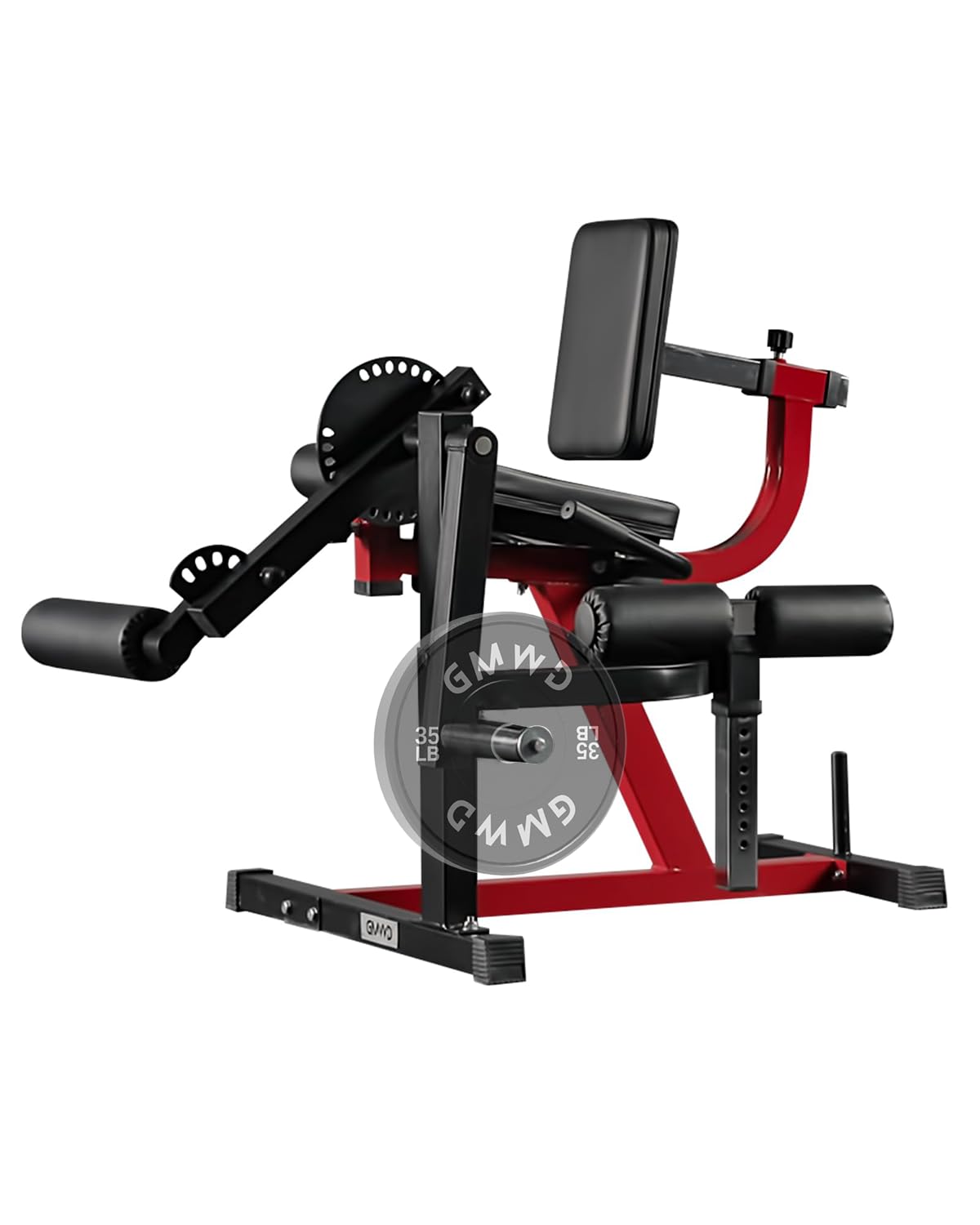
GMWD LE02 Leg Extension and Curl Machine

Most home gyms

Our Score 9.0/10
Check Price

Worth Noting

  • Plate storage post takes small plates only
  • 300-pound tension rating is the lowest here
Footprint
34"D x 36"W x 37"H
Adjustment
28+5 leg, 8 backrest, 4 seat positions
Machine Weight
95 lb
Tension Rating
300 lb
Read the full review

Most compact leg machines ask you to pick a side: a frame that fits a spare room, or a seat that actually moves to meet your body. The GMWD LE02 skips that argument. It packs 28+5 leg positions, eight backrest settings and four seat settings into a footprint of 34 by 36 inches, which is the adjustment range you usually have to buy a much larger machine to get.

That range is why it's our default pick. The seat, backrest and ankle roller each move independently, so the pivot ends up level with your knee instead of near it, and the difference between those two things is a machine you use and one you stop noticing. The 95-pound frame holds its ground through a working set, and the removable pins let you switch between extension and curl and reset the seat height without hunting for a wrench.

Assembly is a sit-down project rather than a ten-minute one, though the hardware arrives bagged and the steps follow in order, which is usually where this price bracket falls apart. The adjustment plate carries no index marks, so once you find your seat and roller positions, circle them with a paint pen. It takes two minutes and spares you hunting for the same setting mid-workout for as long as you own the machine.

Bottom line: Our default for a home gym: the widest adjustment range in this group inside a 34-inch footprint, at a price that undercuts the premium machines.
#2

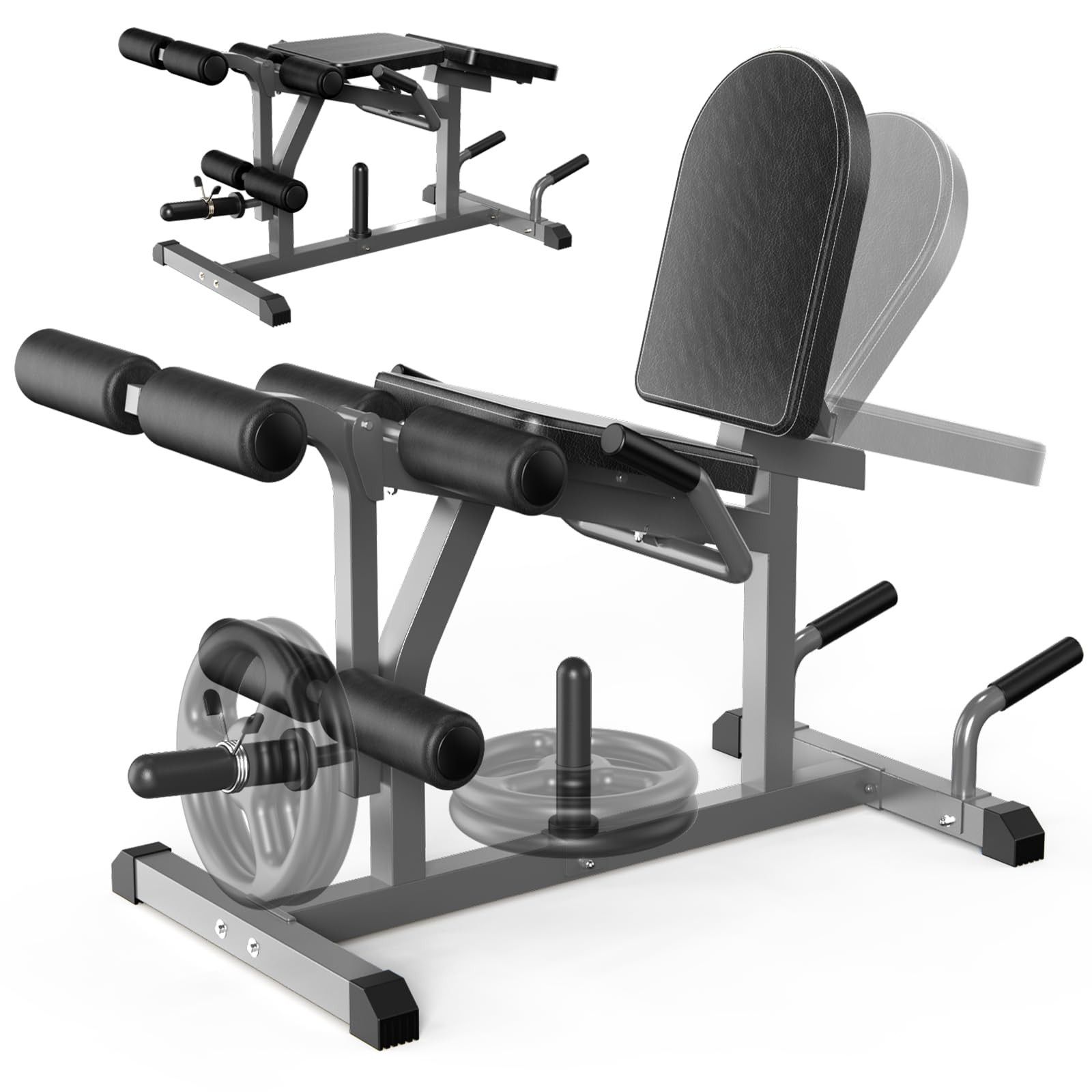
Z ZHICHI TT02 Leg Extension and Curl Machine

Z ZHICHI TT02 Leg Extension and Curl Machine

A starter machine

Our Score 9.0/10
Check Price

Worth Noting

  • Plates capped under 130 pounds
Frame
50 x 50 mm, 1.4 mm steel
Footprint
7.9 square feet
Plate Limit
Under 130 pounds
Machine Weight
44.1 lb
Read the full review

It's the cheapest machine here, and at 20 kilograms it's also the lightest, which tells you most of what you need to know before you read another word. A 50 by 50 mm carbon steel frame with 1.4 mm walls on a 7.9-square-foot footprint is enough structure for moderate loading, and not much more than that.

What you get for the money is more than the frame. Three backrest positions and two seat angles cover the fit, a height adjustment under the seat lines up lying curls so your hips aren't fighting the pad, and six foam rollers are wrapped in 1.4 mm leather with 360-degree coverage. The switch between extension and curl takes about five seconds, and the post takes both 1-inch and 2-inch plates, which is rare at any price.

The ceiling is the loading. The manufacturer asks for plates under 130 pounds, and two 45s, a 25 and a 10 already put you at 125 — fine for high-rep sets and early rehab work, short for anyone who has outgrown a stack of dumbbells. Buy plates with that number in mind rather than adding them up at the register.

As a starter machine, or as the one you keep in a small room where a 136-pound frame was never going to fit, the TT02 does both movements properly and tells you honestly where it stops. That's a better deal than a bigger frame you never load past half its rating.

Bottom line: The cheapest way into a two-function leg machine, and a sensible one if your working weight stays under the 130-pound plate limit.

#3

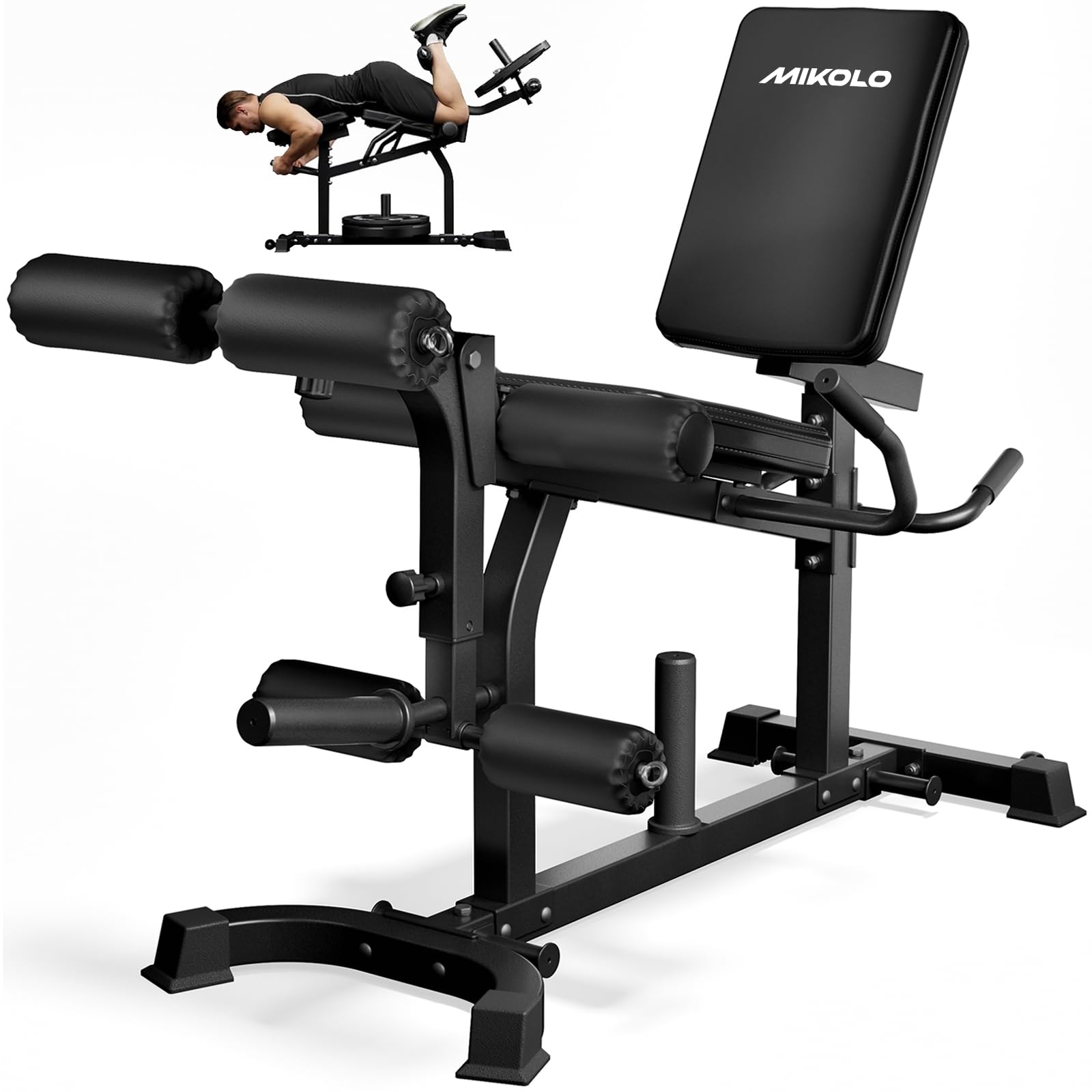
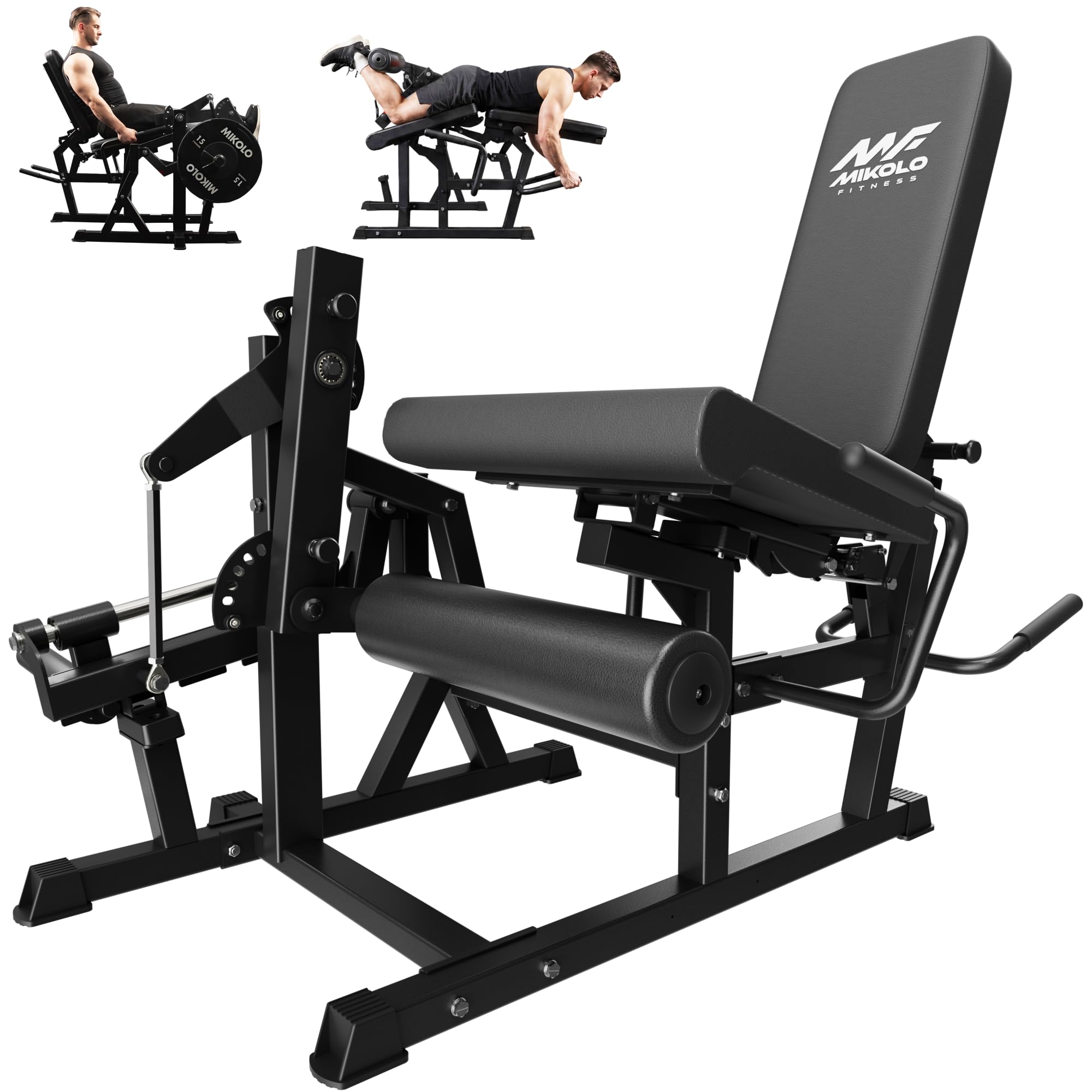
Mikolo LE12 Leg Extension and Curl Machine

Mikolo LE12 Leg Extension and Curl Machine

Constant-tension training

Our Score 8.8/10
Check Price

Worth Noting

  • 120-pound ceiling limits heavy loading
  • Ankle pad can rub rather than roll
Footprint
56.5"D x 51.2"W x 47.2"H
Load Ratio
1.0/1.1/1.2
Resistance
100 to 120 pounds
Machine Weight
136 lb
Read the full review

Three settings on the resistance arm change what a plate weighs. Load 100 pounds, set the ratio to 1.2, and the machine gives you 120 — micro-loading without stripping plates or hunting for a pair of twos between sets. That lever is the reason to look at the Mikolo LE12, and it makes the most sense for someone training in the 60-to-120-pound range for higher reps. Anyone chasing a heavy single runs out of machine long before they run out of effort.

The rest of the frame is built to that standard. A 136-pound body on a 56.5 by 51.2-inch footprint makes it the biggest thing in this group, and the bulk buys a pull pin that moves between seated extensions and lying curls in one motion, eight starting positions, and a 12-degree V-tilt pad with a gap cut through the middle so your midsection isn't compressed at the bottom of a curl.

What the size actually gets you is a machine that behaves like the one at the gym: resistance stays smooth through the full arc, the settings land where you expect, and nothing about the frame asks you to be careful with it. The price of that is floor space. Measure the wall before you order, because 56 inches of depth is more than most spare rooms give up without a fight.

Bottom line: Buy it for constant-tension training: a 1.0/1.1/1.2 ratio turns 100 pounds of plates into 120 and keeps load on the muscle through the arc.

#4

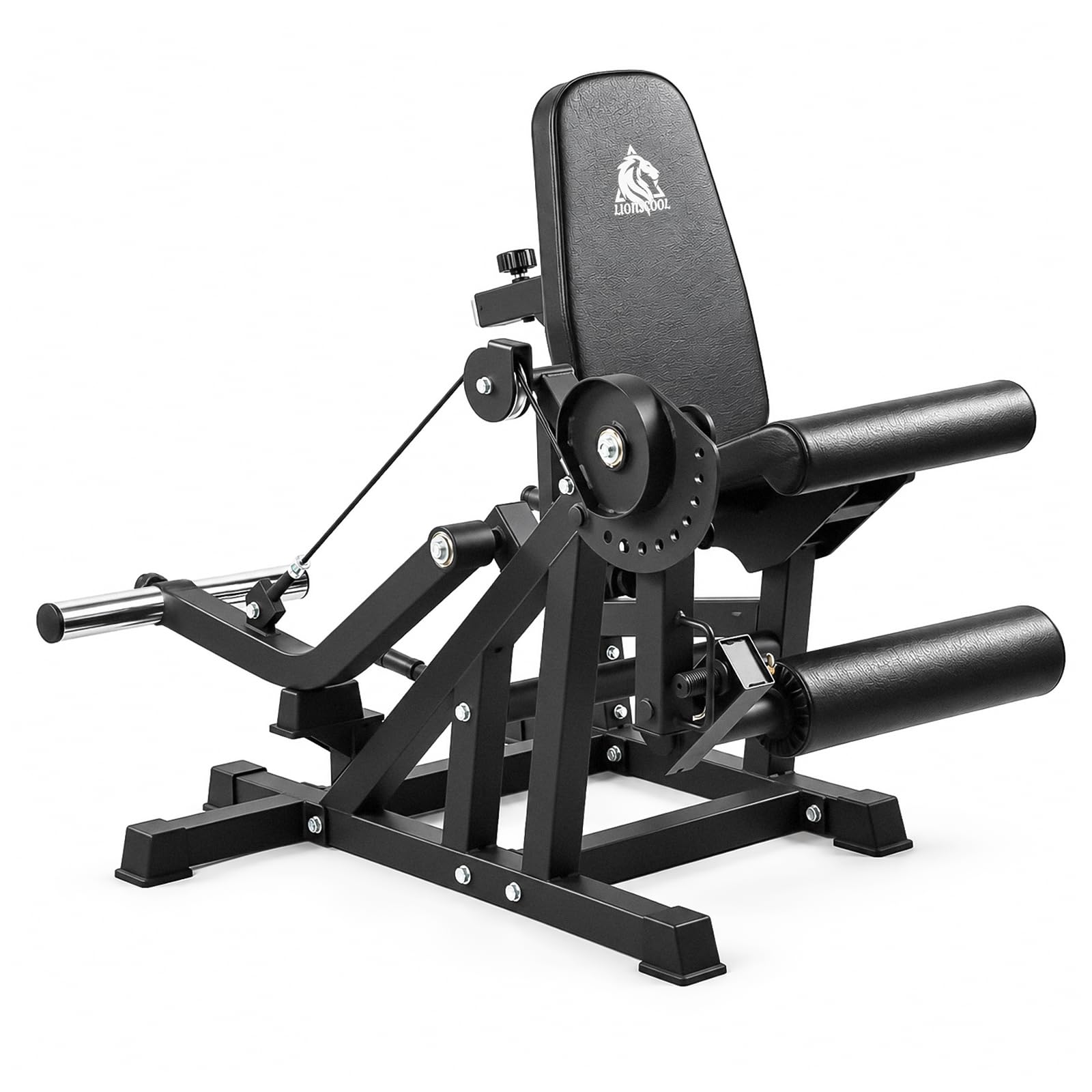
LIONSCOOL V4.0 Leg Extension and Curl Machine

LIONSCOOL V4.0 Leg Extension and Curl Machine

Smooth cable resistance

Our Score 8.8/10
Check Price

Worth Noting

  • Frame flexes under very heavy load
  • Seat may not lock at every position
Footprint
57"D x 43"W x 40"H
Resistance
400 lb
Machine Weight
125 lb
Max User Weight
800 lb
Read the full review

There's no knee holder on the LIONSCOOL V4.0, and that's the whole idea. You sit, swing your shins behind the roller and start — no lifting a pad, no unlatching anything, no lever to remember. If you've ever banged a thigh pad into a sore knee on the way into a set, that small omission turns into a daily one.

The load runs through an aluminum pulley and a 6mm cable rated to 400 pounds, which is the point of a cable machine: tension stays on the quad through the bottom of the extension, where a straight plate arm goes light. The frame weighs 125 pounds and carries an 800-pound user rating on a 57 by 43-inch footprint. The seat splits into three sections instead of one pad, and that's the detail that makes lying curls feel less like balancing on a bench.

This is the one we choose when the feel of the movement matters more than the size of the plate post. It's also the easiest machine here to get on and off, which counts for something when you train alone and don't want to rehearse a mount every set. What you take on is more to assemble — pulleys, cable, handles — and one more wear item to watch than a plain steel arm ever asks of you.

Bottom line: The best-feeling movement in this group: a pulley holds tension through the arc, and there's no knee pad to climb over on the way in.

#5

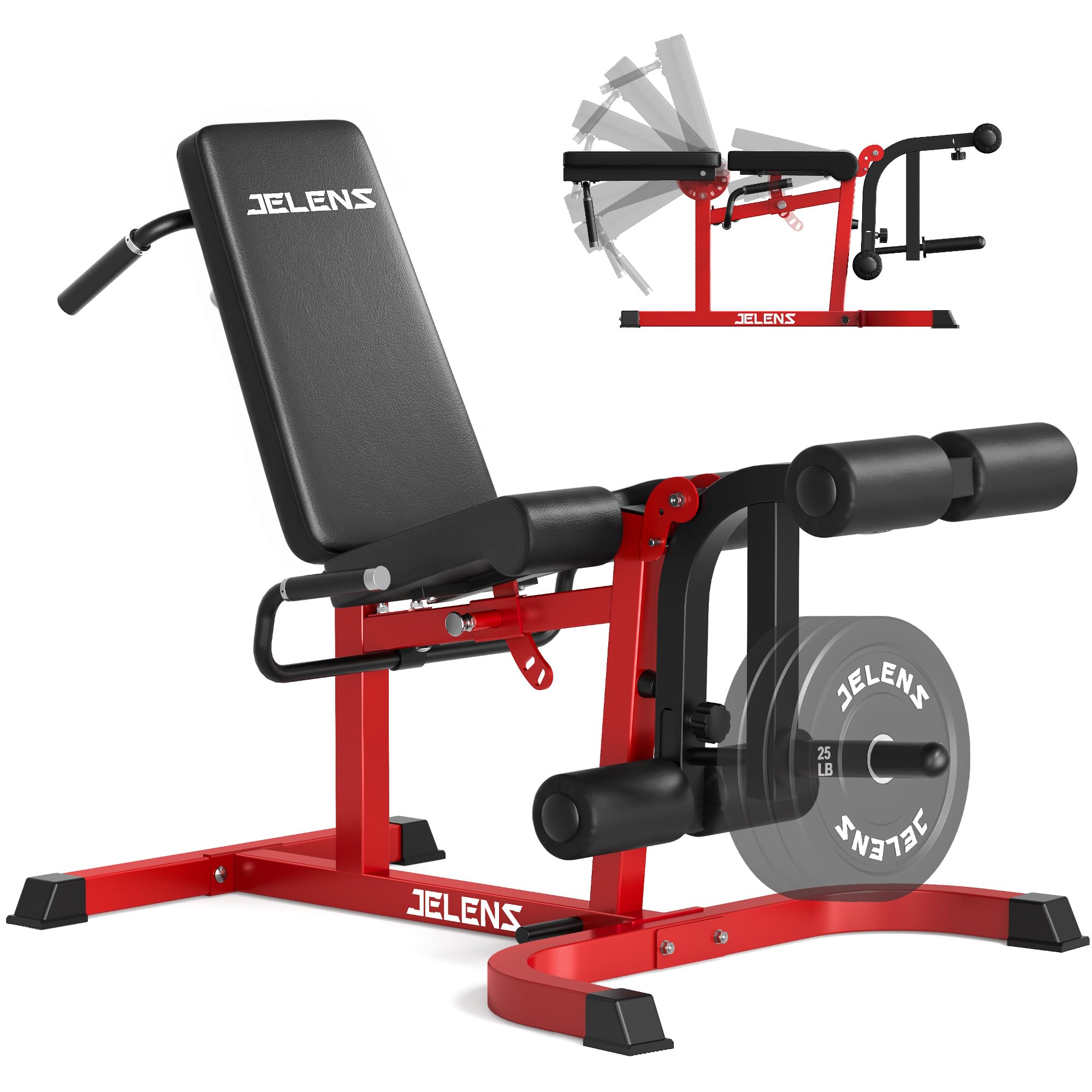
JELENS J10 Leg Extension and Curl Machine

JELENS J10 Leg Extension and Curl Machine

A first home machine

Our Score 8.8/10
Check Price

Worth Noting

  • Seat adjusts for height only, not depth
Warranty
1 year
Resistance
440 lb
Strap Type
Linear bearing straps
Max User Weight
500 lb
Read the full review

The first thing we check on a budget leg machine is the base, because that's where the money usually goes missing. The J10 sits on a widened H-shaped frame in alloy steel, rated for a 500-pound user and 440 pounds of resistance, and the arm turns on linear bearing straps rather than a bare steel-on-steel pivot. That's a more serious bottom end than the price suggests.

The padding holds up its end too. The backrest and handle keep your torso neutral while you push, and the foam is dense enough that a twenty-rep set doesn't turn into a fidget. The seat cushion moves up and down on a pin, so you can get the height right in a couple of tries without tools.

Getting on and off is easier than the frame's weight suggests, which matters more than it sounds when your legs are already tired. The bearing straps are also the quiet part of the design: they spread load across the pivot instead of concentrating it on a single pin, and that pivot is the first thing to announce itself on a cheap machine.

Where it lands in this group is at the low end of the price range with the parts that matter intact — nothing about the frame reads as built to a number and then forgotten. Spend the difference on plates rather than on the next machine up, and the J10 keeps earning its corner of the room.

Bottom line: A sturdy first machine — a 500-pound user rating and a 440-pound resistance rating on an H-shaped alloy steel base, at the low end of this group's prices.

#6

FEIERDUN 4-in-1 Leg Extension and Curl Machine

FEIERDUN 4-in-1 Leg Extension and Curl Machine

Value in a small space

Our Score 8.6/10
Check Price

Worth Noting

  • Weight post fits about three 45-pound plates
  • Frame shifts under heavier loads
Warranty
1 year
Footprint
34"D x 33"W x 38.5"H
Weight Capacity
700 lb
Read the full review

Thirty-three inches wide and thirty-four deep is the kind of figure that decides whether a leg machine lives in your gym or ends up in the hallway, and the FEIERDUN hits it without shrinking into a toy. For the money it's the best value in this group: a 700-pound-rated frame, a full adjustment set, and a footprint smaller than the premium machines here, with hardware bagged and labeled by step.

The arm runs on linear bearings, and the switch from extension to curl is a plug-in pin rather than a bolt you undo, so changing exercises mid-session takes seconds rather than a walk to the toolbox. Seat, backrest and roller all move, and the nuts and bolts come organized by assembly step, which is most of why the build goes faster than the price suggests.

On a working set it feels like a plate machine, because it is one: the resistance is heaviest at the top of the extension and lightest at the bottom, and no amount of bearing smoothness changes that. The pad edges are curved rather than square, which you notice around rep fifteen. If you want cable-constant tension, look at the LIONSCOOL; this one trades that feel for a heavier rating on less than half the footprint.

Bottom line: The value pick: a full-size 700-pound plate-loaded frame on a 33 by 34-inch footprint, with hardware bagged by step so the build goes quickly.

#7

Mikolo LE00 Leg Extension and Curl Machine

Mikolo LE00 Leg Extension and Curl Machine

Tight spaces

Our Score 8.6/10
Check Price

Worth Noting

  • Range of motion runs short at the bottom
Loading
Plates, bands, cable clip
Footprint
48.3"D x 21.7"W x 39.2"H
Resistance
440 lb
Machine Weight
55 lb
Read the full review

A plate post, band pegs and a cable clip: that's three ways to add resistance on one frame, and on a machine this small it's more than the big plate-loaded units here offer. The Mikolo LE00 puts all three on a 55-pound body that covers 7.28 square feet, which is the sort of thing you notice when the alternative is not having a leg machine at all.

At 21.7 inches wide and 48.3 deep it slips past a doorway and parks beside a rack, with five extension positions and four curl settings covering most of the fit. The honest cost of a 55-pound frame is that it needs weight low down to feel planted, so set a pair of plates on the base storage before your first set and it settles right down.

This is the machine we point to for a rental, a shared room, or the corner of a bedroom where a 136-pound frame was never going to live. The band pegs matter more than they sound in that setting: they add resistance without another trip to the plate store, and they come off in seconds when you want the same movement to feel easier.

Bottom line: The small-space pick: 21.7 inches wide, 55 pounds, and three ways to load resistance so you're not tied to a single plate post.

#8

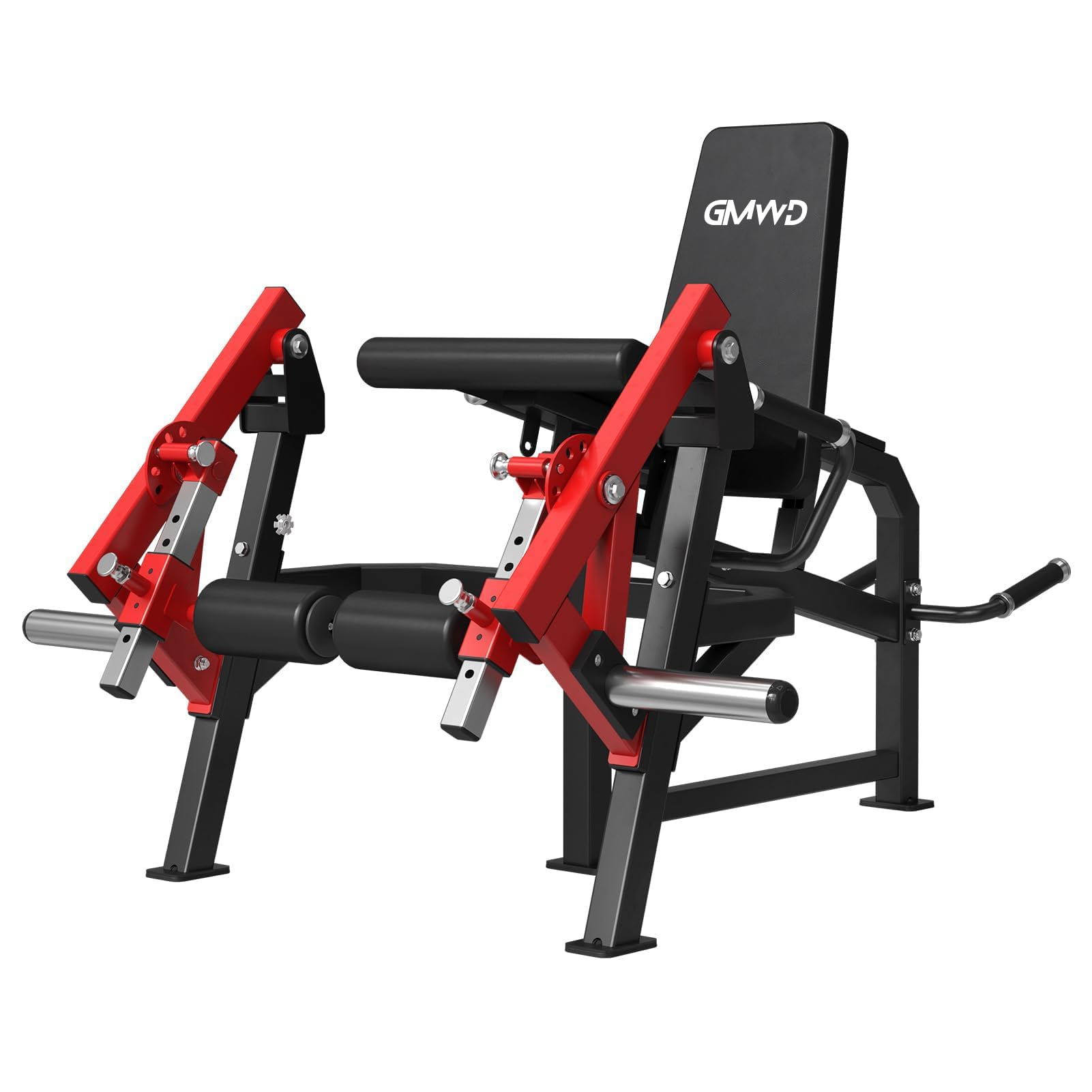
GMWD LE03 Leg Extension and Curl Machine

GMWD LE03 Leg Extension and Curl Machine

Single-leg training

Our Score 8.4/10
Check Price

Worth Noting

  • Left and right arms can sit unevenly
  • Paint can arrive chipped or scratched
Footprint
48"D x 32.5"W x 41"H
Resistance
440 lb
Machine Weight
115 lb
Max User Weight
700 lb
Read the full review

Each arm on the GMWD LE03 loads and moves on its own, which sounds like a small thing until you've spent a month leading with your stronger leg. Load one side only and the weaker leg does all the work — the only honest way to find out how big the gap is, and then to close it one plate at a time.

That's why this is our pick for uneven legs, whether the difference comes from an old injury or years of favoring one side. The same pop pins give you a standing curl alongside the lying version, so three exercises land on a 32.5 by 48-inch footprint, and the 115-pound frame backs a 440-pound tension rating with a 700-pound user rating. Six ankle positions, three seat settings and two backrest settings do the fitting.

The hardware is the part to watch. Movement through the arms works nuts and bolts loose over the first few weeks, so a dab of thread lock at assembly saves a re-torque later, and a monthly check of every bolt is cheap insurance. The pop pins themselves are the good part: no tools, no unbolting, and the settings hold where you put them.

Bottom line: Independent arms are the reason to choose this one: you can load a single side and find out how big the strength gap really is.

How We Chose and Tested the Best Leg Extension Machines

We started by mapping the options that could realistically fit a home gym: plate-loaded and selectorized machines with published footprint dimensions, weight limits, and adjustment ranges, then filtered out models with vague specs or duplicate rebrands. That left seven machines, which we assembled ourselves and used for eight months.

Each machine lived in a real training space—my garage gym and a teammate’s spare-room setup—and got used on scheduled leg days, usually two sessions a week, with a mix of light high-rep sets and heavy work. We timed solo assembly with a stopwatch and noted where instructions stalled or a second person would have helped. Once built, we checked footprint against a standard gym mat, then ran the same warm-up: set the back pad and ankle roller for each tester’s lower leg length, extend from full flexion to lockout, and watch whether the machine shifted, the pad dug in, or the arc felt jerky.

We kept notes on sturdiness under load—whether the frame walked across the floor, the seat flexed, or the roller assembly developed play after weeks of use. Build quality showed up in the details, too: loose bolts, pad seams, and finish chips after we moved each machine for cleaning. Range of motion got checked against each tester’s knee comfort, not just the spec sheet, and we judged value by how often the machine got chosen over free weights, not by sticker price alone. After eight months, the machines that held their settings, stayed quiet, and still felt solid are the ones we’d recommend; the ones that needed constant tightening did not make the cut.

How to Choose a Leg Extension Machine

Start with how the resistance is applied

A plate-loaded arm is the simplest thing you can buy and the cheapest to keep working, but a straight arm is lightest at the bottom of the extension, exactly where your quad is strongest. A cable and pulley holds tension through that stretch, which is why the LIONSCOOL feels different from the plate machines at the same weight. Ratio loading, as on the Mikolo LE12, multiplies what a small stack of plates delivers.

Decide your working weight before you shop, then check the stated rating against it rather than against the marketing. If you're lifting heavy singles, a plate arm with a long post is the safer buy; if you train in higher rep ranges, a cable or ratio system will feel better through the set.

Adjustment is about the pivot, not the hole count

A leg extension is only comfortable when your knee sits roughly under the machine's pivot; everything else is secondary. That makes seat depth the adjustment that matters most, and it's the one budget frames skip — some here move the cushion up and down but not forward and back. If you're much taller or shorter than average, put seat depth ahead of the total number of positions.

The ankle roller should sit just above your instep and roll with your shin rather than rub against it. Rollers that bind are the difference between a set you finish and one you cut short.

Footprint, arm travel, and getting on and off

The depth figure in a listing covers the frame at rest, not the space the arm sweeps through as it lifts. Mark the footprint on the floor with tape, then add a couple of feet in front for the arc and for your own legs.

Entry matters too. A machine with a knee holder asks you to lift a pad every time you sit, while the LIONSCOOL's open front removes that step at the cost of thigh support. In a shared room, the gap between a 21-inch and a 43-inch width is the gap between keeping the machine and storing it.

Frame weight tells you more than the ad copy

A 136-pound frame and a 55-pound frame can carry the same rating and behave nothing alike. Mass low in the frame is what keeps a machine from walking across the floor when you push hard, and it's why the heavier picks here need less fuss about mats and leveling. If your floor is carpeted or uneven, either buy weight or plan to set plates on the base before your first set.

Whatever you choose, tighten every bolt again after a week of use. Movement through the arms works hardware loose, and a dab of thread lock at assembly saves a re-torque later.

Frequently Asked Questions

Final Verdict

For most home gyms the GMWD LE02 is the machine to buy: 28+5 leg positions and four seat settings land the pivot on your knee, the 95-pound frame stays where you put it, and the 34-inch depth leaves room for a bench. If floor space is the binding constraint, the Mikolo LE00 covers 7.28 square feet and takes plates, bands or a cable. If your legs are uneven after an injury, the GMWD LE03's independent arms are the reason to spend more.