Strength & Weights

Best Leg Curl Machines of 2026

Leg curls train the hamstrings through knee flexion, which is the one thing squats, deadlifts, and hip thrusts never quite ask of them — and that's the gap most home gyms live with for years. A dedicated leg curl machine closes it, but it also eats floor space to do a single movement, which is why so many of us try to get away with a bench attachment and a stack of plates. The right machine fixes both: real hamstring isolation without turning your garage into a commercial gym.

I spent six months rotating seven machines through my own garage setup, from plate-loaded attachments to full seated units, and the gap between them is sharper than the marketing suggests. Seated versions keep tension at the top of the curl, lying versions build it closer to the bottom, so the right pick depends on where you feel weak. The rest comes down to assembly: a machine that rocks at 90 pounds will rock forever. The picks below cover the whole spread, and each one earned its floor space.

#1

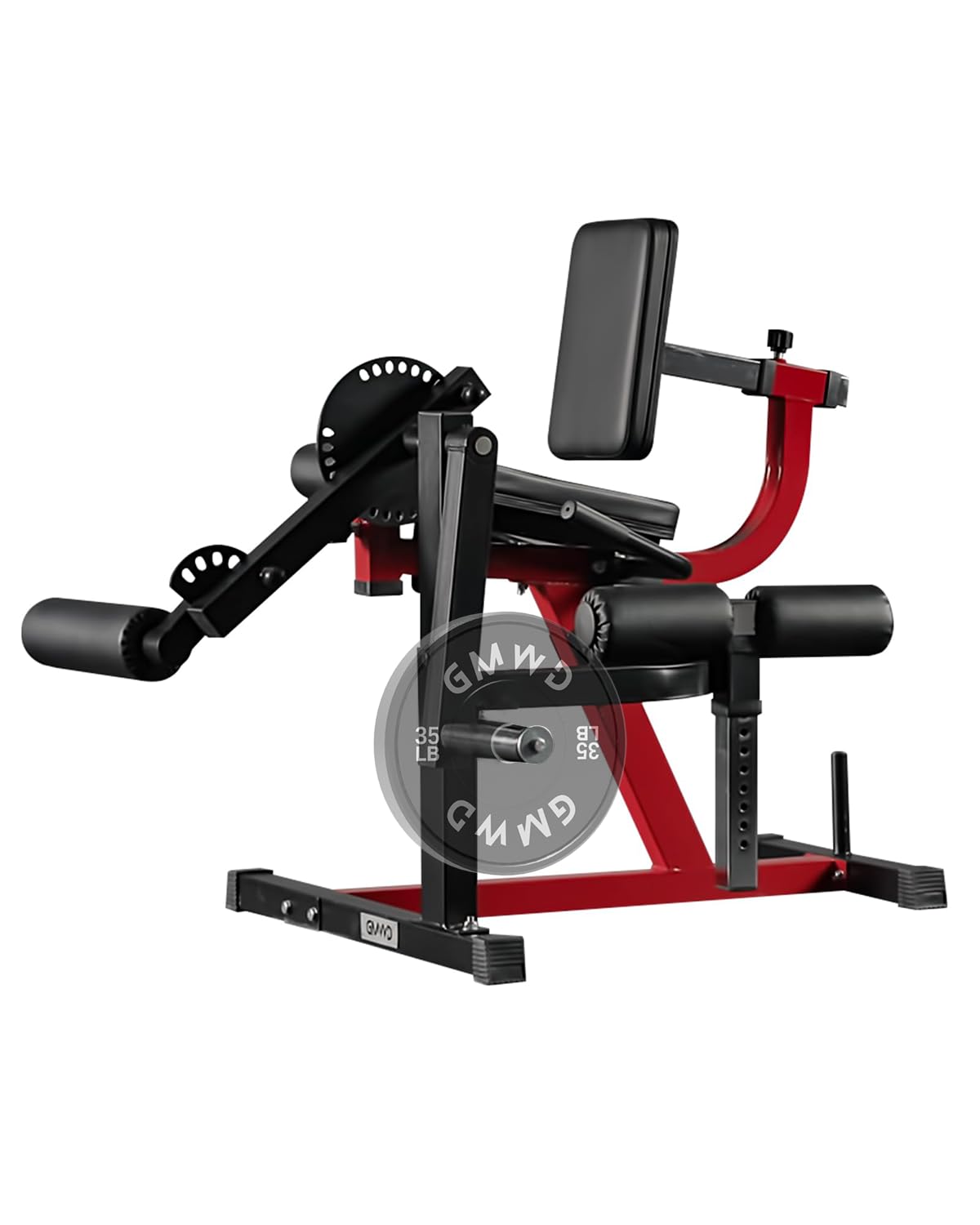
GMWD LE02 Leg Curl Machine

Top Pick
GMWD LE02 Leg Curl Machine

Small home gyms

Our Score 9.0/10
Check Price

Worth Noting

  • Plate storage area favors smaller plates
  • Adjustment detents lack position numbers
Footprint
34"D x 36"W x 37"H
Plate Load
300 lb
User Weight Limit
500 lb
Seat And Back Adjustment
28+5 leg positions, 8 backrest positions, 4 seat positions
Read the full review

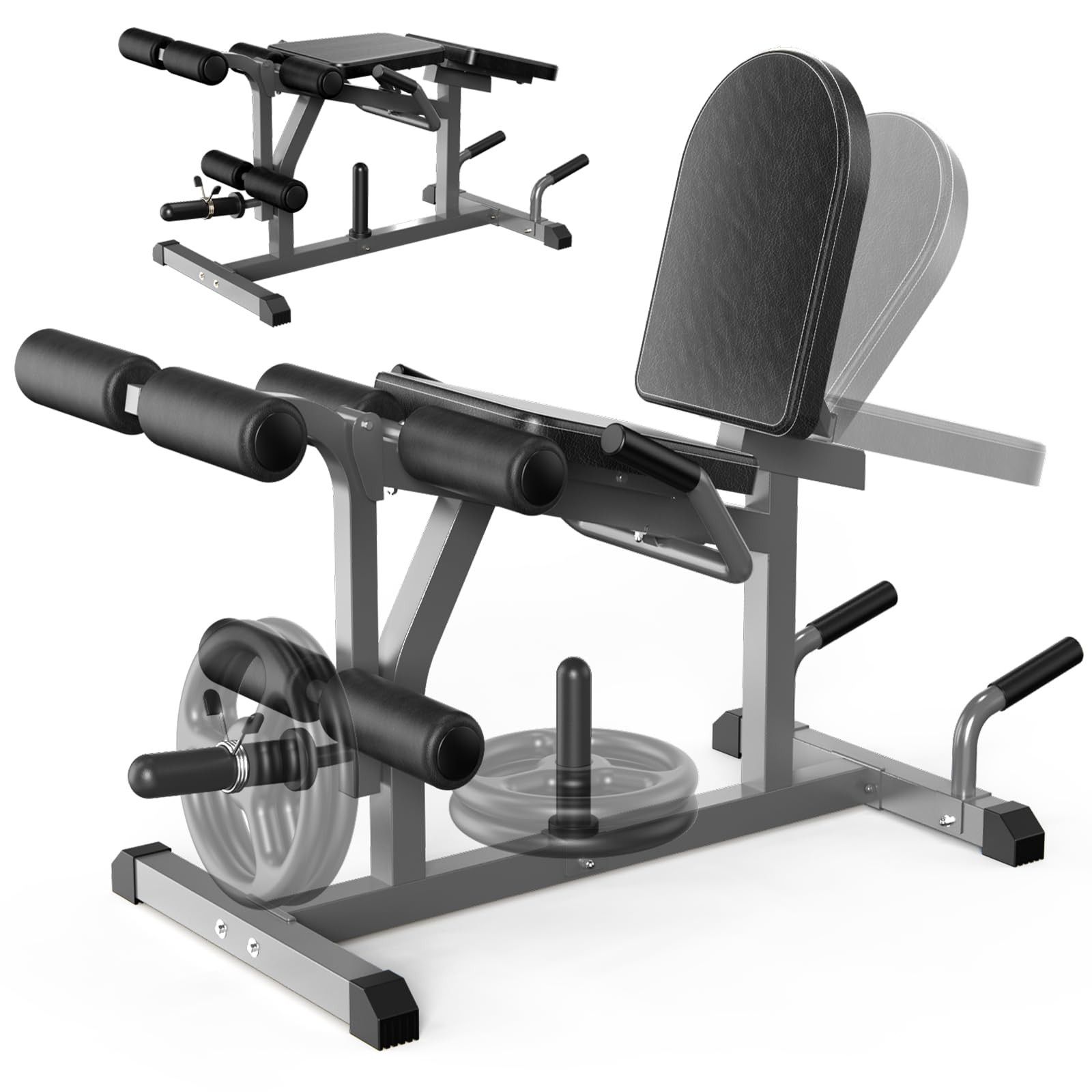
A 34-by-36-inch footprint is the first thing that makes the LE02 easy to live with: it fits a corner, and the pull-pin swap means one machine covers leg extensions and lying curls. The 95-pound frame is heavy enough to feel planted at home, and the 500-pound user limit gives most lifters headroom.

What separates it from the budget machines here is the fit. It offers 28+5 leg positions, eight backrest positions, and four seat positions, so you can line the ankle roller up with your lower shin instead of chasing a compromise. We also like that the padding is thicker at the seat edges, where a leg machine usually gets uncomfortable. The 300-pound plate ceiling is the honest limit; it is fine for most home lifters, but not for someone chasing heavy loading.

The switch between modes is the detail that makes it liveable. You are not unbolting a carriage or moving a separate bench; the removable pin changes the setup, and the fixed handle gives you something to hold while you settle in. That matters in a small gym, where the best machine is the one you do not dread setting up.

We rank it first because it gets the everyday job right: a stable, compact 2-in-1 with enough adjustment for different bodies. Stronger lifters should look at the higher-capacity plate-loaded picks, and anyone with a very short or very long inseam should check the roller range before ordering. For most home gyms, that is the trade we make.

Bottom line: We recommend the GMWD LE02 for most home gyms because it balances a compact footprint, a planted feel, and two leg exercises in one machine.
#2

Z ZHICHI 2-in-1 Leg Machine

Z ZHICHI 2-in-1 Leg Machine

Tight budgets

Our Score 9.0/10
Check Price

Worth Noting

  • Lying-curl head position can feel awkward
Footprint
7.9 sq ft
Machine Weight
44.1 lb
Weight Capacity
660 lb
Plate Compatibility
1" and 2" plates
Read the full review

At the lowest price tier in this group, the Z ZHICHI is the easiest way into a 2-in-1. The specs are more generous than the price suggests: a 660-pound capacity claim, a 20-kilogram frame, and a claimed 7.9-square-foot footprint. It also works with both 1-inch and 2-inch plates, which is useful if you already own standard weights.

The height adjustment under the seat is a thoughtful touch for lying curls; it lets you raise the pad instead of propping your upper body on a rolled towel. The three backrest positions and two seat angles give you a reasonable range for a budget machine, and the padding is adequate for moderate loads.

We see it as a starter machine, not a heavy-load default. The light frame can move under pressure, and the claimed 7.9-square-foot footprint still needs a width check before you order. The 660-pound capacity is a claim, not a license to load it like a commercial machine.

For light-to-moderate home use in a tight space, those compromises are easier to accept. If you plan to load heavy plates or train near failure often, the sturdier picks here are worth the step up. It is a machine we keep for a first setup, not for a garage gym with a strong lifter.

Bottom line: We recommend the Z ZHICHI as a low-cost starter for light-to-moderate home use, provided you check the footprint and keep loads within its comfort zone.

#3

Mikolo LE12 Leg Curl Machine

Mikolo LE12 Leg Curl Machine

Smooth premium training

Our Score 8.8/10
Check Price

Worth Noting

  • Premium price tier
Footprint
56.5"D x 51.18"W x 47.24"H
Load Ratio
1.0/1.1/1.2
Resistance
120 lb
User Weight Limit
400 lb
Read the full review

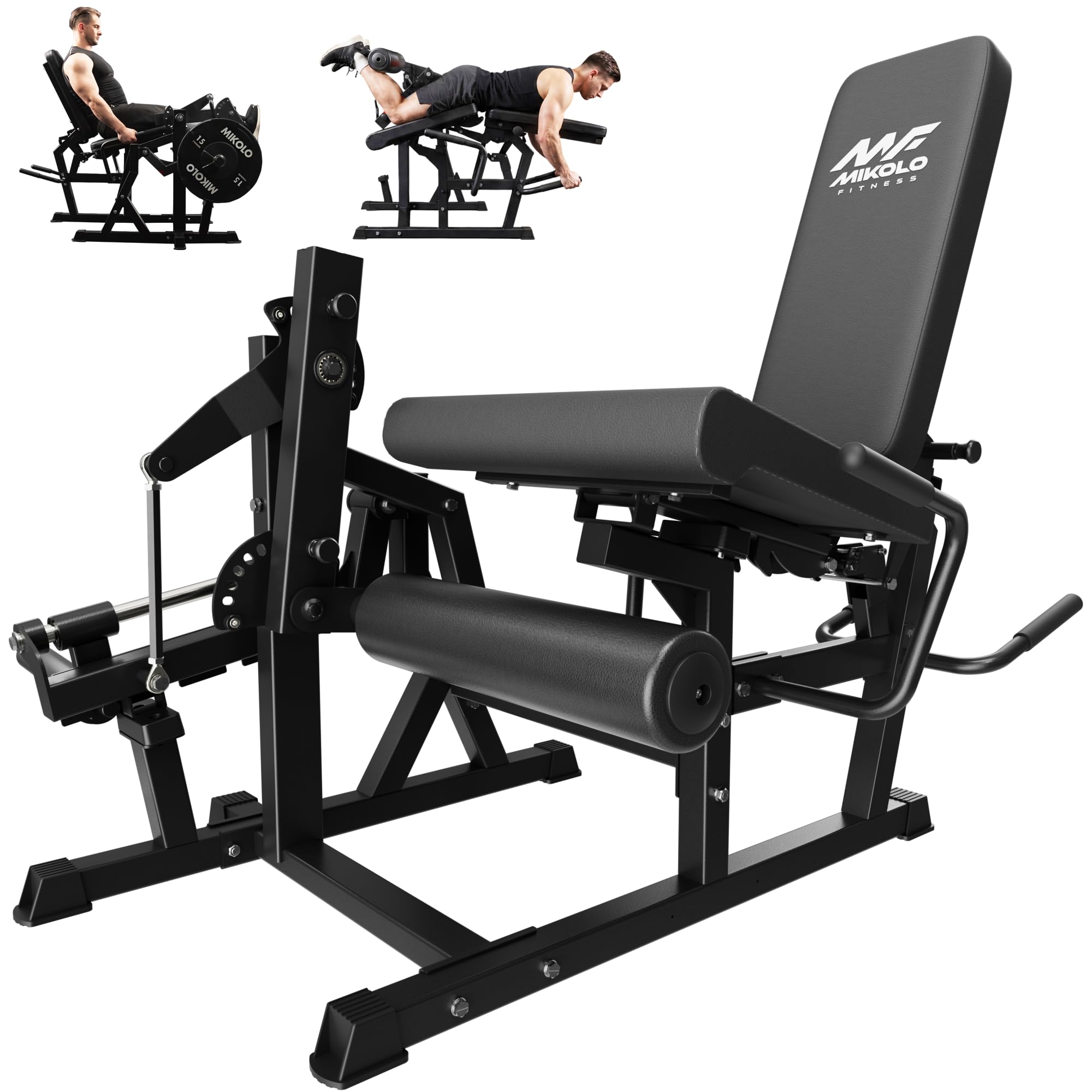
Constant-tension resistance is what sets the LE12 apart. The variable load ratio lets you switch among 1.0, 1.1, and 1.2 without stripping plates, and the system is designed to keep the load smooth through the range. The 136-pound frame and eight starting positions make it feel more like a club machine than a budget bench.

We think it is the best pick here for someone who cares about feel more than maximum load. The pull-pin switch between seated extensions and lying curls is quick, and the V-tilt seat shape gives you room to breathe instead of folding you into your own stomach. If you have used a plate-loaded machine with a dead spot at the top, this is the opposite experience.

The footprint is the first practical catch: 56.5 by 51.18 inches is the largest here, and that is a real commitment in a garage gym. Measure the floor before you fall for the smooth action. The shin pad also needs attention; set the starting position so the roller sits cleanly, because rubbing at the Achilles will ruin the set.

The 120-pound resistance ceiling is the bigger limit for strong lifters. If you are already repping heavy plate-loaded curls, this is not the machine for you. For a lifter with the space and a moderate working weight, the LE12 is the most refined machine in this group.

Bottom line: We recommend the Mikolo LE12 for lifters who want the smoothest, most adjustable resistance and can trade maximum plate load for a polished feel.

#4

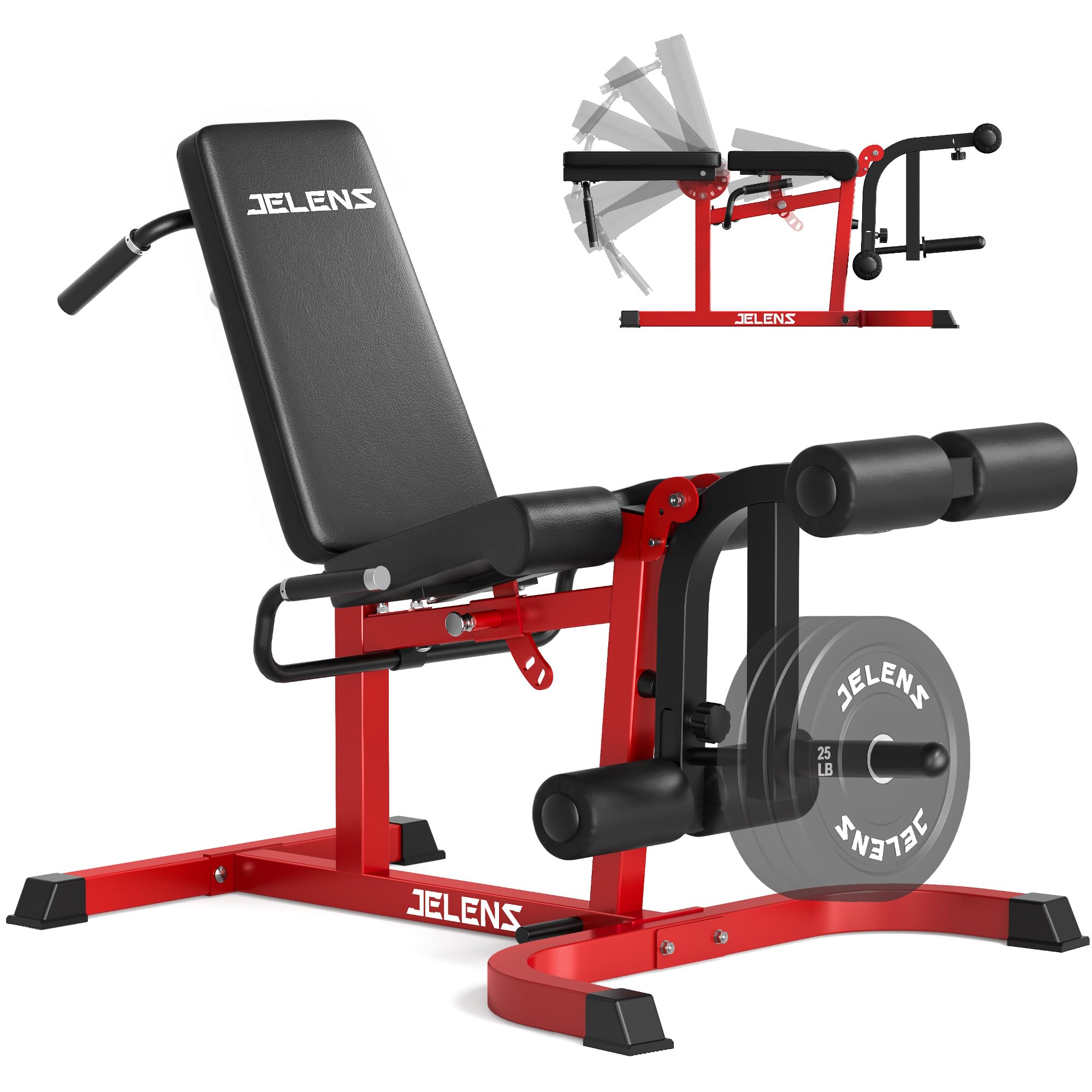
JELENS J10 Leg Curl Machine

JELENS J10 Leg Curl Machine

First home gym

Our Score 8.8/10
Check Price

Worth Noting

  • Seat depth does not adjust
Frame
H-shape steel
Warranty
1 year
Resistance
440 lb
User Weight Limit
500 lb
Read the full review

A compact entry-level 2-in-1 with a 440-pound resistance rating and a 500-pound user limit, the JELENS J10 is built for lighter home use. The H-shape steel base and linear bearing straps are the parts that matter; the pads and handle are there to keep you neutral while you work quads and hamstrings.

We like the easy-entry shape for a small room. The backrest and handle are positioned to keep your upper body from rocking, and the one-year warranty is a reasonable safety net at the budget end. The assembly is straightforward enough that it does not dominate a weekend.

The central joint is the fit detail to watch. It can crowd your knees if you have a narrower stance, and the padding does not rotate enough to fix that for every user. Check your knee clearance before you commit; a leg machine is only as good as its setup.

Stability is the bigger caveat as the load climbs. Keep the J10 on a level surface, use collars, and stay within moderate weight; if you plan heavy work, the sturdier machines here are worth the extra money. For lighter training and a first home gym, it covers the basics without taking over the room.

Bottom line: We recommend the JELENS J10 for lighter home use and shorter lifters, as long as you keep the load moderate and check knee clearance.

#5

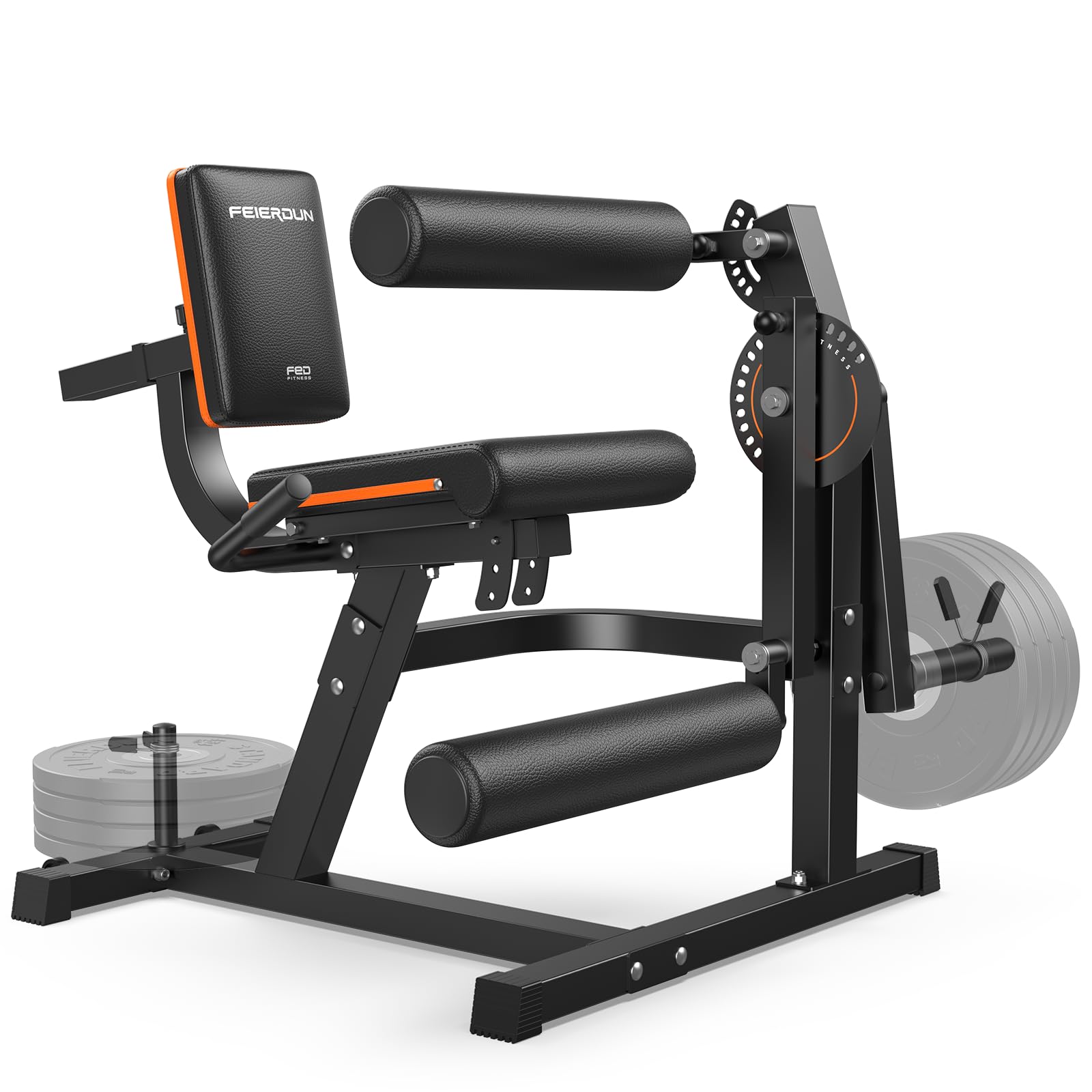
FEIERDUN 4-in-1 Leg Machine

FEIERDUN 4-in-1 Leg Machine

Budget leg days

Our Score 8.6/10
Check Price

Worth Noting

  • Weight post tight for thick plates
Warranty
1 year
Footprint
38.5"D x 34"W x 38.5"H
Assembly Time
Under 40 minutes
Weight Capacity
700 lb
Read the full review

For a first home leg machine, this is the budget package we point to first: a 700-pound capacity claim, a 38.5-by-34-inch footprint, and a 4-in-1 layout with linear bearings. We see the leg extension and curl as the reason to buy; the extra positions are a bonus, not the main event.

Assembly is one of its better stories. The hardware is organized by step, the instructions are clear, and the listed build time is under 40 minutes, which is realistic for a home machine if you lay the parts out first. The padded seat and curved edges make longer sets more tolerable, and the linear bearings make the movement feel smoother than the price suggests. The compact footprint also leaves room for a bench or rack nearby.

The trade-off is load. The frame can shift when you push heavier plates, so check the bolts after assembly and keep the load within what the machine holds comfortably. The 4-in-1 extras are also less compelling than the core extension and curl; treat them as a bonus rather than the reason to buy. For a first home leg machine, those are manageable compromises at the budget end.

Bottom line: We recommend the FEIERDUN for budget-minded home lifters who want both leg extensions and curls without paying premium prices.

#6

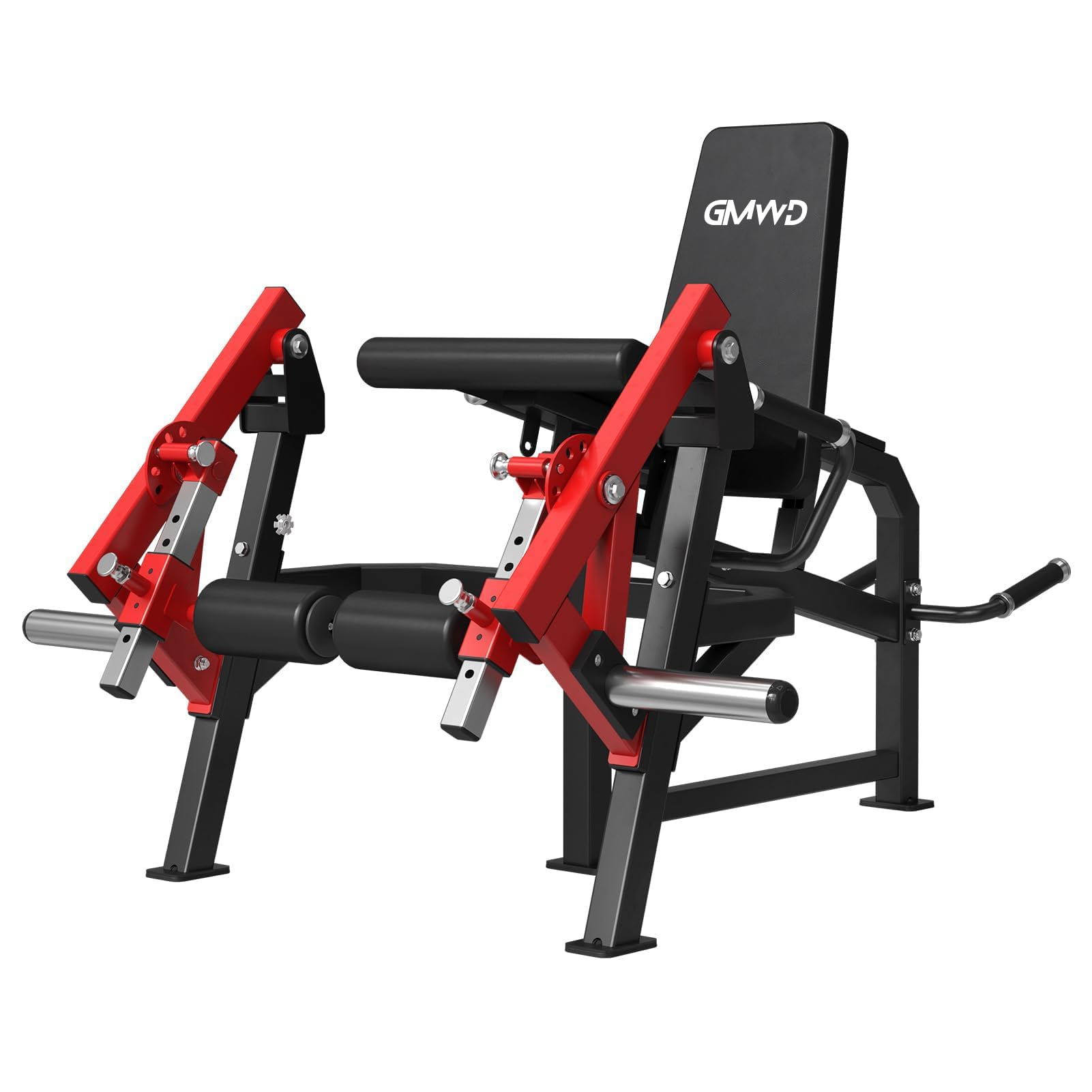
GMWD LE03 Leg Curl Machine

GMWD LE03 Leg Curl Machine

Single-leg training

Our Score 8.4/10
Check Price

Worth Noting

  • Premium price tier
  • Arms need side-to-side alignment
Frame
50x50 mm 14-gauge alloy steel
Stations
Three lower-body stations
Footprint
48"D x 32.5"W x 41"H
User Weight Limit
700 lb
Read the full review

Independent left and right arms are the reason to look at the LE03. Each side loads and moves on its own, so you can work one leg at a time and see whether the stronger side is hiding a weakness. The 115-pound frame and 32.5-by-48-inch footprint make it a more serious machine than the budget 2-in-1s, while the quick pop-pins cover leg extensions, lying curls, and standing curls.

The 4-in-1 label is accurate, but the standing curl is the station that makes it different from most home machines. The thigh pad and handle give you something to brace against, and the ankle roller adjusts through six positions. We like that the seat and back pads move independently; it is easier to get the pivot close to your knee without folding yourself into the machine.

What earns it runner-up status is the unilateral training. If your left and right legs feel different under load, the independent arms expose that quickly, and you can train the weaker side without adding a separate plate-loaded station. The heavier frame also feels more settled than the budget machines when you load it up.

The finish needs a careful look on arrival; check the frame before assembly, because a marked tube is easier to deal with before the hardware goes on. Beyond that, the machine rewards a deliberate setup: take the time to match your stance before adding plates. It is the one here that treats each leg as its own project.

Bottom line: We recommend the GMWD LE03 for lifters who want independent leg training and a planted frame, and who will pay for that versatility.

#7

Titan Fitness Leg Curl Machine

Titan Fitness Leg Curl Machine

Heavy-duty home use

Our Score 8.4/10
Check Price

Worth Noting

  • Premium price tier
Footprint
36"D x 42"W x 39"H
Upholstery
HeftyGrip Vinyl
Seat Adjustment
7 seat depth positions and 3 seat angle positions
Weight Capacity
300 lb
Read the full review

A 108-pound steel frame and a 300-pound rating make the Titan Fitness machine the simplest serious build here. The plate-loaded arm switches between extensions and curls with a pull-pin, and the fixed handle and rotary thigh clamp keep you locked in. We think it is the heavy-duty pick for someone who wants a machine that feels planted and does not need a lot of extra stations.

The details are old-school in a good way. The seat has seven depth positions and three angle positions, and the vinyl upholstery wipes clean after sweaty sessions. We appreciate that Titan uses a straightforward loading post and a fixed handle instead of adding complexity that does not help the lift.

The lap-bar knob is the detail to check before you load; if it sticks, the thigh clamp becomes a nuisance. The 300-pound ceiling is also the main limit, lower than some cheaper machines claim, so strong lifters will want more headroom. For a lifter who wants a simple, sturdy plate-loaded machine and stays within its rating, it is a satisfying buy.

Bottom line: We recommend the Titan Fitness machine for lifters who want a simple, heavy, plate-loaded build and do not need the highest load rating.

#8

Goimu 4-in-1 Leg Machine

Goimu 4-in-1 Leg Machine

Four-way leg work

Our Score 8.0/10
Check Price

Worth Noting

  • No stated warranty
Footprint
41.3"D x 39.9"W x 38.6"H
Machine Weight
88.5 lb
Weight Capacity
750 lb
Adjustment Settings
47
Read the full review

Forty-seven adjustment settings is the headline, and the Goimu backs it with a 4-in-1 layout, a 750-pound capacity claim, and an 88.5-pound frame. The linear bearings are meant to keep the movement smooth, and the midrange price makes the adjustment count look like a lot of machine for the money.

On paper, the extra positions are useful. They let you shorten or lengthen the range, and the 4-in-1 design gives you more than just extensions and curls. We still judge a leg machine on the two main movements, and the Goimu's setup is more complicated than the simpler 2-in-1s here.

The frame is the compromise. At 88.5 pounds it is lighter than the premium picks, and it can feel less planted when you load it heavily; keep the plates secured and the machine on a level surface. The 41.3-by-39.9-inch footprint is also larger than the compact GMWD, so the adjustment count costs you floor space.

What holds it back is the overall finish. It is a busy machine with a lot of settings to check, and it does not have the settled feel of the FEIERDUN or the GMWD. If the four-way adjustment is the feature you want, it is worth a look; if you just want a solid leg curl and extension, the simpler picks are easier to live with.

Bottom line: We recommend the Goimu for budget buyers who want the most adjustment settings, provided they keep loads moderate and check the frame's stability.

How We Picked and Tested Leg Curl Machines

We started by pulling every leg curl machine a home buyer could realistically assemble and fit — standalone seated and lying units, plate-loaded bench attachments, and a couple of cable-based options — then filtered by footprint, weight capacity, pad adjustment range, and whether the frame worked alongside a standard bench or rack. Seven made the cut. We weighed price against frame gauge, hardware, and upholstery rather than against feature count, since a long list of adjustments means nothing on a frame that flexes.

Each one went into a real training space: a two-car garage, a spare bedroom with a low ceiling, and a living-room corner with six feet of wall to spare. Two testers, one at 5'4" and one at 6'2", ran them through a full lower-body rotation three times a week for six months, starting light and working up. We timed solo assembly out of the box, noted which steps needed a second pair of hands, and measured the footprint once each was built.

Stability got checked every session the same way: load the machine near the top of its range, curl to failure, and watch whether a foot lifted or the frame crept across the floor. For comfort, we noted where the ankle pad landed on the Achilles and whether the knee pad held the leg down without pinching — a machine that's an inch off is unusable for one tester and fine for the other. Durability showed up in unglamorous places over six months: stretched seams, cable fray at the pulley, a new wobble in a pivot that was tight at week one. We also logged how adjustability worked in practice, whether one pin moved a single pad or the whole arm, and whether you had to stand up mid-set to change it.

How to Choose a Leg Curl Machine

Fit Your Body Before You Choose Features

The first thing to check is not the weight rating but where the machine puts your knee and ankle. Sit on the bench and line up the pivot with the side of your knee; the ankle roller should sit on the lower shin, not on the Achilles. More seat, back, and roller positions make that easier. The GMWD LE02's 28+5 leg positions, eight backrest positions, and four seat positions are a good example of a range that fits different bodies. We put fit first because a machine that does not line up will not get used.

Decide How Much Stability You Need

Stability is a design and setup question, not just a weight number. A heavier frame with a wide base generally feels more planted, but the floor, assembly, and load matter too. Budget machines can shift when you add plates; premium machines like the Titan Fitness feel more settled, though they cost more and may have a lower load ceiling. If you train near failure or load heavily, prioritize a planted frame and check the bolts after assembly. A level mat and careful plate loading help, but they do not turn a light frame into a heavy one.

Match the Resistance to Your Training

Plate-loaded machines are simple and give you the load you can hang on the post. Constant-tension machines use a different resistance system; the Mikolo LE12, for example, offers a 120-pound ceiling with a variable 1.0/1.1/1.2 load ratio. That is plenty for moderate training and smooth micro-loading, but not for a strong lifter who needs 300 pounds. Check whether a capacity figure refers to plate load, resistance, or user weight, and leave headroom. The cheaper machines may advertise higher numbers, but the feel under load matters more than the claim.

Measure the Footprint and the Switchover

A 2-in-1 saves space only if you can actually move around it. Measure the depth and width, then add room for the plate post and for getting on and off. The compact GMWD LE02 is 34 by 36 inches; the Mikolo LE12 is 56.5 by 51.18 inches, so the premium feel costs floor space. Also check how the machine switches between curl and extension: a pull-pin is faster than unbolting a carriage. If you only use one movement, a dedicated machine may be simpler.

Plan for Assembly, Comfort, and Support

Assembly is a one-time job, but comfort is every session. Look for padding that supports the shin and thigh without pressure points, and a seat that lets you breathe rather than folding you forward. Budget machines often need more careful setup; the FEIERDUN lists assembly under 40 minutes, while the Titan has a lap-bar knob to check before loading. Warranty coverage varies from a year to none, so check it before you buy if parts support matters.

Frequently Asked Questions

Final Verdict

For most home gyms, the GMWD LE02 is the machine to buy: it fits a corner, switches between extensions and curls quickly, and has the broadest adjustment range among the compact picks. Its 300-pound plate ceiling is the main reason to look elsewhere if you load heavily. When unilateral work is the priority, the GMWD LE03's independent arms are worth the premium. If you want the smoothest resistance and have the floor space, the Mikolo LE12 is the refined alternative. Start with your working weight and footprint; those two answers settle most of the choice.