Strength & Weights

Best Doorway Pull-Up Bars of 2026

A doorway pull-up bar has one job, and it can go wrong in about half a second: hold your body weight off a piece of trim you didn't install and can't see inside of. I've had one shift under me mid-set — not a full drop, just a slow slide — and it was enough to end the workout and start a research project. What a bar that actually fits your frame fixes is that hesitation. You stop bracing for movement and start thinking about the last rep.

My team and I have spent the past four months hanging, pulling, and slowly lowering our way through 14 bars, mounted in doorways from a narrow closet frame to a generous 36-inch opening. Here's what most first-time buyers don't realize: the width range printed on the box matters more than the weight rating, because a bar an inch shy of your frame will either refuse to seat or bear down on the trim in the wrong place. Everything below earned its spot on an actual doorframe, not a spec sheet.

#1

AmazeFan Pull-Up Bar

Top Pick
AmazeFan Pull-Up Bar

Most doorways

Our Score 9.2/10
Check Price

Worth Noting

  • Can leave dark scuffs on light trim
  • Won't span openings wider than 36.22 in
Bar Weight
8.5 lb
Mount Type
Hook-on, arrives assembled
Hook Spacing
21.65 in
Weight Limit
400 lb
Read the full review

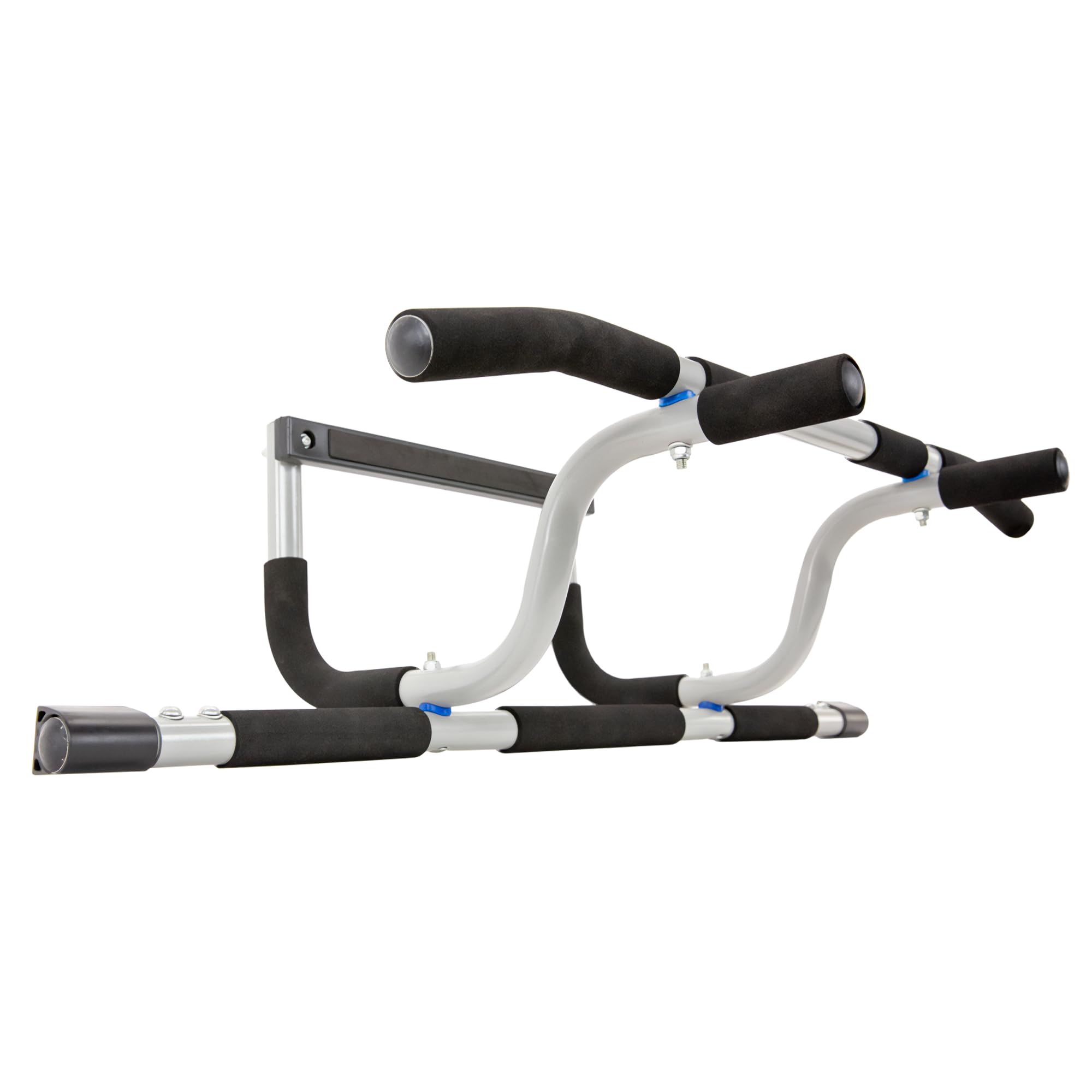
Twenty-one and a half inches is the number that earns this bar its place at the top of the list. That is the gap between the two hooks, and it is why the AmazeFan settles into narrow closet frames and corner doorways where a wider lever bar has nothing to grab. It arrives assembled, so getting set up is a lift and a hang rather than an afternoon with a screwdriver.

We hung it in openings of three different widths and it was the hook-on bar we trusted fastest. The frame carries 8.5 pounds of steel rated to 400 pounds, and the parts that touch your trim are silicone rather than foam, which matters a year in, because foam crushes and flakes while silicone just sits there. The angled ends give you overhand, neutral and close grips without shifting the bar.

Your doorway is still the deciding factor. The bar measures 36.22 inches across, so a wide cased opening is out, and deep or heavily bevelled casing can keep it from seating flat against the trim. Hanging it is a two-second job once you have checked that the top of the frame has a surface for the hooks to catch.

Between sessions it lifts off and folds against a wall, which is the difference between owning a pull-up bar and turning a hallway into a gym.

Bottom line: We recommend it to almost anyone with a standard doorway: it hangs in seconds, reaches openings other bars cannot, and the silicone pads outlast foam.

#2

Maximiza Screw-In Bar

Maximiza Screw-In Bar

Permanent mount

Our Score 9.0/10
Check Price

Worth Noting

  • Needs solid wood trim at least 1 in thick
  • Foam grips wear through with steady use
Mount Type
Screw-in brackets
Weight Limit
300 lb
Mounts Included
3 sets
Fits Frame Width
27–39 in
Read the full review

Three complete sets of screw-in mounts come in the box, and that one detail explains who the Maximiza is for: one bar, three doorways, no unclipping and re-leveling between them. We recommend it to anyone who wants the most planted feeling a doorway can offer.

The bar clamps into two fixed brackets instead of resting on friction, so your weight hangs from screws biting into the trim. We loaded it out at the ends, where a bar is most likely to tip, and it stayed square. A locking collar keeps the tube from spinning in the clamps, a small thing that becomes obvious the first time you do a set on a bar that rotates under you.

Installation is an afternoon with a drill and a level rather than a two-minute hang. Set the mounts where you can tighten the clamps hard, then check them again after the first week; that follow-up is the difference between a bar that feels welded in and one that creeps.

What you trade for the solidity is flexibility. Once the brackets are in, the bar lives in one of those three doorways, and the small holes stay behind when you move out. For a spare-room gym you use every week, that is a fair exchange for a bar that never leaves you wondering whether it seated.

Bottom line: If you want a bar that feels bolted to the house rather than balanced on it, this is the one we point to, provided your trim is solid wood.

#3

JFIT Deluxe 40-Inch

JFIT Deluxe 40-Inch

Wide doorways

Our Score 9.0/10
Check Price

Worth Noting

  • Telescopic joint can work loose during hard sets
Grips
Removable neoprene
Mount Type
Screw-in brackets
Weight Limit
300 lb
Fits Doorway Width
25.25–40 in
Read the full review

Forty inches is an unusually generous span for a doorway bar, and it is the reason to look at the JFIT first. Screwed into a wide cased opening or a double closet, it fills space that leaves other bars rattling with an inch of play at each end. The same bar telescopes down to 25.25 inches for a narrow frame.

Brackets, screws and sit-up plugs all come in the box, and the bar locks at your chosen width with a single telescopic joint, so give the collar a firm twist when you set it. The neoprene grips attach with velcro, which means you can slide them to where your hands actually land and pull them off to wash. Flip the bar to the lower position and it becomes a sit-up anchor.

In use, it is the slimness that stands out. The tube is narrow, the brackets are discreet, and the whole thing weighs a little over three pounds, so it goes up and comes down without a fight. We treat it as the budget screw-in option: it does the same fundamental job as the Maximiza and reaches further into wide openings.

At 300 pounds it is rated in the middle of this group, which is worth weighing against the 440- and 500-pound bars if you are a heavier lifter or you like your reps explosive.

Bottom line: Our pick when the opening is wider than a standard door, and the screw-in bar we suggest when you want a fixed mount without spending much.

#4

Iron Gym Pull-Up Bar

Iron Gym Pull-Up Bar

Quick sessions

Our Score 9.0/10
Check Price

Worth Noting

  • Foam grips tear with steady use
  • Needs a standard-width frame with a top lip
Bar Weight
4.7 lb
Mount Type
Hook-on lever
Weight Limit
300 lb
Grip Positions
Three
Read the full review

At 4.7 pounds, the Iron Gym is light enough to lift off its mounts one-handed and carry to another room, which is roughly how most people end up using it. It is the bar that made doorway pull-ups a mainstream idea, and the design has not needed to change: two hooks over the frame, three grip positions, a padded bar across the middle. Ours has hung in a hallway without anyone in the house complaining about it.

What we appreciated most is how completely it disappears. There is no bracket plate on the trim and no elevated frame jutting into the hall, just a slim bar above the doorway that you stop noticing until you walk through it.

Nothing needs assembling, either. You hang it on the frame and the bar's own geometry holds it there while your weight does the rest. Narrow, wide and neutral grips are built in, and the same bar goes on the floor when you want push-ups between sets.

It is a starting point rather than a finish line. Three hundred pounds covers steady training, and the three grips are the three you get, so nothing here grows with you as your training does.

Bottom line: We keep coming back to it as the easiest bar to live with: light, quick to hang, and forgiving for anyone new to pull-ups.

#5

KAKICLAY Multi-Grip Bar

KAKICLAY Multi-Grip Bar

Folding storage

Our Score 9.0/10
Check Price

Worth Noting

  • Unpadded metal can dent drywall above the frame
Bar Weight
11.6 lb
Mount Type
Hook-on, folds flat
Weight Limit
440 lb
Fits Door Width
21.65–36.22 in
Read the full review

The KAKICLAY puts the bar above the door trim, the same trick the Ultimate Body Press uses, in a frame that folds down when you are finished. For a tall lifter in a house with standard-height doors, those inches are the difference between a real dead hang and a dangling one.

It is the heaviest bar here at 11.6 pounds, and most of that is carbon steel rated to 440 pounds. The upper bar carries four separate grips plus angled ends, so you can cycle through widths without moving your hands far, and silicone protectors sit between the frame and the metal.

Folding is the part we keep coming back to. In a hallway where a fixed bar would be in the way all day, this one tucks up against the frame and stops being furniture.

The reservation is the wide grip. The ends angle out far enough that finishing a rep there is a stretch for anyone with ordinary arm length, so the neutral and close positions do most of the real work. If your program is built on close and neutral pulls, you will not miss it.

Bottom line: Worth it for the fold and the extra height, though the wide grips sit further out than most arms can finish a rep on.

#6

Ultimate Body Press XL

Ultimate Body Press XL

Taller lifters

Our Score 8.8/10
Check Price

Worth Noting

  • Fits doorways no more than 6 inches deep
  • Bulky 10.2 lb frame to move around
Bar Height
1 in above trim
Bar Weight
10.2 lb
Weight Limit
300 lb
Doorway Depth
Up to 6 in
Read the full review

Most doorway bars hang level with the top of your trim, which is exactly where a tall lifter's knees meet the floor at the bottom of a dead hang. The Ultimate Body Press XL raises the bar an inch above the trim and pushes it ten inches out from the wall, and that geometry is the whole reason to spend more.

It is a substantial piece of kit: 10.2 pounds of heavy steel tubing joined by ABS couplers, high-density foam on the grips, and expandable ends that fit the frame without a single hole. Setup takes minutes and no tools, and the ten-year limited warranty is the longest coverage in this guide.

Our verdict on the height is that it earns its keep if your knees are what is stopping a full hang, and does little for you if they are not. The grip layout is generous, with wide, neutral and close positions set far enough apart to feel like different exercises, and the elevated center means you can hang without folding your legs up.

What it asks in return is commitment to one doorway. Ten pounds of steel does not sling under one arm the way a four-pound lever bar does, so this is a bar you install and leave.

Bottom line: Buy this if your knees stop a full hang on a standard bar; the raised position is genuinely better, and we think it justifies the premium.

#7

Ally Peaks Adjustable Bar

Ally Peaks Adjustable Bar

Heavy lifters

Our Score 8.6/10
Check Price

Worth Noting

  • Bolts need re-checking or the bar loosens
Bar Weight
6.2 lb
Mount Type
Hook-on, silicone pads
Weight Limit
500 lb
Width Settings
Five levels
Read the full review

Five width settings is the pitch, and it is a good one: most bars give you a fixed span and hope your doorways are standard. The Ally Peaks steps out in stages to meet the opening, which helps in older houses where no two frames measure the same.

The other headline is the rating. At 500 pounds it is the highest in this guide, built from 1.7mm chrome steel as a doubled pipe rather than a single tube, and the pads that meet your trim are silicone instead of foam.

Assembly runs to four bolts and a few minutes, and the bar goes up without any drilling. It is a hook-on design, so it lifts off between sessions, and at 6.2 pounds it is light enough to move without a fuss.

Where it lands for us is as the heavy-duty alternative to the top pick: more capacity, more adjustment, and a stiffer bar for anyone whose weight has made a 300-pound model feel like a compromise. It is a lot of bar for the money.

Bottom line: A sensible choice for heavier lifters or oddly sized openings, as long as every bolt gets a proper tighten before the first rep.

#8

Sportneer No-Drill Bar

Sportneer No-Drill Bar

Certified safety

Our Score 8.4/10
Check Price

Worth Noting

  • Requires a solid wood door frame
  • Can slip if the frame is not square
Mount Type
No-drill tension
Weight Limit
440 lb
Certifications
ASTM, EN957, CA65
Fits Doorway Width
29.5–37 in
Read the full review

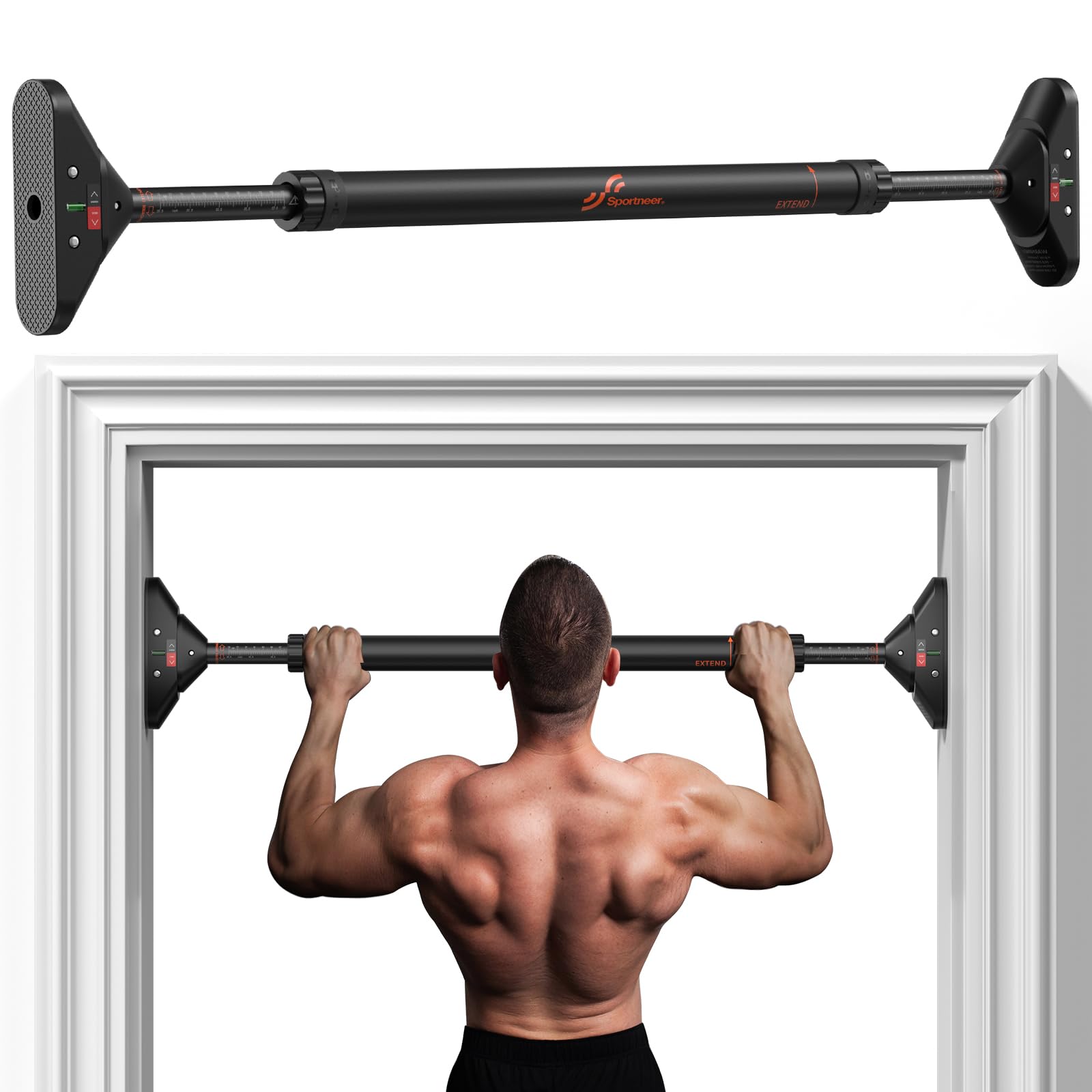
Sportneer is the only bar in this guide whose structural claims are third-party tested: ASTM and EN957 for the frame, plus California's Prop 65 for materials. If you want paperwork behind the thing holding you off the floor, that is the reason to start here.

The design is a tension bar, 3mm outer steel over a 1.5mm inner tube, rated to 440 pounds and wedged between your trim with two 6.5-by-1.8-inch PVC mats doing the gripping. It fits openings from 29.5 to 37 inches and goes up without a drill or a mark.

Setup is genuinely quick: a few turns to expand the bar, a check that the safety lock has engaged, and you are hanging. The mats are large enough to spread the load across a clean, painted frame rather than concentrating it on two small feet.

It is a sound choice where you would rather not put holes in the trim, and the certification is a real reassurance in a category where most safety claims come from the seller.

Bottom line: The bar we point to when independent safety certification matters more to you than a tool-free ten-second install.

How We Tested 14 Doorway Pull-Up Bars

We started with roughly 40 bars sold at the major retailers and cut the list by reading specs first: the doorway width each one spans, whether it locks in by tension or screws into the frame, the diameter of the grip, and how much it weighs. Anything that topped out under 32 inches got dropped, since that leaves out a lot of standard interior doors, and so did anything with a bar so fat it was uncomfortable to hold. That left 14.

Those 14 went into our own doorways for four months — the hallway frame I walk through twenty times a day, a spare-room door, and one older frame with three coats of paint on it. Each bar was installed by one person with no drill, and I timed it and counted how many adjustments it took to get the bar sitting level and the pads flush. Then came pull-ups, chin-ups, and slow negatives, done fresh and again at the end of a workout when form gets sloppy. Painter's tape at the contact points marked where each bar started, so a week later I could see whether it had crept.

To load each bar without gambling on a shoulder, we hung a weighted duffel from the center and left it overnight, then checked the welds, the foam, and the trim underneath. Grip got tested twice, dry hands and sweaty ones, and I noted whether the padding spun or flattened after a few dozen sets. Adjustability meant collapsing and reopening each bar to move it between doorways of different widths, which is where cheap hardware announces itself. Value came down to one question: did the cheapest bar survive that overnight hang without a creak, a spin, or a mark on the paint?

How to Choose a Doorway Pull-Up Bar

Measure the opening, then the trim

Pull-up bars clamp to the frame, so the number that matters is the clear width between the inside faces of the trim, taken at the top where the bar sits. A standard interior door runs 30 to 32 inches, and most bars cover roughly 25 to 40. Depth is the second measurement: the Ultimate Body Press XL, for instance, stops at six inches from trim face to trim face.

Then look up. A lever bar needs a lip or molding at the top for its hooks to catch, and a flush-cased opening gives them nothing to hold. Corner doorways and deep ornate casing defeat most lever designs, which is exactly where a narrow hook spacing earns its keep.

Pick a mount you can live with

Three designs, three different relationships with your trim. Lever bars hook over the top of the frame and lift off in seconds, but they depend on that lip and can scuff paint. Screw-in bars like the Maximiza drive brackets into solid wood and feel the most planted, at the cost of small holes and a drill. Tension bars wedge between the trim with no fasteners at all, which works beautifully on a solid, square frame and badly on a loose or hollow one.

If you rent, start with a lever bar. If the bar will stay up for years, drill.

Height decides how it feels

A bar level with the top of the trim is the standard, and it suits most people. It becomes a problem when your knees stop a full dead hang, because the bar sits low enough that your feet find the floor before your lats stretch. An elevated design such as the Ultimate Body Press XL or the KAKICLAY lifts the bar above the trim to buy that room back.

Stand in the doorway and reach up before you buy. You want clearance for your knuckles at the top and room to walk through without ducking at the bottom.

Grips, padding, and the other 23 hours

Count the grip positions you will genuinely use. Wide, neutral and close cover most training, and a bar that adds four more that are awkward to reach is busier rather than more versatile. Look at what touches your frame as well: silicone and dense rubber outlast the foam on cheaper bars, which is the first thing to go.

Last, decide whether the bar lives in the doorway or comes down. Folding and hook-on designs suit a hallway you share with other people; screw-in brackets suit the spare-room doorway you have claimed as a gym.

Frequently Asked Questions

Final Verdict

Fit, mount and how the bar feels under load settle this, and once you line these bars up on those three, the AmazeFan is the one we hand to most people. It goes up in seconds, reaches frames that stop longer lever bars, and its silicone pads mean the contact points will not crumble within a year.

Give the Maximiza a look if your trim is solid wood and you want the bar anchored rather than balanced. Take the JFIT when your opening runs past 36 inches, and start with the Ultimate Body Press XL if a low bar is what has been stopping your hangs.