Strength & Weights

Best Deadlift Jacks of 2026

A deadlift jack is one of those gym tools you don’t appreciate until you’re on the floor trying to slide a 45 onto a loaded bar. The right one lifts the barbell just enough to make plate changes quick, keeps your back out of it, and feels planted while you work. The wrong one wobbles, scratches your bar, or feels sketchy under a heavy pull. A good jack fixes the awkward, back-twisting part of deadlift day, whether you lift in a garage or a shared gym.

Over six months, we tested 10 deadlift jacks in a home garage gym and a busy strength gym, using steel plates, bumper plates, and the mixed piles real deadlift days create. We watched how easily each one slid under a loaded bar, how stable it felt with heavy weight on it, and whether it still worked smoothly after being kicked around between sessions. Price mattered only next to function: a cheap jack that lifted cleanly beat a fancy one that flexed or scratched the bar. The picks below are the ones I’d keep in my own gym.

#1

RitFit Deadlift Jack

Top Pick
RitFit Deadlift Jack

Everyday home gym

Our Score 9.6/10
Check Price

Worth Noting

  • Lifts one sleeve at a time
Assembly
No assembly required
Capacity
660 lb
Footprint
16.93"L x 7.87"W
Bar Contact
PVC-protected
Read the full review

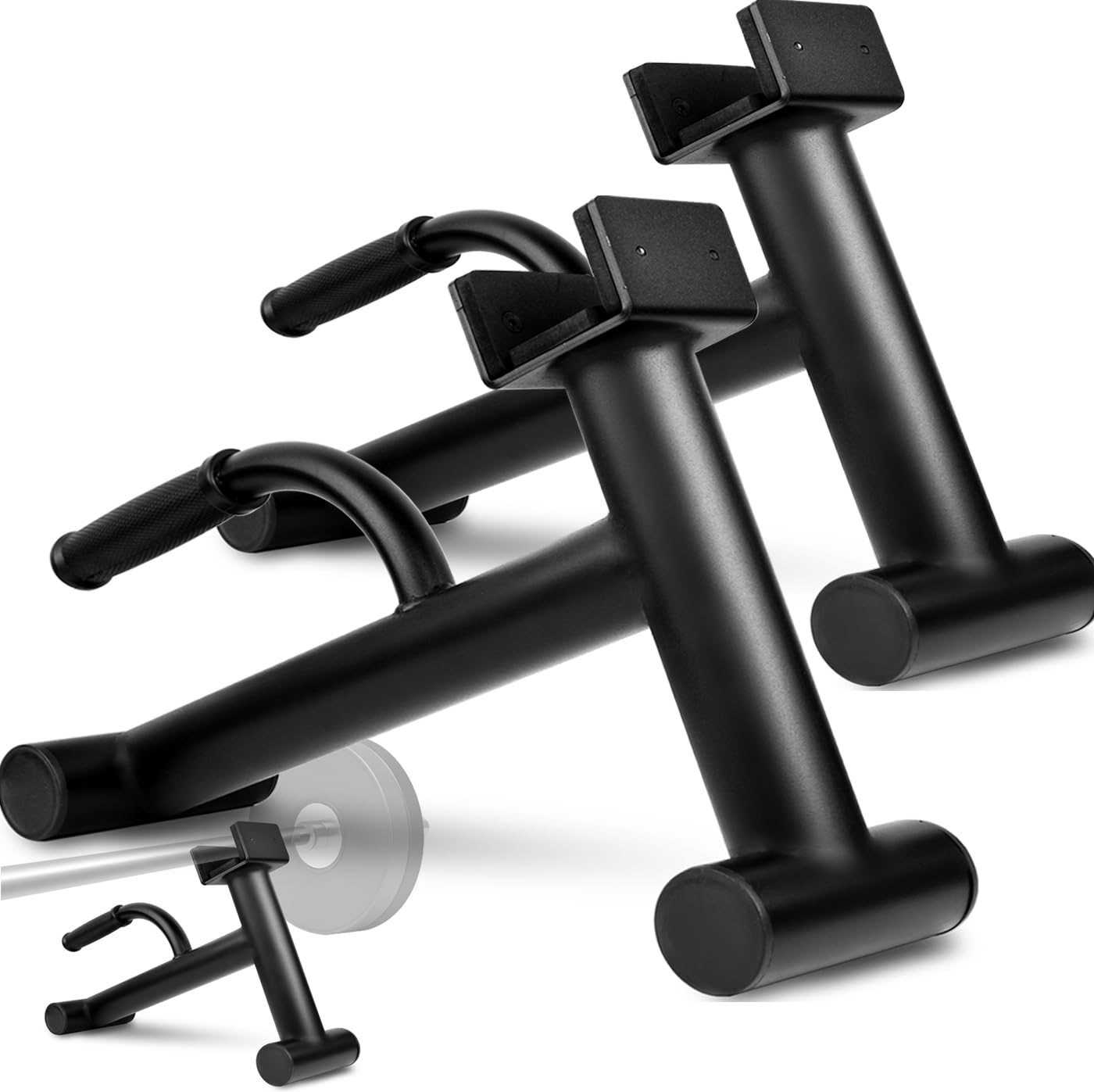
The first plate change on a loaded bar is the moment a deadlift jack proves itself. The RitFit sits low beside the sleeve, and the non-slip handle gives you a clear place to lever the bar up. Its 660-pound capacity is enough for most home-gym deadlifts, and the 16.93-by-7.87-inch footprint tucks against a wall when you're done. No assembly is the quiet luxury here: it comes out of the box ready to use, which matters when you're already warmed up and just want to add weight.

We made it our top pick because it balances the things that actually matter in a mini jack: a stable base, a protected bar contact point, and a footprint that doesn't demand permanent floor space. The PVC-protected base is the detail we appreciated most; it grips the floor and is kinder to a garage slab than bare metal. The wide base also gives you more margin when the bar isn't perfectly centered. It's not the cheapest mini jack here, but it's the one we trust as a default.

The limitation is built into the shape: it lifts one sleeve at a time, so the other end stays on the floor. If you want to raise the whole bar for two-sided loading, the Titan is the better tool. The handle sits where your hand expects it, and the base stays put when you lever the bar. That's the kind of small thing you notice every time you change plates.

Bottom line: For most home gyms, the RitFit is the deadlift jack we recommend: compact, stable, and rated high enough for everyday heavy pulls.

#2

Mikolo Deadlift Jack

Mikolo Deadlift Jack

Small home gyms

Our Score 9.6/10
Check Price

Worth Noting

  • 660-pound capacity ceiling
  • Lifts one sleeve at a time
Weight
4.3 lb
Capacity
660 lb
Warranty
2 years
Dimensions
8.3"D x 4.3"W x 17.3"H
Read the full review

Mikolo's mini jack arrives ready to use, with a 2-year manufacturer warranty and a 660-pound rating. At 4.3 pounds, it's easy to carry, and the anti-slip handle and diamond-pattern PVC base are the details that make it feel less like a bare steel tab. The 17.3-inch frame is small enough to tuck beside a rack.

The 660-pound capacity matches our top pick, and the warranty is the longest here. That coverage is the reason to consider it over the RitFit if you want extra peace of mind. The diamond-tread base is a nice touch on a slick garage floor, and the no-assembly design means it's ready the day it arrives.

The limitation is the mini-jack shape: it lifts one sleeve at a time, so the other end stays down. The 660-pound ceiling is also a hard stop for very heavy pullers. The diamond tread is the detail that makes it feel planted, and the 4.3-pound body is easy to hang on a hook.

Bottom line: A light, ready-to-use mini jack with the longest warranty here and enough capacity for most home-gym deadlifts.

#3

Yes4All Deadlift Jack

Yes4All Deadlift Jack

Budget garage gym

Our Score 9.4/10
Check Price

Worth Noting

  • Can feel less stable with off-center loads
  • Contact coating can wear or crack
Weight
8.1 lb
Capacity
600 lb
Warranty
1 year
Dimensions
19.75"D x 14.75"W x 4.72"H
Read the full review

Value is the first thing that stands out about the Yes4All mini jack, but stability is the thing to watch. The stainless-steel frame, UHMW-padded contact plate, and built-in handle cover the basics, and the 600-pound rating is enough for a lot of home lifters. The padded contact point is a genuine plus: it holds the bar without scratching the knurling.

At 8.1 pounds, it feels substantial on the floor, and the handle makes it easier to move than the bare frame suggests. The trade-off is that it takes more effort to lever a heavy bar than a lighter jack, and the stability changes when the bar is off-center or the floor isn't level. We keep the bar centered and use it on a level platform; in that setting it does the job.

Durability around the contact point is the other question. The outer coating can rub against the bar, and the plastic can crack at the bottom in some cases. That doesn't make it a bad budget jack, but it's a reason to inspect the contact area and avoid dropping the bar onto the cradle. The handle and padded cradle do their jobs; just check the contact area now and then.

Bottom line: A budget-friendly mini jack that handles routine plate changes well, provided you keep the bar centered and the load within its 600-pound rating.

#4

Tamisom Deadlift Jack

Tamisom Deadlift Jack

Budget floor pulls

Our Score 9.4/10
Check Price

Worth Noting

  • Capacity claims conflict; confirm before heavy use
Frame
Triangle
Handle
Rubber-covered
Weight
5.29 lb
Plate Clearance
Up to 11-inch radius
Read the full review

The Tamisom is the smallest-feeling jack here, with a triangle frame and a rubber-covered handle. The soft pad is designed to protect the bar coating, and the cradle can handle plates with radii up to 11 inches.

At 2.4 kilograms, it's easy to move around, and the low profile means it slips under the bar without a lot of setup. The triangle shape is meant to reduce the chance of the bar rolling off while you load plates.

The capacity claims on the listing don't agree, which is the first thing to sort out before you buy. The spec panel says 500 pounds, while the title says 600. We treat the lower figure as the safe number until the seller confirms.

For a budget jack, the Tamisom gets the basics right: a protected contact point, a stable triangle, and a handle that makes it easy to move. It's not the one for a very heavy puller, and the conflicting capacity listing is a real annoyance. The soft pad and triangle frame are the right ideas; the capacity confusion is the thing to resolve before you commit.

Bottom line: A budget-friendly compact jack for moderate loads, provided you confirm the capacity rating before you buy.

#5

Titan Fitness Full Deadlift Jack

Titan Fitness Full Deadlift Jack

Dedicated strength setup

Our Score 9.2/10
Check Price

Worth Noting

  • 42.5-inch footprint needs dedicated space
  • 30 pounds; not portable
Weight
30 lb
Footprint
42.5"W x 18"D
Bar Opening
2.25" x 2.25"
Lift Height
10 inches
Read the full review

A full-size deadlift jack is a different kind of purchase. The Titan Fitness has a 42.5-inch-wide footprint, weighs 30 pounds, and uses a handle jack to raise the bar into J-cups that stand 10 inches high. It's built to lift the whole bar, not one sleeve, so you can load both sides without walking around to alternate ends.

That elevated lift is the reason to buy it. Plates slide on at a comfortable height, and the bar stays put while you work. The 2.25-by-2.25-inch bar opening is generous, and the steel frame feels like gym equipment rather than an accessory. It also takes up a permanent spot: this is not something you tuck in a drawer or carry to a different room.

We recommend it for a dedicated strength setup where the jack can live beside the platform. If you train in a garage with limited floor space or need to move the jack between stations, a mini jack like the RitFit makes more sense. The handle jack takes most of the effort out of raising the bar, and the J-cups hold it at a height that makes a pair of 45s easy to slide on.

Bottom line: For a dedicated strength setup, the Titan is the full-size jack we recommend: it lifts the entire bar and makes heavy plate changes feel controlled, if you can give it permanent floor space.

#6

BRTGYM Deadlift Jack

BRTGYM Deadlift Jack

Portable garage use

Our Score 9.2/10
Check Price

Worth Noting

  • 600-pound capacity ceiling
Weight
5.7 lb
Bar Gap
2 inches
Contact
UHMW padded
Capacity
600 lb
Read the full review

At 5.7 pounds, the BRTGYM is the jack we reach for when the bar is in the driveway and the platform is shared. The built-in pullback handle has a rubber sleeve, so it's easy to carry and position with one hand. The 2-inch gap fits both 1-inch and 2-inch bars, and the UHMW padding protects the knurling. For a portable jack, it feels more solid than the weight suggests.

The compact frame is 17.7 inches long and 4.5 inches wide, so it stores on a shelf or hangs out of the way. The 600-pound capacity is the same as the Yes4All, which is enough for most home lifters but not for a bar loaded beyond that. The 10-inch height gives you useful clearance without a huge footprint.

What we like is the lack of fuss: no assembly, a handle where you need it, and a cradle that doesn't mar the bar. It's a mini jack, so it still lifts one sleeve at a time. If you want a full-bar lift, the Titan is the alternative. The rubber sleeve on the handle is a small detail, but it's the difference between a one-hand carry and a two-hand shuffle.

Bottom line: A light, compact mini jack that's easy to move around the garage and secure enough for typical home-gym loads.

#7

Lovind Deadlift Jack 2-Pack

Lovind Deadlift Jack 2-Pack

Two-sided loading

Our Score 9.2/10
Check Price

Worth Noting

  • Pair takes more storage than a single jack
  • 600-pound capacity ceiling
Grip
2.5-inch padded hook
Bar Fit
1-inch and 2-inch
Capacity
600 lb
Quantity
2 jacks
Read the full review

The Lovind package includes two jacks, which changes the math. Instead of lifting one sleeve at a time, you can place one under each side and raise the bar evenly. The 2.5-inch padded hooking grip fits both 1-inch and 2-inch bars, and the rubber-covered handle gives you a secure place to lift.

Two stands also mean two things to store, and the pair is bulkier than a single mini jack. The powder-coated carbon-steel frame comes pre-assembled, and the padding protects the bar from scratches. The 600-pound capacity is plenty for typical home gyms, though a bar loaded beyond that is outside the rating.

We see the pair as a niche pick: useful if you regularly load both sides at once or share a platform, less necessary if you already have a full-size jack. The set asks for more storage and a slightly higher outlay than a single mini jack, so the second stand needs to earn its place. The rubber handle and padded hook are the details that make the second stand feel less like a spare part.

Bottom line: A sensible two-jack set for a home gym that wants to lift both sides at once, as long as you have room to store the pair.

How We Tested the Deadlift Jacks

We started by researching jacks sold for home gyms and strength gyms, filtering by weight capacity, cradle shape, footprint, materials, and price. We skipped models with vague load ratings or cradles that looked too narrow for common bar sleeves, then narrowed the field to 10 jacks we could use the way lifters actually use them: on a rubber platform in a garage gym and on the concrete floor of a busy strength gym, with some stored beside the platform and others carried in and out of a corner.

During every deadlift session, we slid each jack under a loaded bar from the side, lifted until the plates cleared, swapped plates, and lowered it back down. We loaded bars to 500 pounds and gave each jack a sideways nudge to see whether it walked, tipped, or held its ground. We also checked whether the bar sat securely in the cradle or tried to roll, and noted whether the lift felt smooth or required a shove.

For home gym use, we stored each jack between sessions, checked whether it fit under a bench or tucked into a corner, and carried it one-handed to judge the footprint and handle design. After six months, we inspected welds, pins, hinges, casters, finish, and cradle pads for looseness, rust, and wear. At the end, we compared price against what each jack actually did; a budget model that lifted cleanly and stayed stable earned as much credit as a heavy-duty one.

How to Choose a Deadlift Jack

Mini Jack or Full-Size Jack?

A mini jack lifts one sleeve at a time, which is enough for most home gyms. It stores easily, costs less, and gets the bar high enough to slide plates on and off. A full-size jack raises the whole bar, so you can load both sides at once; the Titan is the obvious example here. Choose full-size only if you have permanent floor space beside the platform and regularly load both sides. The trap is buying a full jack for a garage that has to double as a parking space.

We treat the mini jack as the default because it solves the everyday problem without taking over the room. If you share a platform or train with a partner, the two-sided lift can be worth the extra footprint.

Match Capacity and Bar Fit to Your Lift

Capacity is the first hard limit. Add up your heaviest bar and plates, then leave some margin. A 600-pound jack covers many home lifters, while a 660-pound model gives a little more headroom. Check the cradle opening against your bar: most Olympic bars are 2 inches, but 1-inch standard bars need a narrower or universal fit. UHMW or rubber padding protects the knurling and keeps the bar from sliding.

Don't buy for the number on the title alone. Some listings are more consistent than others, and a jack that fits your bar properly is more useful than one with a higher rating and a sloppy cradle.

Stability Is a Floor-and-Centering Problem

A wide base helps, but a jack can still tip if the bar is off-center or the floor is uneven. Put it on a level platform, center the bar in the cradle, and don't lever from an angle. If your garage floor slopes, fix that before blaming the jack. The lighter the jack, the more you need to pay attention to centering.

We paid attention to how much floor contact each jack has. A PVC or rubber base adds grip, and a wider stance gives you more margin when the bar shifts. That matters more than a fancy finish.

Portability, Storage, and Contact Protection

If the jack lives beside the rack, weight matters less. If it moves between garage and driveway, look for a handle and a weight around 5 pounds. A compact footprint helps, but check the length against your shelf. Padded contact points protect the bar, and a PVC or rubber base is kinder to floors.

The BRTGYM and Mikolo are the easy ones to carry here; the Titan is the one you leave in place. We prefer a handle with a rubber sleeve because sweaty hands are the norm in a garage gym.

Assembly and Warranty

Most mini jacks arrive ready to use; a full-size jack may need tools. If you want set-and-forget, prioritize no-assembly. Warranty length varies from one year to two; it's not the main reason to choose a jack, but it's a tiebreaker between similar models. The Mikolo's two-year coverage is the longest here.

Frequently Asked Questions

Final Verdict

For most home gyms, the RitFit is the deadlift jack we recommend. It has enough capacity for everyday pulls, a compact footprint, and a stable base that doesn't need assembly.

The Yes4All is the budget alternative if you can keep the bar centered, while the Titan is the better tool if you want to lift the whole bar and have permanent floor space. If you move your jack around, the BRTGYM is the easy one to carry.