Strength & Weights

Best Calf Raise Machine of 2026

Calf raises are the exercise everyone plans to finish a workout with and almost nobody does. Balancing on a stair edge with a dumbbell in one hand is more of a balance test than a leg exercise, and it's the rare lifter who keeps it up long enough to see anything change. A calf raise machine fixes both problems at once: it holds you in place so you can press into a real stretch at the bottom, and it takes balance out of the equation so the only thing you're fighting is the load.

Over seven months, nine of these machines moved through my garage, basement, and one long-suffering spare bedroom. The pattern that emerged had little to do with maximum weight capacity — most home lifters will never out-load these frames. What separated the good ones was how stable they stayed at the top of a rep, how far the footplate let my heels drop, and whether a 5-foot-4 tester and a 6-foot-2 tester could both get set up in comfort. The picks below held up on all three.

#1

HVO Seated Calf Raise

Top Pick
HVO Seated Calf Raise

All-around home gym

Our Score 8.8/10
Check Price

Worth Noting

  • Stability can vary at the top of the load range
Adjustment
6 leg-pad heights, 4 rod positions
Dimensions
26.57"D x 50.2"W x 33.9"H
Resistance
Plates or elastic bands
Maximum Load
660 lb
Read the full review

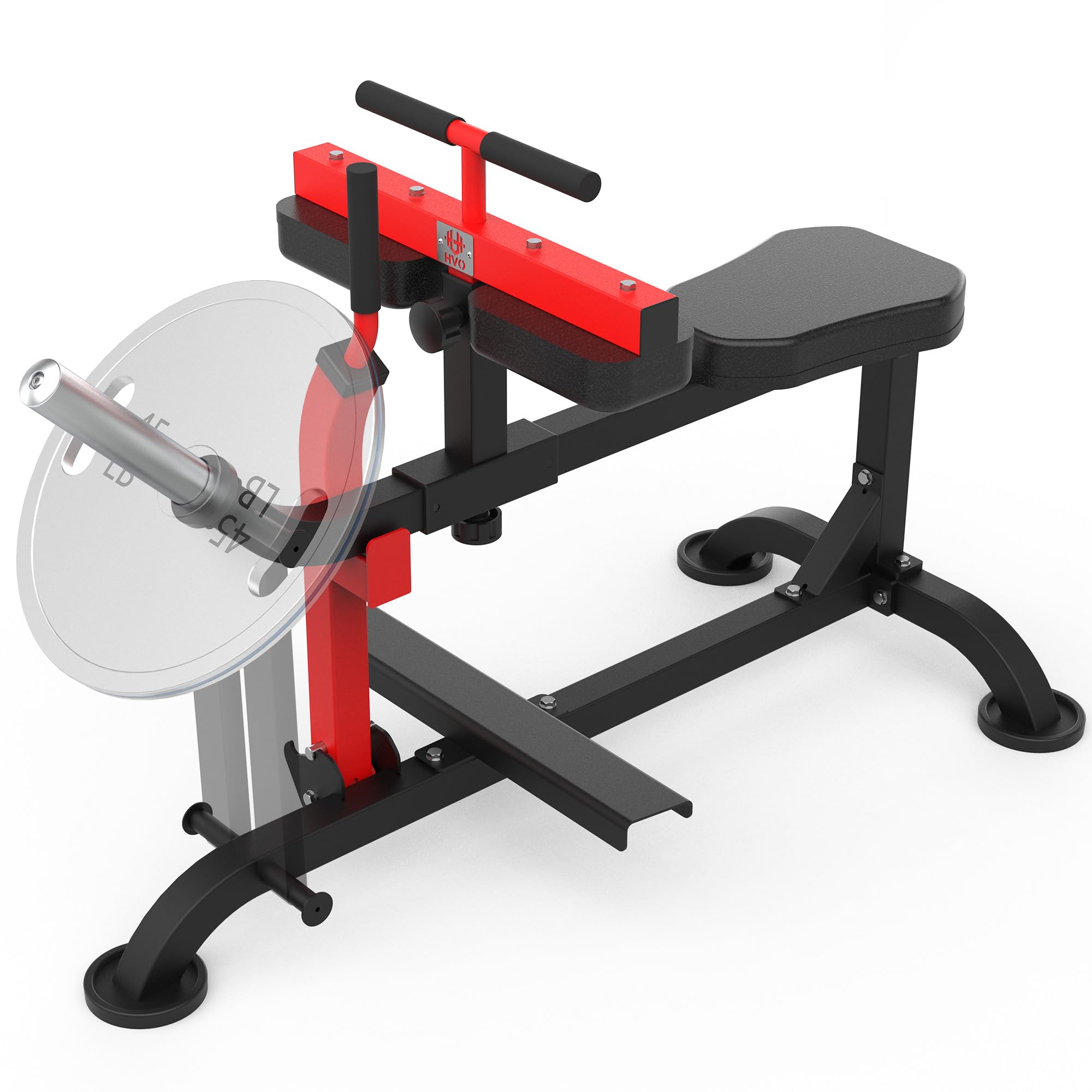
Six hundred sixty pounds is a lot of capacity for a home machine. What makes that number useful is how the HVO supports it: plate loading, four band hooks, six leg-pad heights, and four front-to-back positions for the support rod. The adjustment range covers a wider spread of body sizes and training styles than a single fixed position, which is the first thing we check on a seated machine.

That breadth is why the HVO is our top pick. We like having bands available for warmups and drop sets without giving up plate loading for the working sets. The 2-inch cushion and extended anti-slip pedals are details we appreciate once the weight goes up, because a calf raise is only as good as the contact under your feet and thighs. Nothing here feels like a stripped-down frame with padding added as an afterthought.

At 22 kg, it is light enough to nudge into position, but the 50.2-inch width is the measurement to confirm before ordering. Give it a broad wall bay rather than a narrow gap, and that width becomes an advantage: plate changes and band changes happen without stepping around the frame. It is a machine you set up once and leave ready, which is exactly what a calf station should be.

Bottom line: We recommend the HVO for most home gyms because its high load ceiling, plate-or-band resistance, and broad pad adjustment cover beginners and heavy lifters alike.
#2

Valor Fitness CC-5 Seated Calf Raise

Valor Fitness CC-5 Seated Calf Raise

Comfort-focused setup

Our Score 8.8/10
Check Price

Worth Noting

  • Seat height does not adjust
Frame
12-gauge steel
Knee Pad
Vertical and horizontal adjustment
Dimensions
51.25"D x 25"W x 41"H
Maximum Load
350 lb
Read the full review

The first number on the Valor is 350 pounds, and it changes who this machine is for. If your working sets stay below that ceiling, the CC-5 is the most refined machine in this group; if you are already loading four plates a side, it is the wrong tool. That is not a flaw so much as a clear boundary, and we prefer a machine that states it plainly.

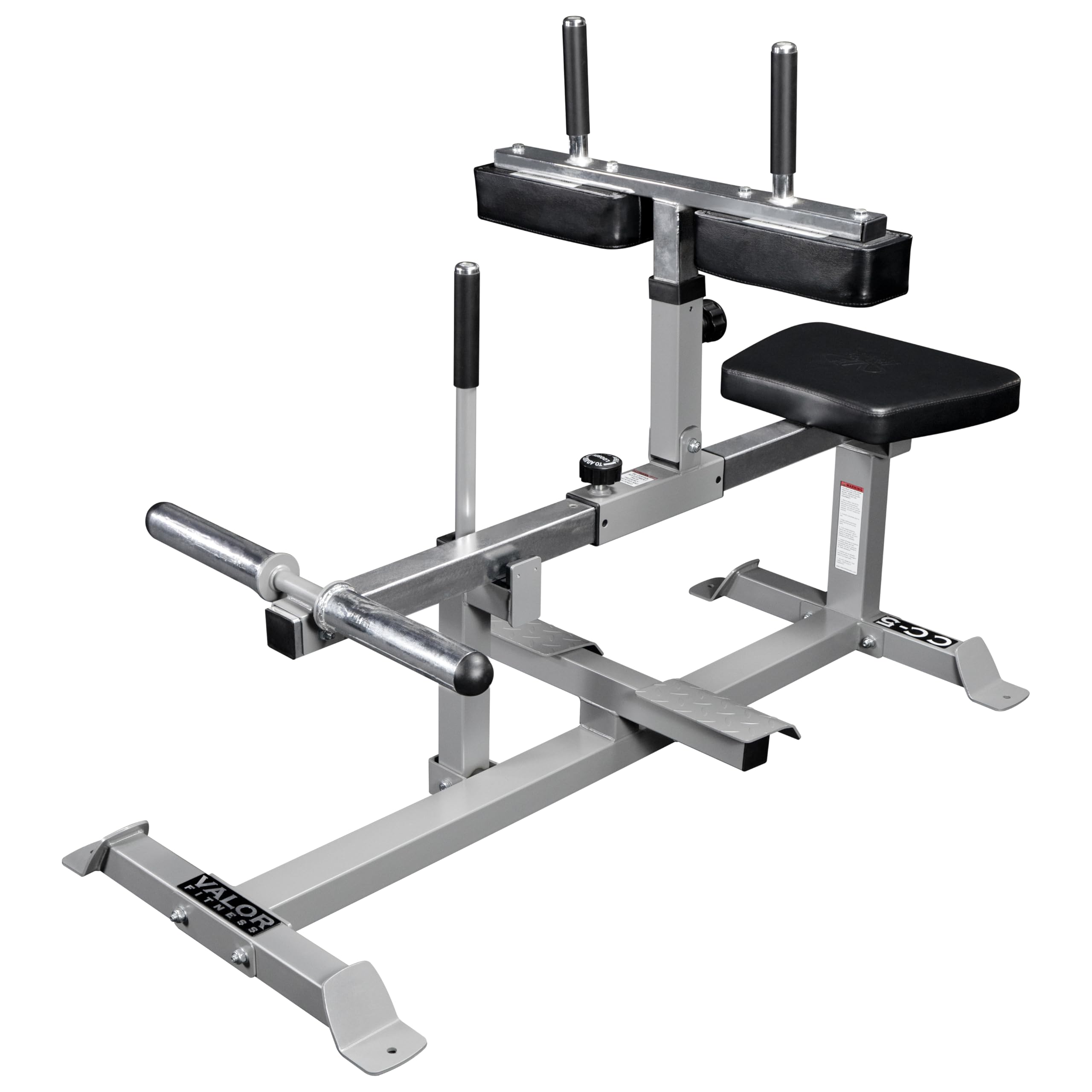
Inside that boundary, you get a 12-gauge steel frame, diamond-plate foot platforms, and a knee pad that adjusts both vertically and horizontally. The 80-pound frame is the heaviest here, and the difference shows in how settled the machine feels before the first rep. The thick thigh padding is a genuine comfort advantage, especially on longer sets.

We also appreciate the wide, textured foot brace; it gives you a place to reset your feet without looking down. Move the knee pad through its range before you load the sleeves, because that adjustment does most of the fitting work. For a lighter-lifting home gym that wants a finished feel rather than a maximum plate ceiling, this is the premium stop.

Bottom line: For a refined, planted feel and easy knee-pad adjustment, we like the Valor for home lifters who want a finished machine.

#3

GMWD Adjustable Seated Calf Raise

GMWD Adjustable Seated Calf Raise

Budget calf training

Our Score 8.4/10
Check Price

Worth Noting

  • Frame can wobble with heavy plates
Adjustment
6 height/length settings
Dimensions
38.6"D x 22"W x 38.6"H
Resistance
Plates and band pegs
Maximum Load
550 lb
Read the full review

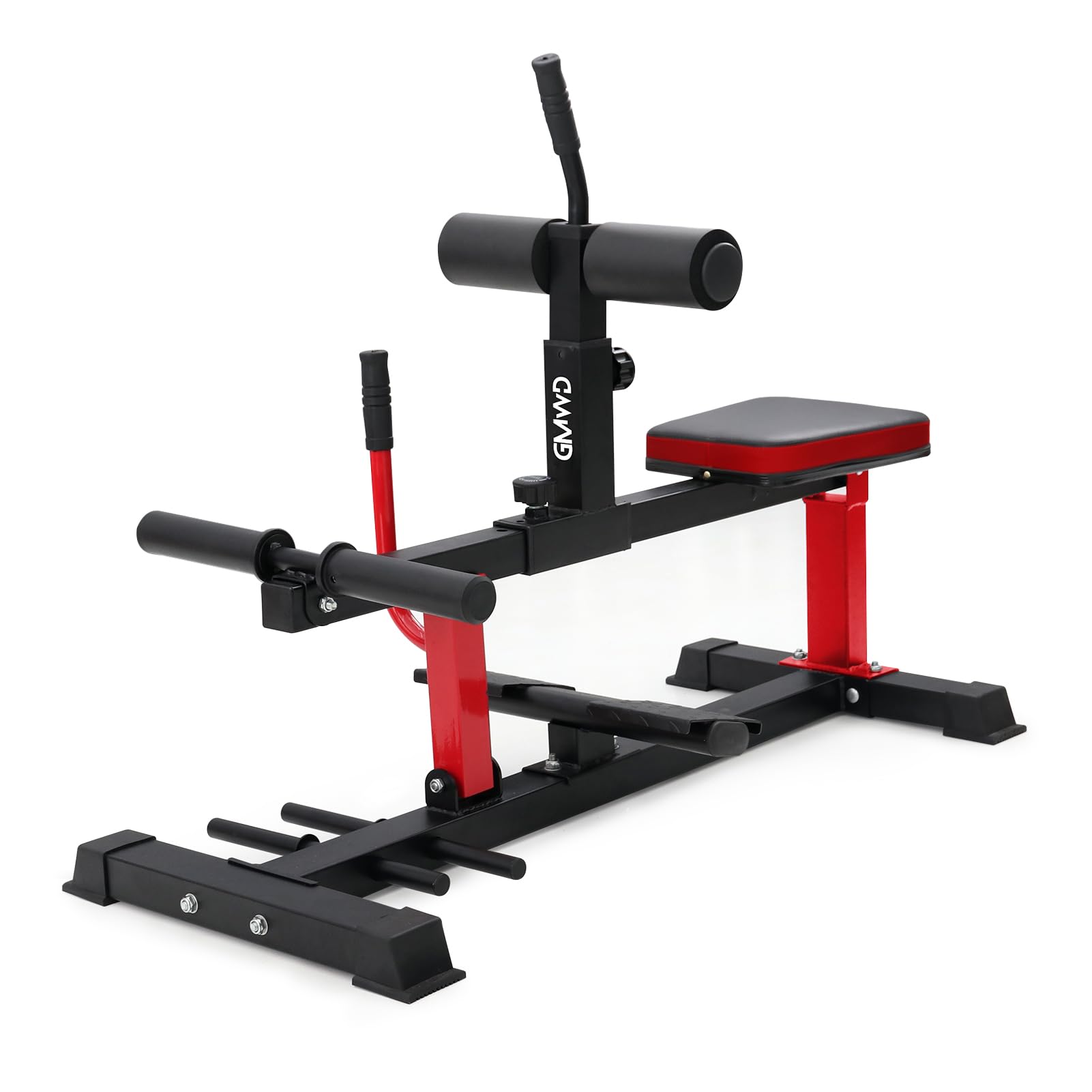
The GMWD is the pick we point to when the budget is tight but the training is not casual. It carries a 550-pound rating, six height and length settings, and band pegs on the side straps. That last detail is more useful than it sounds: bands let you warm up or add a drop set without stripping plates, and the pegs keep the resistance anchored instead of looped around a handle. We think that makes it a more flexible budget machine than its price suggests.

At 22 inches wide and 38.6 inches deep, it fits a narrow bay better than the wider HVO or the deeper Titan. The 56.2-pound frame is light enough to reposition when the room needs to become a room again, but it still has enough mass to feel like a machine rather than a toy. We liked the six settings because they give shorter and taller lifters a real chance of finding a useful knee angle, not just a token adjustment.

The compromises show in the contact points. The knee pad is the first place we want more cushioning at heavy loads, and a folded towel or aftermarket pad solves that cheaply. The weight sleeves also need an occasional check; they can work loose as plates slide on and off. Those are small ownership chores, not deal-breakers, and they keep this one in budget territory.

Bottom line: If you want a capable calf station without spending much, this is the one we point to for band work and compact spaces.

#4

Titan Plate-Loaded Seated Calf Raise

Titan Plate-Loaded Seated Calf Raise

Heavy soleus work

Our Score 8.2/10
Check Price

Worth Noting

  • Side-to-side flex can appear with heavy plates
Adjustment
4 thigh-pad settings
Dimensions
48"D x 23.5"W x 39.5"H
Resistance
Dual 9.5" Olympic sleeves
Maximum Load
550 lb
Read the full review

A seated calf raise with the knees near 90 degrees puts more of the work on the soleus, and the Titan is the machine here that leans hardest into that job. The dual 9.5-inch Olympic sleeves hold up to 550 pounds, enough for serious progressive overload, and four thigh-pad settings let you lock the legs down without guessing. We like the diamond-plated foot bars too; a calf raise gets ugly when your feet slide.

The frame is 60 pounds and measures 48 inches deep, 23.5 inches wide, and 39.5 inches high. That makes it a committed piece of floor equipment rather than something you tuck away. The payoff is a planted feel under load, and the geometry is designed for a deep stretch at the bottom. We think this is the pick for a lifter who wants a dedicated soleus station and does not need the broadest adjustment range.

The knee pads are where we want more from Titan. They are fine for moderate loads, but heavy sets will have you wanting a thicker pad or a folded towel. That is a small fix on a machine that otherwise does the soleus job well. If your training is built around high-volume seated calf work, this is the one that keeps the focus on the muscle rather than the setup.

Bottom line: We like this for lifters who want focused soleus work: the 90-degree knee position and 550-pound sleeve capacity give you a progressive setup.

How We Chose and Tested Calf Raise Machines

We started by pulling every standing and seated calf raise machine sold for home use, then cut the list by footprint, price, plate compatibility, and the assembly complaints that kept turning up in customer reviews. Nine made the final cut. Each one lived in a real training space — a garage with a bare concrete floor, a low-ceilinged basement, and a carpeted spare room — for the full seven months, and got used at least twice a week, usually at the end of a leg session when the last thing anyone wants to do is a slow set of 20.

Assembly was timed with one person and a socket set, start to finish, and I noted which frames needed a second set of hands just to stand upright. Stability got checked at the top of a rep, where a loose machine announces itself, and again by rocking the frame by hand after a set. I measured footplate depth and step height with a tape, then had a 5-foot-4 and a 6-foot-2 lifter adjust the shoulder pads and work through a full range of motion barefoot and in lifters, watching whether the heels could drop below the toes without the plate bottoming out.

Comfort came down to the pads: whether the shoulder blocks dug in during a 20-rep set, whether the footplate had enough grip in socks, whether the knee pad on seated models left a mark. Once a month I went back over the welds, hardware, and plastic bushings, tightening what had loosened and noting what had started to creak. Value, in the end, tracked closely with construction — the machines that felt solid in month one were the same ones still solid in month seven.

How to Choose the Right Calf Raise Machine

Start With the Load Rating and the Frame

A 350-pound machine and a 660-pound machine can look similar in photos, but the rating tells you how much room you have for progressive overload. The HVO tops this set at 660 pounds, the GMWD and Titan sit at 550, and the Valor at 350. We treat the rating as a ceiling, not a target, so choose one above your current working weight. Stability matters just as much: a level floor, snug bolts, and a frame that does not walk are worth more than an extra plate of capacity.

Adjust Around Your Legs, Not Just Your Height

A calf raise machine is fitted at the knee pad and footplate, not by overall height alone. Look for several vertical pad positions and enough front-to-back travel to keep your knees bent without pinching. The HVO and GMWD both list six height or length settings; the Titan uses four thigh-pad settings; the Valor moves its knee pad vertically and horizontally. If the seat is fixed, the pad and foot position carry more of the fit, so test the adjustment range before you commit.

Measure the Footprint Before the Stance

A calf raise machine needs a clear wall bay and room to load plates, not just a spot for its feet. The HVO is broad but shallow at 50.2 inches wide and 26.57 inches deep; the GMWD is narrower at 22 inches but 38.6 inches deep. The Titan and Valor run deeper still. Measure width, depth, and the space you need to walk around the weight sleeves; a machine that fits the wall but traps your plate hand is still in the wrong room.

Choose Plates, Bands, or Both

Plate loading is the default because it gives steady resistance and easy progression. Bands are useful for warmups, drop sets, and travel-light setups, but they change the resistance curve and are not a replacement for plates once you are strong. The HVO and GMWD both accept bands and plates; the Titan and Valor are plate-loaded. We like dual resistance on a budget machine because it adds options without adding another machine.

Check the Contact Points

Your feet and thighs take the load before your calves do. A textured or diamond-plate foot bar keeps the ball of the foot from sliding, and thick knee or thigh padding matters more as the plates add up. Look at the range of motion, too: a large plate can crowd the frame on a compact machine, so check that the top and bottom of the rep stay smooth. These details are harder to compare in a table but easier to feel in the first set.

Frequently Asked Questions

Final Verdict

The HVO is the machine we recommend to most home gyms. Its 660-pound ceiling, plate-or-band resistance, and broad pad adjustment give you room to start light and keep adding load, and the dual setup means you are not shopping for a second machine when bands become useful. Set it on a level floor, confirm the width, and it covers the calf work most people actually do.

If your working sets stay under 350 pounds and you want the most settled, best-finished frame here, the Valor is the alternative. For band work and a tighter footprint, the GMWD is the budget choice.