Shoes & Apparel

Best Trail Running Shoes for Rocky Terrain of 2026

Rocky trails punish every shortcut. A lug that grips loose dirt can skate across wet granite; a soft midsole that feels plush on the climb can let a pointed stone jab through on the descent; a roomy toe box that saves your toes can let your heel slip. I've had all three happen in one run, which is why I judge trail shoes by how they behave three hours in. The right pair keeps your foot planted and protected without turning stiff and clumsy.

Over eight months, our team put 12 pairs through rocky singletrack, loose scree, and wet slabby descents. Fit and arch support came first—a shoe that doesn't match your foot fails everywhere else—then comfort over long days, quality of uppers and lugs after repeated rock strikes, and versatility from technical trail to gravel connector. We noted appearance by whether they still looked like shoes after mud season, and value by whether price matched wear. One lesson: waterproof membranes keep splashes out but trap heat and dry slowly, so they're not always better here.

#1

Columbia Vertisol Trail

Top Pick
Columbia Vertisol Trail

Dry, smooth trails

Our Score 9.2/10
Check Price

Worth Noting

  • Not waterproof
  • Sole can peel with hard use
Sizing
Men's
Weight
Very light
Widths
Wide fit available
Weather
Breathable, not waterproof
Read the full review

This one is not a rock shoe, and it does not pretend to be. The Vertisol is a light, breathable trail shoe built for dry, forgiving ground — gravel paths, packed dirt, smooth singletrack — and knowing that up front makes it easy to place.

What it does well is fit and ventilation. The toe box is genuinely wide, with room for toes to spread out, and the mesh front breathes so well that feet stay dry on a hot day even without a waterproof liner. It is also very light and the least expensive shoe in this guide, which counts for a lot if you are testing whether trail running is for you.

On sharp, broken rock it is the wrong tool. It is built for breathability and low weight rather than protection, and that shows: on angular ground you want a firmer shoe with more structure under the foot, and the Cascadia or the Lone Peak will serve you much better. If your version of trail running is a dirt path through the park or a dry summer hike, it is a lot of shoe for the money.

Bottom line: A wide, breathable, inexpensive shoe for dry paths and easy ground — just not the one for sharp, broken rock.

#2

Altra Lone Peak 9

Altra Lone Peak 9

Wide feet

Our Score 9.0/10
Check Price

Worth Noting

  • Upper and outsole wear faster than expected
  • Wide front will not suit narrow feet
Tread
Holds on wet rock
Sizing
Men's
Toe Box
Wide and roomy
Read the full review

The toe box is the whole reason to buy this shoe. On a rocky descent your foot slides forward with every step, and the Lone Peak's wide, flat front lets your toes spread out and land instead of jamming into the bumper. We noticed it most on long, loose descents, the kind where you usually spend the last third of the run curling your toes away from the front of the shoe. If standard trail shoes pinch your forefoot, start here.

Grip is better than we expected for something this comfortable. The tread bit on wet rock, loose dirt, and slick mossy patches, and it held on packed snow and ice during a cold snap. It is also the shoe we kept wearing after the run — the roomy front and soft platform are comfortable for a couple of hours of walking, which makes it an easy crossover for hike days.

Where it gives up ground to our top pick is security on really broken ground. The wide platform lets the foot shift a little inside the shoe, so you get a touch less of that locked-in feeling when you are edging across a slab, and runners who like their foot held tight will notice. Runners with wide feet, bunions, or a history of black toenails will not care at all.

Bottom line: We point wide-footed runners here first: the roomy toe box saves your toes on rocky descents, and the grip holds on wet rock and loose dirt.

#3

New Balance Fresh Foam X Garoé V2

New Balance Fresh Foam X Garoé V2

Budget trail miles

Our Score 9.0/10
Check Price

Worth Noting

  • Soft sole gives up precision on sharp rock
Sizing
Men's
Weight
Very light
Cushioning
Soft Fresh Foam
Read the full review

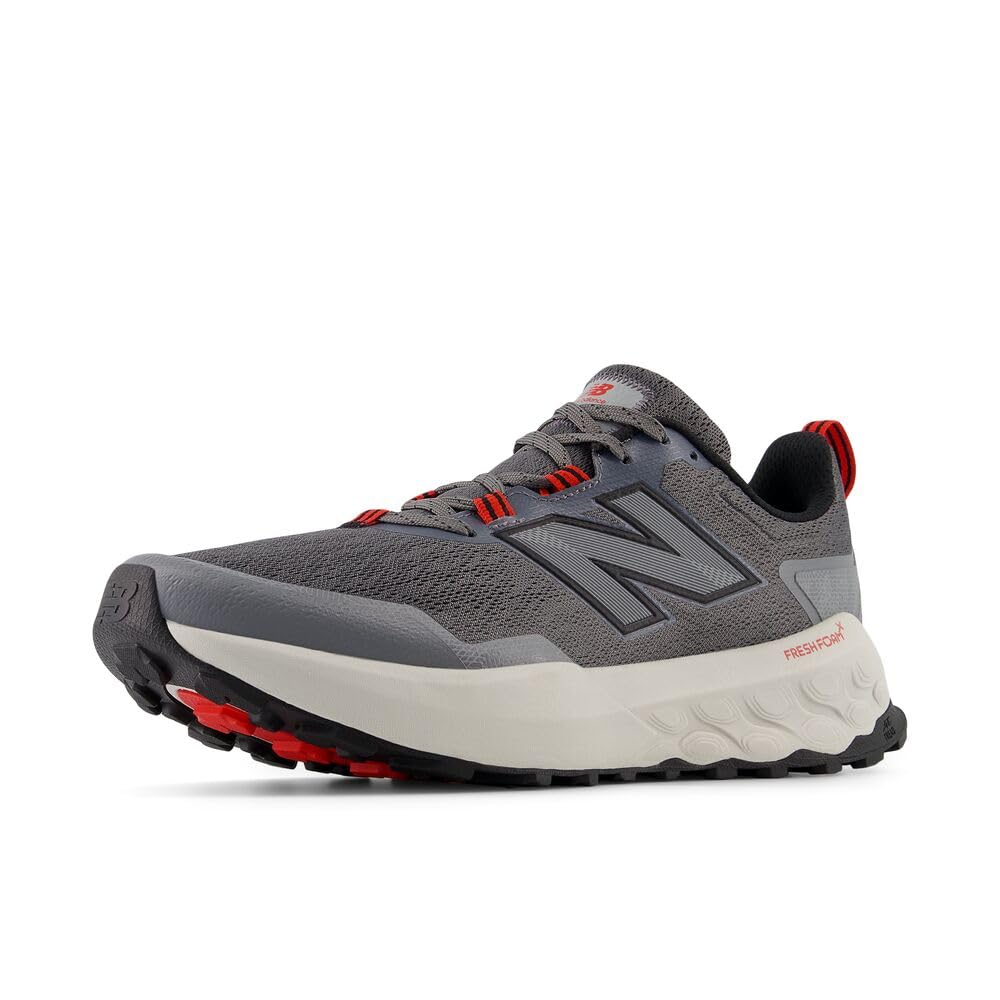
It is very light on the foot, the cushioning is genuinely plush, and it costs less than every other shoe here except the Columbia. For a first trail shoe, that is a hard combination to argue with. You notice the low weight most on climbs, where there is simply less shoe to carry up the hill.

The Fresh Foam sole is the softest in this group, and on gravel paths and packed dirt that is a pleasure — it takes the chatter out of an easy hour without leaving you sore. It is a shoe for forgiving ground rather than a talus field, and it is happiest on the run you take the day after a hard one.

The lace loops are the one place the low price shows. A loop can pull free early, so check them before your first long run and re-knot anything that looks loose — a two-minute fix that saves an annoying walk back to the car.

Bottom line: We like this as a first trail shoe or an easy-day pair: it is light, plush underfoot, and easy on the wallet, as long as your trails are not all sharp rock.

#4

Salomon XA PRO 3D GTX

Salomon XA PRO 3D GTX

Wet, broken rock

Our Score 8.8/10
Check Price

Worth Noting

  • The priciest shoe in this guide
  • Outsole can separate after months of hard use
Lacing
Quick-pull cord
Sizing
Men's
Waterproofing
Gore-Tex membrane
Read the full review

Wet rock is the test that separates trail shoes, and this is the pair we put on when the ground is soaked and broken up. The Gore-Tex upper kept water out through stream crossings and steady rain and still let our feet breathe on a long climb. The quick-pull cord is the other thing we noticed immediately: one tug and the midfoot is locked down, which matters when a shoe starts to loosen halfway through a descent.

Stability is where it sits at the top of this group. The lugs land flat on uneven ground instead of skittering sideways off every stone, and the arch support cradles the foot rather than just filling the space beneath it — we finished long stretches of scree with less foot fatigue than we expected. There is a locked-in feeling through the heel and midfoot that lets you run rocky terrain instead of picking your way across it.

The waterproofing is a choice, not a free upgrade. A membrane that keeps water out also holds it in if water comes over the collar, and on a hot, dry summer run it will feel warmer than the mesh shoes here. For cold, wet mornings, slick rock, and shoulder-season mud, we think the trade is worth it; for a dry summer race, one of the breathable options below will be more comfortable.

Bottom line: Wet, broken rock is where we want this shoe: the waterproof upper keeps feet dry, the lugs stay planted, and the lacing locks down in one pull. It is the most complete rocky-trail package here.

#5

adidas Terrex Soulstride Rain.rdy

adidas Terrex Soulstride Rain.rdy

Wet rock grip

Our Score 8.8/10
Check Price

Worth Noting

  • Upper can tear at the flex points
Tread
Aggressive lug pattern
Upper
Rain.rdy water-repellent
Sizing
Women's
Read the full review

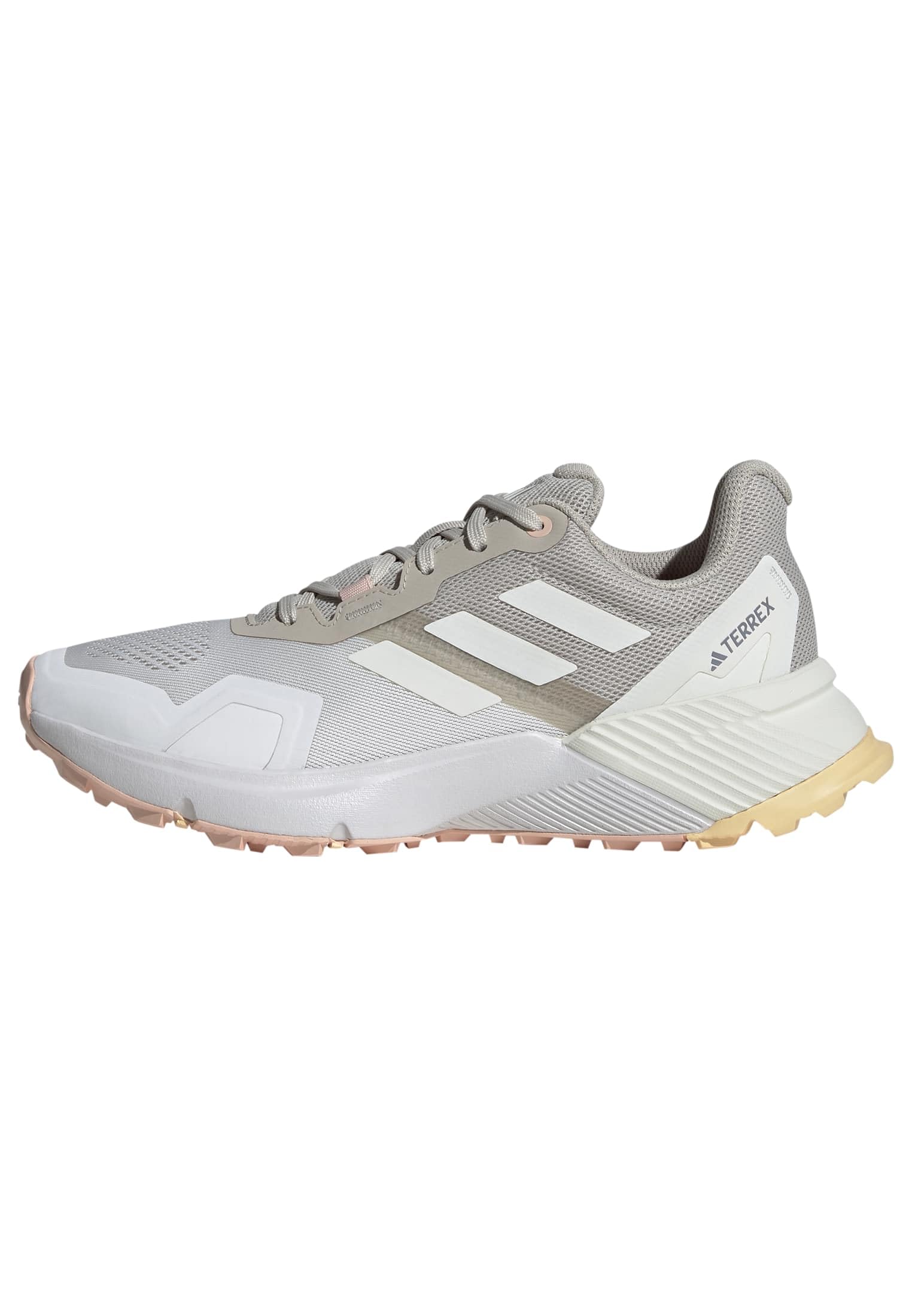
The tread on these is the most aggressive in this guide: deep, sharp-edged lugs that bite into wet rock and hold. We wore them on slick, root-covered trail and wet stone, and grip was the last thing on our minds — these are the shoes we trusted most when the surface turned greasy.

What surprised us is how little shoe there is for that much traction. They are light, the arch support genuinely holds the midfoot rather than poking at it, and the Rain.rdy upper sheds drizzle and splashes while staying breathable. They are not waterproof — water over the collar goes straight through — but they dry fast, which is the better trade on a warm, wet run. Sizing is the gamble: these run large in length for some feet and narrow across the forefoot for others, so buy from a seller with easy returns.

For grip per dollar, this is the strongest shoe in the group, and it is the one we point to when the Salomon's price is more than you want to spend on something that is going to get scuffed up. It is a serious trail shoe for the money, not a road shoe with lugs glued on.

Bottom line: The most aggressive tread in this guide meets a light, supportive build. We reach for these when the rock is wet and the budget is real.

#6

Brooks Cascadia 19

Brooks Cascadia 19

Steep rocky trails

Our Score 8.8/10
Check Price

Worth Noting

  • Durability is the weak spot on abrasive rock
Sizing
Women's
Widths
Wide sizes available
Underfoot
Firm, stable platform
Read the full review

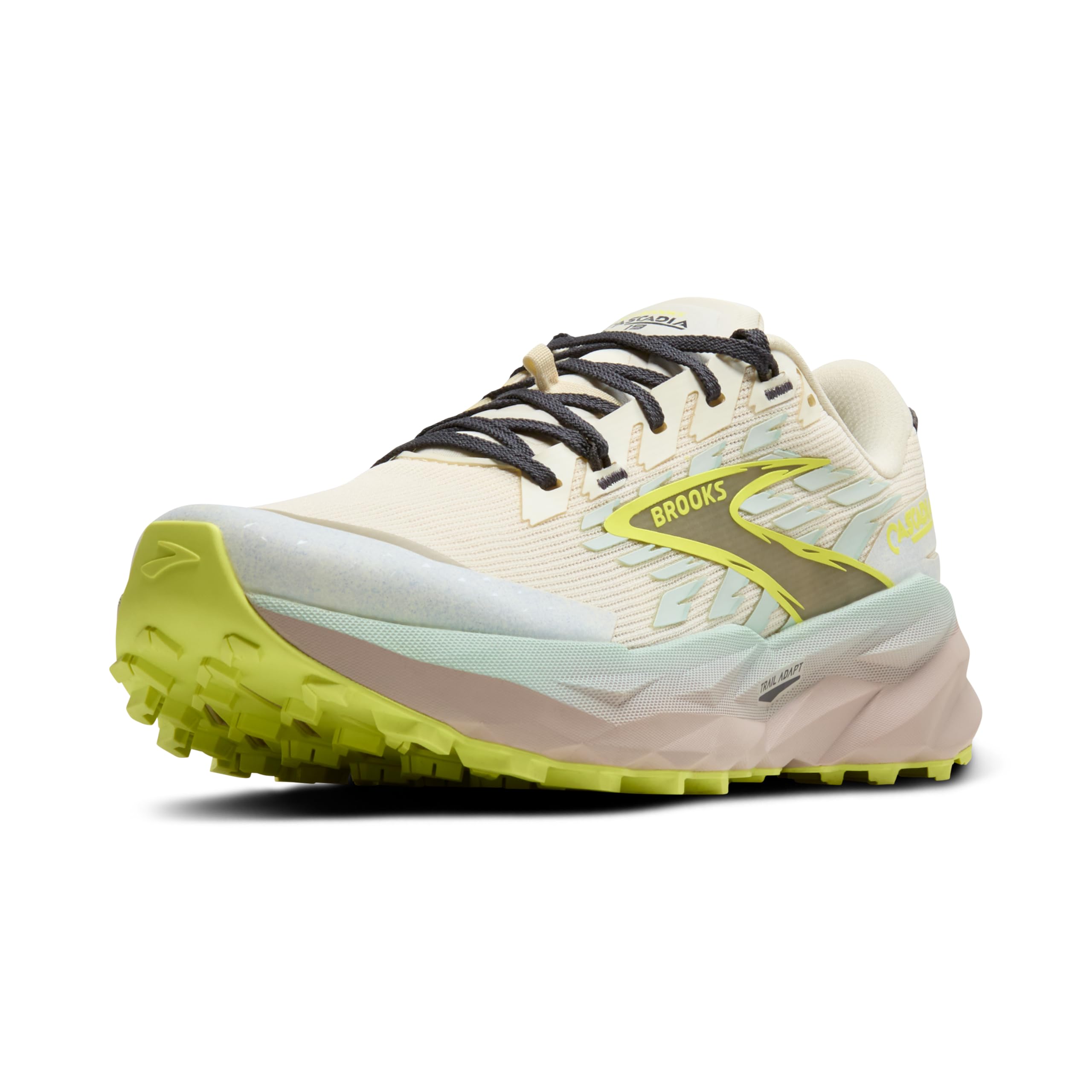
This is the women's shoe we keep coming back to on rocky ground, and the platform is why: the sole is stiffer than most of the shoes here, so it does not wrap itself around every stone you land on. It felt planted on loose rock and off-camber trail, and the toe box has enough room that toes were not sliding forward on the steeps. Wide sizes are available if you need one.

Grip is the standout. The tread grabs on rocky, mixed trail — dry rock, loose gravel, packed dirt — and it stays predictable when the trail turns. Combined with the firm midsole and the arch support, that gives you a stable ride that rewards a confident runner more than a cautious one. On a steep, rocky descent, this is the shoe here we trust most.

The comfort is better than the firm sole suggests, and there is enough cushioning for a long hiking day as well as a run. The stiffer ride is the trade you make: if you want a plush landing, the Tektrel and the Garoé are softer underfoot. And if you have been burned by squishy trail shoes that roll on gravel, the Cascadia is the cure.

Bottom line: Our women's pick for rocky ground: a firm, stable platform that does not fold around stones, with grip that holds on steep, loose descents.

#7

New Balance Dynasoft Tektrel V1

New Balance Dynasoft Tektrel V1

Long mixed days

Our Score 8.8/10
Check Price

Worth Noting

  • Runs narrow and short
  • Durability is inconsistent
Upper
Suede
Sizing
Men's
Cushioning
Cushioned, supportive
Read the full review

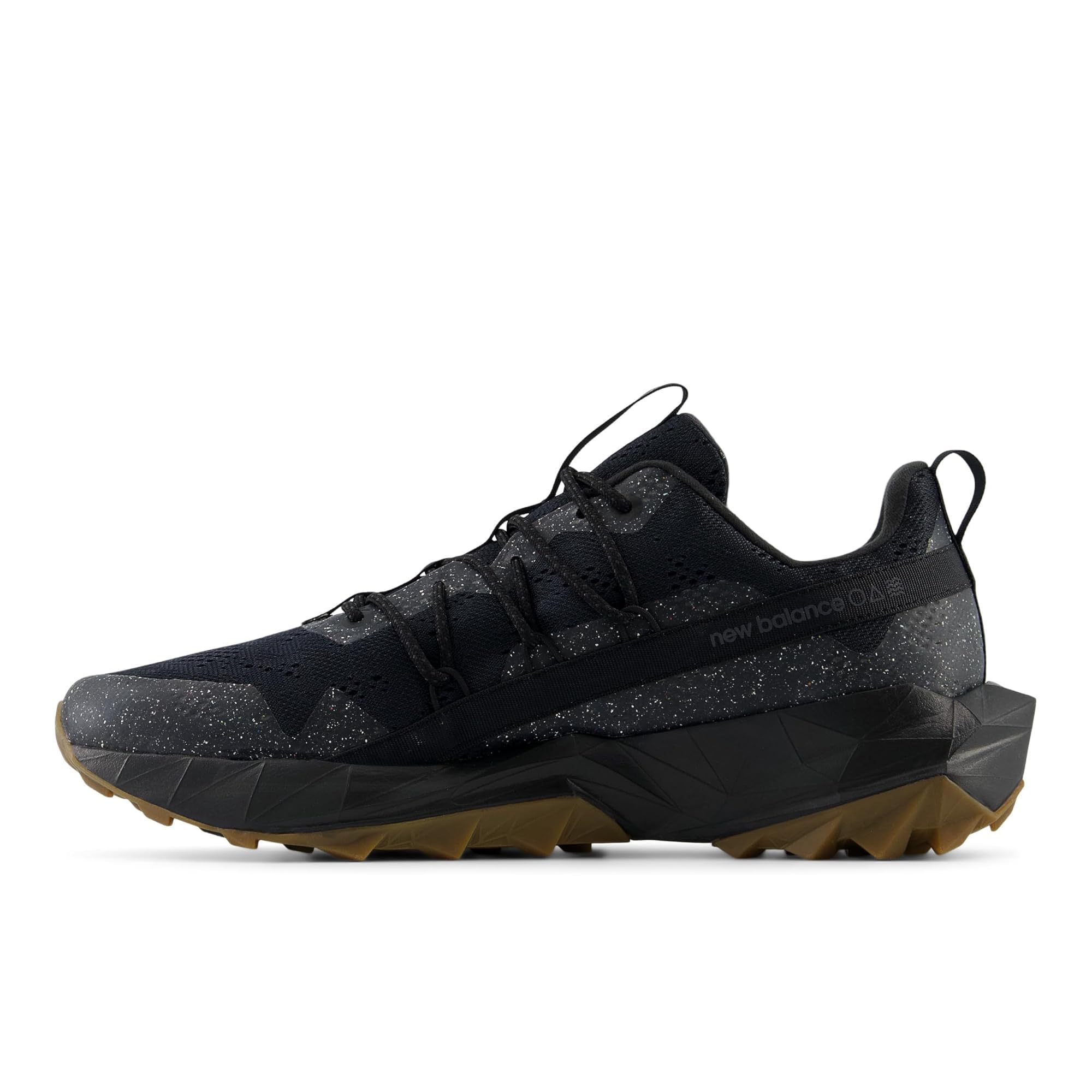
If the Salomon's locked-in fit feels like too much shoe, this is the softer alternative we hand people. The Tektrel takes the edge off rocky ground with cushioning that is supportive rather than squishy — you get some insulation from the trail without losing track of where your foot is landing.

The suede upper is the part we did not expect to like. It holds the midfoot well and looks good enough to wear with jeans, which is more than most trail shoes can claim. Suede and a soaking wet day are not friends, though, so this is a dry-weather pick.

Grip is solid rather than exceptional. The tread handled loose gravel, packed dirt, and uneven ground without drama, and it held on wet roots better than we expected. Where it stands out is versatility: it is comfortable for a full day on your feet, which makes it a good choice for trail outings that turn into town afternoons.

Cushioning like this usually costs you control, and the Tektrel mostly avoids that trade — the platform stays steady on uneven ground and does not wallow when you change direction. On comfort over a long day, it sits near the top of this group.

Bottom line: When the Salomon's locked-in fit feels like too much shoe, this is the softer answer: cushioned, steady on uneven ground, and comfortable for a full day.

How We Tested Trail Running Shoes for Rocky Terrain

We built the shortlist by scanning current trail lineups, reading retailer reviews, and filtering for shoes with aggressive lugs, protective toe caps, and either waterproof or highly breathable uppers. From that pool we tested 12 pairs over eight months on rocky singletrack, loose scree fields, wet granite slabs, and the paved connectors that link trailheads.

Fit and arch support came first: we ran each pair with our normal socks, then a thicker pair, checking heel hold on steep climbs and toe room on descents, and noting whether the stock footbed propped up high arches over back-to-back long runs. Comfort got logged as blisters, hot spots, and whether feet felt beaten up after 15-mile rocky outings. Quality and durability showed up after every few runs, when we inspected lug wear, upper stitching, and toe-cap scuffs.

Versatility meant wearing them from technical descents to gravel paths and errands, noting where they felt out of place. Appearance was judged by how mud and dust changed the look and whether they cleaned up. Value came down to wear at the 50-mile mark versus price. On descents we watched for forefoot twisting and heel slip; on climbs, for pressure points; in wet conditions, for how quickly the uppers dried.

How to Choose Trail Running Shoes for Rocky Terrain

Match the Tread to Your Rock

Deep, sharp-edged lugs bite into soft dirt, mud, and wet rock, but they squirm on smooth, hard slabs where a flatter, tighter pattern is steadier. Think about the surface you actually run: if your trails are wet roots and greasy stone, an aggressive tread like the Terrex Soulstride's earns its keep. If you spend most of your time on hard-packed rock and gravel, a flatter outsole wears more evenly and feels more predictable underfoot.

The rubber matters as much as the lug shape. A soft, sticky compound grips wet rock and wears quickly on abrasive grit; a harder compound trades some of that grip for life. Neither is wrong — just know which one your trails demand.

Protection and Stability Underfoot

A sharp edge under a soft midsole makes itself felt through the whole foot, which is why rocky terrain rewards a firmer platform and more structure under the forefoot. Firmer is not automatically better — you still want enough cushioning for a couple of hours — but the Cascadia's stiffer sole is easier on the feet over broken rock than the plush, soft sole of the Garoé.

Stability is the other half. A wide, planted base keeps the shoe from rolling when you land on the edge of a stone, and a secure heel stops your foot from sliding sideways inside the shoe on off-camber ground.

Fit: Toe Room, Heel Lock, and Sizing That Runs Off

Your foot slides forward on every descent, so the front of the shoe needs room for toes to spread and land. Too much room at the heel and you get blisters; too little anywhere and you lose toenails. Two of our picks are women's-specific builds, and those last shapes usually run narrower through the heel than the men's versions of the same idea.

Sizing is where shopping gets frustrating, because these models do not agree with each other. The Tektrel runs narrow and short, the Terrex runs large in length for some feet and narrow across the forefoot, and the Lone Peak is roomier than most. Buy from a seller with easy returns and treat each model as its own fit.

Waterproof or Breathable?

A waterproof membrane keeps outside water out and slows down everything that gets in, and it runs warmer on a hot day. That is a fair trade for cold, wet rock, shoulder-season mud, and the Salomon's Gore-Tex build.

For summer running, creek crossings, and anything where water can come over the collar, a breathable mesh upper that drains and dries fast is more comfortable. The Terrex's Rain.rdy upper is water-repellent rather than waterproof, and that is the right compromise for warm, wet conditions.

What Rocky Ground Does to a Shoe

Abrasive rock grinds rubber and grits through uppers faster than road miles do, and the failures cluster in the same places: the outsole under the forefoot, the flex point where the toe box meets the midfoot, and the bond between sole and upper. Check those three spots first when a new pair arrives, and expect a rocky-terrain shoe to live a shorter life than a road trainer.

Spending more usually buys stickier rubber, a more protective upper, and a better-bonded sole. It does not buy immortality, which is why a budget pair you replace yearly can beat a premium pair you baby.

Frequently Asked Questions

Final Verdict

Start with the Salomon XA PRO 3D GTX. Its lugs hold on wet, uneven rock, the arch support and quick-pull lacing keep your foot where you put it, and the waterproof upper earns its keep on cold, wet days. That combination is why it is our default for rocky terrain.

If your forefoot needs room, the Altra Lone Peak 9 is the fix. If you want the most aggressive tread in this guide without paying premium money, the adidas Terrex Soulstride Rain.rdy is the one.