Shoes & Apparel

Best Trail Running Shoes of 2026

The trail asks more of a running shoe than the road ever will. It has to grip wet roots, shield your sole from sharp rocks, and still feel light enough that you're not dragging hiking boots up the climb. The best trail running shoes handle that tradeoff without making you choose between protection and speed, so you can look at the view instead of your feet. Over the past eight months, our team has run in 14 pairs on rocky ridgelines, muddy switchbacks, and the gravel path that connects them.

The wrong shoe usually reveals itself late in a run, not at the trailhead. A roomy toe box saves toenails on long descents, but too much room lets your foot slide forward and jam. Arch support matters on uneven ground, where a flat midsole leaves feet aching by mile eight. We noted which pairs felt broken-in immediately and how uppers and lugs held up after mud and stream crossings. The list below is where those notes landed.

#1

Salomon Speedcross 4

Top Pick
Salomon Speedcross 4

Muddy, soft trail

Our Score 9.2/10
Check Price

Worth Noting

  • Narrow toe box; order a half size up
  • Firm, race-oriented ride on hardpack
Closure
Pull-cord laces
Toe Box
Narrow; order a half size up
Cushioning
Firm and rock-protective
Terrain Focus
Mud, soft dirt, loose rock
Read the full review

Grip is the whole argument for the Speedcross 4, and it's why this is the shoe we recommend first. The lugs are deep and spaced wide enough to shed mud rather than pack it, and on soft dirt, wet grass and loose gravel we trusted this outsole more than any other pair here. The pull-cord lacing adds to it: one tug, tuck the loop, and nothing shifts for the rest of the run.

The fit is the part to sort out before you order. The toe box is narrow and the shoe runs small, so go up at least a half size, and if your feet are wide or you have a bunion, look at the Lone Peak 8 or the NORTIV 8 instead. The upper is also stiffer out of the box than the rest of this group, so give it two or three short runs before a long one.

Once it's on, it feels light in a way that matters on climbs, with more support under the arch than an aggressive shoe usually offers. It also holds up: the uppers and lugs came through rock and root without the toe seam opening, which is more than several pairs here managed.

Where it gives ground is comfort on long, hard-packed days. The ride is firm and the shoe wants to point downhill, which suits race-pace trail running and short technical loops better than an all-day plod. If your trail days are five hours of rolling gravel, the Caldera 8 is the kinder choice; for everything soft, loose and steep, this is the one.

Bottom line: The Speedcross 4 is the trail shoe we recommend first: the best grip here in mud and loose dirt, light on the climbs, and tough enough for rock. Order a half size up.
#2

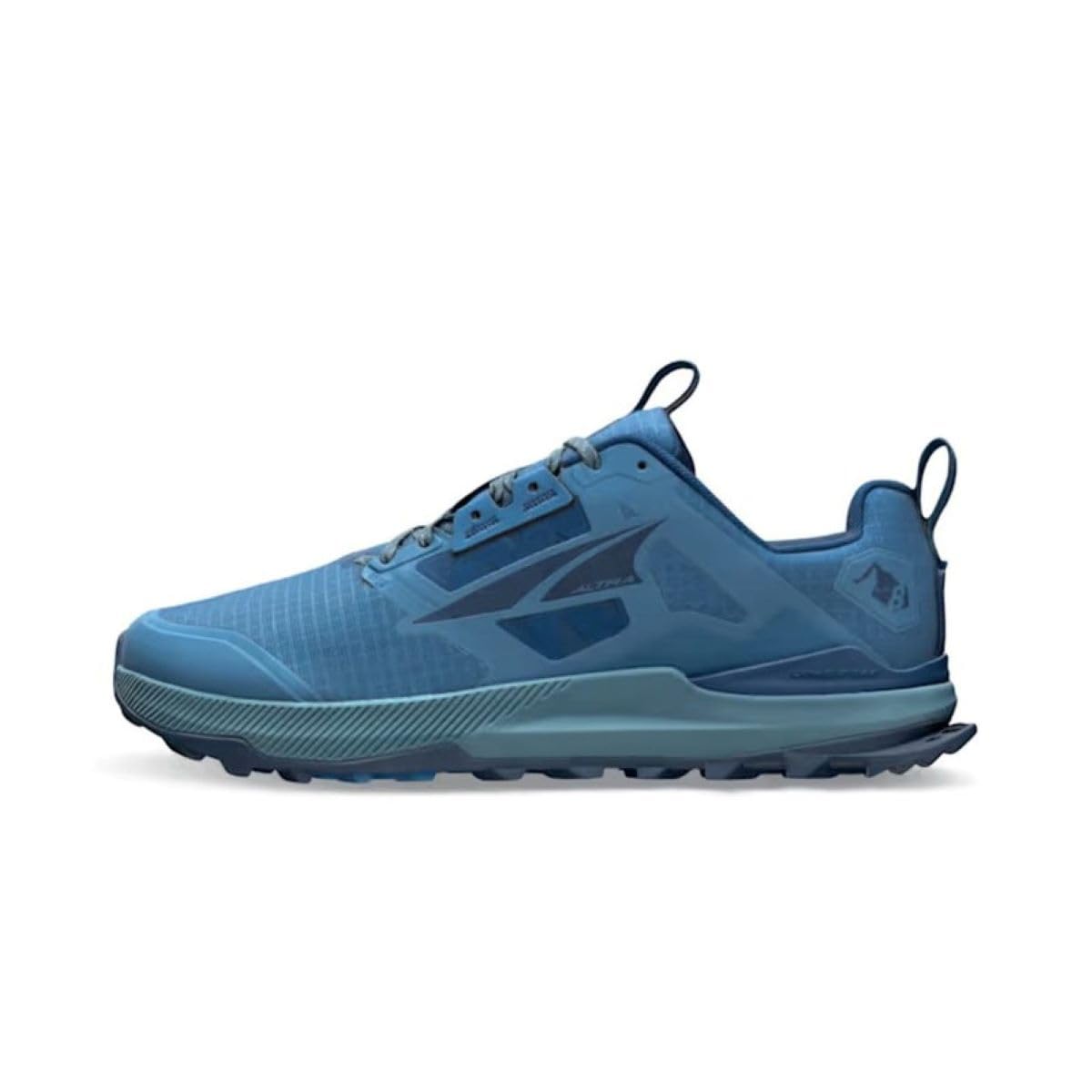
Altra Lone Peak 8

Altra Lone Peak 8

Wide, natural fit

Our Score 9.0/10
Check Price

Worth Noting

  • Upper seams can come apart with hard use
  • Outsole wears quickly with road miles
Toe Box
Wide, foot-shaped
Terrain Focus
Rocky, gravel, mixed trail
Heel-to-toe Drop
Zero drop
Read the full review

Altra builds the Lone Peak 8 around a foot-shaped toe box, and that one decision is why it's here. If your toes have ever gone numb in a shoe that fits everywhere else, this is the pair to try: the front is wide enough for them to splay and the platform sits flat instead of tipping you forward. We found them comfortable from the first mile, with nothing to break in.

Zero drop is the part people underestimate. With no height difference between heel and toe, your calves and Achilles take more of the load, and switching from a conventional shoe takes weeks of easy running rather than one long day. Build up with short trail loops first; the flat platform then starts to feel like the obvious way to land.

Grip is better than the smooth profile suggests — the tread bites on gravel and wet rock, and rocky ground doesn't punish you the way a firmer shoe does. The place it surprised us was standing: a long day on your feet in these leaves less ache than anything else in the guide, which is why hikers and rucking types keep gravitating to them.

Bottom line: For wide feet and a flat, natural ride, the Lone Peak 8 is the shoe we point to: a genuinely roomy toe box, zero drop, and grip that handles gravel. Give your calves time to adapt.

#3

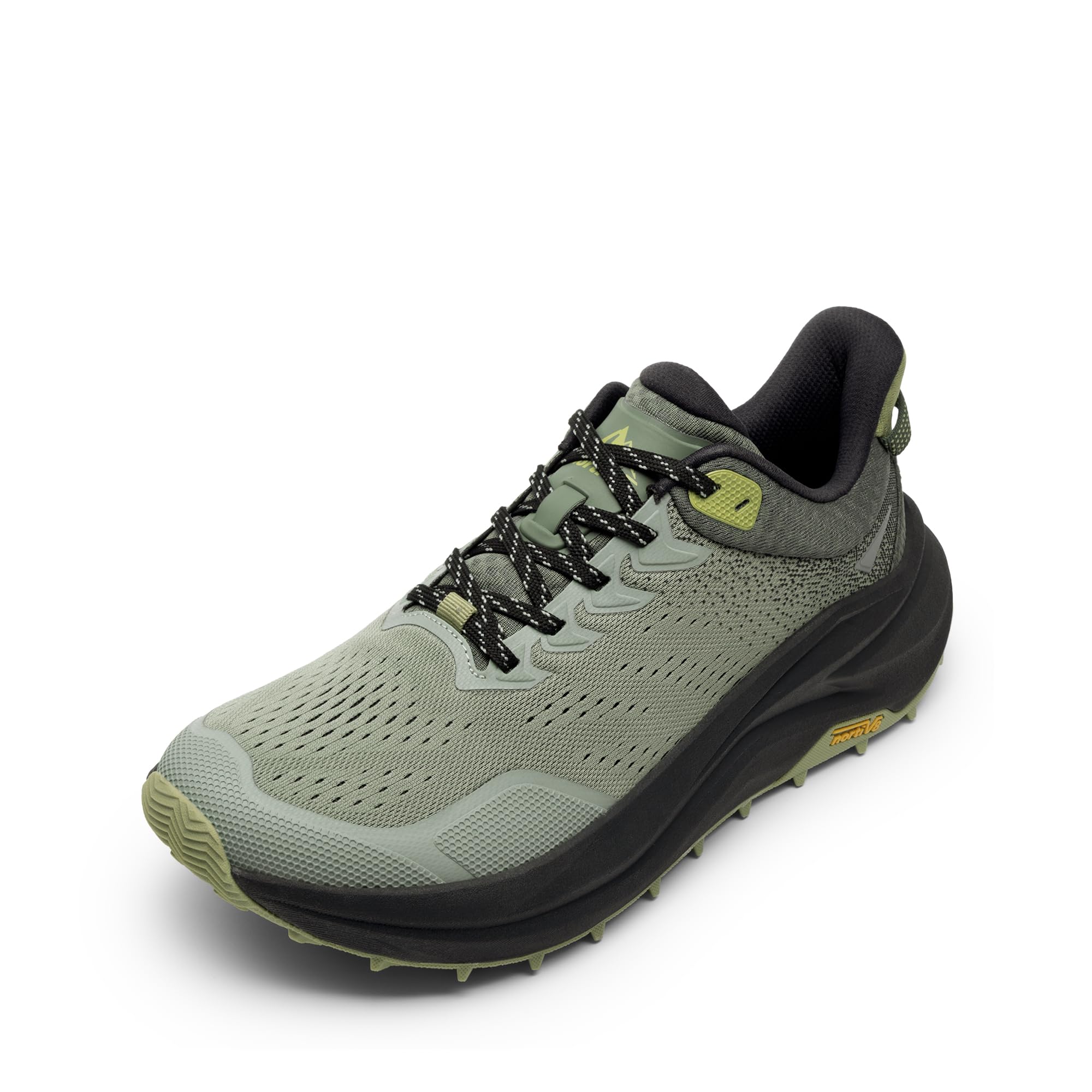
NORTIV 8 Wide Toe Box

NORTIV 8 Wide Toe Box

Budget wide fit

Our Score 9.0/10
Check Price

Worth Noting

  • Unsure grip on wet roots and slick rock
  • Soles wear down with regular pavement use
Toe Box
Wide
Cushioning
Plush but not thick
Arch Support
Pronounced
Heel-to-toe Drop
Low
Read the full review

The NORTIV 8 is the cheapest shoe here, and the only one that pairs a genuinely wide toe box with a cushioned, conventional-feeling ride. That combination is rarer than it ought to be.

On the foot it feels plusher than the money suggests: padding that's soft without becoming a pillow, a low heel-to-toe drop, and a wide base that stops the shoe rolling outward on cambered ground. The arch support is unusually pronounced, which we liked, and the toe box gives your toes somewhere to go on descents.

Traction is the compromise. On dry, dusty trail and gravel it grips well; on wet roots and slick rock it's the least sure shoe here. We still recommend it, because most people moving into a wide trail shoe are coming from a narrow road trainer, and for them the fit alone changes the run. It's also the low-risk way to find out whether a wide, low-drop shape suits you before you spend real money elsewhere.

Bottom line: The NORTIV 8 is the value pick for wide feet: real toe room, a plush low-drop ride and solid dry-trail grip for very little money. Keep it off wet rock.

#4

Salomon XA Pro 3D GTX

Salomon XA Pro 3D GTX

Wet, cold weather

Our Score 8.8/10
Check Price

Worth Noting

  • Sole can separate from the upper with age
  • Heavier and firmer than the Speedcross
Closure
Pull-cord laces
Terrain Focus
Wet trail, rock, town paths
Waterproofing
Gore-Tex membrane
Underfoot Feel
Firm and stable
Read the full review

The XA Pro 3D GTX is the most expensive shoe here, and the money goes into the membrane. The Gore-Tex liner is why it's our wet-weather pick: it keeps water out on sodden grass and muddy field edges and still breathes enough that your feet don't cook on a climb. The pull-cord lacing is the easiest system in this guide to live with — one hand, gloves on, done.

We think it's worth the premium only if wet feet are what ends your runs. Everything else is solid rather than special: the ankle collar wraps snugly, the ride is stable on rock, and the arch support is generous. It's heavier and firmer than the Speedcross, though, and the sole separating from the upper is the failure to watch as the shoe ages.

The other catch is that a waterproof shoe can't drain. Cross anything deep enough to top the collar and the water stays inside until you take them off. For cold, wet, muddy months that's a fair trade; for summer running, stream crossings and hot pavement, a mesh shoe dries faster and runs cooler. Buy this one for the season that ruins ordinary shoes.

Bottom line: We recommend the XA Pro 3D GTX for trails that are wet, cold and muddy for months at a time. The Gore-Tex liner works, the lacing is the best here, and the price is the price.

#5

Saucony Excursion TR15

Saucony Excursion TR15

First trail shoe

Our Score 8.8/10
Check Price

Worth Noting

  • Upper can wear through at the toe seam
  • Slides on smooth, wet rock
Fit
True to size, roomy toe
Arch Support
Pronounced under the ball
Terrain Focus
Woodland trail, loose soil
Read the full review

The Excursion TR15 is the budget answer to our top pick: less bite, less precision, a much lower price and a roomier fit. As a first trail shoe, a second pair for weekly dirt miles, or something you don't mind destroying in mud, that trade makes a lot of sense.

Comfort is where it wins. The fit runs true with room in the toe, the arch support under the ball of the foot is more substantial than the price suggests, and a long day on woodland trail left us with nothing to complain about. Traction is confident on dirt, leaves and roots and noticeably less so on smooth wet rock, where the rubber slides before it grips.

We think the trade is worth it as long as you know what you're buying: a light, comfortable shoe with a modest build. The upper is thin enough to wear through at the toe seam if you're hard on shoes, and the whole thing flexes more than the Salomons under a loaded pack. For two or three runs a week on local trails, it's the value pick here; for daily mileage on rock, spend up.

Bottom line: The Excursion TR15 is the budget pick we're happy to recommend: true-to-size comfort, real arch support and decent grip on dirt for a couple of trail runs a week.

#6

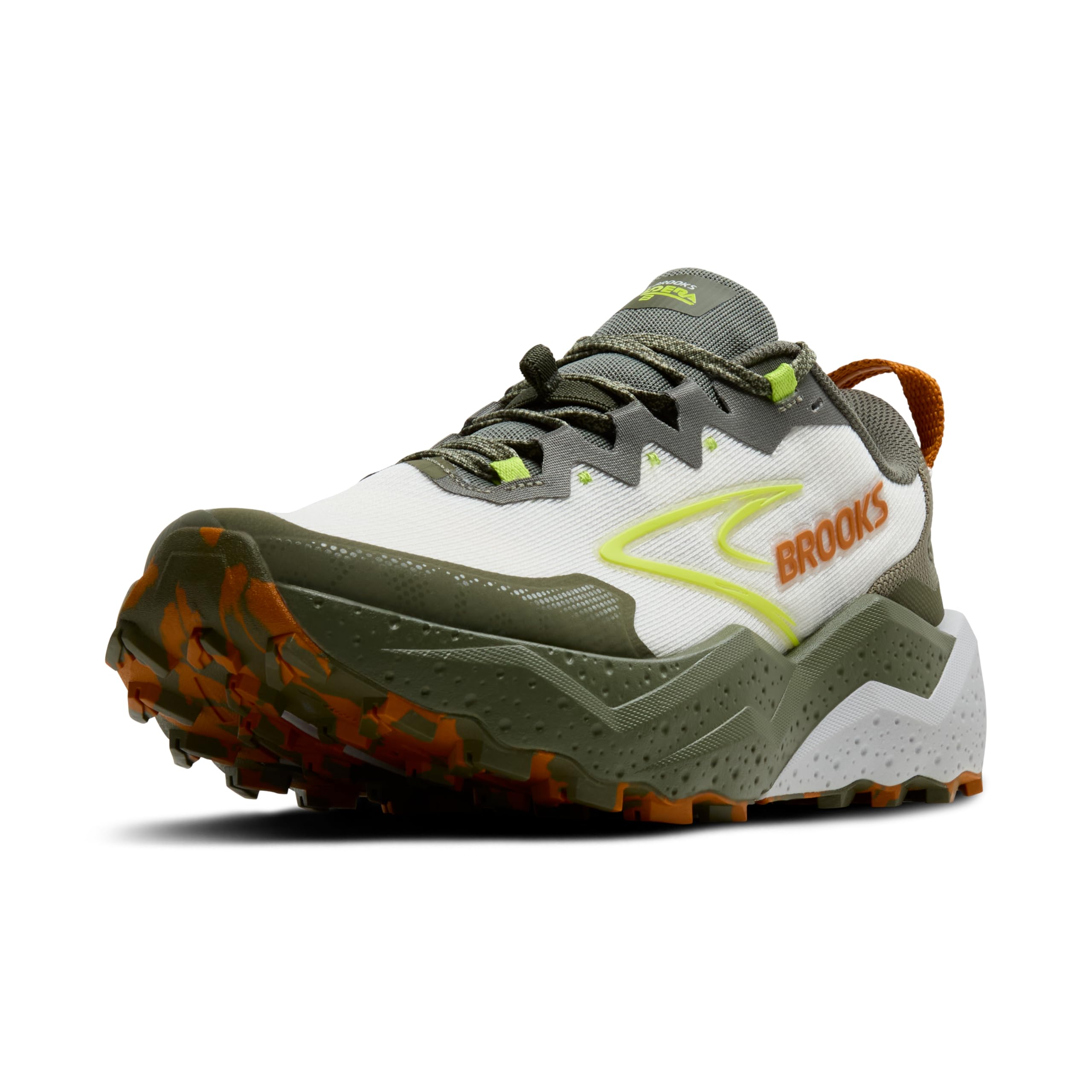
Brooks Caldera 8

Brooks Caldera 8

Long cushioned runs

Our Score 8.8/10
Check Price

Worth Noting

  • Upper durability is the weak point
  • Tall, soft ride blunts feel for the ground
Toe Box
Wide
Platform
Wide and stable
Cushioning
Plush, long-run soft
Terrain Focus
Loose gravel, slopes, paths
Read the full review

Somewhere past the second hour, most trail shoes start to feel like something you're putting up with. The Caldera 8 is built for that part of the day: a thick, soft midsole, a broad platform and a springy feel that keeps a loose descent fun when your legs are already done.

That makes it the best shoe here for long, slow days — the ones where time on feet matters more than pace — and the pick we hand to bigger runners who want protection underfoot. It isn't fast. The stack is tall, you feel the height on technical rock, and the shoe rolls rather than snaps when you push the pace.

The fit is friendly: wide toe box, true to size, and a broad base that adds lateral stability on cambered trail. Grip is better than the cushioning suggests, holding on slopes and loose gravel where a softer shoe usually starts to slide, and the ride stays stable rather than wallowing.

Where it gives ground is precision. On tight, rocky ground the height and the softness work against you, and the shoe asks you to pick a clean line rather than feel your way through it. If your trails are long, loose and rolling, this is the more comfortable way to spend the day; if they're steep and technical, the Speedcross is sharper.

Bottom line: We recommend the Caldera 8 for long, loose, rolling trail days and bigger runners who want cushioning without losing stability. It's the comfiest four hours in this guide.

#7

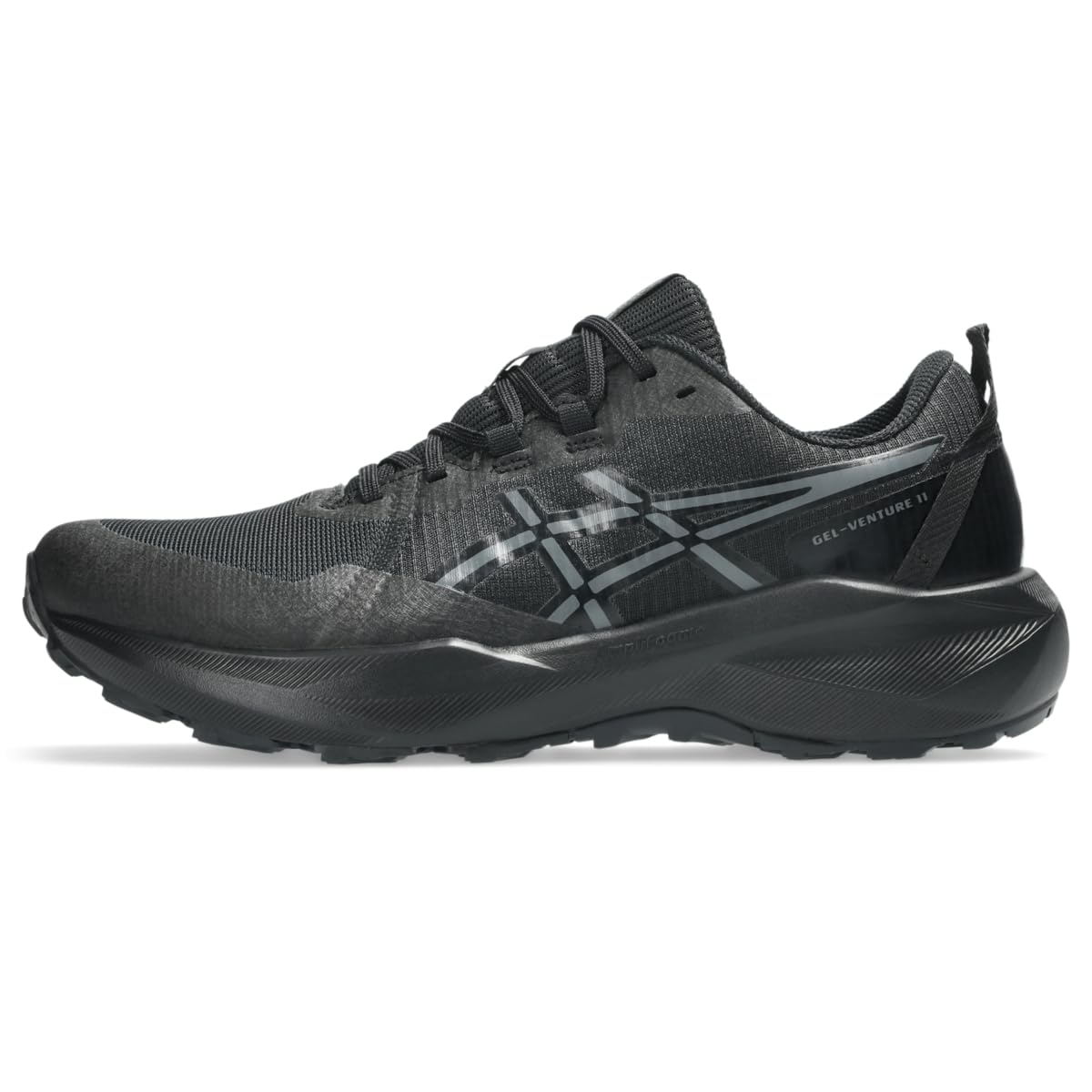
ASICS Gel-Venture 11

ASICS Gel-Venture 11

Gravel and pavement

Our Score 8.8/10
Check Price

Worth Noting

  • Runs small for some feet
  • Grip fades on wet roots and loose rock
Fit
Runs small for some
Support
Firm heel cup and arch
Terrain Focus
Gravel, path, pavement
Read the full review

The Gel-Venture 11 is the shoe here for the runner whose trail is a gravel path, a park loop and a mile of pavement to reach it. On that mix it's genuinely good: cushioned, stable, with a heel cup that holds the ankle and a tread that grips dry dirt and gravel without clattering on the sidewalk.

Fit is the thing to sort out first. It runs small for plenty of feet, so go up a half size if you're between sizes or broad across the toes; the payoff is a comfortable shoe from the first mile, with arch support that lasts a long walk. It also cleans up well — a rinse and an airing and it looks new again.

Take it onto real trail and the limits show fast. Wet roots, loose rock, steep off-camber dirt: it runs out of grip sooner than anything else here, and there's less underfoot to protect you from sharp stone. The tread is shallow and the upper is thin, which is why it's happy on hardpack and out of its depth on wet rock.

So we recommend it for a specific job: road-to-trail commuting, canal paths, park loops and dog walks, where the cushioning and the price make it easy to live with. If your weekends are mountain days, the Speedcross or the Caldera will look after you better — and this one will last longer if you keep it on the easy stuff.

Bottom line: For gravel paths, park loops and pavement links, the Gel-Venture 11 is a comfortable, well-priced all-rounder. It's a light-trail shoe, not a mountain shoe.

#8

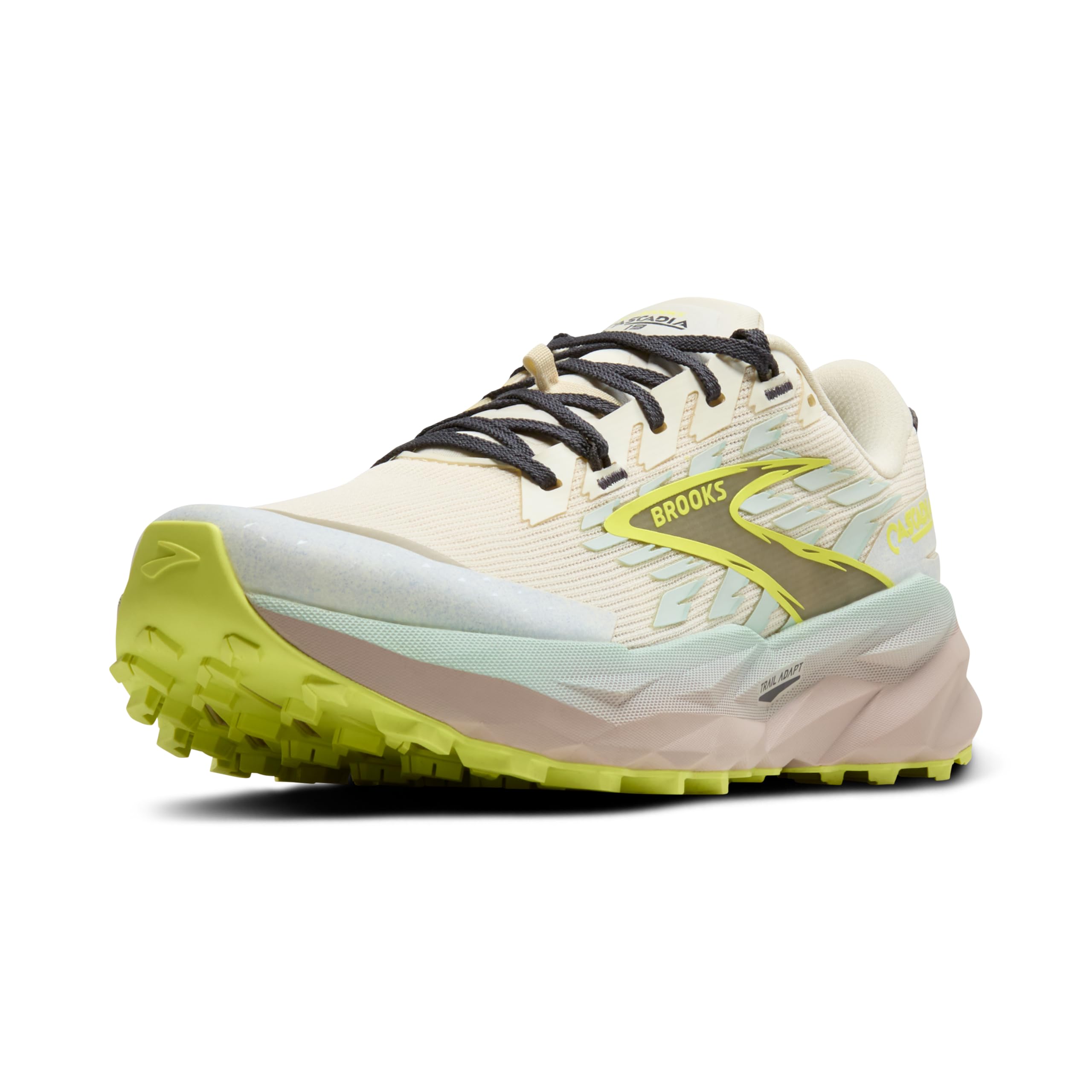
Brooks Cascadia 19

Brooks Cascadia 19

Women's trail fit

Our Score 8.8/10
Check Price

Worth Noting

  • Upper can fail within a couple of months
Fit
Women's-specific
Toe Box
Roomy, wide option
Terrain Focus
Rocky trail, mixed conditions
Underfoot Feel
Firm and protective
Read the full review

The Cascadia 19 is the only women's-specific shoe in this guide, and it earns the place on fit rather than novelty: built on a women's last, with a narrower heel and midfoot and a toe box that still leaves room to spread out on descents.

On rocky trail it's stable and predictable. The sole is on the firm side — more protection than pillow — and the tread grips wet rock and loose gravel without drama, while the arch support holds your foot steady on off-camber sections. We found them true to size, and there's a wide option if you need more volume.

Comfort is where they surprised us. Nothing needed breaking in, no rubbing after a long day, and the shoe stays out of the way whether you're running, hiking or standing around afterwards. The colors are good too, which matters for something you'll wear to the shops.

The caveat is longevity: the upper is the part that goes, and it can go within a couple of months of regular use. That's why this sits among our also-consider picks rather than the top ones. For women logging regular trail miles who want a firm, supportive ride and a proper women's fit, it's the first shoe we hand over.

Bottom line: We recommend the Cascadia 19 for women who want a proper women's fit, a firm and stable ride and real grip on rocky trail — as long as you accept the upper's shorter life.

How We Tested These Trail Runners

To build the shortlist, we started with more than 60 current trail models and filtered for lug depth, weight, available widths, and price, then narrowed to 14 pairs that represented the range of terrain most runners see. Each pair went out on our regular routes for eight months: a rocky ridge with loose scree, a muddy switchback loop that stays wet for days after rain, a gravel rail trail, and a few stream crossings I would not recommend in road shoes.

On the first run, I noted heel slip on the steepest descent, toe box room, and whether the lacing put pressure on the top of my foot. We repeated the same wet-root section and loose gravel climb in every pair, paying attention to whether the outsole bit or skated. For arch support and comfort, testers with high and low arches wore each shoe on long efforts and reported where fatigue showed up first. After 50 miles, we inspected lug wear, upper stitching, and toe caps for quality and durability, and we noted which uppers cleaned up after mud and still looked presentable. Fit was judged on true-to-size length and width, not just the size on the box.

How to Choose Trail Running Shoes

Start with the ground, not the shoe

Deep, widely spaced lugs — the Speedcross 4 is the extreme case here — clear mud and bite into soft dirt, but they feel vague on smooth wet rock and grind down fast on hard surfaces. Shallower, denser tread like the Excursion TR15 or the Gel-Venture 11 suits gravel, hardpack and mixed path-and-road routes.

The trap is buying the most aggressive shoe in the shop for a gravel towpath, then finding it slippery on wet stone and worn out by autumn. Think about your last three runs. If most of them were hardpack, buy the milder shoe and accept less mud grip; if they were soft and steep, do the opposite.

Fit the toe box and lock the heel

Your toes need room in front — a thumb's width is the old measure — because feet slide forward on descents and a cramped toe box is what costs you a toenail. Width matters just as much: the Speedcross 4 runs narrow and small, while the Lone Peak 8 and NORTIV 8 are built wide.

Sizing is not consistent between brands, so treat your road shoe size as a starting point, read the fit notes for the specific model, and order from somewhere with easy returns. A heel that lifts is the other thing to check before the tags come off.

Decide how much shoe you want underfoot

Cushioning and drop are the two things that change how a trail shoe feels. A thick, soft midsole like the Caldera 8's protects you on long, loose days and suits heavier runners; a firmer, lower shoe gives more feel for the ground and less to roll over on a technical descent.

Drop is the other half. Zero-drop shoes like the Lone Peak 8 load the calf and Achilles more, so the move takes weeks of short, easy runs rather than one big day out. If you only run trails once a week, stay closer to what you already wear.

Waterproofing is a climate decision

A membrane like the Gore-Tex in the XA Pro 3D GTX keeps water out and keeps it in. That is a good trade in cold, wet, muddy seasons and a bad one in summer or on routes with stream crossings, where a mesh shoe drains and dries while a waterproof one stays heavy and clammy.

If wet feet are what ends your winter runs, pay for the membrane. If you cross water regularly, or your feet run hot, skip it.

Plan for wear

Trail shoes die from the outsole up: lugs round off, the toe bumper scuffs through, and the upper separates at the seam where the foot flexes. None of that is a defect, but it does mean the cheapest pair is not always the cheapest to own.

Check the forefoot lugs and the seam near the little toe every few months. Once the lugs are rounded, grip on wet rock is gone even though the shoe still looks serviceable.

Frequently Asked Questions

Final Verdict

The Speedcross 4 is the pair we point most runners to. It grips soft ground better than anything else here, stays light on the climbs and survives rock and root — and the one thing you have to remember is to order a half size up.

If you run in cold, wet conditions for months at a time, the XA Pro 3D GTX's membrane is worth the premium. If your feet are wide or you want a flat, natural ride, the Lone Peak 8 is the better shoe. Start with your terrain and the rest follows.