Shoes & Apparel

Best Running Jackets of 2026

The worst running jacket is the one that turns a drizzle into a sauna. I learned that on a windy run when a too-thin shell flapped hard and its water-resistant finish gave up before mile two. A good running jacket blocks wind and rain without trapping heat, moves with your arms, and sits close enough that it doesn't balloon. It needs a zipper that doesn't snag, thumb holes that don't pull, pockets that hold a phone without bouncing, and reflective details that show up when light goes flat.

Over the past six months, my team and I have run in 14 jackets on road runs, windy loops, and drizzly commutes. Some felt paper-thin in a cold headwind; others were sturdy but clammy. Fit and sizing varied, and a few zippers snagged before the first wash. The keepers looked good beyond the run, felt worth the money, and survived repeated washes. For most runners, breathability matters more than waterproofing—a light, wind-resistant layer with a hood handles cool mornings better than a sealed shell, and packability is a bonus.

#1

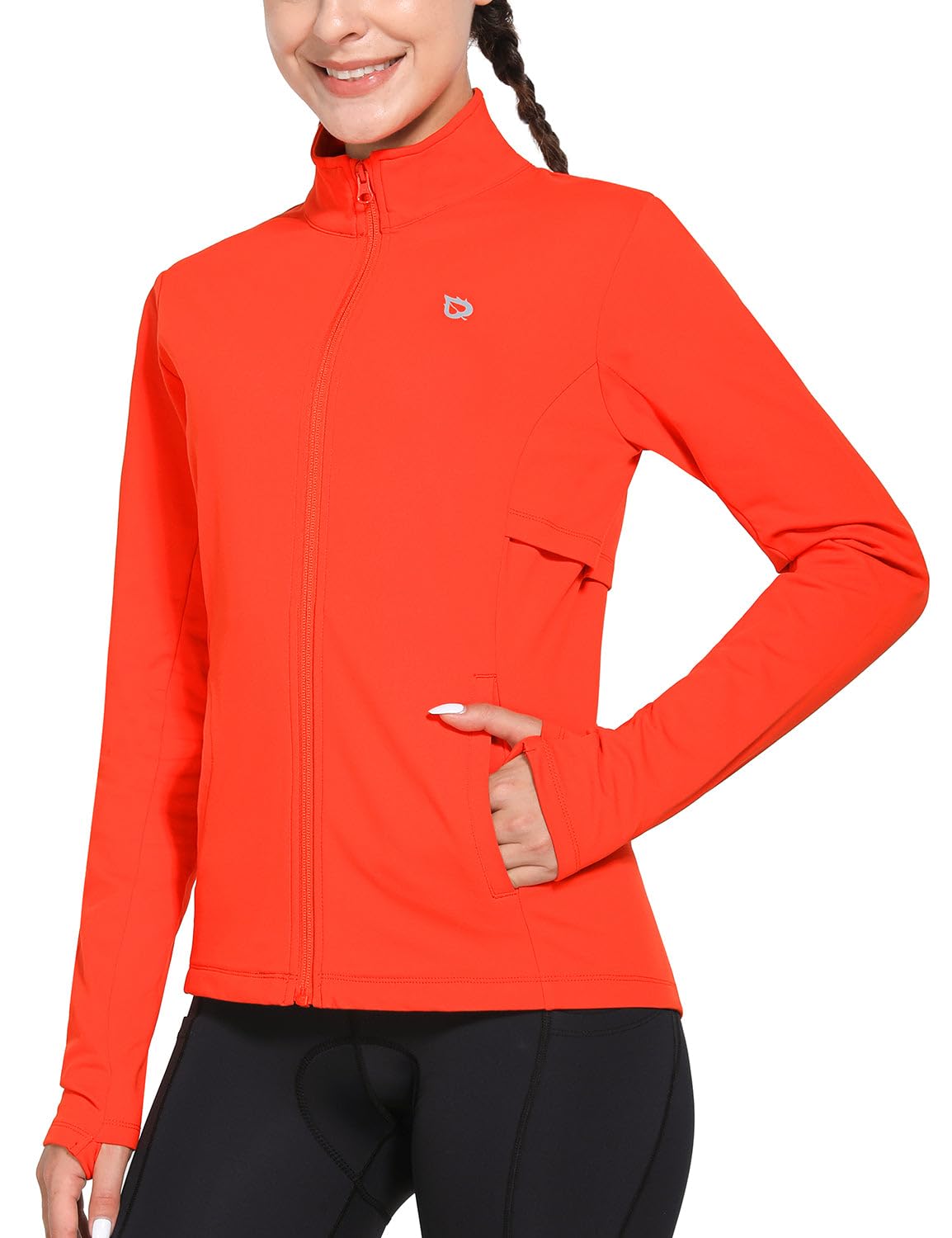
baleaf Women's Fleece Running Jacket

Top Pick
baleaf Women's Fleece Running Jacket

Cold-weather runs

Our Score 9.4/10
Check Price

Worth Noting

  • Water resistant only
Cuffs
Thumb holes
Pockets
5
Water Resistance
Water resistant
Temperature Range
40-60°F
Read the full review

Forty to 60 degrees is the window baleaf prints on this jacket, and it's an honest one: a brushed fleece back, a full zip, and long sleeves with thumbholes, built for the morning when a T-shirt isn't enough and a shell is too much.

Warmth is the whole point, and it comes without bulk. The fleece sits against your back and arms rather than adding a puffy layer, so your arms still swing and you can put a vest or a long-sleeve underneath when the temperature drops further. The cut is the other reason it earns a place — shaped rather than boxy, with more color choice than the usual black and gray.

Five pockets on a running layer is generous, and the rear zip one is the pick of them: it holds keys and a phone flat against your back instead of swinging in a hand pocket. The thumbholes matter more than they sound, too — they anchor the sleeve inside a glove, so your wrist doesn't go bare at the first stoplight. For dry cold, this is the women's jacket we recommend first.

It is not a rain shell. Water resistant here covers drizzle and damp fog, not a steady downpour, and fleece soaks through where a membrane wouldn't. It also runs small, so size up if you plan to wear anything warmer than a tank underneath.

Bottom line: The warmest women's pick here for dry winter runs: fleece-backed, flattering, and cut for 40 to 60 degree mornings.
#2

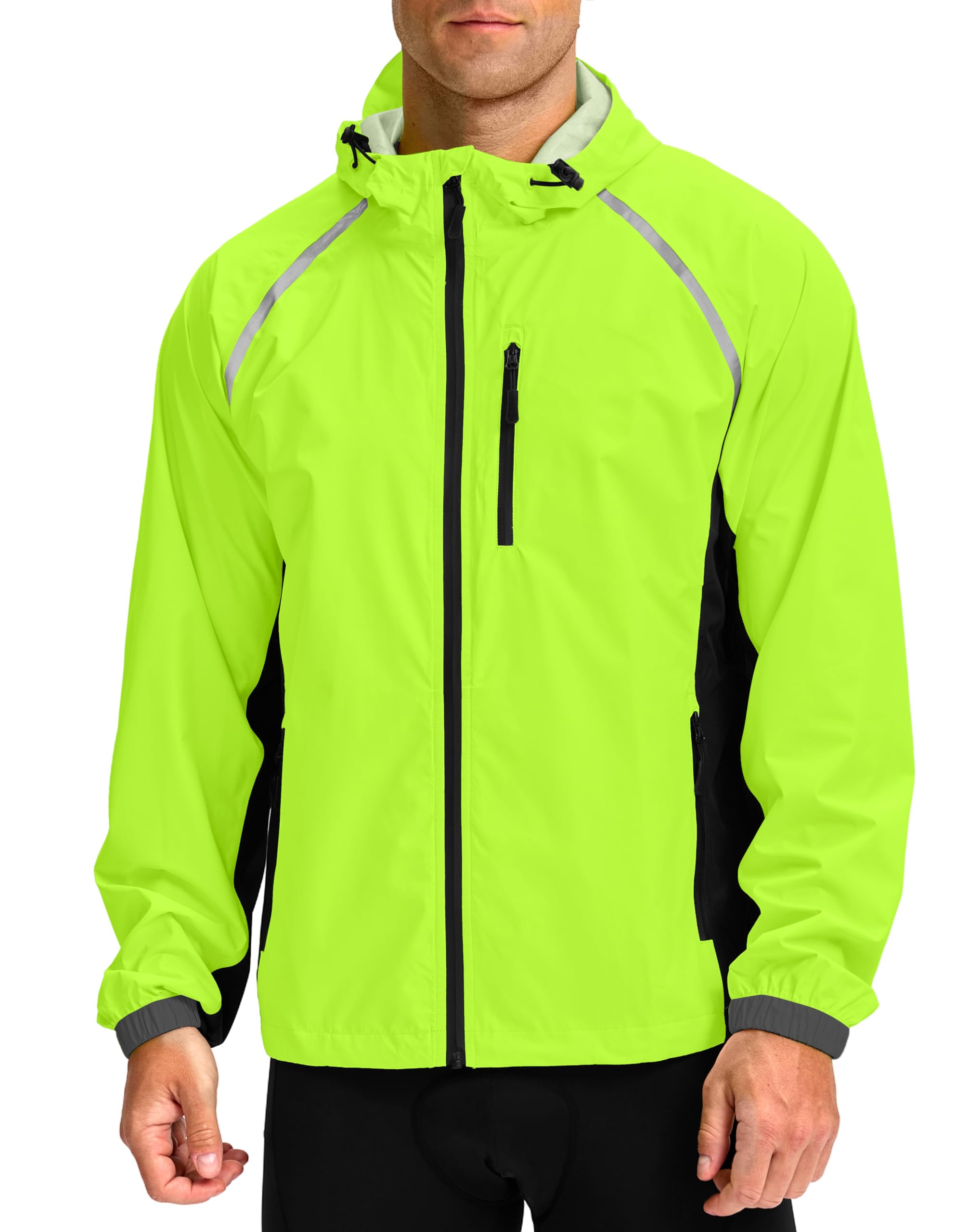
Bikewa Men's Rain Jacket

Bikewa Men's Rain Jacket

Hard, wet efforts

Our Score 9.2/10
Check Price

Worth Noting

  • Crinkly fabric and a clammy unlined inside
  • No insulation
Pockets
3 zippered
Venting
Underarm zips, back vent
Visibility
Reflective front, back, hood
Waterproofing
Waterproof, DWR + TPU membrane
Read the full review

Our top pick wins on all-round usefulness; this Bikewa is the one for the run where you're working hard and it's raining anyway. The difference is ventilation — underarm zips and a back vent, cut into a fully waterproof shell with a laminated TPU membrane and a DWR finish.

For running, venting is worth more than another step up in waterproofing. Body heat is what soaks you from the inside on a tempo run, and being able to open the pits and dump it is why we rate this above every other rain shell here for hard efforts. The rest of the package is thought through for riding and running both: reflective elements on the front, back, and hood, three zippered pockets, and a grippy band at the hem that stops the jacket riding up.

The trade-offs are texture and warmth. The fabric is crinkly and the unlined inside feels clammy against bare arms, so wear a base layer and you'll stop noticing either. It's a shell with no insulation, which makes it a mild-to-cool weather piece rather than a winter jacket.

Bottom line: Choose this over our top pick when your runs are hard and wet — the pit zips and back vent let out the heat a waterproof shell otherwise traps.

#3

Queenie Ke Women's Running Jacket

Queenie Ke Women's Running Jacket

Cool-morning runs

Our Score 9.2/10
Check Price

Worth Noting

  • No weather protection beyond wind
Fit
Slim fit
Cuffs
Thumb holes
Closure
Full zip
Pockets
Zippered pockets
Read the full review

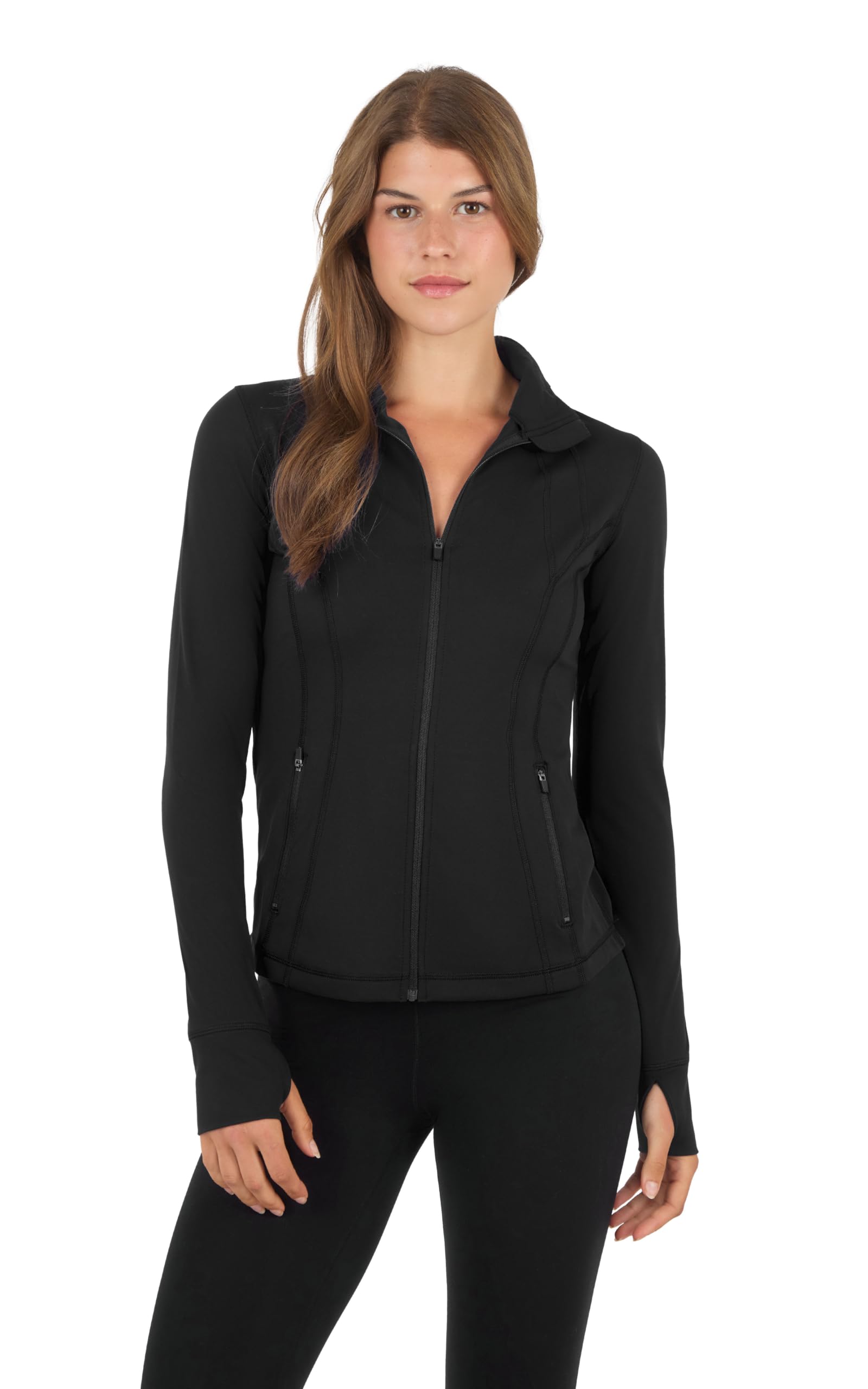
Between a T-shirt and a shell sits this jacket: a stretchy, midweight knit with a slim cut, zippered hand pockets, thumbholes, and sleeves that run long.

It's the layer for a cool, dry morning when you want coverage without a rustle. The fabric moves with you instead of bunching at the shoulders, the hem drops below the hip in back for extra coverage, and the fit is flattering without being compressive — the kind of jacket you leave on for the walk home. We prefer it to the thicker 90 Degree jacket for actual running, because it never fights your arm swing.

Two things to know. It runs small through the shoulders and arms, so size up if you're between sizes or layering. And there's no weather protection here beyond cutting wind: a drizzle will soak it, and a cold snap will have you reaching for the fleece instead.

Bottom line: Our favorite women's layer for dry, cool mornings — slim enough for intervals, soft enough to wear straight through to coffee.

#4

baleaf Men's Rain Jacket

baleaf Men's Rain Jacket

Wet-weather running

Our Score 9.0/10
Check Price

Worth Noting

  • No pit zips, so hard efforts get clammy
Pockets
6
Visibility
Reflective stripes
Packability
Packable
Waterproofing
Waterproof, TPU membrane
Read the full review

One jacket that handles rain, wind, and a dark morning is worth more than three that handle one problem each, and that is the case this baleaf makes. It pairs a waterproof TPU membrane with a hood, reflective striping, and six pockets, and it rolls up small enough to live in a car or a pack. Nothing else in this group covers all three at once.

We made it our top pick because the coverage is real rather than nominal. Rain beads off in light and steady weather, the fabric shuts out wind on a cold start, and the reflective stripes earn their place when a run slides past sunset. The pockets are the detail that sold us: zippered hand pockets for gloves or a gel, a slash chest pocket that takes a large phone, and a back hem cut longer than the front so spray stays off your rear. It's genuinely light, too — a shell you carry rather than a jacket you wear for warmth.

Breathability is where it stops. There are no pit zips and no back vent, so on a hard effort you'll feel the inside of the jacket before the rain gets through. On a cold, blustery morning that trapped heat is welcome; on a mild, humid one it isn't, and you'll be unzipping to the chest. If your runs are intervals or tempo work in weather, the Bikewa below is the better tool.

Two practical notes before you order. This one runs small, so go up a size, especially if you want a base layer underneath. And it's cut for men; women after the same wet-weather coverage should look at the FitsT4, or at the baleaf fleece if the cold where you run is dry.

Bottom line: Our default for wet, windy, dark miles: a genuinely waterproof shell with reflective trim and pockets big enough for a phone.

#5

FitsT4 Women's Windbreaker

FitsT4 Women's Windbreaker

Dark, drizzly runs

Our Score 8.8/10
Check Price

Worth Noting

  • Handles mist and drizzle, not steady rain
  • Zippers catch on the fabric
Pockets
Multiple pockets
Visibility
Reflective stripes
Packability
Packable
Water Resistance
Light rainproof
Read the full review

This is the jacket that rides folded in a belt or a bike pocket and comes out when the sky changes its mind. It's a hooded windbreaker with light rain protection, reflective striping, and several zippered pockets, and it packs small enough for a jersey pocket or a running belt.

Wind is what it does best. On a cool, breezy morning it takes the edge off without the clamminess of a membrane jacket, and the bright yellow with reflective shapes printed across it is the most visible option in this group. For an early or late run on a road with traffic, that combination is worth more than a waterproof rating.

Rain is where it's honest about its limits: mist, drizzle, a passing shower, yes; a downpour, no — you'll be damp by the end of it. The fit needs sorting before you buy, because the sizing runs large on some frames and tight across the shoulders and bust on others; measure rather than assume, and keep the packaging until you've tried it over a base layer.

As a women's stow-and-go shell, we haven't found another here that does the job as well. The reflective detailing is printed in shapes rather than a single strip down the back, which looks better than most safety-first jackets manage and still catches headlights.

Bottom line: The one to buy if you want a jacket that disappears into a pocket and keeps you visible on dark, breezy runs.

#6

90 Degree By Reflex Track Jacket

90 Degree By Reflex Track Jacket

Gym-to-street wear

Our Score 8.8/10
Check Price

Worth Noting

  • Zipper catches and can fail
  • Forearm seams can come apart
Fit
Slim fit
Cuffs
Thumbholes
Closure
Full zip
Read the full review

Seamed, compressive, and close to the body, this reads like a studio jacket rather than a technical shell, and that's exactly what makes it useful on a cool morning when you want to look put together on the way to the trailhead.

The fabric is the thickest in this group and it holds its shape, with seams that pull the eye in at the waist. Long sleeves with thumbholes and a full zip make it a genuine running layer, but the honest use is gym-to-street: warm-up, cool-down, the drive, the coffee after.

We minded the zipper. It catches, and it's the piece that can fail, so pull it slowly and don't yank. The forearm seams are the other spot to watch. Set those aside and the cut is what you're buying — for gym-to-street wear it earns its place, and nothing else here looks quite like it.

Bottom line: The pick for a fitted, gym-to-street jacket that looks the part — just handle the zipper gently and size up.

#7

Lviefent Full Zip Track Jacket

Lviefent Full Zip Track Jacket

Mild-weather layering

Our Score 8.6/10
Check Price

Worth Noting

  • Paper-thin, with no warmth and sheer light colors
Fit
Slim fit
Cuffs
Thumb holes
Closure
Full zip
Read the full review

The least expensive jacket here is also the least technical: a thin, stretchy full-zip top with thumbholes and a body-skimming cut.

That's not a knock if you run in mild weather or spend more time in the gym than on a rainy road. The fabric is soft and stretchy, the cut flatters, and it layers under a shell without adding bulk. We were surprised by how much shape it has for something this thin.

But thin is the operative word. It adds no warmth, light colors can read sheer in daylight, and it runs small enough that you'll want to go up a size, especially through the arms and bust. Treat it as a second skin for cool mornings and warm-ups rather than a jacket that handles weather.

Bottom line: Buy it as a cheap, flattering second skin for mild mornings and gym warm-ups — not as weather protection.

How We Tested Running Jackets in Real Weather

We started by scanning running jackets from established and smaller athletic brands, then narrowed the field by price, available sizes, and the features runners actually use: a full zip, a hood, reflective trim, thumb holes, and pockets that can hold a phone. We cut anything that came in a narrow size range or leaned on fashion language instead of weather protection. That left 14 jackets, which we wore for six months on early road runs, windy bridge loops, light rain, and cool-down walks.

On each run, I noted whether the fabric flapped or clung, whether the hood stayed put or filled with wind, and whether water beaded up or soaked straight through. I layered each jacket over both a T-shirt and a long-sleeve top to check fit through the shoulders and hips, and I sized up when the cut ran slim to see whether the extra room helped or just added bulk. For zipper quality, I zipped and unzipped each one dozens of times, including one-handed and while wearing gloves, and checked whether the pockets held a phone without bouncing. To judge reflectivity, I had a friend drive slowly behind me at dusk and call out when the trim first became visible.

To judge thin material and durability, I packed each jacket into its own pocket or a small stuff sack, then unpacked and shook it out to see whether it creased, snagged, or lost shape. After each run I checked seams, cuffs, hood edges, and thumb holes for fraying, then washed and dried the jackets according to their care labels and repeated the process. I also compared appearance and value by wearing them for everyday errands, not just workouts, since a jacket that looks too technical for the coffee line tends to stay in the closet.

How to Choose a Running Jacket

Start With the Weather You Run In

Three kinds of jacket turn up in this category, and buying the wrong one is the most common mistake. A waterproof shell handles rain and wind and packs small, but adds no warmth of its own. A fleece or thermal layer is lovely in dry cold and turns into a sponge in rain. A thin zip-up like the Lviefent is a gym and mild-morning layer with no weather protection at all.

If you run through winter in a wet climate, the honest answer is two jackets — a shell over a thermal — rather than one compromise. Buy the piece that matches the weather you meet most often, then fill the gap later.

Venting Beats a Bigger Waterproof Rating

Running generates more heat than walking or riding, so a jacket that keeps rain out but traps steam will leave you wetter than the rain would. Look for pit zips, a back vent, or a mesh back panel before you compare waterproof numbers. We put ventilation ahead of everything else on a wet-weather jacket, because it is the feature you notice on every single run.

The baleaf shell here has no vents and is happiest on easy, cold, wet runs; the Bikewa's underarm zips and rear vent make it the better tool for intervals and tempo work in the same weather.

Fit for Arm Swing, Then Check the Size Chart

A running jacket should clear a long-sleeve base layer and let your arms swing without billowing like a sail. Sizing is where this category trips people up: most of the fitted women's styles here run small, and the men's shell does too, so order by your chest or bust measurement rather than by the size you wear in a T-shirt.

If we're between sizes in a shell we plan to layer under, we take the larger one; in a fitted knit worn against the skin, the smaller. A back hem that drops below the waist is worth having on any jacket you'll run in during weather.

Decide What the Pockets Need to Carry

Most runs need a phone, keys, and maybe a gel, and where those ride decides more daily satisfaction than fabric technology. A zippered chest or rear pocket keeps a phone from bouncing; open hand pockets are for gloves and a hat. We care more about one well-placed zip pocket than about a jacket with five openings and nothing secure.

If a phone goes with you every time, prioritize a pocket sized for it: the baleaf shell's chest pocket takes a large phone, and the baleaf fleece puts a zip pocket across the back. Packability only matters if you plan to shed the jacket mid-run.

Visibility Is a Design Decision

Reflective trim only works when a light hits it, so placement matters. Piping on the back, sleeves, and hem is seen by drivers coming up behind you, while a single logo on the chest does little at dusk. A bright color — safety yellow, white, light green — helps in flat light long before reflectors come into play.

If most of your running happens in the dark, buy for the bright color first and the reflective detail second, and carry a small light rather than trusting the jacket alone. The FitsT4 is the most visible option in this group.

Frequently Asked Questions

Final Verdict

The baleaf rain jacket is the one we point most runners to: it covers rain, wind, and low light in a single light shell, and it's the only jacket here that combines a real waterproof membrane with reflective trim and a phone-sized zip pocket. Women chasing the same wet-weather coverage should take the FitsT4; if your cold is dry rather than wet, the baleaf fleece is warmer and more comfortable. Save the Bikewa for hard, wet sessions where its vents do the work.