Shoes & Apparel

Best Running Shoes for Heavy Runners of 2026

If you're a heavier runner, you already know that most running shoes are designed for someone lighter. The cushioning packs out faster, the uppers stretch where you don't want them to, and that plush feeling you paid for disappears by mile 100. I've spent years running at a heavier weight, and comfort isn't a luxury—it's what keeps you running without wincing. The right pair distributes impact, holds your foot steady, and lasts long enough to justify the price.

Over the past six months, we put 12 pairs through daily road miles, treadmill intervals, and long weekend runs to see which ones hold up for heavier runners. We paid attention to how the cushioning felt after 50 miles, whether the arch support matched the shoe's claims, and if the sizing ran true. One thing I've learned: a max-cushion shoe can feel amazing and turn mushy by week three, so durability matters as much as that first-step comfort. These are the pairs that stayed comfortable, secure, and supportive—and they didn't look half bad on easy days.

#1

ASICS Gel-Cumulus 27

Top Pick
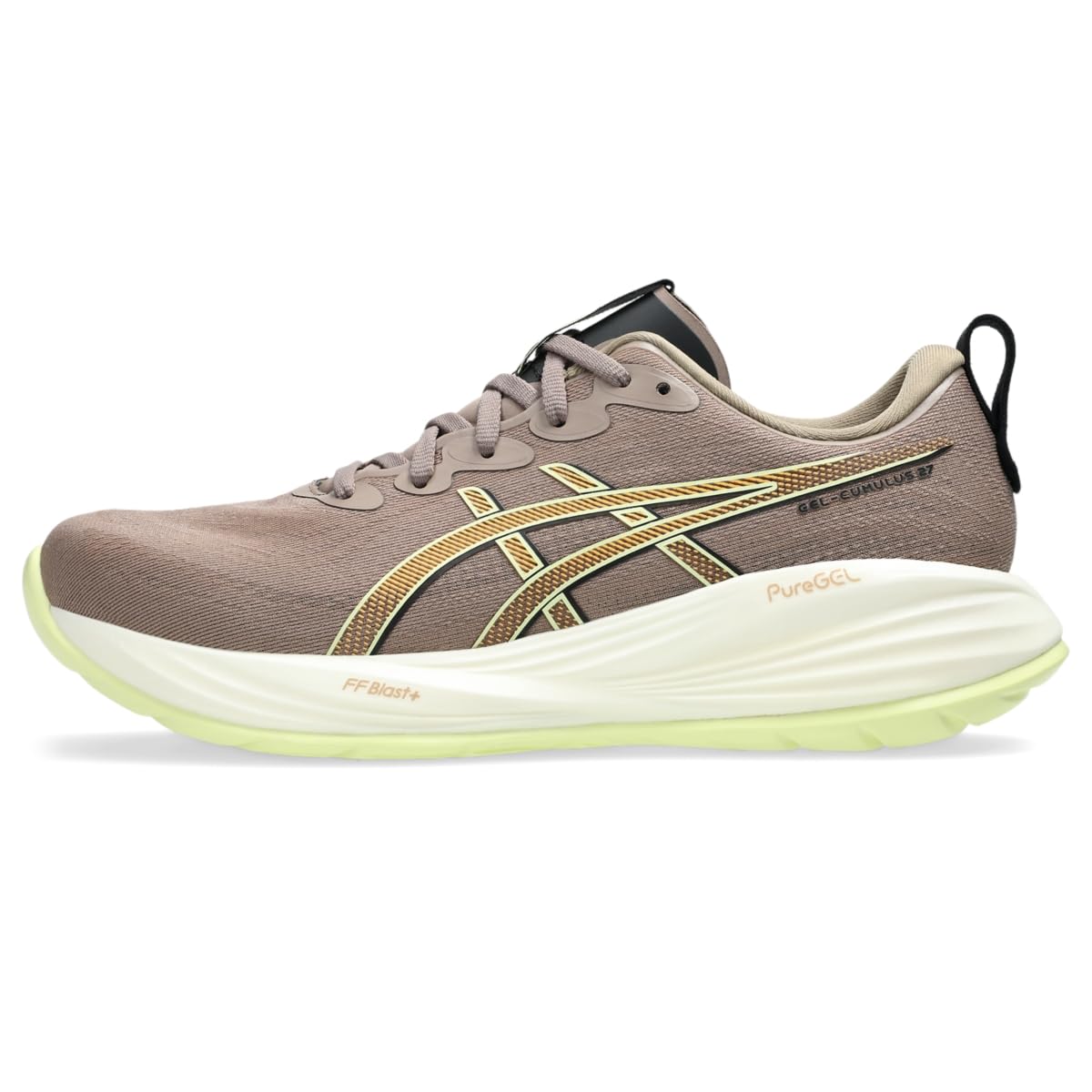
ASICS Gel-Cumulus 27

Neutral daily miles

Our Score 9.2/10
Check Price

Worth Noting

  • Foam may wear before 300 miles
Sizing
True to size
Toe Box
Extra room
Cushioning
Cushy, not overdone
Heel Stability
Excellent
Read the full review

If the Adrenaline's stability doesn't suit your stride, this is where we start. The Gel-Cumulus 27 gives you a neutral ride with enough foam to soften a heavier landing, enough firmness that you still feel the pavement, and a weight that doesn't turn a long run into leg day.

The fit is what we watched closest. It runs true to size with extra room at the toe — useful if your feet spread under load — and heel stability is strong enough that the back of the shoe doesn't wander when you pick up the pace. Cushioning is cushy without being overdone, and there's no break-in period to speak of.

What we keep coming back to is how easy it is to trust. Nothing about the ride surprises you mid-run, and for a heavier runner that predictability is worth more than another inch of foam. The open question is longevity: the foam has worn through before 300 miles in some cases, so treat these as a shoe to replace within a year of steady mileage rather than a buy-once pair.

Bottom line: Our neutral pick: a light, roomy daily trainer with trustworthy cushioning, provided you're comfortable replacing the foam a little sooner.

#2

Under Armour Charged Assert 9

Under Armour Charged Assert 9

Budget training days

Our Score 9.2/10
Check Price

Worth Noting

  • Sizing runs small
  • Firm ride fades over long distances
Weight
Light
Cushioning
Firm, not thin
Arch Support
Good
Width Options
Wide sizes
Read the full review

The budget end of the running shoe market is where heavier runners get burned: cheap shoes usually save the money on the midsole, and the midsole is exactly what you need to hold up. The Charged Assert 9 is the exception we're comfortable recommending, with firm Charged foam, decent arch support, and a wide option.

We've been impressed by how much of the basics it gets right. The upper breathes, the ride is firm rather than paper-thin, and the support through the arch is better than the money suggests. It's the pair we reach for on gym days and shorter road runs, and it holds up to a workday on your feet as readily as a jog.

Where it runs out of road is distance. At a heavier weight the foam is firm enough that you feel every bit of the pavement after an hour, and impact handling at speed is where it gives up ground to the Cumulus and the Adrenaline. Sizing is the other trap: these run small in length, so order up or take the wide.

Bottom line: A budget pick we trust for gym days and short runs — firm support, a wide option, and sizing that runs small enough to order up.

#3

Nike Run Defy

Nike Run Defy

Short easy runs

Our Score 9.2/10
Check Price

Worth Noting

  • Runs small and narrow
  • Short laces
Weight
Light
Cushioning
Cushy
Arch Support
Solid
Breathability
Airy upper
Read the full review

Nike's Run Defy is the lightest and least expensive pair here, and on a short easy run that's exactly what you notice — not much shoe, not much weight, and a cushy footbed that feels better than the money suggests.

The fit is where we hesitate. These run small and narrow: the length comes up short, and wider feet get pinched across the toes. The laces run short enough to be genuinely annoying. Order up a half size, and try them on carpet before you commit to anything longer than a lap of the block.

Set against the rest of this list, it's a shoe for short road runs, the gym, and everyday wear. The long training days belong to the heavier shoes above, where the cushioning is deeper and the platform is built for the load. Buy it as the pair you keep by the door for a quick three miles, not the pair you build a training block around.

Bottom line: The budget pair we keep for short runs and gym days: light, cushy, and cheap, as long as you size up and leave long runs to another shoe.

#4

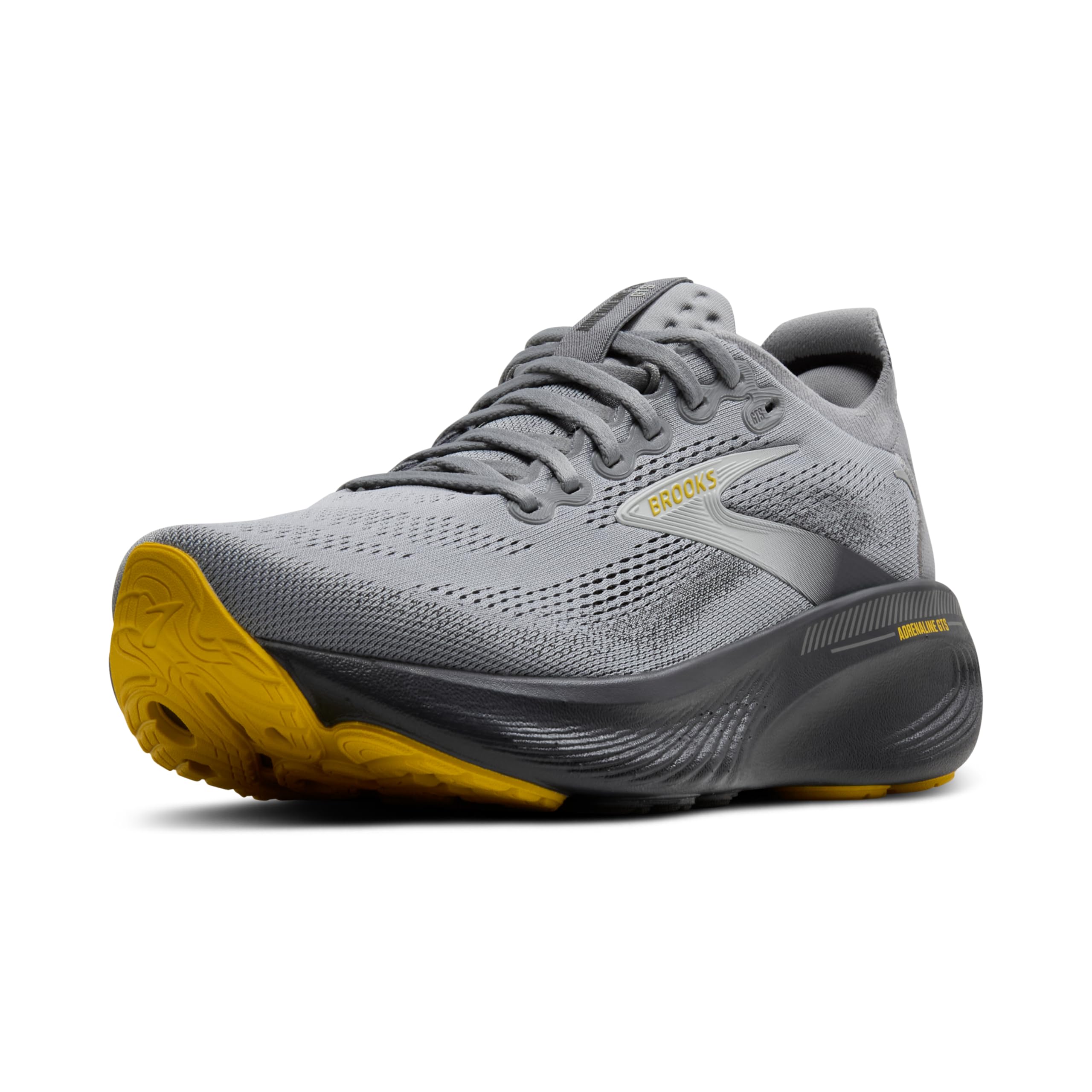
Brooks Adrenaline GTS 25

Brooks Adrenaline GTS 25

Daily training miles

Our Score 9.0/10
Check Price

Worth Noting

  • Premium price within this group
Toe Box
Roomy
Cushioning
Balanced, not squishy
Arch Support
Strong
Width Options
Wide sizes
Read the full review

A heavier runner loads a shoe differently on every landing: more force through the midsole, more demand on the upper, and less tolerance for foam that packs out by mile five. The Brooks Adrenaline GTS 25 is the shoe in this group that answers all three, which is why we made it our top pick.

The support is what convinced us. It's a stability shoe, but the guidance is gentle — the ride stays level underfoot instead of tipping you onto an edge, and the arch is held rather than prodded. It's rare for a support shoe to feel this uncomplicated: the toe box is roomy, the fit runs true to size, and there are wide sizes for feet that need them. For a bigger runner, that fit is not a detail. A shoe that fits properly spreads load properly.

Cushioning is balanced rather than plush, springy and protective without the sinking feeling of a max-cushion shoe. The one caveat is softness: this version runs softer than the one before it, and a runner used to a firm footbed developed plantar fasciitis symptoms about a month in. If you know you like a firm platform, that's a real risk. If you like a little give, it's the comfort you feel at the end of a long day on your feet.

They also clean up well. Wipe them down or run them through the machine and they come out looking like shoes rather than yard-work casualties, which counts for something at this price. Priced at the top of this group, they're the pair to buy once and wear for everything — daily miles, long walks, a shift on your feet.

Bottom line: Our top pick for heavier runners: gentle stability, balanced cushioning, and a true-to-size fit with wide sizes that hold up over daily miles.

#5

Hoka Bondi 9

Hoka Bondi 9

Max cushion comfort

Our Score 9.0/10
Check Price

Worth Noting

  • Soles and uppers wear quickly
  • Most expensive shoe here
Sizing
True to size
Toe Box
Wide
Cushioning
Max, pillow-soft
Width Options
Wide version
Read the full review

Bondi has become shorthand for maximum cushioning, and for a heavier runner that reputation earns its keep: a deep bed of soft EVA between you and the pavement, less road reaching your knees and back, and a toe box wide enough that your foot isn't being squeezed while it lands.

What surprised us is how stable all that softness feels. The platform is deep without being wobbly, the fit runs true to size, and there's a wide version if the standard width pinches. It's as good standing and walking as it is running, which is more than most running shoes manage — this is the pair you keep on after the run instead of swapping for slides.

Durability is where the Bondi gives ground. Soles come loose and uppers fray within a few months of regular use, and the inner lining has worn through inside a season in some cases. It's also the most expensive shoe here. If cushioning is the whole point of the purchase, that trade is worth making; if you want one pair to survive a full training block at a heavier weight, the Adrenaline is the safer buy.

Bottom line: Buy the Bondi 9 if softness is what you're after — the plushest landing here and a wide toe box, with the shortest lifespan of the group.

#6

adidas Ultrarun 5

adidas Ultrarun 5

Casual road miles

Our Score 9.0/10
Check Price

Worth Noting

  • Modest cushioning for heavier runners
  • Best suited to short distances
Upper
Breathable mesh
Outsole
Grippy
Cushioning
Bounce 2.0 foam
Read the full review

Bounce 2.0 is adidas's entry-level cushioning, and the Ultrarun 5 wraps it in a breathable mesh upper with a grippy outsole — a simple, light package that handles easy pavement miles without asking much of you.

We like it best as an everyday sneaker that can also run. It's comfortable from the first wear, true to size for most feet, and the cushioning is just enough for pavement without feeling vague. Support is modest: enough arch to keep an easy jog honest, not enough that we trust it for tempo work at a heavier weight.

The honest boundary is distance. This is a short-to-mid-distance shoe, and past an hour or so at a bigger weight the Bounce foam has less to give than the cushioning on the Adrenaline or the Bondi. For casual road miles, and for the fact that it costs less than most of this list, that's a fair trade.

Bottom line: A comfortable, light sneaker that's happy on an easy 5K — just don't ask it to be the one shoe that carries a heavier runner's long run.

#7

Brooks Ghost Max 3

Brooks Ghost Max 3

Women's cushioned runs

Our Score 8.6/10
Check Price

Worth Noting

  • Toe and foam wear quickly
  • Soft platform can feel unstable
Sizing
True to size
Toe Box
Wide
Cushioning
Max cushion
Width Options
Wide sizes
Read the full review

Heavy-runner advice tends to assume a men's shoe, and women's models that come in wide sizes are harder to find than they should be. The Ghost Max 3 is the women's shoe we recommend first: a max-cushion platform, a wide toe box, wide sizing, and a fit that runs true.

The cushioning is the softest Brooks here, and the support underneath it is real. It's one of the most comfortable shoes in this group, the arch holds up over long days, and it's the shoe we suggest for plantar fasciitis and for twelve-hour shifts on your feet. There's room for custom orthotics, too, which is not a given with this much foam underfoot.

Two things to weigh. The platform is soft enough that hips and back can end up compensating for it, so if you like feeling the road under you, this is the wrong end of the spectrum. And durability is the weak spot — toes have scuffed through within a day of wear, and the foam hasn't held its shape for everyone. Neither is a dealbreaker at this price, but neither makes it the buy-once pair of the group.

Bottom line: The women's shoe we recommend first for heavier runners: max cushioning, wide sizing, and room for orthotics in a true-to-size fit.

How We Tested Running Shoes for Heavy Runners

We started by researching shoes built for high-mileage training and heavier runners, filtering for generous cushioning, durable outsoles, and widths that accommodate a range of foot shapes. We also combed through customer reviews to flag recurring complaints about sizing and premature wear. That narrowed the field to 12 pairs, which we then ran in for six months.

Each pair rotated through the same schedule: early morning road runs on asphalt, treadmill intervals, and long weekend miles on a paved trail. After every run, I logged whether the arch support felt natural or intrusive, if the toe box let my toes spread out, and whether the heel stayed locked in. We tried each shoe with thin and thick socks to see how sizing ran, and we noted any pressure points that showed up after an hour.

To judge durability, we checked the outsole wear pattern after 50 miles, pressed a thumb into the midsole to see how much it had compressed, and inspected seams and toe caps for fraying. We also ran a few pairs through a wet-pavement loop to see if the outsole gripped or slipped. For value, we tracked how many miles each pair lasted before the cushioning felt flat. We judged appearance by whether the shoe looked streamlined enough for everyday wear, not just workout gear.

The shoes that rose to the top shared a few traits: a stable platform that didn't feel clunky, cushioning that stayed springy past 100 miles, and sizing that matched the chart. We'll keep running in them and update if anything changes.

How to Choose Running Shoes for Heavy Runners

Cushioning That Holds Up, Not Just Softness

A heavier runner compresses a midsole further on every landing, so a shoe that feels plush on carpet can bottom out by mile six. Judge cushioning by how much of it is left late in a run, not by the first step. Max-cushion designs like the Bondi 9 give the softest landing and the most protection for long, slow miles. Balanced foams like the Adrenaline GTS 25 feel firmer underfoot but keep rebounding after an hour.

If you're choosing between those two ends, pick the softer shoe when most of your time is standing and walking, and the firmer one for training you plan to repeat several times a week.

How Much Stability You Actually Need

Weight alone doesn't mean you need a stability shoe. What points that way is a stride that collapses inward late in a run, or a history of arch and knee irritation on longer efforts. Stability designs guide the foot back toward level without wrenching it there, which is why the gentle version in the Adrenaline GTS 25 suits most runners who want help.

If your stride is neutral and you dislike the feeling of being corrected, the Gel-Cumulus 27 gives you comparable cushioning with no guidance built in. Either way, a wider toe box helps, because a heavier runner's foot spreads more under load.

Durability Is Part of the Price

Heavier runners wear through foam and uppers faster, which changes the math on a cheap shoe: a budget pair replaced twice can cost more than a midrange trainer that survives a full season of long runs. Look at how much rubber sits under the heel, whether the upper around the toe is reinforced, and how quickly the foam springs back when you press a thumbnail into it.

Durability varies sharply across this group. The Bondi 9 is the softest shoe here and one of the shortest-lived; the Adrenaline holds its shape longest.

Sizing, Width, and Toe Room

Don't assume your usual size. Several shoes here run small — the Charged Assert 9 and the Run Defy both need a half size up for many feet — and a shoe that's too short will bruise toes on descents no matter how good the foam is. Shop at the end of the day when your feet are at their largest, and leave a thumb's width between your longest toe and the end of the shoe.

A wide size is not the same as a wide toe box. The Ghost Max 3 offers both, which is why it works so well for feet that spread under load.

Match the Shoe to the Miles You Actually Run

The right shoe for a twice-weekly 5K is not the right shoe for a marathon block. If most of your running is short and the shoes double as gym and errand footwear, a lighter pair like the Run Defy or the Ultrarun 5 is plenty and costs less.

If you're building distance, or you're on your feet for work all day, put the money into cushioning that holds: the Adrenaline, the Bondi 9, or the Gel-Cumulus 27. That is the difference between finishing a long run fresh and feeling every curb.

Frequently Asked Questions

Final Verdict

The Brooks Adrenaline GTS 25 is the pair we hand a heavier runner first. It steadies the stride without fighting it, the cushioning stays balanced through a long run instead of going flat, and it comes in wide sizes with a fit that runs true. Nothing else here puts support and endurance together as neatly.

If you want the softest landing and you're willing to replace them sooner, the Hoka Bondi 9 is the alternative. And if a stability shoe feels like too much correction, the ASICS Gel-Cumulus 27 fills the same daily-trainer role with a neutral ride and a lighter feel.