Shoes & Apparel

Best Running Shoes for Women with Flat Feet of 2026

Flat feet and running have a complicated relationship. With little arch to work with, the wrong pair turns into shin splints, a sore inside ankle, and that dull ache under the midfoot around mile three. I have limped home from enough runs in shoes that felt fine on the store carpet to have stopped trusting the ten-step test entirely.

Our team spent six months running in 14 pairs to sort the genuinely supportive from the merely squishy. The mistake most low-arched runners make is chasing softness: a plush midsole feels like a cloud for the first mile, then lets your arch collapse further and rolls your foot inward. What helps instead is cushioning that gives and comes back, plus a midfoot that meets your foot rather than bulging against it — some pairs get there with dedicated stability features, others with nothing more than a well-shaped platform.

We also sweated the unglamorous details, like which pairs ran small enough that we needed a half size up, how the outsole held up past 50 miles, and whether a shoe looked like something we would wear past the trailhead. The right pair for your foot and your budget is somewhere in the list below.

#1

Nike Run Swift 3

Top Pick
Nike Run Swift 3

Light daily miles

Our Score 9.2/10
Check Price

Worth Noting

  • Softer, less structured than the stability picks
Sizing
True to size
Shoe Type
Road running
Cushioning
Soft, memory-foam feel
Support Style
Neutral
Read the full review

The Run Swift 3 is the lightest-feeling shoe in this set and the one we reach for on easy days. It's soft, breathable and completely uncorrected — no posting, no guidance, just a cushion you stop thinking about. For a flat-footed runner whose ankles behave, that's a welcome change from the structured feel of a stability shoe.

Comfort is the headline. The cushioning has a memory-foam quality that's forgiving on pavement and on long days of walking, the toe box leaves room without looking clownish, and the mesh breathes well enough that hot feet stop being a factor. Sizing runs true, and the shoe is light enough to pack for a trip where you'll be on your feet from morning to night.

What it won't do is hold an arch that collapses hard. There's no correction built in, so if your ankles roll in and your knees follow, the Adrenaline GTS 25 or the GT-2000 13 is the better call — the Swift starts to feel vague under the midfoot once you're deep into a long run. For everyone else it's the most comfortable everyday ride here, and a good partner to rotate with a firmer pair.

Bottom line: This is the light, soft everyday shoe we reach for when a flat-footed runner's ankles behave and comfort matters more than correction.
#2

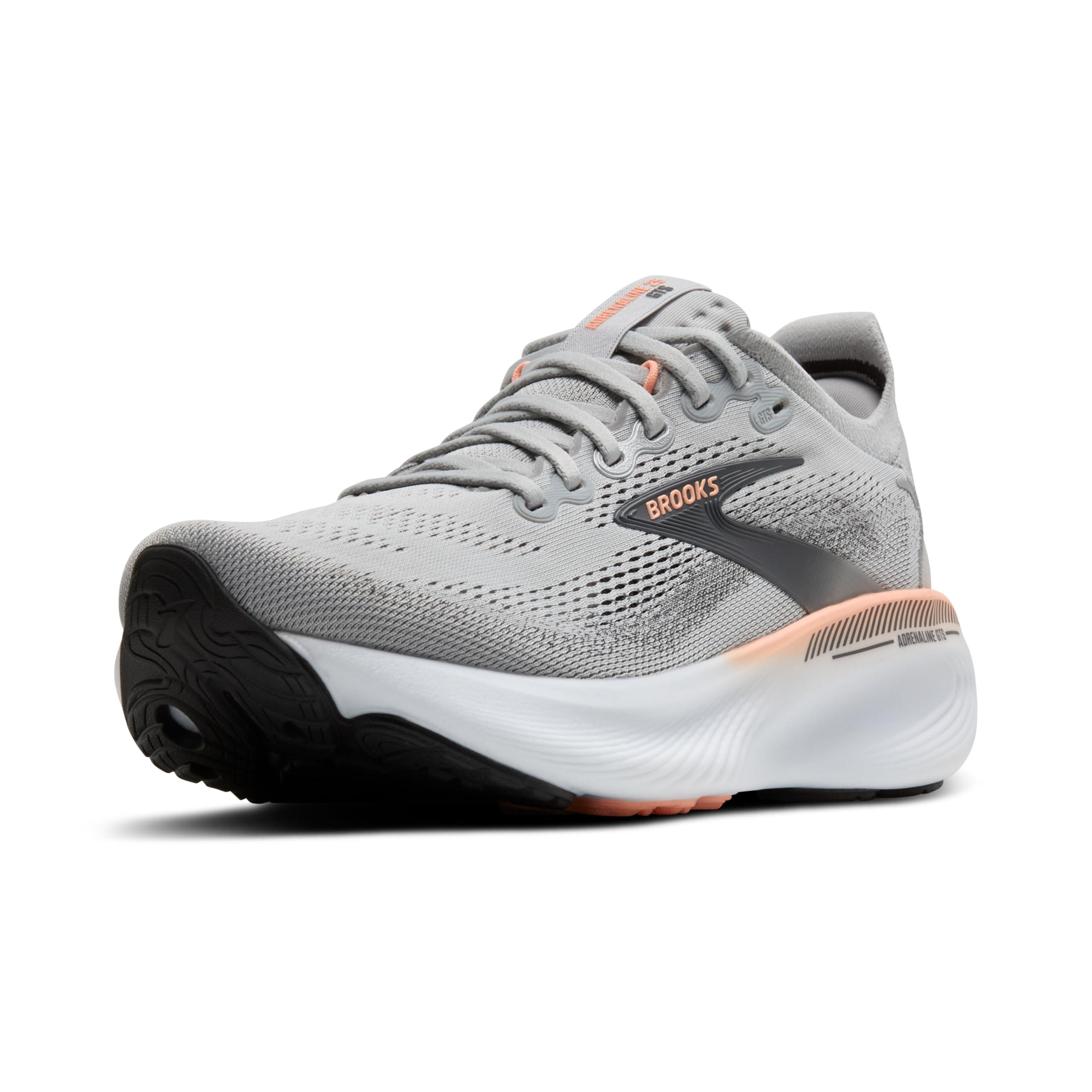
Brooks Adrenaline GTS 25

Brooks Adrenaline GTS 25

Overpronating flat feet

Our Score 9.0/10
Check Price

Worth Noting

  • Premium price with split value feedback
Sizing
True to size
Shoe Type
Road running
Cushioning
Soft and cushioned
Support Style
Stability
Read the full review

A low arch asks one question of a running shoe: does it hold when you land, and is it still comfortable an hour later? The Adrenaline GTS 25 is the shoe here that answers both, and it's the one we hand a flat-footed runner first. The guidance is steady rather than harsh — the shoe nudges the foot back toward center instead of propping the arch up on a shelf.

Comfort is where it earns that recommendation. The footbed is soft through its whole length, the padding around the collar and tongue keeps pressure off the top of the foot, and the toe box is genuinely roomy rather than merely not-tight, which matters if your flat feet came with a wide forefoot. The pain relief is the theme that repeats: plantar fasciitis flare-ups settling down after a few days of wear, arthritic ankles feeling supported, feet that stopped aching after a shift.

Sizing runs true, which is not a given in this category, and the shoe is sold in wide and extra-wide — useful if your feet swell on longer runs. There's no break-in period to plan around either; the shoe feels on day one the way it feels a few weeks in.

Price is the one honest objection. This is the premium end of the set, and it only makes sense if you'll put real miles on it — a casual wearer gets most of the same cushioning from the Charged Assert 9 for a good deal less. What the extra buys is the pairing. No other shoe here combines this much softness with this much guidance, and that combination is the whole job when your arch doesn't hold itself up.

Bottom line: We recommend it first to flat-footed runners because it delivers soft, roomy cushioning and real guidance in the same shoe.

#3

ASICS GT-2000 13

ASICS GT-2000 13

Value stability pick

Our Score 9.0/10
Check Price

Worth Noting

  • Runs narrow through the midfoot
  • Cushioning feels thin to some runners
Fit
Narrow through the midfoot
Shoe Type
Road running
Cushioning
Moderate and firm
Support Style
Stability
Read the full review

Our top pick costs a good deal more, and for plenty of flat-footed runners that difference buys nothing they can feel. The GT-2000 13 is the stability shoe we point to when the budget is real: it steadies the heel, holds the arch, and it feels light on the foot.

The thing we appreciate most is the room it leaves for an insert. A full-length orthotic fits inside without turning the shoe into a clamp, which is more than some snug stability models manage. The support itself sits in the heel and is aimed squarely at overpronation, and a foot doctor signing off on the arch level is the kind of endorsement we don't get often in this price range.

The fit is the catch. This one runs narrow through the middle of the foot and doesn't offer the generous toe box of our top pick, so a wide forefoot will feel it. Cushioning is moderate rather than plush, and a few runners find the ride firm after a long day. If your feet are wider, the roomier Charged Assert 9 or the Max Cushioning Endeavour covers it for less; if they're narrow, this may be the best-fitting shoe in the set.

Bottom line: Buy this one if you want the same overpronation support as our top pick, in a lighter shoe, for a good deal less money.

#4

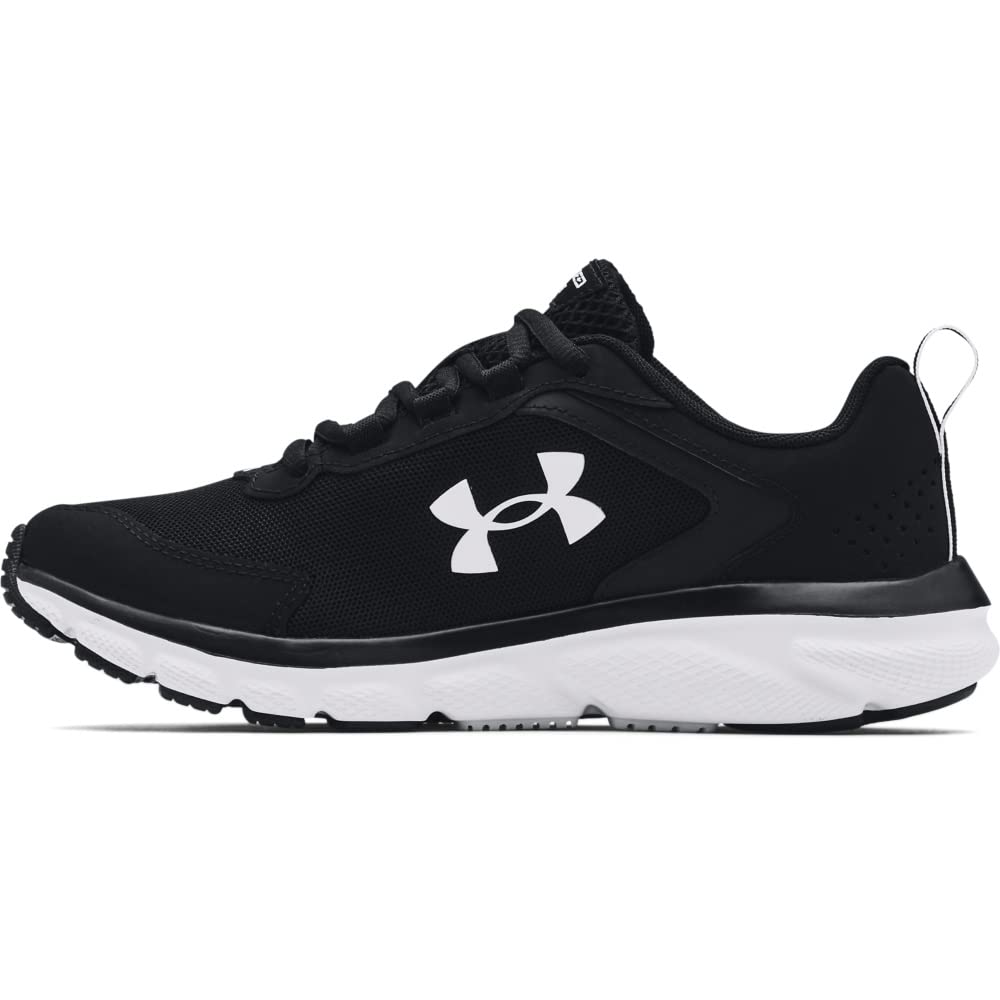
Under Armour Charged Assert 9

Under Armour Charged Assert 9

Budget everyday running

Our Score 9.0/10
Check Price

Worth Noting

  • Sizing runs short for some feet
  • Uppers can separate with heavy daily use
Sizing
Runs small for some
Toe Box
Roomy and wide
Shoe Type
Road running
Support Style
Neutral
Read the full review

This is the least expensive shoe in the set, and it's the one we point to for someone who runs a few times a week, walks a lot, and doesn't want to spend a lot to find out whether running is going to stick.

What surprised us is the shape. The toe box is wide and roomy — genuinely wide, not merely not-narrow — which suits the broad forefoot that so often comes with a low arch. The arch support underneath is more substantial than the price suggests, and the shoe handles long days on concrete without the ache you'd expect at this end of the range. It's a fine walker, a decent jogger, and a forgiving all-rounder for standing shifts.

Two caveats. Sizing is inconsistent: plenty of feet find it true, plenty find it a half size short, so order where returns are easy. And heavy daily use takes a toll, with seams separating on pairs that saw a lot of miles. Neither is unusual at the bottom of the price range, and neither changes the fact that this is the best value here for casual mileage and all-day wear.

Bottom line: Buy the Assert 9 if you want a roomy, supportive shoe for casual miles and long shifts without spending stability-shoe money.

#5

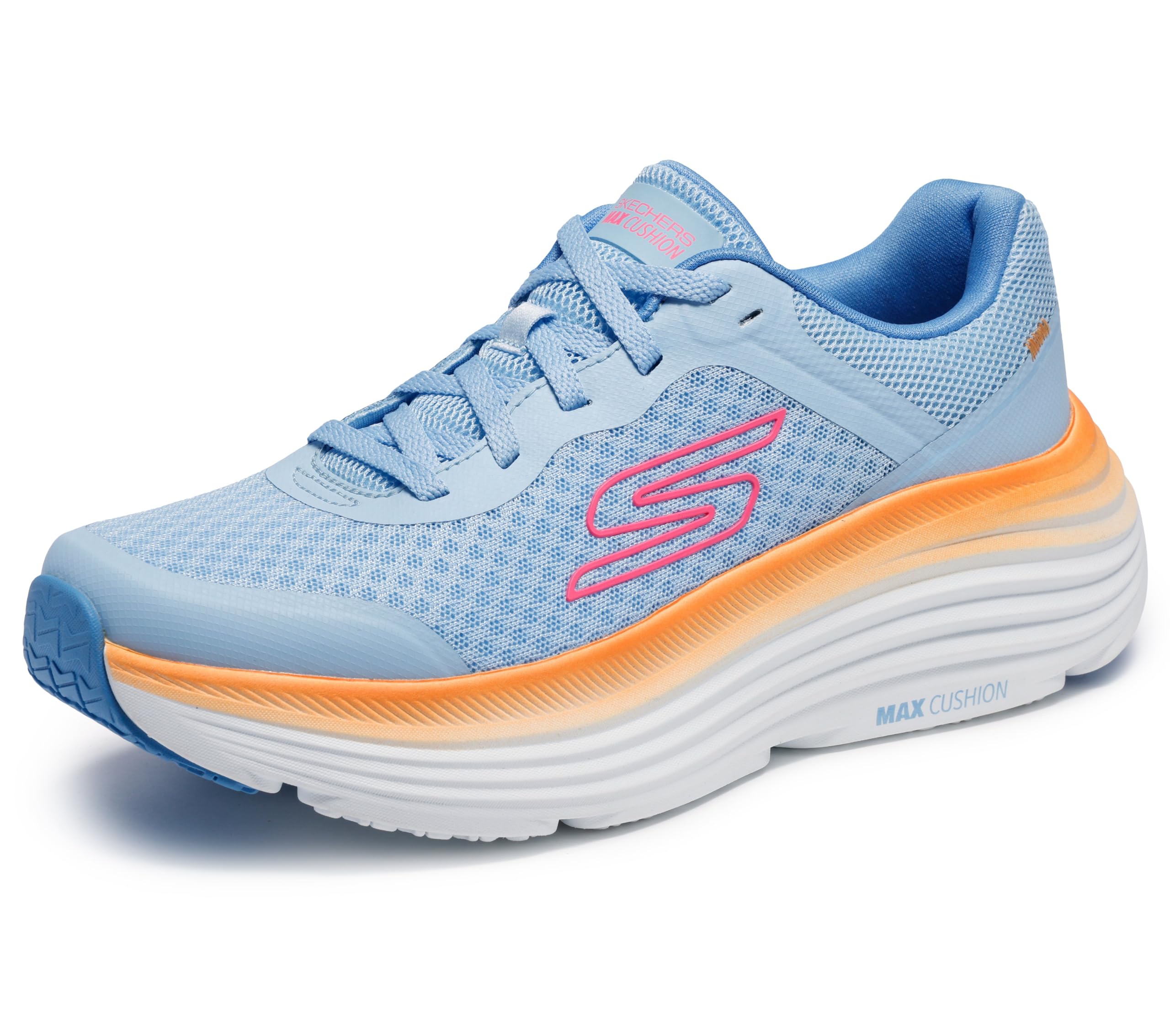
Skechers Max Cushioning Endeavour

Skechers Max Cushioning Endeavour

Max cushion comfort

Our Score 9.0/10
Check Price

Worth Noting

  • Cushioned rather than a stability shoe
Toe Box
Extra roomy
Shoe Type
Road running
Cushioning
Max cushion, soft
Support Style
Neutral
Read the full review

The Endeavour is built around one idea: more foam underfoot. It's the softest platform in this set by a clear margin, closer to a mattress than a road shoe, and for a flat-footed runner with cranky knees or hips that deep cushion is the whole point — it takes the sting out of pavement that a firmer shoe passes straight up the leg.

The toe box is extra roomy, the upper is soft and needs no breaking in, and the shoe is machine washable, which is more useful than it sounds after a muddy season. Arch support is better than a max-cushion shoe usually manages, too; weak ankles feel steadier in it than the stack height would suggest.

What it doesn't give you is guidance. The cushioning does all the work here, so a runner whose arch collapses under load will want the Adrenaline GTS 25 instead. But for standing shifts, recovery miles and anyone who wants their feet to stop hurting at the end of the day, this delivers more softness for the money than anything else on the list.

Bottom line: Pick this one if joint comfort and long days on your feet matter more to you than pronation control.

#6

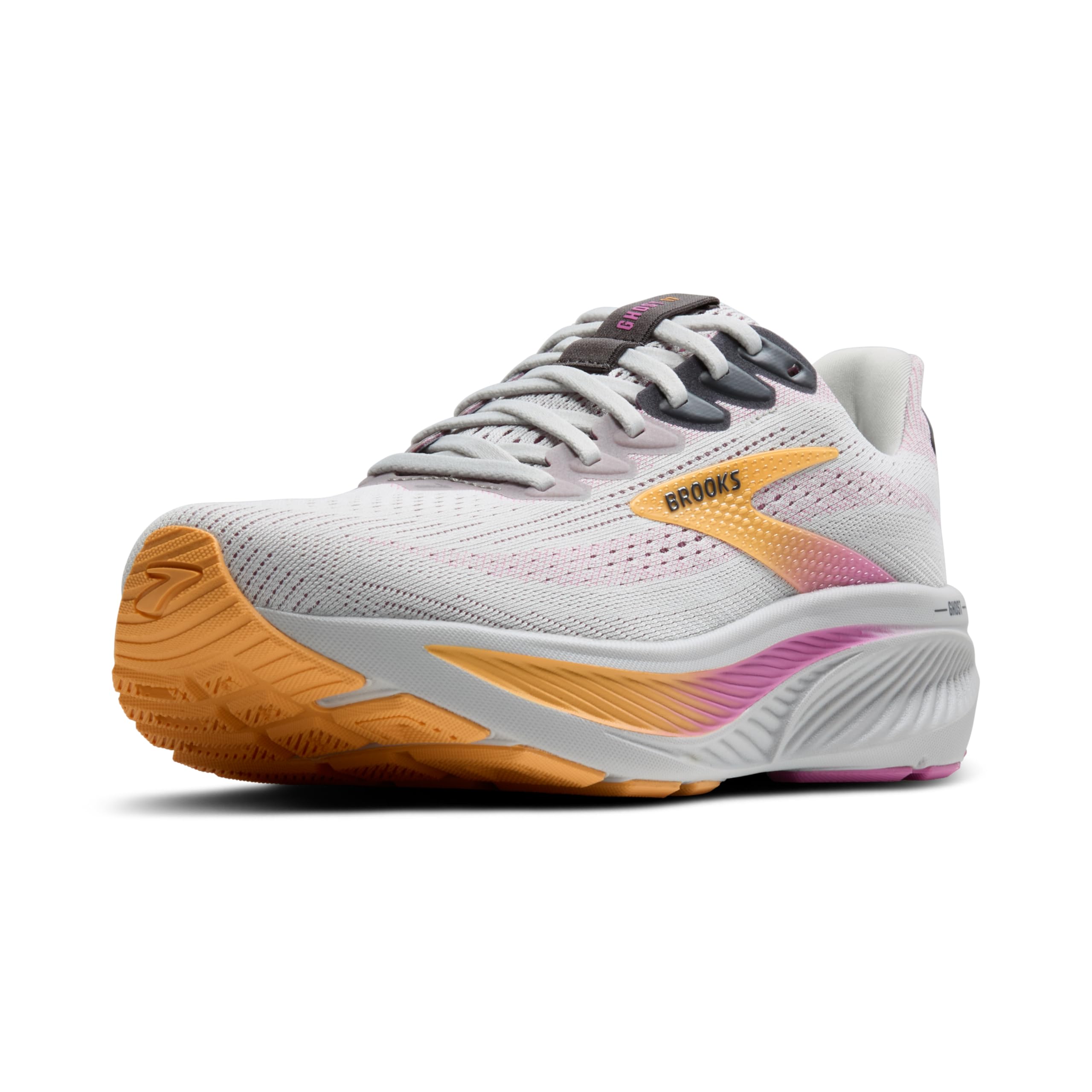
Brooks Ghost 17

Brooks Ghost 17

Neutral cushioned miles

Our Score 8.8/10
Check Price

Worth Noting

  • Runs narrow for wider feet
  • Cushioning splits opinion
Sizing
Runs narrow for some
Shoe Type
Road running
Cushioning
Split firm and soft
Support Style
Neutral
Read the full review

Not every flat-footed runner needs a stability shoe, and the Ghost 17 is the proof. If your arch is low but your ankle doesn't roll, or if an orthotic is already doing the correcting, a neutral shoe with a broad base and honest arch support is often the more comfortable choice. This is that shoe.

The arch support is better than the neutral label suggests. Ankles feel planted in it, the heel counter holds without biting, and it's one of the few shoes here that people describe as firm and soft at the same time. The cushioning is the divisive part: the heel reads soft, the midfoot reads firmer, and depending on your stride that's either a nice balance or a ride that feels inconsistent.

Fit runs narrow through the middle of the foot, which is fine for slim feet and a problem for wide ones — the wide width helps, and it's worth ordering if you're between sizes. Longevity is genuinely mixed. Some pairs run for years; others have the upper give way early, so buy somewhere with a return window you trust.

Where the Ghost earns its place is as the alternative, not the default. It's for the flat-footed runner who has tried guidance and disliked the feeling of being pushed outward, and who wants the cushioning to do the work. For everyone else the Adrenaline GTS 25 does more, and if pure softness is the goal, the Max Cushioning Endeavour gives you more of it for a lot less money.

Bottom line: Choose the Ghost if you have flat feet but don't overpronate, and you want cushioning without a shoe pushing your foot around.

#7

New Balance Fresh Foam 520 v9

New Balance Fresh Foam 520 v9

Soft daily trainer

Our Score 8.8/10
Check Price

Worth Noting

  • Fit runs small for some feet
  • Outsole wear shows early on some pairs
Sizing
Runs small for some
Shoe Type
Road running
Cushioning
Soft Fresh Foam
Support Style
Neutral
Read the full review

Order this one carefully. The 520 v9 is a comfortable, soft daily trainer at a fair midrange price, but it's the shoe in this set with the widest spread of fit experiences — some feet find it true and roomy, others find it short and narrow through the toe. If you're between sizes or have a wide forefoot, try it before you commit.

What's underneath is genuinely good. The Fresh Foam midsole is soft without turning shapeless, the support is real without feeling bulky, and the heel is comfortable from the first wear. It's one of the better walk-all-day shoes here, which is why it keeps turning up on people who stand for a living.

Our take: it's the quiet, cushioned option in this group — good for standing shifts, easy miles and errands, and easy to like if it fits. It isn't the shoe to buy if you want the support to last, since the outsole has worn early on some pairs, and it isn't a stability design either, so anyone whose ankle rolls hard should be looking at the Adrenaline GTS 25 or the GT-2000 13.

Bottom line: Consider the 520 v9 if you want a soft, affordable daily trainer and you're willing to order carefully around the fit.

How We Tested Running Shoes for Flat Feet

We started with a long list of roughly 40 women's running shoes and narrowed it to 14 by reading reviews from runners with flat feet — which pairs they replaced, which gave them blisters, which they bought a second time. Anything that didn't come in wide sizing, or that cost more than most people spend on a daily trainer, was cut. Then we ran in all 14 for six months.

Testing looked like a normal training block: three-to-five mile weekday loops on neighborhood sidewalks, longer weekend runs on a paved trail, treadmill sessions when the weather turned, and a rainy stretch that showed us exactly how each outsole handled wet pavement. I ran in every pair at least three times, and two other low-arched testers did too, so nothing got judged on a single outing.

Arch support got the closest look. We noted where each shoe started to fall apart — usually around mile four — and whether the midfoot still felt met or our ankles had begun rolling inward, then turned each one over to see if the insole's arch lined up with a real foot or sat flat as a board. Fit was checked in thin and thick socks, up and down stairs for heel slip, and with a toe-width squeeze at the end of long runs when feet swell.

Comfort came down to hot spots and lace pressure over the instep, not the first ten steps. Quality meant twisting each shoe, tugging at the seams, and checking outsole wear after 50 miles. We tracked cost per mile, and appearance counted too — a pair that only works with one outfit tends to stay by the door. Sizing varied enough between pairs that we wrote it down for every single shoe.

How to Choose Running Shoes for Flat Feet

Stability or Neutral Cushioning

A stability shoe puts firmer material or a guidance system on the inner side of the midsole to slow the inward roll that often comes with a low arch. A neutral shoe doesn't; it just cushions. The trap is assuming a flat arch automatically means you need the first kind. Plenty of flat-footed runners don't overpronate, and an orthotic may already be doing the correcting.

Look at the shoes you've worn out. If the inner heel and ball are worn through well before the outer edge and your ankles or knees ache after long runs, go stability — the Adrenaline GTS 25 and the GT-2000 13 are the two here. If the wear is even, a neutral shoe like the Ghost 17 will feel better on your foot.

Toe Box Room and Heel Lockdown

Flat feet often come with a wider forefoot, and a shoe that squeezes across the ball turns every run into a countdown. Look for a toe box you can wiggle your toes in: the Charged Assert 9 and the Max Cushioning Endeavour are the roomiest here, while the GT-2000 13 runs narrow.

The heel is the other half of fit. It should hold without pressing, and if it slips, thread the laces through the top eyelet to lock it down before you blame the size. A shoe that's roomy up front and snug at the back is what you're after.

How Much Cushioning You Want

Cushioning is a trade-off, not a score. Deep, soft foam like the Max Cushioning Endeavour's protects achy knees and long days on hard ground, but it returns less feel for the road and can feel vague under the arch. Firmer platforms like the GT-2000 13 feel more planted, at the cost of comfort late in a long run. Flat-footed runners usually do best in the middle, which is where our top pick sits.

Judge the platform after twenty minutes of walking, not on the first step. Plenty of plush shoes feel wonderful in the store and very different at mile eight.

Sizing, Longevity, and What to Pay

Sizing is the least reliable thing about this category — the same brand can run true in one model and short in the next, and this set has both. Order from a seller with easy returns and try your usual size alongside a half size up.

Longevity matters more than it sounds with flat feet, because a compressed midsole stops supporting the arch long before the upper looks worn. Retire a shoe when the inner side feels flat or wrinkles, or when the upper tears. On price, budget picks buy cushioning and room; the premium picks buy a purpose-built stability platform. If you run often, two midrange pairs in rotation will usually serve you better than one expensive pair worn every day.

Frequently Asked Questions

Final Verdict

For most flat-footed runners the decision comes down to one shoe: the Brooks Adrenaline GTS 25. It's the only pick here that pairs genuinely soft cushioning with guidance you can feel, and it comes in widths that fit a wide forefoot.

If the price is the obstacle, the ASICS GT-2000 13 does the same kind of support work in a lighter, narrower shoe for less. And if you've already established that you don't need correction, buy the Ghost 17 for a neutral ride or the Run Swift 3 for the lightest everyday pair here.