Recovery

Best Red Light Therapy Devices of 2026

Red light therapy has a credibility problem: every device promises faster recovery, calmer skin, and less joint pain. The good ones do work — but only if the light is strong enough, the wavelengths are right, and the session is short enough that you'll actually finish it. What that fixes is the grind: instead of paying per visit at a studio, you get ten minutes on the couch, a few times a week, on your own schedule.

I've been chasing relief for a bad shoulder and a cranky knee, and over the past seven months my team and I have used eight devices — masks, panels, and wands — the way people actually use them: on the couch, after a workout, on a timer. The keepers were easy to set up, comfortable to sit under, and solid enough to survive a shelf. Power matters less than consistency, and consistency depends on a device that doesn't overheat, doesn't wobble, and doesn't cost so much that you resent switching it on. That was the bar, and the ones that cleared it are below.

#1

Hooga PRO300 Panel

Top Pick
Hooga PRO300 Panel

Daily full-body use

Our Score 9.4/10
Check Price

Worth Noting

  • Premium price for a tabletop panel
  • No published irradiance figure to compare
LEDs
60 dual-chip
Weight
9.48 lb
Wattage
300W
Warranty
3 years
Read the full review

It costs more than our top pick, so the fair question is what the extra money buys. The PRO300 runs 60 dual-chip LEDs — each one emitting both 660nm and 850nm — behind a 300W driver, with flicker-free output and internal cooling fans. On wavelength it matches the BestQool exactly. The difference is in how the panel is built and what happens if it fails.

That second part is what sold us. Hooga states a three-year warranty here, the only warranty term stated on any device in this set, and in a category where units quit that is worth paying for. The housing is iron rather than plastic, red and near-infrared switch independently, and the PRO Series panels link together if you ever want to build a larger array for a studio or a gym.

Weight is the cost of that build. At 4.3 kg it doesn't travel the way the BQ60 does; one move between rooms was enough to decide it lives on the counter. Give it a permanent spot and the mass works for you — it doesn't slide, tip, or wander mid-session.

Bottom line: Our choice when you want a panel built to last: the only stated warranty in this set, flicker-free output, and room to expand — in exchange for a premium price and a permanent spot.
#2

BestQool BQ60 Red Light Panel

BestQool BQ60 Red Light Panel

Whole-body sessions

Our Score 9.2/10
Check Price

Worth Noting

  • Corded only, with no battery or remote
Power
105W
Dimensions
8.4 x 2.1 x 13.1 in
Irradiance
95.6 mW/cm² at 3 in
Wavelengths
660nm and 850nm
Read the full review

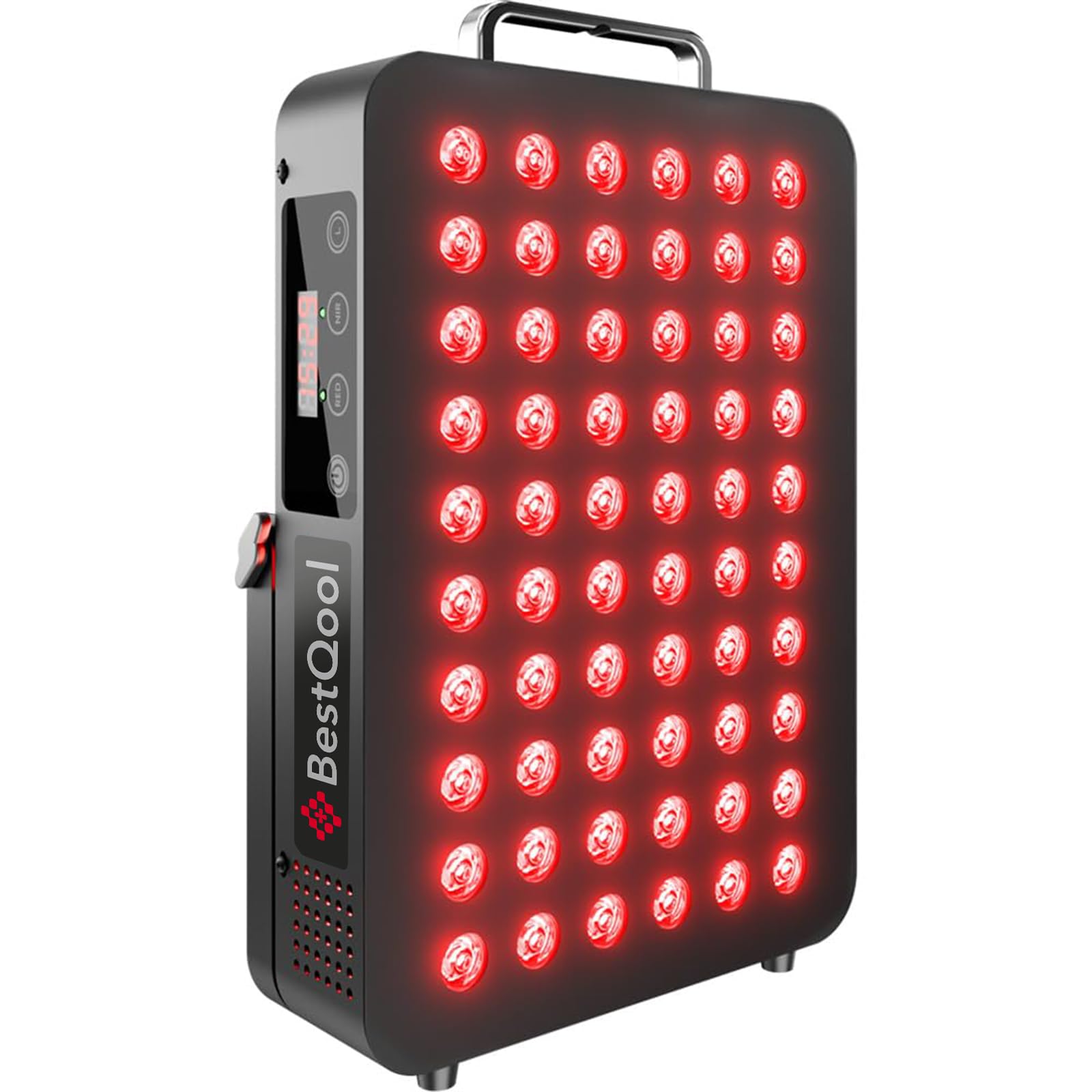
The number that matters on the BQ60 is 95.6 mW/cm², and the detail attached to it is the distance: 3 inches. That makes this a close-quarters panel, and it's the reason it's our top pick. Red light falls off fast as you back away, so a unit that puts this much on your skin from three inches does more for a cheek or a knee than a bigger, dimmer panel across the room.

Sixty dual-chip LEDs cover 660nm red and 850nm near-infrared, with three modes: red, infrared, or both together. We like that they run independently — red is the setting for skin, near-infrared is the one that feels warm and works deeper on muscles, and pairing them is your call rather than the only choice on offer. The U-shaped stand tilts and holds its angle; we set it on a desk at shoulder height and it stayed where we aimed it.

The head is the compromise. At 8.4 by 2.1 by 13.1 inches it lights a face cleanly and a knee cleanly, but a whole back arrives in sections and you'll be moving the panel between them. At 4.8 pounds it's a tabletop fixture rather than something you carry room to room, and the cooling fan is quiet enough to forget about mid-session.

What settles it is that the panel asks nothing of you. No strap to adjust, no battery to remember, no app to open — you sit down, aim it, and the fifteen minutes pass while you do something else. For a first serious device, that ease is worth as much as the output figures.

Bottom line: We think it's the right first panel for most people: strong close-range output, both key wavelengths, three modes, and a stand that aims it — with no battery to manage.

#3

INTEO Face and Neck Mask

INTEO Face and Neck Mask

Face and neck

Our Score 9.2/10
Check Price

Worth Noting

  • Charge life can fall short of the rated 120 minutes
Battery
2000mAh remote
Coverage
Face, neck and chest
Light Beads
680
Wavelengths
630nm, 850nm, 460nm, 605nm
Read the full review

Most LED masks stop at the jaw, which leaves the neck to a second device or to nothing at all. INTEO's answer is a second panel: 100 beads across the face and 70 across the neck and chest, four LEDs in each, for 680 in total. That coverage is the reason to pick it, and it's why it earned a place in a guide where most picks treat one area.

Four modes give you 630nm red, 850nm near-infrared, 460nm blue, and 605nm amber. The mask itself is soft silicone, so it lies against the skin rather than hovering over it, and the controls live on a rechargeable remote — cordless, so you can walk to the kitchen mid-session without unplugging anything.

The straps take a mirror to seat the first time, because the neck panel has to sit flat to reach the chest, and after that it's two clips and a button. Fit runs large: a smaller face will see gaps at the sides until you pull the straps tighter than feels necessary.

Bottom line: Four modes, soft silicone, and a neck-and-chest panel no other mask here has — our pick when coverage matters more than diode count.

#4

iRestore LED Face Mask

iRestore LED Face Mask

Facial treatments

Our Score 9.0/10
Check Price

Worth Noting

  • Steepest price in this set
  • Nothing below the jaw
LEDs
360
Weight
1.87 lb
Wavelengths
635nm, 830nm, 415nm
Session Time
10 minutes
Read the full review

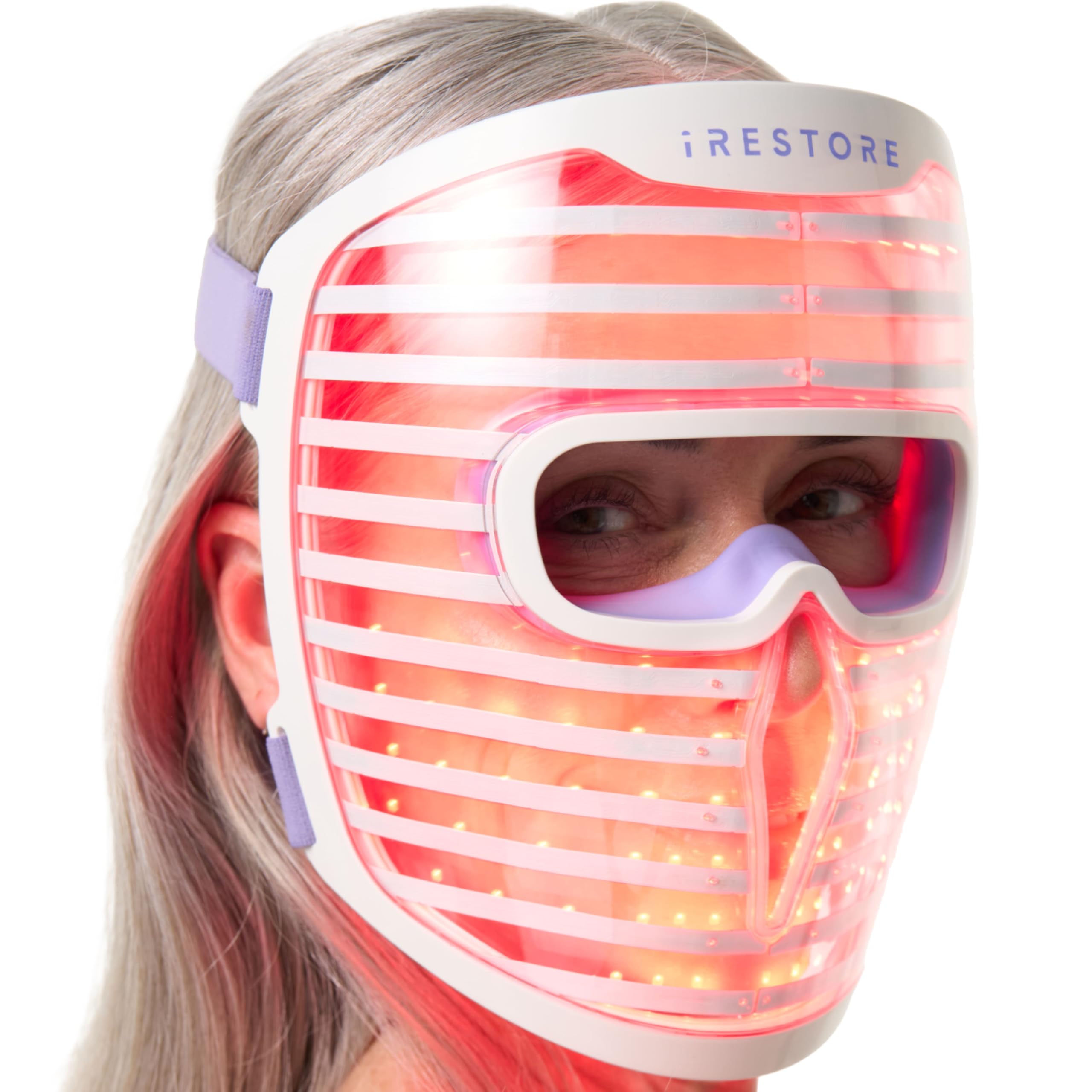
A mask with 360 LEDs is making a claim most masks can't back up: that something you wear can put out enough light to matter. Three wavelengths do the work here — 635nm red, 830nm near-infrared, and 415nm blue — in 10-minute sessions with a timer that shuts the unit off for you.

It hovers. The dual strap holds the shell away from your face instead of pressing it onto your nose, and the interior blocks light from your eyes, so the ten minutes don't have to be ten minutes of lying still with your eyes shut. At 1.87 pounds we wore it through a full cycle without wanting it off, and the carry case means it survives the drawer between sessions.

Among the face-only masks here, this is the one we recommend: more LEDs than any of them, a blue mode aimed at breakouts, and a build that feels like a device rather than a gadget. The strap takes a second to seat and then stays put for the whole session, which is most of what a mask has to get right.

Ten minutes is short enough to run while the coffee brews, and the timer means nobody has to watch a clock. That matters more than it sounds, because the devices that get abandoned are the fussy ones, not the underpowered ones.

Bottom line: The most capable face mask in this set — 360 LEDs, ten-minute sessions, and a shell that hovers off your skin — with the highest price here as the catch.

#5

Hooga HG24 Bulb

Hooga HG24 Bulb

Desk and travel

Our Score 9.0/10
Check Price

Worth Noting

  • Gets hot after a few minutes of close use
  • Service life is the weak point
LEDs
12 dual-chip
Weight
1.39 lb
Wattage
24W
Irradiance
120 mW/cm²
Read the full review

A bulb in a socket base is the least complicated way into red light therapy, and the HG24 is a well-specified version of that idea: 12 dual-chip LEDs at 660nm and 850nm, a 24W draw, and roughly 120 mW/cm² measured at the surface of the bulb.

The base, braided cord, and inline switch all come in the box, which is easy to overlook until you've gone looking for a housing for a bare bulb. Screwed into a desk lamp it puts light exactly where you aim it, and at 1.39 pounds it moves from desk to nightstand without a thought. On a desk it lit a shoulder well and a back poorly — aim matters more here than with a panel.

The catch is the falloff. That 120 mW/cm² is at the surface; a few inches back and you're getting a fraction of it, and the beam is narrow enough that the whole thing behaves like a spotlight. Used up close on a specific spot, that's fine. Used as room lighting for a torso, it isn't.

So we treat this as a supplement rather than a system. As a low-cost entry point, a travel light, or a second device for a desk drawer it earns its place; as your only device, it asks for more patience than a panel does. That's the trade for a small outlay, and it's a fair one if you know which of those you're buying.

Bottom line: We see this as a low-cost first step, or a second device for a desk, as long as you treat a bulb as a spot tool rather than a panel replacement.

#6

Comfytemp Red Light Belt

Comfytemp Red Light Belt

Lower back pain

Our Score 8.8/10
Check Price

Worth Noting

  • Corded, so you work within reach of an outlet
LEDs
126
Light Area
22 x 8 in
Belt Length
50 in
Wavelengths
660nm and 850nm
Read the full review

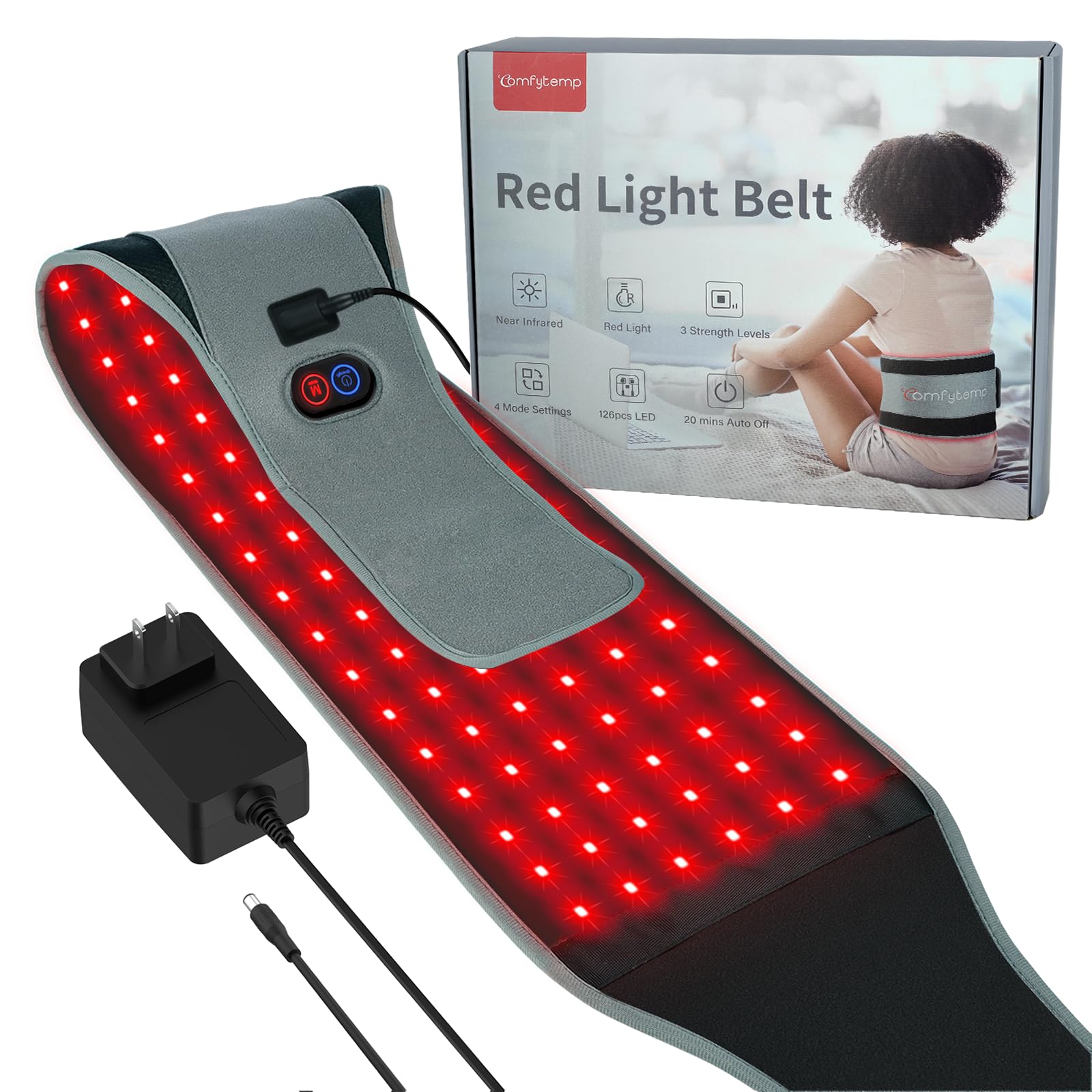
A belt solves a problem a panel can't: keeping light on a lower back while you sit, or on a hip you can't hold a lamp against. The numbers that matter are the lit area — 22 by 8 inches — and the belt length, 50 inches, which wraps a waist or a shoulder. The lights cover less than half the belt, so where you centre it decides what actually gets treated.

126 dual-chip LEDs run at 660nm and 850nm through four modes and three intensity levels, with buttons on the belt itself rather than a remote you'll lose. We rate it the most practical device here for an awkward-to-reach ache: it stays where you put it, it's light enough at 1.46 pounds to wear while you work, and the warmth it gives off is pleasant rather than distracting.

Longevity is the question mark. A belt folds, gets stuffed in a drawer, and takes the strain at its wiring, so the electronics are the part that gives out rather than the fabric. Buy it as a device you'll use hard for a year or two rather than an heirloom, and the money is well spent.

Bottom line: The practical answer for a sore lower back: a wide band of red and near-infrared light that stays put while you sit, provided you have an outlet nearby.

#7

LifePro LumiCure Wand

LifePro LumiCure Wand

Targeted spot relief

Our Score 8.8/10
Check Price

Worth Noting

  • 15-minute auto shut-off ends sessions early
Power
Rechargeable batteries
Weight
6.35 oz
Wavelengths
3
Auto Shut-Off
15 minutes
Read the full review

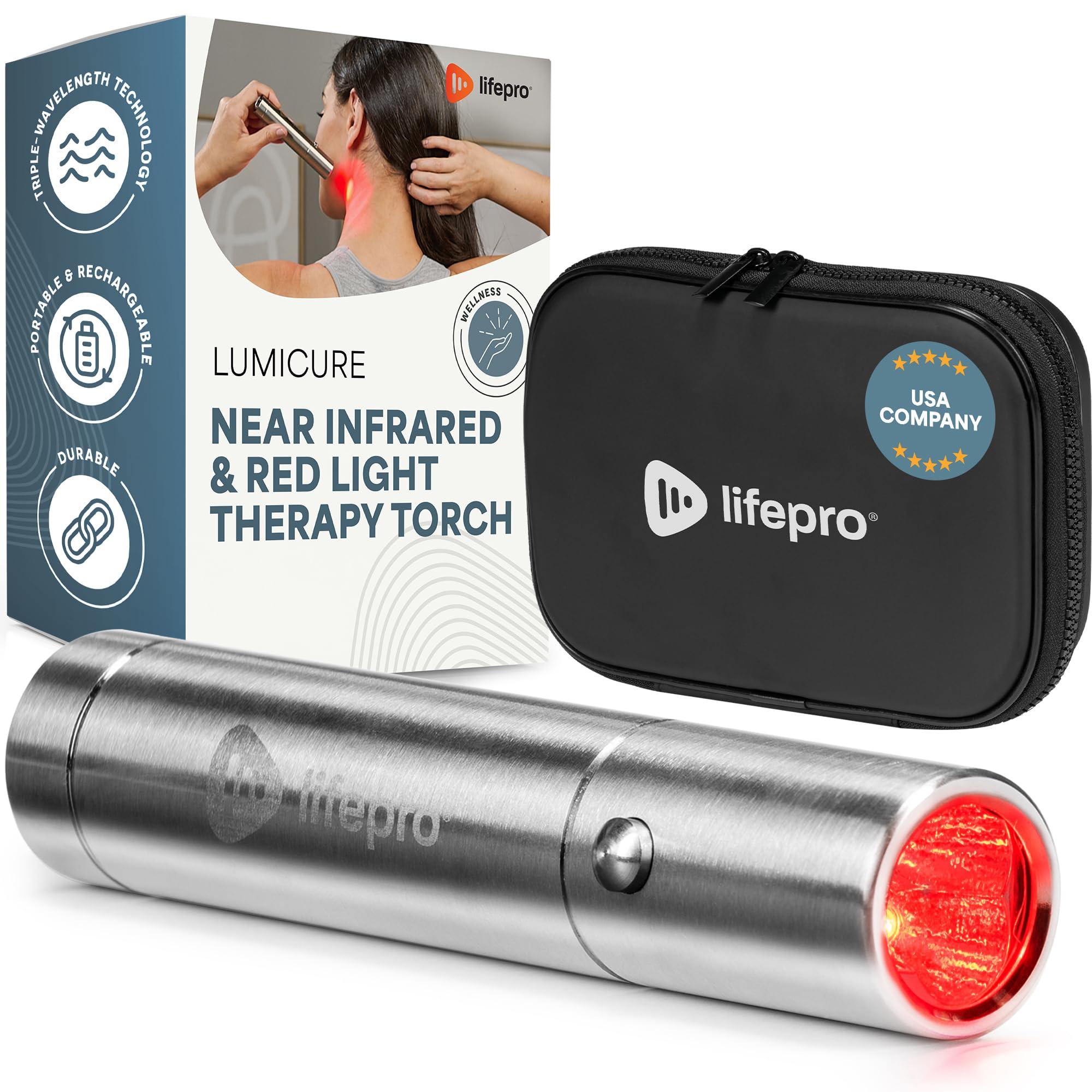
The LumiCure is the smallest light source in this guide, and for a lot of jobs that's an advantage rather than a compromise. At 6.35 ounces it goes where the light needs to be instead of asking you to arrange yourself in front of a panel: a foot, a knee, the base of a thumb. Three wavelengths, one button, and a wrist strap for when you'd rather not grip it.

Two rechargeable batteries ship in the box, which solves the usual cordless problem — one charges while the other runs, so a dead cell doesn't end the session. The zippered case means it lives in a gym bag without collecting lint, and we kept it in a jacket pocket between uses without noticing the weight.

Fifteen minutes on a knee is fifteen minutes on a knee. The head treats a spot rather than an area, and covering a whole back would take longer than anyone sticks with, so this works as a second device rather than a first. As the thing you keep in a bag for a flare-up on a trip, it's the pick here, and the spare battery makes it genuinely self-sufficient.

Bottom line: Six ounces of targeted light with a spare battery — the device we carry when a knee or a foot needs attention away from home.

#8

Viconor Red Light Lamp

Viconor Red Light Lamp

Budget full-body

Our Score 8.6/10
Check Price

Worth Noting

  • Wired controller and cord limit placement
LEDs
120
Mount
Adjustable tripod
Weight
7.08 lb
Wavelengths
660nm and 850nm
Read the full review

The tripod is the first thing you notice, and it's the reason this lamp does something the other panels here can't: it stands on the floor and lights a whole torso at once. The head carries 120 LEDs — each with a red 660nm chip and two 850nm infrared chips — set into a curved face that concentrates output toward the middle of the panel.

That curve is a design decision rather than a marketing line. The centre of the panel does more work than the edges, so you aim it at the area that needs light instead of standing in front of it and hoping. At 7.08 pounds the head is heavy enough to hold its position, and the height and angle adjust on the tripod.

The knobs are the weak point. The frame is functional rather than solid: fittings loosen, the head droops if you don't seat everything firmly, and a knock moves a carefully aimed panel. This is a device to set up once in a corner, not one to reposition every session.

For a spare room or a garage gym, that's a bargain we're happy to recommend: full-body reach, a curved head that concentrates the light, and a stand that does the aiming for you. Check the fittings when it arrives and tighten everything before the first session, then leave it alone.

Bottom line: Our budget route to treating a large area: floor-standing coverage for the least money here, with the stand, not the light, as the thing you're gambling on.

How We Tested Red Light Therapy Devices at Home

To build the shortlist, we started with the numbers that decide whether a session does anything at all: stated irradiance at the surface, the mix of red and near-infrared wavelengths, and the size of the treatment area relative to the body part it's sold for. Anything with a vague output claim or no wavelength range got cut, then we narrowed by price so we weren't only testing the expensive end. That left eight devices — full-face masks, tabletop panels, and a couple of handheld wands — which we lived with for seven months.

We timed setup from unboxing to first session, and again every time a device moved between rooms. Panels got mounted on a door and set on a stand; we nudged each one mid-session to see whether it shifted or tipped, and checked the hardware after weeks of being folded and stored. Masks went on over bare skin and over a towel with a timer running, so we could see how the straps held and whether light crept into our eyes.

Heat is what ends a session early, so we noted when a panel or mask started to feel warm against the skin, whether it turned uncomfortable at the ten-minute mark, and whether it ever shut itself off. Each tester logged sessions on the same sore spot — a shoulder after swimming, a knee after a run — and rated how it felt the next morning rather than right away. At the end we set what each device cost against how often we actually reached for it, which is the only value math that held up.

How to Choose a Red Light Therapy Device

Pick the Form Factor First

A mask covers a face and nothing else, but it is hands-free and often cordless, which is why face-only routines live and die by them. A panel is the opposite: it treats a back, a chest and a thigh, and it asks you to arrange yourself in front of it. Belts wrap a joint or a lower back, and bulbs and wands put light on one small spot.

The trap is assuming a bigger device is a more versatile one. A floor-standing panel still only lights what sits in front of its head, so treating a whole back means repositioning it or standing further away and losing intensity. Choose the area you'll treat most, then accept the form factor that serves it.

Red, Near-Infrared, and Blue

Red light around 630 to 660nm sits near the surface and is the setting most people want for skin tone and texture. Near-infrared around 810 to 850nm goes deeper, feels warm, and is the one used for muscle and joint comfort; you can't see it, which is exactly why eye protection matters. Blue around 415 to 460nm is aimed at breakouts.

Dual-chip LEDs emit red and near-infrared from the same diode, which gives more even coverage than alternating emitters. Check that the two run independently, too. A device that only offers both at once forces you to take the deeper, warmer treatment every time you wanted a few minutes on your face.

How to Read a Power Claim

Watts describe what a device draws from the wall, not what lands on your skin, so a 300W panel is not three times a 105W one. The comparable number is irradiance in mW/cm², and only when it comes with the distance it was measured at. Intensity drops steeply as you back away.

So a panel rated at 95 mW/cm² at three inches is a close-range tool, not something that fills a room. Where a maker publishes no irradiance at all, treat the device as unrated and plan to sit close, at the distance your skin feels warm rather than hot.

Build, Batteries, and the Warranty

This is a category where units quit. Corded panels have the fewest failure points, with no cell to degrade and no charging circuit to wear out. Cordless masks live and die by their battery, and a mask that needs a charge every few days becomes a chore you skip within a month. A belt folds and gets stuffed in a drawer, so the wiring takes the strain.

A stated warranty is worth real money here. Only one device in this set states a term, and it is three years. If a maker won't say how long the unit is covered, assume the answer is short and weigh that against the price you're paying.

Frequently Asked Questions

Final Verdict

The BestQool BQ60 is the device we point most people to. It puts both key wavelengths on a face, a knee, or a shoulder with enough output to matter, it stands and aims itself, and it skips the battery management that turns cordless masks into a chore.

If your routine is face-only, the iRestore is the more capable mask and worth the premium. If you want a panel built to outlast everything else here and you'll leave it in one place, the Hooga PRO300's three-year warranty is the argument. And for a sore back and nothing else, the Comfytemp belt does the job for less.