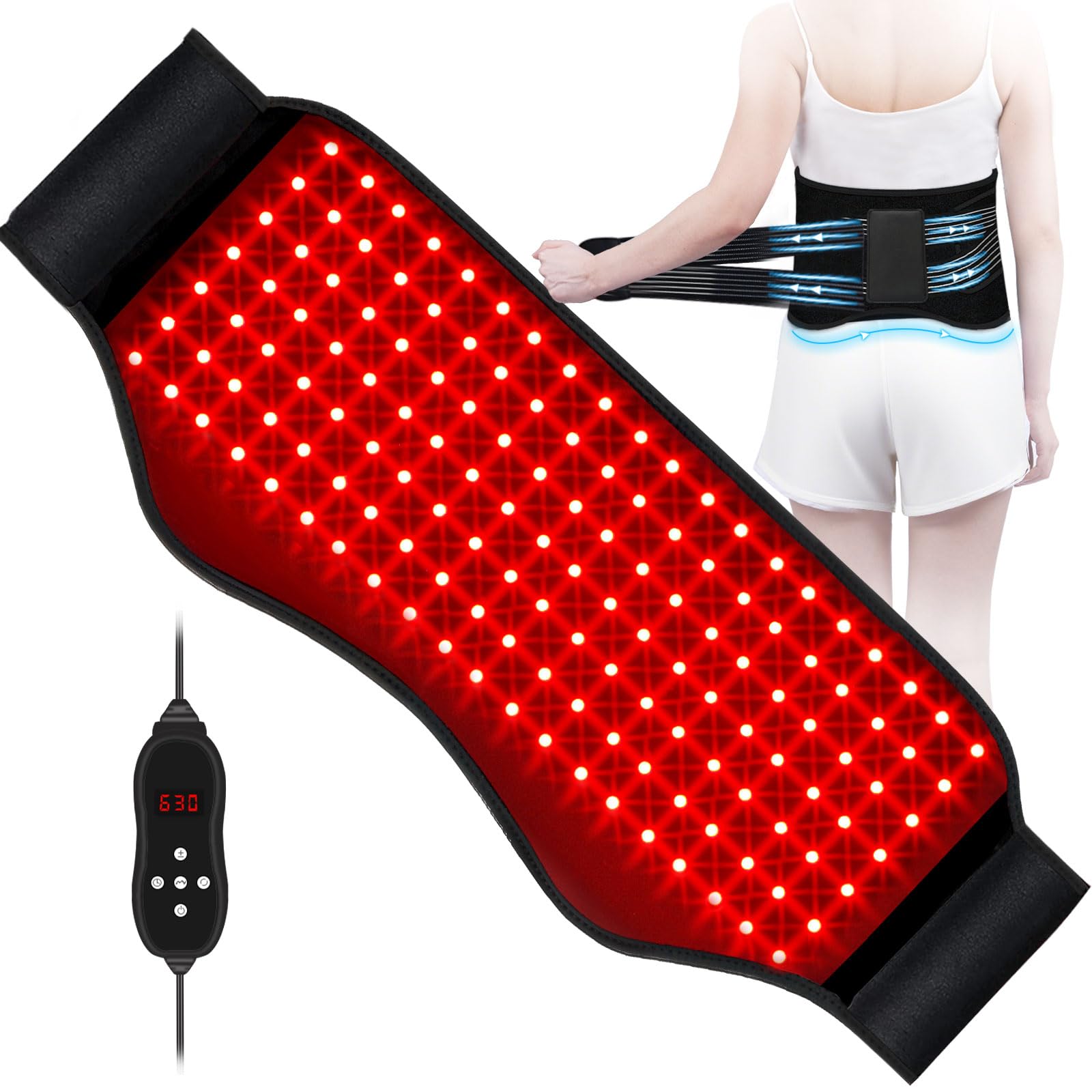
Recovery

Best Red Light Therapy Belts of 2026

Red light therapy belts promise to bring the clinic home, but the real questions are simpler: will it stay wrapped around your sore back, keep a charge through a session, and feel warm enough to make a difference? I've worn them after workouts and during long desk days, and I'm fussy about straps that dig in, controls I can't see, and cords that won't stretch from the couch to an outlet. A belt that fixes those daily annoyances can turn a ten-minute session into something you actually keep up with.

We tested 10 belts over seven months, using them across different body types and in the places they belong: on the couch, at the desk, and after evening walks. We noted how fast each heated up, whether the light reached the full sore spot, and how many sessions the battery managed per charge. Some felt supportive at first; others slipped, flickered, or came with a charging cable too short to be useful. The picks below are the ones that held up, fit a range of bodies, and were worth it.

#1

Comfytemp 126-LED Red Light Belt

Top Pick
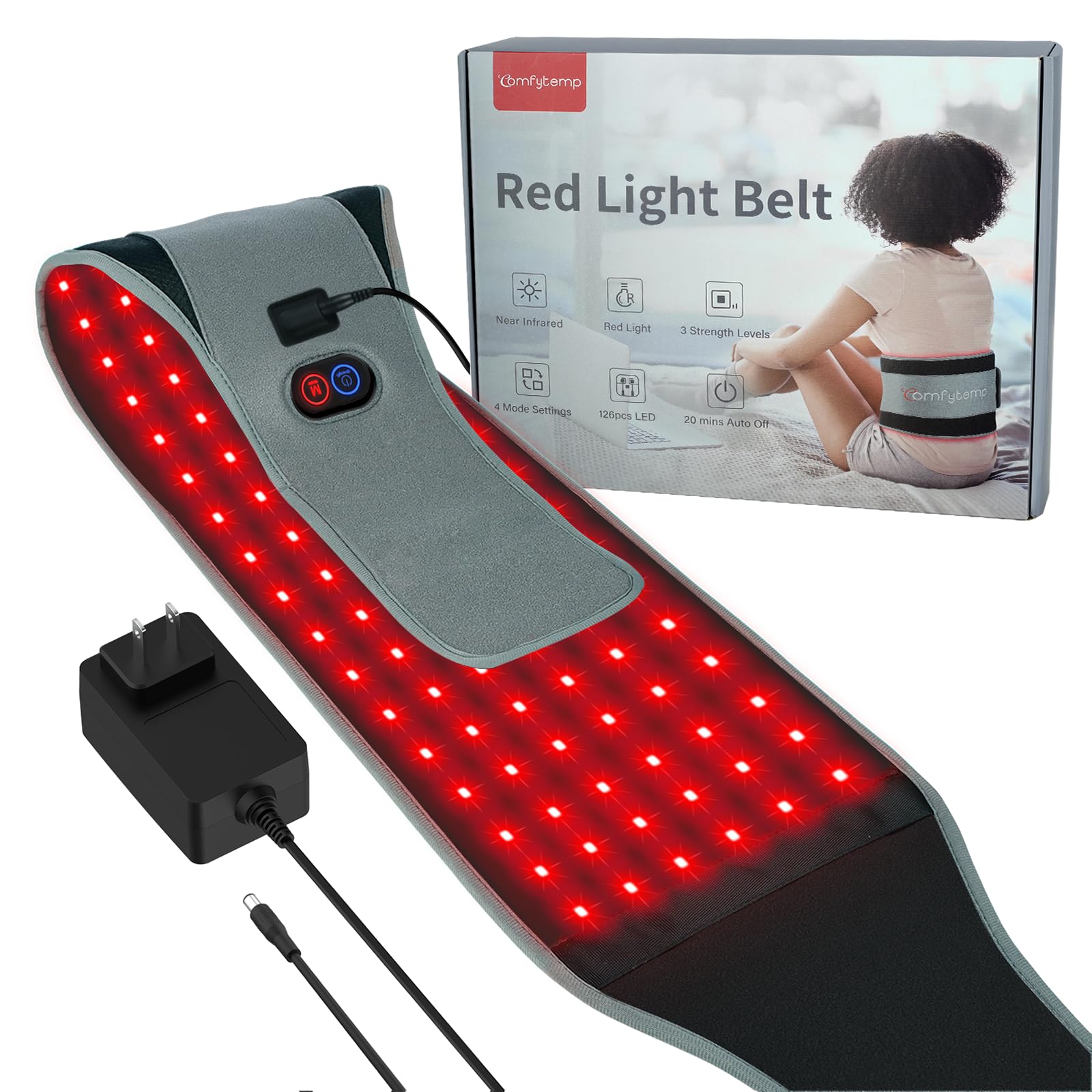
Comfytemp 126-LED Red Light Belt

Couch-side corded use

Our Score 8.8/10
Check Price

Worth Noting

  • Belt life is the weak point here
LEDs
126 dual-chip
Modes
4 modes, 3 levels
Lit Area
22 x 8 inches
Belt Size
50 x 8 inches
Read the full review

The lit section of this belt is 22 by 8 inches, and that's the number to hold on to. It's the part of a 50-inch belt that actually emits — roughly the span of a lumbar back — and it's why the coverage feels more generous than the rest of the spec sheet suggests.

The controls sit on the belt itself rather than on a dangling pod, so changing modes mid-session doesn't mean hunting for a controller under a cushion. Four modes and three brightness levels is a short menu next to the flashier belts here; by the second session we had a favorite and stopped adjusting it.

It runs warmer than we expected, closer to a heated wrap than to a bare panel of light, and that's what makes it easy to leave on past the point where you'd normally get bored. Warmth is a side effect of the diodes rather than a feature, but it does real work in a cold room.

The tether is the price of that simplicity: with no battery option, a session means an outlet and a chair. Give it a permanent spot near the couch and the cord stops mattering — which is how a belt this plain ends up getting used more often than the fancy ones.

Bottom line: We keep this one by the couch: a bright, warm, plug-in belt with a short settings menu and a lit area sized for a lower back.

#2

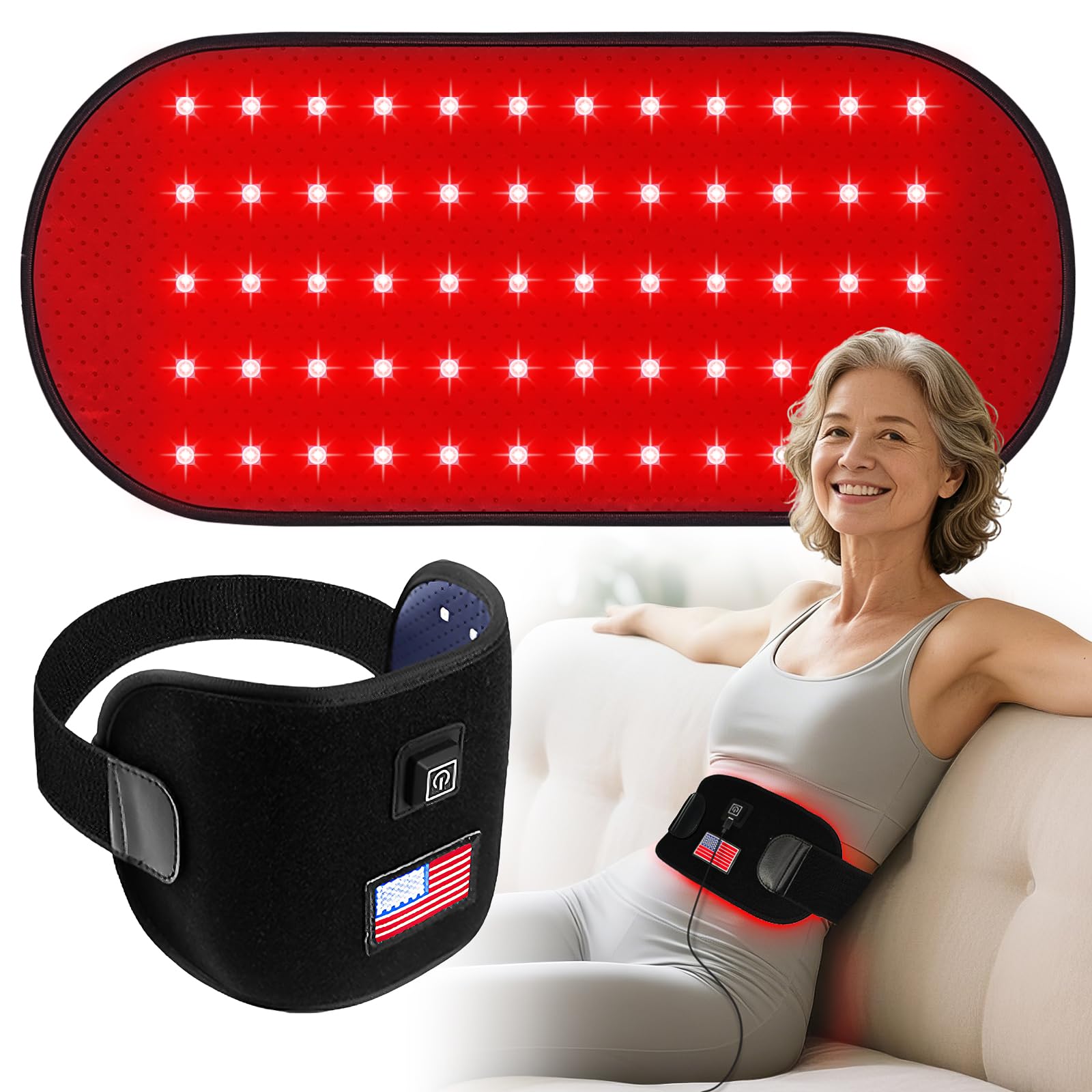
Comfytemp 5000mAh Cordless Belt

Comfytemp 5000mAh Cordless Belt

Wearing while moving

Our Score 8.8/10
Check Price

Worth Noting

  • About 80 minutes of run time on high
Modes
4 modes, 9 settings
Power
13W cordless
Battery
5000mAh, 80-250 minutes
Waist Fit
Up to 70 inches
Read the full review

Cordless changes how you use one of these. We wore this belt around the kitchen while dinner happened — 20 minutes of light, no cord to step over, no reason to sit down — and that's the whole argument for paying for a battery.

The rest is straightforward: four modes, nine settings, both wavelengths, and an extension strap that takes the fit out to a 70-inch waist. Put it on, pick an intensity, and get on with whatever you were doing.

The battery is the honest trade. The listing advertises 80 to 250 minutes and its own small print gives 80 on the highest setting, so a charge is a session or two rather than a workday. That's fine for a daily 20-minute habit and frustrating if you wanted it on all afternoon.

The habit that stuck was docking it on the charger after each session, the way you'd dock a watch. Do that and the run time never bites; skip it twice and you're tethered to a cable anyway, waiting.

Bottom line: The cordless belt we point budget buyers to: wear it while you move, and plan each session around roughly an hour of run time.

#3

Deerbaba Red Light Pad

Deerbaba Red Light Pad

Knees and shoulders

Our Score 8.8/10
Check Price

Worth Noting

  • Fixed 30-minute timer with no shorter option
LEDs
60 dual-wavelength
Modes
4 intensity plus breathing
Timer
Fixed 30 minutes
Pad Size
12.4 x 6.1 inches
Read the full review

Twelve inches by six is a pad, not a belt, and for a knee, elbow, or shoulder that's the right shape. A 48-inch wrap has to be coiled and tucked to treat a joint; this one lies across it.

The light is the surprise. Sixty dual-wavelength beads over four intensity steps read brighter on skin than the size suggests, and the fixed 30-minute timer lets you start it and stop thinking about it. What it doesn't do is hold itself in place — there's no wrap or strap in the design, so it's a device you lie down with or rest against a joint rather than wear while you make coffee.

Power is over USB, so an adapter or power bank you already own will run it, and it packs flat enough to live in a laptop bag. It ended up as our second device, the one for a specific joint rather than a whole back, and that's the role it fills well.

The routine it built was 30 minutes on a shoulder while watching something, which is exactly the kind of low-effort habit that survives past the second week.

Bottom line: We use it as the second device: a bright little pad for a knee or a shoulder, not a hands-free wrap.

#4

Lifepro Allevared Belt

Lifepro Allevared Belt

Daily back sessions

Our Score 8.6/10
Check Price

Worth Noting

  • Premium price against similar-output budget belts
LEDs
105 triple-chip
Belt Size
49.49 x 7.72 inches
Wavelengths
660nm and 850nm
Therapy Modes
Red, near-infrared, or both
Read the full review

The Allevared is a 49.5-inch strip of panel less than half an inch thick, and that thinness is the first thing we noticed: around the lower back it lies flat and disappears under a T-shirt instead of propping you away from the couch. At 14 ounces it's light enough that a session over a shoulder doesn't turn into a one-armed hold.

Three modes cover what most people need — red alone, near-infrared alone, or both together — and the timer runs from 1 to 30 minutes, so a short session doesn't need supervising. What we kept coming back to is the USB power. Feed it from a wall adapter at home or a power bank elsewhere, and the belt stops being something you have to sit still for.

Pain relief is what these get bought for, and the long-run picture here is the steadiest in this group: a belt that quits in the first month is a smaller part of the story than it is on the cheaper panels we compared. That's most of the reason we're comfortable pointing to it for daily use.

If you want the most light for the least money, the KingPavonini is the smarter buy; if you want to move around untethered, the Comfytemp cordless does it. Neither disappears against your back the way this one does.

Bottom line: The belt we recommend by default: three light modes, a wrap thin enough to forget, and the steadiest long-term picture in a category where belts quit early.

#5

KingPavonini Red Light Therapy Belt

KingPavonini Red Light Therapy Belt

Big-area back relief

Our Score 8.6/10
Check Price

Worth Noting

  • Heaviest belt in this group at 1.94 pounds
  • Long-term durability is the open question
LEDs
140 (420 chips)
Modes
12 modes, 6 timers
Power
Adapter or USB power bank
Belt Size
48 x 8.6 inches
Read the full review

Three chips sit behind each of this belt's 140 lenses — one red at 660nm, two infrared at 850nm — for 420 emitters across a band 8.6 inches tall. That's the most light in this group, spread over the widest strip of skin, which matters when the thing you're treating is a whole lower back rather than one sore spot.

What won us over is the power. There's a wall adapter for long sessions at home and a USB cord for a power bank, so the same belt works beside the couch and in a hotel room. The compression straps are the quiet win: they pull the panel into the curve of your back instead of letting it bridge across, and light sitting an inch off the skin is mostly wasted.

Twelve modes and six timers are more choice than anyone needs. We picked a mode in the first ten minutes and stopped fiddling, and the straps are generous enough that a small frame will have a good length of tail to tuck.

The surprise was the heat. On the higher brightness settings the whole band warms up, so a 20-minute session feels less like a light fixture and more like a treatment — which is usually the version of a habit that gets repeated.

Bottom line: Buy this one if you want the most light and the widest coverage here without premium money — it's the value pick we hand first-time buyers.

How We Chose and Tested Red Light Therapy Belts

To build the shortlist, I started with belts that could adjust to fit a range of waists and hips, then filtered out models with flimsy straps, vague session timers, or charging setups that looked likely to annoy. From there, we brought in 10 belts and used them for seven months. Each tester wore their assigned belt against bare skin and over a T-shirt, in 10- to 20-minute sessions after morning walks, during long desk stretches, and on the couch in the evening.

We noted how fast each belt warmed up, whether the heat stayed even across the panel, and whether the light coverage reached the whole sore area or only a small patch. For pain relief, we kept simple notes after each session: did a lower back or shoulder ache feel different an hour later, and did that hold up over repeated use? For ease of use, we adjusted controls without looking, reset timers mid-session, and packed the belt for a weekend trip.

Battery life got its own tally: we counted sessions per full charge, timed how long a charge took, and checked whether the charging cable reached from a bedside outlet to the belt on the bed. Fit was judged on different body shapes and while sitting, standing, and walking; belts that slid or needed constant readjusting lost points. Every few weeks we checked straps, stitching, hook-and-loop closures, and wiring for fraying or loosening, and any belt that flickered, quit mid-session, or felt unreliable went on a watch list. At the end, we compared what each belt delivered against what it asked us to spend, so value was about comfort, consistency, and features that held up, not just the lowest number on the page.

How to Choose a Red Light Therapy Belt

Read the output, not the bead count

Every belt here pairs 660nm red with 850nm near-infrared, so the wavelength is rarely the difference. The counts are. One panel runs 105 triple-chip LEDs, another 126 dual-chip beads, a third 140 beads at three chips each. A corded model here draws 22W where our cordless pick draws 13W.

More beads spread across more skin isn't automatically a stronger dose where it lands. Compare wattage and the size of the lit area together before you compare LED totals — a big panel with modest power is a broad, gentle session, while a small bright one concentrates everything on a joint.

Decide how tethered you want to be

A cord runs as long as you like and gives you one less part to fail. A battery lets you stand up, walk to the kitchen, and finish a session while doing something else. The catch is run time at full output: one belt here advertises up to 250 minutes, with 80 on its highest setting in the small print.

If your sessions are 20 minutes on the couch, take the cord and keep the money. If you want to wear one while you cook or tidy, pay for the battery and expect to charge it more often than the box suggests.

Fit is half the therapy

Belts here run 48 to 51 inches, and extensions take some of them out to a 70-inch waist. That's generous for a back and absurd for a wrist. Measure the body part you're actually targeting rather than your waist: a long belt bunches when it wraps a knee, and a 12-inch pad can't cover a lumbar back.

On a small frame, expect to tuck a tail of strap. On a large one, confirm the extension is included rather than sold separately, and look for a second compression strap — it's what keeps the panel pressed to the curve of your back instead of bridging across it.

Plan for the failure, not just the features

These are flexible electronics that bend every session, and wear shows at the joint where the controller meets the panel or in rows of LEDs going dark. That's the argument for buying where returns are easy: run the belt hard for the first week, while sending it back is still an option, and keep the box.

Handle it the way you'd handle a charging cable — pull the plug, not the wire — and store it flat rather than folded around itself. None of that makes a cheap panel last forever, but it keeps the failure at the far end of the return window.

Frequently Asked Questions

Final Verdict

Start with the Lifepro Allevared. Three light modes, a wrap thin enough to forget you're wearing, USB power for a wall outlet or a power bank, and the steadiest long-term picture of anything here — for a device you plan to use most days, that last part is worth the premium.

If money is the deciding factor, the KingPavonini gives you more emitters and more coverage for a fraction of the price. And if being untethered is the whole point, the Comfytemp cordless is the one to take, as long as you charge it between sessions.