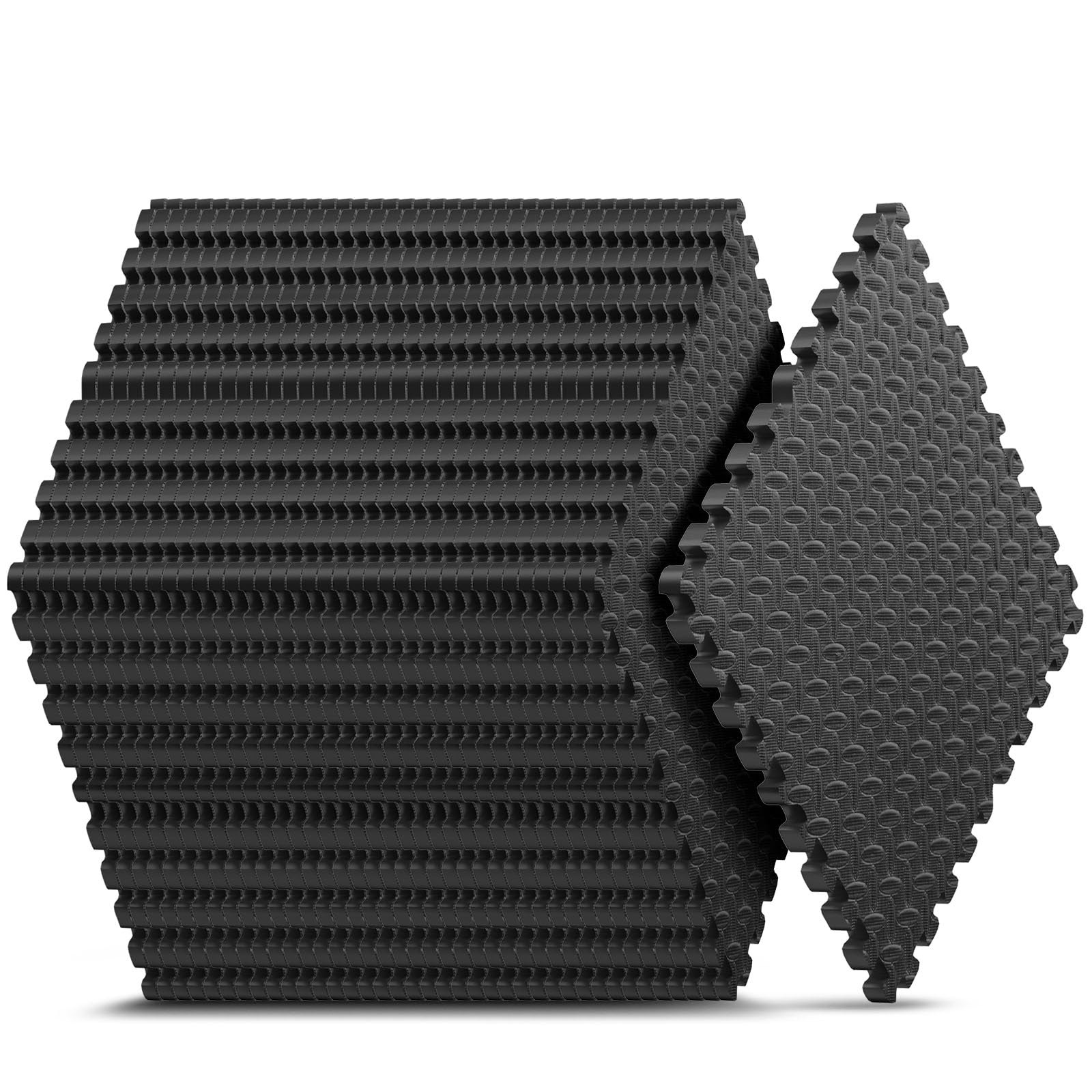
Home Gym

Best Home Gym Flooring Over Carpet of 2026

Carpet is kind to your knees and terrible for everything else. Set a yoga mat down on a plush bedroom rug and it creeps toward the dresser the moment you start lunging; lay interlocking tiles over it and the seams open up under a squat rack. What you actually need is a floor for your floor — something dense enough to spread the load across the padding underneath and grippy enough to stay where you put it.

I've laid gym flooring in a carpeted spare room and on a low-pile basement rug, and the mats that stayed put were almost never the thickest ones. Over the past six months we've tested 12 roll-out mats and interlocking tile sets, judging grip, durability, thickness, coverage, and how each one held up to real workouts. The pattern we kept landing on was density: soft foam feels wonderful barefoot and then sinks under a bench, while a firm base keeps the edges flat and the seams closed.

What follows is the short list of those that survived — some sized for a full rack footprint, some for a corner and a pair of dumbbells. Both formats are represented, because the right answer depends less on your workout and more on how much carpet you're trying to cover.

#1

Gorilla Mats Large Exercise Mat

Top Pick
Gorilla Mats Large Exercise Mat

All-around gym floor

Our Score 9.4/10
Check Price

Worth Noting

  • Premium price for a single sheet
Sizes
6 x 4 to 10 x 4 ft
Weight
14 lb
Material
ProFoam
Thickness
0.25 in (6 mm)
Read the full review

Any floor covering laid over carpet has two jobs: stay where you put it, and stop the pile from swallowing your stance. Interlocking tiles struggle with the first one — seams open when you push off sideways, and on plush carpet the whole assembly can walk. A single weighted sheet sidesteps that. Gorilla's mat is a quarter inch of their ProFoam, 14 pounds of it, with a non-slip top and a patterned underside that grips.

That quarter inch is what sold us. It is enough to bridge low-pile carpet and take the chill off a slab, but not so much that lunges and single-leg work feel like standing on a mattress. Plenty of mats cushion harder and wobble more; this one keeps you connected to the floor, which is why it works as well for cardio in shoes as it does for a warm-up.

It ships with a microfiber towel, two straps, and a carry bag, and the straps are the part that matters: a 14-pound mat that rolls tight and stays rolled is one you put away instead of stepping over. Sizes run from 6 x 4 to 10 x 4 feet, so a spare bedroom and a two-car garage are covered by the same product, and the surface wipes clean with a damp cloth.

Kneeling work is where it runs out of foam. If your session is mostly get-ups, bird dogs, and long stretches, the half-inch and one-inch tiles here are kinder, and the Xspec in particular. What you give up in padding you get back in stability, which is the trade this mat is built around.

Bottom line: Our pick for most carpeted home gyms: one heavy, grippy sheet that stays flat through cardio and lifting, then rolls away when the room has to be a room again.

#2

GXMMAT Extra Large Exercise Mat

GXMMAT Extra Large Exercise Mat

Large shared space

Our Score 9.4/10
Check Price

Worth Noting

  • Heaviest mat here to move and roll
  • Priciest option in this group
Surface
Double-sided non-slip
Coverage
10 x 6 ft
Material
High-density PVC
Thickness
0.28 in (7 mm)
Read the full review

Ten by six feet is the biggest single surface here — a whole bay rather than a corner. Roll the GXMMAT mat out and it covers a bench, a rack of dumbbells, and the floor between them, which is why it turns up in garages where two people train at the same time.

It is 0.28 inch of high-density PVC with a grooved, matrix-circle underside that bites into carpet and a textured top that is happy under shoes. The 15 kilograms are doing real work: a mat that heavy does not slide when you push off it, and it lies flat once it is down instead of curling at the corners.

We reach for this one when the room is the gym. The 0.28 inch is firm rather than plush — enough to protect the carpet and soften burpees, not enough to feel like a crash pad — and the size means you are not repositioning between cardio and floor work. What it does not do is hold a sweaty palm: the top gets slick once your hands are wet, so keep a towel at the edge.

A carry bag, three hook-and-loop straps, and a pair of gloves come with it, and the mat rolls up around the straps without fighting back. Nothing else here covers this much floor in one piece.

Bottom line: For a full garage bay or two people training together, this is the surface we point to: big, heavy, and flat, with the size to keep you off the carpet between sets.

#3

Xspec 1-Inch Foam Tiles

Xspec 1-Inch Foam Tiles

Joint-friendly floor work

Our Score 9.4/10
Check Price

Worth Noting

  • Adds an inch of height at doorways
Coverage
48 sq ft
Material
EVA foam
Thickness
1 in
Tile Size
24 x 24 in
Read the full review

An inch of foam is a different category of floor. Lay Xspec's tiles over carpet and the pile disappears underneath — no telegraphing, no cold seeping up from the slab, no ache in the knees after a long stretch on the ground.

Sitting or kneeling work is where we got the most out of it: mobility, core, stretching, anything where a hip bone or an elbow meets the floor. The reversible steel pattern means a worn tile can be flipped rather than replaced, and 48 square feet per set is enough to build a proper mat area rather than a strip.

An inch is also a lot of give. Under a loaded rack or a heavy bench the foam compresses, and the maker's own instructions warn that excessive weight can leave indents, so this is flooring for bodyweight and light dumbbell work rather than a platform for a squat stand. Those same instructions recommend carpet tape or a wall-to-wall fit to stop the tiles walking, which is worth doing on anything deeper than low pile.

Bottom line: If your workout happens on the floor rather than under a barbell, this is the most forgiving surface here — an inch of foam that makes carpet feel like a mat.

#4

GymCope Large Exercise Mat

GymCope Large Exercise Mat

Standing workouts

Our Score 9.4/10
Check Price

Worth Noting

Weight
28 lb
Coverage
8 x 6 ft
Material
PVC
Thickness
0.27 in
Read the full review

At 0.27 inch, GymCope's mat is the thinnest sheet here, and that is a feature if you train in shoes. There is no squish to fight when you land a jump or set up a split squat; the mat reads as floor rather than cushion, and the textured PVC gives a sole something to grab.

On carpet it behaves: the slip-resistant grooves underneath hold the pile, and a 28-pound roll sits down flat instead of curling at the corners. Eight by six feet is enough for a barbell, a bench, and the room to walk around them, and it ships with a bag, three straps, and a towel.

Thin cuts both ways. Kneeling work and long stretches want more padding than this, and you feel the floor through ab work. What you get back is stability for anything fast — jump rope, HIIT, lifting — where a thicker mat lets your feet sink and your balance wander.

We noticed the difference most in single-leg work: split squats and step-ups felt planted in a way they do not on half-inch foam. It is also the firmest surface here that is still pleasant barefoot, which is a narrower window than it sounds.

Bottom line: Worth it for firmness: a thin, grippy sheet that keeps shoes planted over carpet, provided you do your stretching somewhere softer.

#5

AIRHOP Rubber-Top Gym Tiles

AIRHOP Rubber-Top Gym Tiles

Under heavy equipment

Our Score 9.2/10
Check Price

Worth Noting

  • Corner pieces can resist locking
  • Heavier than plain foam tiles
Coverage
24 sq ft
Material
EVA foam with rubber top
Thickness
0.56 in
Tile Size
24 x 24 in
Read the full review

The top of these tiles is rubber, not foam, and that one choice decides where they belong. Foam alone dents under a bench leg and turns slick when you sweat on it; the rubber skin on AIRHOP's 0.56-inch tiles resists both, and it gives a shoe something to push against.

Underneath sits high-density EVA, so there is still give — enough that the tiles settle into low-pile carpet instead of rocking on it — and the locking tabs are oversized compared with plain puzzle mats, which is the difference between a floor that stays together through a set of landmine presses and one that does not. Six tiles cover 24 square feet: a rack footprint plus working room, not a whole room.

We like these best under equipment. A squat stand, a bench, a rower — anything with feet that concentrate load — sits on rubber here instead of chewing through foam, and the 0.56 inch is thin enough that the machine does not perch on a sponge. Sweat and chalk wipe off the surface rather than soaking down toward the carpet.

The catch is area. Twenty-four square feet disappears once you lay out a bench and the space to load it, so a bigger room means a second set or a 48-square-foot pack. Either route still costs less than covering the same floor with one full-size sheet.

Bottom line: Buy these if a rack or bench lives on your carpet: the rubber face takes point loads and shoe traffic that plain foam tiles give up on.

#6

Nazhura 12-Pack Puzzle Mat

Nazhura 12-Pack Puzzle Mat

Budget room coverage

Our Score 9.2/10
Check Price

Worth Noting

  • Slick under socks and bare feet
Tiles
12
Coverage
48 sq ft
Thickness
0.5 in
Tile Size
24 x 24 in
Read the full review

Twelve half-inch tiles make 48 square feet, twice the floor of most six-tile packs for about the same money. If the goal is covering a carpeted room rather than a corner of one, that arithmetic is the whole argument, and it is why this set is the one we suggest when the budget is the constraint.

We appreciate how far a pack goes: lay a rectangle around the rack, run a second row out past the bench, and trim the last tile to the baseboard with a utility knife. The 24-inch tiles go down in minutes without tools, the textured surface hides scuffs better than smooth foam does, and the finished floor reads as deliberate rather than improvised.

Carpet is where any foam tile needs help. On low pile these sit flat and stay; on deep or loose pile the seams work open as you push off sideways, and the fix is carpet tape under the joins or a wall-to-wall layout with the edges trapped by furniture. Check the seams after the first week of real workouts rather than assuming they have settled.

Bottom line: The value pick: enough half-inch tile to floor an actual room, with the caveat that deep pile needs tape or a wall-to-wall fit.

#7

HAPBEAR Large Exercise Mat

HAPBEAR Large Exercise Mat

Small spare room

Our Score 9.2/10
Check Price

Worth Noting

  • PVC skin can peel with hard use
Weight
15.6 lb
Coverage
7 x 5 ft
Material
High-density PVC
Thickness
0.32 in (8 mm)
Read the full review

Same idea as our top pick, less mat and less money: HAPBEAR's large mat runs 7 x 5 feet at about a third of an inch of high-density PVC, so it covers a workout zone rather than a bay.

The part worth knowing is underneath. A suction-cup pattern holds the carpet and a corrugated top gives shoes and hands something to push against, which is the difference between a mat you straighten every set and one that stays where you put it. It is waterproof, so sweat wipes off instead of soaking in.

We think it is the right call for a spare bedroom or the end of a living room, where a ten-foot mat physically will not fit but a yoga mat would slide off the pile. It unrolls flat and rolls back up tight enough to stand in a closet, and at 15.6 pounds it is light enough to move on your own.

A third of an inch is thinner than the half-inch tiles here, so treat it as protection and grip rather than cushion. It keeps sweat and scuffs off the carpet, and it will not hide a floor that is already uneven — on plush pile you still feel some give under a knee.

Bottom line: A sensible small-room buy: a grippy 7 x 5 foot PVC mat that stays on the carpet, stores in a closet, and costs well under our top pick.

#8

CAP Interlocking Puzzle Mat

CAP Interlocking Puzzle Mat

First tile setup

Our Score 9.2/10
Check Price

Worth Noting

  • Only 24 square feet per set
Surface
Diamond texture
Coverage
24 sq ft
Thickness
0.5 in
Tile Size
24 x 24 in
Read the full review

If you have never laid a tile floor and want to find out whether the idea works in your room, CAP's six-tile set is the least you can spend to try it. Two feet square and half an inch thick, with a diamond texture and finishing strips for the outer edges, it covers 24 square feet — a rack, a bench, or a stretching corner.

The pieces click together in minutes and come apart just as fast, so the same six tiles can be a lifting platform this month and a play surface the next. Cleaning is a damp cloth; the foam is water-resistant rather than waterproof, so a soaked spill needs dealing with before it reaches the carpet.

Half-inch EVA is comfortable underfoot, and it dents where a loaded barbell sits for months. Equipment dragged rather than lifted chews at the seams too. That is the honest limit of any foam tile at this price, and it is why we point heavy lifters toward a rubber-topped set.

For the money, we mind the coverage more than the dents. Twenty-four square feet is one rack footprint with room to load a bar, not a room, and two packs cost about what a single 48-square-foot pack does.

Bottom line: The cheapest way to find out whether interlocking tiles suit your room: 24 square feet, quick to assemble, fine under dumbbells and bodyweight.

How We Tested Home Gym Flooring Over Carpet

We started by gathering every large-format mat and interlocking tile set we could find that was meant for indoor home gym use, then filtered out anything too thin to bridge carpet padding, too small to cover a rack and bench footprint, or so soft that a bench would leave a permanent dent. That left 12 candidates. We laid them over three different carpets — a plush spare-bedroom rug, a low-pile finished-basement carpet, and a rental-grade apartment carpet — and lived with them for six months.

Each one got the same treatment: a loaded squat rack and bench in one corner, dumbbells dropped from waist height, a jump rope, and a walking pad. We measured coverage edge to edge ourselves instead of trusting the box, pressed down on tile seams to see whether they held, and noted whether the thickness underfoot matched what we thought we ordered. Then we watched what the carpet underneath did — mats that curled at the corners, tiles that drifted apart overnight, foam that compressed into the padding and never came back.

Slip resistance got its own round. We worked out in socks and in shoes, did split squats off the edge of each mat, and shoved a bench across the surface mid-set to see whether the whole floor moved with it. Grip was the most common failure point by a wide margin, and it correlated far more with surface texture and weight than with thickness. We also rolled and unrolled every mat repeatedly to check for memory and stored the tile sets stacked for a month to see if the edges deformed.

After six months we went back through for durability — crumbling edges, flattened high-traffic lanes, tiles that no longer locked — and wiped each surface with a damp cloth to see what sweat and chalk left behind. The picks below are the ones still in place.

How to Choose Home Gym Flooring for Carpet

Tiles or One Big Sheet

Modular tiles let you shape the floor to the room — around a rack, down a narrow bay, into an L — and you can add a pack later when the setup grows. A roll-out mat gives you one uninterrupted surface with no seams to open, which is why it holds up better on thick carpet and under fast, side-to-side movement.

If your space is a rectangle and you train in shoes, a sheet is simpler to live with. If the room is odd, or you want to expand gradually, tiles win on flexibility. The one thing tiles can never match is the seam-free stability of a single weighted piece.

How Thick the Foam Should Be

Thickness is the dial you are actually turning. A quarter to a third of an inch makes a firm, shoe-friendly surface that keeps you stable for lifting and cardio. Half an inch adds comfort for bodyweight work without turning into a mattress. A full inch is floor-work territory — stretching, mobility, kids — and it is too soft to sit a loaded rack on.

Over carpet, add the pile to your thinking. Thick foam on thick carpet is two sponges stacked, and the taller the stack, the more your balance has to work.

What Actually Stays Put on Pile

Interlocking edges hold tiles to each other, not to the carpet. On low pile they behave for years; on deep or loose pile every push-off works the seams, and the assembly can drift across the room. Carpet tape under the joins, or a wall-to-wall layout with the edges trapped by furniture or baseboard, is the difference between a floor and a puzzle that keeps coming apart.

A heavy roll-out mat skips the problem, because its weight and its underside do the holding. That is why the big sheets tend to win on carpet even though tiles win on shape.

Match the Surface to Your Shoes

Bare EVA foam is soft and cheap, but it is slick under a sock and quick to dent. A rubber-topped tile puts a dense wear layer exactly where bench legs and shoes land, at the cost of weight and money. PVC sheets sit in between: firm, lightly textured, and grippy in shoes, though sweat makes them slick, so keep a towel at the edge.

If you work out barefoot most of the time, prioritize texture over thickness. If you never take your shoes off, prioritize the wear layer.

Living With Flooring on Carpet

Whatever you lay down, sweat and spills go somewhere. A waterproof mat keeps moisture on top; a tiled floor lets it through the seams onto the carpet, where it sits. Lift or pull the floor up every month or so, let both sides air dry, and vacuum underneath.

Roll-out mats should be rolled loosely rather than folded, and tiles stacked flat so the edges do not take a permanent curl. New foam and rubber need a few days of open air before they stop smelling like the factory.

Frequently Asked Questions

Final Verdict

Gorilla Mats is our recommendation for most carpeted home gyms. It solves the problem the carpet creates: one heavy sheet that does not creep, does not open at the seams, and takes shoes, then rolls up when the room has to be a room again.

Two situations call for something else. If a rack or bench lives on the floor, AIRHOP's rubber-topped tiles handle point loads that foam cannot. If most of your training happens on the floor, Xspec's inch of foam is kinder to knees and hips. Both cost less than a full-size mat, and each does one job better than a sheet can.