Cardio Machines

Best Water Rowing Machines of 2026

A water rower works on a simple promise: pull the handle, spin the paddle, and the tank pushes back harder the faster you go. That smooth, self-adjusting resistance is why people love them—it feels more like rowing on a lake than yanking a fan. What it fixes is real: a full-body, low-impact workout at home without the jet-engine roar of an air rower. But the gap between a good one and a frustrating one comes down to details you don't see in the photos—tank seams, frame wobble, assembly, and how loud the water actually is.

I've spent the last nine months living with six water rowers, rowing in a spare-room corner and a living room while the TV was on. We assembled each one solo, adjusted foot straps and monitors mid-row, and listened for clanks and creaks at 24 strokes per minute. Some felt planted and quiet; others made me check the tank seams every week. The picks below are the ones that earned their floor space—on performance, assembly, build quality, looks, quiet operation, and value.

#1

YOSUDA Water Rowing Machine

Top Pick
YOSUDA Water Rowing Machine

All-around home use

Our Score 9.6/10
Check Price

Worth Noting

  • Foot straps feel less substantial
Storage
Folds 180°
Water Tank
22 L
Frame Material
Solid beech
Weight Capacity
400 lb
Read the full review

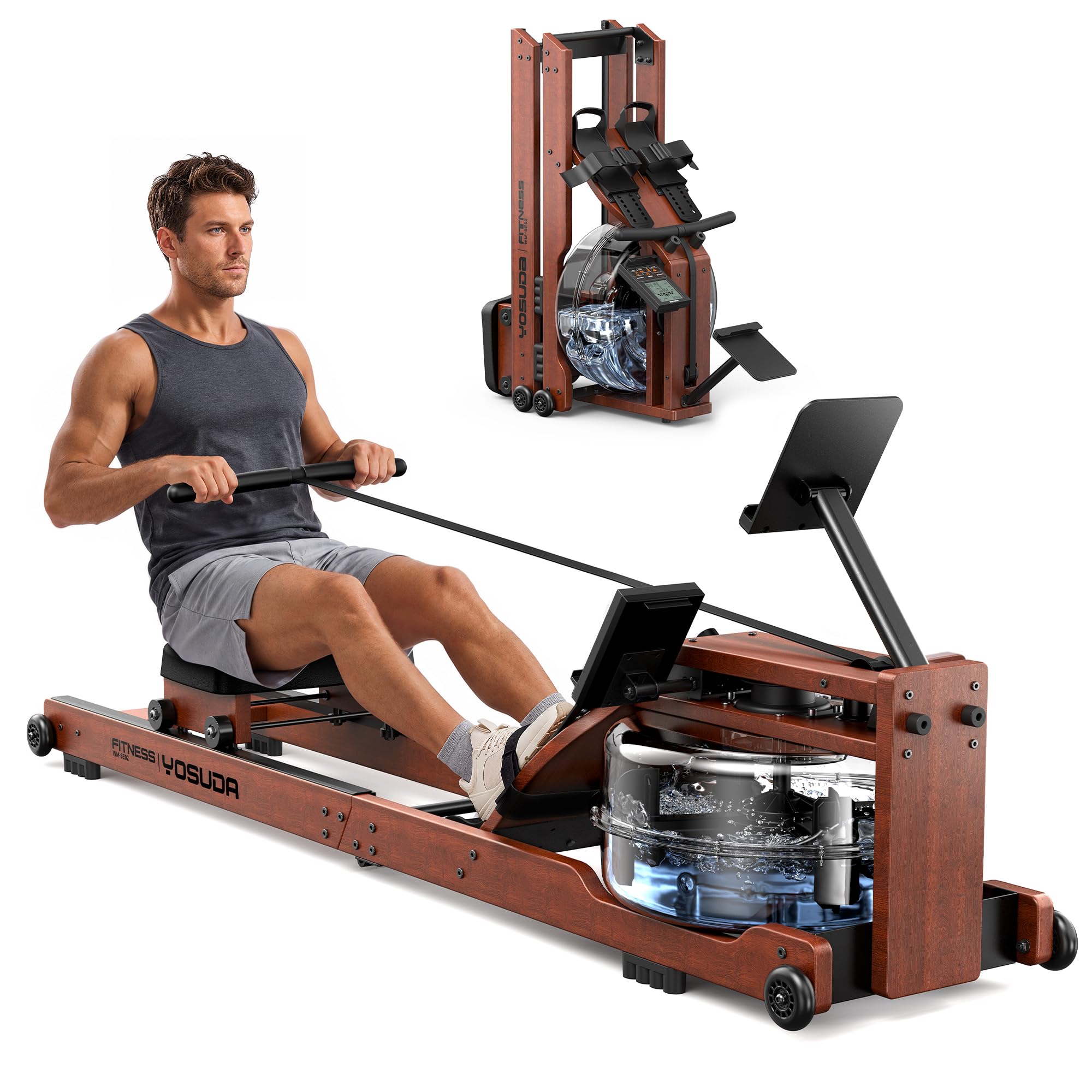
A 22-liter tank is the detail that separates the YOSUDA from the 14-liter rowers here, and it is why we made it our top pick. More water gives the catch a fuller, heavier feel, and you can tune resistance by how much you fill the tank. The 400-pound capacity and support for users up to 6-foot-6 make it one of the more accommodating frames in this group, while the solid beech build keeps the folded package manageable at 55 pounds.

The 180-degree fold and transport wheels matter in a spare room: the rower can stand out of the way between sessions instead of becoming a permanent obstacle. The Bluetooth monitor is basic but useful, pairing with Kinomap, Apple Health, or Google Fit; those apps are a bonus rather than the reason to buy. Assembly is straightforward, and the water sound is part of the appeal—not a silent machine, but a soothing one.

That is a small caveat on a rower that otherwise nails the basics: a big tank, a strong weight limit, and a footprint you can reclaim. The trade-off against the Merach is simple: you give up one-handed folding and get more tank volume and a longer rail for taller rowers.

Bottom line: We recommend the YOSUDA as the default home water rower because its big tank, 400-pound frame, and folding storage cover the essentials without a premium price.
#2

WaterRower Oak S4

WaterRower Oak S4

Long-term investment

Our Score 9.4/10
Check Price

Worth Noting

  • Premium price limits the value case
Monitor
S4 BLE
Dimensions
87.75 x 22.25 x 20 in
Frame Material
Appalachian hardwood
Weight Capacity
700 lb
Read the full review

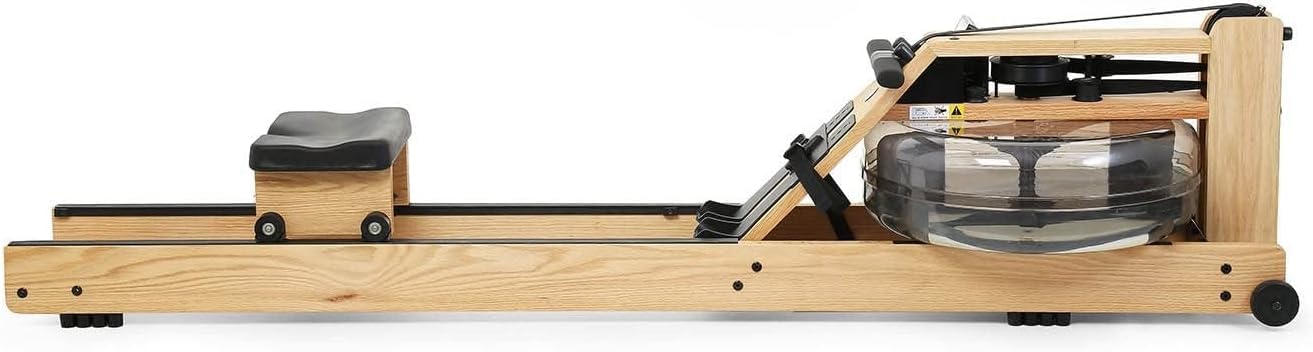
A 700-pound weight limit is the sort of number that makes the WaterRower feel like a different category. The Appalachian hardwood frame is handcrafted in the USA, and the original WaterFlywheel resistance is the benchmark many other water rowers imitate. At 87.75 inches long, it wants a real spot in the room rather than a corner that gets folded away.

The S4 BLE monitor is more capable than the basic LCDs on the budget models, and the seat glides smoothly on a long rail that suits taller rowers. The build is the most substantial here, with commercial-grade components and a frame that feels like furniture rather than gym equipment. The trade-off is floor space: this machine takes up more room than every other pick.

The wood finish is the part that surprises people. It looks like something you leave in a living room, and the water sound is calming rather than mechanical. We rank it as the long-term pick for someone who wants a single well-made rower and does not need to fold it after every session. For a dedicated home gym, that solidity is the point.

Bottom line: Choose the WaterRower if you want a commercial-grade wooden rower for the long term and have a permanent spot for its long frame.

#3

Merach R280 Water Rower

Merach R280 Water Rower

Small spaces

Our Score 9.2/10
Check Price

Worth Noting

  • Short 60-inch rail may limit tall rowers
Storage
180° fold
Frame Material
Solid wood
Weight Capacity
400 lb
Listed Dimensions
60 x 18 x 30 in
Read the full review

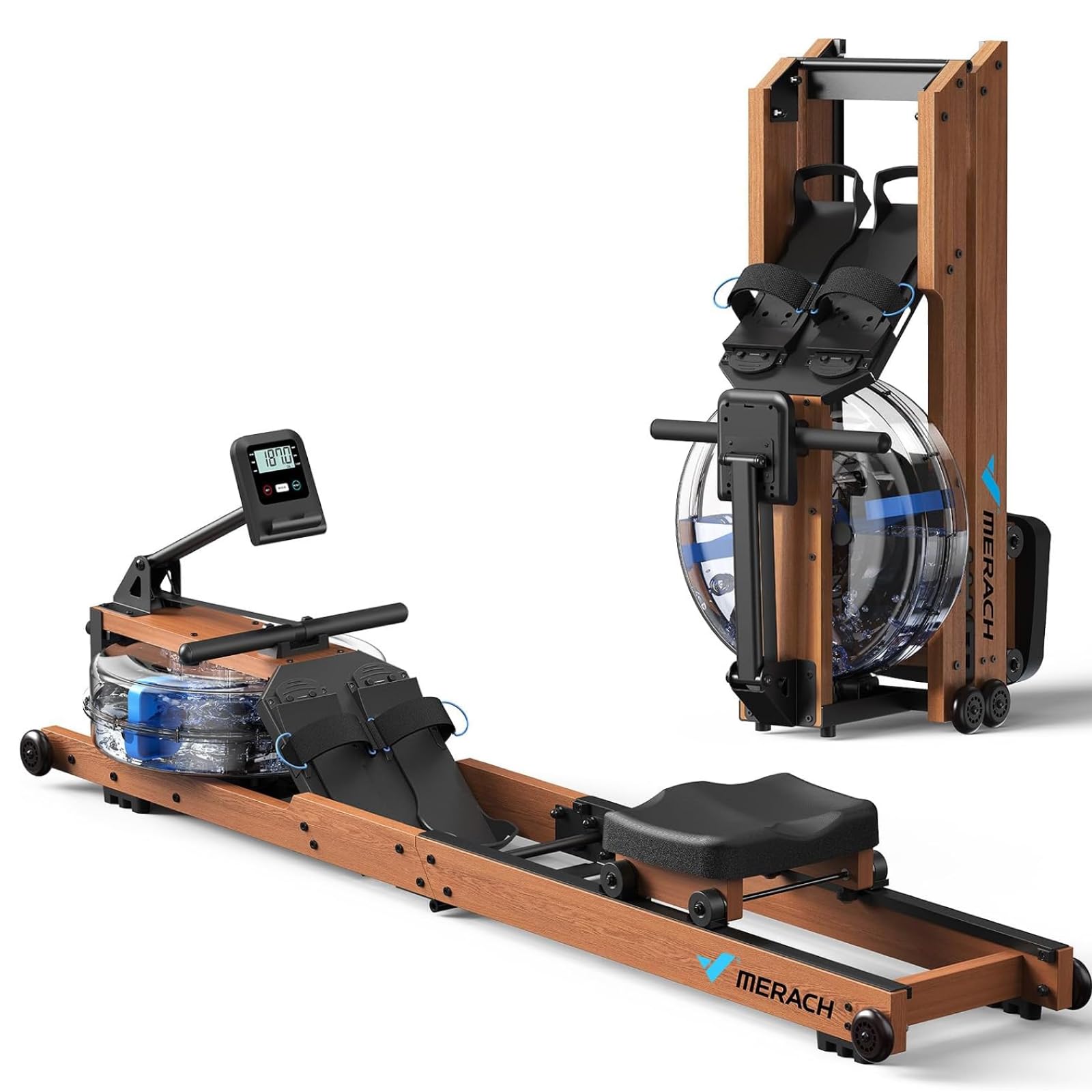
The Merach R280 is for the person who has to fold the rower after every session. Its 180-degree fold is designed to work one-handed, and the wheels let it roll away like a suitcase. That sounds like a small convenience until you are doing it twice a day; it is the reason this model is our pick for small homes and shared rooms.

We put it near the top of this group for space because the 60-inch footprint is one of the shortest here. The 400-pound capacity and solid wood frame still give bigger rowers room to work, and the sealed tank is meant to prevent leaks. The included electric pump takes the annoyance out of filling it.

The dedicated Bluetooth monitor covers distance, time, and calories, but it is a basic display; the app connection is there for people who want it, not a full coaching system. Assembly is quick, and the water sound stays quiet enough for a shared living space. At 23 kg, the Merach is easy to roll, though you still need a clear path to its storage spot.

Bottom line: Buy the Merach R280 if the rower has to fold and roll after every session; its one-handed routine is the best space-saving setup here.

#4

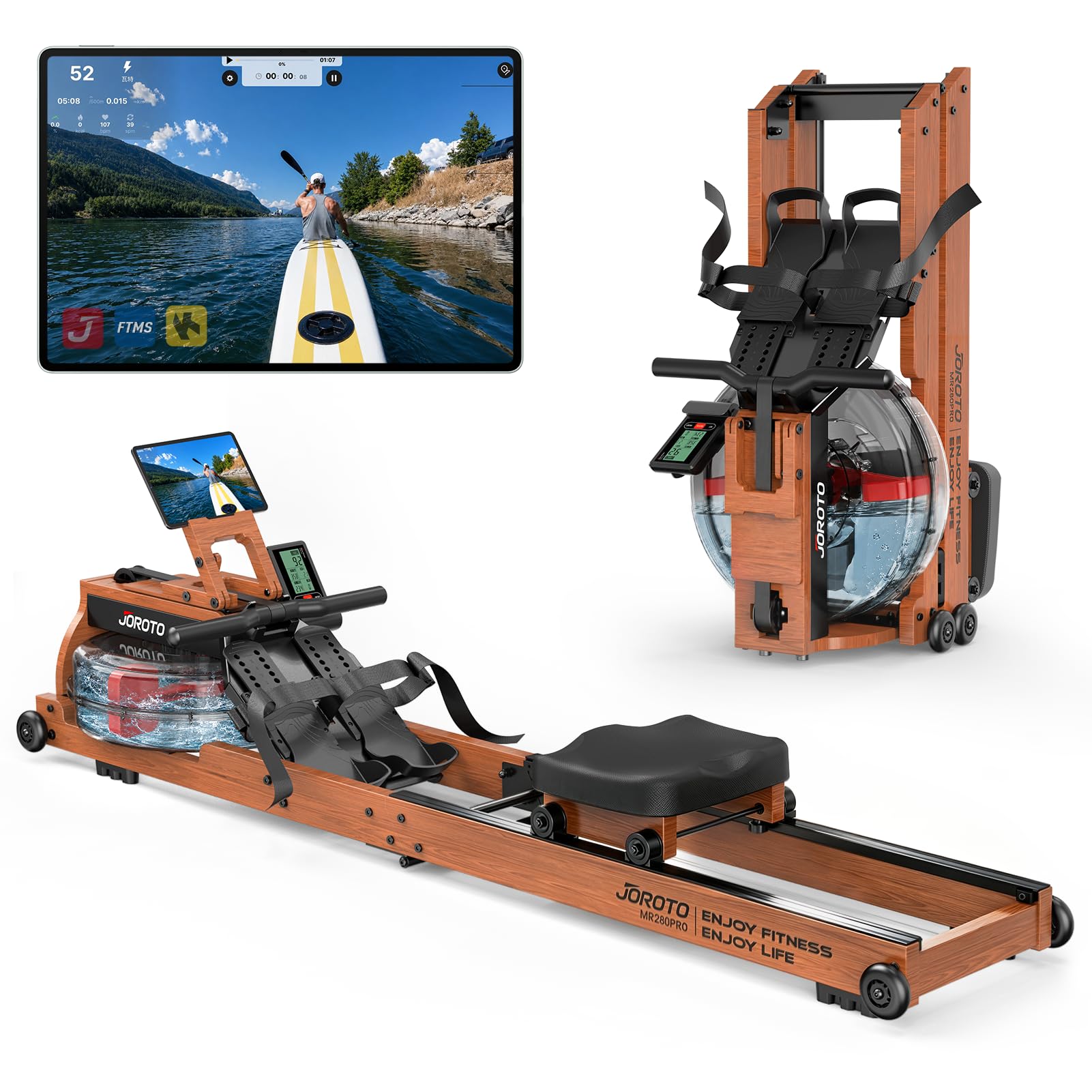
JOROTO MR280PRO

JOROTO MR280PRO

Guided workouts

Our Score 9.2/10
Check Price

Worth Noting

  • App coaching depends on a phone or tablet
Storage
180° fold
Assembly
90% preassembled
Frame Material
FSC oak
Weight Capacity
400 lb
Read the full review

The JOROTO MR280PRO arrives 90% preassembled, and that is the most useful thing about it for anyone who hates setup. The remaining work is mostly attaching the monitor and feet, and then you have a solid oak rower with a 400-pound capacity. The Bluetooth monitor connects to the JOROTO app for guided workouts, and the 180-degree fold keeps storage simple. We made it our guided-workout pick because the setup and coaching work together.

The app is the reason to choose this over the Merach or YOSUDA. It adds trainer-led sessions and a reason to come back, though the monitor itself is not as polished as the WaterRower's S4. The rower is smooth and quiet enough not to fight the experience, and the seat glides well for longer sessions.

At 52 pounds, it moves easily on its wheels, and the folded package fits a closet without drama. The one thing to check is rail length and seat height if you are very tall; the 70.9-inch rail is generous but not the longest here. For a first serious home rower with coaching built in, this is a strong middle choice.

Bottom line: Pick the JOROTO if you want app-guided rowing and a nearly assembled oak frame; it is the easiest route into structured home sessions.

#5

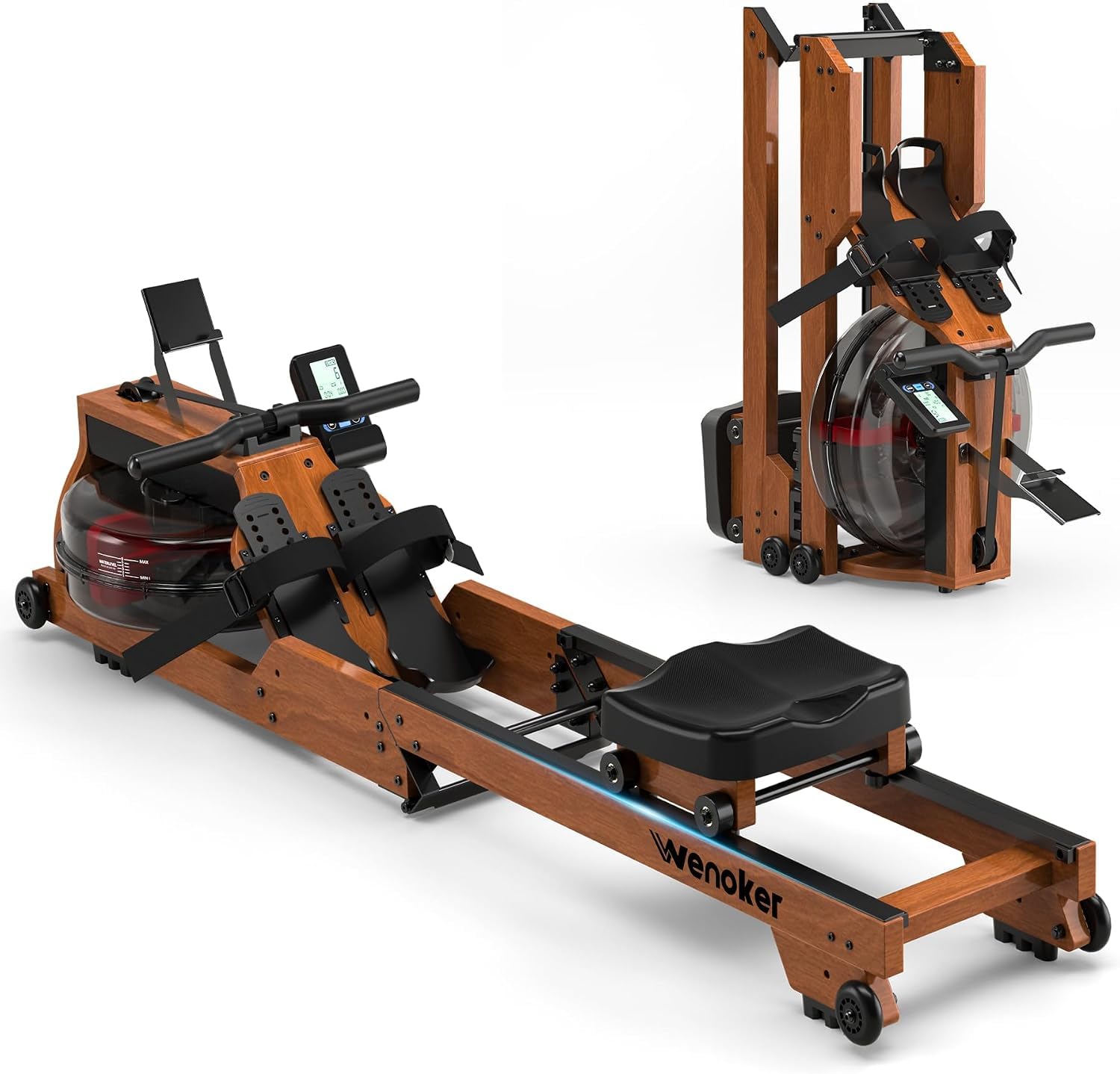
Wenoker Water Rowing Machine

Wenoker Water Rowing Machine

Compact storage

Our Score 9.2/10
Check Price

Worth Noting

  • 14 L tank limits top-end resistance
  • 350 lb capacity trails the 400 lb picks
Storage
Folds 180°
Water Tank
14 L
Frame Material
Oak wood
Weight Capacity
350 lb
Read the full review

The Wenoker's oak frame and small folded footprint are the reasons it earns a place here. It is the water rower for someone who wants the sound and feel without dedicating a whole room to it. The 180-degree fold gives it a genuinely small storage footprint, and the wood looks good enough to leave out.

We like the Wenoker for apartments and tight home gyms because the folded machine tucks beside a sofa or into a closet. The Bluetooth monitor covers the basics, and the seat is comfortable enough for steady sessions; do not expect a gym-grade rail. The 14-liter tank and 350-pound capacity put it in the compact class.

Assembly is one of its stronger points, with many major sections pre-built and the necessary tools included. We think of it as the space-saving pick that does not make you feel like you are rowing a toy. For a guest room or a small apartment, that trade is usually the right one.

Bottom line: Consider the Wenoker if storage is tight and you want a wooden water rower that tucks away; heavier or stronger rowers should size up.

#6

Dripex Water Rowing Machine

Dripex Water Rowing Machine

Budget rowing

Our Score 8.8/10
Check Price

Worth Noting

  • Foot straps may wear early
Resistance
6 water levels
Water Tank
14 L
Frame Material
FSC-certified oak
Weight Capacity
400 lb
Read the full review

The Dripex is the least expensive water rower here, and it does not ask you to give up the 400-pound frame. The 14-liter tank has six water levels, so you can adjust resistance without buying extra parts. The oak frame and folding design make it look and store better than its budget position suggests.

The resistance is the most variable part. We like the six levels for lighter rowers and beginners, but strong rowers may find the top end soft. The adjustability is not as smooth or precise as the higher-priced rowers here. If you are new to rowing or want a second machine for a guest room, that trade-off is easier to accept; if you chase hard intervals, spend more.

Assembly is straightforward, and the included tools do the job. The Dripex gives you the water sound and folding convenience at the entry point. It does not match the refinement of the picks above, but it is a sensible first rower for someone who wants to try the format.

Bottom line: The Dripex is the budget entry we point to for casual rowers who want water feel and folding storage without paying for extras.

#7

Sunny SF-RW5910

Sunny SF-RW5910

Basic metrics

Our Score 8.8/10
Check Price

Worth Noting

  • 300 lb capacity limits heavier users
Monitor
LCD with pulse
Storage
Folds with wheels
Frame Material
Alloy steel
Weight Capacity
300 lb
Read the full review

The monitor on the Sunny SF-RW5910 tracks pulse and strokes per minute, which is more than most budget LCDs offer. The steel frame is sturdy, the seat sits higher than on some wooden rowers, and the folding design rolls away when you are done. It is a practical choice for someone who likes reading numbers during a session.

We rank it behind the better-rounded picks because the monitor is also its weak point: the display is small and not backlit, so it can be hard to read in a dim room. Resistance is moderate; strong rowers may want a larger tank. The long rail helps taller rowers, but this is not the rower for someone who wants a high resistance ceiling.

The steel frame gives it a different feel from the wood rowers—less furniture, more gym equipment—and it is heavier to move as a result. Assembly is manageable, and the folding action is useful if you have a closet or a corner. The long rail is a real advantage for taller rowers who do not need a premium finish.

What keeps the Sunny in the conversation is the data. Pulse and stroke rate are useful for steady-state work, and the folding steel frame is reassuringly solid. We see it as a sensible also-consider for a taller, lighter rower who wants more numbers than the budget picks provide.

Bottom line: The Sunny SF-RW5910 suits a taller, lighter rower who wants pulse and stroke-rate data and does not need a premium wooden frame.

How We Tested the Best Water Rowing Machines

We started by researching the water rower market and narrowing the field by tank design, footprint, monitor features, and whether replacement parts were easy to source. That left six machines, which we tested over nine months in the places they actually live: a spare-room corner, a living room with a TV going, and a garage that gets cold in winter. I rowed each one in the morning before work, in the evening during a show, and on longer weekend sessions.

Assembly came first: I built every machine solo with a stopwatch running, from opening the box to the first full stroke, and noted where the instructions lost me. Once built, I rowed at a steady 22 to 24 strokes per minute and listened for clanks, creaks, and water slosh, noting whether I had to turn up the TV. To judge resistance, I compared the catch and drive at stroke one and stroke 500, and checked whether the tank felt smooth or grabby through the whole pull.

For quality and durability, I checked tank seams for weeping, wiped down the rail after sweaty sessions, and looked for rust at bolt heads. I adjusted foot straps and monitor angles mid-row, with sweaty hands, to see if the settings held. I also read the display from a foot away without leaning in, and looked at each machine from the doorway to judge whether it read as furniture or gym equipment. Finally, value came down to what was in the box—seat, monitor, tank treatment—against the going rate for a water rower.

How to Choose Water Rowing Machines

Start with tank size and the resistance you want

Tank volume is the clearest guide to how much resistance a water rower can offer. A 14-liter tank like the Wenoker or Dripex suits beginners and casual rowers; the YOSUDA's 22-liter tank gives stronger rowers more to pull against. Fill level matters too, so check whether the maker lets you adjust water volume and how easy the fill port is to reach. If you want a steady, heavy pull for intervals, prioritize tank size and a sealed, serviceable design over app features.

Measure the footprint before you fall for the fold

Folding is useful, but it does not make a rower tiny. A machine that is 80 inches long still needs a clear path to roll and a wall or closet wide enough for the folded frame. Measure the assembled length, the folded depth, and the space you need to stand it upright; then check the ceiling height if you plan to store it vertically. The WaterRower is the longest here at 87.75 inches, while the Merach is closer to 60 and easier to tuck away.

Match capacity and rail length to the rower

A 300-pound limit is fine for many households, but a 400-pound frame gives more margin for bigger users and harder rowing. Do not stop at capacity: rail length and seat height decide whether a tall rower can get a full stroke without feeling cramped. The YOSUDA lists support for users up to 6-foot-6, and the WaterRower's 700-pound rating is the most generous here. If you are near a limit, choose the higher-rated frame and check the rail length.

Decide how much monitor and app you need

Basic LCD monitors cover time, distance, strokes, and calories; Bluetooth models add app pairing for guided rows and workout history. The extra connectivity is worth paying for only if you will use a phone or tablet during sessions—otherwise a clear, simple display is easier to live with. The JOROTO's app coaching and the WaterRower's S4 BLE monitor are the strongest connected options in this set; the Sunny SF-RW5910 goes the other way with a detailed but small display.

Plan for water care and long-term sealing

Water rowers need a clean tank, a secure seal, and a little routine care. Use the fill and treatment method the maker specifies—some include purification tablets or a pump—and check the tank and foot straps periodically for wear. Store the machine as instructed; upright storage is convenient, but it is not the right call for every tank design. Warranties range from one to three years, so look at what the tank and seals are covered for, not just the frame.

Frequently Asked Questions

Final Verdict

The YOSUDA is the water rower we recommend first because it gets the fundamentals right: a 22-liter tank, a 400-pound frame, and a fold that lets you reclaim the room. It is not the most refined machine here, but it delivers the water-rower feel without asking you to rearrange your life.

If space is the deciding factor, the Merach's one-handed fold is the better fit. If you want commercial-grade construction and have the floor space, the WaterRower is the premium choice.