Cardio Machines

Best Rowing Machines for Beginners of 2026

A rowing machine works your legs, back, and arms in a single stroke, and unlike a treadmill it's quiet enough that the neighbors won't complain. What separates one rower from another is mostly invisible in a product photo: whether the resistance comes from air, water, or a magnetic flywheel decides how the stroke feels, how loud the machine runs, and how much upkeep it needs. For a beginner, that one choice matters more than any screen or app — get it right and twenty minutes goes by fast; get it wrong and the machine ends up folded in a corner.

Since the start of the year, my team and I have assembled and rowed on seven machines, from compact folders to full-length water rowers, and the gaps showed up fast — sometimes ten minutes in with an Allen wrench, sometimes in week six when a strap started to fray. My rule for first-timers: if the seat and footrests don't adjust without a manual, you won't use it. The picks below are the ones we kept climbing back onto.

#1

Merach R280

Top Pick
Merach R280

Living-room rowing

Our Score 9.2/10
Check Price

Worth Noting

  • Basic monitor for the price
Storage
180° fold
Footprint
60 x 18 in
Resistance
Water resistance
Max User Weight
400 lb
Read the full review

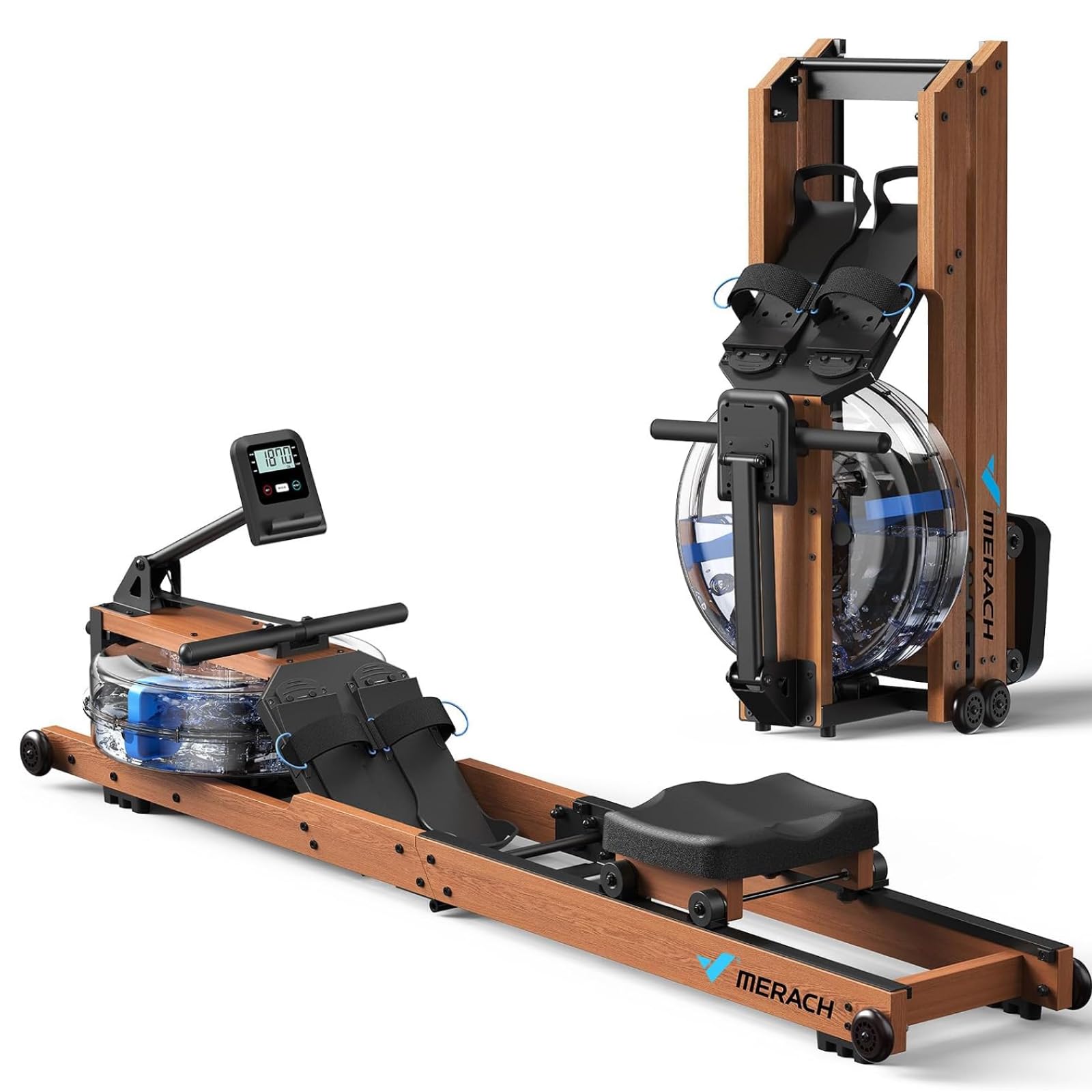
The Merach R280 is the one that does not look like exercise equipment. The solid wood frame and water tank give it the look of a slim cabinet, and at 18 inches wide it sits against a wall without dominating the room. We like that Merach leans into the furniture idea rather than bolting a black metal frame to a water resistance unit. The 60-inch rail gives a long stroke, and the 400-pound user limit is the highest in this group.

Water resistance is the reason to choose it over a magnetic rower. The tank responds to how hard you pull, so the stroke gets heavier as you drive faster, natural for a beginner learning to connect legs, core, and arms. The 180-degree fold is genuinely one-handed, and the bottom wheels let you stand it up and roll it away. Merach includes an electric pump and water-treatment pills, so the first fill is less of a chore. Bluetooth sync adds app-based feedback.

The R280 is not maintenance-free. The tank needs water care, and the wood frame asks for a little more attention than a steel magnetic rower. That is the price of the look and the water feel. We found the seat and rail comfortable for longer sessions, and the water sound is soothing rather than distracting. This is the rower for someone who wants the machine to be part of the room, not hidden in a garage.

At the premium end of this set, it is not the value pick, and it is not the simplest first rower if you want zero upkeep. What it does better than the others is make rowing pleasant enough to leave out and use. We recommend it to the beginner with a dedicated spot and an eye for how the room looks. If the rower lives in a closet, the fold is less useful and a magnetic model is easier to live with.

Bottom line: The Merach R280 is our water-rower pick for beginners who want a machine that looks good enough to leave out, with a 400-pound capacity and an easy fold.
#2

YPOO RM930

YPOO RM930

Tight spaces

Our Score 9.0/10
Check Price

Worth Noting

  • Folding adds a step before each session
Storage
Foldable
Footprint
65 x 17.7 in
Resistance
16 magnetic levels
Max User Weight
350 lb
Read the full review

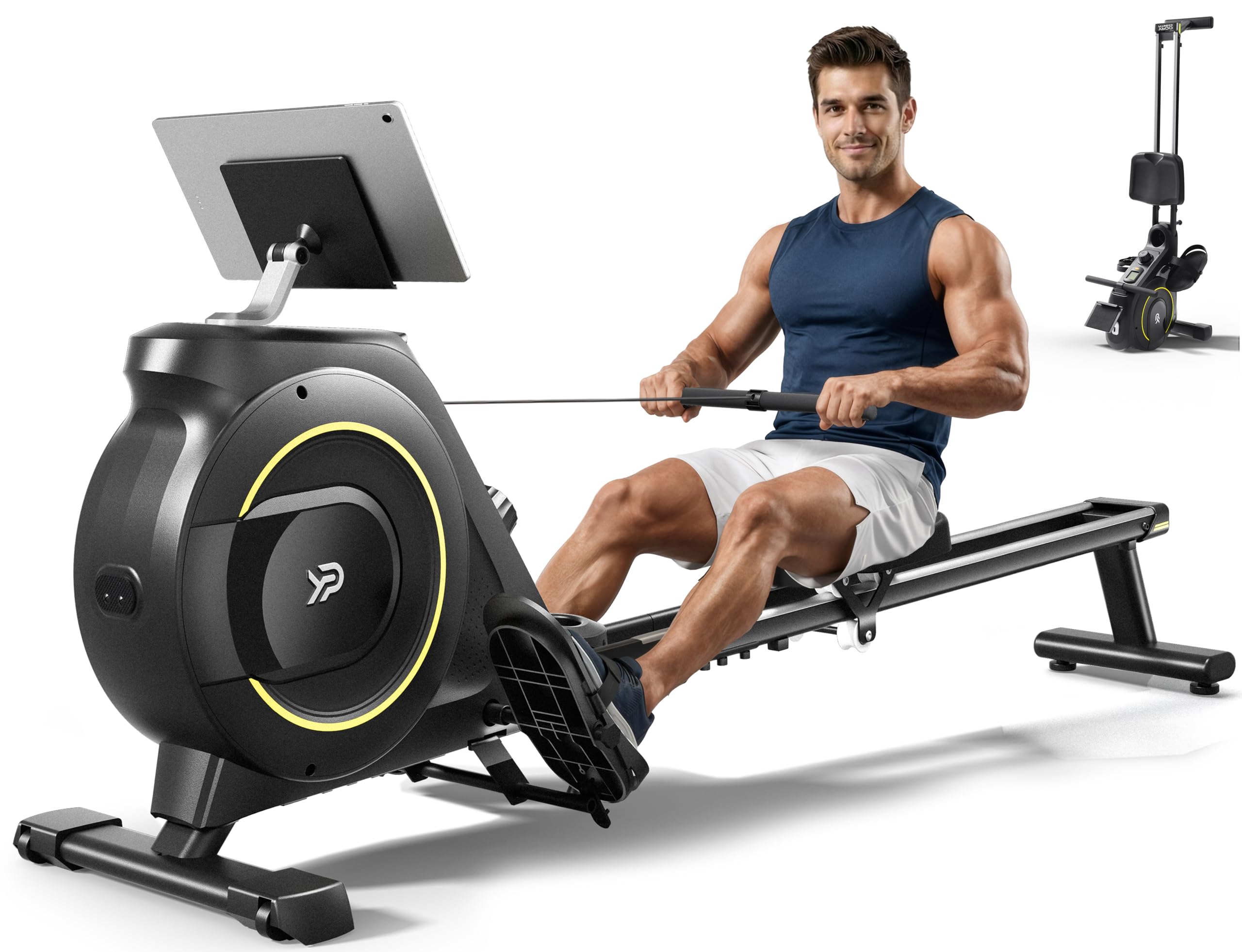
The YPOO RM930 is the rower we reach for when the workout space has to do double duty. It folds into a claimed 2.9 square feet, and at 17.7 inches wide it slips into gaps that swallow wider machines. The 65-inch rail still gives a full stroke, and the 350-pound user limit means it is not a toy. We were surprised by how solid it feels for something that folds; the dual slide rail keeps the seat steady, and the magnetic drive is quiet enough for early-morning sessions. For a beginner in a small apartment, the fold is not a gimmick; it is the reason the rower gets used.

Assembly is manageable with the included tools, and the console covers time, SPM, distance, calories, and count. The YPOOFIT app and Kinomap compatibility add guided rows, but we did not find the app necessary for a basic session. The 16 resistance levels move in clear steps, and the top end is stronger than the budget hydraulics here, which gives a beginner room to progress. The seat is comfortable for 20-minute sessions, and the foot straps hold without a fight.

YPOO lists 99 pounds of resistance, which is a big claim for a compact magnetic rower; we treat that as a ceiling for strong users, not a promise that every pull feels heavy. That is the trade-off for the fold and the price. If you have a spare corner and plan to leave the rower out, a fixed-frame magnetic model is simpler. If you do not, the RM930 earns its place. The narrow width is what we noticed most in a hallway; it does not crowd the path like a 19-inch rail.

Bottom line: We like the YPOO RM930 for beginners who need a rower to fold away in a small apartment without giving up a 350-pound weight limit or quiet magnetic resistance.

#3

Merach Q1S

Merach Q1S

First-time rowers

Our Score 8.8/10
Check Price

Worth Noting

  • Long 65-inch footprint needs floor space
Footprint
65 x 19.3 in
Resistance
16 magnetic levels
Item Weight
42 lb
Max User Weight
350 lb
Read the full review

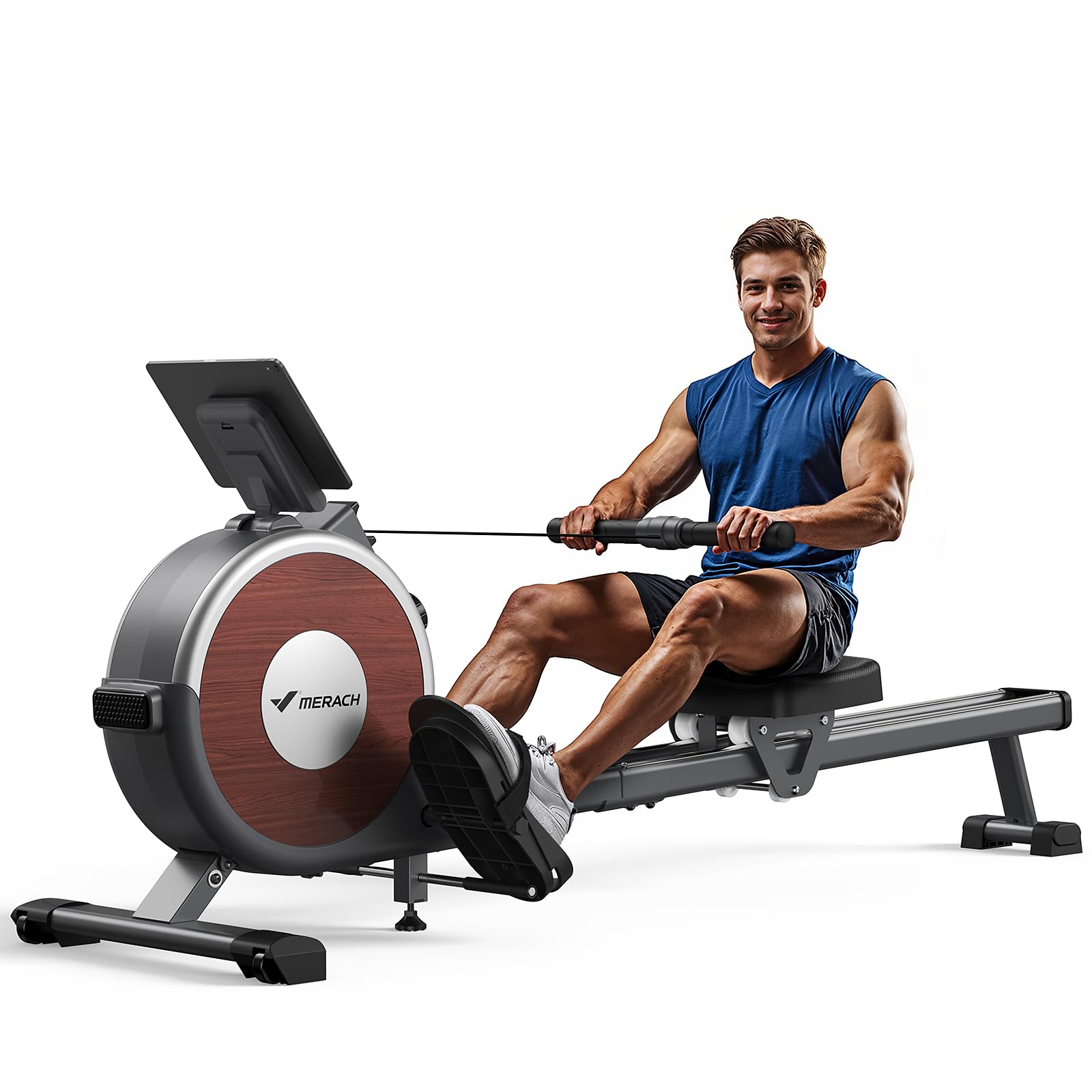
The dual slide rail is the first thing we noticed on the Merach Q1S, and it is the reason this is our top pick for beginners. The two rails keep the seat tracking straight even when you are still finding a rhythm, which makes the first few weeks feel less like a balancing act. Merach pairs that with 16 magnetic resistance levels and a 350-pound user limit. The 65-inch rail gives a long, smooth stroke, and the 42-pound frame stays planted without being a bear to shift. Quiet operation is another strength: we used it while someone watched TV in the next room and never got a dirty look.

Setup is a short job rather than a weekend project. The Q1S arrives partly assembled, and the parts kit is straightforward; we had the rail, seat, and monitor together without needing a second person. The LCD covers time, distance, calories, stroke count, and speed, while the Merach app adds guided courses and Kinomap compatibility. We did not need the app to start rowing, but it is nice to have a structured session on days when motivation is low. The seat is padded enough for 20- to 30-minute sessions, and the foot straps hold without pinching.

What separates the Q1S from the cheaper hydraulics here is the way it keeps its manners as you pull harder. The magnetic drive stays smooth and the rail does not flex, so you can focus on legs, core, and arms instead of fighting the machine. We also like that the resistance changes in clean steps, which makes it easier to build a routine. It is not the rower for someone who already trains hard and wants a heavy gym pull; the top end is friendly rather than fierce. For a first rower in a shared home, that is the right compromise. The 350-pound capacity and 42-pound frame make it a household machine, not a solo gadget.

Bottom line: For most beginners, the Merach Q1S is the rower we send them to first: the dual rail, quiet magnetic drive, and simple assembly make the first month easier.

#4

Sunny SF-RW524079

Sunny SF-RW524079

App-guided workouts

Our Score 8.8/10
Check Price

Worth Noting

  • Top resistance may feel light
Storage
Vertical storage
Footprint
64 x 19.3 in
Resistance
16 magnetic levels
Max User Weight
300 lb
Read the full review

Three years of coverage on the frame is the first thing we check on a budget rower, and the Sunny SF-RW524079 is the only pick here that gives it. That matters for a beginner who is not sure yet whether rowing will stick. The 16 magnetic levels and 300-pound user limit cover a wide range of households, and the 64-inch rail gives taller rowers room to extend. We also like the monitor: time, distance, calories, stroke count, SPM, and 500-meter split are all there, which is more feedback than most people need at the start.

Where this Sunny earns its place is guidance. The SunnyFit app connects over Bluetooth and adds trainer-led sessions and scenic rows, so you are not left staring at a blank wall while you learn the stroke. We found the app pairing quick and the console readable from the seat. Setup is straightforward, and the frame is light enough to stand on its end for storage, which is the difference between a rower that lives in the room and one that gets buried in the garage. The 19.3-inch width is narrow enough for a hallway, though you still need 64 inches of clear floor when it is in use.

The catch is that this is a home cardio machine, not a gym tank: 300 pounds is the ceiling, and the lighter frame is happiest with steady, moderate sessions rather than daily hard intervals. We recommend it to the beginner who wants a guided routine and vertical storage without paying premium money. The three-year frame warranty is the reassurance; the app is the reason to choose it over the simpler magnetic rowers. If the rower has to disappear into a closet, look elsewhere; if it can stand in a corner, this is an easy recommendation.

Bottom line: We point app-led beginners to the Sunny SF-RW524079 for its guided workouts, vertical storage, and three-year frame coverage, even though the top resistance is modest.

#5

Sunny SF-RW1205

Sunny SF-RW1205

Small apartments

Our Score 8.8/10
Check Price

Worth Noting

  • 300-pound user limit
Footprint
58.1 x 20.1 in
Resistance
12 hydraulic levels
Item Weight
22.4 lb
Max User Weight
300 lb
Read the full review

At 22.4 pounds, the Sunny SF-RW1205 is the rower we move with one hand and tuck against a wall without rearranging the room. It is 58.1 inches long and 20.1 inches wide, so it fits in apartments where a 65-inch magnetic rail feels like a piece of furniture. The 12 hydraulic levels are adjusted by a knob, and the inclined rail uses your body weight to add a little extra leg drive. Setup is simple, and the compact frame is light enough that you can move it between rooms mid-week without thinking about it.

We like this one for short, casual sessions: 10 or 15 minutes before work, a few times a week. The motion is smooth at the lower levels, and the monitor covers time, count, calories, and scan without asking you to learn a second language. The seat is padded and the foot straps are adjustable, though taller rowers should check the rail length before committing. It is quiet enough for apartment use, which matters if you row before the household wakes.

Where it falls down is the resistance. Hydraulic cylinders can loosen as they warm up, so a long, hard interval session turns into a different workout by the end. That is why we position this as the budget compact pick rather than the beginner default: it is brilliant for getting the habit started, and less so for someone who already rows with force. For a small apartment, a tight budget, and a short daily session, it is an easy machine to live with. The low weight is the feature we came back to; it moves like a piece of luggage, not a gym fixture.

Bottom line: Apartment dwellers who want a light, compact rower for short casual sessions get our budget nod with the Sunny SF-RW1205, provided a 300-pound limit fits.

#6

Dripex Magnetic Rower

Dripex Magnetic Rower

Value magnetic

Our Score 8.8/10
Check Price

Worth Noting

  • Firmer seat than padded picks
  • Rail may be short for tall rowers
Footprint
63.4 x 16.5 in
Resistance
16 magnetic levels
Item Weight
46 lb
Max User Weight
360 lb
Read the full review

The Dripex is the narrowest rower in this group at 16.5 inches wide, and that is the detail that makes it useful in a bedroom or beside a desk. The 63.4-inch length still needs clearance, but the slim frame is easier to walk past than the 19-inch rails here. Dripex pairs it with a 360-pound user limit, 46 pounds of machine, and a dual slide rail that keeps the seat from wandering. We noticed the narrower stance immediately; it feels tidy rather than cramped, and the seat still has room to track smoothly.

Sixteen magnetic levels and a claimed 66 pounds of resistance give a beginner more headroom than the budget hydraulics, and the Bluetooth app adds guided rows and metric tracking. Assembly is straightforward, with numbered parts and a clear sequence. We like that the console is simple and the resistance knob is easy to reach mid-stroke. The glide is smooth and quiet enough for an apartment, and the dual rail gives the seat a planted feel during harder pulls. This is the value magnetic pick for someone who wants a narrow machine without dropping to a hydraulic.

The trade-offs are mostly about fit, and they are the reason this sits below our top pick rather than beside it. The 360-pound capacity is high for the size, but the narrow frame means you need to be honest about your stance. For a beginner who wants a magnetic rower that fits a slim gap, it is an easy recommendation. The orange frame accents are a small thing, but they make the machine easier to spot in a dim room; the real win is that it does not dominate the space.

Bottom line: We see the Dripex as the value magnetic pick for a narrow space, with a 360-pound limit and a smooth dual-rail glide that suits new rowers.

#7

FEIERDUN Hydraulic Rower

FEIERDUN Hydraulic Rower

Tight budgets

Our Score 8.6/10
Check Price

Worth Noting

  • Not foldable despite the product name
Footprint
57.09 x 23.62 in
Resistance
12 hydraulic levels
Item Weight
22.4 lb
Max User Weight
300 lb
Read the full review

The FEIERDUN is the least fussy assembly in this group: stabilizer bars, seat, pedals, and monitor, with no tools and no complicated sequence. At 22.4 pounds, it is light enough to move from room to room without a second pair of hands. The 12 hydraulic levels are adjusted by a knob, and the 300-pound user limit is the lowest here. That last number matters: this is a rower for smaller households and lighter users, not a shared machine for a 300-pound-plus lifter. The compact frame is 57.09 inches long and 23.62 inches wide, so it fits in a small room but still needs a clear floor.

We like it for short, low-impact sessions. The seat is padded, the motion is smooth at the lower levels, and the monitor covers time, count, calories, and scan. The resistance knob is easy to turn, and the 12 levels give a beginner enough range to start easy and add a little challenge. It is quiet enough for an apartment, and the low weight makes it easy to slide aside. The rowing motion is straightforward rather than refined; you are not getting the polished glide of the magnetic picks here.

Where it earns its place is as the lowest-cost way into rowing. It gets you on a machine, learning the stroke, without committing to a premium frame or app ecosystem. The hydraulic resistance is best for shorter sessions, and the compact frame is easier to live with than a long magnetic rail. If you have a small space and a tight budget, it is a sensible first rower. The low weight is the feature we came back to: it moves like a suitcase, and that is why it gets used.

Bottom line: Tight budgets and small households get our simplest recommendation in the FEIERDUN, as long as a 300-pound limit and short sessions fit the plan.

How We Tested the Best Rowing Machines for Beginners

We built a long list of beginner-friendly rowers, then cut it down from spec sheets: anything with a warranty under a year, a low max-user weight, or a footprint that wouldn't fit in a spare room came off first. We favored machines that listed realistic assembled dimensions, since a rower that's a pain to move tends not to get used. Seven made the final cut, and we've lived with them for eight months.

One person assembled each machine with a stopwatch running, and I noted whether the instructions were clear illustrations or a wall of text and whether the tools in the box actually fit. Every rower got a 30-minute steady session before work and a round of short intervals on weekend afternoons, at both the lightest and heaviest resistance settings. We paid attention to whether the catch grabbed abruptly or eased in, whether the seat still rolled smoothly past the ten-minute mark, and whether a 5-foot-4 tester and a 6-foot-1 tester could both get their feet locked in without fiddling.

Durability got its own pass. Twice a week we folded and unfolded each machine, wheeled it across carpet and over a threshold, then checked the rail for wobble and the strap or chain for fraying. We wiped sweat off the rail after sessions to see whether it pooled, and logged how quickly resistance changed when we tapped a button and how often the monitor needed batteries. Value was the last question: we weighed what each machine included against its price and asked whether the frame, seat, and console felt like they came from the same product.

How to Choose Rowing Machines for Beginners

Match the resistance to your starting point

Resistance is where beginner rowers differ most, and the mechanism matters as much as the number of levels. Magnetic rowers are quiet and smooth, but the affordable ones can feel light at the top end; hydraulic rowers are compact and cheap, though the pull can fade as the cylinder warms. Water resistance responds to how hard you drive, which feels natural but adds water care.

If you want room to progress, choose a magnetic rower with 16 levels and accept that the top end may still be modest. If you mainly want short sessions, a hydraulic model like the Sunny SF-RW1205 is plenty.

Measure the real footprint before you buy

Most listed lengths are the in-use footprint, not the folded size, and a 65-inch rail needs 65 inches of clear space plus room to stand up or slide away. The YPOO RM930 folds into a claimed 2.9 square feet, while the Sunny SF-RW524079 stands vertically; both are useful, but they solve different problems.

Tape out the length and width, then check the ceiling or wall clearance for vertical storage. A narrow 16.5-inch rower like the Dripex is easier to walk past, but it still takes up a long strip of floor.

Prioritise assembly, noise, and household fit

Assembly is usually a one-evening job, and a partly pre-assembled frame makes a real difference. Look for included tools, numbered parts, and a manual that matches the hardware; the Q1S and YPOO are the least fussy builds here. Noise matters if you row early or late: magnetic resistance is generally quieter than hydraulic, and a smooth rail cuts the clatter.

Check the user-weight limit too. A 300-pound ceiling is fine for many households, but a shared machine with a 350- or 400-pound limit gives more room.

Check comfort and foot security

Comfort is not a luxury on a rower; it is what keeps you coming back. Check the seat padding, the foot straps, and the rail length. Feet that slip out of the holders ruin a session, and a seat that rocks or binds makes every stroke feel harder.

Taller rowers should look for a longer rail and a higher seat height; shorter rowers should check that the footplates adjust far enough. The Dripex's narrow frame and the R280's water feel suit different rooms, but both reward a careful look at seat height and rail length before you commit.

Frequently Asked Questions

Final Verdict

For most beginners, the Merach Q1S is the rower we point to first. It is stable, quiet, and simple to assemble, and its 16 magnetic levels give you room to grow without asking for a gym-grade pull. If app-guided workouts and vertical storage matter more, the Sunny SF-RW524079 is the better fit. If you need to fold the rower away, choose the YPOO RM930.

Those are the three decisions that cover most first-time buyers; the rest of the list is for specific rooms, budgets, and water-rower preferences.