Cardio Machines

Best Rowing Machines of 2026

A rowing machine has one job — make you pull, and make you want to pull again tomorrow — and resistance is where that job gets done. Air rowers deliver the whoosh and a sweat in four minutes, but they're loud enough to wake the house; magnetic ones run nearly silent, though the stroke can feel like rowing through sand. What a good machine fixes is simple: a full-body workout in the corner of a room, no weather, no commute, and a start easy enough that you don't talk yourself out of it.

Over the past eight months, my team and I have lived with seven of them, building each one ourselves and rowing on them before work. The keepers had three things in common: they went together without a fight, stayed steady under a hard pull, and were quiet enough that nobody upstairs noticed. One thing I'd tell any first-time buyer — the resistance type matters more than the monitor or the app. The picks below are the ones that earned their footprint.

#1

Concept2 RowErg

Top Pick
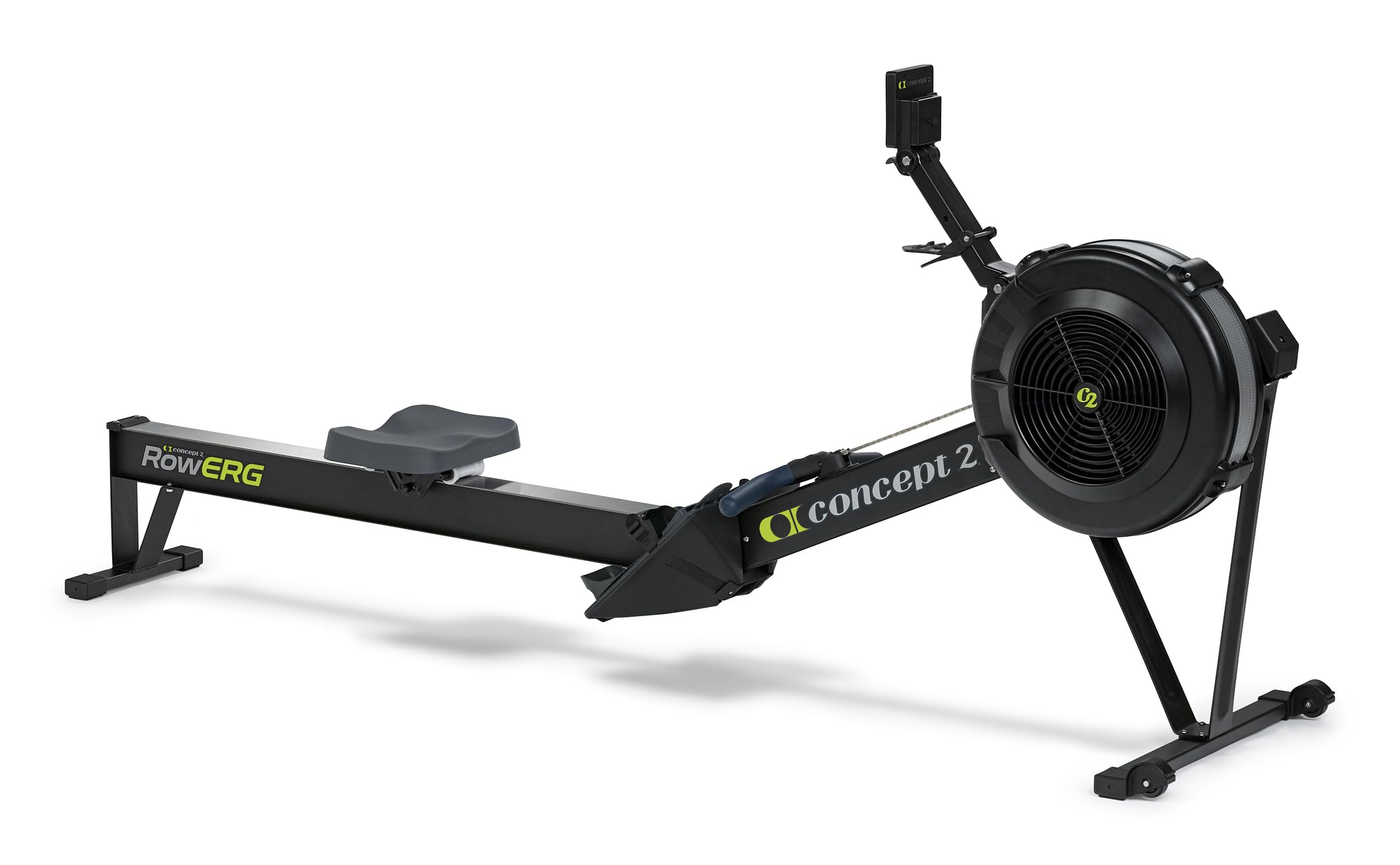
Concept2 RowErg

Serious home training

Our Score 9.8/10
Check Price

Worth Noting

  • Flywheel noise carries into the next room
Monitor
PM5, Bluetooth and ANT+
Storage
Splits into two pieces
Resistance
Air, damper adjusted
Max User Weight
227 kg (500 lb)
Read the full review

The RowErg separates in the middle, so the flywheel half and the rail half can be stacked against a wall or pushed into a closet between sessions. That's the least interesting reason it's our top pick. The real one is the resistance: an air flywheel that answers a harder pull with more resistance, straight away, with no dial to reach for in the middle of a piece.

Everything else supports that. The Performance Monitor 5 reports pace, watts and calories rather than just strokes and an estimate, which is what makes one session comparable with another, and it pairs over Bluetooth and ANT+ with a heart-rate strap or an app. The cradle holds a phone or tablet so you can follow a session without propping it on the floor. Most consoles here count strokes and guess at calories; this one is a training instrument.

What you accept is noise and a learning curve. The flywheel moves a lot of air, and this is the machine here you'll hear through a door — worth knowing if the rower is going in a spare bedroom with thin walls. The damper lever is also not a tension dial. It changes how heavy and slow the flywheel feels rather than how hard the stroke is, and setting it high makes a stroke feel laboured without giving you more resistance. Start lower than you think and move up only if the pull feels light.

The build is the other half of the case: aluminum front legs, steel rear legs, a 227 kg (500 lb) user limit that is the highest here, and two- and five-year warranty cover, the longest in this group. Nothing about it is plush — the seat is firm and the handle is a plain bar. It's the rower we point people toward when they want one machine to grow into rather than one to try for a winter.

Bottom line: Our default for anyone who wants to train rather than try: real air resistance, the most useful data here, and a frame that splits for storage.
#2

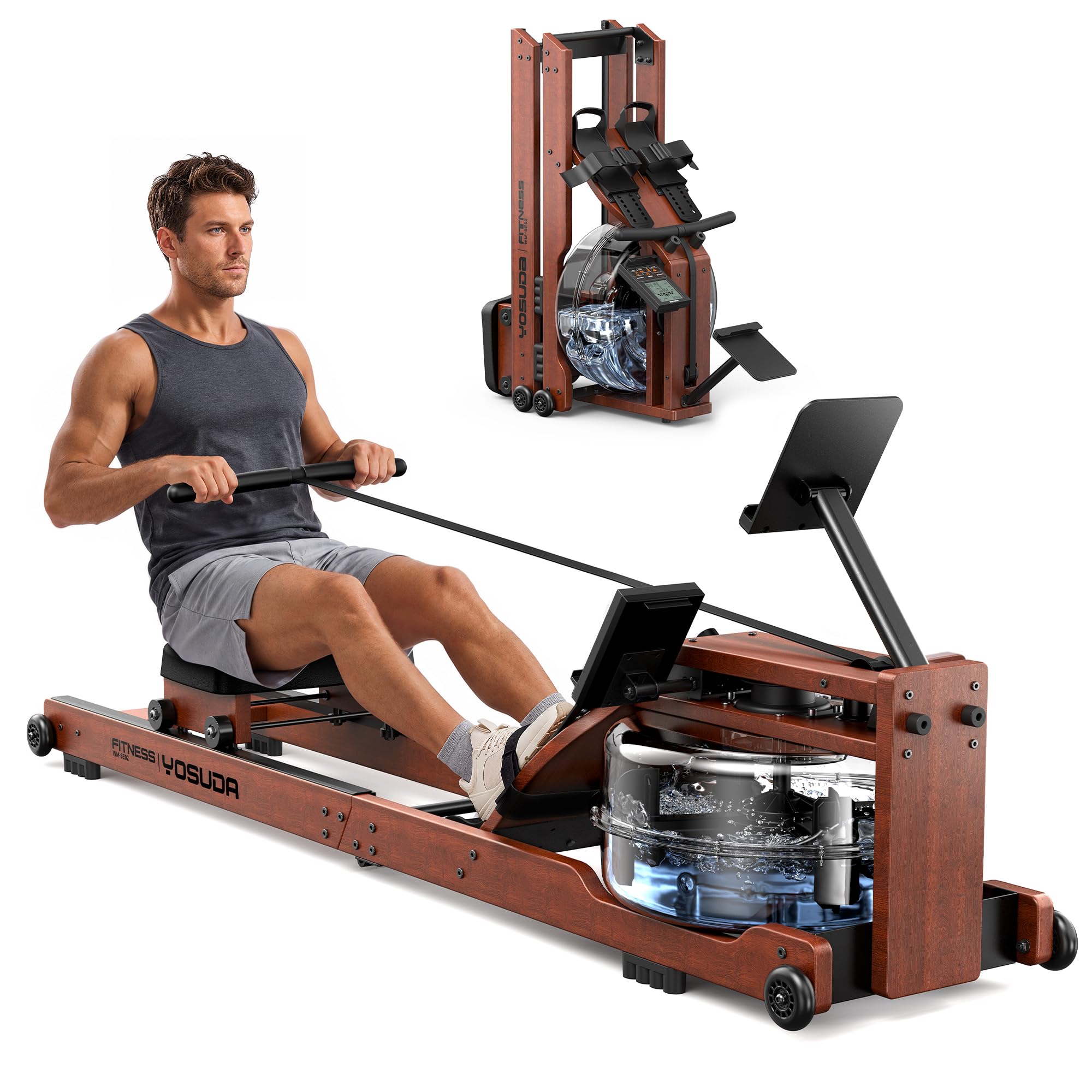
YOSUDA Water Rower

YOSUDA Water Rower

Living-room rowing

Our Score 9.6/10
Check Price

Worth Noting

  • Resistance is set by water level, not a dial
Frame
Solid beech wood
Storage
Folds 180 degrees
Resistance
Water, 5.8 gal tank
Max User Weight
400 lb
Read the full review

There's a sound a water rower makes at the catch — a low rush as the paddles bite — that no magnetic machine imitates, and it's a large part of why people keep coming back to them. Wrap it in a 30 mm beech frame with a low, wide profile and you get the only rower in this group you might leave out on purpose.

We pick it for living rooms and for anyone who wants resistance that builds through the stroke instead of sitting flat. The 22 L tank takes the load you give it, the four-blade paddle gives a firm consistent pull, and at 400 lb with room for a 6 ft 6 in rower it's the most accommodating frame here after the Concept2. Folded 180 degrees it rolls into a corner on its wheels, which is how a 73-inch wooden rower survives a small apartment.

What you take on is upkeep: the tank wants water treatment and an occasional change, and the foot straps are the flimsiest part of an otherwise solid machine. The first stroke also feels different from any magnetic rower — there's a beat at the catch before the resistance arrives — so give it a week before you decide you don't like it.

Bottom line: Ours for the living room: water resistance, a beech frame worth leaving out on show, and a fold that lets it disappear when guests arrive.

#3

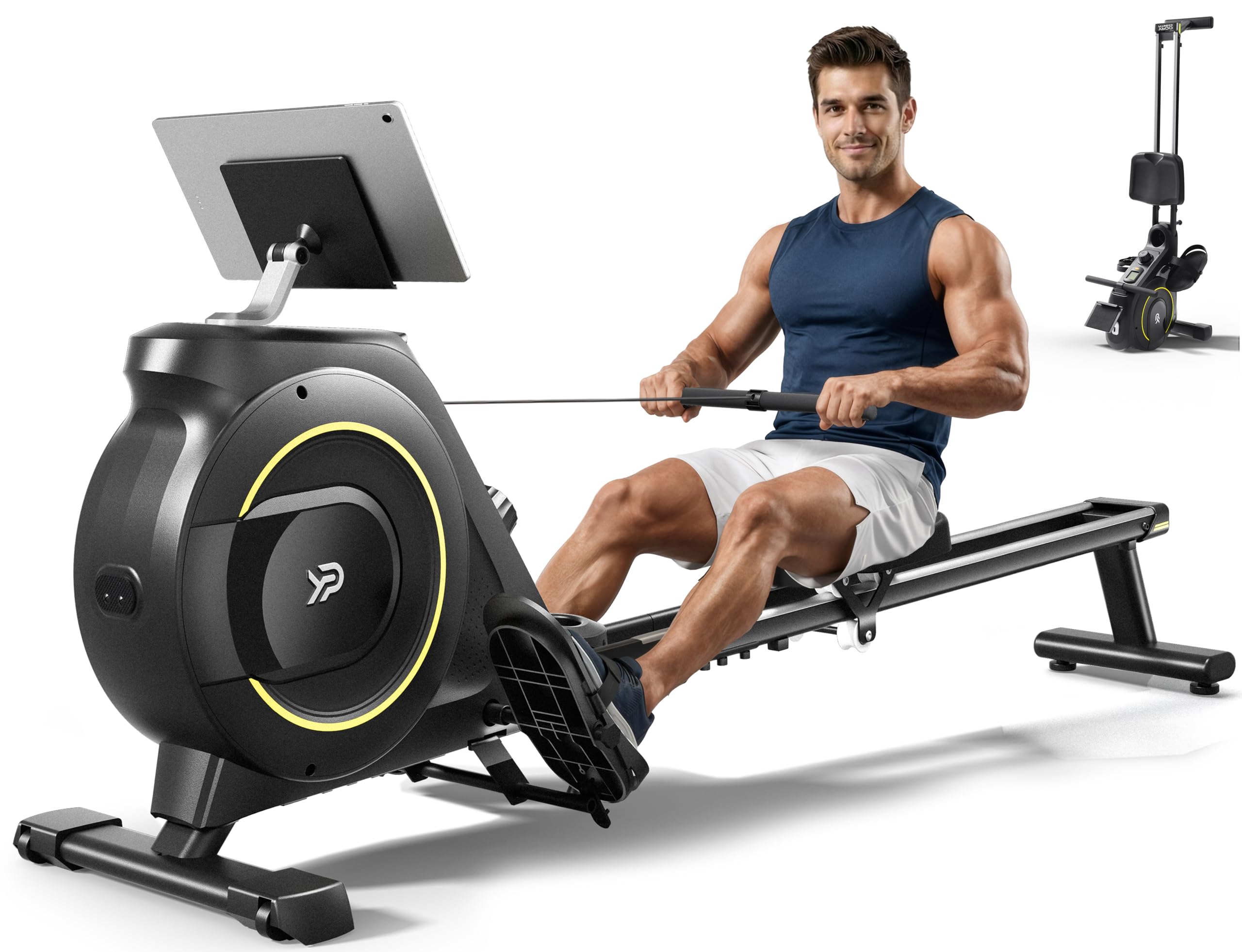
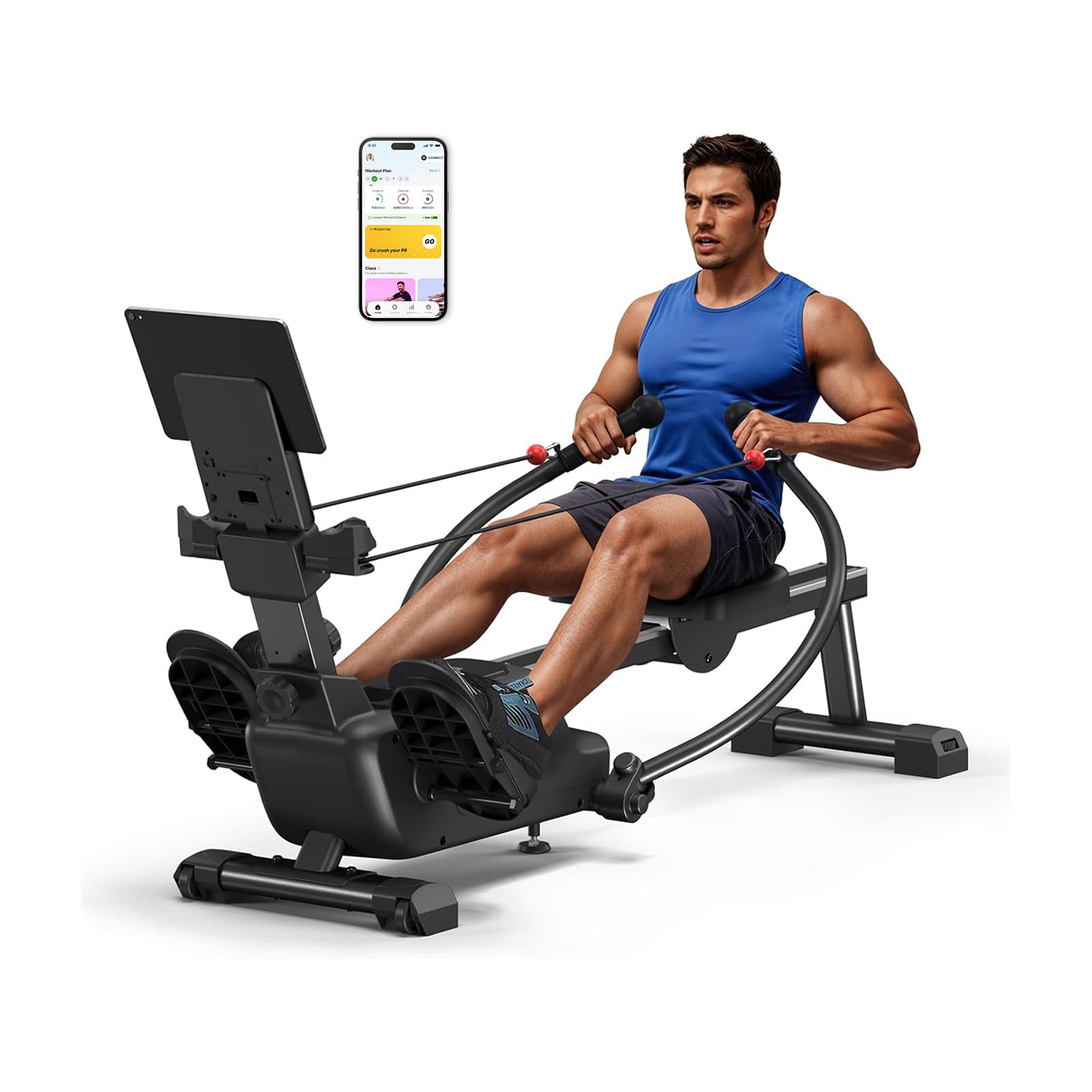
Merach RS3 Scull

Merach RS3 Scull

Quiet magnetic training

Our Score 9.4/10
Check Price

Worth Noting

  • 12-month warranty is short at this price
Dimensions
60 x 28.3 x 29.5 in
Resistance
Magnetic, 16 levels, 80 lb
Rowing Modes
Scull, alternating, dual-arm
Max User Weight
350 lb
Read the full review

The arms on the RS3 swing outward about 120 degrees instead of pulling straight back into your ribs, so the stroke finishes wide, closer to sculling on water than to a gym erg. It recruits the upper back and chest through a longer arc, and the three patterns — both arms, alternating, one arm at a time — give a long session some variety.

That's why this is the magnetic rower we recommend over the others here. Sixteen levels go up to 80 lb, more headroom than most magnetic machines in this group, and the glide is the smoothest of them. The seat is contoured and stays comfortable past twenty minutes. The MERACH app adds coached sessions and games; we used it for a while and went back to rowing bare, but an interval session or a teenager would get more out of it.

The trade for those arms is floor space: at 28.3 inches it's the widest machine in this group, and it wants clearance on both sides rather than a slot against a wall. At 58 lb you'll put it where it's going to live and leave it there. Give it that corner and nothing about the arrangement feels like a compromise.

Bottom line: We point home rowers here when they want magnetic quiet without a flat-feeling stroke — the scull arms make the movement worth repeating.

#4

YPOO RM930

YPOO RM930

Tight budgets

Our Score 9.0/10
Check Price

Worth Noting

  • 46-inch rail is the shortest here
Rail
46 in dual slide
Resistance
Magnetic, 16 levels
Max User Weight
350 lb
Folded Footprint
2.9 sq ft
Read the full review

The least expensive magnetic rower here doesn't feel like the compromise we expected. The frame is steel, the seat runs on a 46-inch dual slide, and the whole machine folds down to about 2.9 square feet — small enough to stand in a hallway without an argument.

Rowing on it, the dual rail does what the design promises: the seat tracks straight and doesn't rock the way a single-rail budget machine can. At 17.7 inches wide it's the narrowest here, which matters more than length when you're squeezing past it. It's quiet enough for an apartment, and the dial runs through sixteen levels that start easy and get steadily firmer.

Where it gives ground is elsewhere: the monitor is a basic LCD covering time, count, distance and calories, and the warranty runs twelve months. Neither changes our recommendation for a first rower, a small apartment, or a spare-room machine — what you notice every day is the fold, the quiet and the seat tracking straight under you.

Bottom line: The budget pick we keep coming back to: a folding magnetic rower that stays quiet and steady, and gives up less than the price suggests.

#5

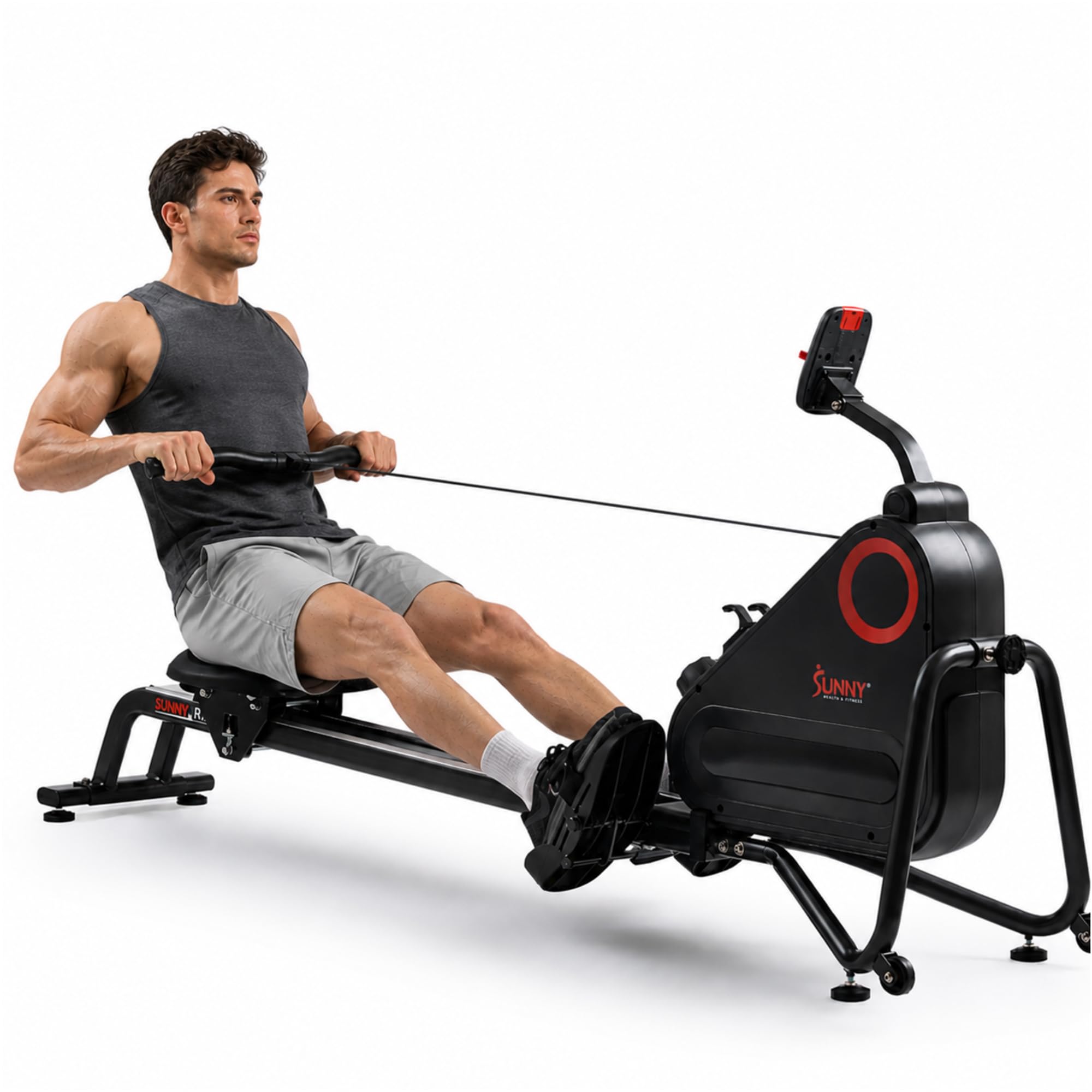
Sunny SF-RW523021

Sunny SF-RW523021

Taller rowers

Our Score 9.0/10
Check Price

Worth Noting

  • 300 lb user limit
  • 79.3 inches long when set up
Rail
50 in
Storage
Stores upright
Resistance
Magnetic, 16 levels
Max User Weight
300 lb
Read the full review

Fifty inches of rail is the number that separates this Sunny from most of the magnetic rowers here, and it's the number to check if you're tall. A longer rail lets the seat travel further back at the catch, and that's the difference between a full stroke and a shortened one for a rower over six feet.

In use it's a quiet, planted machine. Sixteen levels of magnetic resistance, a contoured seat, and a strap-and-pulley pull that stays smooth through a long piece; the free SunnyFit app pairs over Bluetooth for coached sessions, and the frame carries a three-year structural warranty, the longest here outside the Concept2.

Storage is where it earns its place in a small home: the frame stands on its end against a wall, so the space it takes between sessions is a corner rather than a stretch of floor.

Our note of caution is about what the money buys. It costs about what the RS3 does, and the RS3 is the more interesting machine to use — scull arms, games, the same quiet glide. What this one buys is the rail, so if you're tall the arithmetic changes and the extra inches are worth more than the extras.

Bottom line: The pick for taller rowers who want a quiet household machine: 50 inches of rail, a smooth glide, and a frame that stores on its end.

#6

Sunny SF-RW1205

Sunny SF-RW1205

Small apartments

Our Score 8.8/10
Check Price

Worth Noting

  • 300 lb user limit
Dimensions
58.1 x 20.1 x 24.8 in
Resistance
Hydraulic, 12 levels
Item Weight
22.4 lb
Max User Weight
300 lb
Read the full review

At 22.4 lb this is the only rower here one person can carry up a flight of stairs without planning it, and that fact decides how the machine gets used: it lives against the wall, comes out for fifteen minutes in front of the television, and goes back. That's the whole case for a hydraulic rower in a small home, and this is the version of it we recommend.

The inclined rail is the design detail we appreciate most. It slopes upward so your own body weight works against the drive, which adds leg work a flat rail doesn't ask for — useful when the resistance ceiling is low. It's quiet enough to row in a shared room, and the free SunnyFit app adds trainer-led sessions and scenic routes over Bluetooth, which is more than the plain LCD would suggest.

The limit is honest: twelve levels of hydraulic tension cover steady fifteen- to twenty-minute sessions, and the pull can soften as the cylinder warms, at which point you turn the knob up a level and carry on. If you're already fit and want to row hard for half an hour, this machine runs out before you do — that's the moment to look at a magnetic rower or the Concept2.

Bottom line: We recommend it to anyone rowing in a cramped apartment: 22.4 lb, quiet, and simple enough to use every day without thinking about it.

#7

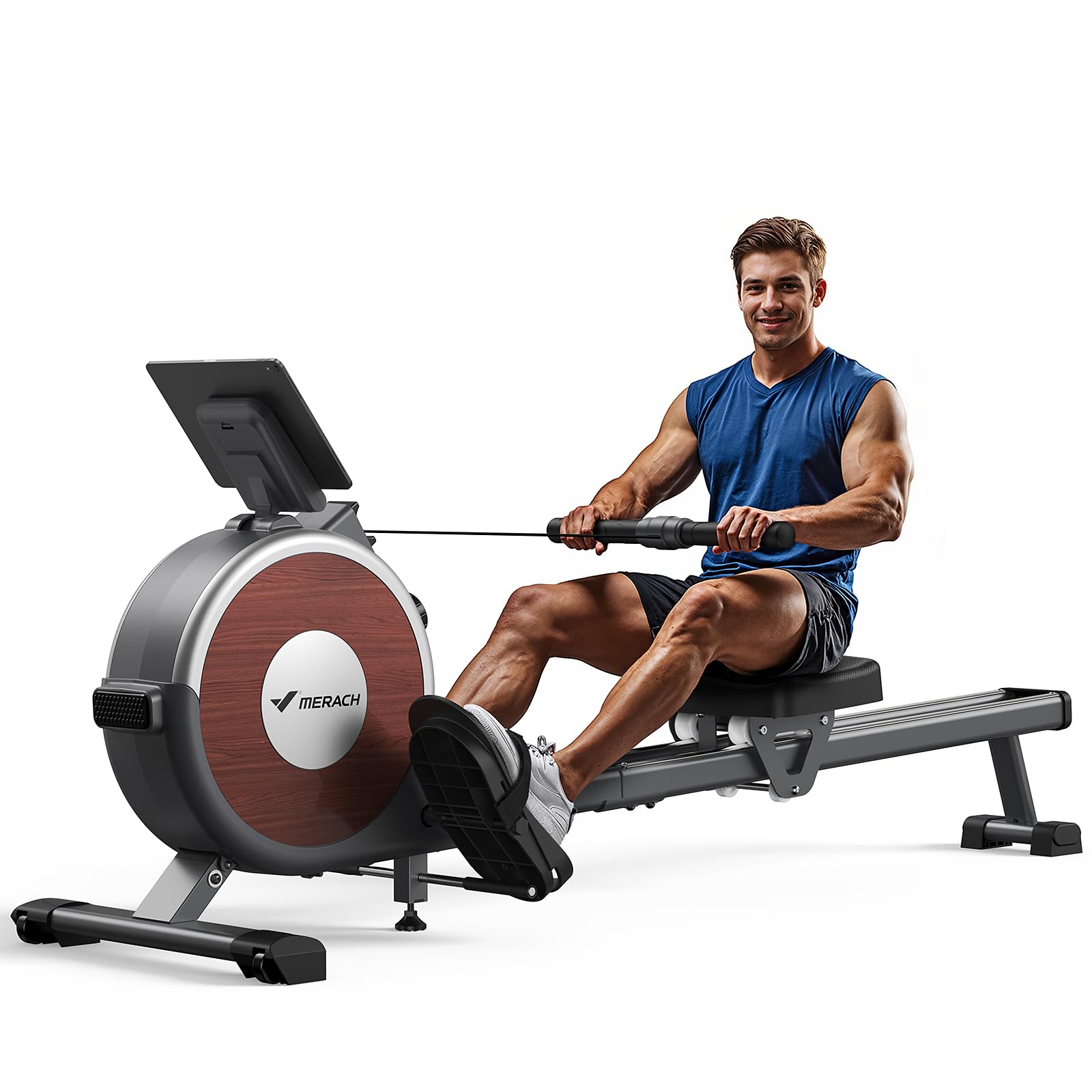
Merach Q1S

Merach Q1S

Daily quiet cardio

Our Score 8.8/10
Check Price

Worth Noting

  • 12-month warranty limits long-term cover
Dimensions
65 x 19.3 x 24.8 in
Resistance
Magnetic, 16 levels
Item Weight
42 lb
Max User Weight
350 lb
Read the full review

The Q1S's resistance runs out before you do. Toward the top of the sixteen levels the steps get smaller, and a strong rower pulling hard finds the machine giving back less than the effort going in. That rules it out for anyone training seriously — and it's also why a beginner won't spend a first month fighting a flywheel that's too much for them.

Everything else is well judged. The dual slide rail keeps the seat steady, it's one of the quietest machines here, and at 42 lb it can be tipped up and moved without a second person. Assembly is mostly done before you start, with the tools in the box, and the app carries courses and pairs with KINOMAP if you want something to follow.

We keep it in the roundup for the person rowing 15 to 20 minutes a day in an apartment: for that, the smooth glide and the low noise are the whole experience, and the resistance ceiling never comes up. If you already train hard, put the money toward the RS3's 80 lb ceiling instead.

Bottom line: The one we hand to first-time rowers: quiet, light, and comfortable for the fifteen-minute sessions most people actually do.

How We Tested Seven Rowing Machines

I began with a list of more than 30 rowers sold by the major fitness retailers, then filtered by resistance type, footprint, maximum user weight, monitor features, and price until seven machines remained — enough to represent each resistance style and price band fairly. Assembly was the first real test: one person, the included tools, a stopwatch, and a spare room with ordinary ceiling height. We noted how readable the instructions were, how many steps secretly needed a second person, and whether the frame still felt solid once the bolts were tight.

Then we used them the way people actually do — 20-minute interval sessions before work, longer steady pieces on weekends, and a timed 2,000-meter effort on each machine. Someone stayed upstairs on calls, and later asleep, so we could judge noise honestly. We watched whether resistance ramped up smoothly or in clunky steps, whether it held at a fast stroke rate, and how quickly we could get from standing in the room to rowing: monitor taps, foot straps, seat height.

Every couple of weeks we wiped down the rail, rocked the seat to check for play, and re-tightened bolts to see what had worked loose. On workout quality, we tracked whether a session left us as worked as it should and whether the seat was still tolerable past minute 15. Value came last — what a machine offers beyond the basics, and whether the build justifies its price against the others in its band. Ease of use sorted itself out in the first week: if we hesitated before climbing on, that counted against it.

How to Choose Rowing Machines

Pick the resistance type first

Air resistance gets harder the harder you pull, which is why serious training is built on it and why you can hear it working. Magnetic resistance is set by a dial and stays identical from the first stroke to the five-hundredth; the trade is a ceiling, and on cheaper machines that ceiling arrives early. Water builds through the stroke and sounds like it, and hydraulic is the lightest and least expensive option, though the pull can soften as the cylinder warms. Decide which of those four experiences you want before you compare anything else.

Check the rail, not the compact badge

Compact in a listing describes the stored footprint, not the machine in use. Most of these rowers run between roughly 58 and 79 inches front to back once they're set up, and a folding frame doesn't shorten that. What changes your stroke is rail length: the YPOO's 46 inches is the shortest here and will cut a tall rower's reach, while the Sunny SF-RW523021 and the YOSUDA give 50 inches or more. Measure the wall you plan to row along, then check the rail against your height.

Weight, storage and the sound it makes

Two numbers decide whether a rower stays in the room: how heavy it is and where it goes when you've finished. A 22 lb hydraulic machine moves with one hand; a 58 lb magnetic rower goes where you put it and stays there. Storage design matters as much — the Sunny SF-RW523021 stands on its end, the Concept2 separates into two pieces, and the YPOO folds to about 2.9 square feet. If the rower is going upstairs or into a shared building, add noise to the list and lean magnetic or water.

The monitor decides how much you'll use the data

A basic LCD gives you time, stroke count and an estimated calorie figure, which is enough for steady sessions and is what most machines here offer. The Concept2's PM5 is in a different class, reporting pace per 500 m and watts so two sessions can be compared honestly. Bluetooth matters more than the screen: it lets any of these rowers talk to an app or a heart-rate strap, and the free app connections supply the coaching the consoles don't. If you like numbers, pay for the monitor.

Where the money goes

Spend on the resistance ceiling and the frame rather than the extras. The cheapest machines here top out at a resistance that suits steady fifteen- to twenty-minute work; the more expensive magnetic rowers and the Concept2 keep going as you get stronger. Warranty tracks the price too — three years or more on a good frame against twelve months on a budget one. If you aren't sure rowing will stick, start with a light quiet machine and spend more only once it's a habit.

Frequently Asked Questions

Final Verdict

The Concept2 RowErg is the rower we recommend to almost everyone, because it keeps working as you get fitter and its data is the kind you can trust from one session to the next. Two situations change the answer. If the machine has to live in a bedroom or a small apartment, the 22.4 lb Sunny SF-RW1205 or the folding YPOO is the practical choice. If you want magnetic quiet with a real feel and room to get strong, the Merach RS3 is worth the step up in price.