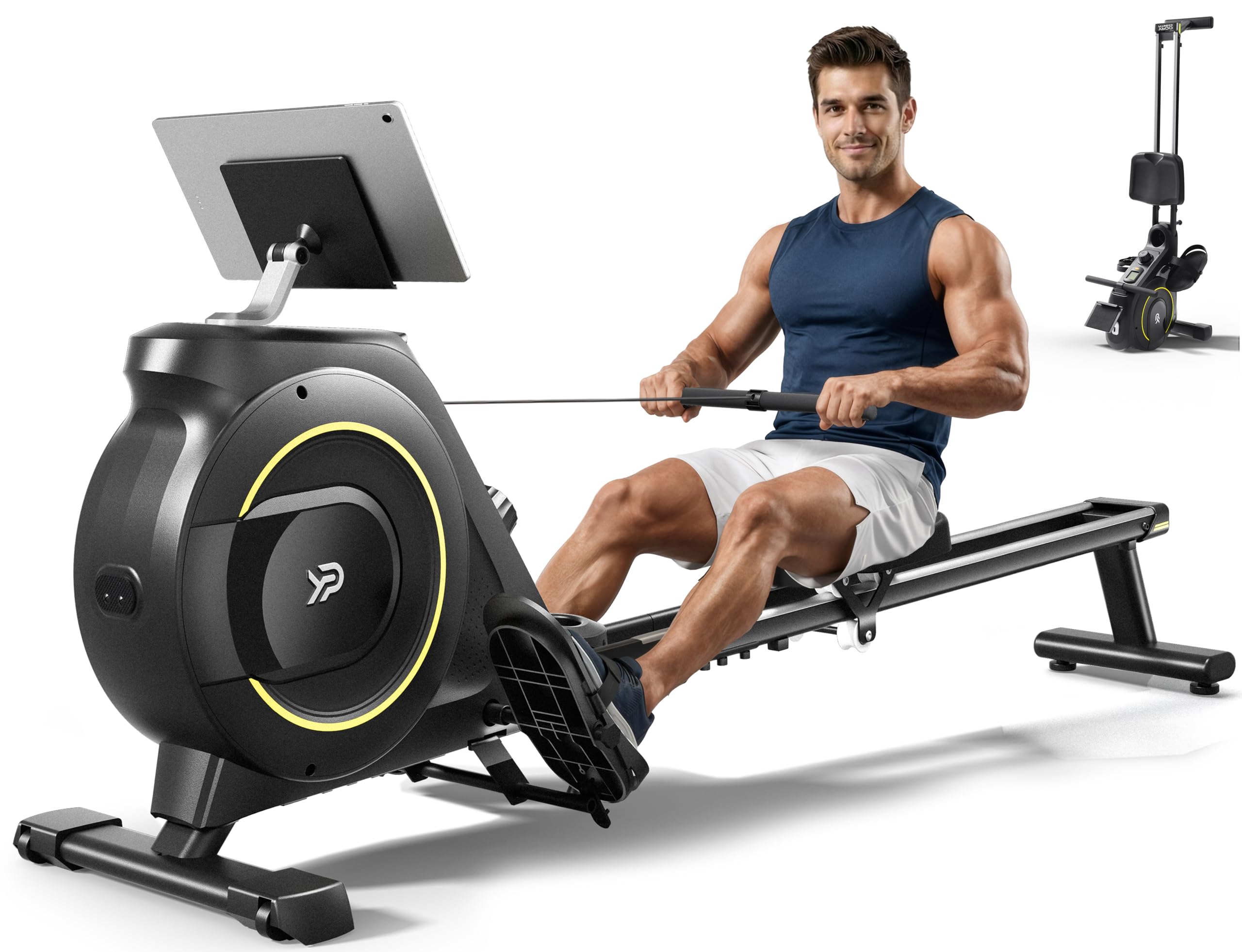
Cardio Machines

Best Cardio Machines for Home of 2026

The hardest part of buying a cardio machine isn't choosing a brand—it's figuring out which one you'll still want to use after the novelty wears off. A treadmill, elliptical, rower, or bike all promise a great workout, but they ask for different things: floor space, assembly patience, a learning curve, and enough comfort to keep you moving for 30 minutes. I lived with six machines over nine months, noting how quickly they assembled, how stable they felt at speed, and whether resistance changes matched my effort. The right one removes excuses; the wrong one becomes an expensive place to hang laundry.

Value isn't just the sticker price. It's whether a machine stays quiet and stable after months of use, whether adjusting resistance mid-workout feels natural, and whether the seat or deck is comfortable enough that you don't cut a session short. My team compared warm-up walks, interval pushes, and longer weekend sessions across all six, and the differences in build quality and ease of use showed up fast. The picks below are the ones that earned their footprint.

#1

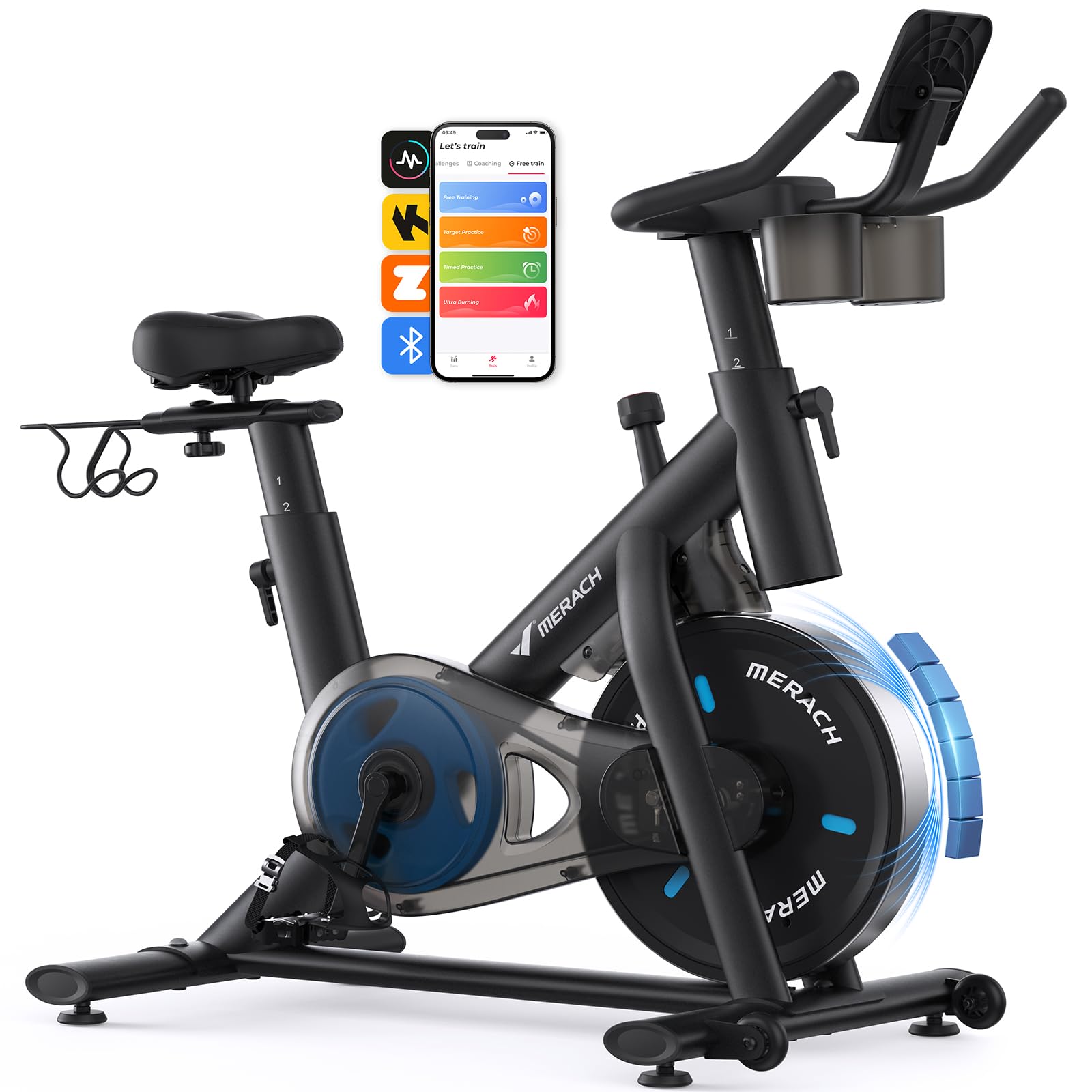
MERACH S26 Exercise Bike

Top Pick
MERACH S26 Exercise Bike

Everyday home cardio

Our Score 9.0/10
Check Price

Worth Noting

  • Resistance ramps up sharply near the top of the dial
  • 62-pound frame is light for standing climbs
Footprint
42.6"D x 19.3"W x 48.6"H
Resistance
Magnetic
Fits Heights
4'8" to 6'2"
Weight Capacity
300 lb
Read the full review

The first thing we check on a home cardio machine is how it sounds at 6 a.m. on a wood floor with someone asleep upstairs. The S26 passes that test comfortably: the belt-driven magnetic resistance hums rather than clanks, and the pedal stroke is smooth enough that you stop noticing it by the second song. That's the main reason it's our top pick for a home.

The rest of the package supports it. A reinforced steel frame carries a 300-pound capacity, the saddle and handlebars adjust for riders from 4'8" to 6'2", and the resistance dial spans a genuine warm-up to a session you'll feel in your quads. Assembly is minimal, the LCD covers time, speed, distance and calories, and the Merach app adds guided rides for the days you want to be told what to do. Two people can share it without hunting for tools: a pull knob moves the seat and the bars adjust up and down.

The saddle is where this bike asks for patience. It's firm, and past the half-hour mark you'll be shifting around; a gel cover or a wider replacement seat solves that for very little money, and the four-way seat adjustment means the reach stays right either way. Everything else about the ride sits a step above what the money suggests.

Bottom line: For most homes this is the one we recommend: quiet enough for a shared apartment, adjustable from 4'8" to 6'2", and simple enough to ride without a plan.
#2

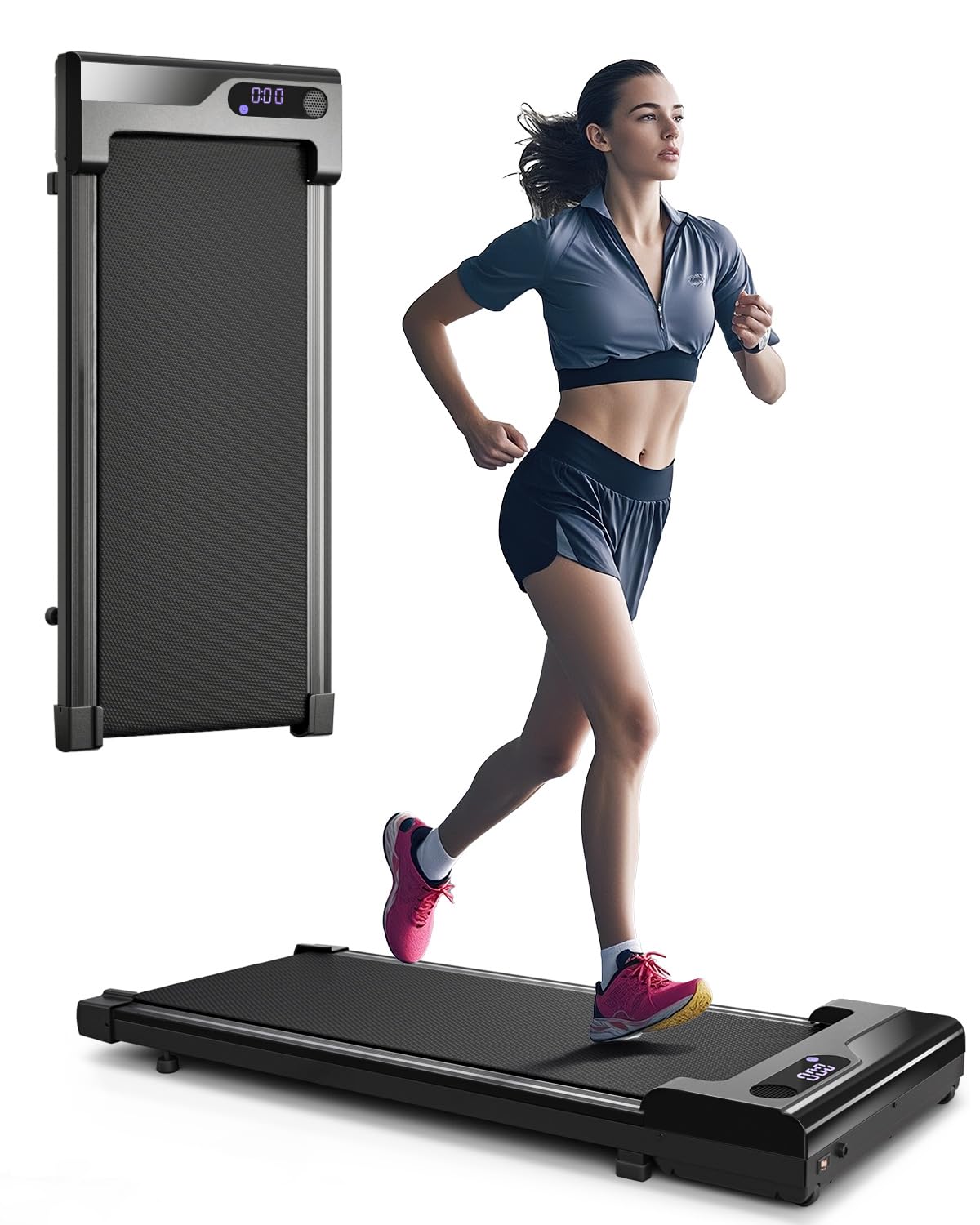
Vhorilix Walking Pad

Vhorilix Walking Pad

Under-desk walking

Our Score 9.0/10
Check Price

Worth Noting

  • 264-pound capacity is the lowest in this group
  • No handrail, so balance is entirely yours
Weight
36.4 lb
Footprint
42.91"D x 19.69"W x 4.33"H
Speed Range
0.6 to 4 mph
Weight Capacity
264 lb
Read the full review

The case for a walking pad isn't fitness in the gym sense — it's the hour you'd otherwise spend sitting through calls. Set this under a desk at two miles an hour and a working day quietly turns into several thousand steps you never scheduled.

What puts it ahead of the other pad here is how little it asks. It arrives assembled, needs two AAA batteries for the remote, and slides under a bed or a sofa at just over four inches tall. It's quiet enough to talk over on a video call, the textured belt feels secure in socks, and the remote means you can nudge the speed without leaning over a keyboard.

The ceiling is four miles an hour, and that defines the buyer. This is walking, not jogging, and steady state rather than intervals — if your idea of cardio is finishing out of breath, a rower or a bike will get you there in half the time. Within its lane it's excellent, and it's the machine here most likely to be used on a nothing-special Tuesday.

Bottom line: The machine most likely to be used on a random Tuesday: it arrives assembled, slides under a bed, and turns a workday into extra steps.

#3

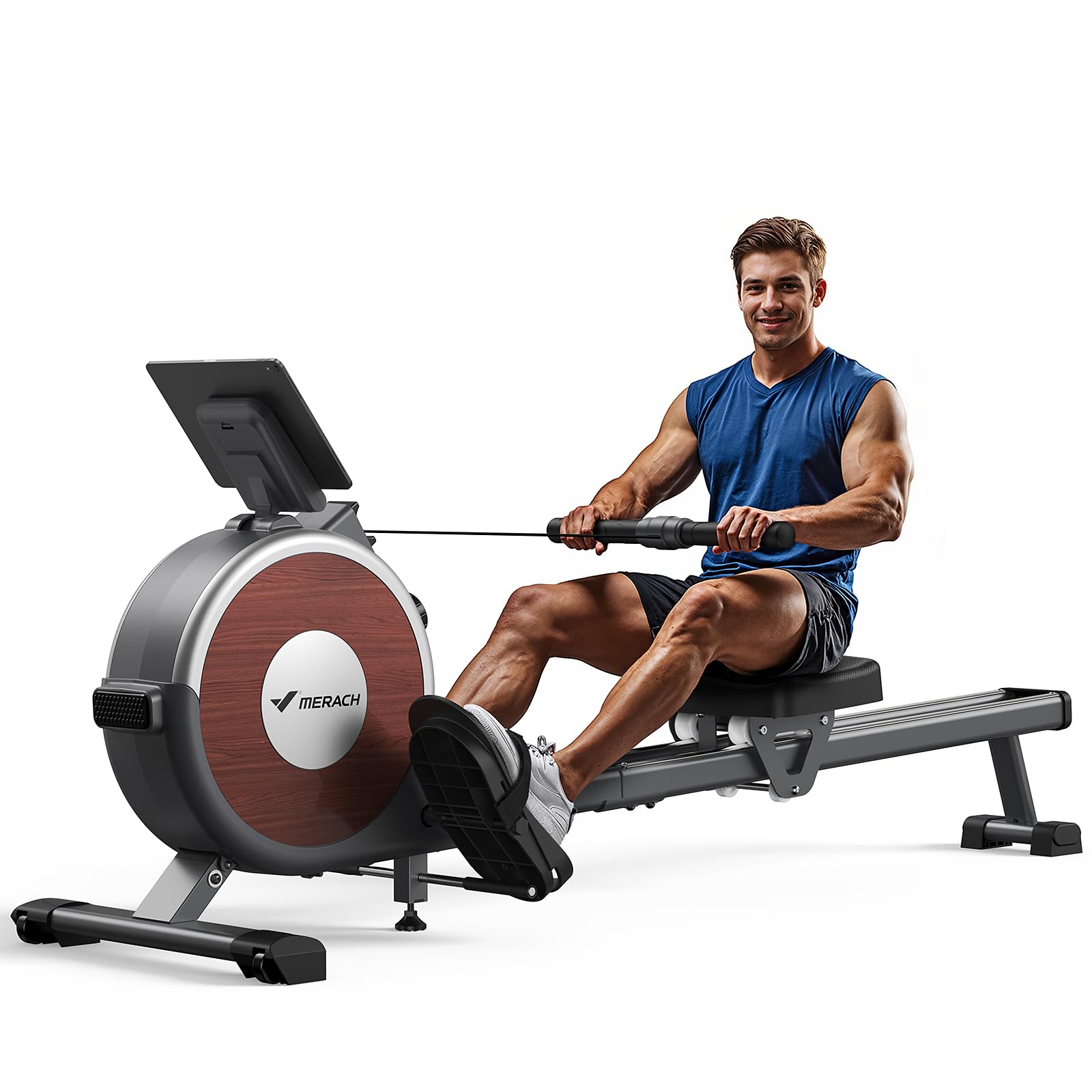
Merach Q1S Rowing Machine

Merach Q1S Rowing Machine

Full-body sessions

Our Score 8.8/10
Check Price

Worth Noting

  • Top resistance feels light for strong rowers
  • Pull height sits low for taller rowers
Rail
Dual slide, 65" overall
Weight
42 lb
Resistance
Magnetic, 16 levels
Weight Capacity
350 lb
Read the full review

Two rails instead of one is the detail that decides the Q1S. A second track keeps the seat running straight even when you pull harder with one arm than the other, and it removes the rock that single-rail rowers develop under a strong stroke. On this machine the seat glides on rollers along both tracks, and the motion is smooth enough that you can row for twenty minutes without thinking about the equipment at all.

That, plus magnetic resistance that stays quiet and a 350-pound capacity on a 42-pound frame, is why this is the rower we name first for someone who wants a full-body session at home. Legs, back, arms and core all work in one movement, there's no pounding through the floor, and the whole machine is 65 inches long, so it lives along a wall on its wheels between sessions.

The caveat is resistance. Sixteen levels sounds like plenty, and for a beginner or an intermediate it is, but a strong adult will find the top of the range gentle and run out of challenge before running out of levels. The monitor covers time, distance, calories, stroke count and pace, it pairs with the Merach app or Kinomap, and most of the machine arrives already assembled.

Bottom line: Our pick for a full-body session at home: stable under a hard stroke, nearly silent, and sized to fit along a wall.

#4

Sunny Hydraulic Rower

Sunny Hydraulic Rower

Tight budgets

Our Score 8.8/10
Check Price

Worth Noting

  • Rail is short for rowers over about 6'2"
  • Gets loud when you pull hard
Weight
22.4 lb
Footprint
58.1"L x 20.1"W x 24.8"H
Resistance
Hydraulic, 12 levels
Weight Capacity
300 lb
Read the full review

At 22.4 pounds this is a rower you can pick up with one hand and stand in a closet. Everything about it follows from that: hydraulic pistons instead of a flywheel, a slimmer frame, and a 58-by-20-inch footprint that fits where a full-length rower simply won't.

Hydraulics behave differently from magnetic resistance, and it's worth understanding before you buy. The pistons resist on both the pull and the return, effort builds through the stroke rather than sitting at a fixed level, and the oil thins as the cylinders warm, so level 6 at minute two is not level 6 at minute twenty. You turn the knob up as you go. The rail also slopes upward, which puts the leg drive against gravity as well as the pistons, and the free SunnyFit app gives you something to follow.

For a first rower in a small apartment, that's a good trade. It costs less than the magnetic rowers here, it stores against a wall, and it will get your heart rate up in five minutes flat. What it won't do is keep a strong adult challenged for long: the top of the resistance range is a casual-workout ceiling, not a training one.

Bottom line: Small budget, small room: this is the rower we point to, at 22 pounds, storing against a wall and still delivering a real sweat.

#5

YPOO RM930 Rower

YPOO RM930 Rower

Folding away

Our Score 8.8/10
Check Price

Worth Noting

  • 46-inch rail limits taller rowers
  • Narrow 17.7-inch stance is the tightest here
Rail
46" dual slide
Resistance
Magnetic, 16 levels
Weight Capacity
350 lb
Folded Footprint
2.9 sq ft
Read the full review

This is the rower we reach for when floor space, not fitness, is the deciding problem. It sells for about what the Merach Q1S does, and for that money it adds the one thing the others can't do: it folds, with the folded footprint listed at under three square feet.

Unfolded, it's a magnetic rower with a 46-inch dual slide rail, 16 resistance levels and a 350-pound capacity — the same broad recipe as the rest, built on a narrower 17.7-inch frame. Resistance builds smoothly through the levels, the glide stays quiet, and the LCD covers time, strokes per minute, distance and calories while app pairing adds guided rows. Assembly is a one-evening job with the tools in the box.

Against that, nothing else here folds, and a rower that disappears into a closet is a rower you'll actually pull out in a studio apartment. Check your own measurements against the rail length before you order, because that's the figure that decides whether a rower feels right at full extension.

Bottom line: If the rower has to fold, this is the one — a quiet dual-rail magnetic machine that tucks away, provided you're not much over six feet.

#6

Sunny Magnetic Rower

Sunny Magnetic Rower

Upright storage

Our Score 8.8/10
Check Price

Worth Noting

  • Top resistance is gentle for trained rowers
  • Some units develop noise or lose resistance over time
Rail
45.7" dual rail
Footprint
64"D x 19.3"W x 27"H
Resistance
Magnetic
Weight Capacity
300 lb
Read the full review

Standing it on end between sessions is what makes this rower livable in a spare room. The frame is built to go vertical against a wall, which matters when the machine is 64 inches long in use and the room already has a sofa in it.

In use it's a dual-rail magnetic rower with a 45.7-inch rail, a 300-pound capacity and an LCD that shows the numbers worth watching, including stroke rate and a 500-meter split. Assembly is straightforward until the last stage of the frame, which wants a second pair of hands. The rail suits average height; if you're tall, measure before you commit, because there's no extending it.

Build quality is the strongest argument for it: the frame carries a three-year structural warranty with 180 days on other components, the rail runs true, and the seat moves without slop. That makes it a sensible first rower, or a second machine for two people sharing one at light-to-moderate effort. What decides who should look elsewhere is the resistance, not the construction.

Bottom line: A well-built dual-rail rower with upright storage; we recommend it for beginners and light-to-moderate households, not for hard intervals.

#7

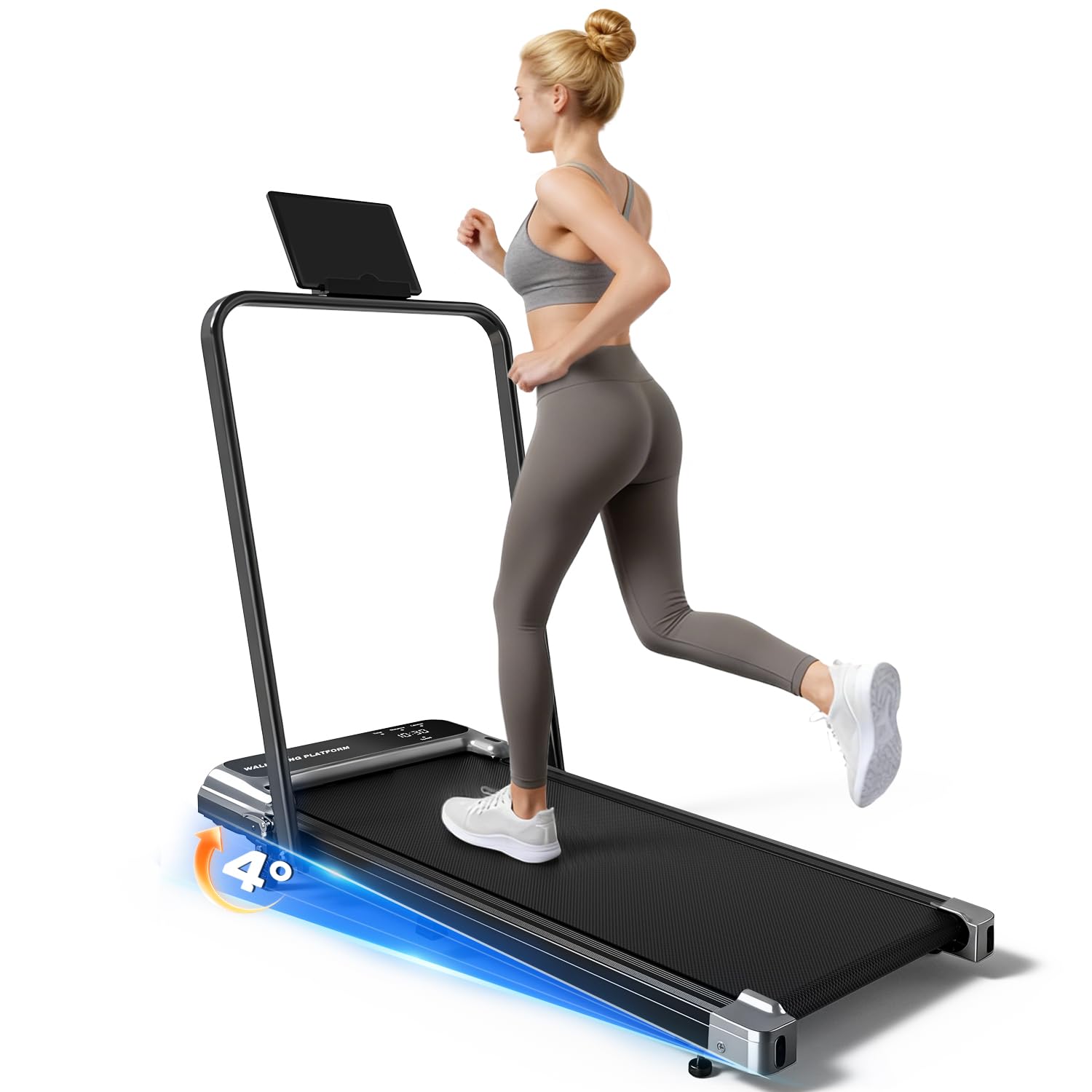
Viamotion Walking Pad

Viamotion Walking Pad

Balance support

Our Score 8.2/10
Check Price

Worth Noting

  • Belt can slip during a walk
  • Deck feels less planted than the flat pads
Incline
4%
Footprint
45.53"D x 21.17"W x 37.4"H
Speed Range
Up to 3.8 mph
Weight Capacity
265 lb
Read the full review

The handlebar is the reason to consider this pad over the flat ones. At walking speeds balance is the thing that stops people using a pad consistently, and a handhold at hip height lets you step on without watching your feet and gives you something to grab when the belt catches you out.

The other additions are a four-degree incline and a top speed just under four miles an hour. The incline is small, but it changes how a thirty-minute walk feels more than the number suggests, and the frame stores upright against a wall between sessions. Setup really is a case of unboxing and plugging in.

One thing to check before you order: the handlebar height is fixed, so a taller walker ends up leaning forward to reach it. Picture where the bar lands against your own hip height. If you're much over six feet, a flat pad with a desk or wall to steady yourself may suit you better than this one.

For the right person it's the most useful machine in this group: someone rebuilding after injury, or anyone who won't walk on a pad without something to hold. Where balance isn't the issue, the flat pad is simpler, cheaper and easier to live with — the bar is the whole argument for paying more.

Bottom line: We recommend it when balance is the deciding factor — the handlebar is what makes a walking pad workable for someone who doesn't trust their footing.

How We Tested Six Cardio Machines

We started with a shortlist of cardio machines that were widely available, reasonably priced for their category, and realistic for a home gym—then filtered by footprint, user-weight capacity, warranty, and the range of resistance or incline each offered. Six made the cut, including a treadmill, an elliptical, a rower, and a stationary bike, and we used them for nine months in a garage gym and a spare-room setup. I timed assembly solo, noted which steps needed a second person, and tracked how long it took to get from box to first workout.

Each machine went through the same rough week: early-morning interval sessions, after-work steady-state cardio, and longer weekend workouts. I paid attention to whether resistance changed smoothly or jumped, whether the frame rocked when I stood up to sprint or row hard, and whether the seat, pedals, or deck stayed comfortable past the 30-minute mark. I also watched for quality issues that show up later—loose bolts, squeaks, fading console response—and compared what each machine cost against how often we reached for it.

By the end, value came down to more than price: it was the machine that was easy to set up, simple to adjust, and sturdy enough that nobody avoided it. We'll keep using these and update if anything changes.

How to Choose a Home Cardio Machine

Start with the motion, not the motor

The three families here ask different things of you. An upright bike is the easiest to use while distracted — you can read, watch something or answer a call, which is why it survives busy weeks. A rower gives you the most work per minute and the most muscle groups, but a sloppy stroke will leave your lower back complaining, so it rewards ten minutes of learning. A walking pad is for steps, not for getting out of breath. Pick the motion you'd happily repeat three times a week, and be honest about whether you'll learn the rowing stroke.

If running is the goal, none of these is the answer. A treadmill that takes daily miles is a different purchase at a different price, and the treadmills we considered here don't carry the reliability record we want behind a recommendation.

Judge resistance by the top end, not the level count

Sixteen levels sound better than eight until you discover that level sixteen is gentle. What matters is how hard the machine gets at full resistance, and whether the steps between levels are small enough to climb. Magnetic resistance holds steady for the whole session; hydraulic pistons thin out as the cylinders warm, so the same setting gets easier after twenty minutes and you end up turning the knob up as you go. If you're a strong adult, buy magnetic and satisfy yourself that the top end is more than a token pull.

Noise, flooring and the people downstairs

Sound is the specification nobody prints and everybody notices. A belt-driven magnetic bike or rower is the quietest option here by a wide margin — quiet enough for an early session in an apartment. Hydraulic rowers clunk at hard effort and walking pads hum continuously, which matters far more across thirty minutes than it does in a showroom. Put whatever you buy on a dense mat: it stops the frame creeping across a wood floor and takes the edge off the vibration that reaches the room below.

Fit: height, weight limit and the floor you're giving up

Two numbers decide whether a machine feels right, and neither is the price. Height range comes first: the bike here covers 4'8" to 6'2" with a four-way seat, while rowers are less forgiving — a 46-inch rail is comfortable at average height and cramped past six feet, and there's no adjusting it. Weight capacity comes second: leave headroom above the heaviest person who'll use it rather than buying at the limit. Then tape the footprint on the floor, including the length you need to get on and off.

What the box actually asks of you

Walking pads arrive assembled and need a battery for the remote; the bike is a short job with the tools in the box; rowers run from half an hour to a full evening, and the last stage of a frame often wants two people. Build it in the room where it will live. A rower carton is five feet long and a bike with its base fitted is awkward through a doorway, so the hallway is the wrong place to start.

Frequently Asked Questions

Final Verdict

For most homes the MERACH S26 is the machine we recommend: quiet enough for a shared apartment, adjustable across more than a foot of rider height, and simple enough that a thirty-minute ride doesn't need a plan. If you want your upper body working too and you'll spend a week learning the stroke, the Merach Q1S rower gives you more per minute.

And if the honest answer is that you'll never block out a workout but you will walk through meetings, skip both and put a Vhorilix pad under the desk.