Accessories

Best Twist Boards of 2026

Twist boards are about as simple as fitness gear gets: a disc, a bearing, and your own two feet. That simplicity is the appeal, and it's also where cheap versions fall apart. The wobbly ones squeak with every rotation, the slick ones let your socks slide right off the edge, and the small ones leave you shuffling in place instead of actually twisting. A good one buys you ten minutes of hip and waist movement in front of the TV, with no gym and no floor space sacrificed.

I've spent about three months with 14 twist boards, going barefoot on hardwood, in socks on carpet, and in sneakers whenever I wanted to see how the surface held up. The differences come down to things a product photo can't show: how the bearing feels underfoot, whether the disc stays put when you pick up speed, and how much of your foot actually fits on the deck. Size matters more than most first-time buyers expect, and plenty of these boards are narrower than they look online.

#1

Daiwa Figure Trimmer XL

Top Pick
Daiwa Figure Trimmer XL

Everyday home twisting

Our Score 9.2/10
Check Price

Worth Noting

  • No built-in workout counter
Surface
Textured with massage nodes
Board Height
1.57 in
Weight Capacity
220 lb
Platform Diameter
14 in
Read the full review

A twist board lives or dies by whether you can step onto it without aiming. The Figure Trimmer's 14-inch disc and 1.57-inch height solve that part neatly: there is enough platform for a natural stance, and the board sits low enough that it does not feel like a contraption in the middle of the room. The textured surface gives your feet something to grip, and the non-slip base keeps the whole thing from skating.

We recommend it for most people because it keeps the mechanism out of the way. This is a passive disc, so your hips and core drive every turn; there is no bungee to stretch, no cord to snap, and no battery to forget. The reward is a low-impact twist you can do for a few minutes at a time, and the 2.2-pound body is easy to move aside when the living room goes back to being a living room. Our one real reservation is capacity: the listed limit is 220 pounds, which is the lowest among these picks, so if you are near or above that line the two-pedal MERACH is the better call.

For everyone else, the Figure Trimmer is the one we keep coming back to because it asks so little: no setup, no app, no maintenance ritual beyond wiping the platform. The eight acupressure nodes are a nice bit of texture underfoot, though they are not the reason to buy it. The reason is that the board is big enough to trust and simple enough to leave out.

Bottom line: We recommend the Figure Trimmer XL as the default twist board for most homes: the 14-inch platform is roomy, stable, and simple enough to use while the TV is on.
#2

OLIXIS Waist Twister

OLIXIS Waist Twister

Simple dual-pedal

Our Score 9.2/10
Check Price

Worth Noting

Stance
Dual pedal
Pull Cords
Dual side cords
Item Weight
7.7 lb
Weight Capacity
300 lb
Read the full review

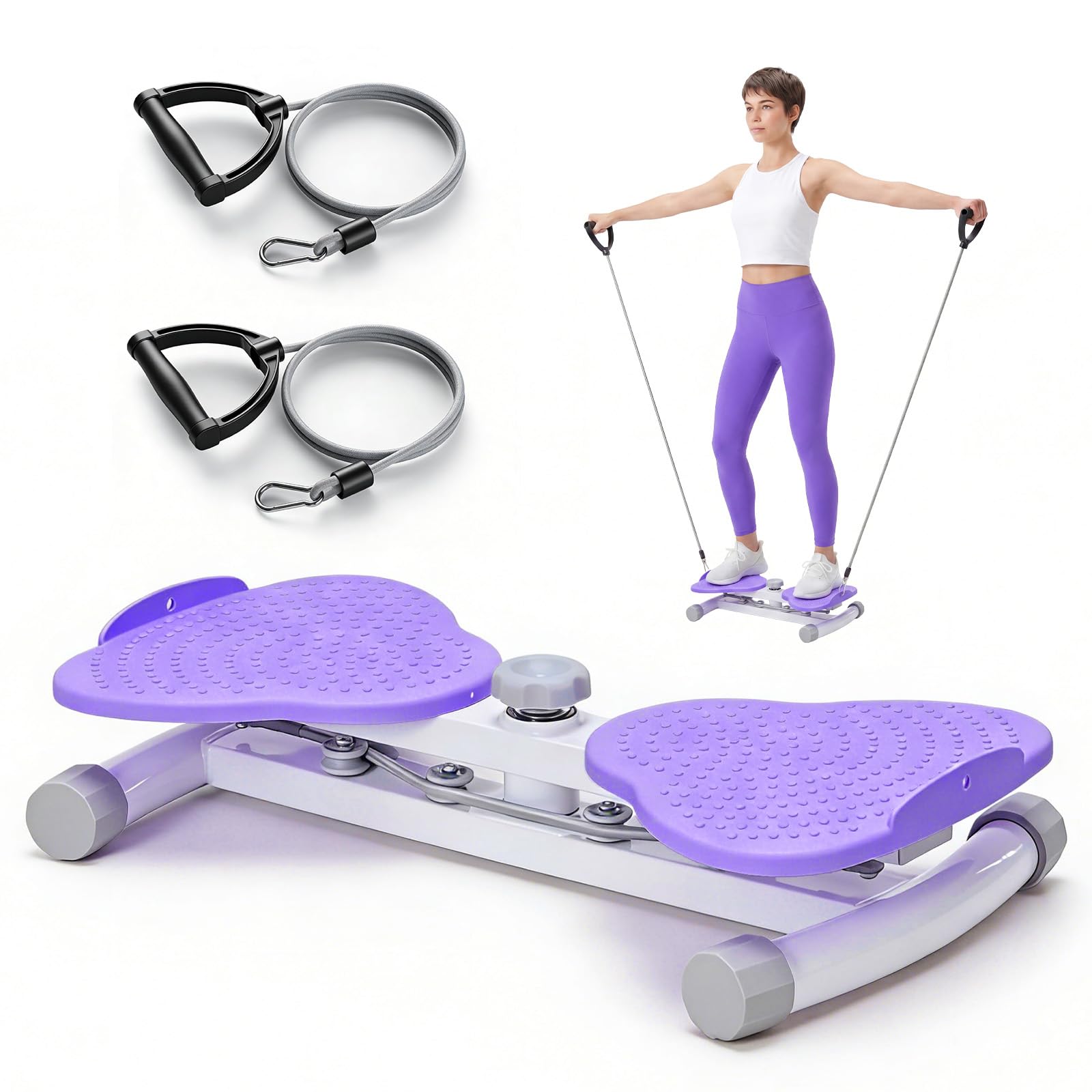
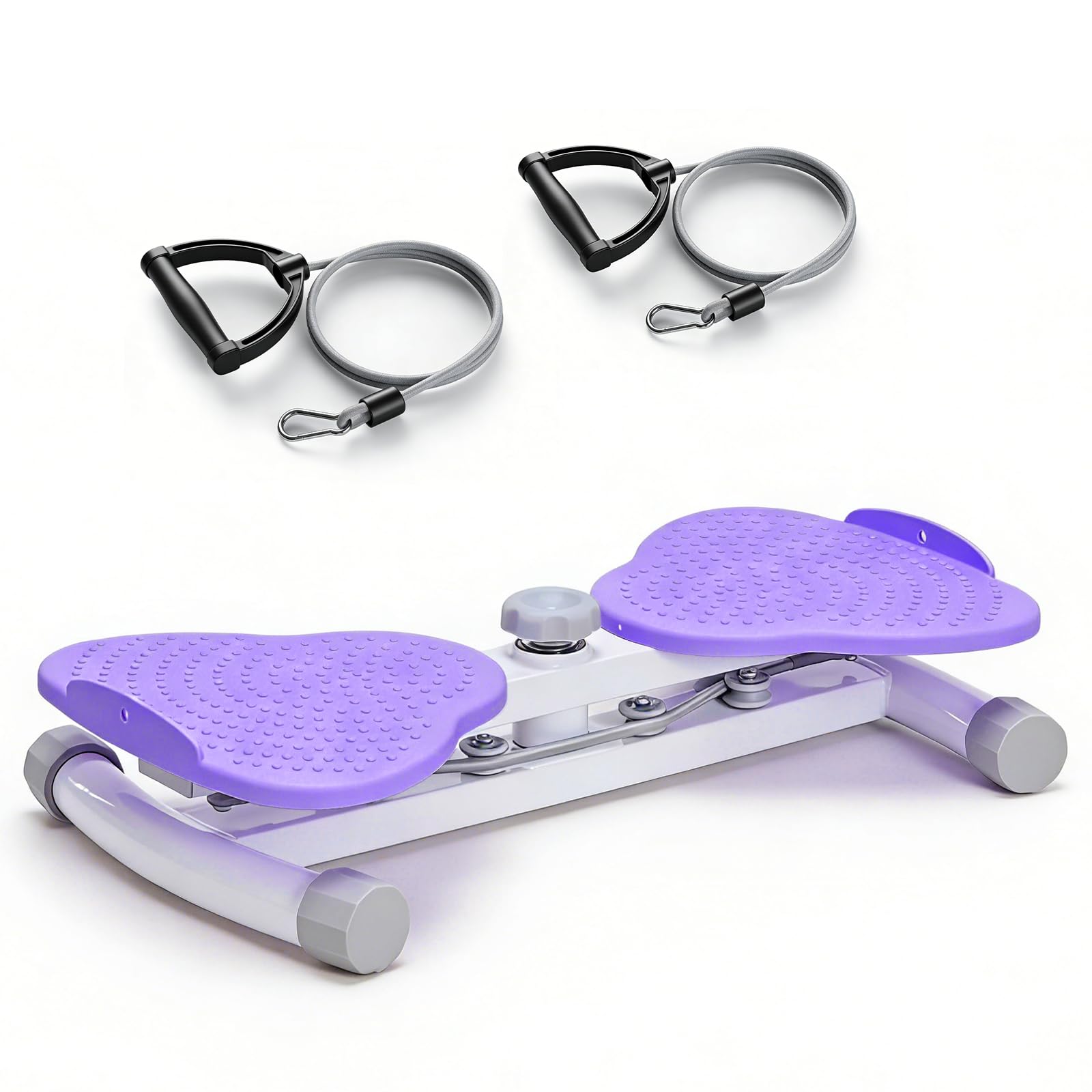
The OLIXIS takes the familiar full-size recipe, dual pedals, a 300-pound rating, and a twisted-rope return, and wraps it in a 7.7-pound body. That is light enough to move with one hand between the living room and a spare bedroom, and the dual side cords give you the option of adding arm movement. The non-slip pads and textured platform are there for the same reason as on the other machines: to keep your feet from sliding when you pick up the pace.

We found the layout straightforward: step on, twist, and let the rope return bring you back. The 300-pound rating gives bigger users a realistic option, and the 7.7-pound body is easier to reposition than the heavier MERACH. The purple frame is a little more playful than the usual black or grey, which is a small thing but one we noticed.

We place the OLIXIS just behind the MERACH because it delivers the same wide stance and 300-pound capacity in a lighter body. The four floor pads keep it planted, and the pull cords add a bit of upper-body variety. It is the full-size board to choose when the essential format matters more than extra features.

Bottom line: The OLIXIS is a solid 300-lb two-pedal twister for buyers who want a full-size stance, pull cords, and a lighter body.

#3

MERACH Waist Twister

MERACH Waist Twister

Wider stance

Our Score 8.6/10
Check Price

Worth Noting

  • Bungee cord can wear out or get noisy
Height
4.72 in
Stance
Dual pedal with rope return
Footprint
21.65 x 12.8 in
Weight Capacity
300 lb
Read the full review

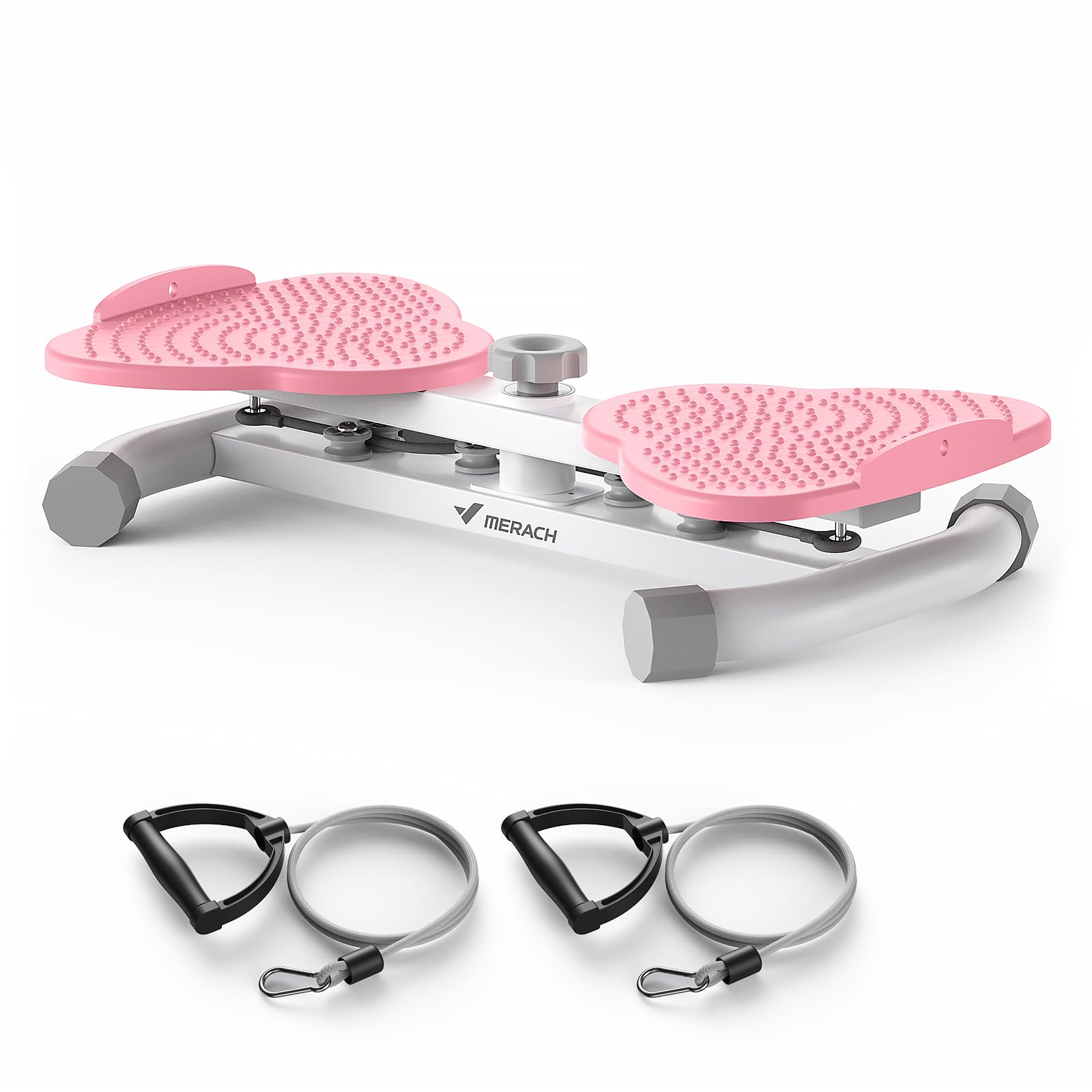
The MERACH earns its place with two pedals and a 300-pound rating. That wider stance is the difference you notice before you even twist: your feet sit apart instead of stacked on one disc, and the textured pedals give a clear place to plant each shoe. We recommend it for anyone who has tried a small disc and felt perched on top of it, and for heavier users who need the extra capacity. The 8.2-pound frame is still light enough to move from room to room.

The motion is different, too. A twisted rope pulls the board back toward center, so the twist has a springy, rebounding rhythm rather than the free spin of a passive disc. We liked that for keeping a steady pace, and the two-pedal layout makes it easier to settle into that rhythm without thinking about balance. The textured surface doubles as a light foot massage, which is a small pleasure between sets.

Assembly is minimal, and the board is ready to use without a tool kit. It is a good fit for a garage or spare room where you have a permanent patch of floor, because this is not a board you tuck into a closet. A one-year warranty is a useful cushion on the moving parts, and the wide pedals remain the main reason to choose it over a flat disc.

Bottom line: For a wider stance or a higher weight limit, the MERACH is the twist board we point to first, with a springy two-pedal rhythm that keeps you moving.

#4

DUMOS Waist Twister

DUMOS Waist Twister

Budget full-size

Our Score 8.4/10
Check Price

Worth Noting

  • Tension band can wear through
Base
Four non-slip pads
Stance
Dual pedal
Pull Cords
Dual side cords
Weight Capacity
300 lb
Read the full review

Full-size two-pedal twisters tend to sit at the premium end of this group, so the DUMOS stands out by offering the same basic layout for less. The 300-pound rating is the headline, and the dual pedals give you a shoulder-width stance instead of a single disc under both feet. Dual side pull cords add a light upper-body option, and the four non-slip pads under the base are there to keep the board from walking across the floor.

We appreciated the details that make it feel less like a bare-bones purchase: the textured platform, the foot-massage bumps, and the twin pull cords. The twisted-rope return gives the board a controlled back-and-forth instead of a free spin, which suits someone who wants a guided rhythm. It is not the quietest design in this group, though; the return mechanism can make itself heard, especially on a hard floor.

Where it lands for us is as a starter board with full-size ambitions. It gives you the wide stance, the 300-pound capacity, and the pull cords without asking you to commit to the top of the market; the workout you get is the same low-impact twist. The four floor pads are a small detail that makes it feel more planted than the price suggests.

Bottom line: The DUMOS is the budget route to a full-size two-pedal twister, with a 300-lb rating, a wide stance, and pull cords for light upper-body work.

#5

RONAI Waist Twister

RONAI Waist Twister

Tracked workouts

Our Score 8.0/10
Check Price

Worth Noting

  • Band resistance is light for experienced users
Dimensions
21.3 x 5.1 x 13.6 in
Weight Capacity
300 lb
Workout Display
Time, reps, calories
Resistance Bands
Four included
Read the full review

A counter and four resistance bands turn the RONAI from a simple twister into a small home circuit. The display tracks time, reps, and estimated calories, while the dual pedals and 300-pound rating keep the base format familiar. The bands come with handles and are split into two lighter and two stronger options, so you can add arm and shoulder movement without picking up a separate set of weights.

We recommend it for someone who needs a nudge to keep going. Seeing a rep count climb is a surprisingly effective motivator, and the four bands give you something to do with your arms besides hold on. The display is easy to ignore if you just want to twist, which is a point in its favor. The dual pedals still give you the wide stance that makes the basic motion feel stable.

The board is a full-size machine, so it needs a dedicated corner rather than a slot in a closet. We noted the handles are easy to pick up and put down between sets, which matters more than the number of bands on the box. This is the pick for someone who likes feedback and a little variety, not for someone who wants the simplest possible disc.

Bottom line: The RONAI suits anyone who wants their twist session to count reps and add upper-body movement without a separate machine.

#6

KYTO Waist Twister

KYTO Waist Twister

Small spaces

Our Score 8.0/10
Check Price

Worth Noting

  • Small platform can crowd larger feet
Counter
Twist count and time
Assembly
None required
Weight Capacity
220 lb
Platform Diameter
10.5 in
Read the full review

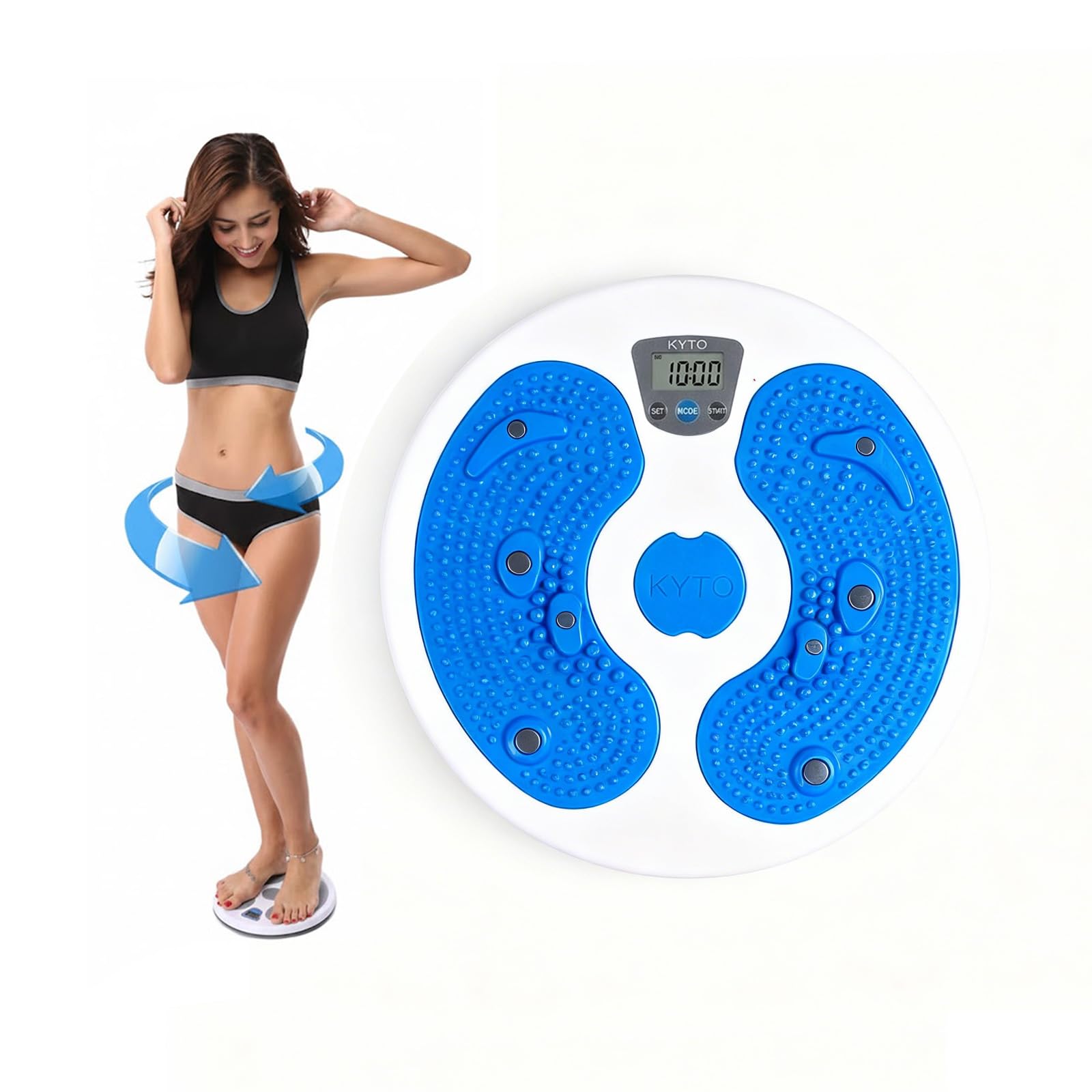
At 10.5 inches across, the KYTO is the smallest board we recommend, and that is the point. It slips under a desk or stands beside a bookshelf, weighs about as much as a laptop, and needs no assembly, so there is less friction between deciding to twist and actually doing it. We recommend it for apartments, bedrooms, and anyone who wants a board they can put away without rearranging furniture.

The built-in counter tracks twists and time, which is more useful on a small board than it sounds; the platform is compact enough that a short set can feel like a lot, and the number gives you a stopping point. The 360-degree rotation is manual, so you control the speed and range. The 220-pound limit is the main boundary; if you are near it, step up to a 300-pound board.

What we like most is that it does not pretend to be a full gym. It is a small, low-impact tool for a few minutes of twisting, and the counter makes those minutes feel accounted for. The absence of setup is the underrated part: you can start using it before you talk yourself out of it.

Bottom line: The KYTO is the one to grab when floor space is tight: a 10.5-inch board that stows easily and still counts your twists.

#7

Karimonox Counter Twister

Karimonox Counter Twister

Counter-led training

Our Score 8.0/10
Check Price

Worth Noting

Height
3.9 in
Counter
Time, reps, calories
Footprint
20.5 x 12.6 in
Weight Capacity
300 lb
Read the full review

A counter on a twist board is a small thing until you are trying to build a daily habit. The Karimonox puts time, reps, and estimated calories on the board, then wraps that around a 300-pound dual-pedal frame that measures 20.5 by 12.6 inches. That is compact for a two-pedal machine, though it is still a floor-standing piece rather than a disc you tuck in a closet.

The board itself is light at 7.1 pounds, and the anti-slip pads and textured footbeds do the basic work of keeping you planted. We appreciated that the counter is built in rather than requiring a phone or a separate app; the less setup there is, the more likely the board is to get used. The 3.9-inch height keeps it low enough to step onto without a production.

The motion is the familiar rope-return twist, which gives a controlled back-and-forth rather than a free spin. That suits the counter: you can settle into a rhythm and watch the reps add up. It is not the board for someone who wants a heavy resistance workout; the frame and pedals are built for low-impact twisting, and the counter is the main feature that separates it from the simpler machines here.

The Karimonox makes the most sense in a bedroom or office where the board stays out and the counter catches your eye. The 300-pound capacity covers bigger users, and the 20.5-inch width is narrow enough for a small floor plan. We like it as a nudge, not as a centerpiece.

Bottom line: The Karimonox Counter Twister is for the buyer who wants reps and calories on a full-size board that still fits a small room; it is a useful niche, not the default.

How We Tested the Twist Boards

We started by gathering every twist board we could find from major retailers and filtering for the basics: a textured, non-slip top, a deck wide enough for a men's size 11 shoe, a clearly stated weight limit, and a manufacturer who says anything at all about the bearing inside. That cut a much longer list down to 14 boards, which we bought ourselves and rotated through for three months.

Testing happened where these things actually live — a living room rug during a TV episode, kitchen tile while the kettle boiled, a home office floor between calls. Each tester did five- to ten-minute sessions barefoot, in socks, and in sneakers, then repeated it at speed. We noted whether the disc drifted across the floor, whether the surface gripped or rubbed, and whether the rotation still felt smooth after a few weeks of daily use.

Noise got its own pass. We twisted on bare hardwood and listened for squeaks, clicks, and grinding, then checked again a month in to hear whether anything had loosened. Durability meant flipping each board over to look for hairline cracks, worn bearings, and grip pads that had started sliding. We also paid attention to resistance: a free-spinning disc is easy to start but hard to control, while a tighter one feels like actual work.

For value, we set the price of each board against how solid it felt underfoot, how much room it gave our stance, and whether it came with anything extra like resistance bands or a printed routine. Several boards in the midrange did everything the priciest ones did, and a few of the cheapest felt fine on day one and gritty by week six.

How to Choose Twist Boards

Choose a disc or a two-pedal machine

A flat disc is the simplest object in this category: you stand on it and rotate against your own momentum. It stores easily and has no return cord to wear, but it asks more of your balance because your feet are close together. A two-pedal machine gives you a wider stance and often a springy return, which feels more guided; the trade-off is more floor space and a mechanism to maintain. We recommend starting with the disc if you want low fuss, and the two-pedal layout if you want a more planted stance or a higher weight limit.

Check the weight limit first

Twist boards are rated for a maximum user weight, and the spread here is wide: the smallest boards top out around 200 to 220 pounds, while the full-size machines commonly list 300 pounds. The figure is not a suggestion; it is the load the frame and bearings are built around. If two people in the house will use it, size for the heavier one. The Figure Trimmer XL is a good example of a board that is roomy but still limited to 220 pounds, while the MERACH and several dual-pedal picks carry 300-pound ratings. We put capacity ahead of features because it decides whether the board is suitable at all.

Match the platform to your feet and floor

Platform size is a comfort issue, not a vanity spec. A 10.5-inch disc is easy to store but can leave larger feet hanging over the edge; a 14-inch disc gives more room without taking over the room. Two-pedal boards trade diameter for a wider stance, which some people find easier to balance on. Texture matters too: raised massage nodes can be pleasant through socks or bare feet, but they are not a substitute for a non-slip base. We look for a platform that leaves a little margin around the foot, then check the floor: a level, hard surface and enough clearance to step on and off matter more than a polished finish.

Decide whether you need resistance or a counter

Passive discs rely on your body weight and movement; bands and counters add structure but also complexity. A counter is useful if you like turning exercise into a number you can beat, and resistance bands can add light upper-body work to a waist-focused movement. Neither turns a twist board into a strength machine. The RONAI is the clearest example of the feature-heavy approach, with a display and four bands, while the Daiwa keeps things to a disc and a textured surface. We suggest buying the simplest version that matches your habit: if you will not check a display, do not pay for one.

Plan for noise, storage, and the wear part

Rope-return machines have a bungee or tension cord inside, and that cord is the part most likely to stretch, squeak, or fail first. A passive disc has fewer moving parts and usually less to go wrong, but it also gives you no springy assist. A model described as quiet is only a starting point; hard floors amplify mechanical noise, and a mat can help. Storage is the other daily decision: a 10.5-inch disc can live in a closet, while a 20-inch two-pedal board needs a dedicated corner. We treat the moving parts as consumables on budget machines and choose accordingly.

Frequently Asked Questions

Final Verdict

We recommend starting with the Daiwa Figure Trimmer XL. Its 14-inch disc is roomy enough to feel secure, low enough to leave out, and simple enough that the only thing you have to maintain is the habit. The 220-pound limit is the deciding exception: above that, choose the MERACH, whose two-pedal, 300-pound build is the better fit. If you want a counter and light bands, the RONAI makes more sense, and the KYTO is the small-space answer. For most homes, though, the simple, no-bungee disc is the one that earns its floor space.