Accessories

Best Plyo Boxes of 2026

A plyo box looks like the simplest thing you'll ever buy: one cube, three heights, no moving parts. That's exactly why the bad ones are so irritating. Every box splits the difference between two things you can't fully have at once — heavy enough to stay planted when you land, light enough to drag out of a closet — and the cheap ones split it badly, wobbling on a level floor or skating mid-jump. A good one fixes all of that: you jump, you land, nothing shifts.

I've jumped on a lot of these over the years — gym floors, a concrete basement slab, once a rug that turned out to be a terrible idea. Over the past eight months, my team and I put 11 boxes through that kind of use, and the pattern held. One thing new buyers don't expect: the stated height and the height you actually get can differ by half an inch once padding is in play, which matters when you're stepping up in 6-inch increments. The boxes below are the ones I'd land on again.

#1

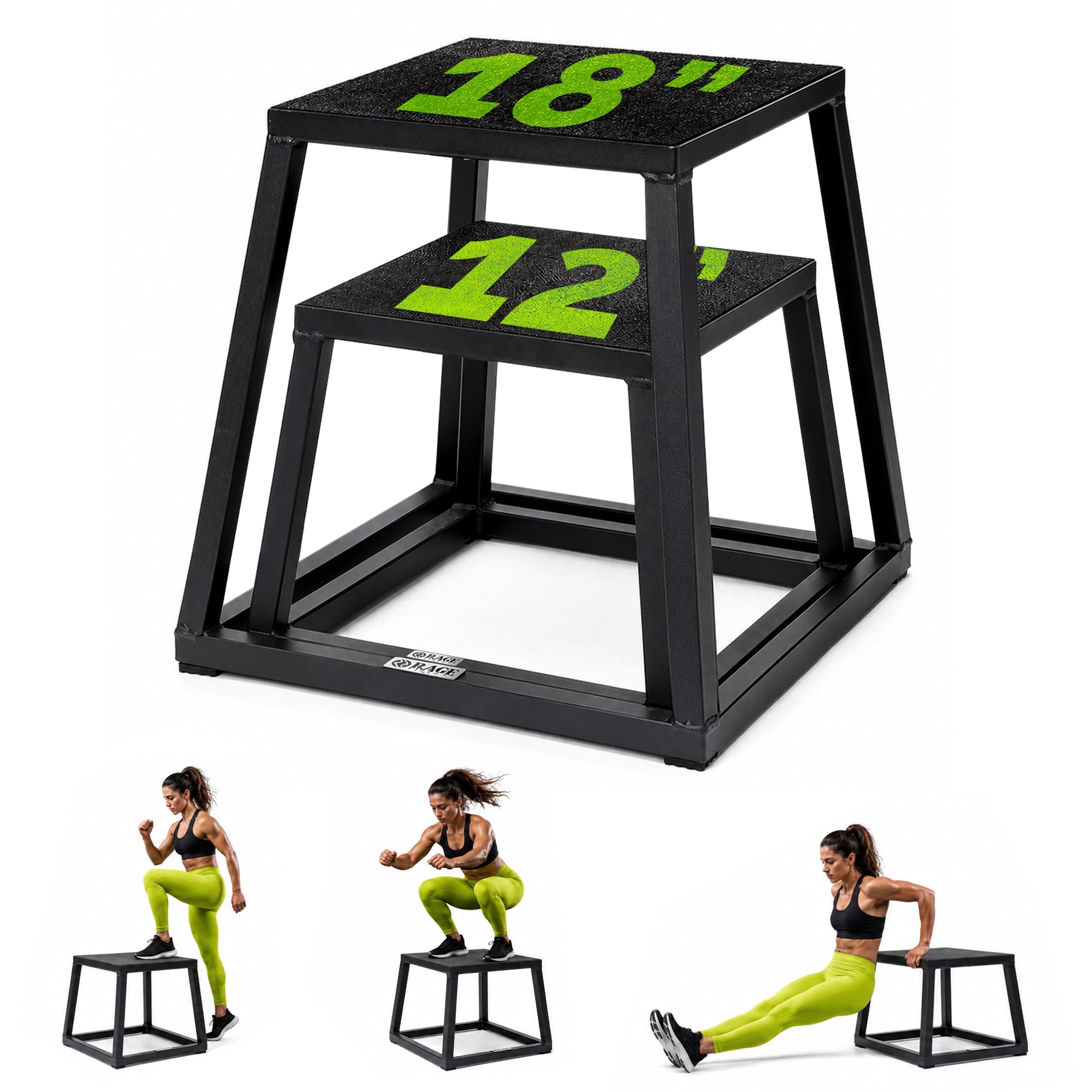
Rage Fitness Steel Plyo Box

Top Pick
Rage Fitness Steel Plyo Box

Step-ups

Our Score 9.6/10
Check Price

Worth Noting

  • Small 12.5-inch top
  • Harder landing than foam
Height
12 in
Top Size
12.5 x 12.5 in
Item Weight
12 lb
Weight Limit
560 lb
Read the full review

A single fixed 12-inch height sounds like a limitation, and it is. The Rage won't rotate into a 20- or 24-inch box, so it can't be the only plyo box for someone chasing a taller jump.

What it does, it does with almost no fuss: the welded steel frame arrives assembled, the rubber top and feet keep it from walking across the floor, and the 560-pound rating is the highest here. We kept coming back to it for step-ups, dips, and low jumps because there is nothing to tighten or unfold before a set.

At 12 pounds, it tucks under a bench and comes out without a grunt. The rubber top is the part to watch: if an edge starts to lift, stop using the box until it sits flat again. We used it as a dip station and a step-up platform more than a jump target, and that is where it makes the most sense.

Bottom line: The Rage is the no-fuss steel box we reach for when the session is step-ups, dips, and low jumps: one 12-inch height, no assembly, and a very high weight rating.

#2

Retrospec Leap Plyo Box

Retrospec Leap Plyo Box

Compact step-ups

Our Score 9.6/10
Check Price

Worth Noting

  • Hard steel landing surface
Height
18 in
Assembly
None
Material
Steel
Weight Limit
350 lb
Read the full review

The Retrospec arrives as a single welded steel frame with no assembly required. The 18-by-18-inch top is a square landing area, and the tapered base gives it a wider footprint than the top.

At 18 inches high, it sits between the small wooden boxes and the big 24-inch platforms. That fixed height is the catch: you cannot rotate it to a lower setting for a nervous beginner or a higher one for an advanced jumper. What you get instead is a box that stays put, with a 350-pound rating and rubber stoppers that keep it from sliding on a garage floor.

For step-ups, split squats, and low box jumps, the no-assembly frame and stable base are more useful than another height option. It is the one we keep by the rack for quick sets, and the one we hand someone who wants a box that feels solid without a build project. The 18-inch height is low enough to step onto without a run-up, which is why it works for physical therapy-style step-downs.

Bottom line: The Retrospec is the steel 18-inch box we recommend for step-ups and compact home gyms; it arrives assembled and never asks you to find a screwdriver.

#3

Rep Plyometric Wood Jump Box

Rep Plyometric Wood Jump Box

High jumpers

Our Score 9.4/10
Check Price

Worth Noting

  • 50-pound box is hard to move
Material
3/4-inch plywood
Item Weight
50 lb
Weight Limit
400 lb
Box Dimensions
30 x 24 x 20 in
Read the full review

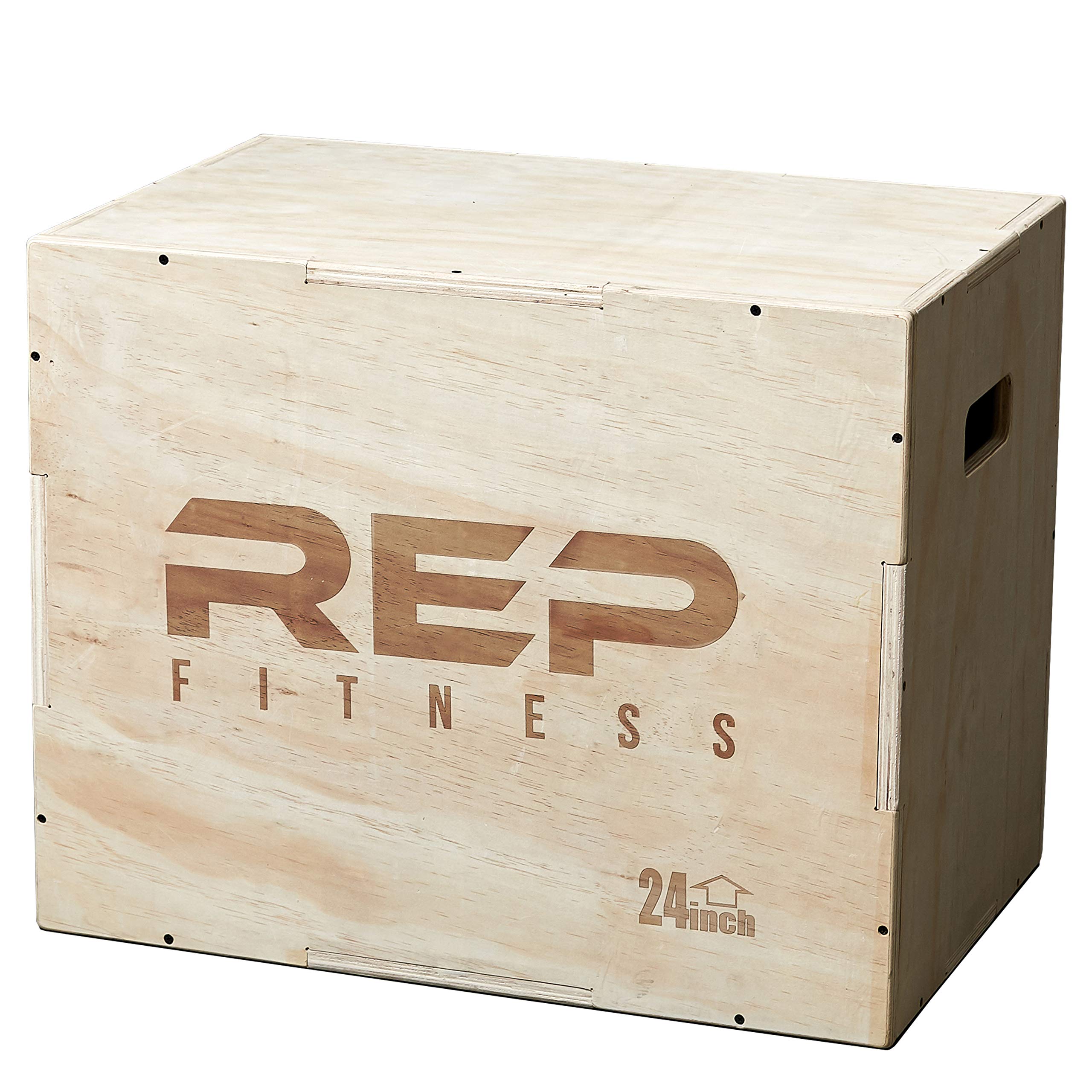
The Rep is the box in this group that keeps going after the small 12/14/16-inch boxes run out of height. Its 30-by-24-by-20-inch frame gives you a 30-inch side for serious jump work, and the 3/4-inch plywood with internal bracing feels like gym furniture rather than a folded-up platform.

We noticed the difference on the tall side: the bigger footprint gives you more room to land, and the interlocking panels keep the box from feeling like a stack of loose boards. The weight is what makes it stay put, and assembly takes a power driver and a clear space on the floor. This is a box for a dedicated gym corner, not one you tuck behind a door.

At 400 pounds, the capacity is high enough for most home lifters, and the sanded edges and pre-drilled holes make the finished box feel considered. The trade is space: a 30-inch side plus your landing zone needs real ceiling height and floor room. In a garage gym with the clearance, that is a fair exchange. The finish is smooth enough that brushing against it between sets is not a worry.

Bottom line: Choose the Rep if you are already jumping high or want one box that can grow past 24 inches; it is heavy, expensive, and built like gym furniture.

#4

CAP Barbell 3-in-1 Plyo Box

CAP Barbell 3-in-1 Plyo Box

Budget wood

Our Score 9.4/10
Check Price

Worth Noting

  • 300-pound weight limit
  • Small landing surface
Material
Engineered wood
Item Weight
15.4 lb
Weight Limit
300 lb
Height Options
12/14/16 in
Read the full review

The CAP is the box we reach for when the budget is tight and the gym corner is tighter. It delivers the familiar three-height wooden layout, with 12-, 14-, and 16-inch sides, in a frame that weighs just over 15 pounds and has built-in handles.

Assembly is straightforward: the panels interlock, the screws are countersunk, and the finished box feels more solid than the price suggests. The included hex wrench is the weak link; use a driver with a bit that fits, and the job stops being a forearm workout.

What makes it worth a place is the combination of three heights, a compact footprint, and a surface that grips without feeling like sandpaper. The frame feels planted when you step on it, and the handles make it easy to shift between exercises. For a lighter lifter, a teen, or a step-up-focused home gym, it covers the basics neatly.

Bottom line: The CAP is our budget wood pick: three heights in a compact frame, with a 300-pound rating that suits smaller home-gym users and step-up work.

#5

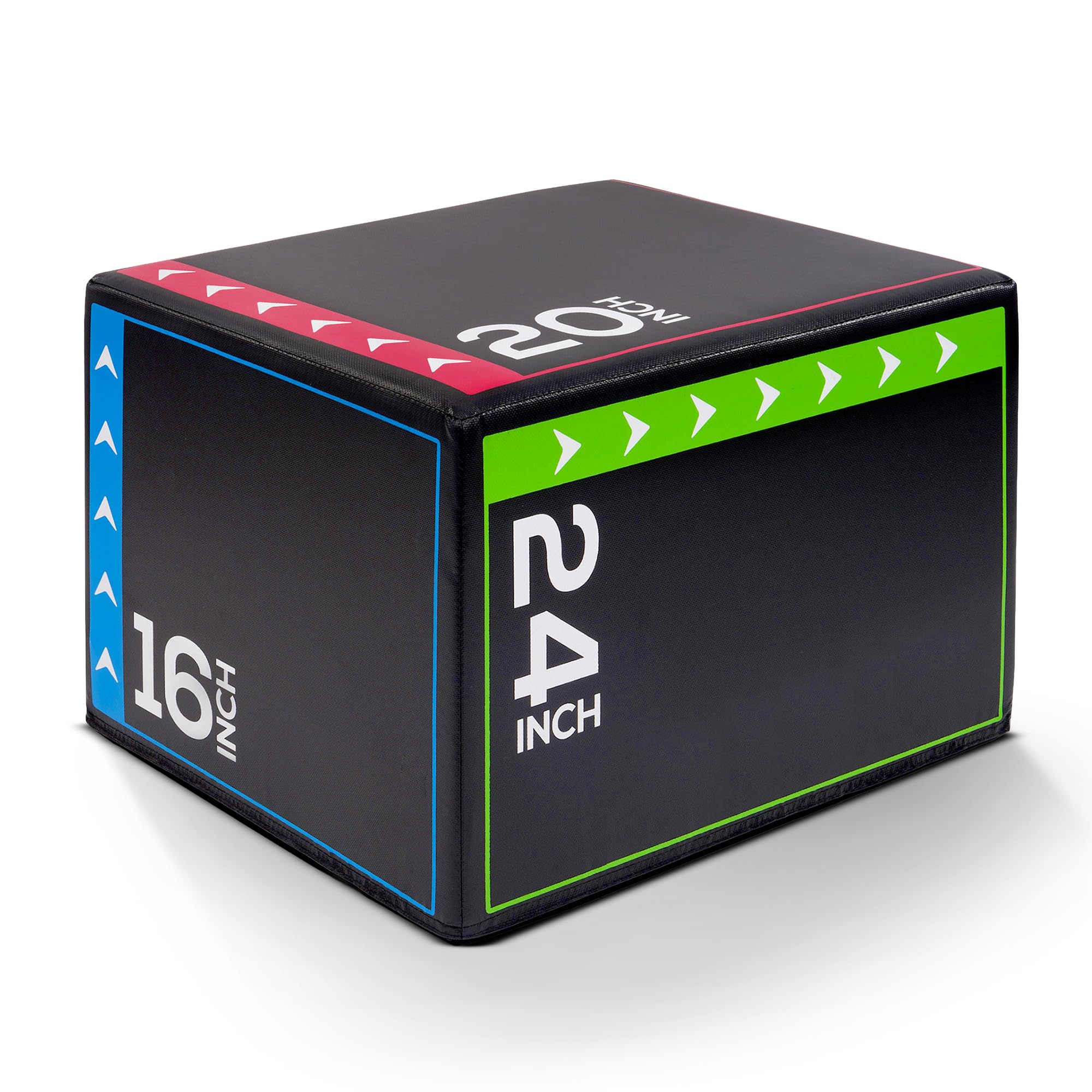
papababe 3-in-1 Foam Jump Box

papababe 3-in-1 Foam Jump Box

Low-height training

Our Score 9.4/10
Check Price

Worth Noting

  • Tallest side is 16 inches
Surface
1000D Oxford
Material
Heavy foam
Item Weight
15 lb
Height Options
12/14/16 in
Read the full review

The papababe is the smallest box in this group, and that is the point. It gives you three foam sides for low jumps, step-ups, and conditioning, with a soft surface that takes the sting out of a missed landing.

The 1000D Oxford cover is tougher than the fabric on most foam boxes, and it wipes down after a sweaty session. At 15 pounds, it is easy to carry from the garage to the yard, and the three sides give a beginner a way to progress without buying another box.

The foam build is the trade. It is softer underfoot than wood, and a light box can move if you land near an edge, so keep the landing centered and use it on a non-slip surface. That is not a dealbreaker for low jumps, but it is why this one stays in the beginner and step-up lane.

We appreciate the confidence it gives someone who is not ready for a wooden box. It is not the box you graduate to, but it is a useful first step, especially in a small space where a bigger box is in the way. For low jumps and step-ups, the softness is the feature, not a compromise.

Bottom line: The papababe is a short foam box for low jumps, step-ups, and anyone who wants a softer introduction to plyometrics; it is not the box for advanced jumping.

#6

BalanceFrom 3-in-1 Foam Plyo Box

BalanceFrom 3-in-1 Foam Plyo Box

Home gym jumps

Our Score 9.2/10
Check Price

Worth Noting

Material
High-density foam
Item Weight
10 lb
Weight Limit
250 lb
Height Options
3-in-1
Read the full review

The BalanceFrom is the box we recommend first to a home-gym athlete who wants to jump without dreading the edge. Its high-density foam has enough give to soften a clipped landing, and the textured cover gives shoes something to grip. That combination makes the tallest side feel less like a dare, which is exactly what a box you'll use several times a week should do.

Three sides give three heights, so the box grows with you from step-ups to full jumps. At 10 pounds, it is light enough to move from the garage to the driveway, and the footprint is small enough for a corner. We found the foam firm enough to land on, not so soft that it swallowed the push-off, and the non-slip surface stayed put during step-ups with dumbbells.

The limit is the 250-pound weight rating. That covers most home athletes, but a heavier jumper should look at the steel or high-capacity wood boxes here; the foam also will not feel as planted as a 50-pound plywood box. What settled it for us is the balance: forgiving enough for beginners, stable enough for regular conditioning, and far easier to live with in a small gym than a heavy wooden cube. It is the box we leave out between sets rather than folding away, because it takes up little more floor than a step stool.

Bottom line: We recommend the BalanceFrom as the default home-gym plyo box: three heights, a forgiving foam landing, and enough stability for most jumpers.

#7

Yes4All Soft-Padded Plyo Box

Yes4All Soft-Padded Plyo Box

Beginner jumps

Our Score 9.2/10
Check Price

Worth Noting

  • Compact 16 x 14-inch top
  • Firmer padding than expected
Material
Wood core, EVA foam, vinyl
Item Weight
12.1 lb
Weight Limit
450 lb
Height Options
12/14/16 in
Read the full review

The Yes4All soft-padded box is the one we choose when shin fear is the thing keeping someone from jumping. The landing surface is a vinyl-wrapped layer of EVA foam over a wooden core, which takes the hard edge off a missed jump without turning the box into a marshmallow.

The 12/14/16-inch layout is the right starting range for most home gyms, and the 450-pound rating gives it more headroom than the foam-only boxes. At 12.1 pounds, it is easy to move, and the PVC cover wipes clean after a sweaty session. The non-slip surface is the detail we appreciated most when stepping on and off with dumbbells.

The trade is that this is a step-up and beginner box more than a landing pad for advanced bounding. On a slick floor, put a mat underneath, because the light build can slide when you push off hard. The padding is there to protect a mistake, not to make the box feel like a crash mat.

Bottom line: The Yes4All soft-padded box is the one we choose when shin fear is the thing keeping someone from jumping; it is forgiving, grippy, and still rated to 450 pounds.

#8

Yes4All Wooden Plyo Box

Yes4All Wooden Plyo Box

Tight budgets

Our Score 9.2/10
Check Price

Worth Noting

  • Maxes out at 16 inches
  • Compact landing top
Material
Wood
Item Weight
14 lb
Weight Limit
450 lb
Height Options
12/14/16 in
Read the full review

The Yes4All wooden box is the budget route into a proper three-height wood platform. Three sides cover beginner jumps and step-ups, and the 450-pound rating is high for the money.

Assembly is the part to plan for. The panels are pre-drilled and the instructions are clear, but the included hardware is the weak link; check the screw bag before you start, and have a few spares on hand. With a driver, the box goes together quickly and feels solid once everything is tight.

The sanded edges and built-in handles are small touches that make it easier to live with, and the wooden surface gives you a firmer landing than foam. The frame feels solid when the screws are tight, and the handles help when you rotate it between heights.

For a first wooden box, it earns its place: the three heights are useful, the frame feels solid when assembled, and the box stashes easily against a wall. The buyer who should look elsewhere is the one who wants a wide landing zone or a box that arrives ready to jump on.

Bottom line: The Yes4All wooden 3-in-1 is a budget way into a proper wood box, as long as you are comfortable assembling it and staying under 450 pounds.

How We Tested 11 Plyo Boxes Over Eight Months

We started with roughly 40 boxes sold in the U.S. and pared the list by specs: stated weight capacity, actual footprint and height, construction, assembly format, and warranty. Anything with no published dimensions or a top surface that looked slick in photos got cut. That left 11 — three-height wooden boxes, stackable foam, and a couple of steel options.

Flat-pack units I assembled alone with the included tools, timing the build and noting whether the pilot holes lined up, whether the screws bit cleanly without stripping, and whether the finished box sat flat on a concrete basement floor. A box that rocks on a level slab will rock under you. We re-checked every fastener at the one-month and six-month marks.

The boxes lived in a basement gym and a garage, and we rotated them onto carpet and rubber matting to see how the surface changed things. Sessions included box jumps, step-ups, elevated push-ups, and seated dips from people ranging from about 120 to 220 pounds. On every landing we watched for slide, felt whether the top grabbed a sneaker sole or went slick with sweat, and listened for the hollow thump that means the platform is flexing. We also weighed and carried each one up a flight of stairs, since a stable box you can't move ends up permanently in the way.

At the end of eight months we went back over every joint, edge, and corner for splintering, foam crumbling, vinyl splitting, and screws that had wallowed out their holes. Padding got the fingernail test on arrival and again at the finish, and odor was checked right out of the box and again after a week shut in a small room, because some foam boxes off-gas. Value we judged by how a box looked after eight months of landings, not on day one.

How to Choose Plyo Boxes

Start With the Height Range

A single-height steel box is simple and stable, but it locks you into one jump height. A 3-in-1 box gives you three sides to rotate, which is the easier way to progress from step-ups to 20- or 24-inch jumps. The small wooden and foam boxes here typically top out at 16 inches; the large boxes go to 24 or 30.

If you are new to jumping, a 12/14/16-inch box leaves room to learn. If you are already clearing 24 inches, buy the larger footprint instead of stacking boxes or lining up a wobbly tower of platforms.

Match the Landing Surface to Your Nerves

Foam and padded boxes are the forgiving choice: a missed jump is less likely to bark your shin, and the softer surface makes the box less intimidating. The trade is weight and firmness; a light foam box can shift on a slick floor, and the tallest side may feel less planted than wood.

Wood gives a firmer, more predictable landing and usually a higher weight rating, while steel is the most bombproof and the least forgiving. Choose foam for confidence and portability, wood for a home gym that stays put, steel for step-ups and low jumps.

Check the Weight Rating and the Top

Height gets the attention, but the rated capacity and the size of the landing top decide whether the box suits you. Capacities in this group run from 250 to 560 pounds; if you are near the top of a box's rating, move up to a sturdier model.

The top matters too: a 12.5-inch steel top asks for precise foot placement, while an 18-inch or larger top gives you more room to land. Measure your shoe spread and your available floor space before you order.

Decide How Much Assembly You Will Tolerate

Steel boxes often arrive welded and ready to use; wooden boxes usually need pre-drilled panels screwed together, and some need a power driver to seat the screws cleanly. If the box will live in a garage and rarely move, assembly is a one-time cost.

If you need to move it between rooms or store it against a wall, pay attention to weight as well: a 50-pound wooden box is stable but awkward, while a 10- to 15-pound foam box is easy to shift. We prioritize the box that will actually get used, not the one that stays folded against the wall.

Frequently Asked Questions

Final Verdict

Most home gyms should start with the BalanceFrom 3-in-1 foam box. It gives you three heights, a forgiving landing surface, and enough stability for regular jump and step-up sessions, with the 250-pound capacity as the one limit to check first.

If you are already jumping high, the Rep's 30-inch side and larger footprint are worth the extra weight and cost. If you want steel and no assembly, the Rage is the better fit for step-ups and low jumps.