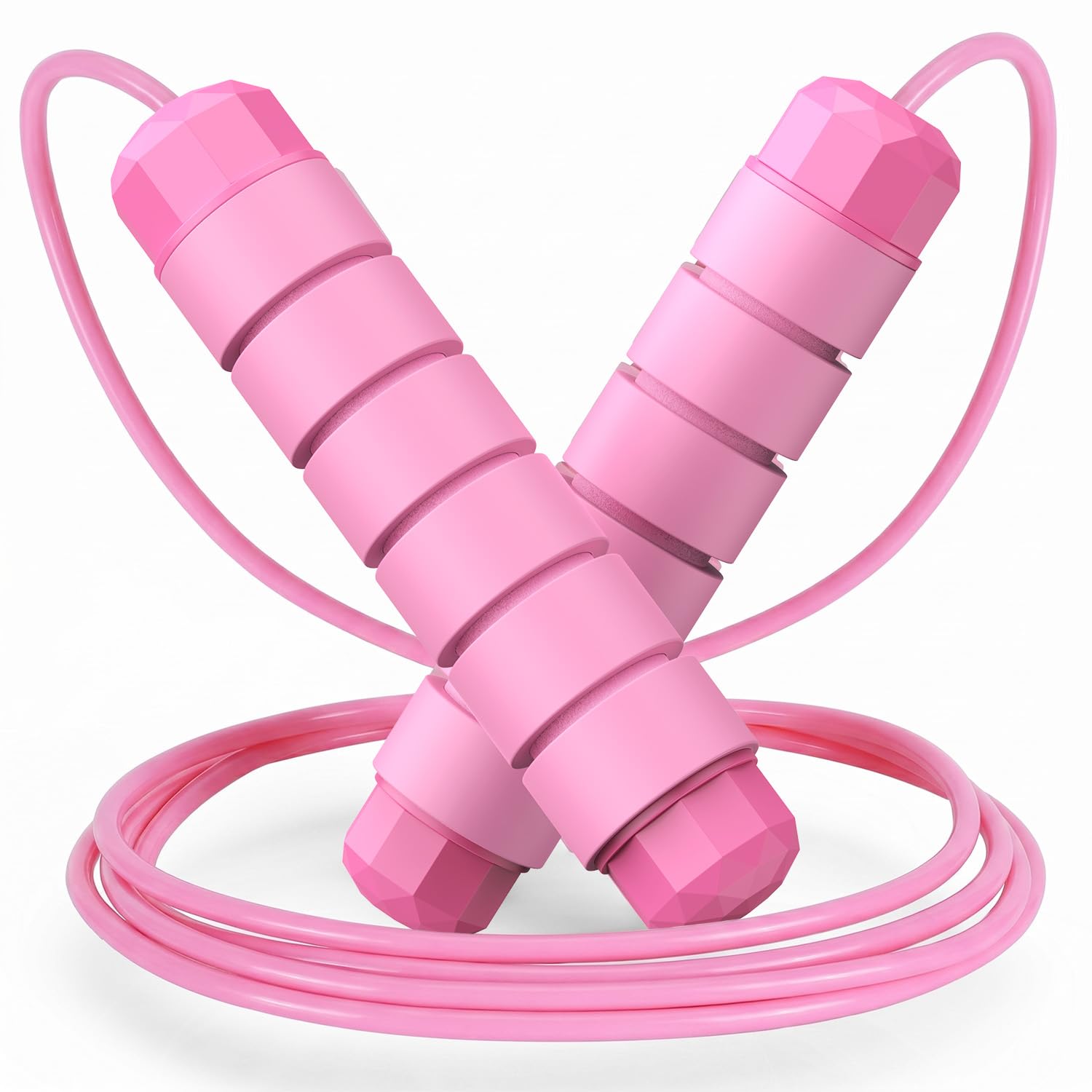
Accessories

Best Jump Ropes for Beginners of 2026

A jump rope looks like the simplest piece of fitness gear you can buy—until you're standing in the driveway with a cord that's too long, slapping your shins on every rotation. The problem isn't coordination. It's a rope that wasn't sized for your height, a cord too light to feel, or handles that go slick once your palms sweat. A good beginner rope fixes all three: it shortens to your measurement, gives you enough weight to feel the arc, and stays put in your hands while you learn the timing.

Over the past three months, we tested 14 beginner-friendly ropes. The best ones had a cord you can feel moving, an adjustment that doesn't slip, and handles that stay grippy as your hands warm up. I still reach for a slightly weighted cord with a real handle—it makes the rhythm easier to find. Most beginners buy a speed rope because it looks serious; those thin cables are unforgiving while you're learning the bounce. The picks below are what I'd hand to a friend who's never jumped rope.

#1

Elite Jumps 6mm PVC Jump Rope

Top Pick
Elite Jumps 6mm PVC Jump Rope

Rough outdoor surfaces

Our Score 9.4/10
Check Price

Worth Noting

  • Stiff cord takes time to soften
  • Plain plastic handles offer little cushioning
Use
Indoor and outdoor
Cord
6mm PVC with inner cord
Handle
5-inch plastic
Length
10 feet
Read the full review

Thin speed cables are wonderful until you take one onto a driveway. The Elite Jumps 6mm PVC is built for that less forgiving setting: the cord is thick, PVC-coated, and wrapped around an inner string, so it has more presence than a bare cable and a better chance of surviving rough concrete. The 10-foot length gives taller jumpers room, and the five-inch plastic handles leave plenty of space for a full hand.

That thickness is why it earns a runner-up spot. The extra mass gives the rope a steadier arc than a thin cable, which helps when you are still learning to time the landing; it also makes the rope feel more deliberate on outdoor surfaces. We found the 10-foot length generous without being unwieldy once adjusted. It is not a delicate speed tool, and that is the point.

This is a working rope rather than a finesse rope. The 6mm cord is happiest with basic jumps, crossovers, and steady cardio; for fast double-unders, a thinner cable makes more sense. If your practice space is a garage, patio, or rough gym floor, the extra bulk is a fair trade for the durability.

Bottom line: Choose the Elite Jumps 6mm PVC if your jumping happens outdoors or on rough floors; the thick cord takes abuse and still gives a steady, readable swing.
#2

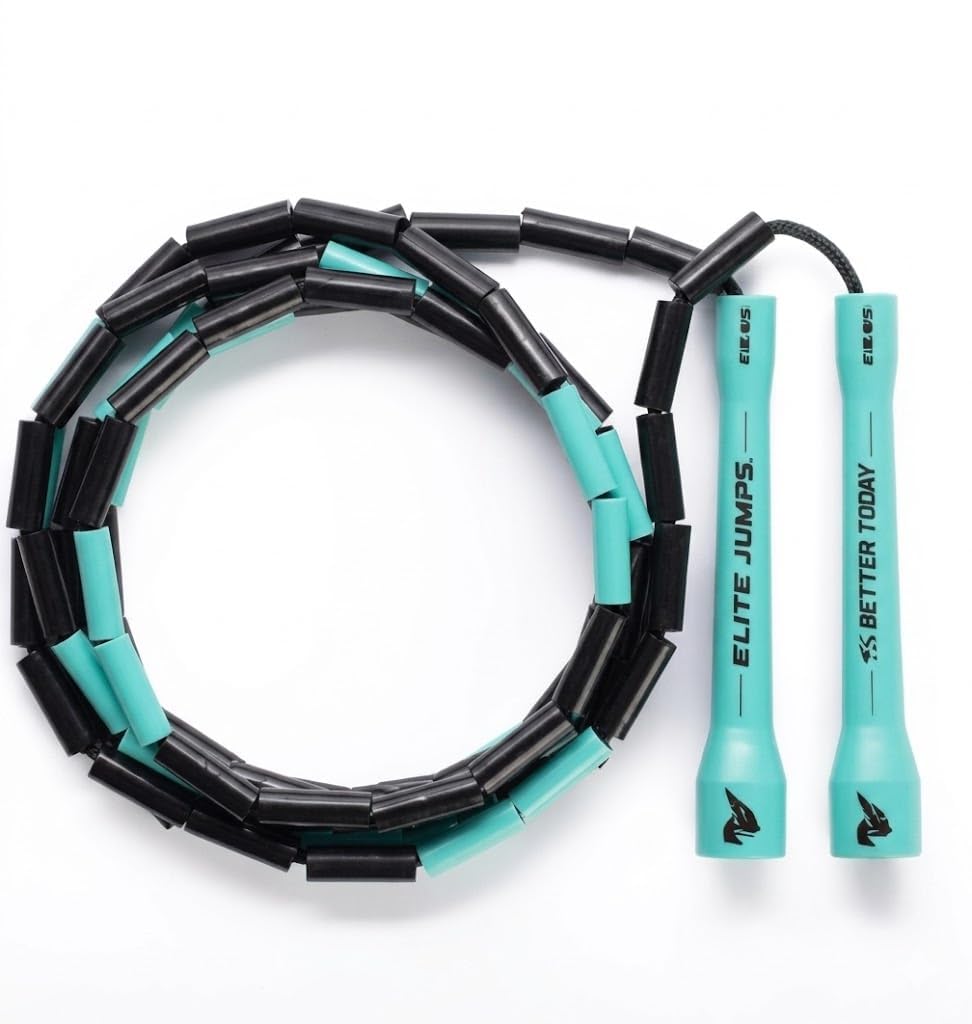
Elite Jumps 1-Inch Beaded Rope

Elite Jumps 1-Inch Beaded Rope

Learning basic jumps

Our Score 9.2/10
Check Price

Worth Noting

  • Premium price for a first rope
  • Bulkier to pack than a cable
Handle
Plastic
Length
10 feet, adjustable
Rope Type
1-inch beaded
Adjustment
Remove beads
Read the full review

A beaded rope is the beginner's metronome. The 1-inch beads give the rope enough weight to hold its shape and enough of a tick against the floor to tell you where the rope is without looking down. That feedback is why the Elite Jumps beaded rope is our top pick: it makes the first few weeks of practice feel less like guesswork. The 10-foot length is adjusted by removing beads, so it can fit a taller adult or a child, though it arrives long and needs a deliberate setup.

The slower feel is the point. A thin speed cable can whip through the air faster than a beginner can time the landing, while the beads make the arc visible and audible. The shatter-resistant beads and sturdy cord give it a more substantial feel than the cheapest beaded ropes here; the plastic handles are plain but comfortable for short sets. We also appreciate that the rope can be shortened without cutting it, which matters if more than one person in the house will use it.

It is not the rope for double-unders or sprint-style intervals; the beads are too slow and too chunky for that kind of work. For learning basic jumps, warm-ups, and steady cardio, the trade is worth it. If you want one rope that can teach rhythm and then live by the door, this is the one we reach for first.

Bottom line: For most beginners, the Elite Jumps beaded rope is the one we hand over first: the beads make the arc easy to feel and the rhythm easier to find.

#3

Leeboom Beaded Jump Rope 3-Pack

Leeboom Beaded Jump Rope 3-Pack

Family use

Our Score 9.2/10
Check Price

Worth Noting

  • May be too short for taller adults
Handle
Textured polypropylene
Length
9.2 feet, adjustable
Pack Size
3 ropes
Rope Type
Soft segmented beads
Read the full review

The Leeboom pack solves a problem you may not know you have until the whole household wants a turn. Three ropes arrive in green, pink, and blue, each with soft segmented beads and a simple plastic handle. The beads are the useful part: they are soft enough that a missed jump stings less than a hard plastic segmented rope, and the gentle tick gives a beginner something to listen for.

We recommend it as the family pick because the length can be shortened by removing beads, so one pack can cover a child, an adult, and a spare for a guest. The ropes are light enough for kids to handle without the handles feeling toy-like in an adult's hand. The bright colors are not a gimmick in a shared house; they make it easy to know whose rope is whose.

For a single adult who is serious about progressing to speed work, this is not the most focused choice. The beads are forgiving and rhythmic rather than quick, and the three-pack is more rope than one person needs. But for a family learning together, or for a beginner who wants a gentle rope, the set is useful rather than excessive.

Bottom line: We recommend this three-pack for families: the soft beads are forgiving, the colors make sharing easy, and the shorter maximum length is the main catch.

#4

Wastou Speed Jump Rope

Wastou Speed Jump Rope

Metal-handle grip

Our Score 9.0/10
Check Price

Worth Noting

  • Handle connection can loosen with use
Cord
Silicone-coated steel
Handle
Aluminum
Length
9.8 feet
Bearings
Dual bearings
Read the full review

The first thing you notice about the Wastou is the handles. They are hollow aluminum, so they look and feel more substantial than the plastic grips on most budget ropes without making the rope nose-heavy. The silicone grip is firm, and the dual bearings let the cable rotate freely when you turn your wrists.

The 9.8-foot cable is long enough for most adults, and the adjustment is a straightforward matter of setting the length and locking it in. The coated steel cable is light and quick, so it suits someone who wants a speed-oriented rope without paying premium prices. We found the metal handles particularly welcome during longer sets, when foam can start to feel slippery. The cable coils small enough for a gym bag, and the 9.8-foot maximum leaves room for taller users before you shorten it.

What keeps it out of the top spot is not the grip but the learning curve: the light cable is quick enough to punish uneven wrist turns, so a complete beginner may find the beaded rope more forgiving. It is not the rope we hand to a total beginner first, but it rewards a little practice. For someone who already has a little rhythm and wants a firm metal handle, it is a sensible step up.

Bottom line: The Wastou is our pick when you want a metal-handled speed rope: the aluminum grips and dual bearings feel secure, and the length adjusts without fuss.

#5

Loocio Speed Jump Rope

Loocio Speed Jump Rope

Budget cardio

Our Score 8.8/10
Check Price

Worth Noting

  • Handle can crack under hard use
Cord
PVC-coated steel
Handle
Foam
Length
Adjustable
Bearings
Ball bearings
Read the full review

The appeal of the Loocio is that it asks almost nothing of your wallet or your routine. It is a light PVC-coated steel cable on foam handles, with ball bearings that let it turn quickly and a length that adjusts to different heights. For a beginner who wants a simple cardio rope and does not want to spend much to find out whether jumping is for them, it is the budget pick we point to first. It also packs down small, so it can live in a work bag without taking over a pocket.

The lightness cuts both ways. It is quick and easy to carry, but a very light cable gives less feedback than a beaded rope, so you may spend the first few sessions looking down to find your timing. The foam handles are comfortable for short workouts, and the cable moves smoothly once you settle into a rhythm. For a budget rope, that is the trade.

The adjustment is the part to sort out before your first session: set it, test a few jumps, and shorten again if the rope catches your feet. Once set, it coils small and slips into a gym bag. If you are taller, the 10-foot Elite beaded rope gives you more room; if you mainly want a cheap sweat, this one is enough.

Bottom line: We point budget-minded beginners to this Loocio cable rope: it is light, quick, and simple to shorten, with a low-cost feel that matches the price.

#6

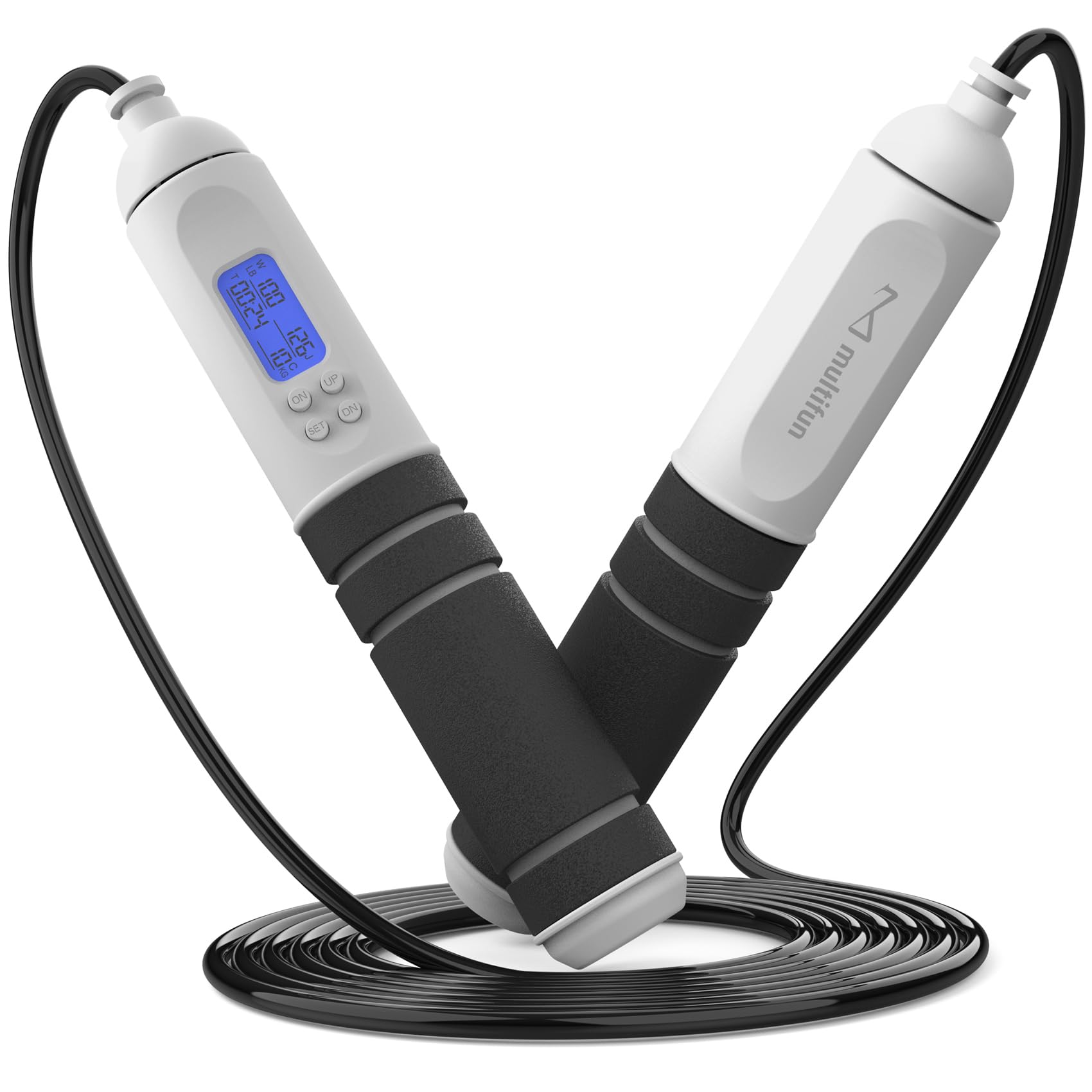
multifun Smart Digital Jump Rope

multifun Smart Digital Jump Rope

Jump tracking

Our Score 8.8/10
Check Price

Worth Noting

  • Counter can miss occasional jumps
Handle
Foam grip
Length
118 inches
Counter
Dual-Hall sensors
Display
Backlit LCD
Read the full review

A counter is either the reason you buy a jump rope or a feature you ignore. The multifun makes a good case for the first camp: the handles track jumps, time, and calories on a backlit display, and a small beep marks your goal. For a beginner who likes a concrete target, that turns a vague cardio session into a set you can finish.

The rope itself is a light PVC-coated cable with foam grips and a tool-free length adjustment. It is quick and portable, and the setup is simple enough to get through without a manual. We like that the display gives you a reason to stop at a set number rather than drifting through a workout, and the backlight is easy to read in a dim garage. The handles are light, and the rope packs down without much bulk, so it can live in a work bag.

We see it as a useful also-consider rather than the default beginner pick. The counter adds motivation, but it can also pull your attention away from timing. If numbers keep you consistent, that trade is worth it; if you want to focus on the rope, the simpler beaded Elite is the easier place to start.

Bottom line: We like the multifun for beginners who want proof of effort: it counts jumps and calories, adjusts without tools, and adds only a little setup to a simple habit.

How We Tested Beginner Jump Ropes

We started by pulling together a shortlist of ropes marketed for beginners, filtering out anything that couldn't be shortened, anything with a cord thinner than a standard jump-rope cable, and anything that looked like it would twist into a knot in a gym bag. That left us with 14 ropes, which we tested over three months.

Our testers ranged from people who hadn't jumped rope since grade school to one former boxer, and we used the ropes in a driveway, on a concrete patio, and on a gym floor. Each person measured the rope against their height, shortened it per the instructions, and did three 30-second sets, noting whether the cord caught on their shoes, whether the handles slipped once their palms got sweaty, and whether the rope tracked straight or wobbled off to one side. We also paid attention to weight: a cord that's too light tends to drift, while a heavier one gives beginners more feedback but can slow the rhythm.

After each session, we checked for kinks and tangles, and we kept using the same ropes for three months to see which handles loosened, which cords frayed, and which adjustment sliders started slipping. We looked at the materials too—whether the cord coating cracked, whether the handles had rough seams, and whether the grip held up once sweat was involved. For value, we compared what each rope offered—a spare cord, a carry bag, a handle that actually stayed put—against what it cost, rather than assuming the cheapest option was the best deal. The ropes that rose to the top were the ones a beginner could adjust without a tutorial, swing without fighting the cord, and pick up again after a week off.

How to Choose a Beginner Jump Rope

Rope Type: Beaded, PVC, or Coated Cable

Beaded ropes are the easiest to learn on because the segments hold the arc open and make a soft tick you can hear. They are slower, so they suit basic jumps and rhythm work rather than double-unders. Coated steel cables are faster and smoother, but they give less feedback; if you are still looking down at your feet, a cable can make timing harder. Thick PVC sits between the two: more durable and more visible than a thin cable, with a calmer swing. Our top pick is beaded for that reason, while the Elite 6mm PVC is the one for rough outdoor surfaces.

Length and Adjustment

Most beginner ropes here run from about 9.2 to 10 feet, and that range is not universal. Stand on the middle of the rope and bring the handles up; for a new jumper, the handles should reach roughly your armpits, with a little extra length giving you room to clear the rope. The trap is treating adjustable as infinite: a 9.2-foot rope can still be short for a tall adult, and a 10-foot beaded rope may need several beads removed before it feels right. Beaded ropes shorten by taking out beads; cables usually need a cut or a stopper reset, so check the method before you buy.

Handles and Bearings

Handles matter less than the rope, but they matter more than most beginners expect. A grip that fills your palm keeps the rope from sliding when your hands get sweaty, and smooth bearings let the cable turn without fighting your wrists. Foam is comfortable for short sessions but can feel slick later; plastic is cheap and light; aluminum adds a firm, cool feel and often a little more handle mass. We do not think bearings alone justify a jump in price; a smooth, simple handle is enough for basic jumps. Pick the grip that stays secure in your hand and leave the rest to practice.

Durability, Surface, and Extras

Where you jump changes what will last. A coated steel cable is happiest on smooth gym floors or mats; rough concrete can wear the coating and shorten its life. Beaded ropes and thick PVC ropes handle abrasive surfaces better, which is why the 6mm Elite is our outdoor-leaning pick. A counter can be motivating if you like targets, but it adds a battery, a display, and another thing to manage. Our advice is to buy the simplest rope that matches your surface and ignore extras until you know they will help you keep going.

Frequently Asked Questions

Final Verdict

Our default for a beginner is the Elite Jumps 1-Inch Beaded Rope. The beads make the rope's arc visible and audible, which shortens the guesswork phase, and the adjustable length lets one rope serve a household.

If your practice space is rough concrete or a driveway, choose the Elite Jumps 6mm PVC instead; it gives up some speed for a tougher cord. For the smallest commitment, the Loocio cable rope covers basic cardio without much outlay.