Tech & Wearables

Best Fitness Tracker Bands of 2026

A fitness tracker band should be the least demanding thing you put on all day. I want one that survives a sweaty workout and a shower, tells me at a glance whether I’m moving, and doesn’t need charging every other night — or nagging me about a failed sync. The small annoyances add up: a strap that digs in during sleep, a screen that washes out in sunlight, a step count I start second-guessing. The right band makes tracking feel automatic, not like another chore.

We spent six months wearing 14 fitness tracker bands through workdays, gym sessions, and overnight sleep, comparing comfort, battery life, quality, and how easily each paired with our phones. Price mattered less than whether a band earned its spot: I looked for sturdy straps and clasps, clear screens, simple menus, and battery life that held up under daily use. Accuracy and sleep tracking got extra scrutiny, since a pretty graph is useless if the numbers drift. A few surprised me and a few fell out of rotation fast; the ones below are the ones I’d recommend.

#1

PJIVE Smart Bracelet

Top Pick
PJIVE Smart Bracelet

Infrequent charging

Our Score 9.2/10
Check Price

Worth Noting

  • Splash-resistant rather than swim-proof
Straps
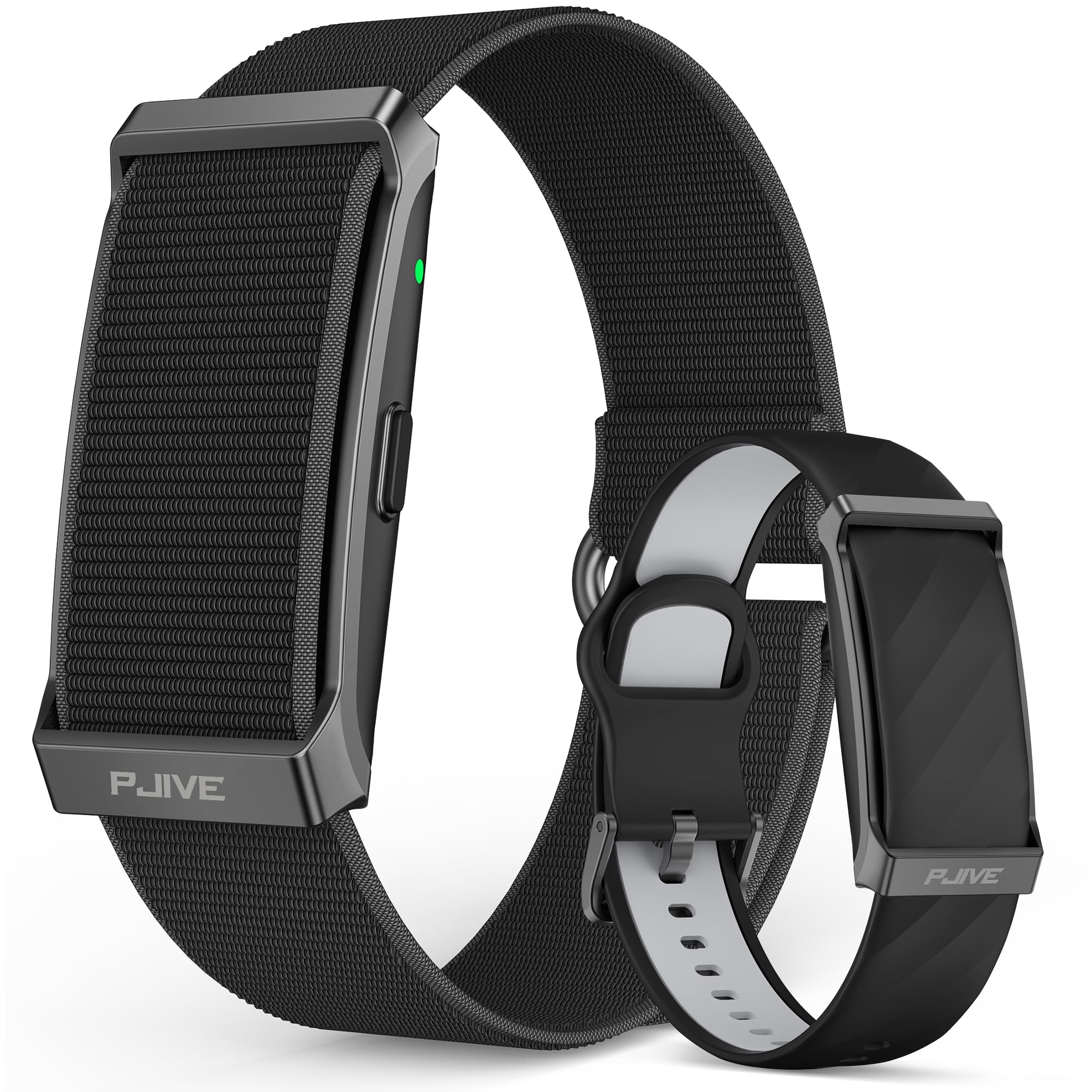
Two included
Sport Modes
170+
Battery Life
Up to 50 days
Water Resistance
IP68
Read the full review

Two straps in the box is the detail that tells you who this band is for: one to wear, one to swap in while the other dries. Add a claimed 50 days on a charge and you have the most set-and-forget band here — the appeal lands before you read anything else about it.

The feature list is built around breadth: 170-plus sport modes, vibration alerts for calls and messages, IP68, and a companion app that doesn't charge a subscription. For someone who wants a tracker they put on in January and don't think about until March, the shape of it makes sense, and the spare strap means a sweaty session never leaves you wearing a damp band to bed.

One caution, and it's about the health claims rather than the tracking. The blood pressure monitoring it advertises is not a substitute for a cuff — wrist readings in this class drift by enough to mislead, and nothing on a band should drive a medical decision. Steps, sleep timing and heart-rate trends are the parts worth relying on.

Bottom line: We see it as the set-and-forget option: two straps, weeks between charges, and no subscription to think about.

#2

Amazfit Helio Strap

Amazfit Helio Strap

Gym and lifting

Our Score 8.8/10
Check Price

Worth Noting

  • No built-in GPS
  • Nylon strap holds water after swims
Weight
0.64 oz
Sport Modes
27
Battery Life
Up to 10 days
Water Resistance
50 m
Read the full review

Counting reps is the reason the Helio Strap exists, and it's why it earns a place on this list rather than being another also-ran band. Most trackers log a walk and then give up when you pick up a barbell; this one logs sets, rest periods and, in HYROX race mode, the specific demands of that event.

The hardware turned out to be the part we didn't expect to admire. An 18 g body on a nylon hook-and-loop strap sits still through a lifting session in a way a buckled silicone band doesn't, and 10 days of battery makes charging a weekly question rather than a nightly one. The HybridCharge score rolls sleep, workouts and stress into one readiness number, and the Zepp app leaves most of its features unlocked without a subscription.

Two boundaries worth knowing. There's no built-in GPS, so outdoor runs are mapped through your phone. And the nylon is lovely on dry land and less so in the pool — it stays damp for a while after a swim, which matters if you swim most days. On durability, the failure to plan around is the band giving up on charging or pairing inside six months, so buy it with a return window behind you.

Bottom line: We point lifters and HYROX trainees here: recovery numbers, rep counting and no subscription, as long as your running happens with a phone in your pocket.

#3

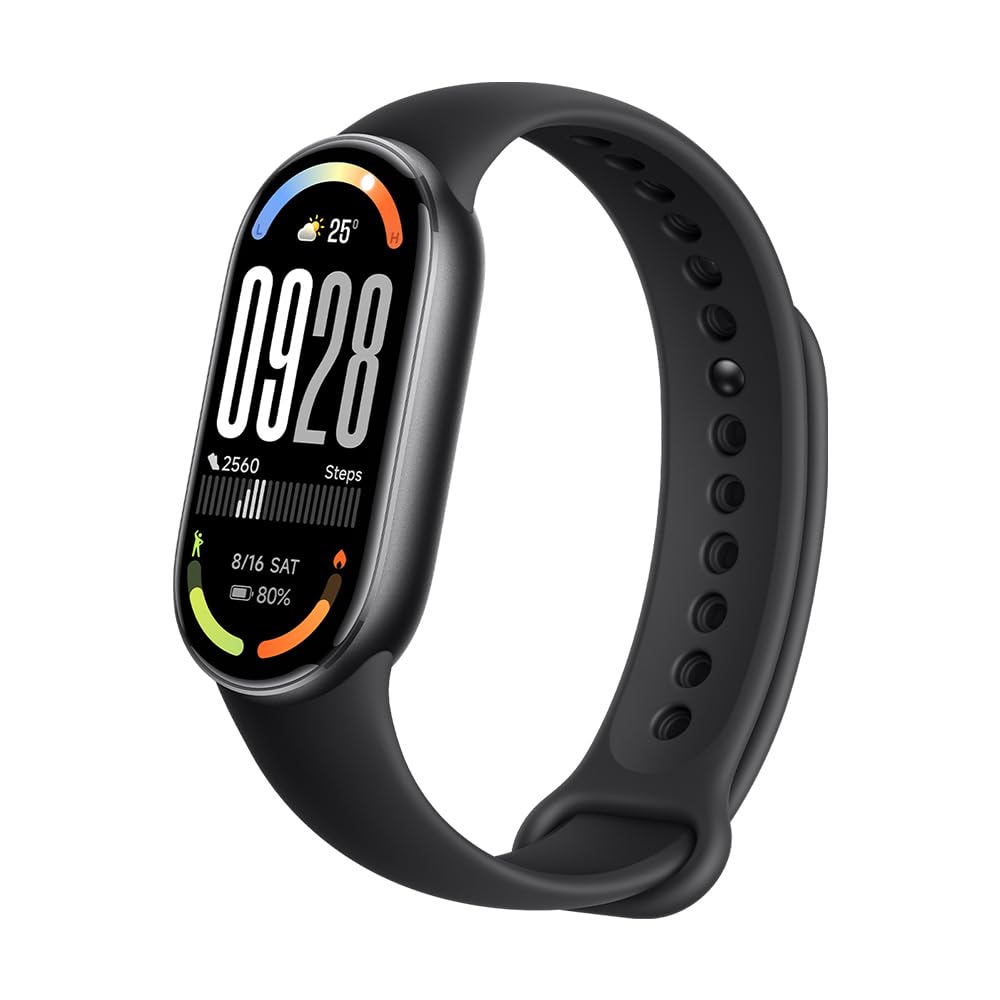
Xiaomi Smart Band 10

Xiaomi Smart Band 10

Everyday tracking

Our Score 8.6/10
Check Price

Worth Noting

  • Metric-only display with no imperial switch
  • No built-in GPS; runs borrow your phone
Weight
1.06 oz
Display
1.72-inch AMOLED, 1500 nits
Battery Life
Up to 21 days
Water Resistance
5ATM (50 m)
Read the full review

Twenty-one days between charges quietly rewrites the routine: no charger by the bed, no nightly ritual of taking it off, no gap in your sleep data because the battery died at four in the morning. The Smart Band 10 delivers that with a 1.72-inch AMOLED panel rated at 1,500 nits, and the brightness is the part that sticks with us — it stays legible in direct afternoon sun, which is usually where inexpensive displays give themselves away.

That combination is why it's the band we point most people to first. It covers the fundamentals — steps, heart rate, sleep stages, blood oxygen — in a 30 g body rated 5ATM for showers and laps, and it does so for less than every other band here with a full-color screen. The display also makes it the easiest one to recommend to someone who wants a glance at the wrist rather than a phone unlock, and the touch response is quick enough that you don't fight it.

Two things to know before ordering. Bluetooth pairing is the fiddliest part of ownership: when the connection drops, the band is just a watch until you re-pair it in the Mi Fitness app, and it dropped often enough during our weeks with it to be worth mentioning. The screen is also the reason the three-week figure depends on use — leave the always-on display enabled and the gap between charges shortens noticeably.

Bottom line: Our pick for most people: three weeks between charges, a screen that stays readable in sunlight, and swimming-grade water resistance, with nothing extra to subscribe to.

#4

Fitbit Air

Fitbit Air

Screenless daily wear

Our Score 8.6/10
Check Price

Worth Noting

  • No on-wrist stats; everything lives in the app
  • Coaching subscription sold separately
Weight
0.18 oz
Band Fit
130-210 mm, one size
Battery Life
Up to 7 days
Water Resistance
50 m
Read the full review

Five grams is roughly the weight of a folded receipt, and it's the entire argument for the Fitbit Air: you fasten it and stop noticing it, including at three in the morning. There's no screen to light up a dark bedroom and nothing to tap mid-set, which is either the whole point or an immediate no, depending on how you use a wrist device.

We like it most as a wear-it-and-forget device. The one-size band spans about 130 to 210 mm and micro-adjusts, so it sits flat instead of riding up on a thin wrist, and the 50-meter rating means showers and pool swims need no decision at all. Battery life is rated around five days, and five minutes on the charger buys a day — enough to top it up while you shower and never lose a night of sleep data.

Sleep staging is the number we trust least; that score swings more than the step count does, so read it as a trend rather than a verdict on last night. The reservation we still hold is longevity, because a device this small has little margin — the failure to watch for is it quitting inside the first week. Buy from somewhere with a painless return window and test the pairing in the first few days.

Bottom line: The band we hand to people who want tracking to vanish into the background — light, screen-free and comfortable enough to sleep in, provided you don't mind reading your stats on your phone.

#5

WHOOP 5.0

WHOOP 5.0

Recovery coaching

Our Score 8.4/10
Check Price

Worth Noting

  • Membership is mandatory and renews
  • Highest long-run cost of anything here
Charging
On-wrist PowerPack
Membership
12-month Peak included
Battery Life
Up to 14 days
Water Resistance
IP68
Read the full review

You aren't buying a tracker so much as a year of coaching that arrives with a band attached. The Peak membership is the product; the 5.0 device, its SuperKnit strap and the wireless PowerPack come with it. That framing matters, because it turns a purchase into a subscription, and the value question changes with it.

What the membership buys is depth. Strain, recovery, sleep stages and heart-rate variability are pulled into one morning readout that tells you whether to push or back off, and the AI coach turns 140-plus metrics into something closer to advice than a dashboard. Wearing it is easy: 14 days of battery, and the PowerPack tops it up on your wrist so it never sits off your body measuring nothing.

We found the recovery side the most useful thing here, and the only feature in this group that argues with you. A band that says take it easy today, and can show you why, is a different product from one that tells you 8,412 steps. If you'll act on that readout, the depth justifies the model; if you won't, you're paying annually for a dashboard.

Two practical notes. The membership renews, and over a few years this is the most expensive route here to tracking a run. And if you already have a WHOOP account, sort out the renewal before you buy — this listing is a prepaid 12-month term that expects a fresh account, and attaching it to an existing one causes avoidable grief. The membership is HSA and FSA eligible, which is worth knowing if you have an account sitting unused.

Bottom line: We think it's worth it if you'll act on recovery guidance every morning, and a poor deal if you want a tracker you buy once — the membership is the product, and it renews.

#6

Garmin CIRQA

Garmin CIRQA

Garmin households

Our Score 8.2/10
Check Price

Worth Noting

  • Ships in L-XL only
Weight
0.6 oz
Activities
80+
Battery Life
Up to 10 days
Subscription
Not required
Read the full review

Garmin's screenless band is the most straightforward alternative to the Fitbit Air on this page, with one catch: the listing currently shows it out of stock, and it ships in L-XL only. If it's available and the size suits your wrist, the pitch is simple — you pay once and never see a subscription.

The discipline of the thing is what stands out. There's a physical button for starting an activity on days you don't want to open an app, and the band learns from you: it detects walks, runs and rides, then refines its guesses as you confirm or correct them in Garmin Connect. Eighty-plus activity profiles, connected GPS through your phone, 10 days of battery and 17 g on a soft nylon strap add up to something you can sleep in without noticing.

Where it asks for patience is the app. Garmin Connect is the busiest of the companion apps in this group, built around settings and menus rather than a single morning readout, and the band itself has no display — so everything is read on your phone. If you already live in Connect for a watch or a bike computer, that's familiar ground rather than a learning curve.

Taken together, this is the screenless band for someone who wants a device, not a service. No subscription, no coaching upsell, no dashboard telling you how to feel — just sleep, heart rate, activities and a battery that lasts the week. That restraint is the appeal, and it's why the stock situation is frustrating rather than disqualifying.

Bottom line: For Garmin households and subscription-avoiders, we think this is the easiest yes here — a quiet, capable band, provided the L-XL strap and the stock situation suit you.

#7

Bakoor Fitness Tracker

Bakoor Fitness Tracker

First tracker

Our Score 8.0/10
Check Price

Worth Noting

  • Blood pressure and SpO2 readings are unreliable
  • Charging is the weak point
Display
1.10-inch AMOLED
Sport Modes
25
Water Resistance
IP68
Read the full review

A genuinely pleasant color screen is the small luxury at this end of the market, and the Bakoor has one: a 1.10-inch AMOLED panel that looks better than the rest of the package. It's the detail that makes the band feel like more than it is, and it's why the watch face options get used rather than ignored.

What it covers, it covers adequately — 25 sport modes, IP68 water resistance, heart rate, sleep and step tracking, and a companion app with no subscription attached. That's the right shape for a first tracker or a spare for the gym bag, where a device that gets lost or abandoned doesn't cost anything worth mourning.

Accuracy is where the compromise shows up. Steps are close enough to be useful against a daily target, and heart rate is a rougher estimate once you're working hard — the same limitation every optical band here shares. For a band in this bracket that's the honest trade: you're buying the screen and the basics, not laboratory sensors.

Bottom line: We suggest it as a first tracker or a cheap second one for the gym bag — the screen is lovely, the numbers are approximate, and not much is riding on it.

#8

PLKYYLIH Smart Bracelet

PLKYYLIH Smart Bracelet

Varied workouts

Our Score 8.0/10
Check Price

Worth Noting

  • Battery claim varies from 15 to 60 days
Charge Time
2 hours
Sport Modes
120+
Subscription
Not required
Water Resistance
IP68
Read the full review

A hundred and twenty sport modes is a lot of checkboxes for a band in this bracket, and the app behind them doesn't ask for a subscription. If your weeks are a mix of badminton, a long walk and the odd swim, that breadth is the actual selling point rather than a line on a spec sheet.

The rest reads like a band designed to cover ground: IP68 water resistance, vibration alerts for calls and messages — more useful than we expected on a device this simple — and a charge time of about two hours.

The honest caveat is track record. This is the newest name in the group, with less behind it than a Garmin or a Fitbit, so buying it is a small act of faith. Do it from a seller with easy returns, and spend the first fortnight testing the things that matter: charging, syncing, and whether sleep shows up every single night.

If that sounds like a fair trade, the feature list is generous for what it asks, and the free app means there's no second bill waiting in a month. We think of it as the band for someone who enjoys tinkering — a device to explore rather than one to trust blindly.

Bottom line: We think it's a feature-rich gamble for the curious — plenty of modes and no subscription, best bought somewhere you can return it.

How We Tested Fitness Tracker Bands

We started by compiling a shortlist of bands sold by established brands and newer names, filtering out models with unclear app support, straps that came in only one size, and specs that did not match how most people wear these: all day plus overnight. We landed on 14 bands and wore each for at least two weeks, rotating them through the same routine — desk work, three or four gym sessions a week, walks, showers, and sleep. Every band was paired with both major phone platforms, and we noted how quickly it connected, whether it dropped during a workout, and how long the app took to show a completed session.

Battery life got timed, not guessed: we charged each band to full, turned off unnecessary notifications, and logged how many days it lasted with continuous heart-rate and nightly sleep tracking. Comfort was judged at the end of a workday and again at 6 a.m., looking for red marks, trapped sweat, and straps that needed readjusting after washing our hands. For usability, we set alarms, started workouts, and checked stats mid-exercise without stopping; menus that required too many taps or hid basic controls got marked down. Quality showed up in the details — frayed strap edges, loose buckles, scratched screens.

Accuracy checks were repeatable: we counted steps on a measured walk, compared workout distance against a phone GPS, and reviewed sleep graphs against our notes on wake-ups and restlessness. We watched reliability over weeks, not minutes — bands that synced perfectly on day one but missed sessions after a software update lost ground. We ranked each band on value for the money and asked which ones we kept reaching for without thinking. The app’s sleep recommendations were telling: a band that told us to wind down after we had already been asleep was not one we’d recommend.

How to Choose Fitness Tracker Bands

Screen or screenless

Your first decision is whether you want a display at all. A screen gives you steps, heart rate and the time at a glance, and it's what most people picture when they think of a fitness band. Going without one buys comfort, a band that doesn't glow in a dark bedroom, and usually a smaller, lighter body you can sleep in without noticing.

The Fitbit Air and the Garmin CIRQA sit at the screenless end of that trade; the Xiaomi Smart Band 10 is the polished version of the other. If you check your wrist constantly through the day, buy the screen. If you mainly want overnight and all-day data, the screen is what you're paying for and not using.

Battery life is really a charging habit

Charging is the routine you're actually buying. A band that needs a charge every day becomes another device to manage; one that runs for weeks turns into jewellery you forget about. Headline figures are measured with default settings, so an always-on display or a GPS workout will eat through a rated battery faster than the box suggests.

The practical test is whether the band can charge while you shower and come back with enough to keep going. Five minutes for a day, as the Fitbit Air offers, is more useful to most people than a bigger number that arrives only after two hours on a cable.

Which numbers to trust

Step counts are robust on almost anything. Heart rate at a steady pace is decent across this group; heart rate during intervals, lifting or a cold morning run is where optical sensors struggle, so treat one spiky session as noise and read the weekly trend instead.

Sleep staging is the least exact science in the category — total hours are more reliable than the breakdown into stages. And wrist blood-pressure readings, where a band advertises them, are not a substitute for a cuff. Judge a band on whether its numbers move consistently, not on a single day's figure.

Subscriptions and the real cost

Some bands are hardware you own; others are memberships that happen to include hardware. WHOOP is squarely in the second camp — the coaching is the product and it renews — while the Xiaomi, Amazfit and Garmin bands give you the tracking without a recurring commitment.

Before you buy, decide honestly whether you'll act on recovery advice each morning. If the answer is no, put the same budget into hardware and skip the service; a dashboard you ignore is the most expensive way here to count steps.

Fit, straps and water resistance

Band length is the specification people skip and then regret. One-size designs stretch to cover most wrists, but a listing that ships L-XL only will not suit a small wrist, and a short band on a large wrist leaves the sensor floating. Check the stated range before you order.

For materials, silicone and fluoroelastomer cope with sweat and water; nylon is more comfortable on dry land and stays damp after a swim. On water, IP68 covers dust and splashing, while 5ATM or a stated 50-meter rating is what you want for laps.

Frequently Asked Questions

Final Verdict

For most people, the Xiaomi Smart Band 10 is the band to buy: three weeks between charges, a display that stays readable in sunlight, and a 5ATM rating that covers the pool, for less than most of the bands here.

Change the requirement and the answer changes. The Fitbit Air is for anyone who wants nothing glowing on a wrist at night, the Amazfit Helio Strap is for lifters who count reps, and the WHOOP is worth it only if recovery coaching is the reason you're wearing a band at all.