Tech & Wearables

Best Running Headphones of 2026

A running headphone has one job no spec sheet can promise: staying put at mile four. I've had buds that sounded gorgeous on the couch slide out at a crosswalk, and pairs that fit like a dream die at minute 90. What you actually want is duller — something that stays seated, holds its connection past a busy intersection, and sounds good enough that you stop thinking about it. Fit and comfort come first; everything else is downstream of a pair you don't have to adjust every half mile.

My team and I have spent the past six months running in 14 pairs, from budget picks to premium ones, on treadmills and sidewalk loops and through more rain than I'd like. One thing I'd tell a first-time buyer: the seal does more for bass than the driver does, so a pair that fits your ear canal will usually beat a pricier one that doesn't. Below, the picks are sorted by who they suit — road runners who need to hear traffic, gym regulars who don't, and anyone who just wants to stop thinking about their ears.

#1

SHOKZ OpenRun

Top Pick
SHOKZ OpenRun

Open-ear road runs

Our Score 9.0/10
Check Price

Worth Noting

  • Band and power button are the design's wear points
Weight
0.92 oz
Bluetooth
5.1
Battery Life
8 hours
Water Resistance
IP67
Read the full review

IP67 is the number that put the OpenRun at the top of this list. It is the highest water rating in the group, and it covers the two things that actually end a pair of running headphones: sweat running down the band in July, and rain that starts ten minutes from home. Rinse them under the tap afterwards and nothing changes.

The frame handles the rest. A 26-gram titanium band hooks over your ears and wraps behind your head, so there is nothing to seat in the canal, nothing to wiggle loose, and nothing to push back in at a crossing. We stopped thinking about them about a mile into the first run, which is the highest compliment this category offers. You hear traffic, your own footfalls, a cyclist's freewheel, and that awareness is the product.

Eight hours per charge covers a marathon with room to spare, and a ten-minute top-up buys roughly another ninety minutes if you forgot to plug in the night before. Bluetooth 5.1 with multipoint keeps a phone and a laptop connected at once. Shokz covers it for two years, which is long enough to matter on a pair that lives in a sweaty gym bag.

Where it costs you is bass. Bone conduction sends sound through your cheekbones, so vocals come through cleanly while the low end stays thin, and on a busy road you will nudge the volume up to follow a podcast. That is the trade for hearing the world, and it is one we make most days. If it is not one you want to make, the OpenRun Pro 2 adds an air driver and four more hours for more money.

Bottom line: Our default for road running: nothing in your ears, eight hours of charge, and the best water rating here for the sweaty days.

#2

Soundcore V20i

Soundcore V20i

Budget open-ear

Our Score 8.8/10
Check Price

Worth Noting

  • Battery and charging are the weak points
  • Bluetooth dropouts turn up in the mix
Bluetooth
5.4
Driver Size
16 mm
Battery Life
8 hours, 36 with case
Water Resistance
IP55
Read the full review

The V20i's trick is four positions on a rotating hook. Instead of hoping one fixed angle suits your ear, you rotate the driver housing until the 16mm driver sits where it is loudest and the hook stops pressing anywhere in particular. Finding your setting takes about a minute, and it is the reason these stay comfortable on long days.

The rest of the spec sheet is more than you would expect at the bottom of the market: IP55, eight hours per charge with 36 in the case, Bluetooth 5.4 with multipoint, four mics for calls, and an 18-month warranty. The touch panel takes a few runs to learn and the case is a pocketable slab rather than a small one, but neither is a dealbreaker.

We expected to make allowances for a pair this cheap and did not have to. The hooks held through our runs, the sound is warm rather than sharp, and the open-ear design kept traffic audible without the thinness you get from bone conduction. These aim a driver at the ear rather than through your cheekbone, and it shows in the low end.

One caveat on that rotating hook: the housing is a fixed size, so very small ears may find the driver sits further out than they would like, and the seal-free design means no isolation at all. In a gym with loud music you will hear both the music and the room, which is the honest trade for a pair that lets you hear the road.

Bottom line: The best-value open-ear pair here: adjustable enough to fit almost anyone, cheap enough to replace, and comfortable enough to forget.

#3

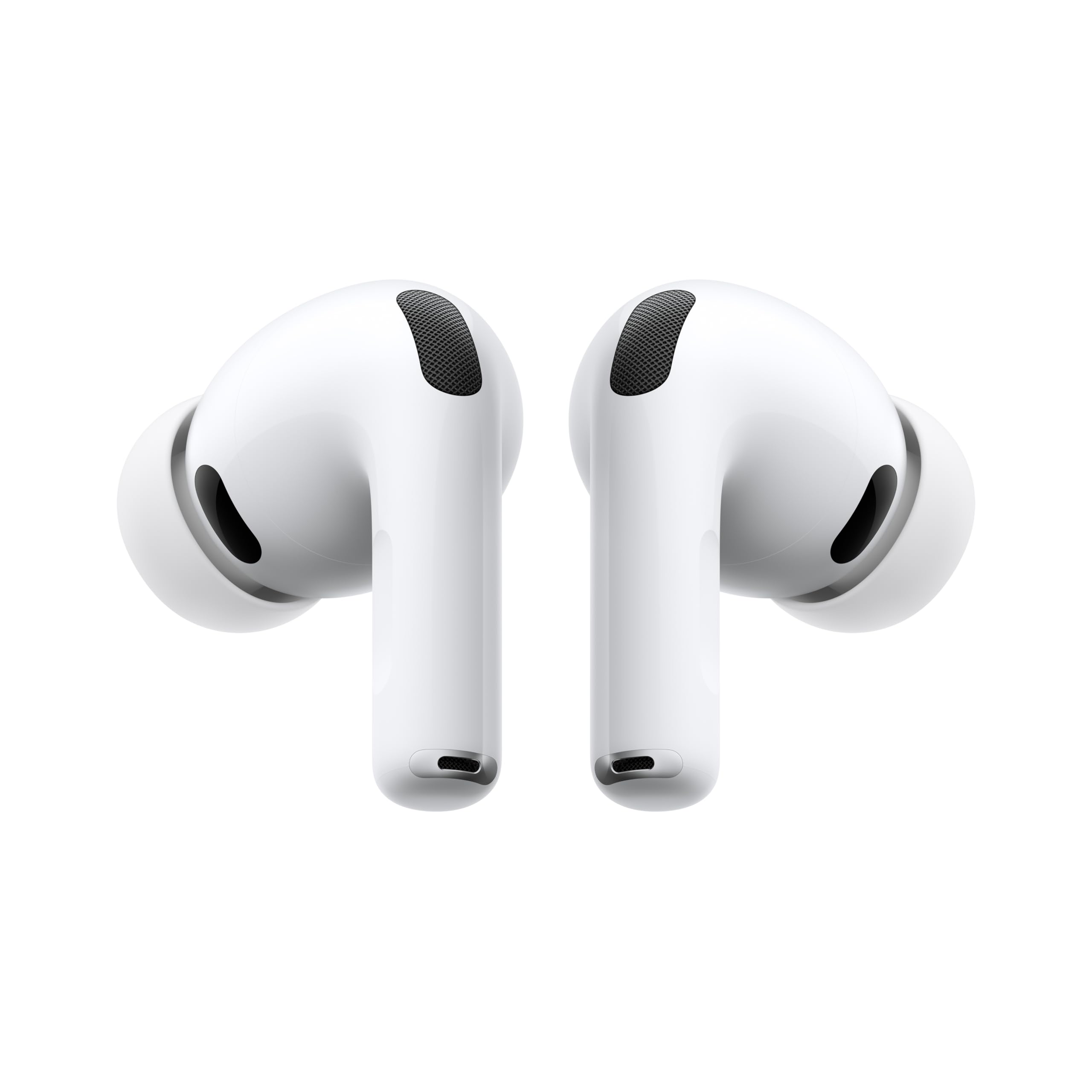
Apple AirPods Pro 3

Apple AirPods Pro 3

Treadmill sessions

Our Score 8.8/10
Check Price

Worth Noting

  • Fit varies by ear shape with no hook as backup
Weight
0.32 oz
Heart Rate
Built-in sensors
Battery Life
8 hours with ANC
Noise Cancelling
Active
Read the full review

Fit decides whether the AirPods Pro 3 are a running headphone for you, and it is the one question we cannot answer from a spec sheet. The tip and stem shape that suits one runner's ear will sit loose in another's, and this generation is shaped differently enough from the last that previous experience only half predicts it.

What you get if they do fit is the strongest noise cancelling in this group and the widest feature set. ANC removes up to twice the noise of the previous generation, Transparency sounds natural enough to wear on a pavement, heart-rate sensing covers 50 workout types, and eight hours with ANC on is enough for a long run, if not quite for a marathon at the back of the pack.

The Apple ecosystem is the other draw: pairing is instant if you are already in it, and the case is genuinely small. A pair that stops holding a charge is the failure to watch for, which is why the warranty matters more than the head-line runtime here.

Our read: these are for treadmill sessions, gym work, and any run where you want the world turned down. For road running, an open-ear design does the job with fewer unknowns and no seal to maintain, and a pair that has to be pushed back in at every junction is not really solving the problem you bought it for.

Bottom line: Buy them for indoor training and everything that is not running; for the road, the fit gamble and the seal make an open-ear pair safer.

#4

SHOKZ OpenRun Pro 2

SHOKZ OpenRun Pro 2

Long-distance training

Our Score 8.6/10
Check Price

Worth Noting

  • IP55 stops short of a rinse under the tap
  • Costs a clear step more than the OpenRun
Weight
1.07 oz
Bluetooth
5.3
Battery Life
12 hours
Water Resistance
IP55
Read the full review

The Pro 2 is the upgrade argument in one product, because it fixes the thing everyone notices first about bone conduction. Shokz pairs a bone-conduction driver with a small air-conduction driver for the low end, and against the OpenRun the difference lands the moment a track with a beat comes on. Twelve hours per charge is the longest figure in this group, which is the spec that matters if your long runs are genuinely long.

It is also the more comfortable of the two Shokz models on a hot day: nickel-titanium memory wire under silicone, 30.3 grams, flexing to your head rather than clamping onto it. The hard-shell case is the detail we ended up valuing most, since it shrugs off a gym bag where a soft pouch just gets crushed.

The app is worth five minutes. Dedicated EQ modes let you strip the sound back to pure bone conduction or push the bass harder, and on a windy route the Classic setting keeps the air driver from turning boomy. The volume controls sit on the band where a thumb finds them without looking, which matters more than it sounds when you are wearing gloves.

If your runs are long and your playlists matter, this is the bone-conduction pair to buy. If you mostly want a running soundtrack you can hear the road over, the OpenRun does that job for less and survives more water doing it.

Bottom line: Twelve hours, real bass, and the same open-ear awareness: the pair to buy if your long runs are long and your playlists matter.

#5

bmani T16

bmani T16

Everyday miles

Our Score 8.6/10
Check Price

Worth Noting

  • No IP number behind the sweat-resistance claim
Weight
2 oz
Battery Life
80 hours with case
Charging Case
LED battery display
Water Resistance
Water resistant
Read the full review

Eighty hours of total playtime, a case that shows its own battery percentage, and a price at the bottom of this group: that is the bmani pitch, and it is why we point budget shoppers here first. Nothing else on this list combines an over-ear hook with that much reserve for so little money.

Buttons rather than touch is the detail we appreciated most. A physical click works with wet fingers and through a light glove, and it does not fire off when a hoodie brushes your ear. Small things, but they add up over a winter of training.

The 10mm drivers are loud and clear enough for podcasts and pace cues, the dual mics hold up on a call, and the adjustable hooks sit around the ear rather than inside it, which kept them steady on runs without the pressure an in-ear tip puts on the canal.

The known weak spot is charging. A bud that does not seat cleanly in the case can be flat the next morning, so wipe the contacts and set them in deliberately rather than dropping them. What tempers that is a five-year manufacturer warranty, by far the longest coverage here. Keep the receipt and use it.

Bottom line: The cheapest pair here we would actually run in: an over-ear hook, a case that lasts a week, and a warranty long enough to cover the gamble.

#6

TOZO OpenEarRing

TOZO OpenEarRing

All-day comfort

Our Score 8.6/10
Check Price

Worth Noting

  • No IP number behind the water-resistance claim
  • Charging case is the long-term weak point
Bluetooth
5.4
Driver Size
10 mm
Battery Life
10 hours, 40 with case
Water Resistance
Water resistant
Read the full review

If earhooks have never sat right on you, the clip-on shape of the OpenEarRing is the alternative worth trying. It grips the edge of your ear instead of hooking over the top, so nothing presses behind your ear under a cap, a helmet strap, or the arm of a pair of sunglasses.

Ten millimetre drivers, ten hours per charge and 40 with the case, Bluetooth 5.4, and an app with 32 EQ presets: the spec list is short and sensible. The case is small enough for a jeans pocket, which is more than several pairs here can claim.

What we did not expect at this price is how little the open design bothered us. The clip holds the driver a few millimetres off the canal, so music stays clear while traffic stays audible, and it never worked loose on a run. If thin sound has put you off open-ear before, this is the one to try first.

Between this and the Soundcore V20i, the deciding difference is shape rather than spec. The V20i hooks over the ear and adjusts four ways; this one clips on and stays where you put it. If you wear glasses or a bike helmet every day, the clip wins; if you want the most adjustable fit, the V20i does.

Bottom line: Our pick for anyone whose ears reject earhooks: a light clip-on that stays put, sounds far better than it costs, and leaves your ears open.

#7

PSIER X12

PSIER X12

Light bone conduction

Our Score 8.4/10
Check Price

Worth Noting

  • IPX5 is the lowest rating among the open-ear picks
  • No app or EQ to adjust the sound
Weight
0.81 oz
Bluetooth
6.0
Battery Life
10 hours
Water Resistance
IPX5
Read the full review

Twenty-three grams is the number that stands out on the X12, and over a long run it is the difference between a band you notice and one you forget about. The memory-titanium frame flexes to your head instead of clamping onto it, and it stays put when you look down at your watch.

The rest of the package is sensible rather than flashy: ten hours at half volume, Bluetooth 6.0 for quick pairing, push-button controls, IPX5, and a two-year warranty. It ships with earplugs, which sounds odd until you realise you can plug your ears for a louder, more isolated listen when you are nowhere near a road.

The sound is louder and clearer than the money suggests. Bone conduction at this end of the market often sounds like a tin can with a paperclip inside it, and this does not. Bass is still the missing piece, as it is on any bone-conduction design, so podcasts and spoken word flatter it more than music does.

The two-year warranty is the detail that makes it a low-risk first try at open-ear running. The parts that eventually fail on any wraparound band are the wire and the power button, and coverage long enough to find out whether the shape suits you is worth a lot on an experiment like this.

Bottom line: The lightest and least expensive way to try bone conduction, with a two-year warranty standing behind the experiment.

#8

Beats Powerbeats Pro 2

Beats Powerbeats Pro 2

Noisy gyms

Our Score 8.2/10
Check Price

Worth Noting

  • Case is bulky for a pocket
  • Priced at the top of this group
Weight
5.1 oz
Heart Rate
Built-in ear sensors
Battery Life
Up to 45 hours with case
Noise Cancelling
Active
Read the full review

Heart rate from your ears is what separates the Powerbeats Pro 2 from everything else here. Sensors in each bud sample more than 100 times a second, so a session logs itself without a chest strap or a watch on your wrist. Because the earhook holds the bud in place, you can also take a call mid-run without pressing a finger to your ear.

The noise cancelling is tuned for exactly where these belong. On a treadmill, or in a gym where the playlist is somebody else's, ANC drops the room out and you get on with the work; Transparency brings the road back the moment you head outside. We rate that flexibility above the open-ear alternative on indoor days, and below it any time you are running near traffic.

Battery is the other headline: up to 45 hours with the case, which is a week of runs between charges, and the case itself charges on a Qi pad so there is one less cable in your bag. One-touch pairing and automatic switching keep an iPhone and a Mac from arguing over them, and the heart-rate features work on Android as well as iPhone.

The earhook is one fixed shape, though. Tips swap, the hook does not, so the same pair that locks onto one runner can sit proud on a smaller ear and let noise in around the tip. Run in them inside the return window; if the hook sits flush behind your ear, nothing in this guide is more secure.

Bottom line: The pair for anyone who wants to disappear into a workout: real noise cancelling, earhook security, and heart rate without a strap.

How We Tested Running Headphones on the Road, Treadmill, and Gym Floor

The shortlist started as a spreadsheet: every pair we could find with a published sweat- or water-resistance rating, split by design — in-ear with a fin, ear-hook, and open-ear — and filtered so we weren't testing five versions of the same thing. We cut anything without a clear water rating or a battery claim under six hours, then bought 14 pairs ourselves. Testing ran six months across treadmill intervals, sidewalk loops, a hilly long run, and one memorably wet 10-miler.

Fit and comfort got judged on the move. I wore each pair for one 45-minute run and one two-hour run, counting how many times I had to reseat them, whether my ears ached late in the run, and whether the tips stayed put through a sweaty shake test. Sound went through the same three tracks — bass-heavy, cymbal-heavy, and a spoken-word podcast — so we could hear which pairs muddied the low end and which pushed vocals forward. On a road with live traffic, we listened for whether an open-ear or noise-cancelling pair let us hear a car coming up behind us.

Battery was timed, not trusted: a stopwatch from full charge to the low-battery chime, then from dead back to full, checked every 15 minutes, plus a count of how many charges each case actually delivered. We paired every set with both an iPhone and an Android phone, then left the phone on a gym bench and walked to the far wall to find where each signal broke. Durability meant sweat, a wipe-down after every run, waist-high drops onto concrete, and a hard yank on the cable. Reliability showed up in month four, when a few pairs started cutting out mid-run.

How to Choose Running Headphones

Decide how much of the world you want to hear

Open-ear designs leave the canal clear, whether they send sound through your cheekbone like the Shokz pairs or aim a small driver at your ear like the Soundcore V20i. Traffic, footfalls, and a cyclist's warning all arrive at full volume. Sealed buds with active noise cancelling do the opposite, and that is the right call on a treadmill or in a gym where the music is somebody else's.

The trap is buying noise cancelling for road running. It works, but it removes exactly the information you need at a junction. If you run a mix, look for a transparency mode you can reach with one press, and expect to use it more than you expect to.

Fit is a shape question, not a size question

Earhooks come in fixed shapes and tips come in sizes, which is why two runners with similar ears can have opposite experiences with the same pair. A wraparound band spreads weight across the back of your head. A clip-on grips the edge of the ear and leaves the space behind it free for glasses and helmet straps. An in-ear hook lives or dies on whether the tip seals.

Treat the return window as part of the purchase. Run in them for a week, shake your head hard at the end of it, and check whether the bud has crept out of position. A pair that needs a mid-run nudge on day two will still need one in month six.

Read the IP number, not the word waterproof

The two characters after IP tell you what a pair actually survives. The first digit is dust, the second is water, and 5 means jets while 7 means you can dunk it. So an IP67 pair like the OpenRun takes a rinse under the tap, an IP55 pair handles sweat and rain but should not be submerged, and an IPX5 pair with no dust figure is the sensible floor for heavy sweating.

A listing that says waterproof or sweatproof with no number attached is telling you nothing you can check. Buy the number, not the adjective.

Per-charge runtime matters more than the big total

Case totals are marketing. Eighty hours sounds enormous until you realise it is eight charges of ten hours, and the number that matters at the start of a Sunday long run is the one before the slash. Eight hours is the practical floor here, and it covers a marathon with margin. The total only tells you how often you go hunting for a cable.

Check the quick-charge figure too: ten minutes for ninety minutes of playback has rescued more runs than any 45-hour case. Expect both numbers to fade after a year or two of sweat and heat, which is the argument for the longest warranty you can get.

Controls and Bluetooth, the parts you notice later

Touch panels are elegant until your fingers are wet or gloved and a swipe becomes a guess. Real buttons, as on the bmani, the PSIER, and the Shokz band, are the safer bet for winter training. Touch is fine if you mostly change volume from your phone.

Bluetooth 5.3 and 5.4 add multipoint, which lets a phone and a laptop stay connected at once, and the usable range is around 30 feet. That is plenty for a waist belt and not enough for a phone left in a locker two rooms away.

Frequently Asked Questions

Final Verdict

Our pick is the Shokz OpenRun. It carries the best water rating here, it wraps around your head so there is nothing to readjust at a red light, and eight hours per charge covers any run most people will do. If you want real bass and a longer runtime from the same open-ear shape, the OpenRun Pro 2 is the step up. If the budget decides it, the bmani T16 gives you an over-ear hook, a week of case reserve, and a five-year warranty behind it.