Strength & Weights

Best Swiss Bar of 2026

A straight bar locks your wrists, elbows, and shoulders into one position, which is fine right up until it isn't — and for a lot of lifters, the moment it isn't arrives as a cranky shoulder every time they bench or press overhead. A Swiss bar fixes that with geometry: neutral handles let your arms travel where they actually want to go. What you're really buying, though, is a piece of welded steel that has to survive years of loaded reps.

I've pressed with a neutral grip for years, and the things I notice at month six are never on the spec sheet — whether the knurling still bites with chalk on my hands, whether plates sit tight on the sleeves, whether the bar rattles when I unrack it alone. Handle diameter is the detail first-time buyers miss; it varies a lot between models and quietly decides whether you can hold on for a full set. We put nine bars through eight months of bench, press, and row work. The ones worth your money are below.

#1

Valor Fitness Swiss Bar

Top Pick
Valor Fitness Swiss Bar

Grip variety

Our Score 9.2/10
Check Price

Worth Noting

  • 300 lb capacity ceiling limits heavy pressers
  • Finish wears quickly at the J-hook contact points
Bar Weight
26 lb
Grip Options
4 from six handles
Loadable Sleeve
10.5 in
Weight Capacity
300 lb
Read the full review

Six handles arranged into four usable hand positions, on a bar that weighs 26 lb. That combination keeps the Valor in the conversation even though it costs about what the two Titans here do, and it is the reason we still reach for it for arm work after a pressing session.

What we appreciated most is how little thought it needs. The knurled handles run 5 inches, so your hands have somewhere to go in every position, the 10.5 inch sleeves hold a workable stack of plates, and the 12-gauge steel frame refuses to feel like a compromise. The catch is the 300 lb ceiling. For pressing, rows and triceps work in a home gym that is plenty. If your bench is already past it, this is the wrong bar, and no amount of grip variety fixes that.

The finish is where it gives ground. Black zinc wears at the contact points where the bar sits in the J-hooks, and it does not take long. That is cosmetic rather than structural, and a wrap of tape or a pair of plastic J-cup liners keeps most of it off the bar. Three years of warranty is the longest coverage on this page, which tells you the frame is expected to outlast the paint.

Ours has collected the usual rack scuffs and nothing else. The handles still feel tight, and the sleeves still hold plates square.

Bottom line: We reach for the Valor when hand position is the deciding factor: four grip options, a 26 lb bar that is easy to handle, and the longest warranty here, as long as your pressing stays under 300 lb.
#2

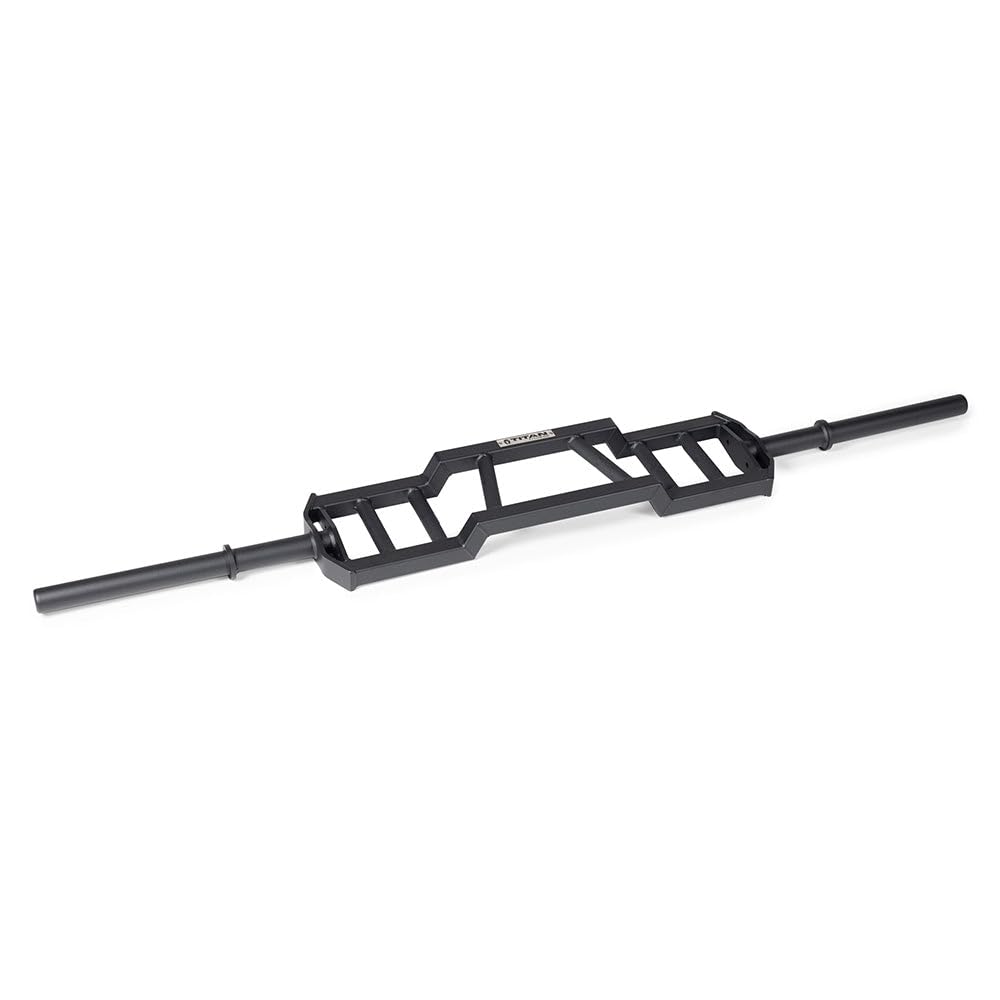
Titan Camber Multi-Grip Bar

Titan Camber Multi-Grip Bar

Heavy pressing

Our Score 9.0/10
Check Price

Worth Noting

  • 39 lb bar weight shifts your usual plate math
Bar Weight
39 lb
Grip Positions
3 (angled and neutral)
Loadable Sleeve
13.75 in
Weight Capacity
1,000 lb
Read the full review

Two inches of camber sounds like a marketing line until you press with it. Dropping the grips below the sleeves means every rep starts a little lower and finishes a little deeper, and on a bench press that extra travel is the difference between a movement your shoulders merely tolerate and one they seem to like. Of the five bars here, this is the one we point a strength-focused lifter to first: the longer stroke comes with a 1,000 lb rating, clean welds and a powder coat that still looks new where the J-hooks grab it.

Three grip positions is plenty, and the spacing is well judged. The 30-degree pair sits 10 inches apart and covers the close-grip bench and triceps extension role; the vertical pair at 20 inches is where most pressing happens; the wide pair at 28.5 inches suits rows and a broader press. The medium knurl is the part we paid closest attention to, because a pressing bar has to grip without punishing, and this one lands on the right side of that line. Your hands stay put, and you are not picking the pattern out of your palms afterward.

Loading is straightforward: 13.75 inches of sleeve per side, and it drops into a standard power rack without a fight. One geometry note worth having before you plan a session around it: because the load hangs below your hands, a floor pull starts lower than it does with a straight bar, so treat deadlift-style work as a variation rather than a straight swap. At 39 lb the bar is lighter than the 45 lb one you are used to, which shows up in your plate math and disappears once you have done the conversion a few times.

Bottom line: We recommend this one to anyone who presses for strength and wants their shoulders to cooperate: the camber adds real range, the 1,000 lb rating covers home-gym loads, and it racks like a normal bar.

#3

Yes4All Multi Grip Barbell

Yes4All Multi Grip Barbell

Budget home gym

Our Score 9.0/10
Check Price

Worth Noting

  • ⚠️ Can arrive unbalanced, with a rattle inside the tubing
Bar Weight
24 lb
Grip Positions
6 (neutral and angled)
Weight Capacity
400 lb
Collars Included
2 included
Read the full review

The case for this bar is simple. It does what a Swiss bar exists to do for less money than anything else here: six grips, a neutral pair your hands fall into naturally, and 400 lb of capacity. We pressed, rowed and did triceps work on it and never felt the bar was holding us back.

The grips are the interesting part. Twenty-eight millimeter handles leave room for most hand sizes, and six hollow positions cover narrow, medium and wide, so you can find a press your wrists do not argue with. It is light, a shade over 24 lb, which makes overhead pressing and getting set for curls noticeably easier, and it arrives with two collars so you are not hunting for hardware on day one.

Where it gives ground is straightness. A bar that does not sit level matters once there is weight on it, and these can arrive out of true, sometimes with something loose rattling inside the tubing. Inspect it the day it lands and use the return window rather than living with it. The included collars are also on the thin side, and a set with more bite is worth buying.

None of that changes the fundamentals. For accessory work and a shoulder-friendly press, it earns its place in a small gym where one bar has to do several jobs.

Bottom line: This is the bar we point first-time home-gym buyers to: six grips, a neutral press that spares your shoulders, and 400 lb of capacity for the least money in this group.

#4

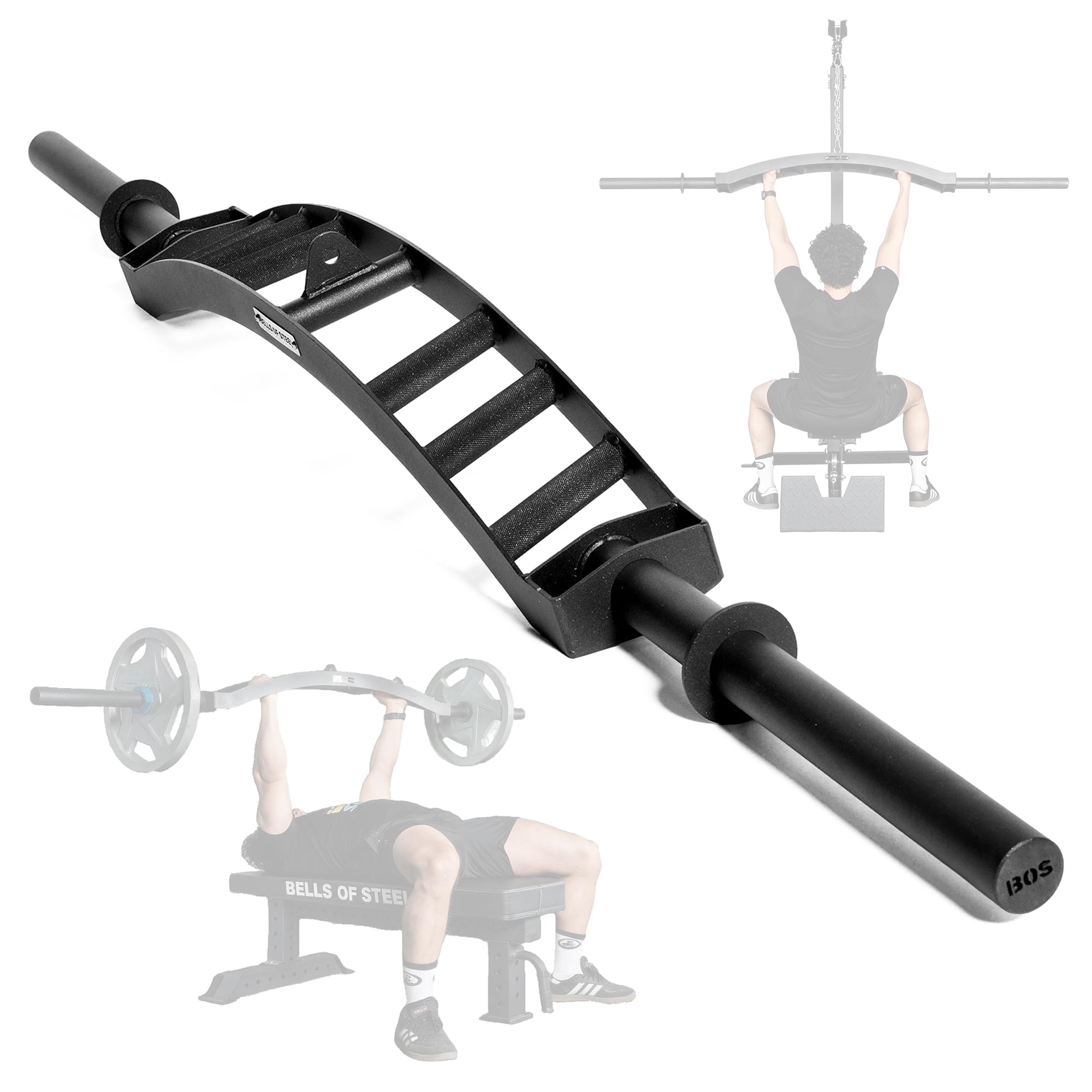
Bells of Steel Arch Nemesis

Bells of Steel Arch Nemesis

Light cambered bar

Our Score 9.0/10
Check Price

Worth Noting

  • 49.7 mm sleeves, so standard collars sit loose
  • 20.7 lb bar weight upends familiar plate math
Bar Weight
20.7 lb
Handle Diameter
1 in
Sleeve Diameter
49.7 mm
Read the full review

At 20.7 lb the Arch Nemesis is the lightest bar here by a good margin, and that one figure explains most of what it is good at. Overhead pressing, curls, triceps extensions, anything where you are wrestling the bar into position rather than lifting it off J-hooks, gets easier when the bar weighs less than half what a standard Olympic bar does. The camber is here too, so you get the deeper pressing groove that makes a neutral-grip bench feel different from a straight bar.

What we did not expect to like was the handle size. One inch, or 25.4 mm, is thinner than the 28 and 32 mm grips on the other bars here, and for smaller hands that is a real advantage: you can wrap your thumb properly instead of chasing the bar around your palm. The knurling is aggressive, the powder coat is dark and even, and the laser-cut end caps give it a finished look the plainer bars here do not have.

The lift list is where it earns its spot. Bench press, floor press, rows, overhead press and triceps extensions from one bar is more range than a pressing-only design gives you. Floor press is the one to try first: with the camber the handles sit below the sleeves, so the start position changes and the light bar weight stops being the thing you notice.

Bottom line: We like the Arch Nemesis for overhead pressing and arm work: 20.7 lb of cambered bar with slim handles, and the easiest of these to get into position without a rack.

#5

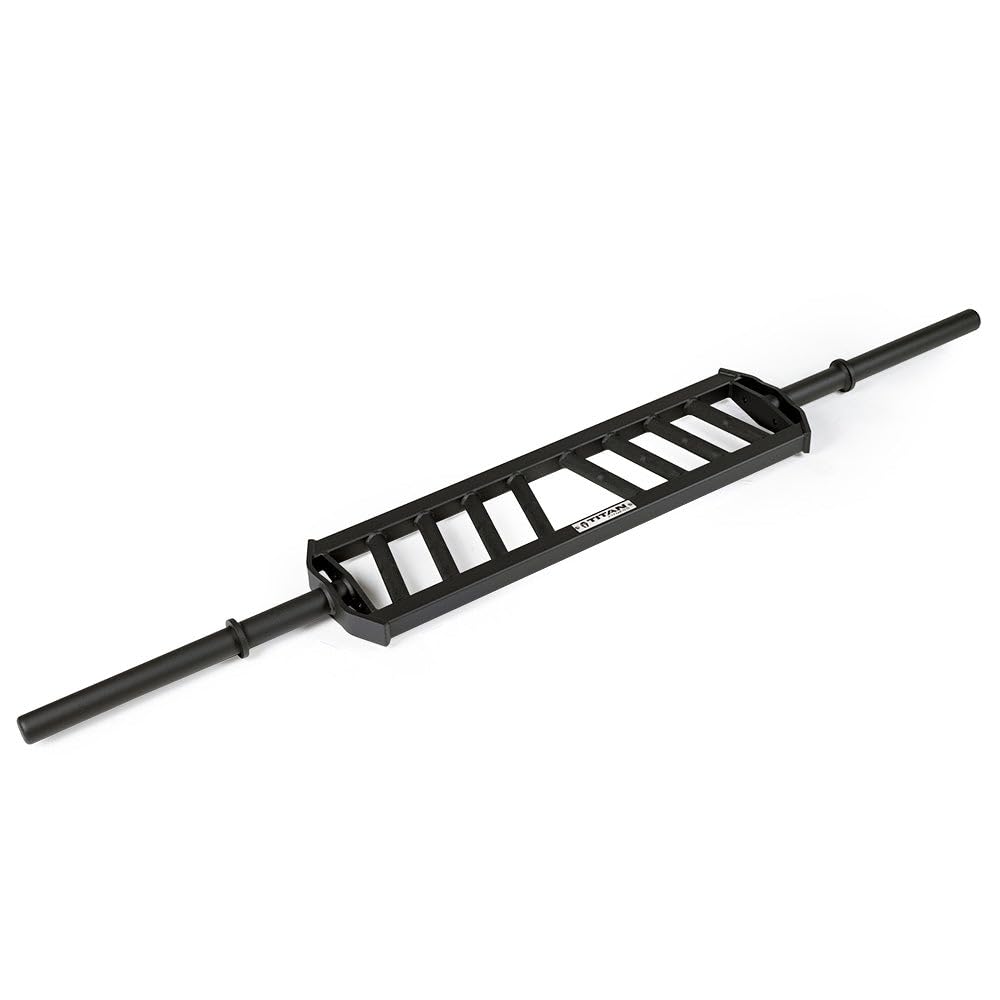
Titan Angled Multi-Grip Bar

Titan Angled Multi-Grip Bar

High-load pressing

Our Score 8.8/10
Check Price

Worth Noting

  • All four grips angled at 30 degrees; no vertical neutral pair
Bar Weight
38 lb
Grip Positions
4 sets, 30 degree angled
Handle Diameter
32 mm
Weight Capacity
1,900 lb
Read the full review

A 1,900 lb rating on a bar you will load with a few hundred pounds is overkill, and that is exactly the appeal: capacity is one question you never have to ask again. Where the cambered Titan we recommend overall trades some rating for a deeper press, this one keeps the grips level with the sleeves, so the stroke stays the length of a normal bench press and the bar behaves like the one already in your rack.

Four sets of 32 mm handles, each with a diamond-textured center knurl mark. The fatter grip fills the hand in a way the thinner bars here do not, and if you have ever felt a multi-grip handle was too slim to trust under a heavy press, this is the fix. The 14.5 inch loadable sleeves are the longest on this page, so a heavy set has room for plates and collars without crowding.

Between the two Titans here, this is the bar for a lifter whose bench is climbing and who wants the bar to stop being the limiting factor first. What it does not offer is range. No camber means no extra stretch at the bottom, and if a deeper press is the reason you are shopping, the cambered bar is the one to buy.

One wrinkle worth sorting out early: the sleeves run slightly under standard Olympic diameter, so plates can shift and spring collars do not clamp the way they should. Clamp-style collars that screw or ratchet tight solve it, and that is a job for before your first heavy set, not during it.

Bottom line: We recommend the angled Titan to the lifter who loads heavy: a 1,900 lb rating, 32 mm handles and the longest loadable sleeve here, with no camber to change the stroke.

How We Chose and Tested Swiss Bars

To build the shortlist, I started with bars actually sold as Swiss or multi-grip bars rather than cambered adapters or handle attachments, then filtered on stated weight capacity, sleeve diameter, and whether the manufacturer published rack compatibility at all. From there I cut anything whose welded handle junctions looked thin in product photos, and anything priced so far above the field that the extra money was clearly buying finish instead of function. Nine bars made the cut.

Grip is where most of our time went. I measured every handle with calipers, compared the diameter against a standard barbell, then benched, pressed overhead, and rowed with each bar bare-handed and again with chalk. Halfway through a chalked set is when you learn whether knurling is real or decorative, and a couple of bars were politely retired at that point. We also racked and unracked each one repeatedly to see whether the handle angle made it awkward to get out of the J-hooks solo.

Rack fit eliminated two more. We seated every bar in 2x2 and 3x3 J-hooks and watched how much it shifted, then slid plates onto the sleeves to check whether they seated flush or wobbled under the collar. Each bar went on a shipping scale against its claimed weight, since an unevenly balanced Swiss bar is a genuinely unpleasant thing to bench. We loaded in 45-pound jumps up to the rated capacity, listening for rattle and watching the welds for flex, then kept using them twice a week for eight months and checked the finish at the handle junctions for rust and flaking.

How to Choose the Right Swiss Bar

Cambered or Straight Grips

On a cambered bar the handles sit below the sleeves, so the load hangs lower relative to your hands and every press travels further. That extra range is the reason to buy one: it puts more demand on the bottom of a bench press and tends to sit better with shoulders that dislike a straight bar. A flat multi-grip bar keeps the handles level with the sleeves, so the stroke matches a normal bench press.

If you are buying a single bar to press for strength and range, camber earns its keep. If you want a direct supplement to the bench you already train on, the flat geometry is the easier one to slot into a program.

Grip Positions: Three Is Usually Enough

The bars here run from three grip positions to six, and most lifters end up living on two of them: a narrow pair for close-grip pressing and triceps work, and a neutral pair at roughly shoulder width for everything else. The count matters less than the spacing. A widest grip that lands near 28 inches apart suits a broad-shouldered lifter and frustrates a narrow one.

So check the actual spacing rather than the number of handles, and treat angled grips as a middle option rather than a replacement for a true vertical neutral pair.

Sleeves, Collars and the Two-Inch Assumption

Every bar here is sold as an Olympic bar, and that does not guarantee a true two-inch sleeve in practice. Several run a fraction under, which is enough for spring collars to sit loose and plates to shift the moment you tilt the bar to rack it.

Decide what you will clamp with before you order. If it is the spring clips that came with your plates, compare them against the listed sleeve diameter. If you are willing to buy clamp-style collars that tighten down, most of these bars stop being a problem.

What the Bar Weighs, and Why It Matters Twice

Multi-grip bars are lighter than the 45 lb Olympic bar you are used to. The ones here run from about 21 lb to 39 lb, which is a genuine handling advantage when you are pressing overhead or wrestling a bar into position for curls, and a bookkeeping problem the first time you load what you think is a familiar weight.

Read the rated capacity at the same time. Somewhere around 300 lb is fine for pressing and arm work, while a lifter whose bench is climbing wants headroom well past current numbers. Write the bar weight on the sleeve in marker if you will be doing the math mid-session.

Frequently Asked Questions

Final Verdict

The Titan Fitness cambered multi-grip bar is what we point strength-focused lifters to, and the camber is the whole argument: it turns a shoulder-friendly press into a longer, harder one instead of an easier substitute. The 1,000 lb rating means you will not outgrow it, and three grip positions cover close-grip work through rows.

If capacity is not the concern and money is, the Yes4All covers the same movements at the entry level. If four hand positions matter more than a heavy ceiling, the Valor is the better fit.