Strength & Weights

Best Roman Chairs of 2026

A roman chair looks like a simple piece of gym equipment until you're hanging over one, wondering whether the frame will stay put. The good ones give you a stable base for back extensions, glute raises, and core work—no wobble, no pinching, no fiddling with pads mid-set. The wrong ones turn a simple hinge into a balance test, and that is usually where the shopping regret starts.

I have used roman chairs in cramped spare rooms and full gyms, and the same things separate a keeper from a return: a frame that doesn't shift, pads that stay comfortable through a full set, and an assembly process that doesn't require a second person. We spent eight months with 12 roman chairs, folding in the ones that fit different spaces, bodies, and budgets. What follows is what held up when we actually trained on them—not just what looked sturdy in the box.

#1

XDDIAS Roman Chair

Top Pick
XDDIAS Roman Chair

Taller users

Our Score 9.2/10
Check Price

Worth Noting

  • 47.4 pounds, 59.6 inches, and no fold
Item Weight
47.4 lb
User Height
Up to 6 ft 6 in
Weight Capacity
1000 lb
Pad Height Settings
11
Read the full review

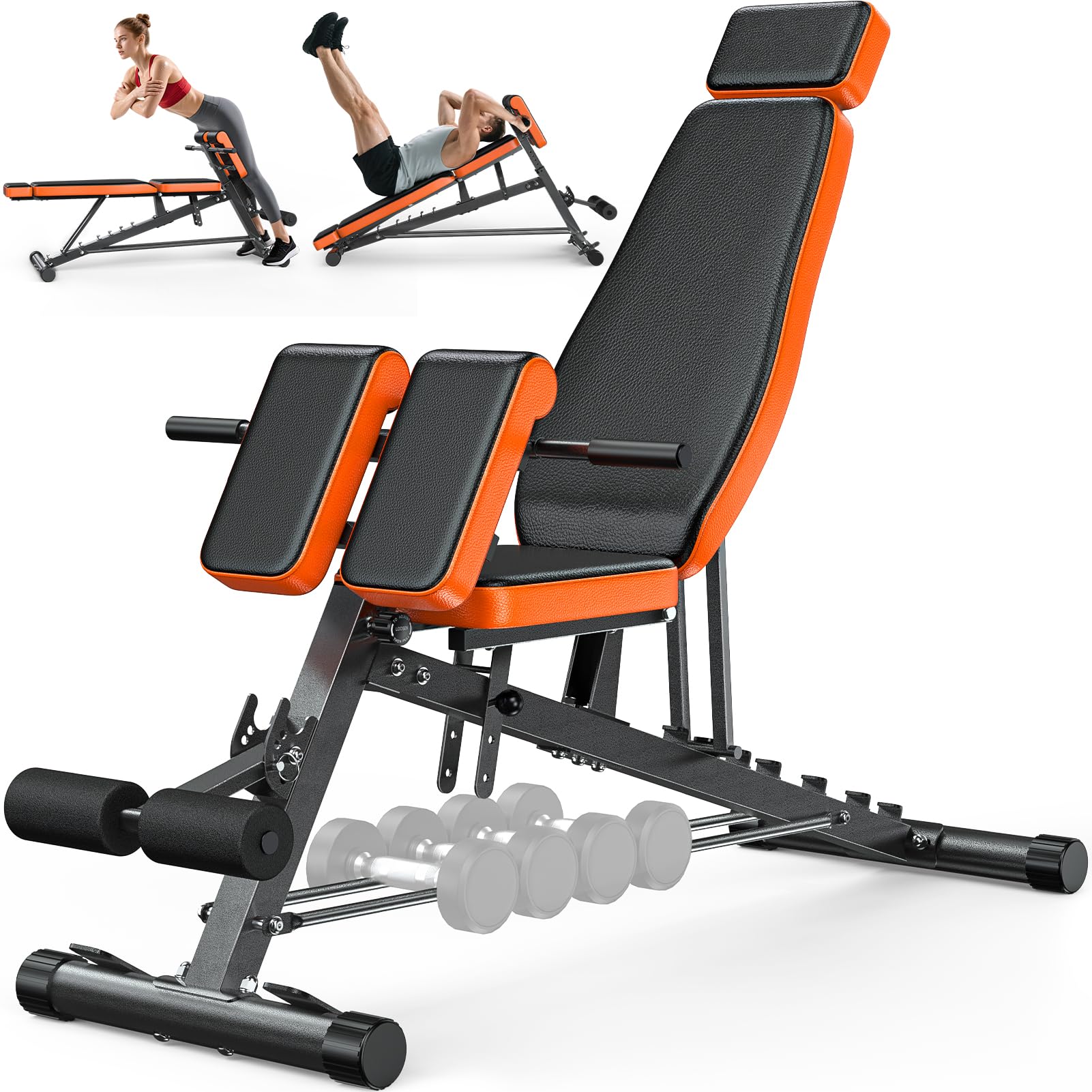
Most of the benches here run out of adjustment around six feet of user height. This one keeps going: a 47-inch head support, 11 pad heights, and enough travel that a 6-foot-6 lifter can get the pad under the hip crease instead of the ribs. That range is why it earns a place in a roundup this size.

Two pad widths is the clever bit. Narrow, the split pads clear your arms for lower-back and glute work; wide, they support obliques, side bends, and core work, with the handles widening to match. Add eight backrest angles and three seat positions and you can set this up for extensions, incline sit-ups, and pressing without reaching for another machine.

At 47.4 pounds and 59.6 inches long with no fold, it stays where you put it, so measure the corner before you order. Assembly is the smoothest of these — hardware bagged and numbered step by step — which matters when a bench this size arrives in pieces. You pay for the range in floor space and in the effort of moving it, and for a lifter over six feet that is the right trade.

Bottom line: We point taller lifters here: head support and pad travel that reach six feet six inches, two pad widths, and a frame rated to 1,000 pounds.

#2

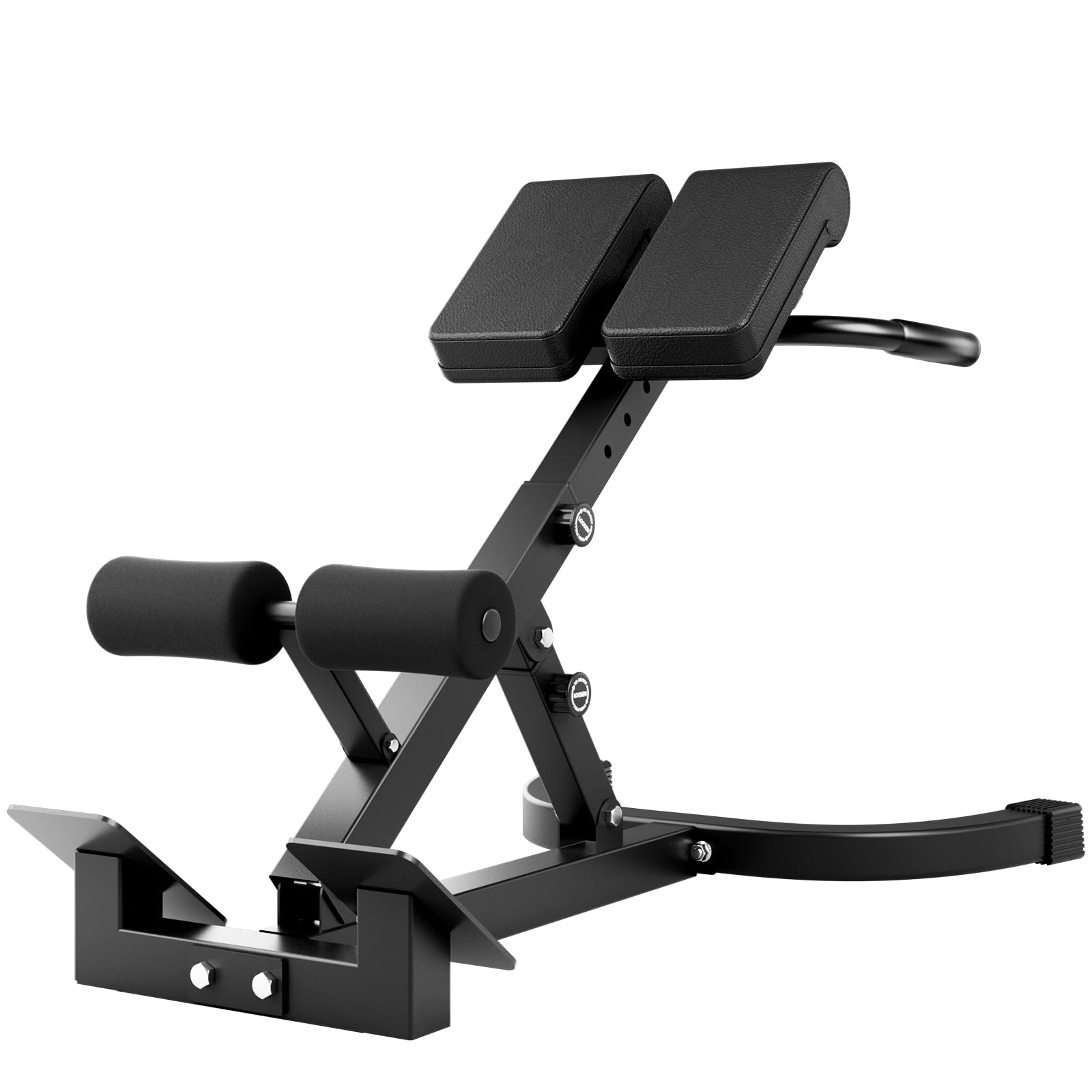
Lifepro SculptTrainer

Lifepro SculptTrainer

Most home gyms

Our Score 8.8/10
Check Price

Worth Noting

  • Still about 38 inches long when folded
Storage
Folds flat
Footprint
38.2 x 22.2 in
Item Weight
19.8 lb
Weight Capacity
330 lb
Read the full review

Folding flat takes a few seconds, and that is why this one holds the top spot. At 19.8 pounds with a 38.2 by 22.2 inch footprint, the SculptTrainer stands in a closet or slides under a bed between sessions, which is the difference between a back-extension habit and a bench you stop noticing after three weeks. The 330-pound rating rides on square-steel tubing and a wide stabilizer base, so there is real structure behind the number.

The hip pad moves through height positions so the pad edge lands under your hip crease rather than your ribs, and the padded ankle rollers hold your legs still while you hinge. If it arrives sitting crooked, loosen the frame bolts, set the whole thing on a level floor, and tighten them in sequence before your first set — that is the one assembly detail worth taking slowly.

The grip handles open up dips, side bends, and incline push-ups, so the bench earns its floor space even on days you skip extensions. What you give up is capacity — the Marcy and the XDDIAS both out-lift it — and what you keep is a station that disappears into a closet when the workout ends.

Bottom line: Our default pick: it folds flat, weighs under 20 pounds, and adjusts to fit most bodies, so a roman chair can live in a small home gym without taking it over.

#3

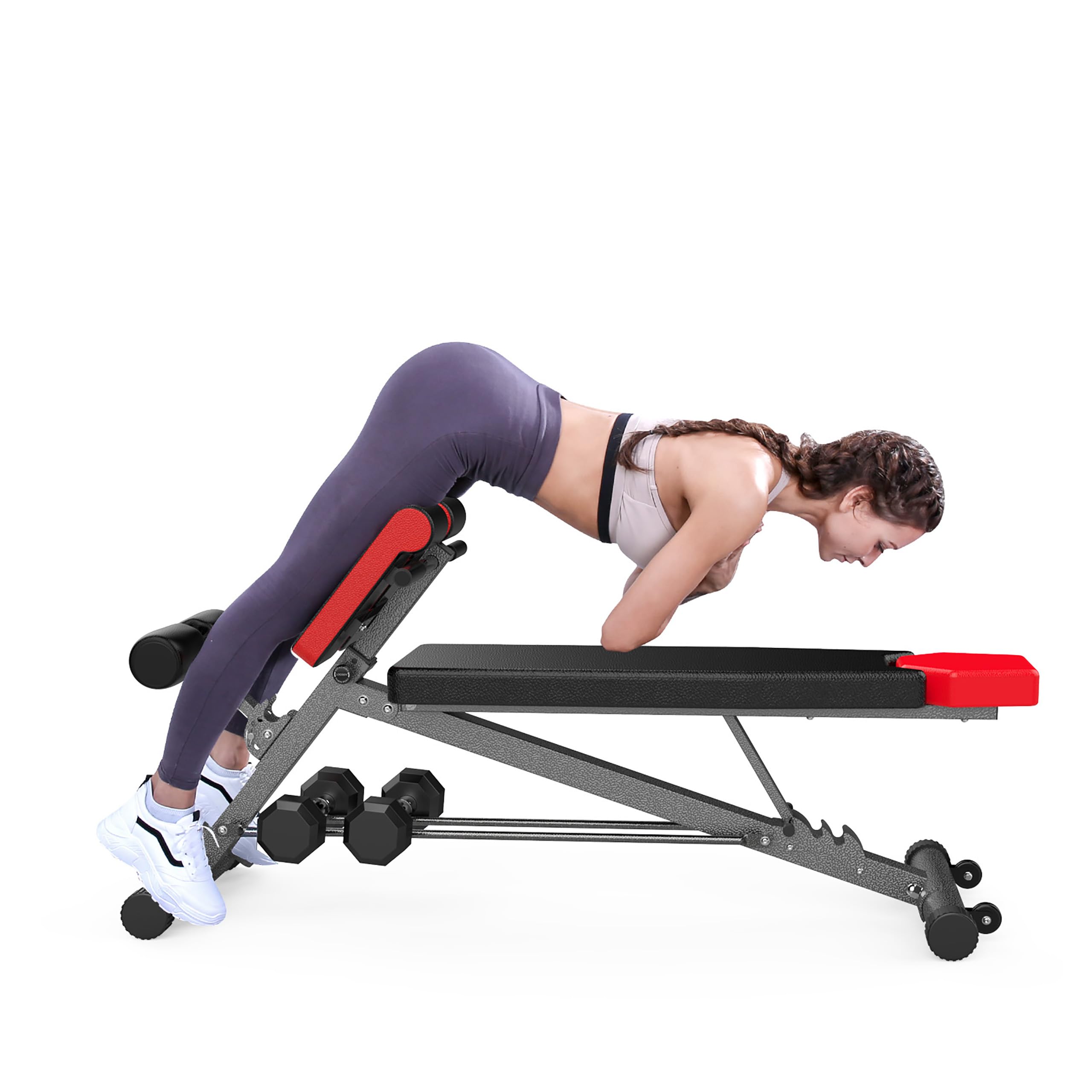
Finer Form Multi-Functional

Finer Form Multi-Functional

Bench plus extensions

Our Score 8.8/10
Check Price

Worth Noting

  • Can shift under heavy pressing
  • Five-foot footprint, and it doesn't fold
Footprint
60.5 x 19.75 in
Item Weight
38 lb
Weight Capacity
660 lb
Back Extension Levels
8
Read the full review

Eight back-extension levels, a flat setting, and decline positions on a single 660-pound frame — this is a weight bench that happens to be very good at back extensions, or the other way around, depending on the day. The 60.5-inch pad length is the giveaway that pressing came first.

We recommend it to anyone whose gym is one bench: press flat, drop to decline, then set the hip pad and rollers for extensions. As a pure roman chair it gives ground to the Lifepro — five feet of floor instead of three, 38 pounds instead of 20, and more money — but nothing else here covers chest and back on the same frame.

Look closely at the base before you load it. The triangular support and 38 pounds keep it composed for extensions, but a bench this light can shift under heavy pressing, and the pad is sized for average frames rather than long torsos.

Bottom line: If one bench has to cover pressing and back extensions, this is the one we recommend: a 660-pound frame with eight extension levels on a five-foot footprint.

#4

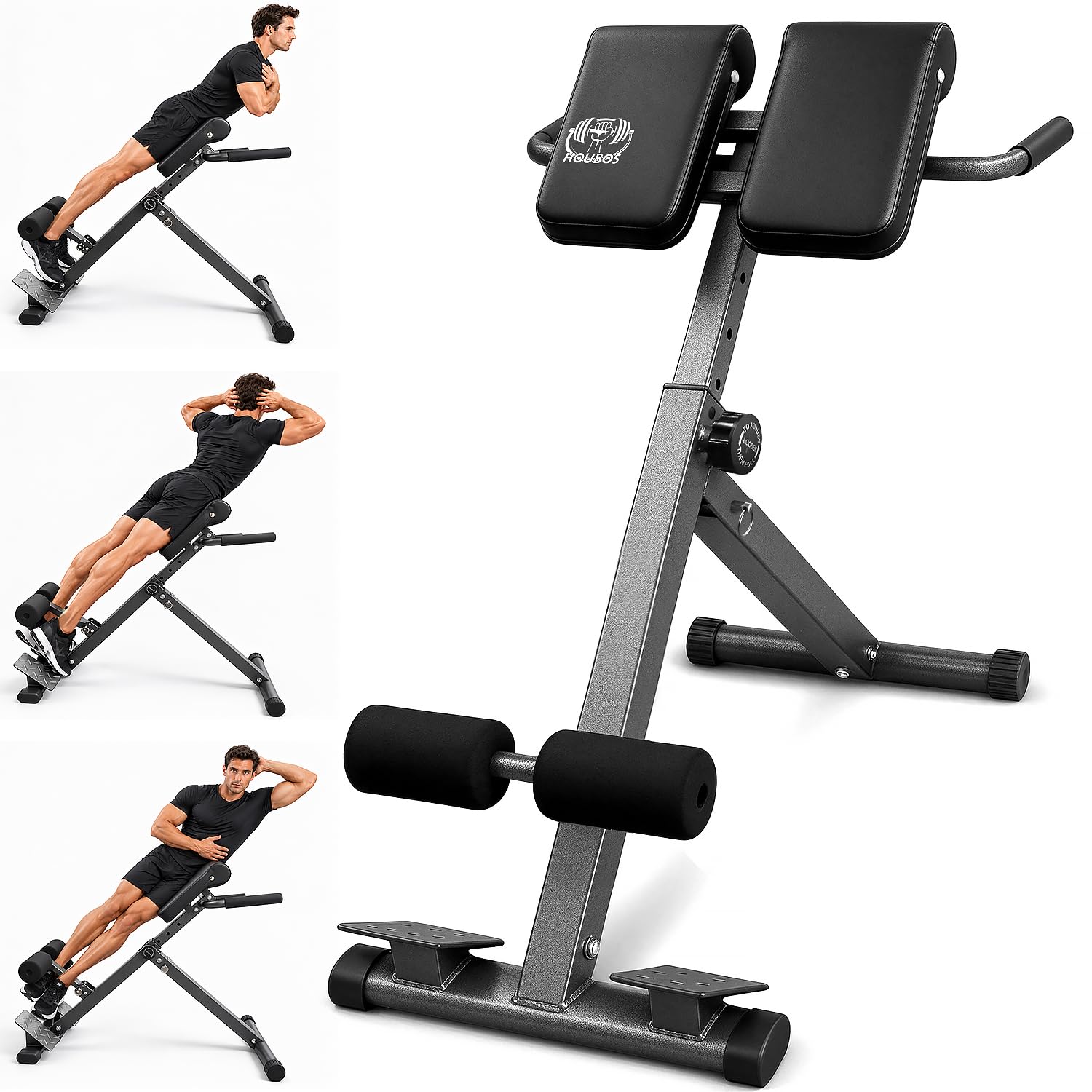
Houbos Foldable

Houbos Foldable

Small spaces

Our Score 8.8/10
Check Price

Worth Noting

  • 250-pound rating limits heavier users
Footprint
36.2 x 16.9 in
Item Weight
19.8 lb
Height Settings
8
Weight Capacity
250 lb
Read the full review

At 36.2 by 16.9 inches, this is the smallest footprint in the group — closer to a kitchen chair than to the five-foot benches. It still has proper footrests and a three-stage leg support, rather than a single flat plate, which is the part compact designs usually get wrong.

Two limits define who it is for. The frame carries 250 pounds, and the height range is aimed at users between five and six feet. At 220 pounds and 6-foot-2 you are outside both and no adjustment fixes that; at 5-foot-8 and 170 pounds you are comfortably inside it.

For an apartment or a spare-bedroom gym, it does the job quietly: eight height positions, half an hour of assembly with most bolts pre-installed, and a fold that leaves it flat against a wall. It sits at the low end of this group on price, and nothing about it feels like a downgrade in the movement itself. Start light, get your hip crease over the pad edge, and it will hold up as well as anything here for a lifter its size.

Bottom line: For a corner of a small room this is the one we point people to: a 36-inch footprint, under 20 pounds, a flat fold, as long as 250 pounds covers you.

#5

FITKS360 440 lb

FITKS360 440 lb

Angle variety

Our Score 8.8/10
Check Price

Worth Noting

  • Heaviest folding bench here at 30.8 pounds
Item Weight
30.8 lb
Angle Settings
5
Height Settings
8
Weight Capacity
440 lb
Read the full review

Angle adjustment is the feature: five settings on a 45-degree frame, so you can move from a true hyperextension to a shallower incline for sit-ups without reaching for another machine. Eight height positions set the pad end for your hips.

The frame is rated to 440 pounds, the highest stated capacity among the folding benches here, and it folds flat in seconds. At 30.8 pounds it is also the heaviest folder in this group — roughly half again the weight of the Lifepro and the Houbos — so the fold is for storage, not for carrying it between rooms.

If you want a folding bench that also handles decline sit-ups and side work, those extra angle settings are worth the extra weight. If storage is the priority, the Lifepro folds lighter and costs less; if raw capacity is, the XDDIAS and the Finer Form go higher still.

Bottom line: We like the adjustment range on this one — five angles and eight heights on a 440-pound frame — though it is the heaviest folder here, so it wins on variety rather than portability.

#6

Stamina 2014

Stamina 2014

First bench

Our Score 8.8/10
Check Price

Worth Noting

  • Base shifts on carpet under load
Storage
Folds for storage
Item Weight
20 lb
Frame Material
Carbon steel
Weight Capacity
250 lb
Read the full review

Twenty pounds is the number that matters. The 2014 folds, stands against a wall, and moves with one hand, and it is light enough that the fold is a real feature rather than a line on a spec sheet.

The layout is the familiar Stamina one: height-adjustable back and leg cushions, pivoting foam rollers, wide non-slip handles, and a fold that takes seconds. The müüv app adds guided coaching and demo videos, which is more useful than it sounds if you have never set up a hyperextension before.

We treat this as a starter bench. It is the least intimidating machine here, it stores like a step ladder, and the 250-pound rating leaves little margin for a heavier lifter adding resistance. Start with bodyweight and a short range, and the 2014 will teach you the movement before you spend on a heavier frame.

Bottom line: A light folding bench for back-extension work at home: the 20-pound frame is why it moves easily and also why it shifts a little under load.

#7

Marcy JD3.1

Marcy JD3.1

Fixed, planted setup

Our Score 8.6/10
Check Price

Worth Noting

  • Thin padding where the hips rest
Item Weight
42 lb
Frame Material
Iron
Weight Capacity
308 lb
Read the full review

Forty-two pounds of iron tubing is the whole argument. The JD3.1 does not fold, adjusts little beyond its two foam leg holders, and makes no attempt to be a pressing bench — it is a hyperextension station, and it feels like one the moment you lean into it.

The contact points are why it works: high-density foam under the hips, rollers that hold your ankles without slipping, and padded handles within reach when you want to pull yourself back up. Back support is the strongest part of the design, and a full set of extensions feels controlled rather than loose.

Height is the catch. The distance between the hip pad and the rollers suits users under about six feet, so if you are six feet or taller, the XDDIAS is the better buy — this one will have you cramped over the pad instead of hinging clear of it.

For a bench with a permanent spot on the floor, this is our pick of the fixed frames: heavy, simple, and cheaper than the other two benches here that don't fold. It will not fold, it will not press, and it will not grow with a taller owner — but it will still be standing exactly where you left it.

Bottom line: A no-frills iron bench that stays planted through every rep; buy it if you are under six feet and the bench never leaves its corner.

How We Tested and Chose the Best Roman Chairs

We started by researching the roman chairs sold by major fitness retailers and specialty strength brands, then narrowed the field by footprint, supported user height, adjustment range, frame material, pad thickness, and price relative to features. We ended up with 12 models, all built and used over eight months in home gyms, a spare bedroom, and a garage. Each one was assembled solo with the included tools and instructions; we timed the build and noted where the directions were vague, where bolts were hard to reach, and whether one person could safely flip the unit into place.

Once set up, every chair went through the same workout rotation: back extensions, glute-focused raises, and core work, done in morning and evening sessions by testers of different heights. We rocked each frame side to side before loading it, then paid attention to whether the feet slid on carpet or hardwood during sets. We measured the footprint with a tape and checked whether the hip pad and ankle rollers could be adjusted without tools; comfort was judged by whether pressure points appeared during a full set, not by squeezing the foam once.

Over eight months we kept checking the details that separate quality from a good first impression: loose bolts, creaking joints, compressed padding, stitching, and finish wear. We also compared how much variety each chair handled—some felt fine for back extensions but awkward for glute raises—and whether the extra adjustment or padding was worth the added cost. The picks below are the ones that stayed stable, comfortable, and easy to live with after the new-equipment shine wore off.

How to Choose Roman Chairs

Match the pad to your hip crease

When you lie on a roman chair, the front edge of the hip pad should sit just below the crease of your hip, so your torso can travel past horizontal without your ribs catching the foam. Too high and you are doing a crunch against a pad; too low and you slide forward with every rep. This is the fit that decides whether the movement feels natural or fights you.

It is also where the picks separate. The Marcy suits users under about six feet, the Houbos is built for five to six feet, and the XDDIAS stretches to six feet six inches. Take your height seriously here before you compare anything else.

Treat the weight rating as a ceiling

Capacities in this group run from 250 to 1,000 pounds, and the number describes the frame rather than your comfort on it. A 250-pound bench under a 220-pound lifter has almost no margin for the drop at the bottom of a rep, and that is the moment frames flex. If you plan to hold a plate against your chest, leave real headroom.

Weight is the other half of that story. The heavy fixed benches, at 42 and 47 pounds, feel calmer under load partly because more steel is resisting for you — a trade you notice every time you move one across the room.

A wider base beats a clever fold

Wobble comes from the base and the joints, not from the pad. Benches with a broad stance resist side-to-side tipping better than the narrowest folders, which sit around 17 inches across against 26 inches on the widest of these. If your gym floor is carpet, put a hard mat under the feet and retighten every bolt after the first week; a joint that was never fully seated will make any frame feel loose.

Decide where it lives before you decide what it does

A folding bench only helps if the folded size fits the gap you actually have: the Lifepro still needs about 38 inches of length, the Houbos about 36. If the bench stays out between sessions, buy for stability and skip the fold entirely, because the fixed frames are heavier and more planted.

Either way, keep clear floor in front of the pad. Your torso travels below horizontal on every rep, and a bench wedged against a wall turns a good hinge into a cramped one.

Frequently Asked Questions

Final Verdict

Most home gyms should buy the Lifepro SculptTrainer. It folds flat, weighs under 20 pounds, holds 330 pounds, and adjusts enough that a shared room can hold a real back-extension station without surrendering the floor. The trade is capacity, and that is a fair price for most lifters training bodyweight and light plates.

Two requirements change the answer. If you are six feet or taller, buy the XDDIAS for the head support and pad travel. If one bench has to cover pressing as well, the Finer Form does both jobs on a 660-pound frame.