Strength & Weights

Best Olympic Lifting Barbells of 2026

The bar is the last thing many lifters upgrade and the first thing that limits them. A cheap bar can spin poorly, chew up your hands, or develop a bend after a few missed cleans, and suddenly every lift feels like a negotiation. I’ve lifted on chalk-caked gym bars and shiny new garage purchases, and the difference usually shows up in the knurling, the sleeve rotation, and whether the bar stays true after it hits the platform. A good Olympic barbell fixes all three without making you feel like you need a second mortgage.

Over the past 10 months, my team and I tested eight Olympic lifting barbells across garage gyms and training platforms, running them through squats, deadlifts, cleans, snatches, and presses. We weighed each one, checked how plates and collars fit the sleeves, and paid attention to grip with chalk and sweaty hands. Some bars felt great on day one but showed finish wear or a stubborn bend later; others were plain-looking and just kept doing the work. The picks below are the ones that held up and still felt worth their price.

#1

XMARK Lumberjack Olympic Barbell

Top Pick
XMARK Lumberjack Olympic Barbell

All-round home lifting

Our Score 9.6/10
Check Price

Worth Noting

  • Brass bushings spin less freely than needle bearings
Bar Weight
44.1 lb
Max Capacity
1000 lb
Shaft Diameter
28 mm
Sleeve Rotation
Brass bushings
Read the full review

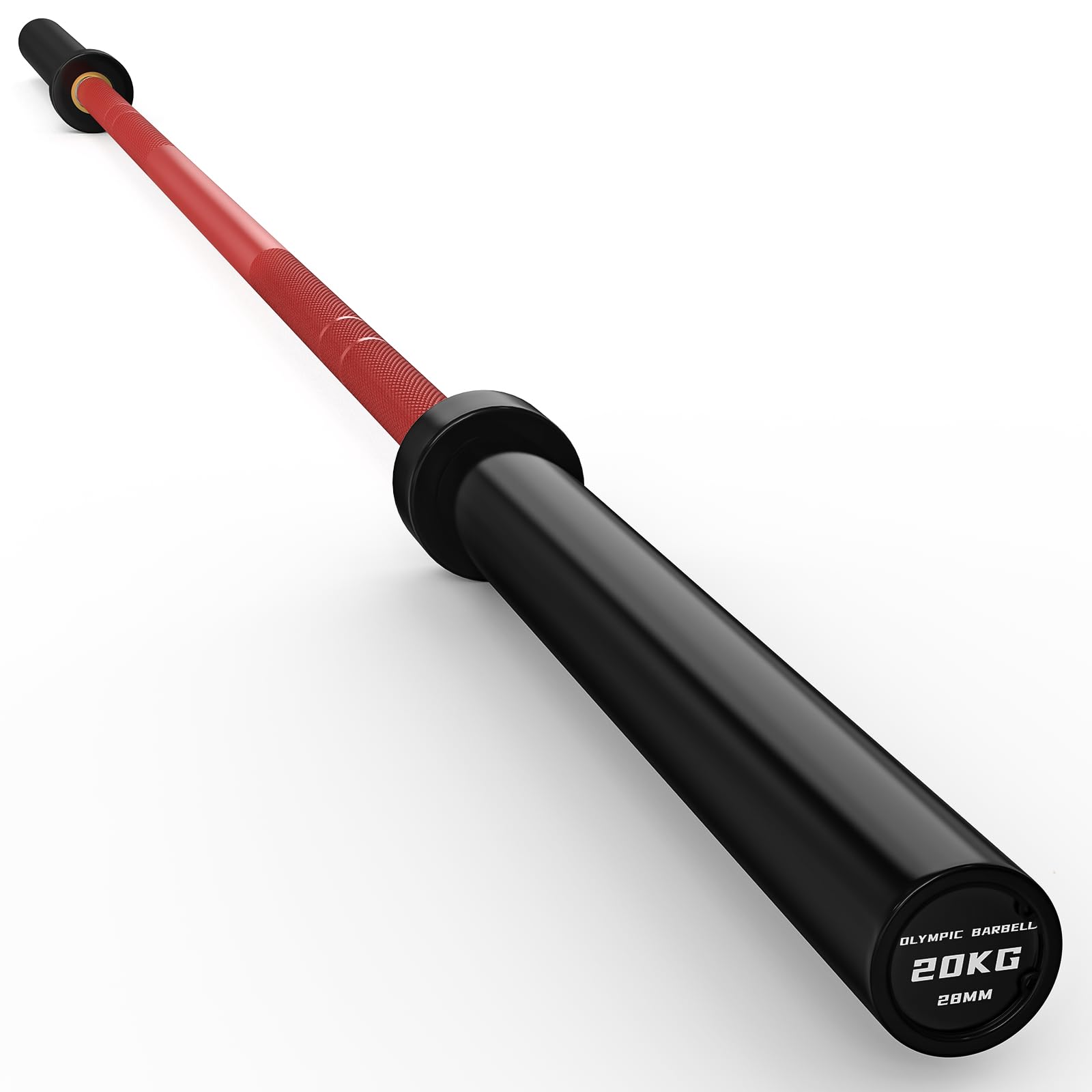
Twenty-eight millimeters is the diameter Olympic bars are built around, and it's the first thing that made the Lumberjack feel familiar in the hand. The shaft weighs 20 kg, the knurl is medium rather than aggressive, and there's a slight, controlled flex under load that gives a clean some life without turning a squat into a diving board. For a home platform that's the balance most lifters can live with every session.

Sleeve rotation is smooth and quiet, and 16.25 inches of loadable sleeve leaves room for a stack of bumper plates plus a collar. The black manganese phosphate shaft grips chalk rather than slicking up the way polished chrome can, the chrome sleeves let plates slide on without a fight, and the snap-ring construction means there's no end cap working loose mid-set.

Moisture is where the finish gives ground. Left on a concrete floor through a humid summer, rust can start on the shaft, so wipe it down after a sweaty session and keep it horizontal on a rack. That's a habit, not a flaw you have to tolerate.

Against the rest of this group the picture is simple: the Mikolo out-spins it, the HANDBODE undercuts it, and neither is as complete a single bar. Ours stayed on the rack between sessions, which is the most honest recommendation we can give.

Bottom line: For one bar that handles squats, cleans, and everything between, the Lumberjack is the most complete package here: a 28 mm, 20 kg shaft with a medium knurl and sensible whip.
#2

Mikolo 7ft Olympic Barbell

Mikolo 7ft Olympic Barbell

Olympic lifts

Our Score 9.6/10
Check Price

Worth Noting

  • Smooth center section is less secure for squats
Bar Weight
45 lb
Max Capacity
1500 lb
Shaft Diameter
28 mm
Sleeve Rotation
8 needle bearings and brass bushings
Read the full review

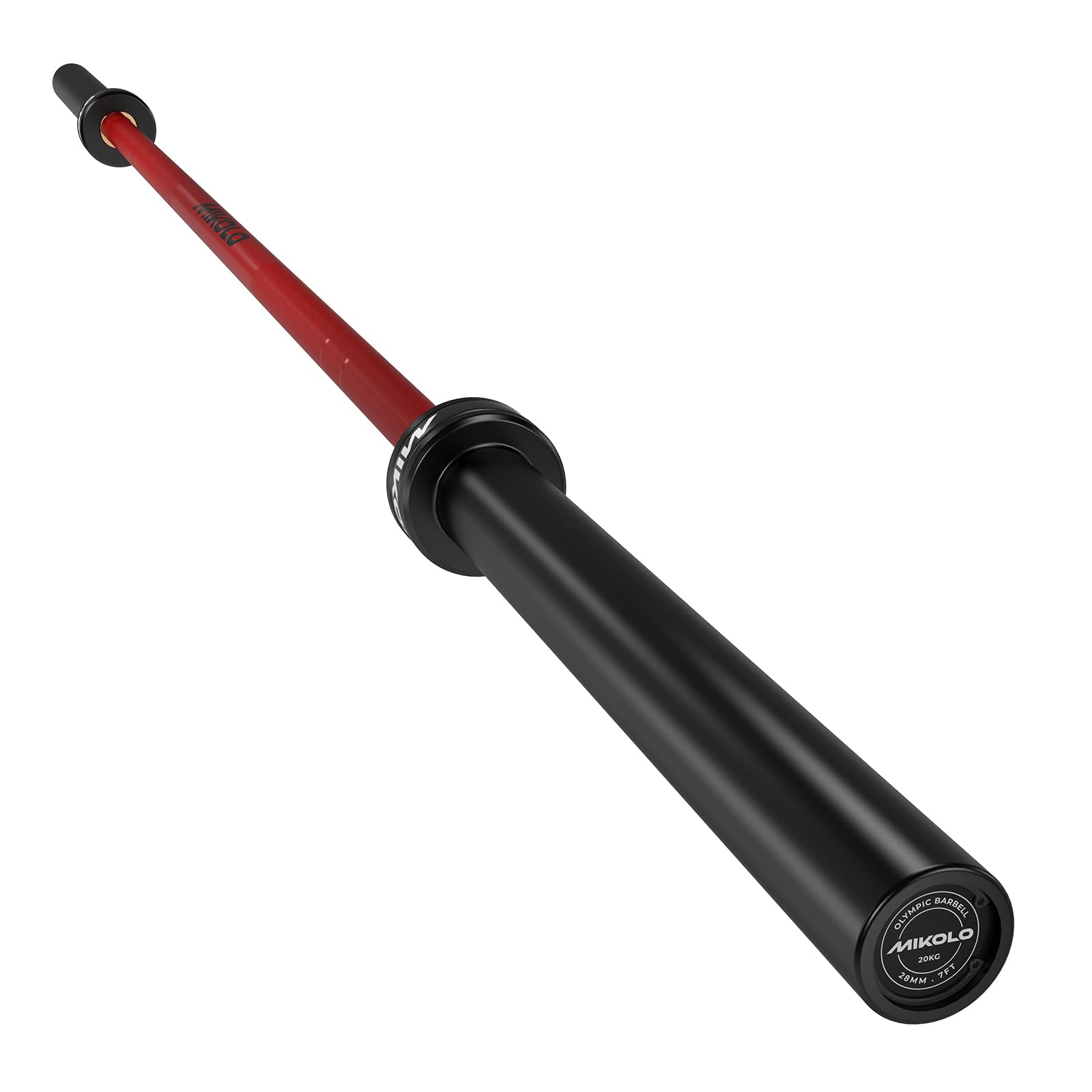
Eight needle bearings is more than any other bar here carries, and the difference shows the moment the bar leaves the floor. The sleeves rotate independently of the shaft and keep rotating under load, so a clean finishes with the bar turning in your hands instead of dragging against them.

That's why this is the bar we hand to anyone training the quick lifts seriously. The shaft is the standard 28 mm, the steel is rated to 1,500 lb, and dual knurl marks let you set the same hand position for a weightlifting grip and a powerlifting one. The bearings run silent too, which matters when the platform is in the house rather than the garage.

The finish is why it looks expensive: a red-and-black scheme that resists the scuffing plain chrome shows within weeks, with a 1.2 mm knurl depth that feels secure rather than punitive. It's the priciest bar in this group, and the premium buys bearings rather than decoration.

If you squat and bench more than you snatch, the XMARK does the same job with bushings that never need a thought. If the quick lifts are the reason you're building the platform, the extra rotation earns its keep.

Bottom line: For lifters whose training is built around the snatch and the clean, the Mikolo's eight needle bearings and dual marks make it the best-specified Olympic bar in this group.

#3

HANDBODE 7ft Olympic Barbell

HANDBODE 7ft Olympic Barbell

Budget home gyms

Our Score 9.6/10
Check Price

Worth Noting

  • Weight can come in under the stated 45 lb
Bar Weight
45 lb
Max Capacity
1000 lb
Shaft Diameter
28 mm
Sleeve Rotation
4 needle bearings
Read the full review

Cheap bars usually give up the same three things: the shaft goes to 30 mm, the knurl gets coarse, and the sleeves barely turn. The HANDBODE keeps all three — a 28 mm shaft, volcano knurling, and four needle bearings — for about half what the midrange bars here cost, which is the kind of arithmetic that makes a first home gym possible.

The knurl is where we were most pleasantly surprised. Volcano patterns can be vicious; this one has bite without needing chalk, and a long set of cleans didn't leave our hands raw.

The sleeves spin the way needle bearings should, the bar runs 86.6 inches end to end with 16.3 inches of loadable sleeve, and the dual marks are there for hand placement. The finish is spray-applied over E-coated sleeves; it looks sharp out of the box, though three winters in an unheated garage is a test we haven't run.

For a first bar that's a fair trade: the shaft and the rotation are what you feel on every rep, and the finish is what you don't.

Bottom line: If you want a real 28 mm Olympic shaft and sleeves that spin, without midrange money, this is the bar to start with.

#4

PAPABABE 7ft Olympic Barbell

PAPABABE 7ft Olympic Barbell

Big hands, pressing

Our Score 9.6/10
Check Price

Worth Noting

  • Chrome can pit in a humid garage
Bar Weight
44.1 lb
Max Capacity
1000 lb
Shaft Diameter
30 mm
Sleeve Rotation
Needle bearings and bushings
Read the full review

Thirty millimeters doesn't sound very different from twenty-eight until you wrap a hook grip around it. The PAPABABE's shaft is noticeably fatter in the hand — comfortable for pressing and squatting, and a genuine nuisance if you're holding a snatch grip at the top of a pull.

That's the trade at the heart of this bar. It's a stiff, 190,000 PSI, 1,000 lb platform bar at a budget price, and the hybrid needle bearing and bushing sleeves turn well enough for most training. We think it's a sensible buy for a lifter with big hands who squats and presses far more often than they snatch, and a frustrating one for anyone whose training is built on the quick lifts.

The knurl sits on the sharp side of medium and can leave your hands marked over high-rep sets. What we liked beyond the shaft: 51.57 inches of shaft length that fits a standard power cage with room to spare, 16.14 inches of loadable sleeve, and a look that reads more expensive than it is.

Bottom line: The pick for big hands and pressing-heavy training: a stiff 30 mm bar rated to 1,000 lb that costs less than the midrange options.

#5

LIONSCOOL 7ft Olympic Barbell

LIONSCOOL 7ft Olympic Barbell

Blacked-out home gyms

Our Score 9.4/10
Check Price

Worth Noting

  • Can arrive slightly out of true; roll it first
Finish
Black E-coating
Bar Weight
44.1 lb
Max Capacity
700 lb
Shaft Diameter
28.5 mm
Read the full review

The all-black finish is the first thing you notice, and it isn't vanity: an E-coated shaft doesn't show chalk dust and rack scuffs the way polished chrome does, so the bar still looks new after a month of daily use.

The shaft measures 28.5 mm, half a millimeter over the Olympic standard, which you feel more in a hook grip than in a squat. Hybrid sleeves pair needle bearings with bushings for a smooth, quiet spin, and the 1.5 mm diamond knurl has flattened tops that hold without tearing at your palms.

Capacity is where it gives ground: 700 lb on this variant against 1,000 on our top pick for similar money. That's plenty for most home lifters and not plenty for a strong one, and we think that number decides the bar for you — the finish and the spin are what you're buying.

Bottom line: A good-looking, smooth-spinning 28.5 mm bar for lifters who want an all-black finish and can live with a 700 lb ceiling.

#6

RitFit Elite 7ft Olympic Barbell

RitFit Elite 7ft Olympic Barbell

Warranty-minded lifters

Our Score 9.4/10
Check Price

Worth Noting

  • 500 lb rating limits stronger lifters
Warranty
Lifetime against bending
Bar Weight
44.1 lb
Max Capacity
500 lb
Shaft Diameter
28 mm
Read the full review

A lifetime warranty against bending is a confident thing to put on a barbell, and it's the reason the RitFit Elite earned a place here. The bar is a 28 mm, 20 kg hybrid with needle-bearing sleeves — stiff enough for a heavy squat, with enough give for a clean.

The variant matters enormously. The one we looked at is rated to 500 lb, and the same bar is sold in higher capacities; the lowest-rated version is the cheapest way in and the one that will stop a strong lifter soonest. Check which rating you're buying, because that number is what the bar is built to hold.

The oxide finish is the other soft spot. It shows handling marks quickly, and rust can appear where the bar sits in a damp room; a wipe-down and a wall rack handle most of it.

So the Elite makes sense for a lifter with a modest ceiling who wants a warranty standing behind the bar. If your numbers are already well past what this variant is rated for, the XMARK is the better buy at the same money, warranty or not.

Bottom line: Buy it for the lifetime warranty and the needle-bearing sleeves, provided the 500 lb rating on this variant is a ceiling you're comfortable with.

#7

Yaheetech 7ft Olympic Barbell

Yaheetech 7ft Olympic Barbell

Light home training

Our Score 9.4/10
Check Price

Worth Noting

  • 330 lb capacity caps long-term progress
Bar Weight
35.9 lb
Max Capacity
330 lb
Sleeve Length
13.6 in
Shaft Diameter
30 mm
Read the full review

The bar weighs about 36 lb, not 45, and that's the fact that should decide your purchase. A 7-foot bar nine pounds lighter than a standard Olympic bar changes the math on every lift, and the rating printed on it reflects that lighter build rather than a stricter testing standard.

What you get for the money is a full-length bar with 2-inch sleeves, a medium diamond knurl, and spring collars in the box — enough to squat, press, and row in a garage without buying anything else. The chrome looks sharp, the knurl is comfortable in the hand, and the bar arrives ready to load.

We think that's a fair trade for a first bar, because you're buying length and plate compatibility rather than a 20 kg training tool. Chrome is also the part that ages fastest: it can flake where plates rub and where the bar sits in a rack, and the sleeves can be snug enough that bumper plates need a firm push. Buy it for light training in a small space, and plan to replace it once your squat approaches what the bar is rated to hold.

Bottom line: A full-length chrome bar for light training at home — buy it knowing it weighs about 36 lb and is rated to a fraction of what a platform bar takes.

How We Tested Olympic Lifting Barbells

We started with a shortlist of Olympic bars sold for home and commercial gym use, then narrowed it by stated weight capacity, bar weight, sleeve diameter, knurl pattern, and price. Eight bars made the cut, and we used them for 10 months in garage gyms and on training platforms. Each bar saw squat and deadlift sessions, clean and snatch work, and overhead pressing, usually with a mix of iron and bumper plates and whatever collars were within reach.

On day one, we weighed every bar on a scale and checked how plates and collars slid onto the sleeves. We noted whether the knurling bit through chalk and sweaty hands or felt sharp enough to sting, and we watched how freely the sleeves spun during cleans and snatches. We also checked that the ring markings sat where they should for grip width. Then we loaded each bar in stages toward its stated capacity—never beyond—and paid attention to whip on heavy pulls versus how stable it felt on presses. After platform drops, we rolled each bar on a flat surface to check for bends and looked over the finish for chips, rust, or fading.

We judged value by what each bar delivered for its price, not just the sticker: solid welds, consistent sleeve play, and knurling that stayed useful after months of chalk and drops counted for more than a pretty finish. The bars that stayed true and kept feeling good in the hands are the ones that earned a spot below.

How to Choose Olympic Lifting Barbells

Shaft diameter and bar weight come first

An Olympic bar is measured at the grip. Twenty-eight millimeters is the standard for a men's bar built for the snatch and the clean, and 28.5 mm feels close enough that most lifters won't notice. A 30 mm shaft is a different animal: thicker in the hand, harder to wrap a hook grip around, and better suited to pressing and squatting than to fast lifts.

Bar weight matters just as much. A men's bar is 20 kg, about 44 lb; a women's bar is 15 kg. A full-length bar that weighs 36 lb and is rated to 330 lb is a light-duty tool whatever its length, so if your numbers are still climbing, buy the standard rather than the compromise.

Bearings, bushings, and how the sleeves turn

Needle bearings let the sleeves rotate almost independently of the shaft, which is what you want under a clean or a snatch — the bar turns instead of fighting your wrists. Bushings are simpler, quieter, and durable, and a good bushing bar still spins freely; our top pick proves you don't need bearings to lift well.

The trap is assuming more spin is always better. Under a heavy squat or bench, a bar that rotates too easily can feel unsettled across your back. If you mostly press and squat, bushings are not a downgrade — they're the more forgiving choice.

A capacity rating is a ceiling, not a promise

Tensile strength in PSI and a maximum load in pounds are the numbers sellers lead with, and neither tells you how the bar behaves at your working weight. The rating is the point past which you should not go, not a guarantee of stiffness below it.

Buy a bar rated well above the most you load today, then check that it arrived straight: roll it across a flat floor and watch the shaft. A bend you find on day one is a return; a bend you find at month six is a replacement.

Knurl, center knurl, and hand marks

Knurling is the most personal spec on the bar. Medium-depth knurl holds chalk and doesn't shred your hands over a long session; aggressive volcanic patterns grip harder and cost you skin on high reps. A center knurl keeps a heavy squat planted on your back but scrapes across the chest and throat on cleans, which is why Olympic bars often leave the middle smooth.

Dual marks matter more than shoppers expect. They let you set the same hand position for a snatch grip and a bench grip without measuring the shaft every set.

Finish and storage in a home gym

Chrome looks sharp and flakes. Black phosphate and oxide finishes feel better with chalk and rust where the air is damp. E-coats sit somewhere between, and no finish survives a bar left on a concrete floor in an unheated garage.

Wipe the shaft after a session, store the bar horizontally on a rack or in stands, and put a light oil on the shaft — not the knurl — a few times a year. A cheap bar stored well outlasts an expensive one stored badly.

Frequently Asked Questions

Final Verdict

The XMARK Lumberjack is the bar we point most people toward: 28 mm, 20 kg, rated to 1,000 lb, with a medium knurl and just enough whip to make a clean feel alive. It doesn't have needle bearings, and for general strength work it doesn't need them.

If the Olympic lifts are the whole point, the Mikolo's eight bearings and dual marks are worth the step up. If the budget is tight, the HANDBODE gets you the same 28 mm shaft and a spinning sleeve for about half the money.