Strength & Weights

Best Powerlifting Barbells of 2026

A powerlifting barbell has one job it can't fumble: holding a loaded bar exactly where you put it. The catch is that the thing doing the holding — deep, sharp knurling — is also what leaves your hands raw and your neck marked after a heavy squat session. The right bar threads that needle. It bites without shredding you, spins when you ask it to, and stays straight under a near-max load instead of bowing and fighting back.

I've lifted on gym bars with knurl worn smooth and on new ones that chewed through my hands, so when my team spent eight months with seven powerlifting barbells — in my garage gym and at a busy powerlifting club — the differences showed up fast. One thing worth knowing before you shop: a center knurl is a personal preference, not a mark of quality, and shaft diameter affects how a bar feels in your hands more than most spec sheets let on. Here's what earned a permanent spot on the rack.

#1

Mikolo 7ft Olympic Barbell

Top Pick
Mikolo 7ft Olympic Barbell

Heavy mixed training

Our Score 9.6/10
Check Price

Worth Noting

  • No center knurl along the shaft
Bar Weight
45 lb / 20 kg
Maximum Load
1,500 lb
Shaft Diameter
28 mm
Tensile Strength
190,000 PSI
Read the full review

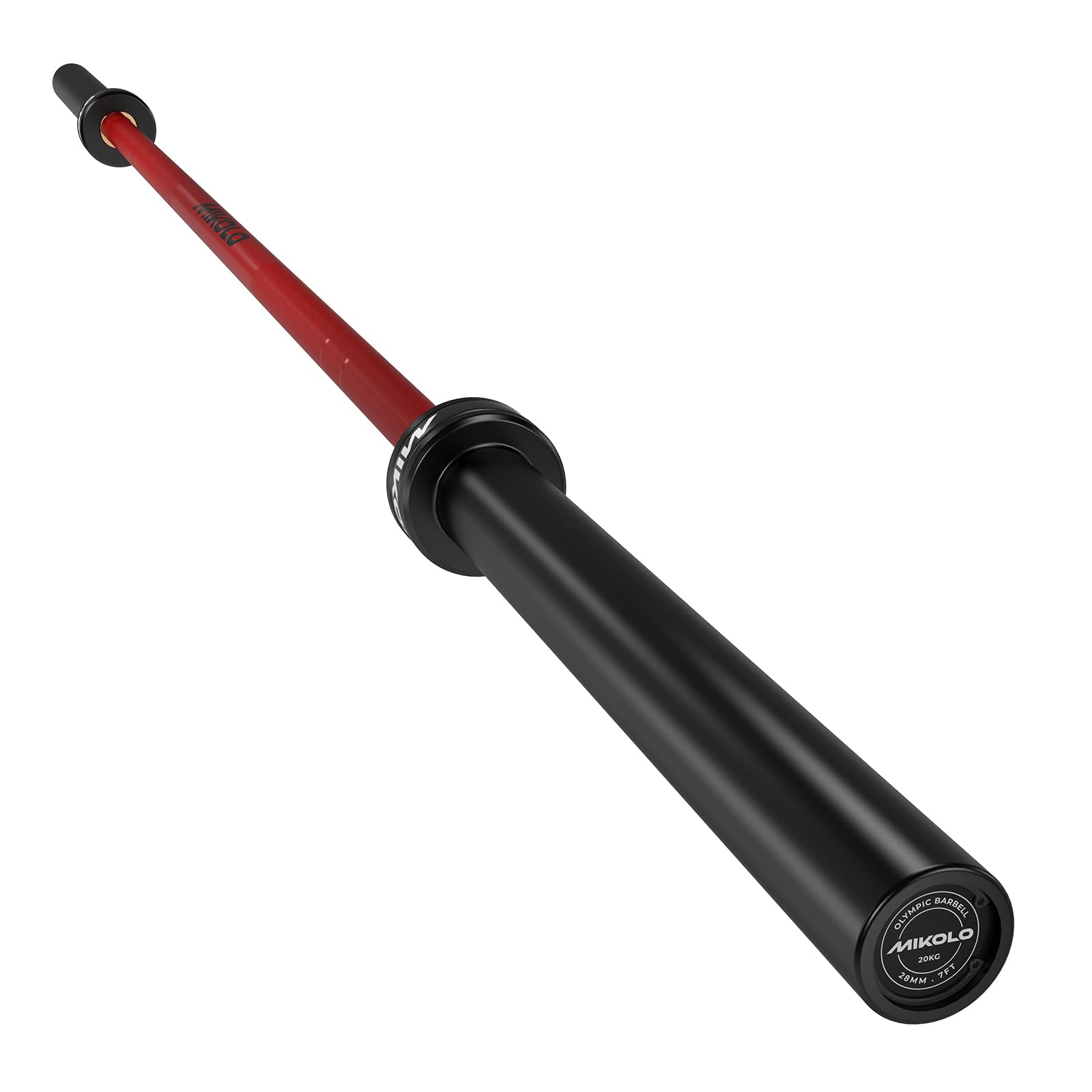
The Mikolo does most of what our top pick does for less money: same 1,500 lb rating, same 190,000 PSI steel, same 45 lb / 20 kg bar. The difference is in the shaft, 28 mm here instead of 29, and in the sleeves, which run needle bearings with brass bushings and spin far more freely than the Rhino's planted ones.

That spin is the whole story. Needle bearings make the bar feel loose and quick in the hands, which is a pleasure on a clean and a small distraction on a grinder of a squat where you want everything locked. We recommend it to lifters who want one bar for powerlifting and a bit of everything else: it holds steady under a heavy bench and still rotates when the lift calls for it.

The red-and-black finish is the sharpest-looking bar in this group, and the dual knurl marks are the sleeper feature, letting you repeat the same hand placement for powerlifting and weightlifting widths without hunting around the shaft. The 1.2 mm knurl is medium depth: enough bite for a sweaty bench session, gentle enough for high-volume work. It's built to IWF standards, which tells you where the design started, a weightlifting bar that happens to have the capacity for powerlifting loads.

Bottom line: We think this is the bar for a lifter who wants powerlifting capacity and sleeves that actually spin, for less than our top pick.
#2

PAPABABE 7ft Olympic Barbell

PAPABABE 7ft Olympic Barbell

Budget garage gyms

Our Score 9.6/10
Check Price

Worth Noting

  • Chrome finish can rust in a humid garage
Finish
Chrome
Bar Weight
44.1 lb
Maximum Load
1,000 lb
Shaft Diameter
30 mm
Read the full review

This is the least expensive way here to get a real 45 lb, 7 ft Olympic bar into a garage, and it also has the thickest shaft of the bunch at 30 mm. A fatter shaft bends less, and 1,000 lb of capacity is more than most home lifters will ever load. It mixes needle bearings with bushings too, which you don't often see at this end of the range.

Thirty millimeters is a lot to wrap a hand around, and that's the real dividing line: for big-handed lifters who want a bar that refuses to move, it's exactly right, while smaller hands and anyone who pulls hook grip will be happier with the 28 mm picks here. What the thickness buys shows up on the unrack, where there's almost no give before the plates leave the pins.

For a first power bar, or a second bar that lives in the rack and takes a beating, we think this is the best value on the page. It's a budget bar, so check it over when it lands: spin the sleeves with a plate loaded and make sure they turn without play. The 51.6-inch shaft leaves room for a wide grip, and the 16.1-inch sleeves hold a deep stack of plates.

Bottom line: We point budget buyers here first: a real 45 lb bar with the thickest, stiffest shaft in this guide, and 1,000 lb of capacity.

#3

E.T.ENERGIC 7FT Olympic Barbell

E.T.ENERGIC 7FT Olympic Barbell

Humid home gyms

Our Score 9.6/10
Check Price

Worth Noting

  • 28 mm shaft flexes more than a 29 mm power bar
Finish
Hard chrome
Bearings
4 needle bearings plus bushing per sleeve
Maximum Load
1,500 lb
Shaft Diameter
28 mm
Read the full review

Hard chrome is the reason this bar stands out here. Most of these picks wear black phosphate, Cerakote, or a sprayed coating, while the E.T.ENERGIC is plated end to end, and chrome is the finish we trust most in a garage that swings between humid summers and cold winters. It's paired with a 1,500 lb rating and a 28 mm shaft, so the corrosion protection doesn't cost you capacity.

Each sleeve carries four needle bearings and a bushing, which gives a quick, smooth spin, and the 1.2 mm knurl is medium depth that holds a sweaty bench session without shredding your hands on volume day. The 16.4-inch sleeves take a full stack of plates, and the 86.6-inch overall length is the standard 7 ft footprint for a power rack.

The honest unknown is long-term wear. We have less mileage to point to with this bar than with the Mikolo or the Rhino, so treat the finish and the rating as strong on paper and unproven over a decade. For a humid garage and a lifter who wants capacity without going to the top of the range, it's still the sensible buy.

Bottom line: We recommend it to anyone whose bar lives in a humid garage: hard chrome, 1,500 lb of capacity, and needle bearings, with less long-term mileage behind it.

#4

HANDBODE 7ft Olympic Barbell

HANDBODE 7ft Olympic Barbell

First home bar

Our Score 9.6/10
Check Price

Worth Noting

  • Mild knurl gives less bite on heavy pulls
Bearings
4 needle bearings
Bar Weight
45 lb
Maximum Load
1,000 lb
Shaft Diameter
28 mm
Read the full review

If you're outfitting a first garage gym and the bar has to share a budget with plates, this is the one to look at. It's a full 7 ft, 45 lb bar with 2-inch sleeves, 1,000 lb of capacity, and four needle bearings, which is a spec sheet that usually costs more than this.

The 16.3-inch sleeves are the detail worth pointing at. That's within an inch of what the premium bars here offer, so a mixed set of bumpers and iron fits without stacking collars on the very end. Dual knurl marks let you repeat your grip for both powerlifting and weightlifting widths, and the coated sleeves resist corrosion better than bare steel would.

Where it lands: a sensible first power bar that won't punish you for not knowing exactly what you want yet, with capacity for years of progress. It isn't the bar you buy to keep for a decade, since the coating is a sprayed finish rather than a plating and that's the first thing a damp garage will test, but at this end of the range that's the trade you're making.

Bottom line: A sensible first power bar — we recommend it to anyone outfitting a garage gym who wants 1,000 lb and needle bearings without spending much.

#5

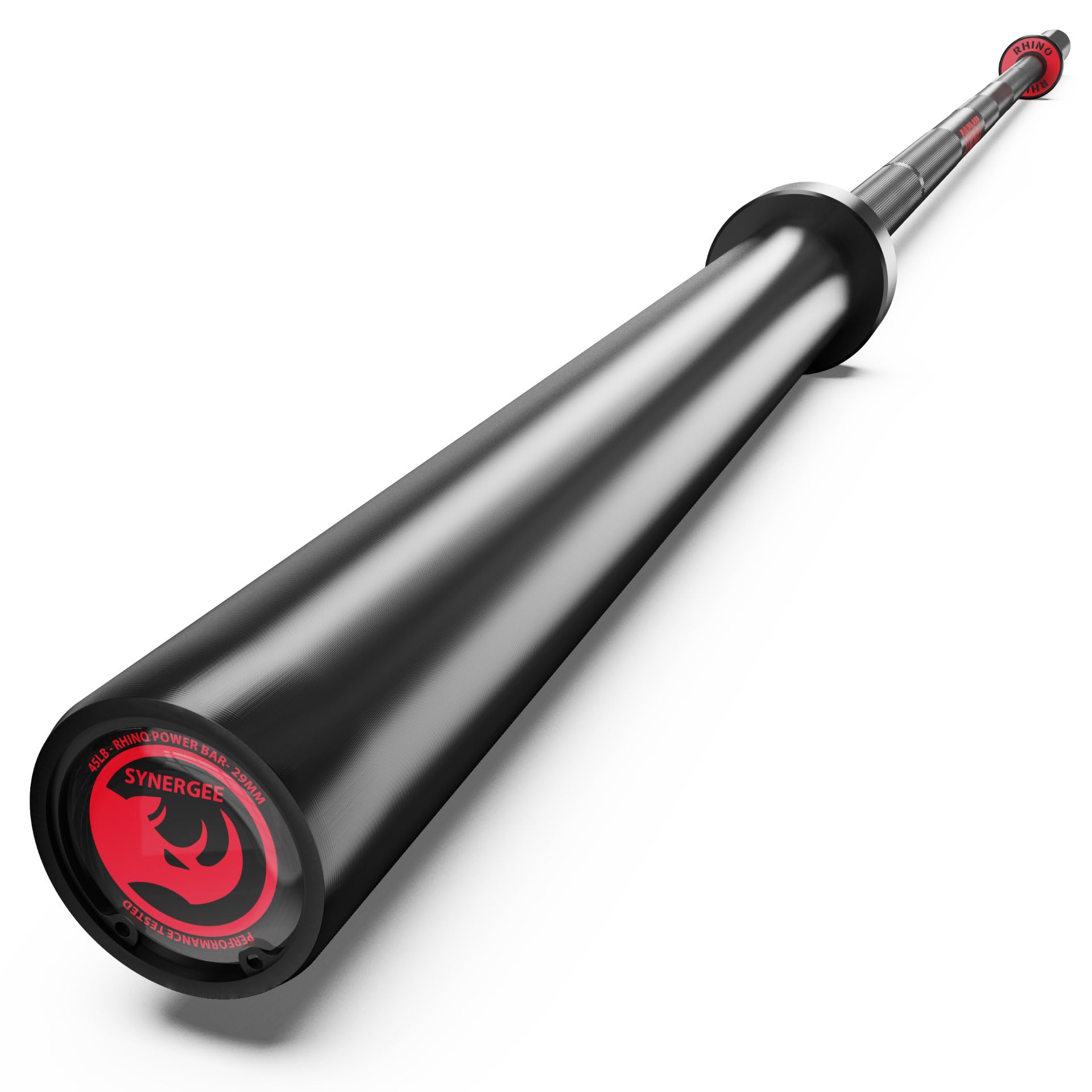
Synergee Rhino Powerlifting Barbell

Synergee Rhino Powerlifting Barbell

Squat, bench, deadlift

Our Score 9.4/10
Check Price

Worth Noting

  • The priciest bar in this group
Finish
Cerakote shaft, black phosphate sleeves
Bar Weight
45 lb
Maximum Load
1,500 lb
Shaft Diameter
29 mm
Read the full review

Twenty-nine millimeters is the number that matters here. That extra millimeter over the 28 mm bars that dominate this list is why the Rhino sits so still when you unrack a heavy squat, and it comes with sleeves that have no bearings in them at all, just a solid, planted feel. Our take is simple: if your training is squat, bench, and deadlift, this is the bar to build the rack around.

The rest of the specification backs it up: 190,000 PSI steel, a 1,500 lb rating, 16.4 inches of loadable sleeve, and a 51.6-inch shaft that leaves room for a wide grip inside the J-cups. We like that there is nothing to service. Bearings that spin freely are a pleasure on a clean and a nuisance on a grind, and this bar was built by people who clearly think the same way.

The knurling is where we part company with the marketing. This is billed as an aggressive power bar and it isn't: the diamond pattern is milder than a competition bar's, and if you squat without chalk or lift in a slick shirt you'll want chalk to keep the bar locked in place. What the Cerakote buys you in return is real, and the plate-loading area is where that finish wears first, as it does on any bar that gets loaded twice a week.

The one thing it isn't for is a mixed program. If cleans and snatches are part of your week, a bearing bar will feel better in the turnover, and the Regional below is the same maker's answer to that. For pure powerlifting, this is the bar that stays in the rack and asks nothing of you.

Bottom line: We recommend the Rhino to anyone whose training is squat, bench, and deadlift: the 29 mm shaft and bearing-free sleeves give you a bar that refuses to flex, and the 1,500 lb rating leaves headroom.

#6

LIONSCOOL 7FT Olympic Barbell

LIONSCOOL 7FT Olympic Barbell

Squats and bench

Our Score 9.4/10
Check Price

Worth Noting

  • 700 lb rating leaves little headroom for heavy pullers
Bar Weight
20 kg (44 lb)
Center Knurl
4.7 in
Maximum Load
700 lb
Shaft Diameter
28.5 mm
Read the full review

A 4.7-inch center knurl is what separates this bar from nearly everything else in the guide. That patch of texture in the middle of the shaft is what keeps the bar from creeping up your back in a squat, and at 28.5 mm the shaft sits between the thin weightlifting bars and the 29 mm power bars here.

This is the bar we reach for when squats and bench presses are the whole week. The 1.5 mm diamond knurl is comfortable enough to press bare-handed, the black e-coat looks good enough to leave on the rack, and the hybrid needle-bearing and bushing sleeves have some life in them without feeling loose.

Do two things when it arrives. Spin the bar in the rack and watch the sleeves for a wobble, because a 130,000 PSI bar in this price band is worth checking for straightness before you load it. Then confirm you have the center-knurled version, since this listing covers several finishes and capacities on one page and the center knurl is the entire reason to choose it.

Bottom line: Our pick for a squat-focused gym: the 4.7-inch center knurl keeps the bar where you put it, and 28.5 mm splits the difference between power and weightlifting bars.

#7

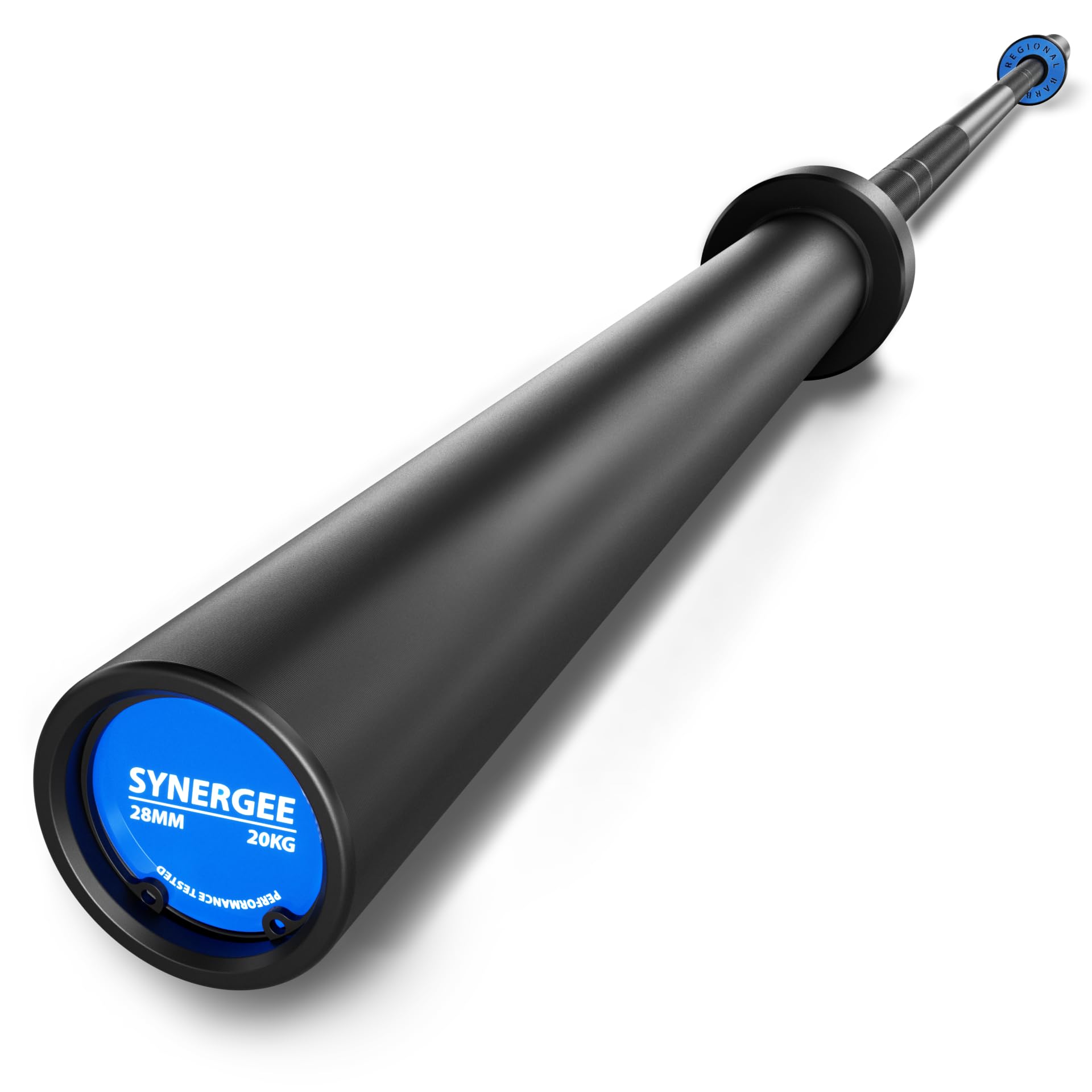
Synergee Regional Barbell

Synergee Regional Barbell

Powerlifting plus cleans

Our Score 9.4/10
Check Price

Worth Noting

  • No center knurl along the shaft
Finish
Black phosphate
Bearings
5 needle bearings per sleeve
Maximum Load
1,500 lb
Shaft Diameter
28 mm
Read the full review

Two bars from one maker in a guide this short takes some explaining, and the Regional earns its place by being the other Synergee's opposite. Where the Rhino is stiff and bearing-free, this one runs five needle bearings per sleeve, ten in all, on 190,000 PSI steel rated to 1,500 lb. Same family, completely different feel.

The bearing count is what you notice first. Sleeves spin freely even with plates on, which matters for cleans and anything where the bar has to rotate around your hands, and it's a distinctly looser feel than the Rhino's planted sleeves. At 28 mm the shaft is livelier too, so a heavy squat has a little more spring in it, which some lifters want and others don't.

Black phosphate is the finish, and it's the part to go in with your eyes open. Phosphate holds chalk beautifully and looks the part, but it's the finish most likely to show a rust tint in a damp garage, so wipe it down after sweaty sessions and keep it off the floor.

Here's who we recommend it to: a lifter who spends most of the week under a bar but still wants to clean, front squat, or run a conditioning circuit without buying a second barbell. If your training never leaves the three powerlifts, the Rhino is the better use of the money.

Bottom line: For lifters who squat and bench but still want to clean, we recommend the Regional: ten needle bearings, 1,500 lb of capacity, and a shaft that stays lively.

How We Chose and Tested the Best Powerlifting Barbells

To build the shortlist, I started with the specs that actually separate a powerlifting bar from a general-purpose one: a 29mm-ish shaft, powerlifting knurl marks, a sleeve assembly that spins without excessive play, and steel with a stated tensile strength. We read spec sheets and lifter forums, set a realistic price ceiling, and filtered down to seven bars we could get our hands on and load heavy.

Testing ran eight months. Each bar lived in one of two places: my garage gym, where it saw three squat and bench sessions a week, and a powerlifting club where a rotating cast of lifters trained with chalk, belts, and dropped deadlifts. Every bar rotated through both settings so none of them got the easy job.

What we watched: whether chalked hands stayed put on heavy bench singles, and whether the bar sat still on the back through a grinding squat; how the knurl felt on bare skin over consecutive days rather than once; where the finish went after months of chalk and humid garage air, from bare steel spotting to coating chipping at the collars; whether the sleeves still spun as freely after being dropped from lockout; and how much the shaft deflected under near-max loads, filmed from the side. We also weighed what each bar cost against what it actually delivered.

How to Choose a Powerlifting Barbell

Shaft Diameter Is the Stiffness Decision

Most of the bars here run 28 mm, which is the weightlifting standard and a fine all-rounder. A 29 mm shaft like the Synergee Rhino's carries noticeably more steel in the same length, and that is what stops a bar bowing across your back in a heavy squat or springing at the top of a pull. The PAPABABE goes further at 30 mm, but a fatter shaft is harder to wrap a hand around and miserable to hook grip.

Choose 29 mm or 30 mm for a bar that only squats, benches, and deadlifts. Choose 28 mm if cleans and snatches are part of your week, because the thinner shaft bends more willingly and is easier to hold in a turnover.

Center Knurl Changes How a Squat Feels

Center knurl is the patch of texture in the middle of the shaft, and its only real job is keeping the bar from creeping up your back in a squat. Plenty of otherwise good bars skip it, because it's uncomfortable on the chest for Olympic lifts and unnecessary for deadlifts.

The trap is that several listings here cover multiple finishes and capacities on one page, so confirm the version you're ordering actually has it. The LIONSCOOL's 4.7-inch patch is the clearest example in this group of a bar designed around that detail.

Match the Load Rating to Your Total, Then Add Room

Ratings here run from 700 lb to 1,500 lb. That number describes how much the bar can hold before it takes a permanent bend; it says nothing about how pleasant it feels on the way there, and a bar flexing hard at your working weight is distracting long before it fails.

A 1,000 lb bar covers nearly every home lifter for years, and a 1,500 lb bar is headroom you pay for. If your best pull is within a couple of hundred pounds of a rating, buy up rather than hope.

Bearings, Bushings, or Nothing at All

Needle bearings let the sleeves spin freely, which matters for cleans and snatches and does nothing for a squat. Bushings spin less. A bar with neither, like the Rhino, feels planted and gives you nothing to service. Hybrid setups with needle bearings and a bushing are what most of these bars use, and they're the sensible compromise if one bar has to cover everything.

If you never let go of the bar, stiffness is worth more than spin, and there's less to wear out.

Finish and Where the Bar Lives

Chrome and hard chrome are the most forgiving finishes in a humid garage. Black phosphate and bare steel look sharp and hold chalk well but show a rust tint fastest, while Cerakote sits between the two and shrugs off chalk dust.

Whatever you pick, wipe the shaft down after a sweaty session, keep the bar off a concrete floor, and store it horizontally in a rack or on wall hooks. Rust starts in the knurl and the sleeve crevices, not on the smooth parts you can see.

Frequently Asked Questions

Final Verdict

The Synergee Rhino is the bar we recommend for a powerlifting-first gym: a 29 mm shaft with no bearings in the sleeves, a 1,500 lb rating, and a finish that survives a garage. It's the one here that never asks you to work around it.

If your week also includes cleans, the Mikolo gives you 1,500 lb and sleeves that actually spin for less money. And if squats are the whole program, the LIONSCOOL's center knurl is worth accepting its lower ceiling.