Strength & Weights

Best Barbell Pad of 2026

A barbell pad is one of those purchases you make in a hurry, usually after the bar has already bruised your collarbone or your hip bones during thrusts. The right one spreads the load without turning the bar into a wobbly pool noodle, and the wrong one slides, bunches, or leaves a strap flapping against your back. I've used enough of them to know that comfort is only half the story; fit and stability are what keep you from re-racking early.

Over the past four months, I put 14 barbell pads through squats, hip thrusts, lunges, and a lot of awkward setup adjustments. I wanted to know which ones stayed put on different bar diameters, which straps actually held tight, and which foam kept its shape after weeks of use. Some cheaper pads performed better than thicker ones, which is the kind of thing you only learn by putting them on the bar. The picks below are the ones I'd keep in my gym bag.

#1

Gymreapers Barbell Squat Pad

Top Pick
Gymreapers Barbell Squat Pad

General strength training

Our Score 9.6/10
Check Price

Worth Noting

  • Separate straps are easy to misplace
Weight
7.37 oz
Material
Neoprene
Warranty
1 year
Length X Width
17.5 x 3.5 in
Read the full review

The Gymreapers pad is the one we reach for when we don't want to think about the bar. The 17.5-inch body covers the traps and sits wide enough for hip thrusts, and the dense neoprene foam keeps its shape instead of flattening into the bar. We noticed the difference most on high-bar squats: the pad gives the bar a place to sit without turning the setup into a balancing act.

Anti-slip foam does most of the work. The straps are optional, which we appreciate: on a standard Olympic bar the pad stays put well enough without them, and there's no loose strap to chase if you leave them off. On a smooth bar or a sweaty set, use the straps. They're the difference between secure and merely okay. The matte cover has enough texture that it doesn't feel slick when you first set it up.

At 7.37 ounces it disappears into a gym bag, and the neoprene cover wipes down after a session. The one-year manufacturer warranty is useful insurance for a piece of foam that takes a beating. What we didn't expect was how much the 3.5-inch diameter helps on lunges: there's enough cushion to protect the shoulder without the pad feeling like a pool noodle. That matters if you're carrying it back and forth to a commercial gym.

Bottom line: We recommend the Gymreapers as the default barbell pad for most lifters: its dense foam and 17.5-inch body stay comfortable through squats and hip thrusts without feeling bulky.

#2

NEALFIT Barbell Pad

NEALFIT Barbell Pad

Budget lifters

Our Score 9.6/10
Check Price

Worth Noting

  • Firm foam may feel less plush for high-rep hip thrusts
Weight
8 oz
Material
Foam
Length X Width
17 x 3.5 in
Weight Capacity
600 lb
Read the full review

The NEALFIT doesn't look like a budget pad. The foam is thick and dense, the cover has a smooth finish, and the Velcro straps hold it snugly on the bar. At 8 ounces it's one of the lightest pads here, so it disappears into a gym bag.

On the bar, the 17-inch body covers the traps well enough for squats and gives you a reasonable platform for hip thrusts. The 600-pound weight rating is the standout number: it's higher than several pads that cost more, and it gives heavier lifters some headroom.

The foam is firm rather than plush, which we liked for squats because the bar doesn't sink in. The straps are basic hook-and-loop, and they do their job as long as you keep them tight. The cover is easy to wipe, and the pad hasn't shown any wear in our sessions.

What makes the NEALFIT our budget pick is that it doesn't ask you to accept a flimsy pad to save money. It fits standard and Olympic bars, stays put with the straps, and has enough capacity for serious home lifting. The one thing we noticed after a few sessions is how little it moved once the straps were snug; it didn't need readjusting between sets.

Bottom line: The NEALFIT is the budget pad we recommend first: it's light, fits standard and Olympic bars, and its 600-pound capacity is more than most home lifters need.

#3

FITGIRL Squat and Hip Thrust Pad

FITGIRL Squat and Hip Thrust Pad

Smaller frames

Our Score 9.6/10
Check Price

Worth Noting

  • 14-inch body leaves less bar coverage
  • Can fit tightly on some gym bars
Weight
13.7 oz
Material
Synthetic rubber
Designed For
Women
Sleeve Length
14 in
Read the full review

The FITGIRL pad is shorter than most of the pads here, and that's the reason to consider it. The 14-inch sleeve sits neatly between the shoulders on squats and doesn't crowd the bar during hip thrusts. It's designed for women, but the real story is the compact body and the grippy inner material. The pink option is a nice change from all-black gym gear, too.

We like it for smaller frames because a 17.5-inch pad can feel like it's wearing you rather than the other way around. The thick foam is firm and supportive, and the Velcro straps keep it centered. The 14-inch body is also less likely to dig into your sides on hip thrusts. It's the pad we hand to lifters who want less bulk, not more.

The cover has a grippy inner surface that helps it stay put, and the 13.68-ounce weight is still light enough for a gym bag. What we didn't expect was how much the shorter body helps on hip thrusts: there's less pad to bump against your ribs when you set up. The cover feels durable enough for regular gym use, and it hasn't frayed at the seams in our sessions.

Bottom line: For smaller frames, we reach for the FITGIRL: its 14-inch sleeve keeps the pad compact, but it covers less of the bar than the longer picks.

#4

POWER GUIDANCE Barbell Squat Pad

POWER GUIDANCE Barbell Squat Pad

First-time lifters

Our Score 9.6/10
Check Price

Worth Noting

  • Can roll on smooth bars if the straps loosen
Weight
7.05 oz
Bar Fit
Standard and Olympic
Material
Foam
Length X Width
17.32 x 3.74 in
Read the full review

The middle groove is the detail that makes the Power Guidance feel different from a plain foam tube. It gives the bar a channel to sit in, which takes pressure off the back of the neck during squats. For a low-cost pad, the foam is surprisingly dense. We noticed the groove most on high-bar squats, where the bar sits close to the neck.

It's light, at 0.2 kg, and the 17.32-inch body fits standard and Olympic bars. The cover has a high-grip surface, and the straps are there to keep it centered. We found it easiest to set the pad where you want it, then tighten the straps before you load the bar. The 3.74-inch diameter gives it a substantial feel without being bulky.

What we appreciate is that it doesn't try to be a premium pad. It's a simple sleeve with a useful shape, and it gets the neck relief right. The 3.74-inch diameter is the middle ground: enough cushion for squats, not so much that it feels like a pool noodle. It also slips into a gym bag without taking up much room.

Bottom line: The Power Guidance is the low-cost pad we suggest for new lifters: the contoured groove takes pressure off the neck, and it fits standard and Olympic bars without fuss.

#5

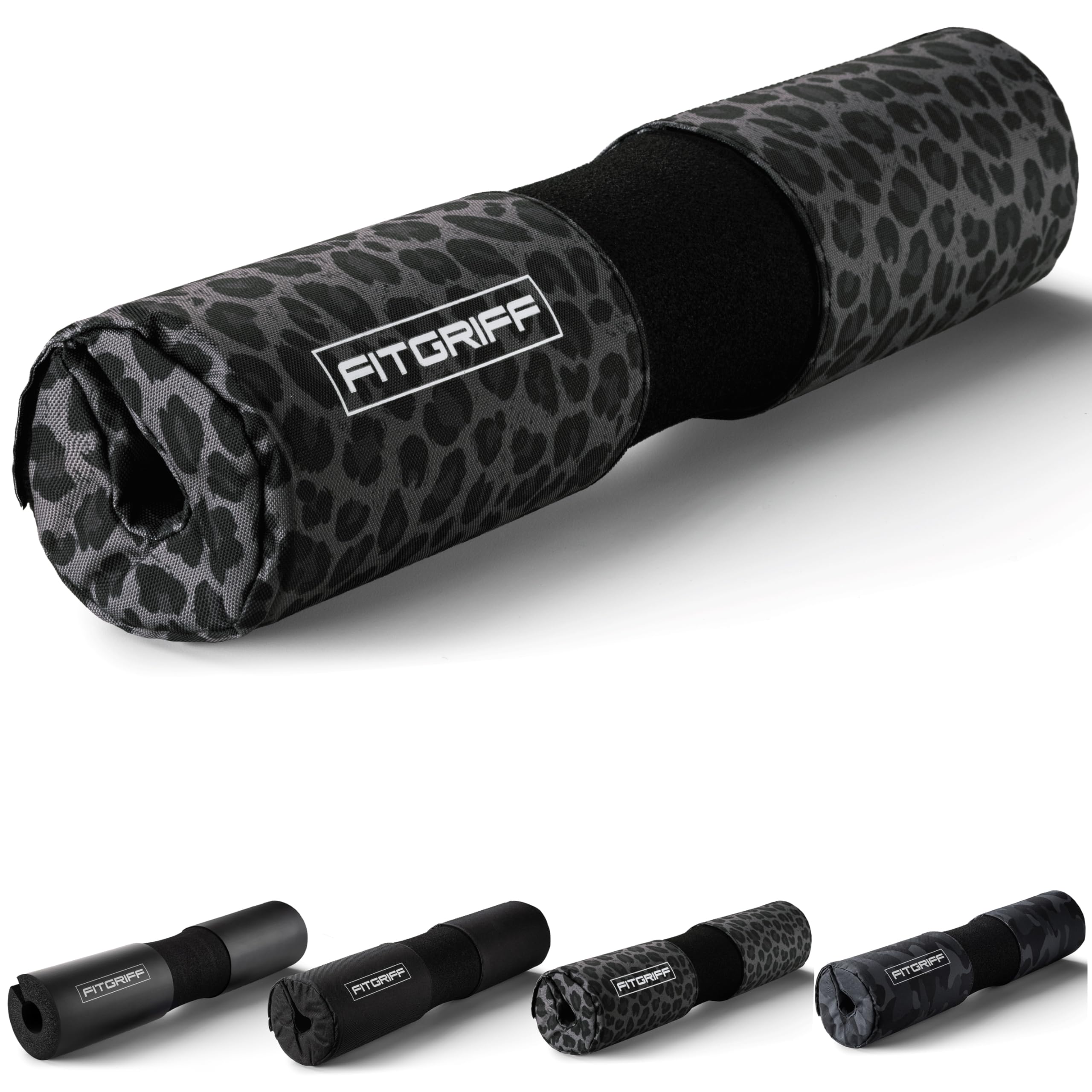
Fitgriff Barbell Hip Thrust Pad

Fitgriff Barbell Hip Thrust Pad

Everyday gym use

Our Score 9.6/10
Check Price

Worth Noting

  • Firmer cushioning than the extra-thick picks
Cover
Fabric with Velcro
Weight
9.6 oz
Length X Width
17.3 x 3.7 in
Weight Capacity
440.9 lb
Read the full review

The Fitgriff's cover is the feature that stands out. It wraps around the foam and closes with Velcro, so there are no loose straps to thread or lose. We found it quick to put on and take off, which matters when you're moving between a squat rack and a hip thrust bench. That also means there are no dangling straps to get caught on the rack.

The 17.3-inch body is right in the middle of the pads here, long enough for squats and most hip thrust setups. The EVA foam is dense, and the 200 kg capacity covers typical gym weights. It's a pad that feels secure rather than squishy. The 3.7-inch diameter is comfortable without feeling bulky, and it's the kind of pad you can leave on the bar between sets.

The cover adds a little structure, so the pad doesn't bunch up when you slide it onto the bar. That's the kind of detail you notice when you're setting up in a hurry. It also wipes clean, which keeps the fabric from looking grimy after a few leg days. We had no trouble getting it on and off a standard bar.

Bottom line: We like the Fitgriff as a tidy everyday pad: the Velcro fabric cover goes on fast, and the 17.3-inch body suits squats and hip thrusts, though the cushioning is not the plushest here.

#6

WALITO Barbell Pad Set

WALITO Barbell Pad Set

Starter leg-day kit

Our Score 9.6/10
Check Price

Worth Noting

  • Bundled extras add bulk if you only need a pad
Material
Polyurethane (PU)
Set Includes
Pad, bands, ankle straps, bag
Pad Length X Width
16 x 3.7 in
Read the full review

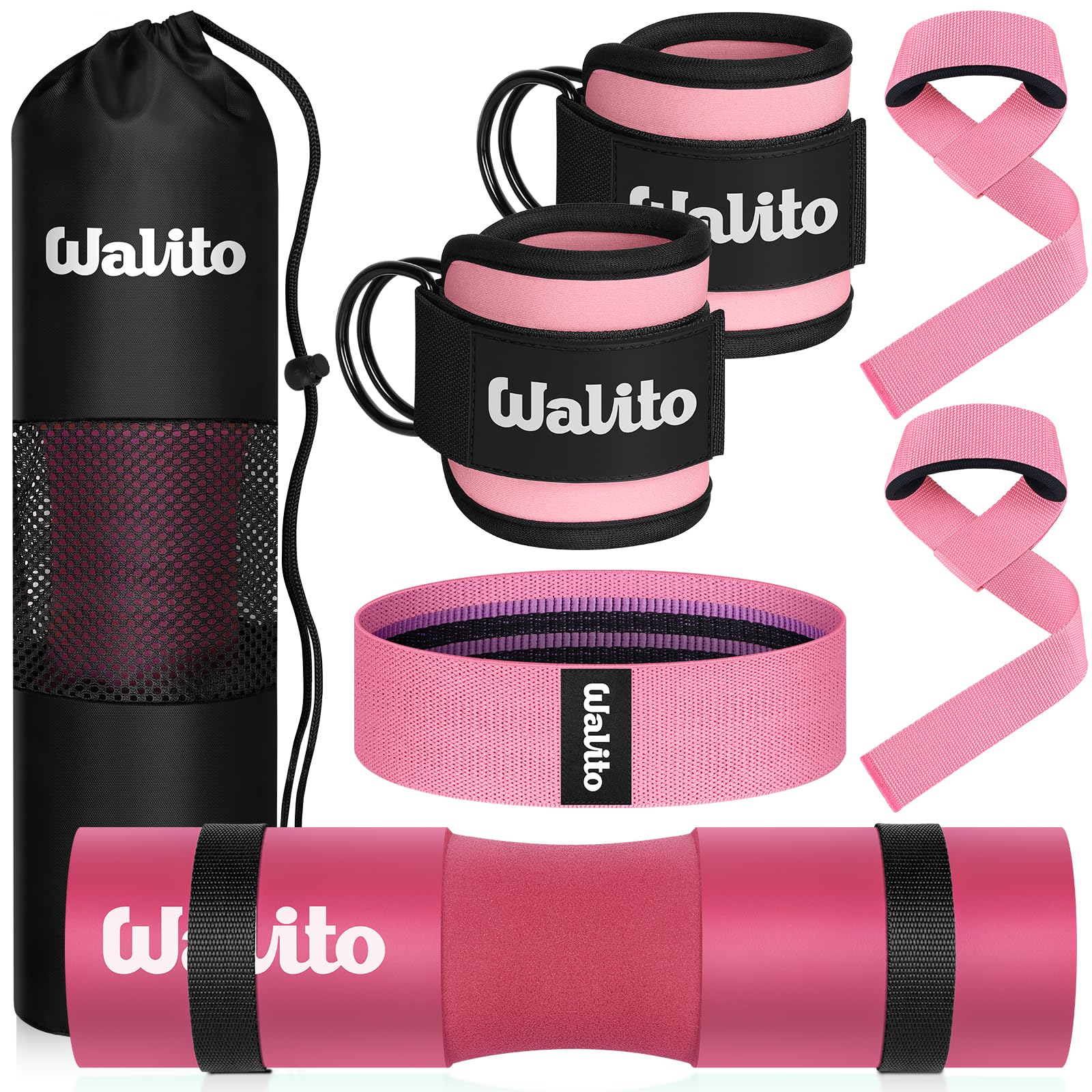
WALITO sells the pad as part of a leg-day kit, and that's the right way to look at it. You get the 16-inch barbell pad plus ankle straps, resistance bands, a lifting strap, and a carry bag. The pad is the centerpiece, but the extras are what make the set useful for someone building a home gym.

The pad itself is made from PU-covered foam with a curved shape that fits the neck and shoulders. It's comfortable for squats and hip thrusts, and the 3.7-inch diameter gives you a decent cushion without feeling enormous. The cover wipes down, and the pad stays put when you position it well.

The 16-inch length is the main compromise. It covers the traps, but it's shorter than the 17.5-inch Gymreapers and the 19-inch DMoose, so it gives you less room to shift your grip or setup. If you're broad-shouldered or you like a lot of pad on hip thrusts, that shorter body will be noticeable.

The extras are what carry the set. The bands and ankle straps are useful for warm-ups and accessory work, and the bag keeps it all together. The ankle straps are the sleeper part of the kit: they turn the set into something you can use for cable work, not just barbell lifts.

Bottom line: We point to the WALITO set when someone wants a starter kit: the 16-inch pad is comfortable, and the extras cover warm-ups and accessory work.

#7

Dark Iron Fitness Barbell Pad

Dark Iron Fitness Barbell Pad

Heavy lifting

Our Score 9.4/10
Check Price

Worth Noting

  • 400-pound weight capacity is lower than some here
Length
15 in
Closure
Hook and loop
Material
Nylon
Weight Capacity
400 lb
Read the full review

Extra thickness is the whole point of the Dark Iron, and it's the first thing you notice when you settle it onto your back. The foam is dense rather than squishy, so it cushions without letting the bar sink through. For low-bar squats and heavy hip thrusts, that extra material is welcome.

The hook-and-loop closure wraps the pad around the bar and keeps it from spinning, which we prefer to a loose strap on a heavy set. The 15-inch body is shorter than the 17.5-inch Gymreapers, though, so it leaves more of the bar exposed. That's fine if you like a compact pad; it's less ideal if you shift your grip around a lot.

The synthetic leather cover wipes clean and feels sturdier than the foam-only pads here. It's the priciest pad in this group, and the extra thickness is the reason to pay. If you want a plush pad for light squats, this is more than you need; if you're chasing a heavy hip thrust, the cushioning earns its keep.

What we liked most is how little the pad moved once the closure was tight. We spent less time repositioning it between sets than with the strapless pads, and that's a real convenience when the bar is loaded.

Bottom line: The Dark Iron is our pick for heavy lifters: extra-thick foam and a hook-and-loop wrap make it feel protective, though its 15-inch body covers less of the bar.

#8

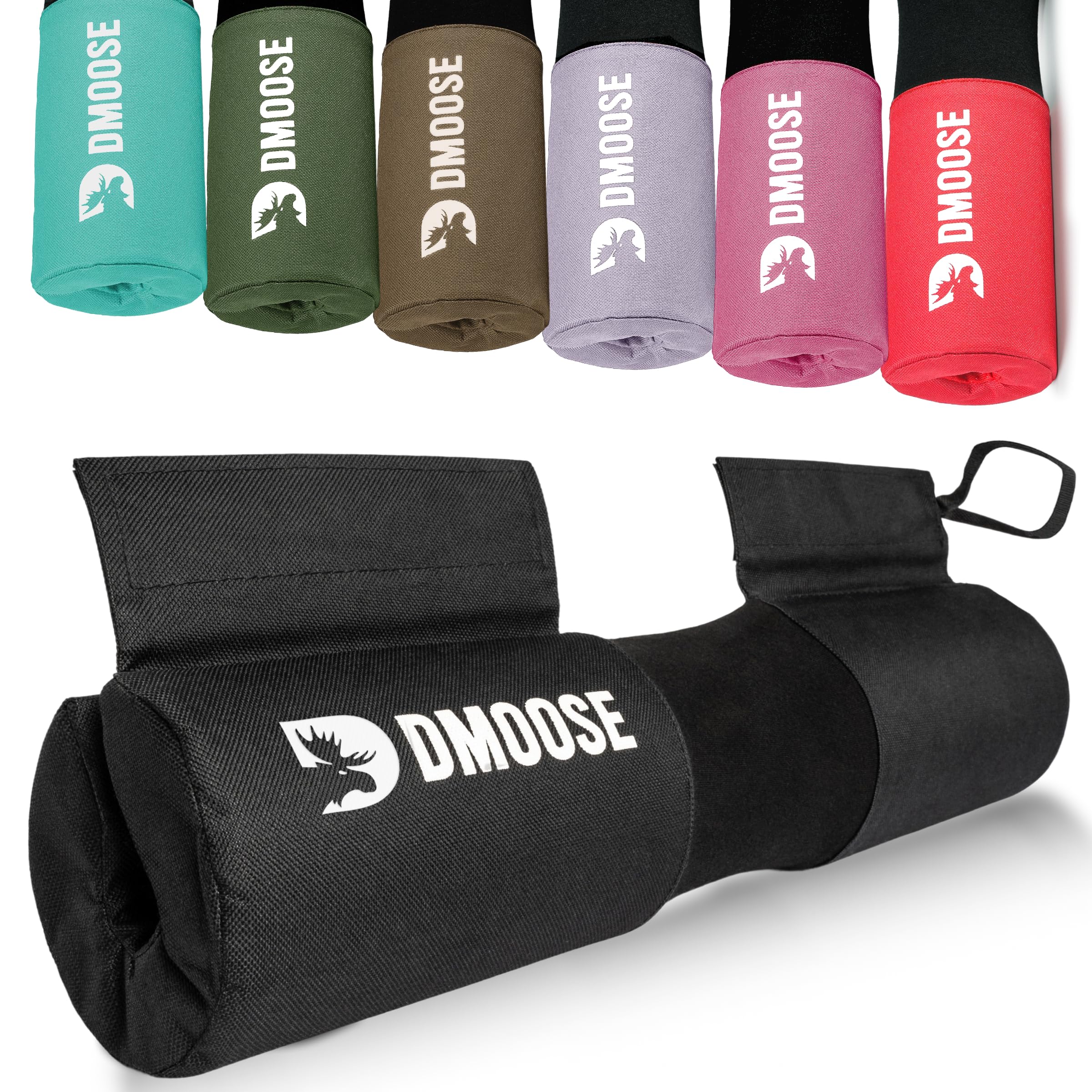
DMoose Fitness Barbell Pad

DMoose Fitness Barbell Pad

Hip thrusts

Our Score 9.4/10
Check Price

Worth Noting

  • Large diameter feels bulky on squats
Weight
7.05 oz
Material
High-density EVA foam
Length X Width
19 x 4 in
Weight Capacity
550 lb
Read the full review

Length is the DMoose's advantage. At 19 inches it's the longest pad in this group, which means you can slide it along the bar to find the right spot for hip thrusts without running out of cushion. We found that extra room useful when switching between high-bar and low-bar positions on squats, too. The extra length also gives you a visual target when you're centering the pad.

The high-density EVA foam is firm and thick, and the two hook-and-loop straps hold it tight. On a smooth bar, the anti-slip Oxford fabric helps, but the straps are what make it feel locked in. The pad is sweat-resistant and wipes down easily, which matters on repeated hip thrust sets.

That length is why we point hip-thrust specialists here and steer most squatters to the Gymreapers. If hip thrusts are the priority, the DMoose's length and straps earn their place. The 550-pound capacity is plenty for most lifters.

The detail that sold us is the range of adjustment: the pad can move along the bar without uncovering the spot you need. That's a small thing until you're set up under a loaded bar and don't want to reset. That adjustability is the reason it stays in our hip-thrust rotation.

Bottom line: The DMoose is the pad we choose for hip thrusts: its 19-inch body gives you room to shift position, and the two straps keep it from wandering, though it's a lot of pad for squats.

How We Tested the Best Barbell Pads

We started by pulling together the pads that kept showing up in gym bags and review sections, then narrowed the list by bar compatibility, strap style, padding density, and overall value. That left 14 pads, which we used for four months across squat sessions, hip thrust days, and enough walking lunges to make the testing feel less like a favor.

Each pad went on an Olympic bar and a standard bar to see how snugly it fit and whether it rotated once the bar came off the rack. During squats, we noted whether the pad stayed centered on the upper back, whether the strap stayed tight, and whether the foam compressed so much that the bar's shape came through. For hip thrusts, we checked whether the pad shifted against the bench and whether the edges dug into the hips.

We also paid attention to strap design: hook-and-loop closures that stayed stuck through a set, buckles that didn't press into the back, and straps that were easy to adjust without taking the pad off the bar. Durability got a simple test: four months of regular use, then a look at seams, stretched closures, flattened foam, and cracked outer fabric.

Value came down to whether the pad did its job without asking for more money than the job required. A less expensive pad that stayed put and kept its shape beat a thicker one that slid during every set. We'll keep using these and update if anything changes.

How to Choose the Right Barbell Pad

Fit and coverage

Start with the bar, not the color. A pad needs to slide over a standard or Olympic bar and stay centered once it's there. We look for a 17- to 18-inch pad first because it covers enough of the back for squats and gives you room for hip thrusts. A 14-inch compact pad like the FITGIRL suits smaller frames but leaves more bar exposed, while a 19-inch pad like the DMoose gives you more shifting room.

The trap is assuming compact means universally easier: a short pad can feel less secure on a broad back. Check the stated inner diameter or closure if you use a Smith machine, since its bar sleeve can differ from a free bar.

Stability and closure

Stability comes from two things: the material against the bar and the closure around it. A textured or anti-slip inner surface helps, but a loose strap undoes it. Strapped pads are the safer default for hip thrusts and smooth Olympic bars; strapless or quick-slip designs are faster to change but can rotate when the bar gets sweaty.

The trap is trusting a pad's grip without tightening it. Set the pad where you want it, cinch the closure, then load the bar. If the pad moves under a warm-up set, it will move under a working set.

Thickness and density

Thicker is not automatically more comfortable. A dense pad protects without letting the bar sink in, while a soft, very thick pad can make the bar feel unstable. At the extreme, a 4-inch-diameter pad like the DMoose is welcome on hip thrusts but can feel bulky on squats; a 3.5-inch pad is easier to keep in place.

The trap is choosing the plushest pad for heavy squats: too much squish can change the bar's position and make you fight the pad instead of the weight. Firm foam is usually the better compromise.

Portability and upkeep

Weight and packed size decide whether the pad actually travels with you. Most pads here run from about 7 to 14 ounces; the lighter ones disappear into a gym bag, while the heavier ones are still portable but take up more room. Check how the cover cleans, too, because sweat and chalk build up. A wipeable synthetic cover is easy; a fabric cover may need more attention.

The trap is buying a padded sleeve too bulky for your bag and then leaving it in the car. If you train at home, portability matters less than cover durability.

Frequently Asked Questions

Final Verdict

We point most lifters to the Gymreapers first. It has the coverage, dense foam, and secure-enough fit to handle squats, lunges, and hip thrusts without the bulk of a specialty pad, and the optional straps make it easy to adapt to a smooth gym bar.

If heavy hip thrusts are your priority, the longer DMoose is the better fit; if you're on a tight budget, the NEALFIT covers the basics for less. The Dark Iron earns its place for heavy squats, but its shorter body is a real trade-off.