Strength & Weights

Best Barbell Collars of 2026

A barbell collar looks like an afterthought—until a plate shifts mid-squat. The right set locks onto the bar, keeps heavy plates quiet through a working set, and comes off without a fight when you're spent. Over four months, my team and I loaded 14 sets onto bars in a garage gym and a busy commercial gym, from spring clips to clamp-style designs. The differences aren't cosmetic—some take two hands and a wrestle, others click on and stay put—and a good collar closes the gap between feeling set and actually being set.

What separates the keepers is the locking mechanism and how it meets the bar. I want a collar that grips without scratching, stays tight through squats and deadlifts, and works when my hands are chalky. Value matters too—a cheap set that slips is no bargain. We watched for durability and spring clips that lose tension, because a collar that fails after a few months is just clutter; these picks earned their place by being easy to use and hard to shake loose.

#1

Lock-Jaw OLY 2

Top Pick
Lock-Jaw OLY 2

All-around home gym

Our Score 9.6/10
Check Price

Worth Noting

  • 500 lb load ceiling for very heavy lifters
Bar Fit
2"/50mm Olympic bars
Material
Reinforced nylon resin
Max Load
500 lb
Warranty
Lifetime
Read the full review

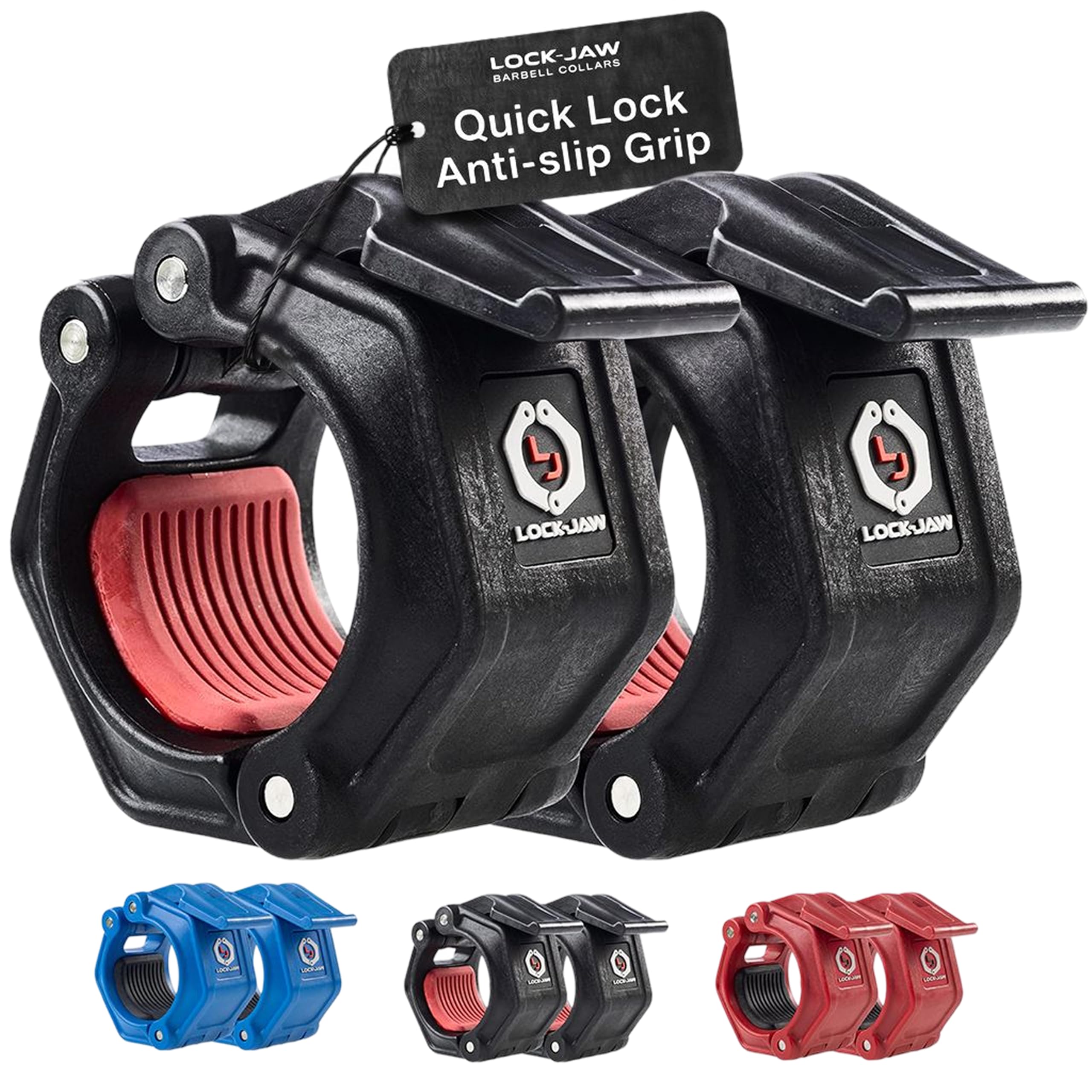
The Lock-Jaw OLY 2 starts with a 500-pound load rating and an oversized quick-release lever, but the detail that matters is the pair of elastomer pads inside the jaws. Those pads grip without biting into a Cerakote finish, and the reinforced nylon resin body gives the latch something solid to lock against. The lever gives you a full handhold instead of a pinch point, which matters when your hands are chalky or the bar is on a rack.

We think this is the best combination of hold, bar protection, and one-hand release in this group for a home gym or garage setup. The pads grip without biting into a coated bar, and the latch stays put once it snaps down. The lever releases cleanly with one hand, which is the difference between swapping plates between sets and wrestling with a spring clip. If you rotate between a straight bar and a specialty bar, the pads are the detail we appreciate most: they protect the finish without leaving the collar loose.

The fit is tight at first while the elastomer pads compress, so expect to use a little force for the first few sessions; that is normal break-in, not a defect. The lifetime warranty is the quieter advantage: it covers the latch, which is the part that usually fails first on a plastic collar.

Bottom line: Our default 2-inch collar is the Lock-Jaw OLY 2: a secure clamp, a one-hand release, and pads that protect a coated bar.

#2

Greententljs 2-Inch

Greententljs 2-Inch

Budget quick release

Our Score 9.6/10
Check Price

Worth Noting

  • Plastic latch is the wear point
Bar Fit
2 inch
Locking
Quick release
Quantity
Pair
Read the full review

This is the pair we point to when the goal is a secure 2-inch collar without paying for bar-protecting pads. It snaps on with a broad lever, and the tight fit on an Olympic sleeve makes it easy to trust. We think it is the best value in this set.

The plastic body is light, and the latch releases cleanly with one hand. The clamp does not slide once it is seated, and the pressure is spread across a wide enough face that plates stay put during normal lifting. For a coated bar, the Lock-Jaw OLY 2 is the better choice; its pads protect the finish in a way this simple plastic body does not. Here, the snap-and-go design is the point.

Bottom line: For an easy snap-on fit at the lowest cost here, the Greententljs pair is the value buy we keep coming back to.

#3

Lock-Jaw PRO 2

Lock-Jaw PRO 2

Heavy lifting

Our Score 9.6/10
Check Price

Worth Noting

  • Heavy pair for a gym bag
  • Premium cost
Bar Fit
2"/50mm Olympic bars
Material
Cast iron
Warranty
Lifetime
Item Weight
15.2 oz
Read the full review

The first thing you notice about the Lock-Jaw PRO 2 is the weight: 15.2 ounces for the pair, which is substantial next to the plastic collars here. That mass comes with a cast-iron body and a lever that feels like it belongs on a piece of shop equipment.

The clamp is built for heavy, low-rep work. The lever locks down with a solid feel, and the jaws hold a tight line on the sleeve. If you deadlift, squat, or train in a garage where the bar gets loaded and unloaded constantly, the extra heft translates into less fiddling and more confidence.

We think this is the best pick here for a heavy lifter who wants a buy-once collar and keeps it near a rack. The cast-iron body and lifetime warranty support that role. It is a specialist for the lifter who values clamp feel over gym-bag portability.

Bottom line: Heavy lifters who want a buy-once pair should start with the Lock-Jaw PRO 2; we trust its substantial body and secure latch.

#4

Mikolo Magnetic

Mikolo Magnetic

Magnetic rack storage

Our Score 9.6/10
Check Price

Worth Noting

  • Less contact area than full-width collars
Width
1 inch
Bar Fit
2 inch
Magnetic
Dual-sided
Warranty
2 year manufacturer
Read the full review

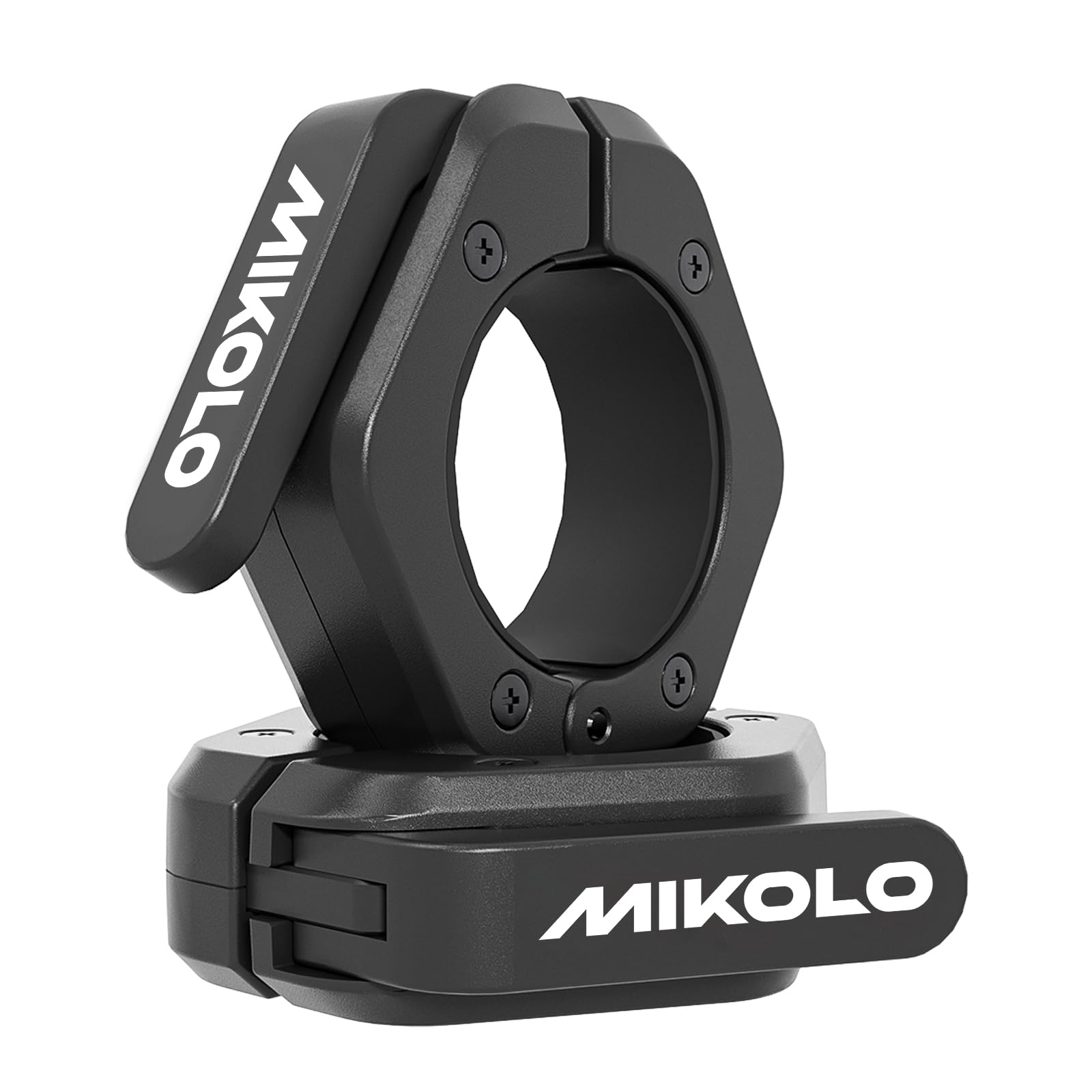
A 1-inch-wide collar with magnets on both sides is a specific answer to two gym problems: short bar sleeves and collars that vanish between sets. The Mikolo pair is half the width of a standard collar, so it leaves more room for plates on a short Olympic bar, and the magnets let you stick it to a rack or power cage when you strip the bar.

We think this is the best magnetic pick in this set for a home gym with a rack. The TPR lining grips the sleeve, the latch locks down securely, and the narrow body does not feel flimsy in the hand. On a standard 2-inch bar, the fit is snug enough that we did not notice the usual side-to-side walk.

The two-year manufacturer warranty is a nice cushion for a budget-priced pair. If you need a collar for very heavy drops, the Lock-Jaw PRO 2 is the sturdier choice. For a rack with a short sleeve and a place to park a magnet, this one makes daily loading simpler.

Bottom line: The Mikolo pair is our magnetic pick for a rack-based home gym: narrow, secure, and easy to park on the upright.

#5

Forcefree+ Compact

Forcefree+ Compact

Short bar sleeves

Our Score 9.4/10
Check Price

Worth Noting

  • No magnetic storage
  • Less contact area than wide collars
Bar Fit
2 inch
Locking
Quick release
Material
Nylon and glass fiber
Quantity
Pair
Read the full review

Short sleeves are where a slim collar earns its keep. The Forcefree+ pair is built from nylon and glass fiber, with a quick-release latch and a body narrow enough to leave more room for plates on a short Olympic bar. We think it is the best pick here when sleeve space is the limiting factor.

The latch snaps closed with a positive click and opens without a fight. The composite body feels stiffer than the basic plastic collars, and the textured faces hold the sleeve without needing a second hand to seat. For a garage gym with a short bar or a landmine setup, that is a useful edge.

Bottom line: When sleeve space is tight, we choose the Forcefree+ compact pair for its slim body and reliable quick release.

#6

Clout Fitness

Clout Fitness

Casual gym bag

Our Score 9.4/10
Check Price

Worth Noting

  • No warranty coverage
Bar Fit
2-inch barbell or hex bar
Material
Plastic
Quantity
Pair
Item Weight
9.29 oz
Read the full review

The Clout Fitness collar is the familiar squeeze-lever design: a wide plastic jaw, a quick-release latch, and a body that is easy to find in a crowded gym bag. It fits 2-inch Olympic bars and hex bars, and it is sold as a pair.

The lever action is light, and the clamp seats with one hand. On a standard Olympic sleeve, the fit is snug, and the plates stay put through normal pressing and pulling. The plastic body keeps the pair light, and the quick release is faster than a spring clip.

Where it earns a place is as a spare pair or a gym-bag pair you do not have to baby. The budget price makes it easy to own two sets, and the wide jaw is easy to find by feel.

We think this is a solid also-consider if you want the familiar lever feel at a budget price and you are not hard on your equipment. The durability is the question mark; if you drop a loaded bar regularly, the Lock-Jaw PRO 2 or Keppi is the better long-term buy. For a casual lifter who racks the bar gently, it does the job.

Bottom line: We recommend the Clout Fitness pair to casual lifters who want a familiar quick-release lever at a budget price.

#7

Keppi Open Collar

Keppi Open Collar

Open-collar rack work

Our Score 9.2/10
Check Price

Worth Noting

  • Latch can fail under hard drops
Width
1.38 inches
Bar Fit
2-inch Olympic
Material
Aluminum and rubber
Item Weight
8.8 oz
Read the full review

The Keppi Open Collar's C-shaped aluminum jaw drops over the sleeve instead of sliding on from the end of the bar. That is a real advantage when the bar is already loaded or when you are working inside a rack with limited clearance.

The dual-caliper locking mechanism presses both sides of the jaw onto the sleeve, and the rubber contact points keep the aluminum from biting the bar. The body is slim at 1.38 inches, so it leaves useful sleeve space. The magnets are strong enough to park the pair on a rack upright, which is the kind of small convenience that keeps a gym floor tidier.

We think this is the best open-collar design in this set for someone who loads and unloads inside a rack and wants an aluminum body without a slide-on ritual. The premium price buys the machined feel and the one-sided press. The magnets also make the pair easy to keep off the floor between sets.

Bottom line: The Keppi Open Collar is our drop-on pick for rack work, with an aluminum body, strong magnets, and a fast one-sided lock.

#8

ProsourceFit Spring

ProsourceFit Spring

Traditional spring backup

Our Score 9.0/10
Check Price

Worth Noting

  • Fit varies between bars
  • Strong spring requires a firm squeeze
Grip
Plastic handles
Bar Fit
2-inch Olympic
Material
Chromed steel and plastic
Quantity
Pair
Read the full review

The ProsourceFit pair is the old-school option: a chromed steel spring with plastic handles, sized for a 2-inch Olympic sleeve. There is no latch to crack, and the handles give you more to hold than a bare spring.

The spring is strong, and the collar clamps tightly when it is seated. The plastic handles help when your hands are sweaty, and the wide opening clears a standard Olympic sleeve. That is the ritual with a spring clip, and it is why they end up as backups rather than everyday collars for a lot of lifters.

The simplicity is the appeal. There is no lever to break and no magnet to lose; you squeeze, slide, release. That is also the limit: a spring clip is slower than a quick release and less precise than a padded clamp.

We think this is a reasonable also-consider for a lifter who wants a traditional spring clip and accepts the squeeze. It is not the pair we recommend for a coated bar or for someone who changes plates constantly; the quick-release collars here are easier on both counts. For a basic home gym with a standard chrome bar, it still does the job.

Bottom line: We see the ProsourceFit spring clips as a backup for a basic home gym, provided the fit suits your bar.

How We Tested Barbell Collars

We started by pulling together the collars that keep showing up in gym-bag reviews and on store shelves, then narrowed the list by bar compatibility, collar type, and price tier so we had a mix of spring clips, clamps, and screw-down designs. That left 14 sets, which my team and I used for four months in a garage gym and at a busy commercial gym. Each set went through the same weekly rotation: squat and deadlift days, bench and overhead-press sessions, and the quick load-and-unload that happens when several people share one bar.

I timed how long it took to slide each collar on and off with one hand, then repeated the test with chalky hands and a loaded bar. I seated every locking mechanism until it felt secure, gave each plate a hard wiggle, and watched whether the collar crept during squats, deadlifts, and bench presses. A useful collar kept plates quiet through the set and came off without me needing to brace the bar with my foot. Ones that needed two hands, stuck halfway, or let plates rattle got marked down.

Durability got its own pass: I dropped each collar onto a rubber gym floor from waist height, checked for cracked plastic, bent pins, and springs that had lost their snap, then kept using the survivors for the rest of the four months. To judge value, I noted which sets I reached for during a normal training week and whether they still felt worth keeping after the newness wore off. The best ones did not just hold weight—they made loading and unloading less of a chore, which is the whole point.

How to Choose Barbell Collars

Start With the Sleeve, Not the Plate

Olympic collars are sized for a 2-inch sleeve, not the 2-inch hole in the plate. Measure the sleeve on a trap bar, hex bar, or axle; a wide jaw can also foul the frame. Coated bars are the other fit issue: hard plastic can scuff Cerakote, while an elastomer or rubber pad grips without the bite. The Lock-Jaw OLY 2 is the clear example here. If you load inside a rack, an open-collar design such as the Keppi drops over the sleeve instead of sliding from the end.

Match the Clamp to the Load

More holding power comes from the jaw shape, the lining, and the latch, not from a fancy finish. A plastic quick-release collar is fine for moderate home-gym loads and normal pressing; a reinforced nylon or aluminum collar is the better bet if you drop the bar from overhead or train with heavy singles. Check the stated load rating when there is one. The Lock-Jaw OLY 2 is rated to 500 pounds, which covers most recreational lifting, while the PRO 2 is the heavier step up for a garage gym that sees constant loading. Do not use a collar's rating as a substitute for the bar's or plates' limits.

Quick Release, Spring, or Open Collar

The release decides how much you enjoy changing plates. A quick-release lever gives you one-hand operation, which matters when your hands are chalky, tired, or holding a plate. A spring clip is simple and has no latch to break, but it takes a deliberate squeeze and can fit differently from bar to bar. An open collar is the specialist for rack work: it drops over the sleeve and locks with a one-sided press, so you do not have to thread it from the end. If you change plates often, pay for the lever; if the bar stays loaded, a spring clip can be a cheap backup.

Sleeve Space and Storage

Width matters on a short sleeve. A wide collar can eat into the loading room; a slim collar leaves space for another plate on a short bar. Magnetic collars are a storage convenience, not a stronger grip: the magnet parks the pair on a rack, while the latch does the work of holding the plates. The Mikolo pair is the clear example of the narrow, magnetic approach. If you train in a shared gym, a bright color or a magnetic pair is easier to keep track of, but never rely on the magnet alone.

Durability and Warranty

Plastic collars are light and inexpensive, but the latch is the part that wears first, especially when the bar gets dropped or the collars live loose in a gym bag. Reinforced nylon, aluminum, and cast-iron bodies cost more and feel more substantial; they also make more sense if you train heavy or keep the collars for years. A lifetime warranty is worth more on a collar with a metal or reinforced body than on a budget plastic pair, because it covers the mechanism you are actually paying for. Inspect the latch and pads before a heavy set; replace a collar that no longer locks positively.

Frequently Asked Questions

Final Verdict

Our default is the Lock-Jaw OLY 2 because it combines a secure 500-pound clamp, a one-hand lever, and elastomer pads that protect a coated bar. If you never drop a loaded bar and want the lowest-cost pair here, the Greententljs is the value choice. If you train heavy and want a buy-once collar, the Lock-Jaw PRO 2 is the step up; for rack work, the Keppi Open Collar is the drop-on alternative.