Strength & Weights

Best Adjustable Weight Benches of 2026

Every adjustable bench makes a deal: you get flat, incline, and decline positions, and in exchange you get more pins, hinges, and places for a little wobble to creep in. A good one feels planted when you're pressing near the top of its weight rating, adjusts quickly enough that you use the settings, and fits your body instead of the spec sheet. Over six months, I assembled, adjusted, and lifted on ten benches. The ones that earned a permanent spot felt solid first and clever second.

Assembly was a reality check: some instructions were clear, others had me rereading the same step twice. Height matters more than photos suggest — at 5'10" I want my feet flat and shoulders supported, but a bench that fits me can leave a shorter lifter dangling. When you incline the back pad, watch the gap at the hinge; on a few benches it changed how I braced. Value wasn't about price but welds, upholstery, and a lock pin that engaged cleanly. The benches that made the cut are the ones I stopped thinking about mid-set.

#1

JOROTO MD80 Weight Bench

Top Pick
JOROTO MD80 Weight Bench

Garage gyms

Our Score 9.4/10
Check Price

Worth Noting

  • Decline is the fussiest position
  • The priciest bench in this group
Item Weight
42 lb
Seat Height
17 inches
Weight Capacity
1300 lb
Backrest Positions
7 plus 2 seat
Read the full review

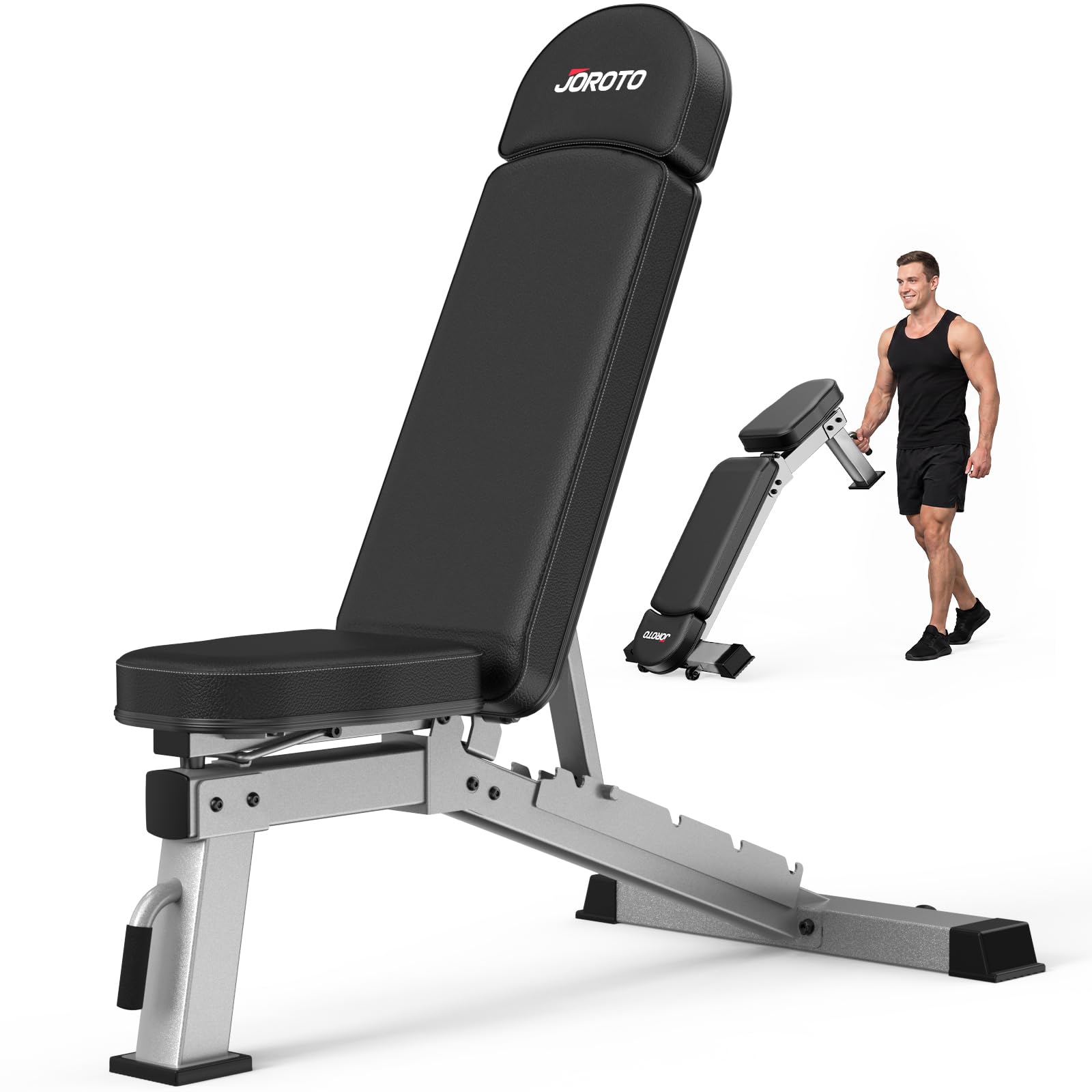
Two wheels and a grab handle are the reason this bench works in a shared garage. Instead of dedicating floor space to it, you tip it onto the wheels and roll it against the wall between sessions, then pull it back out when it is time to press. That matters on the days the car needs the space.

The 1,300-pound rating is the headline, but the ergonomics are what we appreciate most. A listed 17-inch seat height makes it easy to plant both feet flat and drive through your legs on a heavy set, which is where a good chunk of pressing power actually comes from. It is the detail that makes this feel like gym equipment rather than furniture.

The frame is 42 pounds of alloy steel with a 34-inch backrest, seven backrest angles, and two seat positions, covering flat, incline, upright, and decline. Assembly is a short job with a handful of bolts and diagrams that are readable. It is a bench for a permanent home with occasional moves rather than daily folding, which is the right trade when the bench lives in the garage.

Bottom line: The bench we point garage gyms to: 1,300 pounds of steel that rolls out of the way, with a seat height that lets you plant your feet and drive.
#2

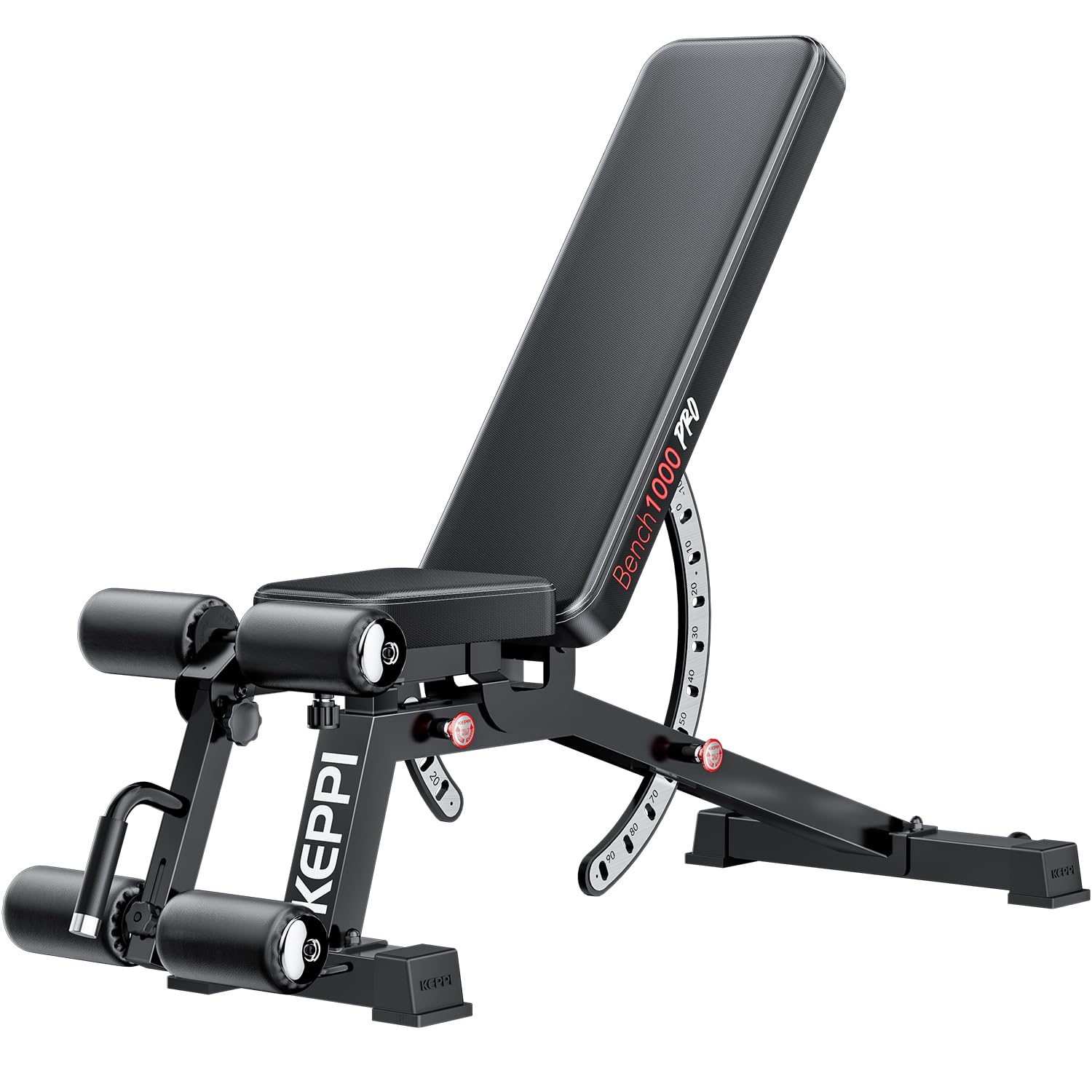
Keppi Adjustable Weight Bench

Keppi Adjustable Weight Bench

Heavy barbell pressing

Our Score 9.2/10
Check Price

Worth Noting

  • Leg brace can shift in heavy decline work
Item Weight
59 lb
Frame Tubing
2 x 3 inch carbon steel
Weight Capacity
1200 lb
Backrest Positions
12 plus 3 seat
Read the full review

The spec that settled this one for us is the ASTM certification at 1,200 pounds, backed by 2-by-3-inch carbon steel tubing rather than the stamped frame most benches here use. Capacity numbers are cheap to print; a 59-pound frame that does not flinch when you set up under a loaded bar is harder to fake. Every other bench on this list gets measured against that.

Adjustment is the second reason. Twelve backrest positions and three seat positions work out to 36 combinations, and the seat tilts with the back so your hips stay supported on incline work instead of sitting over a gap. The three-position foot catch is the detail we appreciated most: it holds your shins on decline presses and sit-ups rather than leaving you braced against nothing.

Nothing about it is quick to move. At 59 pounds with no wheels, this is a bench that claims a corner of the room, and switching from flat to incline means pulling pins at both pads. We plan a block of one angle rather than flipping between sets, which is how most people train anyway.

Assembly is a straightforward bolt-together job, and the padding is dense enough that it disappears from your attention mid-set, which is the best thing a bench pad can do. If the bench has to fold away between workouts, keep reading; if it can stay out, this is the one.

Bottom line: Our pick: a certified 1,200-pound frame that sits still under a loaded bar, plus a seat that tilts with the back and a decline leg catch most benches here lack.

#3

YOLEO Adjustable Weight Bench

YOLEO Adjustable Weight Bench

First home gyms

Our Score 9.2/10
Check Price

Worth Noting

  • Frame flexes under heavier dumbbell loads
Folded Size
31.5 x 12.6 x 13 inches
Backrest Length
28 inches
Max User Weight
330 lb
Weight Capacity
827 lb
Read the full review

Setup is two pins and about five seconds. The YOLEO arrives 98 percent assembled, and after a run of benches that needed an hour and an Allen key, that alone makes it easy to like. It is the bench we suggest to someone buying their first one.

The numbers are better than the price suggests: ASTM-certified to 827 pounds, a stated 330-pound user limit, 84 positions split across back, seat, and leg rollers, and a 28-inch backrest. It folds to 31.5 by 12.6 by 13 inches at 23.2 pounds, so under-bed storage is realistic rather than theoretical.

Size is where it draws its line. The 13-inch seat and 28-inch backrest work for most people, but around 5 feet 10 and up your head starts hanging off the top of the pad and there is less seat under you on steep inclines. Measure yourself against that backrest before ordering.

Everything else is well judged: the pad is dense, the angle changes are quick, and the whole thing moves with one hand. For dumbbell pressing, rows, and incline work in a room that has to serve other purposes, it is the value pick of this group.

Bottom line: The one we suggest to first-time buyers: an 827-pound certified frame, 84 positions, and a setup measured in seconds for a fraction of the heavy-duty picks.

#4

NICEPEOPLE Adjustable Weight Bench

NICEPEOPLE Adjustable Weight Bench

Small rooms

Our Score 9.2/10
Check Price

Worth Noting

  • Frame shifts under heavier dumbbell sets
Item Weight
17 lb
Backrest Angles
8
Backrest Length
29.3 inches
Weight Capacity
660 lb
Read the full review

For a bedroom corner, or the strip of floor between a couch and a wall, 17 pounds matters more than another hundred pounds of capacity. This is the lightest bench in the group by a wide margin, and one hand is enough to move it or stand it against the wall when the room goes back to being a room.

The rest of the package is honest for the money: 660 pounds stated, eight backrest angles from flat to upright, a 29.3-inch backrest that runs longer than the budget YOLEO's, and a leather-look cover that wipes down after a sweaty session. Assembly is two bolts and two spring pins.

Sizing is the thing to weigh. At 46 inches with a compact pad, it is built around average-height users, and taller lifters will find their head hanging off the end on flat pressing. The 660-pound rating also covers you plus the weights, which makes this a dumbbell bench in practice rather than a barbell platform.

For dumbbell work, bands, and bodyweight circuits in a small space, we think it is the smartest buy in the group. It never becomes a chore to set out, and that is the only way a home setup actually gets used.

Bottom line: Seventeen pounds, eight angles, and a 29-inch backrest: the bench we suggest for a bedroom or apartment, provided dumbbells are your weights.

#5

OUNUO Foldable Weight Bench

OUNUO Foldable Weight Bench

Tight budgets

Our Score 9.2/10
Check Price

Worth Noting

  • 660-pound rating leaves little margin
Positions
7 backrest + 4 seat + 3 footrest
Item Weight
23.1 lb
Pad Thickness
1.4 inches
Weight Capacity
660 lb
Read the full review

Three separate adjustment systems — seven backrest positions, four seat positions, three footrest levels — is unusual at the bottom of this price range. The seat adjustment is the part that matters: raising the seat with the backrest keeps your hips supported on incline work instead of leaving a gap at your lower back.

For a spare room, a first setup, or a teenager starting out, that is a useful package, and the 1.4-inch padding is thicker than the price suggests. We think it earns its place as the budget entry here, and at 23.1 pounds it is light enough to shift one-handed.

The 41.7-inch frame is on the short side, so taller users will notice it on flat pressing, and the fold is a basic one: pull the pins, drop the pad, stand it up.

Assembly is a short job with clear instructions, the cover wipes clean, and nothing about it pretends to be commercial equipment. It is a starter bench with a starter price, and it does that job without asking you to baby it.

Bottom line: The cheapest bench here, and the one we hand beginners: independent seat and footrest adjustment, fine for light dumbbell work, not for a barbell.

#6

FLYBIRD WB5 Weight Bench

FLYBIRD WB5 Weight Bench

Folding full-size

Our Score 9.0/10
Check Price

Worth Noting

  • Hinge flexes under heavy pressing
Positions
144
Item Weight
28.5 lb
Backrest Length
30 inches
Weight Capacity
800 lb
Read the full review

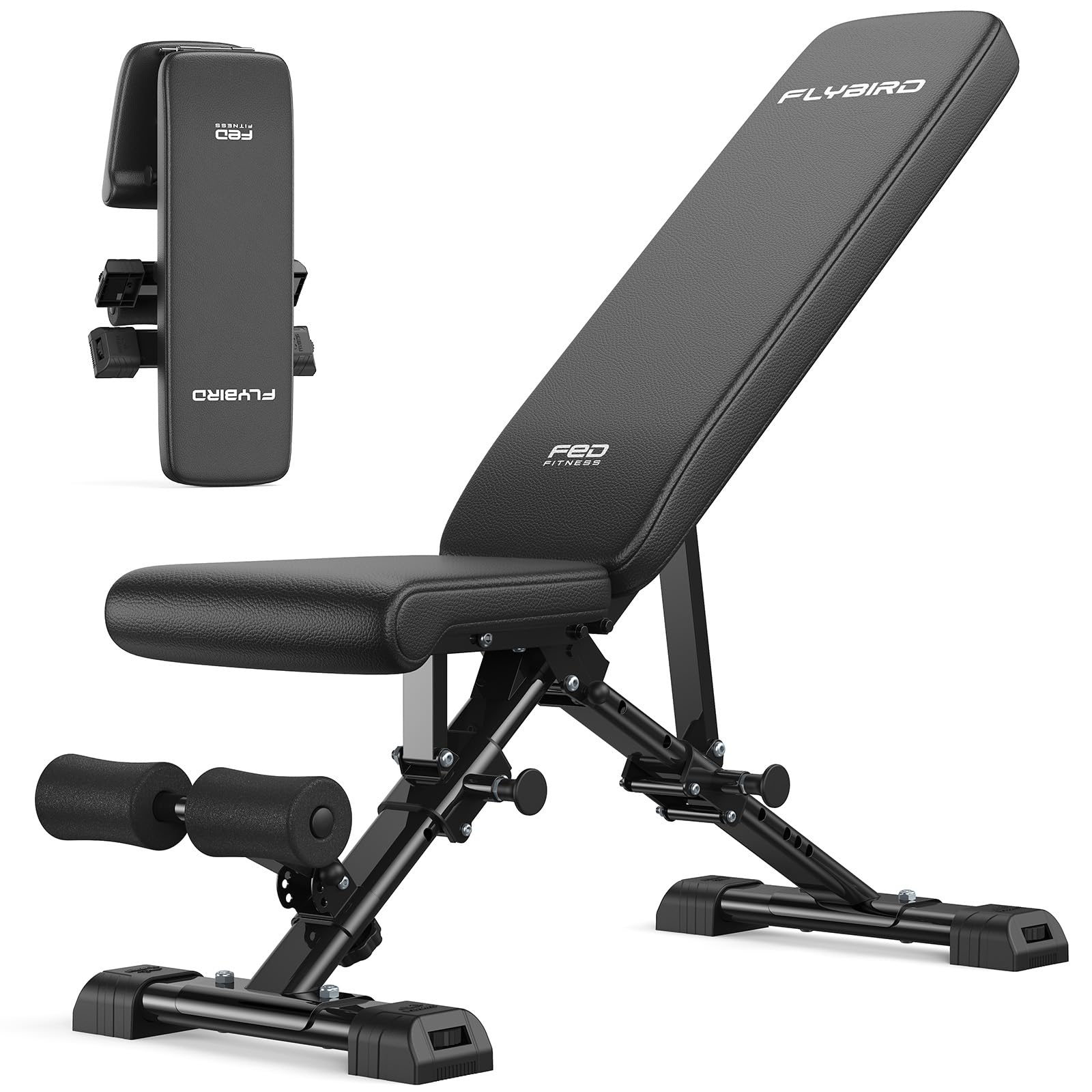
Folding is the whole argument here, so start with it: 28.5 pounds, a frame that collapses down, and a package narrow enough to stand in a closet or slide under a bed. That is what makes a full-size bench livable in an apartment.

The pad is the reason to choose this over the cheaper folders. At 30 inches it runs longer than most backrests here, so your head stays supported, and the frame is ASTM-certified to 800 pounds. The 144 positions run from 90 degrees upright through flat to a 30-degree decline, more range than most people will ever use.

Where it gives ground is rigidity. The big barbell numbers belong on a bench built to sit still, and this one is built to disappear. As a long-padded, high-capacity bench that folds into a closet between sessions, nothing else here comes close.

One practical caution: it sits high. A 48.5-inch overall height is a lot of bench above the floor, and that changes your setup, because your feet sit further below the bar and finding leg drive takes more work. If you are shorter, or pressing moderate dumbbells, it is a non-issue; if you are chasing a big barbell press, it is not.

Bottom line: The folding bench to buy when you need a full-size pad: 800 certified pounds, a 30-inch backrest, and 144 positions that pack down into a closet.

#7

Finer Form Adjustable Bench

Finer Form Adjustable Bench

Back extensions

Our Score 8.8/10
Check Price

Worth Noting

  • Assembly manual's diagrams are hard to follow
  • 60.5-inch frame needs its own floor space
Length
60.5 inches
Item Weight
38 lb
Weight Capacity
660 lb
Back Extension Levels
8
Read the full review

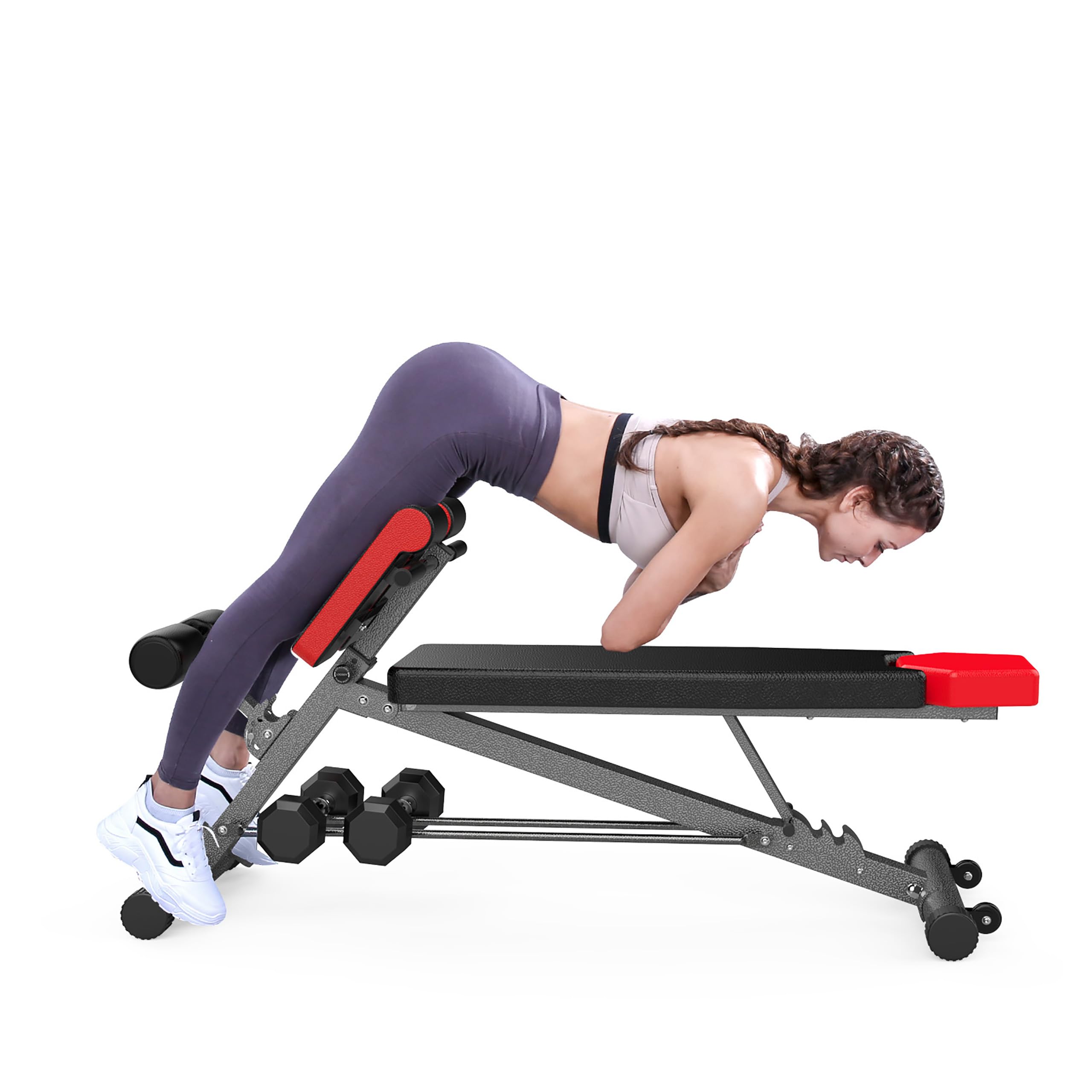
Hyperextensions are the reason this bench exists. The 60.5-inch frame and padded leg hold-downs let you hinge at the hip with your torso unsupported, and it doubles as a flat and decline pressing bench. That combination is why it is here: nothing else in this group does a proper back extension.

The build is 38 pounds of alloy steel rated to 660 pounds, with eight back-extension levels and a firm pad. Assembly takes about half an hour with a handful of bolts, so it is a one-evening job rather than a five-minute one.

Buy it for the movement, not as a replacement for a pressing bench. The pad does not incline, so incline presses and upright work still need another bench, and the right buyer is someone whose program already includes back extensions, hip hinges, or decline work. For everyone else, the Keppi covers more ground.

What it does, it does well: the hold-downs grip your legs through a set, the pad stays firm in a hollowed-out position, and the frame is steady under bodyweight and moderate dumbbell work. It is a specialist, and it is worth owning when you need one.

Bottom line: The one we keep for back extensions and decline work: a Roman chair that benches flat, not an all-round pressing bench.

#8

Marcy SB-350 Utility Bench

Marcy SB-350 Utility Bench

Leg extensions

Our Score 8.8/10
Check Price

Worth Noting

  • Wobbles at the two highest back positions
Attachments
Leg developer and foam rollers
Item Weight
51 lb
Weight Capacity
600 lb
Back Pad Positions
6
Read the full review

A leg extension and curl attachment is the reason to look at the SB-350. It turns one footprint into two stations — flat and incline pressing at one end, extensions and curls at the other — and it saves buying a separate leg machine for a garage gym.

The build is old-school and substantial: 51 pounds of powder-coated steel, a six-position sawtooth back pad, vinyl-covered foam rollers, a transport handle, and wheels at the front. The 600-pound rating is fine for moderate work and honest about what this bench is.

The leg developer has limits worth knowing: it is fixed rather than adjustable, so hamstring curls stop short of a full range for some users. The back pad itself runs six positions from flat to upright on a sawtooth lock that engages without hunting, and the rollers are covered in vinyl that wipes down.

For a garage gym running moderate loads through pressing, extensions, curls, and rows, it covers a lot of ground, and the wheels make it easy to move aside. If pressing is the priority, the Keppi does that job far better without an attachment to work around.

Bottom line: The only bench here with a leg developer, and the one we suggest if extensions and curls matter and heavy pressing does not.

How We Chose and Tested Adjustable Weight Benches

We started with a shortlist of two dozen adjustable benches, then filtered by adjustment range, footprint, rated weight capacity, and whether replacement pads and parts were available. That left ten benches, which we bought and used for six months. The goal wasn't to crown the one with the most settings; it was to find benches that stayed steady under real weight and fit a range of bodies.

I assembled each bench solo, timed the process, and followed the instructions page by page, noting unclear diagrams, missing hardware, and steps that really needed two people. Once built, I pushed each frame side to side and loaded it with dumbbells and a bar to a working weight near 80% of its rated capacity, watching for rocking, creaks, and feet that lifted off the floor. I cycled every adjustment from flat to incline to decline, checking for pinch points, gaps between the seat and back pad, and lock pins that engaged without slop. I also measured pad height and length, then had testers from 5'2" to 6'3" sit, plant their feet, and note whether the bench supported their shoulders or left them reaching.

The benches lived in a garage gym and a spare bedroom, not a lab. I folded them against the wall, rolled them aside, and used them for bench press, incline press, dumbbell rows, and split squats. Quality showed up in the details: stitching that stayed tight, foam that didn't compress into a trough, welds that looked clean, and a frame that stayed quiet after repeated use. Value came down to what came in the box and how little I had to fiddle; benches with clear instructions, useful handles, and parts that stayed tight beat feature-heavy models that wobbled or required a tool for every change. Functionality meant settings I could switch between sets without breaking rhythm.

How to Choose Adjustable Weight Benches

Stability Comes From Mass, Not Marketing

A bench that rocks during a press makes every rep harder and pulls your attention off the bar. The benches that feel planted here are the heavy ones — 42 to 59 pounds of steel, with wide front and rear feet and a hinge that locks without play. Lighter folding frames in the 17-to-23-pound range can still work; they just ask you to stay with dumbbells and keep loads moderate.

If your pressing goes past bodyweight, buy mass first and treat the extra frame weight as part of the equipment rather than a shipping annoyance.

Fit the Pad and the Height to You

Backrests here run 28 to 30 inches and seats around 13 to 14 inches wide, and the difference shows up at the ends. Taller lifters — roughly anyone over 5 feet 10 — want the longer pad so their head does not hang off the top on a flat press. The YOLEO's 28-inch backrest is the one that runs out first; the FLYBIRD's 30 inches is the one to pick if you are long in the torso.

Bench height decides whether you can plant both feet and drive through your legs. A 17-inch seat height like the JOROTO's makes that easy; a tall frame like the FLYBIRD's 48.5-inch overall height pushes your setup higher and takes more work to find leg drive.

Count the Positions You Will Actually Use

Angle counts climb fast — 6, 8, 12, 84, 144 — but two things matter more than the total. First, does the seat move with the backrest? A tilting seat keeps your hips supported on incline work; a fixed seat leaves a step under your lower back. Second, is there a leg catch for decline? The Keppi's three-position foot catch is the one to look at if decline pressing or decline sit-ups are in your program.

If you mostly flat press and add a couple of incline dumbbell angles, six to eight backrest positions is plenty and you can spend the difference on weight.

Decide Where It Lives Before You Buy

Folding is a storage solution, not a portability one. Folding benches here collapse to roughly 31 to 34 inches long, and the pins come out first, so measure the gap under the bed or the floor space in the closet before you count on it. If the bench stays out, skip the folding mechanism and buy for stability.

If you move it weekly, wheels beat folding. The JOROTO tips onto two wheels and rolls, which takes seconds rather than the minute or two of unpinning and collapsing a frame.

Read the Capacity Number Correctly

Capacity ratings cover you plus the weight you are lifting, not the plates alone. A 660-pound bench with a 220-pound lifter on it is a 440-pound working limit, before any bounce or rerack. Certified ratings, like the ASTM figures on the Keppi and the YOLEO, are worth more than an unverified claim printed on a box.

Leave about a third of the rating in reserve, and check whether the maker states a separate maximum user weight — YOLEO lists 330 pounds, which tells you more than the headline figure does.

Frequently Asked Questions

Final Verdict

The Keppi is our pick, and the reason is simple: at 1,200 certified pounds with a seat that moves with the back and a foot catch for decline work, it handles every pressing angle you are likely to use for less money than the JOROTO. Choose the JOROTO if the bench shares a garage with a car and has to roll away, and choose the YOLEO if dumbbells are the plan and the savings belong in more weights.

Buy for the pressing you do now, not the positions you might try later.