Shoes & Apparel

Best Weightlifting Shoes of 2026

A weightlifting shoe is a simple machine: a firm sole that won't squish under load and a slightly raised heel that tips your shins forward so you can hit depth with your chest up. The difference between a modest heel and an aggressive one is the difference between a shoe that feels planted on deadlifts and one that pitches you forward on overhead squats — and the difference between a good pair and a bad one usually shows up in the fit and the glue, not the marketing. What readers ask me most isn't about heel height at all. It's whether the things will fit their feet, hold up past the honeymoon phase, and stay comfortable long enough to finish a session.

I lift four mornings a week on a garage floor mat that has seen better days, and I've rotated a dozen pairs through it since the spring. A few felt broken-in on the first set of squats; others had me limping to the foam roller by the third. Sizing runs narrow and occasionally short on more than one model, so treat your running shoe size as a starting guess rather than a guarantee. The picks below earned their place over months, not minutes, and there's a pair here for flat feet, high arches, and anyone who has ever finished a set with numb toes.

#1

Reebok Lifter PR II

Top Pick
Reebok Lifter PR II

All-round lifting

Our Score 9.2/10
Check Price

Worth Noting

  • Sizing runs a half size large for some
Type
Lifting shoe
Model
JQ144
Department
Men
Read the full review

Most people who buy weightlifting shoes wear them for a handful of sets a couple of times a week, and a competition shoe is more than that job needs. The Lifter PR II is the one we hand to that lifter: a genuine raised heel, a sole that doesn't flex or squirm, and a price that sits below most of this group.

What sold us is how little it asks of you. There's no break-in worth planning around, the foot sits locked without the laces biting, and the heel stays put through a heavy set — we stopped thinking about the shoe, which is the highest compliment a lifter gets. It's comfortable enough to leave on for the whole session, so you aren't swapping shoes between your squat work and the leg press.

The heel is moderate rather than dramatic, and that suits a generalist who squats and pulls in the same shoe. If your ankles are what's capping your depth, the Adipower III is the better tool. Fit is the one place to slow down: the sizing runs generous, and a half size down is the safer call for anyone between sizes.

Be clear about what this is. It's a lifting shoe, not a gym shoe — the sole is stiff on purpose and it doesn't roll, so walk to the rack in it and not much further.

Bottom line: We recommend the Lifter PR II to almost everyone: a real raised heel, a stable platform, and enough comfort to wear all session, for less than the premium shoes in this group.

#2

Nordic Lifting Venja

Nordic Lifting Venja

Wide feet

Our Score 9.2/10
Check Price

Worth Noting

  • Modest heel lift won't fix tight ankles
Type
Weightlifting and CrossFit
Toe Box
Roomy
Package Weight
3.28 lb
Read the full review

Almost every lifter in this group is built on a narrow last, and anyone who has finished a squat session with pinched toes knows what that costs. The Venja is the exception — a genuinely roomy toe box, no cramping or squeezing — which is why it's our pick for wide feet.

The rest of the shoe is quietly sensible. A heavy strap crosses the instep and keeps the laces from working loose mid-set, the heel sits low with some lift but no ramp, and the whole thing feels balanced underfoot instead of tipped forward. For a lifter who squats and pulls in one shoe, that balance is a real advantage: a little help with depth, no sense of squatting in heels while you deadlift.

Comfort over a long session is the other thing we noticed. Feet stay comfortable through a full workout rather than a few sets, and the upper breathes. The trade-off is the modest heel itself — if ankle mobility is the limit, this won't rescue your depth the way the Adipower III will.

Bottom line: We steer wide-footed lifters to the Venja: a roomy toe box, a strap that keeps the laces put, and a low heel that behaves for squats and pulls.

#3

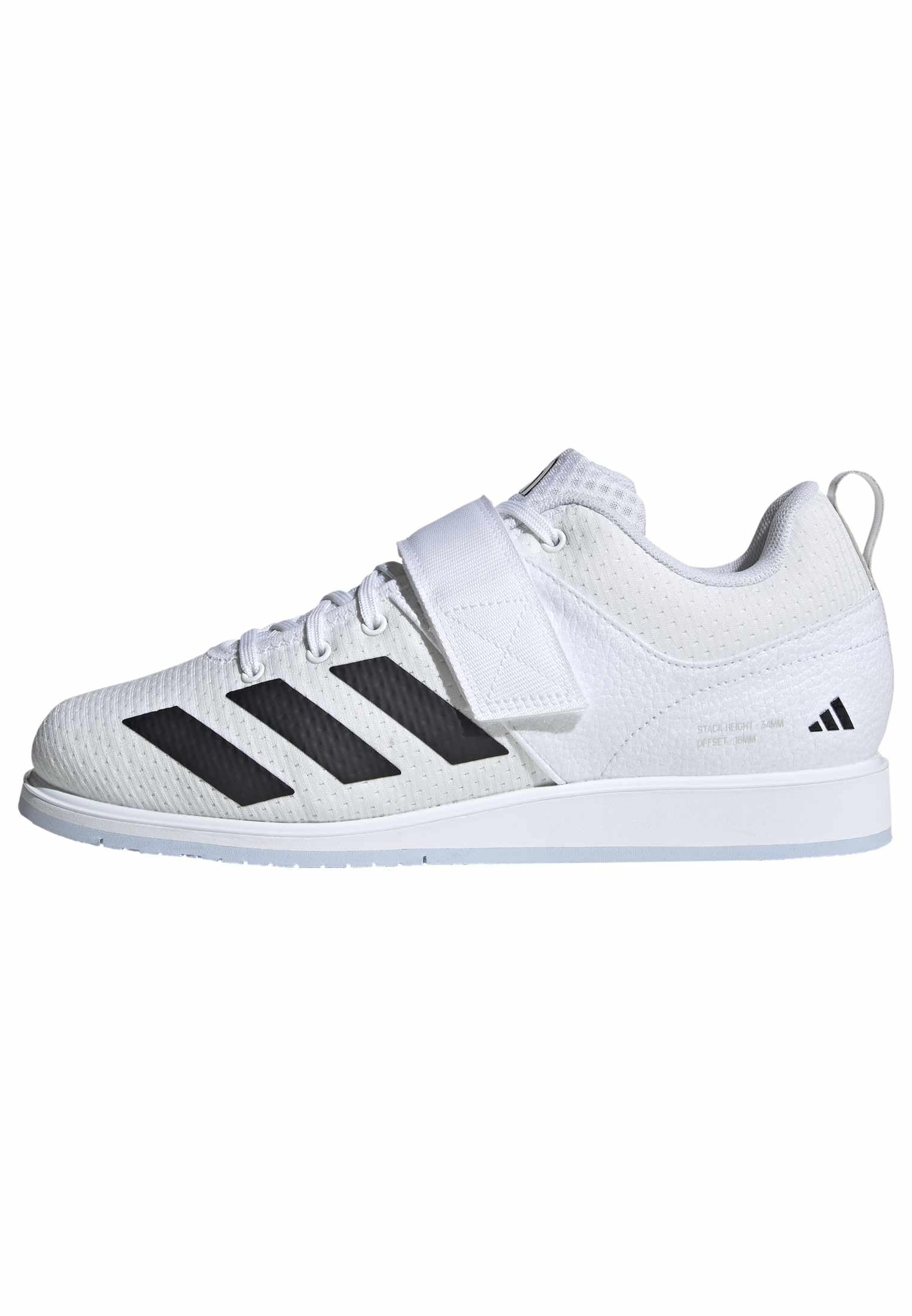
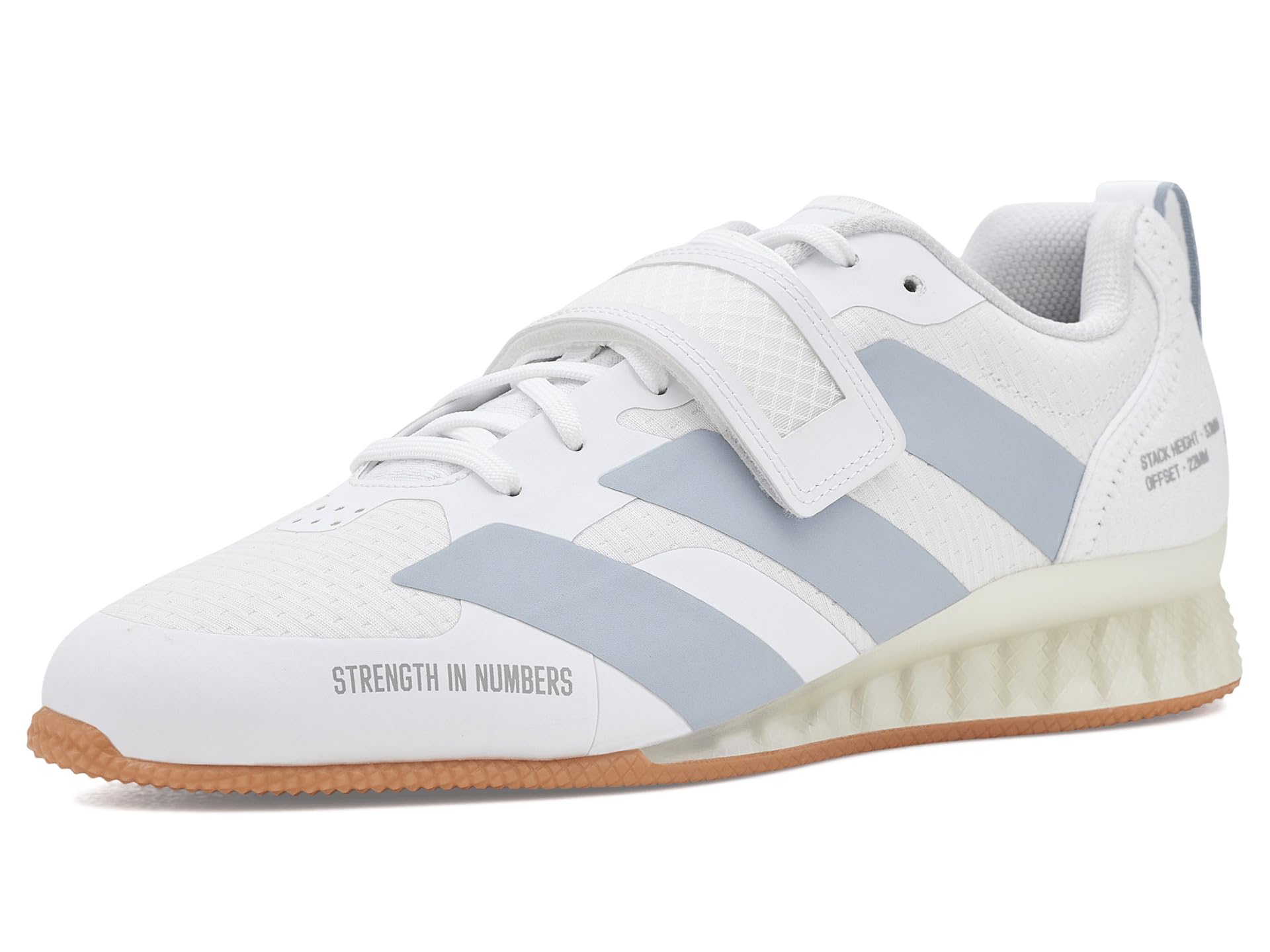
adidas Adipower III

adidas Adipower III

Deep squats

Our Score 9.0/10
Check Price

Worth Noting

  • Narrow toe box rules out wide feet
  • Long strap can catch and fray the laces
Type
Weightlifting
Model
HQ3527
Listed Weight
2.43 lb
Read the full review

If your squat already reaches depth with your heels planted in a flat shoe, you don't need this one. The Adipower III exists for the lifter whose ankles stop the descent — the one who feels the heels lift and the bar drift forward somewhere below parallel.

For that lifter, we think it's the best tool here. The elevated heel buys range the ankle won't give, the sole is unyielding under a loaded bar, and the whole shoe is built with a specificity the budget pairs don't attempt. It's the shoe we point anyone with competition plans toward, and it's the firmest platform in this group.

Two things to know before you commit. The fit is narrow through the toe box, and no strap fixes that — broad feet belong in the Venja or the Osterland. The metatarsal strap is also long, long enough to catch the laces when you cinch it, and laces that meet that hook-and-loop will fray before the rest of the shoe shows wear. Thread them clear of it and the problem disappears.

It's the biggest spend here by a wide margin, and it's worth it only for the problem it solves. Buy it for depth, not for the badge.

Bottom line: We point lifters whose ankles limit their squat depth to the Adipower III; the elevated heel buys range the joint won't give, and the platform is the firmest here.

#4

adidas Powerlift 5

adidas Powerlift 5

First lifters

Our Score 9.0/10
Check Price

Worth Noting

  • Narrow toe box squeezes wider feet
  • Costs more than our top pick without the extra room
Type
Weightlifting
Model
34DC094-OFW
Listed Weight
2.43 lb
Read the full review

The first pair of lifting shoes is really a question about what you're trying to feel. A beginner needs to learn what a planted heel and a rigid sole do to a squat, and the Powerlift 5 makes that lesson obvious within a set or two.

The shoe locks the foot down: laces plus a broad strap across the instep, no tipping or rolling at the bottom, and grip that holds on a rubber gym floor. The raised heel makes squatting easier, particularly for anyone who has spent months fighting for depth in flat trainers. Build quality is solid, and the upper molds to the foot rather than pressing on it.

Where it lands for us is as a good first lifter with real caveats. It's narrow through the toe box, and it costs more than our top pick while offering less room in the front half. If your feet run average to narrow and you like a snug, locked-in feel, that trade is fair; if they don't, this isn't the pair.

Order with that in mind. A half size up helps with length and does nothing for width, so wide feet should start somewhere else in this group.

Bottom line: We see the Powerlift 5 as a first lifter's shoe: it teaches a planted heel and a locked-in stance, as long as your feet run average to narrow.

#5

MANUEKLEAR Deadlift Shoes

MANUEKLEAR Deadlift Shoes

Deadlift days

Our Score 8.8/10
Check Price

Worth Noting

  • Sizing is inconsistent; a half size up is safer
Type
Deadlift
Model
Deadlift
Department
Men
Read the full review

A deadlift shoe has one job: get you close to the floor and stay there. The MANUEKLEAR does it with a thin, flat sole and a rubber bottom that grips harder than it looks, and the upper is soft enough that the toes spread and take the floor the way a pull wants.

It feels strange the first time — close to a sock with a rubber grip — and that is the point. There's no heel to pitch you forward and no cushioned midsole compressing under load, just a flat platform and traction. It's also the least expensive proper lifting shoe here, which makes it an easy second pair to keep in the bag for pull days even if you squat in something with a heel.

Our one reservation is the insole, which can slide; take it out and the problem goes away for most feet. That doesn't touch what the shoe does under a bar, which is exactly what it's for and nothing more.

Bottom line: For pull days, we keep coming back to these: flat, grippy, and close to the floor, at the lowest price of any proper lifting shoe here.

#6

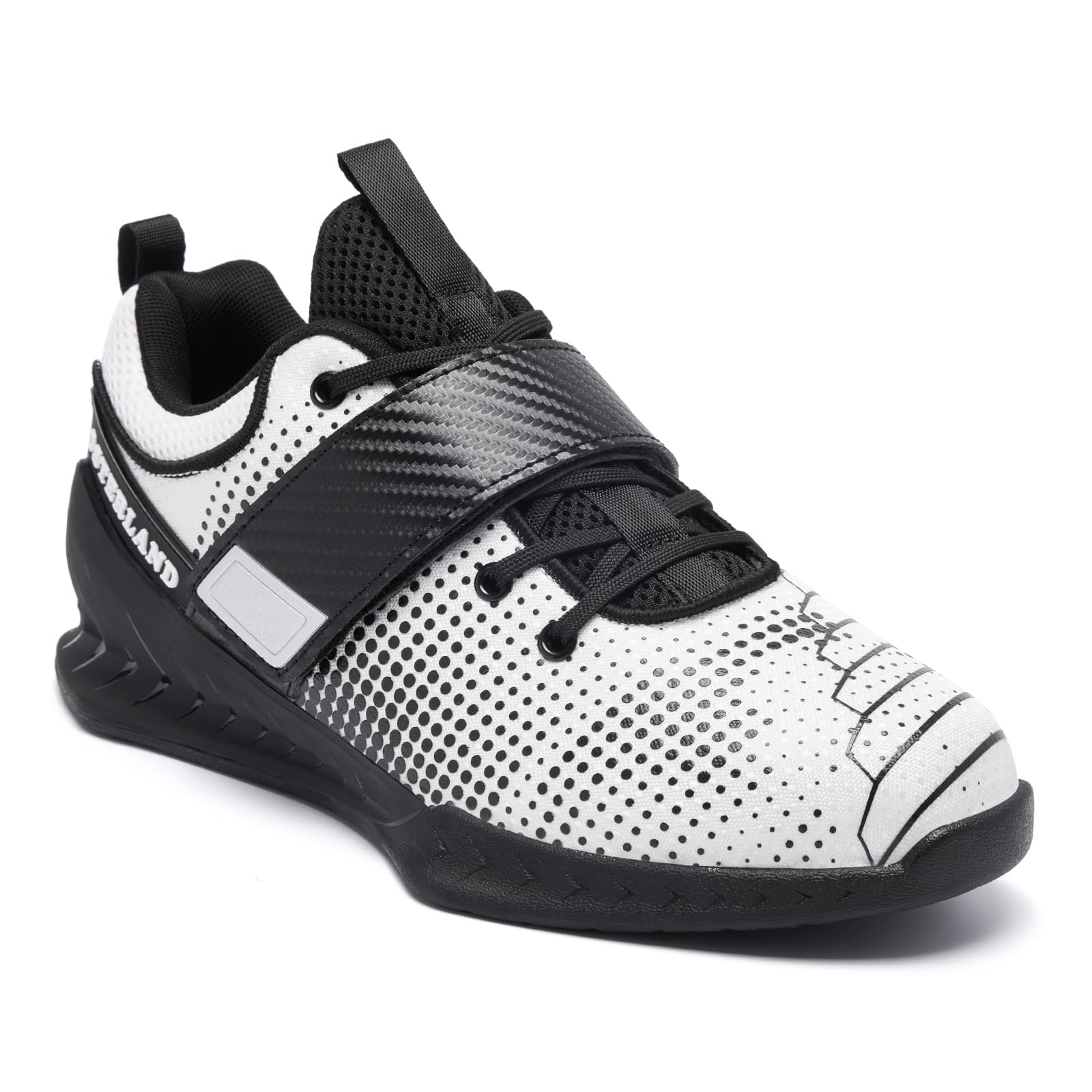
Osterland Weightlifting Shoes

Osterland Weightlifting Shoes

Wide, stable base

Our Score 8.8/10
Check Price

Worth Noting

  • Wide-width labeling doesn't match the fit
Type
Weightlifting
Toe Box
Wide
Department
Unisex adult
Read the full review

Nothing about the Osterland jumps out. There's no loud color blocking, no badge doing the work, no gimmick in the midsole — just a clean lifting shoe that looks better made than several louder ones here.

Underfoot it's a wide, planted base that doesn't wobble, with a forefoot broad enough that the foot stops rolling in and out on heavy sets. Lifters who usually fight a narrow toe box get along with it, and the fit is generous enough to accommodate a broad foot without pinching.

Build quality is solid, it holds up to regular gym use, and it looks good enough that you won't mind wearing it in public. None of that is exciting, and it doesn't need to be.

What keeps it below our top pick is that it does nothing better. The Reebok gives you the same stability and a friendlier price. The Osterland earns its place on width and looks — order with the size chart open, because the shoe runs larger than the number on the box suggests.

Bottom line: We rate the Osterland as a good-looking, wide, stable squat shoe; it just needs you to check the sizing labels before you order.

#7

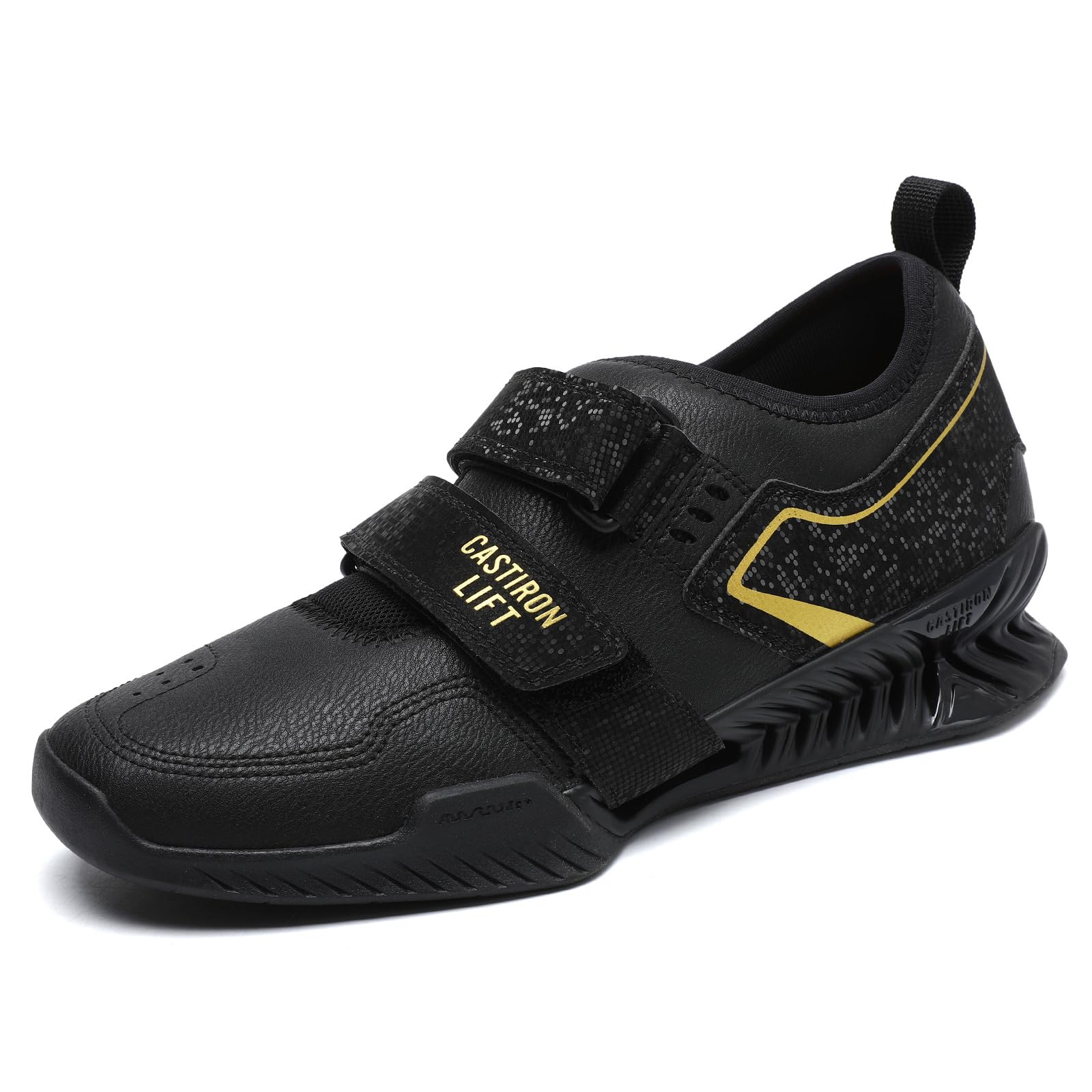
CASTIRON LIFT Weightlifting Shoes

CASTIRON LIFT Weightlifting Shoes

Strap-only lockdown

Our Score 8.8/10
Check Price

Worth Noting

  • Sizing runs large
Type
Weightlifting
Closure
Hook-and-loop straps
Department
Men
Read the full review

The first thing you notice is what's missing: laces. The CASTIRON LIFT closes with straps alone, which makes getting in and out quick and means nothing comes untied in the middle of a set.

Underneath, the platform is broad and stable from heel to toe, wide enough that a broad foot sits flat instead of spilling over the edges. It straps you in firmly, and on front squats it feels direct — planted, with nothing between you and the floor.

The heel counter is the thing to check before committing. It's high and stiff, and a tall, unyielding back can rub the achilles for the first few sessions. Wear them around the house for an evening before a heavy day, and think twice if you've had achilles trouble.

We like it for lifters who want strap-only lockdown and a wide base and don't mind a short break-in. It isn't the friendliest first pair in this group — the platform and closure reward someone who already knows what they want from a lifting shoe.

Bottom line: We like the CASTIRON LIFT for strap-only lockdown and a broad platform, provided you're ready to break in a stiff heel counter.

#8

Skerxut Deadlift Shoes

Skerxut Deadlift Shoes

Cheap pull days

Our Score 8.6/10
Check Price

Worth Noting

  • Essentially no arch support
Type
Deadlift and cross-training
Model
SJG-001
Department
Men
Read the full review

There's a floor to what a flat, grippy gym shoe needs to cost, and the Skerxut sits on it. It's a slip-on with no laces, a breathable upper, and a rubber bottom that sticks to the floor — the whole idea of a deadlift slipper for anyone who wants to find out whether they like one.

We treat it as the cheap experiment, and that isn't a knock. For deadlifts and machine work it does the job: flat, stable enough, grippy. What it isn't is a shoe for lateral work or a lot of standing around — the upper is soft and stretchy, and there's essentially no arch support, which some feet notice on the walk in and most forget under a bar.

There's a practical upside too: no laces to re-tie between sets, and an upper breathable enough for a warm gym. It's the shoe to buy when you want to find out how flat lifting feels before spending real money on it.

Bottom line: We treat this as the cheap experiment: a flat, grippy slip-on for deadlift days, with no arch support and no ambitions beyond the platform.

How We Broke In a Dozen Pairs of Weightlifting Shoes

We started with a list of 30-odd models sold in the U.S. and narrowed it using the specs that genuinely change how a shoe lifts: effective heel height, whether the sole is rigid TPU, wood, or something softer, and how wide each last runs. Customer reviews kept flagging the same two problems — pairs that ran a half size small and heels that peeled away from the midsole inside a year — so models with a track record on both got priority.

Twelve pairs then went into six months of real training, three to four sessions a week, mostly on the rubber floor of a garage gym and once a week at a commercial gym with wooden platforms. Every pair handled back squats, front squats, deadlifts, overhead presses, and split jerks, plus the unglamorous parts of a session: walking to the water fountain, loading plates, twenty minutes on the rower during warm-up. Split jerks were the great separator — the stable pairs kept the foot from rolling inward, and the wobbly ones announced themselves immediately.

We measured each heel with calipers rather than trusting the spec sheet, then tried to fold the forefoot by hand; anything that bent easily got marked down for squats. Two testers with wide feet and one with high arches wore every pair, and we sized up and down in a few models to see whether the printed size meant anything. Comfort was judged at the end of a session, not the start — hot spots, arch ache, lace bite, the urge to take them off between sets. Light-colored uppers picked up chalk and platform dust fast, which is cosmetic but worth knowing. Every six weeks we went back over the stitching, heel counter, and outsole edges for separation, and checked the laces for fraying.

How to Choose Weightlifting Shoes

Match the heel to the lift

A raised heel is a mobility aid, not a badge of seriousness. It puts the ankle at a slight angle so the knee can travel further forward, which is why lifters with tight ankles hit depth immediately in a lifted shoe. Flat shoes do the opposite: they keep you close to the floor, which is what a conventional deadlift wants.

The trap is buying the tallest heel available and then pulling in it. One shoe for everything means a moderate heel like the Reebok's; competing in the squat justifies the Adipower III's taller wedge; and if deadlifts dominate your training, a cheap flat pair beats one expensive compromise.

Stability is the point, not the cushioning

Running shoes are built to compress and return energy. Lifting shoes are built not to move at all. Press a thumb into the sole of a proper lifter and it barely gives; twist it heel to toe and it resists instead of folding. That rigidity is why a firm flat shoe can outperform a cushioned trainer under a heavy bar.

Choose the firmest platform you can tolerate. Squish under the heel is a disqualification rather than a comfort feature, and a shoe that rocks at the edges costs you stability exactly when the load gets serious.

Fit: expect a snug shoe on a narrow last

Most lifting shoes are built narrow, and the toe box is where you feel it. The midfoot and heel should be held firmly — that is what the strap is for — but the toes still need room to spread and take the floor. Sizing up to solve a width problem leaves too much length and a heel that lifts at the back.

Decide width first. Wide feet do better in the Venja or the Osterland; average and narrow feet can take the Powerlift 5 or the Adipower III. Check the listing rather than your street size, too: the MANUEKLEAR runs small, while the CASTIRON LIFT and the Osterland run large.

Grip, closure, and lockdown

Outsole rubber matters more than it sounds. Chalk dust, rubber flooring, and wooden platforms all reward different treads, and a shoe that grips a rubber floor can slide a little on a smooth platform. Test it with a few empty-bar reps on the surface you actually lift on.

Closure is a preference with consequences. Laces allow finer adjustment across the instep; a broad strap gives faster lockdown and cannot come untied. The CASTIRON LIFT goes strap-only, the Venja and the Adipower III combine both, and a high instep is usually happier with laces plus a strap.

Frequently Asked Questions

Final Verdict

The Reebok Lifter PR II is the pair we tell most lifters to buy. It has the two things that actually change a lift — a raised heel that supports depth and a sole that won't compress — and it stays comfortable long enough to finish a session in.

Spend more only for a reason: the adidas Adipower III if ankle mobility is what caps your squat, or the flat MANUEKLEAR if deadlifts are the whole program.