Shoes & Apparel

Best Walking Shoes for Wide Feet of 2026

A shoe labeled wide can be wide at the toe box, wide through the midfoot, or just roomy everywhere, and the size tag won't tell you which. I have a wide forefoot and a narrow heel, so most wide sneakers slide at the back while pinching up front. A good pair fixes something simpler: it lets you walk a couple of miles without thinking about your feet. We've spent six months in 12 pairs, and the differences weren't subtle.

A few things I wish someone had told me sooner. Check whether the insole lifts out, because a removable one buys you depth for swelling or orthotics. And more cushion isn't automatically better — a tall, soft midsole feels wonderful in the store and vague underfoot by mile three. Fit isn't the same as length, either: a couple of pairs ran true in the toe and still needed room once I put on a thicker sock. The picks below are comfortable from the first wear, supportive under the arch, easy to pull on, and normal-looking enough for the grocery store.

#1

Skechers Max Cushioning Endeavour

Top Pick
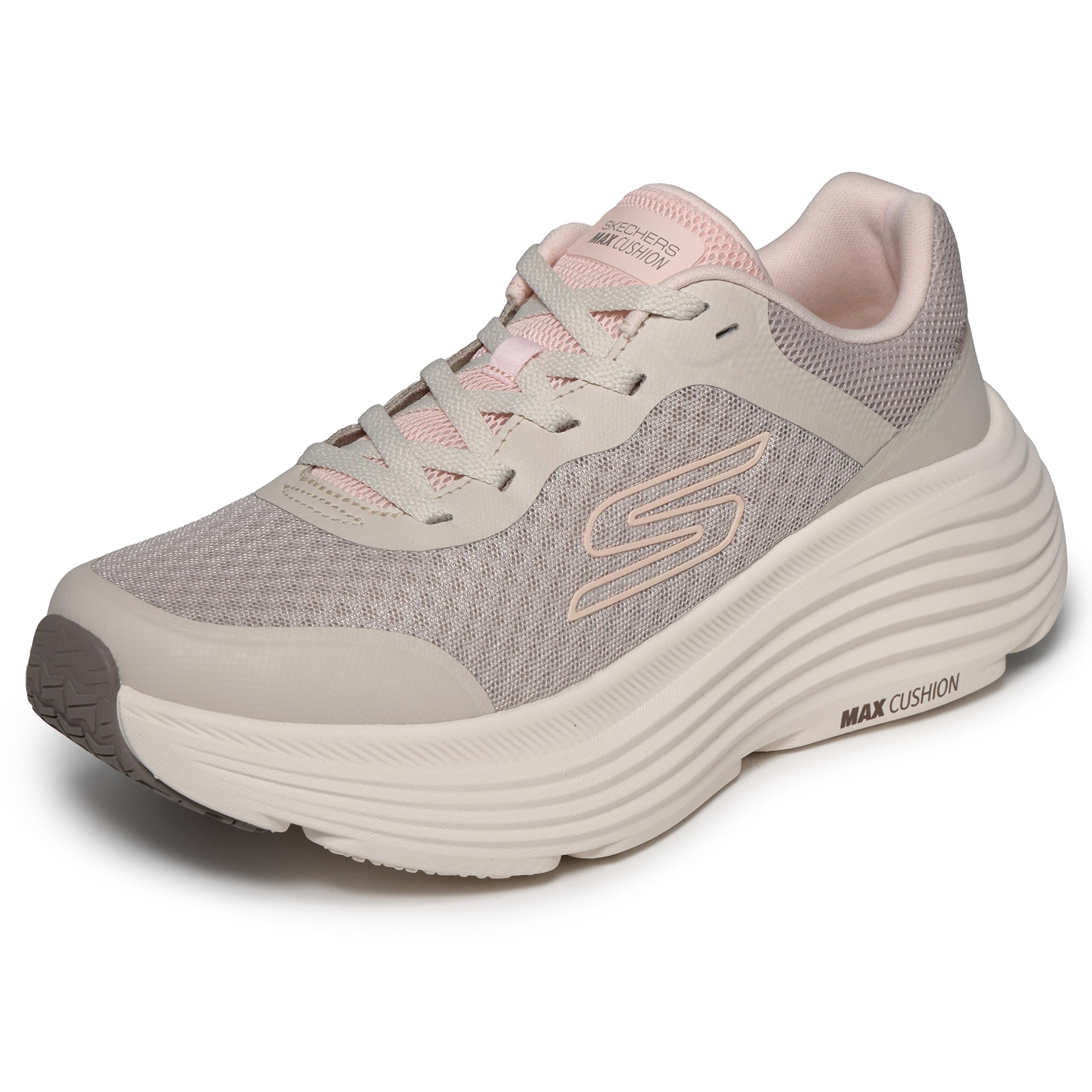
Skechers Max Cushioning Endeavour

Everyday wide-foot walking

Our Score 9.0/10
Check Price

Worth Noting

  • No men's version
Care
Machine washable
Upper
Breathable mesh
Insole
Air-Cooled Goga Mat
Cushioning
Max Cushioning midsole
Read the full review

The forefoot is what puts this Skechers at the top of our list. The cut across the ball is generous — our toes had room to spread in a standard size, which is rarer than it should be — and the mesh upper gives a little over the widest part of the foot instead of pressing there. If your last pair was long enough but still pinched, that is the problem this shoe solves.

Underneath, the Max Cushioning midsole and the Air-Cooled Goga Mat insole take the sting out of pavement. The ride is plush without going mushy, and the heel stays held even with all that room up front, which is the balance a lot of wide shoes miss: they open up the whole shoe instead of just the toe box. Skechers also builds it machine washable, which matters more than it sounds by August.

One caveat worth knowing. The width here comes from a generous cut rather than a numbered wide fitting, so if you normally buy a 2E or 4E, start with a dedicated wide shoe and treat this as the roomy standard-width option. If you are a D width who keeps getting pinched, this is the comfortable place to land — and it costs less than the max-cushion names it gets compared with while holding its own against them on comfort.

Bottom line: For wide feet that need room up front without going up a size, this is the walking shoe we recommend: plush, roomy, and comfortable from the first mile.

#2

FitVille Stepease V2 Men's

FitVille Stepease V2 Men's

Men's extra-wide feet

Our Score 8.8/10
Check Price

Worth Noting

Entry
Slip-on
Width
Extra-wide
Sizing
Men's
Arch Support
Molded insole
Read the full review

Plenty of shoes labeled wide are a standard last with extra volume added. The FitVille Stepease is the real thing for men: it is built on an extra-wide fitting, the toe box runs square instead of tapering to a point, and the whole shoe is shaped around a built-up arch. If your last pair left pressure marks on your pinky toe, start here.

The insole is what we noticed most. It is molded with a pronounced arch that steadies the foot through the stride, and it lifts out, so an orthotic goes in without a fight. The upper is soft and unstructured, and the step-in entry loosens up after a few days so you can push in without bending — one of the few hands-free designs we tested where the heel still feels locked down once the shoe is on.

What surprised us is how little it looks like a wide shoe. There is a substantial sole underfoot, but the toe box is roomy without being boxy, and it reads as an ordinary sneaker rather than a medical one. It is also one of the least expensive picks here, which makes it an easy first pair of properly wide walkers.

Bottom line: If you need a genuinely extra-wide fit, this is the men's walking shoe we recommend: cushioned, steady under the arch, and hands-free to put on.

#3

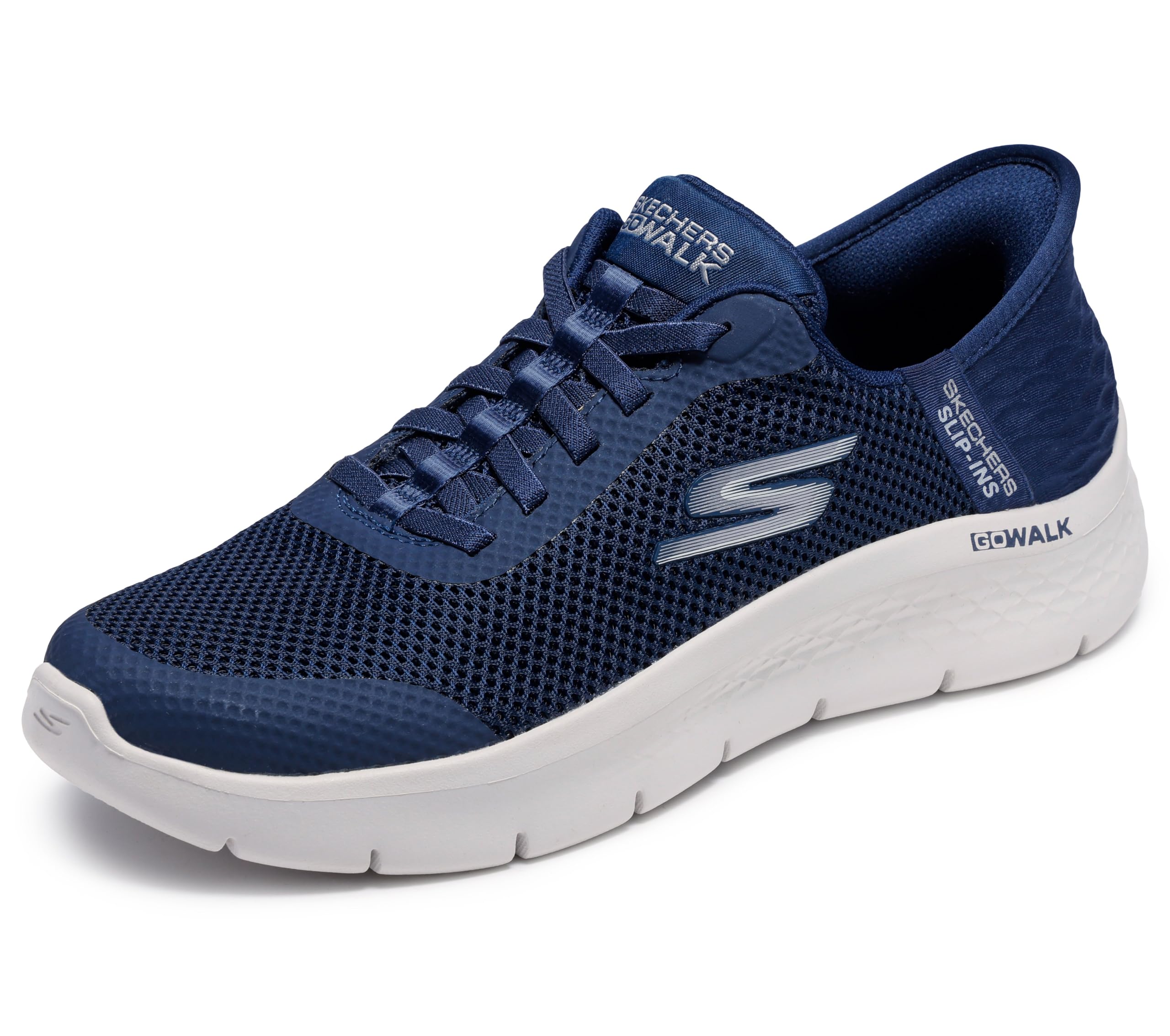
Skechers Go Walk Flex Grand Entry

Skechers Go Walk Flex Grand Entry

Hands-free daily wear

Our Score 8.8/10
Check Price

Worth Noting

  • Sizing is inconsistent between pairs
Entry
Hands-free step-in
Width
Wide fitting offered
Sizing
Women's
Read the full review

The catch with this Skechers is the width. The standard fitting is snug over the instep and gives less across the top of the foot than the Max Cushioning model above, so if your feet are wide through the midfoot or your arches are high, order the wide rather than your usual size. In the wide, the toe room opens up and the shoe behaves the way the step-in design promises.

What it does better than anything else here is disappear at the door. Your foot slides in without a hand on the heel, the collar holds without pinching, and there is no break-in to plan around — the first walk felt like the tenth. For stiff hands, a sore back, or anyone who has left a pair of lace-ups by the door because tying them was too much work, that is the whole point.

It is a good-looking shoe, too, and the upper wipes clean after a wet walk. Order the wide fitting and it is the easiest shoe here to live with, which is exactly what we want from something you will wear five days a week.

Bottom line: Buy the wide fitting and this is the easiest shoe here to live with: a hands-free step-in for anyone who would rather not bend, tie, or break anything in.

#4

NORTIV 8 Women's Walking Shoes

NORTIV 8 Women's Walking Shoes

Long days standing

Our Score 8.6/10
Check Price

Worth Noting

  • Tight opening is hard to pull on
Sole
Rocker bottom
Sizing
Women's
Outsole
Non-slip
Cushioning
Heel cushioning
Read the full review

The sole curves up at the toe and heel like a rocker, and that shape is the whole idea: it rolls you through each step instead of making your toes bend. On a long stretch of pavement that is a leg-saving design, especially if your big toe is stiff or your feet ache by mid-afternoon.

There is real cushioning under the heel, and the forefoot stays firm enough to push off from — soft, but not a marshmallow. Toe room is generous for a standard width, and the wide fit we tried needed no break-in; no hot spots on the first walk, none on the second. The arch support is there without being aggressive, which suits a walker more than a runner.

The trade-off is getting them on. It is a lace-up with a fairly tight throat, and it took both hands and some patience to pull them over the heel — not the shoe for anyone who wants to step in and go. Once they are on, the fit is secure, and the shoe sits mid-pack on price here, which is a fair place to be for a cushion-first walker with wide feet.

Bottom line: A rocker sole and generous toe room make this the pick for wide-footed walkers who spend hours on hard floors and want cushioning that keeps rolling.

#5

Scurtain Wide Width Walking Shoes

Scurtain Wide Width Walking Shoes

Swelling feet

Our Score 8.4/10
Check Price

Worth Noting

  • Runs about half a size large
Drop
Zero drop
Width
Wide width
Sizing
Women's
Closure
Adjustable
Read the full review

Feet that swell through the day are a fit problem no fixed width solves — the shoe that fits at seven in the morning is tight by four in the afternoon. Scurtain's answer is a hook-and-loop panel on the side, so the same pair can be let out after lunch and snugged back up the next morning. For edema, neuropathy, or a foot that changes size after surgery, that adjustability is worth more than any amount of cushioning.

The rest of the shoe is built around the same idea. The toe box is wide and boxy, the sole is zero drop — flat from heel to toe — and there is almost nothing to it, which makes them easy to wear around the house or out on errands. They slip on in seconds, and the wide fit is genuinely wide rather than merely roomy.

What you give up is support. The arch is minimal, so plan on sliding in an insole — there is room for one — and the flat, even stride is the part we had to get used to, since it feels clompier than a cushioned walker. They are also the lightest-feeling shoe in this group, which is why they end up being worn indoors as often as out.

Bottom line: If your feet swell as the day goes on, this is the pair to buy: the adjustable panel widens and snugs the fit, and the toe box is genuinely wide.

What Six Months in 12 Pairs of Wide Walking Shoes Taught Us

Every shoe here started as a candidate I found by combing sizing charts, review sections, and return complaints from brands known for genuinely wide lasts, not just wide labels. I filtered for width availability, price, and whether the upper had any give or an adjustable closure, then cut the field to 12 pairs that spanned the range: extra-wide slip-ons, cushioned rocker-bottom sneakers, adjustable styles built for swelling, and a couple of mainstream shoes that simply come in wide.

None of it happened on a treadmill. The shoes went into six months of real life: morning dog walks, grocery runs, standing shifts on hard hospital floors, and two long airport days. I measured each toe box at its widest point with a tape and compared it to the size chart, then wore every pair with a thick sock and again with a rigid orthotic to see how much depth the removable insole actually bought. Each pair got at least a week of straight wear before I scored it.

For the slip-on styles, I timed how long it took to get them on and off one-handed, since people buying these are often doing it in a hurry or with a sore foot. I crossed wet garage concrete and a tile bathroom floor to check grip, pressed a thumb into the arch to see whether support was molded into the footbed or just printed on the liner, and inspected heel counters and seams for collapse and fraying at the six-month mark. One machine-washable pair went through a full cycle. I also wore the least attractive pairs to the grocery store, because how a wide shoe looks matters as much as how it feels.

How to Choose Walking Shoes for Wide Feet

Width Is a Letter, Not a Feeling

Women's shoes run from narrow (AA) through medium (B), wide (D), and extra-wide (EE); men's run from narrow (B) through medium (D), wide (2E), and extra-wide (4E). A shoe that "runs roomy" in a medium is a different product from a graded wide, and the difference shows up a mile in rather than in the mirror. If you sit between widths, buy the wide and take up the slack with socks or laces.

The trap is sizing up to get width. Extra length does not widen the ball of the shoe, and it slides your arch out of position and lets the heel lift. The Skechers Max Cushioning Endeavour above is the useful exception: a generous cut in a standard width that suits a D foot without a special order.

Cushioning, Arch Support, and Sole Shape

Walking on pavement is a repetitive load, so the midsole matters more than the upper. Max-cushion shoes absorb the most, but softer is not automatically better — a very soft, curved sole gives up ground feel and stability, which is why rocker designs like the NORTIV 8 suit stiff toes and long flat stretches better than uneven ground.

Arch support is the other half of the decision. If your arches are flat or very high, look for a shaped insole underfoot rather than a flat bed with a label, and check that the heel counter holds you without pressing.

Closures, Swelling, and Getting Them On

Feet swell as the day goes on, and a shoe laced snug at breakfast can be tight by dinner. Laces give the most adjustment, hook-and-loop panels give the widest range and are easiest on stiff hands, and hands-free step-ins like the FitVille and the Go Walk Flex trade some of that range for speed.

If you have limited mobility or a sore back, that trade is usually worth it. If your feet change volume through the day, keep the adjustable pair — a fixed-width shoe cannot be let out at four in the afternoon.

When to Replace Them

Cushioning dies before the tread does. A walking shoe's outsole often looks fine while the foam underneath has packed down, which is why the usual signal is a shoe that suddenly feels flat rather than worn. Press a thumb into the midsole: if it no longer springs back, the shoe is done no matter how good the upper looks.

Check the outside edge of the heel for a slanted wear patch, and rotate two pairs if you walk most days — alternating spreads the load and keeps both midsoles fresher longer.

Frequently Asked Questions

Final Verdict

The Skechers Max Cushioning Endeavour is the pair we point most wide-footed walkers to. It has the roomiest forefoot here in a standard size, enough cushioning for daily pavement miles without turning mushy, and it costs less than the max-cushion names it gets compared with.

Men who need a true extra-wide fitting should go straight to the FitVille Stepease V2 — it is the only shoe in this group built on an extra-wide last, and its arch support is the steadiest of the picks. If your feet swell through the day, buy the adjustable Scurtain pair instead and let the panel do the work.