Shoes & Apparel

Best Shoes for Standing All Day of 2026

Somewhere around hour seven, a shoe stops being an accessory and starts being equipment. Anyone who spends a shift on their feet — behind a counter, in a hospital corridor, in a classroom, at a host stand — knows the moment the ache moves from the arch into the heel and settles in for the rest of the day. The right pair doesn't shorten the shift, but it decides whether you can still walk the dog afterward.

I've owned shoes that felt like marshmallows for a week and like plywood by month two, which is why I'm suspicious of any pair I only get to try on for ten minutes. Over eight months, my team and I wore 12 pairs through full shifts, commutes, and the grocery run after, weighing comfort, foot support, traction, looks, and value — and learning the hard way how each one's sizing actually ran once we had socks on. Cushioning is easy to engineer; cushioning that survives a hundred miles of tile and concrete is the real trick. The pairs that pulled it off are below.

#1

Skechers D'Lites Fresh Start

Top Pick
Skechers D'Lites Fresh Start

All-day standing

Our Score 9.2/10
Check Price

Worth Noting

  • Heel area wears through first
Style
Chunky sneaker
Width
Wide available
Department
Women's
Read the full review

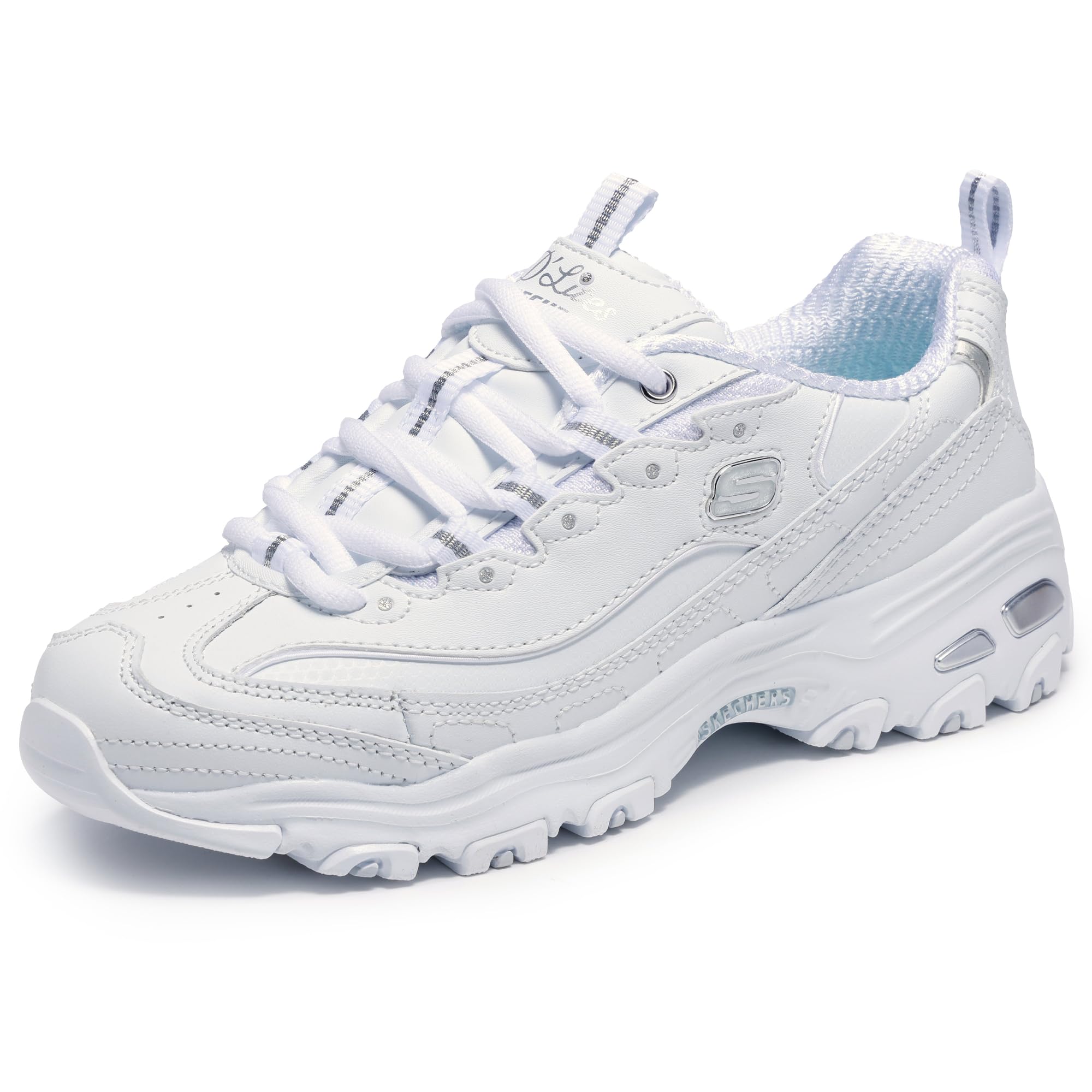
Chunky soles usually mean a heavy shoe, and that's the first thing the D'Lites gets right: it looks like a platform sneaker and carries like a trainer. Underfoot there's a thick, soft slab of cushioning that still feels like cushioning at the end of a long day, and the arch is built up enough that we happily hand these to someone who stands on a hard floor for a living. That combination is why it's our top pick.

Support is where it separates from the lighter shoes here. There's a real shelf under the midfoot rather than a flat insole with a logo stamped into it, and of the five pairs in this guide it's the arch we trust most. The chunky profile reads as a normal sneaker with jeans or scrubs, so you aren't choosing between a work shoe and something you want to be seen in.

Two things to sort out before you order. Sizing is the least predictable of the group — enough people find their usual size too short that going up half a size is the safer start. And the outsole is built for pavement and dry indoor floors, not a wet kitchen; for that, the Cessnock below is the better tool.

The look is a decision in itself. The D'Lites is deliberately chunky and no colorway hides it — we like that, but if you want a shoe that disappears under trousers, the New Balance 327 is the quieter shape.

Bottom line: Our top pick for women who stand all day: the cushioning holds up past hour eight and the arch support is the most convincing in this group.

#2

Under Armour Charged Assert 10

Under Armour Charged Assert 10

Long shifts

Our Score 9.0/10
Check Price

Worth Noting

  • Sole can separate from the upper
Style
Road running shoe
Width
Extra-wide available
Department
Men's
Read the full review

Weight is the first thing you notice about the Assert 10, or rather the lack of it. A long shift is easier when you aren't dragging a shoe around, and this is the lightest-feeling pair here. There's a soft, springy layer under the heel and forefoot that takes the edge off tile and concrete in a way a firm work shoe doesn't.

What we appreciate most is that the lightness doesn't cost you support. The arch is shaped, the base is wide enough to feel stable when you shift your weight, and the upper is thin but holds its shape instead of sagging. It's also the most breathable shoe in the group, which matters more than people expect in a warm building.

Sizing is the thing to get right. These run small often enough that ordering a half size up beats trusting your usual number, and the wide and extra-wide fittings are real rather than nominal — worth hunting down if a standard width pinches across the ball of your foot.

It looks like an ordinary sneaker too, which matters if your workplace has opinions about shoes. It's also the cheapest pair in this guide, which makes ordering a half size up a low-stakes experiment.

Bottom line: Our men's pick: the Assert 10 is the lightest shoe here and still supportive enough for a full shift on concrete, which is a rare combination.

#3

Skechers Cessnock Bungee

Skechers Cessnock Bungee

Wet work floors

Our Score 9.0/10
Check Price

Worth Noting

  • Can come apart under heavy daily use
Style
Work slip-on
Closure
Bungee
Outsole
Slip-resistant
Department
Men's
Read the full review

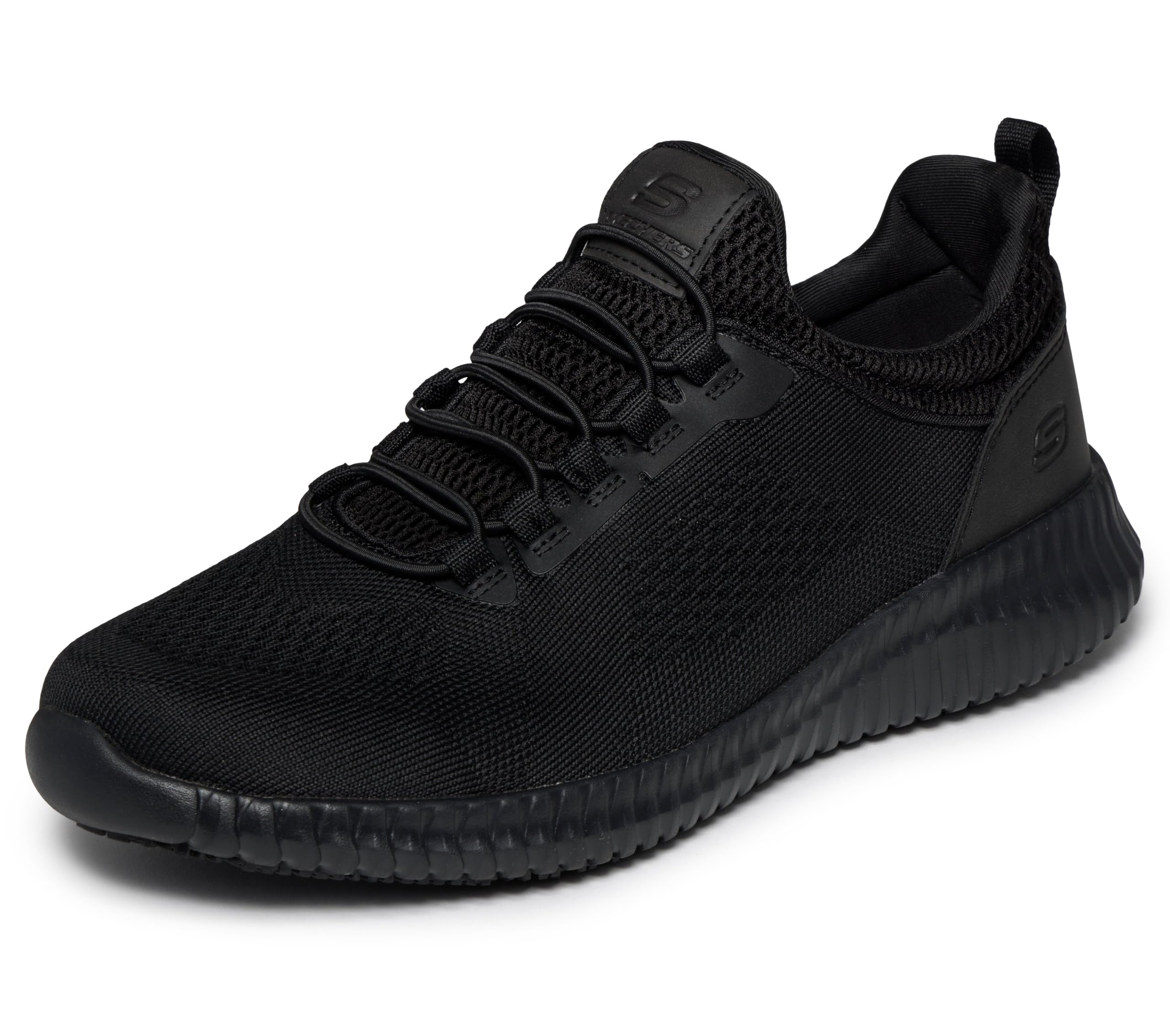
A wet kitchen floor is the hardest test a standing shoe faces, and the Cessnock is the one pair here built for it. The outsole carries an actual tread pattern rather than a smooth fashion sole, and it holds on the kind of slick tile that turns a normal sneaker into a liability. Step-in bungee lacing means you aren't bending down with full hands, which is why it's our pick for kitchen and shop work.

Comfort is better than a work shoe has any right to be. The footbed is thick and cushioned enough that a double shift doesn't leave you hobbling, the toe box is roomy, and there's enough structure through the midfoot for a long day on hard floors. It also wipes clean and survives the washing machine, which is more than any mesh shoe here can claim.

Fit is the thing to sort out. These run wide and long for a lot of people, so if you're between sizes, take the smaller one — the bungee takes up some slack but not a full size of it.

One more thing worth knowing: they read as ordinary sneakers rather than safety gear, so nobody clocks them as work shoes at the end of a shift.

Bottom line: The best choice here for wet kitchen or shop floors: proper traction, a cushioned footbed and a slip-on you can step into with both hands full.

#4

New Balance 608 v5

New Balance 608 v5

Wide feet

Our Score 8.8/10
Check Price

Worth Noting

  • Stiff leather needs a slow break-in
Style
Cross trainer
Upper
Leather
Width
Wide toe box
Department
Women's
Read the full review

The 608 is the most old-fashioned shoe here, and for a lot of feet that's the point. It's a leather cross-trainer with a firm sole, a wide toe box and a shape that doesn't pretend to be a running shoe. If your arches need holding rather than cushioning, that structure does more for you than another inch of foam.

Wide feet are where it earns its place. The toe box is genuinely roomy, the leather holds its shape around the instep instead of collapsing, and the arch sits high enough to support a high instep without pinching across the top of the foot. It's also the steadiest shoe here when the floor isn't level, which is a real advantage on a factory floor or a loading dock.

The cost is break-in. The leather starts stiff and the sole barely flexes, so the first week is a negotiation rather than a pleasure, and anyone who wants a shoe that feels soft out of the box should look at the D'Lites instead. Give these a few short wears before you commit to a ten-hour day, and we think the structure is worth the patience.

There's a nice side effect to the compact sole unit: it makes a long foot look shorter, which is a small vanity win nobody advertises.

Bottom line: The best of these for wide, high-arched feet: firm structured support and a roomy toe box, as long as you can live with a stiff break-in.

#5

New Balance 327

New Balance 327

Style-first days

Our Score 8.8/10
Check Price

Worth Noting

  • Suede marks and bleeds when wet
Style
Lifestyle sneaker
Upper
Suede and mesh
Department
Women's
Read the full review

We expected the 327 to be a looks-first sneaker that gave up by lunchtime. It didn't. The sole is thinner than the chunky shoes in this guide, but the foam is dense rather than pillowy, and that density is what keeps it comfortable late into a day of errands, travel or standing at a desk.

Everything around the standing is where it wins. It's light, the mesh and suede upper breathes, and the arch is shaped rather than flat — not as much support as the 608 gives, but enough that we never felt the floor through it. It's also the only shoe here we happily wear to dinner after a day on our feet.

The suede is the catch. It marks, it doesn't wipe clean the way the work shoes do, and a wet day can bleed color into the lighter panels — treat it before the first wear and keep it out of puddles.

It's the most expensive pair in the guide, and it's the one we reach for when the day has both a shift and a dinner in it.

Bottom line: For anyone who wants standing comfort without a chunky work sneaker, the 327 is the style pick — light, supportive enough for a long day and best kept away from rain.

How We Tested the Best Shoes for Standing All Day

We built the shortlist by pulling about 40 candidates from the brands that keep surfacing in workplace recommendation threads and uniform-supplier catalogs, then cutting anything without a removable insole, a genuinely wide size run, or a slip-resistant outsole. We stayed in the middle of the market, where most people who stand for a living actually shop, and where buying two pairs in rotation is realistic. That left 12 pairs, which we wore for eight months.

Each pair went into a real rotation: ten-hour retail shifts, a hospital corridor, a school hallway, a café bar during a rush, plus the commute and the errand on the way home. We logged at least three consecutive shifts in every shoe before judging it, since a pair that feels wonderful at hour one often tells a different story at hour nine.

Fit and sizing came first. We tried each pair with thin socks and thick ones, noted whether the toe box crowded our smaller toes, and compared the labeled size against a measured foot — a few ran a half size short, which is worth knowing before you order. Stiffness we judged by twisting each shoe end to end and pressing on the heel counter; the ones that resisted slightly out of the box broke in within a week, while the ones that folded in half never gave us enough support.

Support we checked the crude way: how the insole looked after 40 hours of wear, whether it had flattened or stayed springy, and whether our arches ached the morning after a long shift. Traction was tested on wet tile, a greasy kitchen floor, and a polished lobby, walking normally and then turning quickly. At the end of eight months we compared outsole wear and stitching across the group, then made the last call on looks and value — whether we'd wear them to dinner after work, and whether we'd pay full price for a second pair.

How to Choose Shoes for Standing All Day

Cushioning that survives the eighth hour

Soft foam feels wonderful in the store and flattens by lunchtime. The shoes that hold up under standing have a denser, springier slab and a sole that doesn't bottom out under the heel. Press your thumb hard into the heel and forefoot of anything you're considering; if it compresses to nothing, it won't last a shift.

The D'Lites here is the thickest underfoot of the group, while the New Balance 327 uses a thinner but denser foam that stays consistent from morning to evening. Neither is pillow-soft, and that is exactly why we trust them.

Arch support you can feel with your thumb

Nearly every box in this category claims arch support, and the claim means almost nothing. What matters is whether the midfoot has a raised, shaped shelf or a flat insole with a logo printed on it. Run your thumb along the inside edge; if it is flat, plan on adding an insert or picking a different shoe.

This is the biggest split in this group. The D'Lites and the New Balance 608 both put real material under the arch, while lighter lifestyle shoes leave more of the work to your foot.

Fit, width and the swelling question

Feet spread and swell over a day on your feet, so a shoe that fits at eight in the morning can pinch by four. Try them late in the day where you can, and fit the larger foot. Width matters more than length: a wide toe box takes pressure off the ball of your foot, and a genuine extra-wide fitting — the Assert 10 comes in one — beats sizing up in a narrow shoe, which just moves the pinch to your heel.

Sizing here is not a formality. Two of the five pairs run small or large enough that your usual number is a coin flip, so buy where returns are easy.

Let the floor choose the outsole

A carpeted office and a wet kitchen ask for different soles, and this is where buyers get caught: a soft fashion sneaker that feels great on carpet becomes a skating rink on greasy tile. If your floor is wet, greasy or polished concrete, prioritise a lugged rubber outsole and a slip-resistant rating. The Cessnock is the one here built for that.

On dry indoor floors, tread matters far less than cushioning and fit, so don't pay for grip you'll never use.

Weight, laces and getting them on

By hour ten, every ounce counts, and the lightest shoes here are noticeably easier on tired legs than the structured ones. That is a real trade rather than a free win: the lightest pairs give up some firmness under the arch.

Laces let you fine-tune across a swelling instep; bungee and slip-on designs are quicker and kinder to a sore back, but they offer less adjustment when your feet change size over the day.

Frequently Asked Questions

Final Verdict

If you stand all day and want one pair to buy, get the Skechers D'Lites Fresh Start. It's the only shoe here where the cushioning and the arch support both hold up over a long shift, and it stays light enough that you forget you're wearing a chunky sneaker. Go half a size up and accept that the heel will wear before the upper does.

If you work on wet floors, the Cessnock is the better tool. If your feet are wide and want structure rather than softness, the New Balance 608 is the pair to try first.