Shoes & Apparel

Best Shoes for Deadlifting of 2026

Most people assume the deadlift starts at the hips. It starts at the feet. Every millimeter of squish between sole and floor is force that never reaches the bar, which is why the first inch of a heavy pull can feel like dragging a suitcase across carpet. I spent years pulling in cushioned trainers before switching to something flat, and the bar came off the floor cleaner that same week.

Since then, we've put a dozen pairs through six months of lifting — wrestling shoes, canvas high-tops, minimalist trainers, and purpose-built deadlift shoes. The best share a firm, flat sole and a toe box wide enough to let your feet spread and grip. Sizing matters more than anything printed on the box; a shoe that pinches your pinky toe will cost you at lockout.

How much the sole squashes under a heavy single, whether the outsole holds on a chalky platform, whether the stitching survives a knurled bar scraping it for months — that's what we kept score of. Not every pair here is a dedicated deadlift shoe, and that's fine: different feet, budgets, gym floors.

#1

adidas HVC 2 Wrestling Shoes

Top Pick
adidas HVC 2 Wrestling Shoes

First deadlift shoe

Our Score 9.2/10
Check Price

Worth Noting

  • Outsole can peel away at the toe
Type
Wrestling shoe
Upper
Synthetic suede and single-layer mesh
Size Run
6.5–16
Read the full review

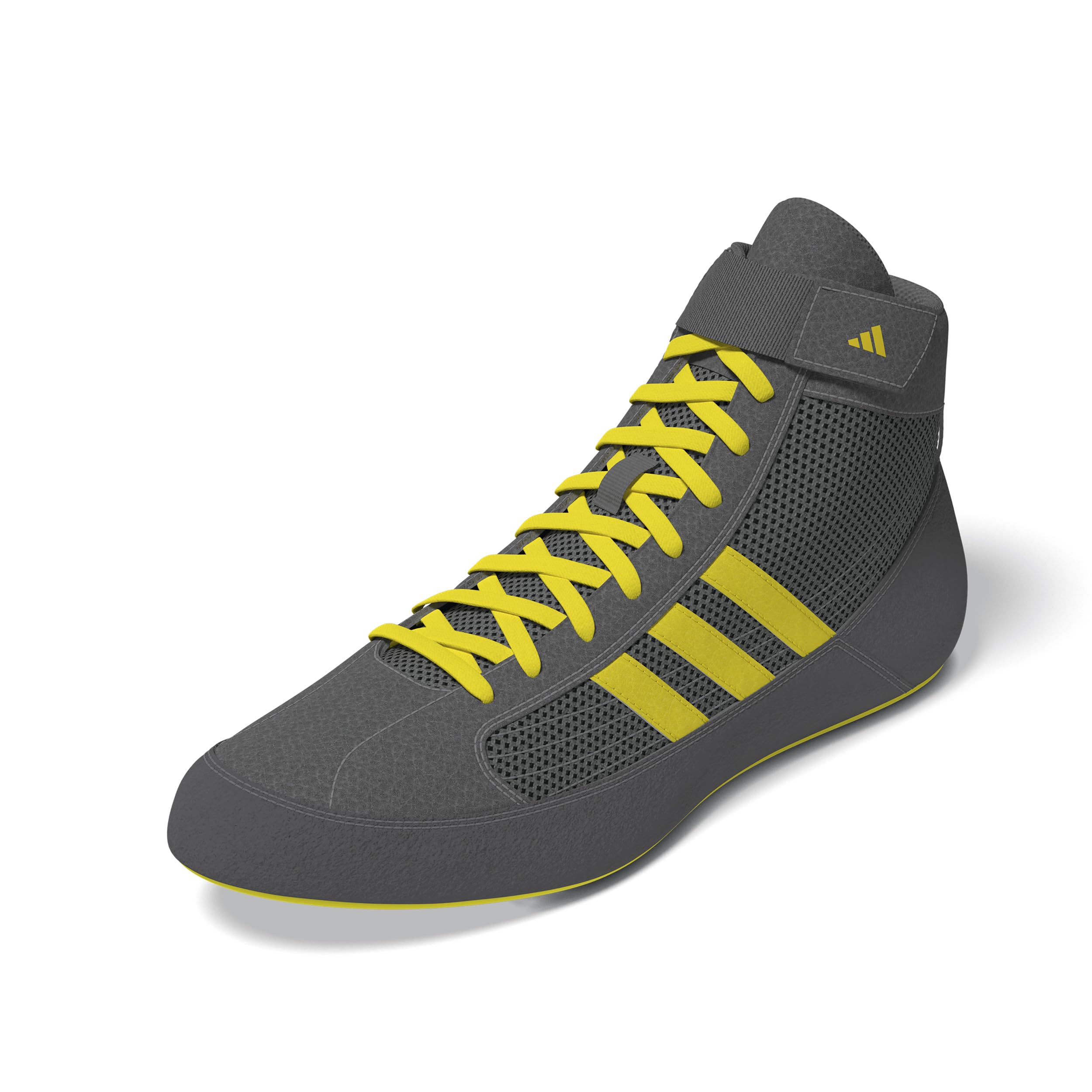
The measurement that matters most in a deadlift shoe is how little sits between your foot and the platform, and the HVC 2 has almost nothing there. It is a wrestling shoe, so the sole is thin and flat with no lifted heel, and the upper wraps the midfoot closely enough that your foot does not slide around inside the shoe while you wedge into position. Synthetic suede and a single layer of mesh keep the top from turning into a sweatbox between sets.

What earns it the top spot here is that ground feel at the lowest price in this guide. Nothing else on this list pairs a flat, thin sole with a price that low, and the ankle-height cut adds coverage a low canvas shoe cannot. The laces also hold their knot through a full session of pulls, which sounds minor until you are resetting your stance and the loose end is under your foot.

Sizing is the one thing to plan around. The fit runs snug through the midfoot and short in the toe, so go up half a size unless you like your toes against the end, and skip it entirely if you have a wide forefoot. The AIRHAS below is the better answer for that foot shape.

Bottom line: For most lifters this is the pair to buy: flat, thin, light, and snug enough that your foot stays where you put it while you set your back.
#2

Converse Chuck Taylor All Star High Top

Converse Chuck Taylor All Star High Top

Gym and everyday

Our Score 9.2/10
Check Price

Worth Noting

  • Narrow through the toe box
Style
High-top sneaker
Upper
Canvas
Sizing
Unisex
Read the full review

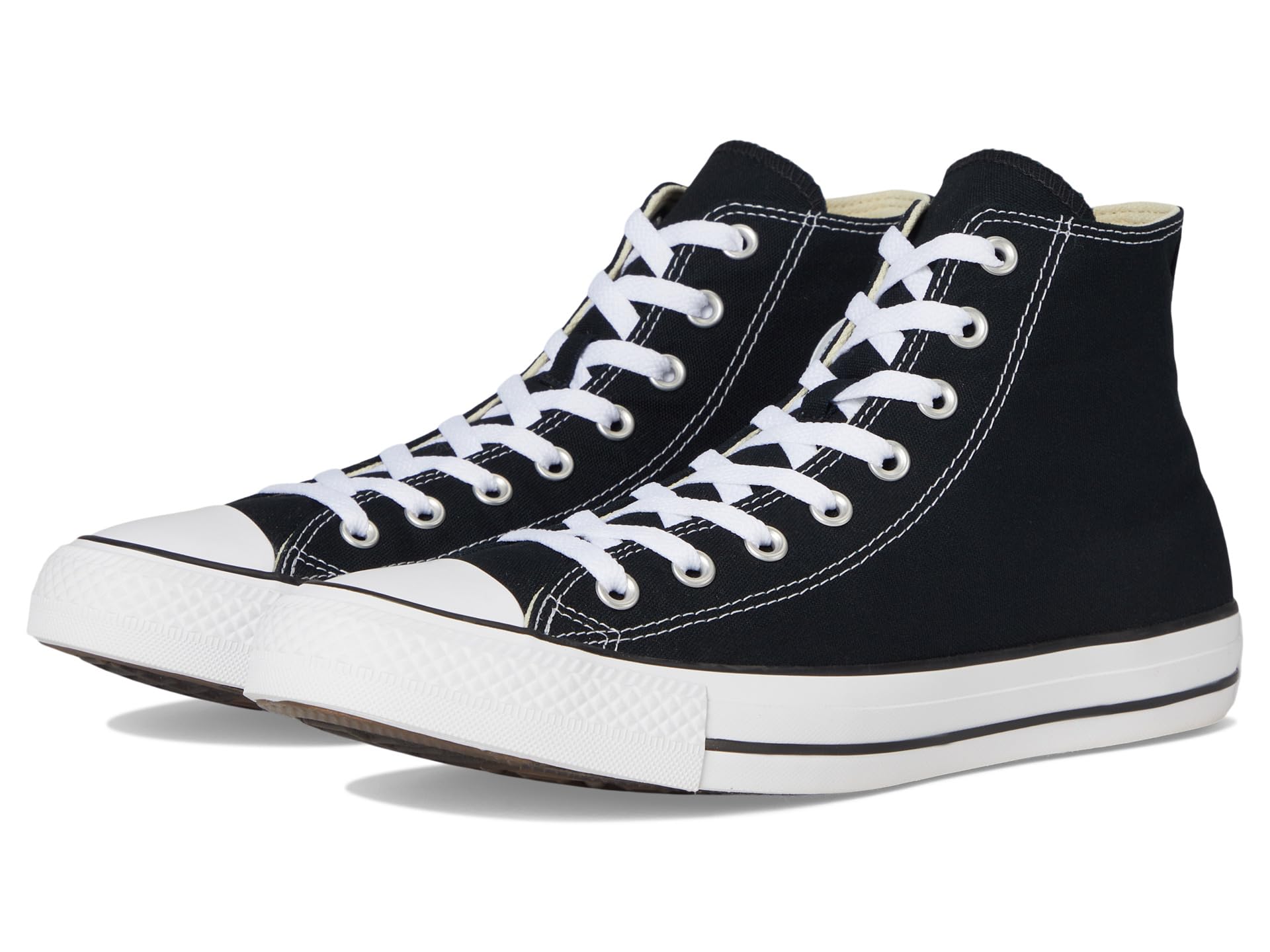
There is a reason Chuck Taylors still turn up on gym floors: a flat rubber sole with no cushioning and no heel lift, which is exactly the shape you want under a deadlift bar. We like that it does not look like equipment. You can pull in them and then walk out to lunch without changing shoes, and the canvas high-top adds a little coverage around the ankle that a low-cut sneaker does not.

Once they are broken in, they are comfortable enough to wear all day, which is more than most lifting shoes can claim, and the flat sole means you are never fighting a rocker while you set up. One shopping note: the sizing is unisex, so convert from your usual women's size if that is the side of the chart you normally buy from.

The weak point is where the rubber trim meets the canvas. On pairs that see a lot of wear, that joint starts to lift at the toe and along the sides, and once it does, the shoe is finished for lifting. Treat them as a consumable rather than a buy-once pair and check that seam every few months.

Bottom line: A flat, uncushioned classic that doubles as an everyday sneaker, and our pick if one pair has to handle the gym and everything after it.

#3

Otomix Stingray Escape

Otomix Stingray Escape

Heavy pulling

Our Score 9.2/10
Check Price

Worth Noting

  • Toe area wears through with hard use
Type
Bodybuilding and wrestling shoe
Model
MF3000-GRY
Department
Men's
Read the full review

The Stingray is the most expensive shoe here, and it is the one that feels most like a piece of lifting equipment rather than a sneaker. Otomix built its name on wrestling and bodybuilding footwear, and this is the shape that earned it: flat, thin-soled, snug through the arch, with almost no structure you can feel underfoot.

What we keep coming back to is how little shoe there is once it is on. The flat base and close fit make it easy to screw your feet into the floor before a pull and hold that position through the set, and the shoe is light enough that you stop noticing it by the second set. The comfort holds past the last rep, which is not a given in something this minimal.

The fit is close and runs a touch small, so size up if you are at the top of a size or wear thick socks. If you want the same flat-sole idea for a lot less money, the HVC 2 above gets you most of the way there, while the Stingray earns its place with a better finish and a tighter, more supportive upper.

Bottom line: For lifters who want a dedicated shoe built for the platform, this is it: flat, very light, and snug, with the highest price here to match.

#4

Nordic Lifting MEGIN

Nordic Lifting MEGIN

Squat depth

Our Score 9.0/10
Check Price

Worth Noting

  • Runs small and narrow
Heel
Elevated
Sole
Non-slip
Type
Powerlifting and weightlifting shoe
Model
W8-81UA-WYPO
Read the full review

If your squat depth stops at your ankles, a raised heel is the oldest fix there is, and the MEGIN is built around that idea. There is a firm wedge under the heel and a non-slip sole under the whole foot, which lets your knees travel forward and your hips sit down between them without your heels lifting off the floor.

As a squat shoe it delivers. The base is wide and stable, the heel feels solid rather than squishy, and it is comfortable enough to keep on for a full session rather than just your top sets. Lifters who fight for depth tend to get on with it immediately.

What it is not is a deadlift shoe. The same wedge that helps you squat puts your hips higher at the start of a pull and takes range off the bottom, which is the opposite of what the lift wants. The flat shoes above exist precisely to avoid that.

So the call is straightforward: it is a squat shoe, and a good one. Buy it for depth work, keep a flat pair for pulls, and do not expect one wedge to solve both lifts.

Bottom line: A stable, non-slip squat shoe with a raised heel: worth buying if ankle mobility caps your depth, and the wrong tool for pulling heavy.

#5

AIRHAS Barefoot Shoes

AIRHAS Barefoot Shoes

Wide feet

Our Score 8.8/10
Check Price

Worth Noting

  • Upper wears out faster than leather
Use
Gym, workout, lifting, training
Drop
Zero
Upper
Breathable, stretchy
Toe Box
Anatomical
Read the full review

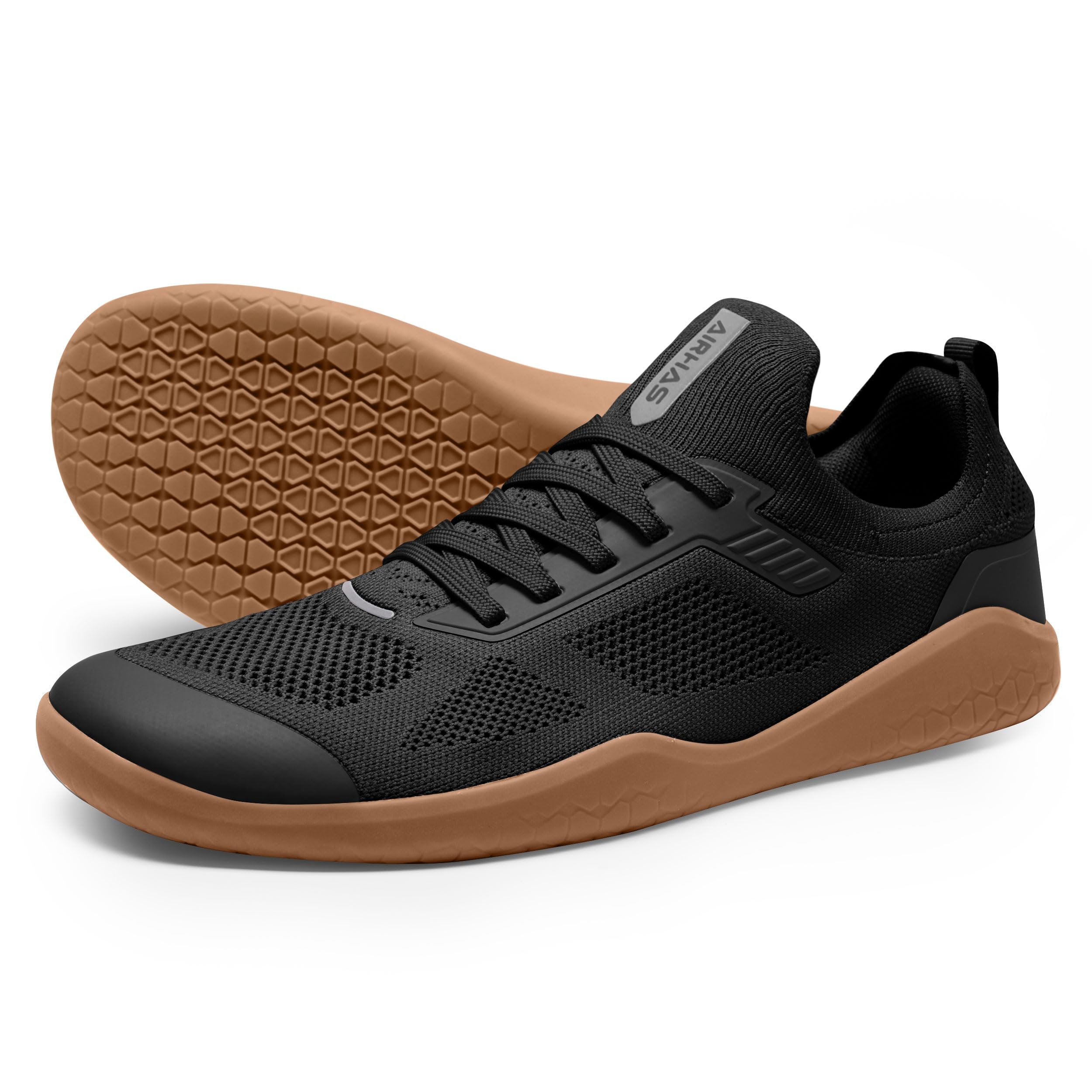
Most training shoes taper toward the toe, which is the opposite of what a lifter wants when the goal is to spread the foot and grip the floor. The AIRHAS goes the other way: an anatomical toe box with real room for your toes, a zero-drop sole, and a stretchy, breathable upper that hugs the midfoot without mashing the front of your foot.

We appreciated how little fuss there is. They slip on in a couple of seconds, the insole lifts out if you want even less underfoot, and the sole is flat enough that the bar does not feel like it is starting from a ramp. For wide feet that have spent years being pinched by tapered trainers, that combination is the whole argument.

Fit is where these need a decision. They run about a half size large, and the stretchy upper does most of the holding, so order down if you are between sizes and accept that the shoe will not lock your heel the way a laced wrestling shoe does. If you want toes that can spread under a loaded bar, this is the pair.

Bottom line: If your feet spill out of tapered lifting shoes, start here: zero drop, a genuinely wide toe box, and a low price that leaves room for a spare pair.

#6

ASICS Snapdown 4

ASICS Snapdown 4

Narrow feet

Our Score 8.8/10
Check Price

Worth Noting

  • Runs narrow enough to rule out wide feet
Type
Wrestling shoe
Model
Snapdown 4
Weight
1.44 lb
Read the full review

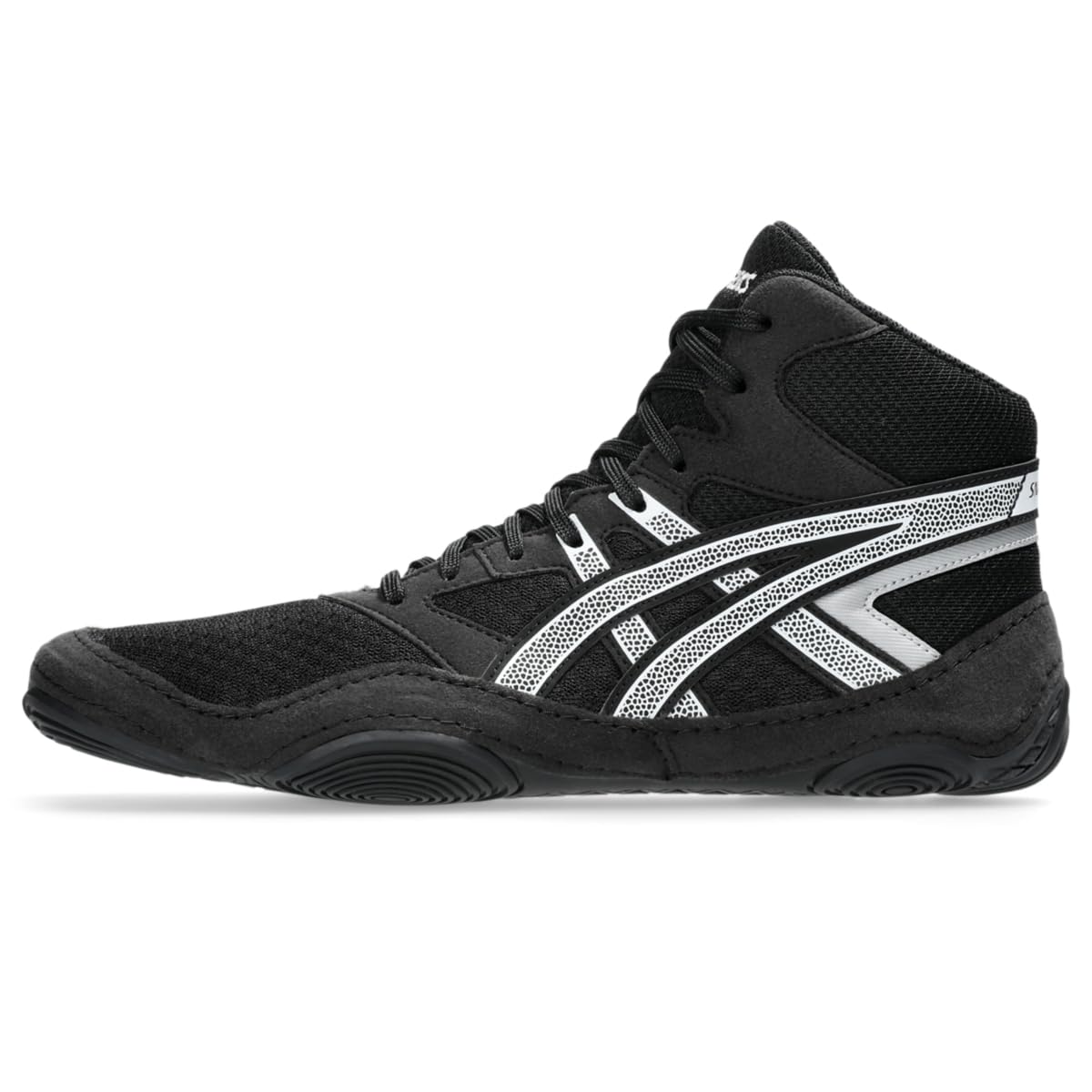
A close, quiet fit is what the Snapdown 4 does best. It is cut snug through the midfoot and toe, and once your foot is in, nothing about the shoe moves during a pull, which is the entire job of a deadlift shoe. If your foot is on the slim side, this is the most locked-in option in the guide.

It is a proper mat shoe underneath too: thin sole, low to the ground, a heel that sits down around the foot, and clean construction that does not look like a budget knockoff on the mat. Nothing about it struck us as flimsy, and the upper is built to take mat abuse rather than being saved for meets.

Getting them on is the annoyance. The opening is tight and the tongue is sewn to one side, so work the laces loose all the way down before you slide a foot in, and go up half a size if you sit at the top of your normal size. Do that and they go on quickly enough between sets.

Bottom line: The closest, most stable fit here for a narrow foot, and a firm no for anyone whose toes need room to spread.

#7

WHITIN Minimalist Trail Runner W30

WHITIN Minimalist Trail Runner W30

Trail and gym

Our Score 8.6/10
Check Price

Worth Noting

  • Toes and tread wear quickly
  • Sizing is inconsistent between pairs
Feel
Close-to-ground
Ride
Ultra-light and flexible
Type
Minimalist trail runner
Toe Box
Wide
Read the full review

Compared with the AIRHAS above, the W30 is the trail version of the same idea: zero drop, a wide toe box, and a flexible, close-to-the-ground ride. The difference is underneath, where this outsole is cut with a lugged tread for dirt and rock rather than a smooth platform.

That tread is a real advantage outdoors. It holds on wet roots and loose gravel better than anything else here, and the shoe is light enough to forget you are wearing it on a long climb. On a smooth gym floor the lugs mean less rubber in contact with the ground than a flat wrestling sole, and you feel it when you are setting your feet for a pull.

Sizing is the awkward part. The fit drifts about half a size in both directions depending on the pair, so order from somewhere with an easy return and try them on before you pull in them. If your lifting happens in a garage on mats or concrete, the tread matters less; on a smooth platform it matters more.

Bottom line: The zero-drop choice for lifters who also run trails: flat and grippy outdoors, with a tread that gives up contact on a smooth gym floor.

How We Tested the Best Shoes for Deadlifting

We began with research, not barbells. I read spec sheets and a few hundred customer reviews for more than 40 pairs across four families of shoe — wrestling shoes, flat canvas sneakers, minimalist and barefoot trainers, and purpose-built lifting shoes — then filtered for a flat sole from heel to toe, a minimal compressible midsole, a wide or anatomical toe box, and a price that made sense for something you wear for one lift. A dozen pairs made the cut.

Each pair lived in a gym bag for six months. Testers pulled conventional and sumo, heavy singles and sets of eight, and wore the shoes for everything in between — loading plates, walking to the water fountain, occasionally out to the parking lot. We set a camera at floor level to film a heavy single in each pair and replayed it frame by frame to see how much the heel and forefoot compressed as the bar broke the floor.

Traction got checked twice: once on a chalky wooden platform and once on smooth rubber flooring, where we noted whether the outsole grabbed or skated during setup. For fit, testers with wide, narrow, and high-volume feet each tried every pair and reported whether they took their normal size or had to go up or down. We tracked comfort in the first session and the tenth, laced and unlaced each pair a few dozen times, logged stitching and toe wear at the end of every month, and wore a few out of the gym to see whether they looked like shoes you'd keep on. At the end, we weighed how each pair held up against its price.

How to Choose Shoes for Deadlifting

Start With the Sole, Not the Brand

Two things decide whether a shoe belongs on a pulling platform: heel-to-toe drop and how much the midsole compresses once you load it. A raised heel turns a deadlift into a deficit pull, and a soft midsole squashes unevenly, so your foot rocks instead of gripping. That is why a wrestling shoe beats an expensive trainer here more often than not.

Press a thumb hard into the forefoot of any shoe you are considering. If it sinks in easily, it belongs on a cardio day, not a pulling day. Then set the shoe on a counter and sight along the sole to check that heel and forefoot sit at roughly the same height.

Match the Upper to How You Want to Feel

Above the sole, the question is how much shoe you want around your foot. Wrestling shoes wrap the midfoot closely and come up over the ankle, which keeps the foot from sliding inside the shoe during a setup. A canvas high-top gives similar flatness with more give and a familiar feel, while a knit minimalist upper lets the toes spread but holds the heel less firmly.

Whichever you choose, try it on late in the day and rock forward on your toes. If your heel lifts before your toes do, the fit is wrong and no break-in period fixes it.

Size for the Shoe, Not the Number

Sizing is where most returns happen in this category. Wrestling shoes run narrow and short, so go up half a size if you are between sizes. Barefoot and minimalist shoes often run large and inconsistently, so order down a half size and buy somewhere with a simple return policy. Canvas sizing is unisex, which catches anyone converting from a women's size.

Ignore the size chart on the listing when it disagrees with your normal athletic-shoe size. Your usual number, adjusted for the shoe's cut, is a better starting point.

Decide Whether One Pair Has to Do Everything

If you also run, take classes, or play court sports, a flat lifting shoe will leave you under-cushioned for all of it. That is fine, and the honest answer is usually two pairs: a flat one for pulling days and whatever you already own for everything else.

Chasing a single shoe that does both is how lifters end up pulling in a rockered running shoe with a soft heel. If you want one pair that comes close, a flat canvas sneaker is the least compromised compromise.

Frequently Asked Questions

Final Verdict

The adidas HVC 2 is the pair we recommend to most people: flat, light, inexpensive, and close enough to the floor that you stop thinking about your feet mid-set. If you want a more polished, more supportive version of the same idea and don't mind paying for it, the Otomix Stingray is the step up.

Buy the Converse instead if the shoe also has to work outside the gym, and the Nordic Lifting MEGIN only if squat depth is the problem you are solving rather than your pull.