Shoes & Apparel

Best Recovery Running Shoes of 2026

You know the staircase shuffle the morning after a long run — hand on the rail, heels first, every step a small negotiation with your calves. Recovery shoes exist to make that walk feel ordinary again: a taller stack of soft foam, a rocker sole that keeps you rolling forward, and a toe box wide enough for feet still a little swollen from the miles. They aren't only for runners. Plenty of people end up in a pair because standing all day hurts or because walking the dog shouldn't feel like a workout.

I keep a pair by the front door now, and I'm not the only one — over the past six months my team and I have worn 14 pairs through post-run mornings, workdays, errands, and long airport walks. The surprise: the softest shoe is rarely the most comfortable one, since a marshmallow midsole makes your arches work harder. Cushioning that compresses and springs back beats cushioning that just squishes. The pairs below are the ones we kept reaching for.

#1

Hoka Clifton 10

Top Pick
Hoka Clifton 10

One-shoe setup

Our Score 9.2/10
Check Price

Worth Noting

  • Midsole and outsole go before the upper does
Use
Road running
Toe Box
Slightly wider
Cushioning
Soft, consistent
Department
Men's
Read the full review

Where the Bondi is the shoe you put on when the run is finished, the Clifton 10 is the one you put on when the run was easy and you are not done yet. It gives up some of the top pick's depth, so you feel more road through it, but it is noticeably lighter on the foot, and that is what we appreciated on the days our legs were tired rather than wrecked.

The ride is soft and consistent rather than dramatic, and the rockered sole takes a few miles to get used to, rolling you through the stride instead of letting you sink into it. We noticed the slightly wider toe box most in the last twenty minutes of a run, which is exactly when a shoe stops being a detail and starts being the reason you finish.

Ours has become the pair that lives in the gym bag, which is about the highest compliment a running shoe gets around here. Try it on late in the day, when your feet are at their biggest, because that is the fit you will actually run in.

Bottom line: For runners who want one shoe for easy miles and the walk home afterwards, the Clifton 10 is the lighter, more versatile version of the same idea.
#2

Under Armour Charged+ Assert 11

Under Armour Charged+ Assert 11

Budget cushioning

Our Score 9.2/10
Check Price

Worth Noting

  • Heel collar sits high around the ankle
Use
Running, walking, gym
Cushioning
Charged foam
Department
Men's
Read the full review

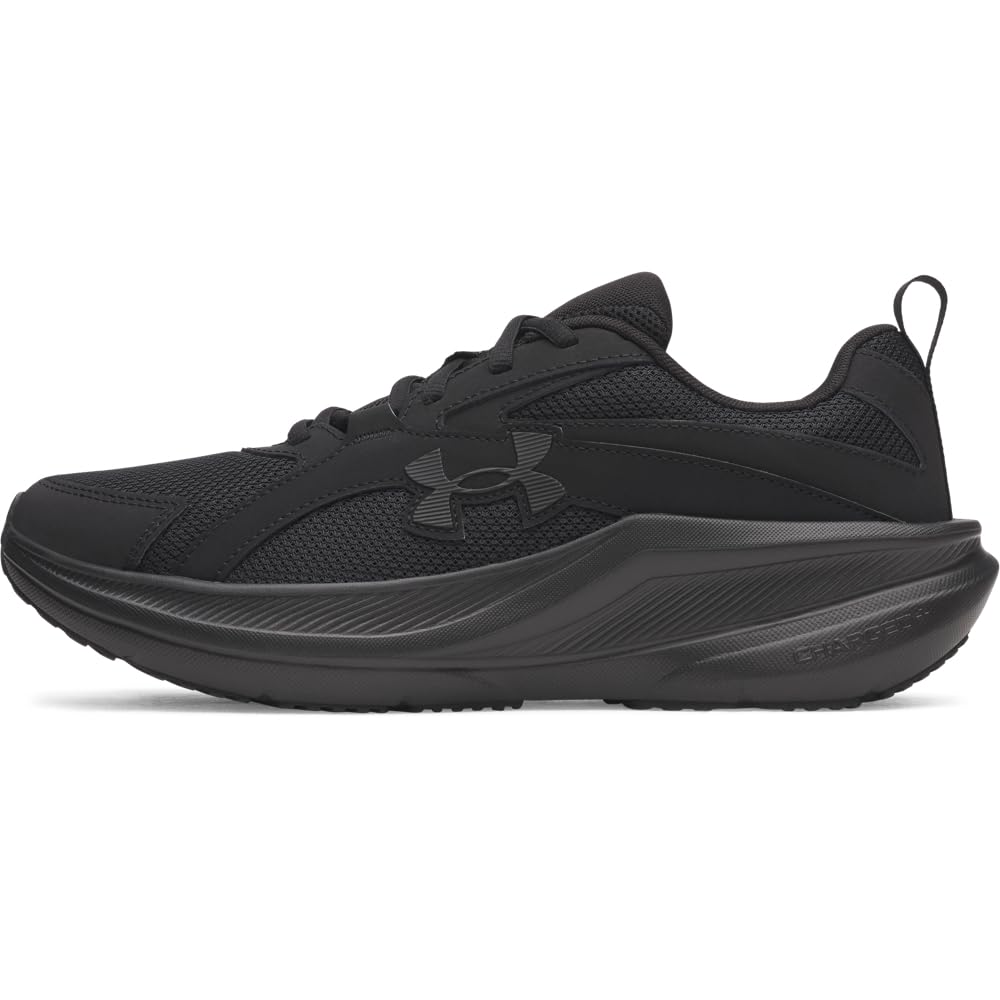
This is the least expensive shoe in the guide, and it is the one we point budget-minded runners toward first. It is not the softest thing here, and it does not try to be, but it does a surprising amount of the recovery job for very little.

The Charged midsole is firmer than the recovery-first picks, so you feel the road more, but it is light, the arch support is real, and it stays comfortable through a full day rather than just an easy three miles. That combination is why it earns a place: it is the shoe you can wear for the run, the errand and the gym without changing.

Fit is where it has a quirk. The heel collar sits high and the shoe runs tall, and we noticed it around the ankle before we noticed anything else. It is the pair for you if you want one inexpensive shoe that covers walking, jogging and a day on your feet, rather than a deep, sinking cushion to sink into after a long effort.

Bottom line: Our budget pick: light, supportive and comfortable enough to wear all day, with money left over for a second pair.

#3

Hoka Bondi 9

Hoka Bondi 9

Recovery days

Our Score 9.0/10
Check Price

Worth Noting

  • Upper and outsole wear ahead of the foam
Use
Road running
Toe Box
Wide
Cushioning
Maximum, soft EVA
Department
Men's
Read the full review

There is more foam underfoot here than on anything else we wore for this guide, and that is the whole argument for the Bondi 9. Stand up in it and the midsole feels almost silly, soft and deep and slow to compress under your weight. Walk to the end of the block and the point lands: your calves stop absorbing every seam and pebble the road puts under them.

That is why this is the pair we tell runners to try first when they ask what to wear the day after a long run. It is not a shoe we enjoy running fast in, because there is too little coming back off the foam when you push, but recovery miles are not about feedback. They are about a shoe that absorbs and asks nothing of you, and the Bondi does that better than the rest of this set.

The wide toe box deserves its own mention. Feet swell after an hour on the road, and the shoe that fit at mile zero can be a different shoe by the time you stop; the Bondi leaves enough room up front that our toes never felt pressed, even on the days we finished with hot feet. It is also why the shoe works so well when you are not running at all, standing at a counter or walking a long way through an afternoon.

What you give up is snappiness, and the shoe makes no apology for it. Ours has ended up living by the front door, doing errands and dog walks long after the run that justified it, which tells you something about how far the comfort stretches past the workout.

Bottom line: The Bondi 9 is the shoe we reach for when our legs are wrecked: the deepest, softest cushioning here, and the easiest miles you'll run all week.

#4

Brooks Adrenaline GTS 24

Brooks Adrenaline GTS 24

Tired, rolling ankles

Our Score 9.0/10
Check Price

Worth Noting

  • Midsole and upper wear before the shoe looks done
Use
Road running
Support
Stability
Cushioning
Balanced
Department
Men's
Read the full review

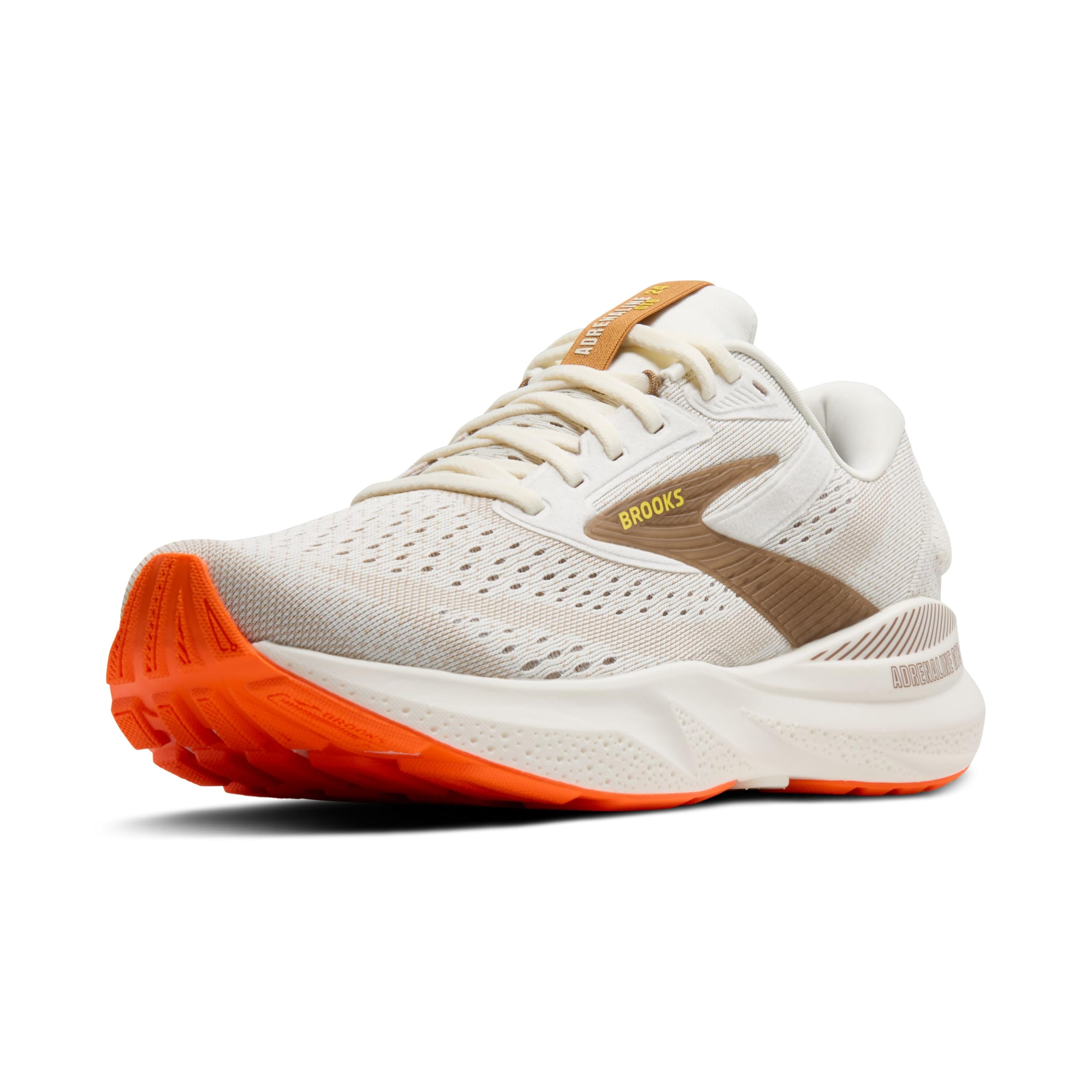
The Adrenaline GTS 24 is not the pillow in this guide, and it is not pretending to be. It is the pick for the runner whose legs stop holding their shape late in a run: the ankle that rolls in when you are tired, the knee that complains the day after a long one.

What Brooks gets right is the balance. The cushioning is even and supportive rather than deep and soft, so you get protection without the vague, sinking feeling a max-cushion shoe can give you when your form is already going. The arch support is the strongest of anything here for flat feet and for anyone whose foot collapses inward under load.

Sizing is the thing to get right, and it is the one place this shoe trips you up: it runs about a half size small, so order up if you are between sizes, and look carefully at the toe box if your feet are wide, because it is roomy on some feet and tight on others. Buying from a seller with easy returns matters more here than a small saving.

For a runner who needs guidance rather than a pillow, this is the one we point to. It is the most supportive shoe here, and the pair we trust when the legs are already tired from yesterday, which is exactly the day a soft shoe stops helping and starts wobbling.

Bottom line: For runners whose form collapses late in a run, the Adrenaline GTS 24 offers steady, guided cushioning that keeps a tired ankle from rolling.

#5

ASICS Gel-Nimbus 27

ASICS Gel-Nimbus 27

Sore arches

Our Score 8.8/10
Check Price

Worth Noting

  • Heel lining wears through first
Use
Running and walking
Cushioning
Soft gel
Department
Women's
Read the full review

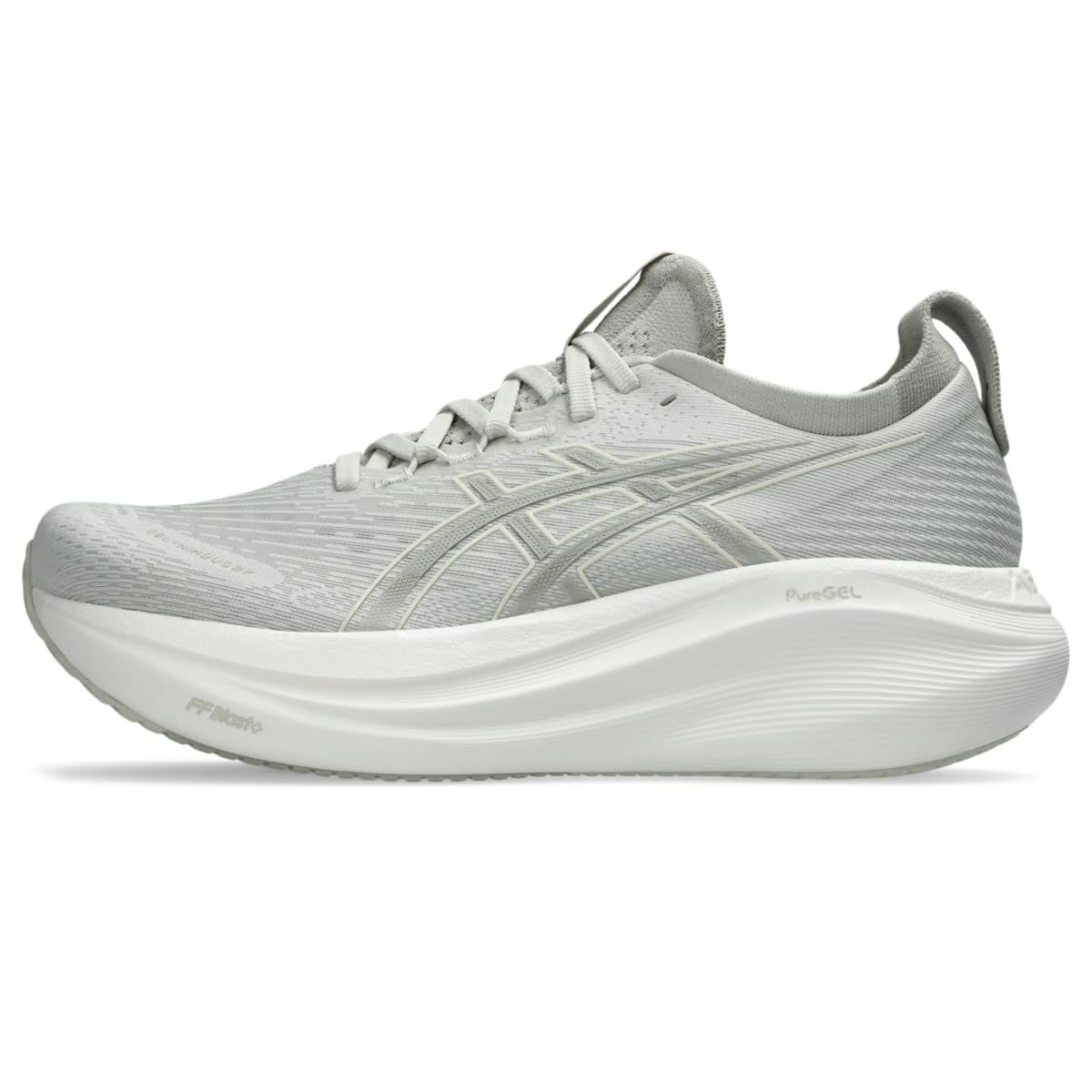
The Gel-Nimbus 27 costs less than the two Hokas here and gives up less than you might guess from the price. The gel-and-foam midsole is soft in a more composed way than the Bondi's: you sink a little less, and the shoe feels more planted when you are walking rather than running.

Cushioning is the story, and it holds up. This is a shoe that feels like a cushion underfoot without the mushiness that makes some soft shoes hard work by the end of a walk. Arch support is a real strength too, and this is the women's pick here for sore arches and the plantar-type ache that shows up first thing in the morning.

We recommend it to the woman who wants deep softness without premium pricing, and who splits her miles between jogging and walking. Sizing is the gamble, because this one turns up both true to size and a half size large, so buy from somewhere with easy returns and try it on with the socks you actually run in.

Bottom line: A soft, supportive women's pick for runners with sore arches, at a lower price than the premium shoes here.

#6

Brooks Ghost Max 3

Brooks Ghost Max 3

Wide, swollen feet

Our Score 8.6/10
Check Price

Worth Noting

  • Mesh over the toes is the wear point
Use
Running and walking
Toe Box
Wide
Cushioning
Max, soft
Department
Women's
Read the full review

If your feet swell enough after a long run that your usual trainers start pressing on your toes, the Ghost Max 3 is the shoe in this set built for that moment. The toe box is genuinely roomy, wide without turning into a boat, and the platform under it is a tall, soft stack that takes the edge off pavement.

Brooks has tuned that foam soft but not shapeless, and the shoe has a second life as a standing shoe: the arch support is substantial and the whole thing feels settled enough for a long shift on a hard floor. For the morning-after soreness that starts in the arch, this is the pair here with the most convincing support.

We recommend it to the runner who wants one pair for recovery miles and a workday, and who would rather have room up front than a snug race fit. It is the least fussy shoe here in that sense: you put it on and it is ready, with no settling-in period to plan around.

Bottom line: If your feet swell after long runs, the Ghost Max 3 is the roomiest, softest place to put them, and it doubles as a work shoe.

#7

OOFOS Oomy Stride

OOFOS Oomy Stride

After-run comfort

Our Score 8.4/10
Check Price

Worth Noting

  • Foam soles wear thin faster than the trainers here
Use
After-run recovery
Cushioning
Plush foam
Department
Women's
Arch Support
High, padded
Read the full review

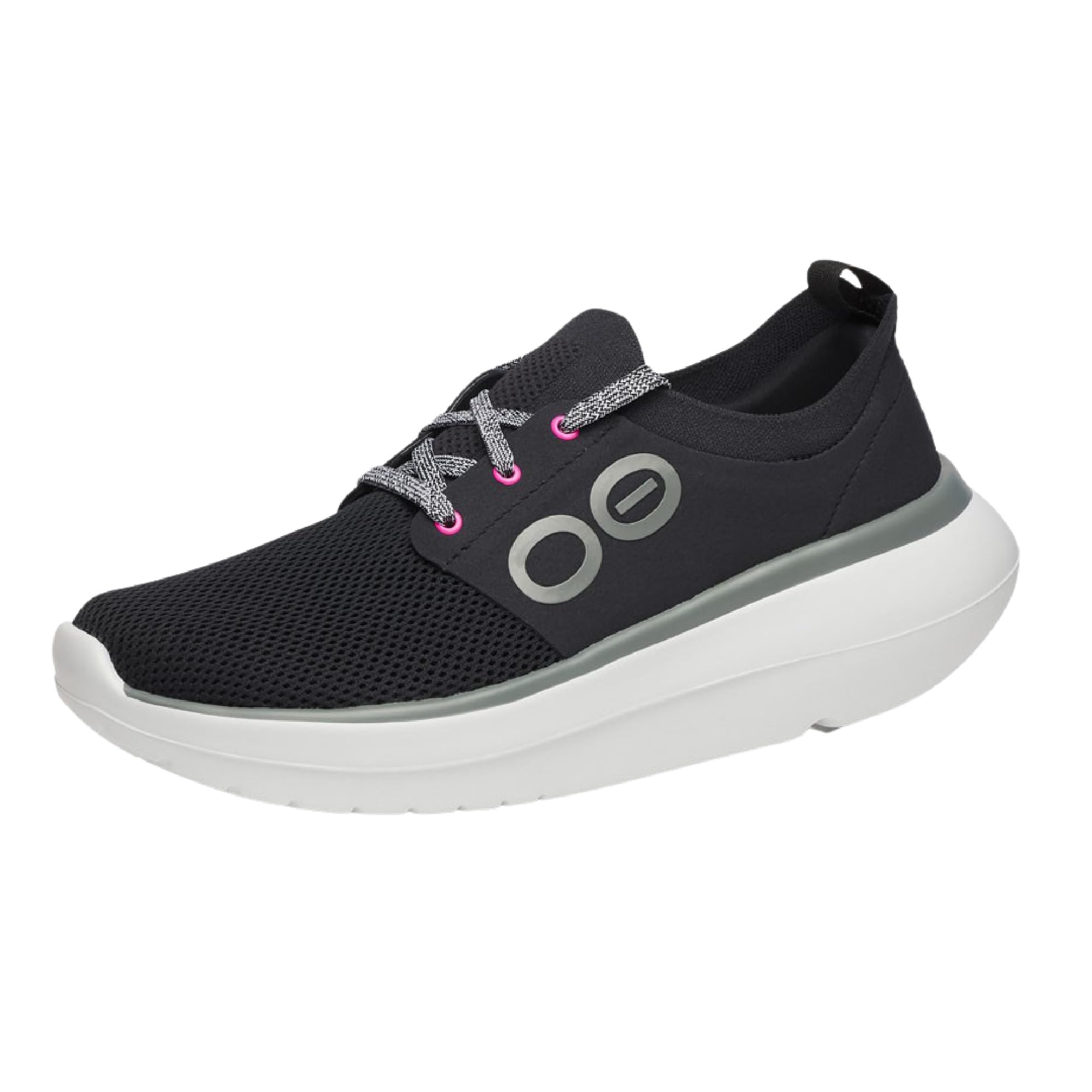
The ten minutes after you stop running are the ones nobody plans a shoe for. Socks come off, the trainers get kicked into a corner, and then you have to walk to the kitchen, stand at the counter, and take the dog out. The Oomy Stride is the only pair here designed specifically for that stretch of the day.

OOFOS builds it around a thick, contoured foam footbed, and the arch is high and padded in a way that feels odd for the first minute and then very good. This is the shoe we reach for when the soles of our feet are sore, not tired in a muscular way but beaten up, and it earns its keep faster than anything else here because you wear it for hours after the run rather than during it.

Fit is the thing to sort out. These run small and the sizing is inconsistent, so try them on before you commit rather than ordering your usual number. And keep them for afterwards: the foam is too soft and too unstable to run in, which is the whole point of it.

Bottom line: For the hours after a run, nothing here beats it: a light, deeply contoured shoe that pampers sore arches, provided you keep it off the road.

How We Picked and Tested Recovery Running Shoes

We built the shortlist from spec sheets and customer reviews, filtering out anything with a rock-hard midsole, a cramped toe box, or no wide sizing, then cross-checked which models people actually wore for walking rather than just racing. That left 14 pairs, ranging from plush daily trainers to firmer rockered shoes. Over six months we wore them where recovery shoes really live: the stairs the morning after a long run, dog walks, grocery runs, a full day standing at a desk, and one very long airport concourse.

Everyone kept a log. We wrote down whether a pair felt better at the start of a walk or an hour in, whether the heel slipped when we went sockless, and how our arches felt after 45 minutes on a hard floor. For fit, we ordered our usual size and then a half size up, comparing where our toes landed and whether the widest part of the foot lined up with the widest part of the shoe.

Durability got the slow test: after 100-plus miles we checked outsole tread for balding, pressed a thumb into the midsole to see how much foam had packed out, and looked at creasing across the forefoot. We also wore each pair to coffee and to the office, since a shoe that never leaves the house never earns its keep — appearance counted, and so did cost per mile. The pairs that held their shape are the ones that made the list.

How to Choose Recovery Running Shoes

A Second Pair, or a Different Kind of Shoe

The first decision is not brand, it is role. A max-cushion running shoe is still a running shoe: it has enough structure to run in, and you can wear it for an easy day, a dog walk, or a long shift on your feet. A dedicated recovery shoe like the OOFOS Oomy Stride is built only for standing and walking, with foam too soft and too unstable to run in.

If you already own a trainer you like, the dedicated pair is the one that changes your evening. If you are buying one pair to do both jobs, buy the trainer every time.

How Soft, and How Much

Depth and softness are not the same thing, and the difference decides whether a shoe helps you or works against you. A deep, soft stack, like the Bondi end of this set, unloads the most when you are walking and absorbs the most when you are jogging slowly, but it gives almost nothing back when you push the pace. A firmer, more guided shoe such as the Adrenaline protects you without that sinking feeling.

The trap is assuming softer always means more recovery. On a tired ankle, a very soft shoe can feel unstable, and unstable is the last thing you want when your form has already gone. If your ankles roll late in runs, trade a little softness for guidance.

Fit for Feet That Swell

Your feet are bigger at the end of a run than at the start, and bigger again in the evening, which is why the size that felt fine at ten in the morning can be the wrong size after a long effort. Shop late in the day, wear the socks you actually run in, and leave room in the toe box.

Our picks are split between men's and women's listings, so start from the version built for your foot and size from there. If you are between sizes, go up: a roomy recovery shoe is not a performance penalty.

Stability for Legs That Give Out Late

Cushioning gets the attention, but what usually cuts a recovery run short is the ankle rather than the knee. If your foot collapses inward when you are tired, a neutral max-cushion shoe will feel vaguer with every mile, while a stability shoe keeps the leg stacked and the landing predictable. The Adrenaline GTS 24 is the obvious choice here.

If you have never had that problem, do not buy stability you do not need. It adds firmness and structure you would rather spend on foam.

Frequently Asked Questions

Final Verdict

Most runners should start with the Hoka Bondi 9. It puts more foam under a tired foot than anything else here, and the day after a long run is exactly what that foam is for.

If you want one pair that handles easy miles as well as the walk home, choose the Clifton 10 instead, because it is lighter and you can genuinely run in it. And if the shoe you want lives by the door and never sees a road, the Oomy Stride does that job better than any trainer here.