Recovery

Best Foam Rollers for Beginners of 2026

A beginner foam roller should feel like a massage, not a punishment. My first one was so hard that I winced every time I rolled out my calves, and I quietly stopped using it within a week. The too-soft ones are just as unhelpful—they glide over tight spots without doing much. What you actually want is a Goldilocks surface: enough pressure to ease everyday aches, but enough give that you'll look forward to using it.

Over three months, we tested a dozen foam rollers, rolling post-run legs, loosening desk-bound shoulders, and handing each one to first-timers to see which felt comfortable right away. We paid attention to length and density, since a roller that's too short or too firm can turn a five-minute session into a chore. The picks below are the ones that made rolling feel manageable, effective, and worth keeping around.

#1

OPTP PRO-Roller Soft

Top Pick
OPTP PRO-Roller Soft

Tender, sore spots

Our Score 9.4/10
Check Price

Worth Noting

  • The most expensive roller in this group
Firmness
Soft
Material
Closed-cell EVA foam
Dimensions
18 x 6 inches
Read the full review

The softest roller we recommend is also the most expensive one here, and that is the price of soft foam that does not collapse. The PRO-Roller is 18 inches long and 6 inches across, made from closed-cell EVA that wipes clean and holds its shape, and it gives under your weight in a way nothing else in this group does.

We reach for this one when a spot is too sore for anything else, a stiff lower back in the morning or a hip that has been complaining all week. Rolling on it feels closer to a massage than to the gritted-teeth work of a textured roller, and for a beginner who is nervous about pain, that difference decides whether the thing gets used at all. It is also the easiest of these to kneel beside for Pilates mat work, because it does not fight back.

What the softness costs you is depth. Digging into a knot in a glute is not what this roller does well; the 321 STRONG and the GRID 1.0 both get further in. What you get instead is something you will reach for on a bad morning rather than a good one, and that is the version of this habit that survives.

Bottom line: Buy this one if every other roller feels like a punishment; it is the softest surface we recommend and the easiest to keep using.
#2

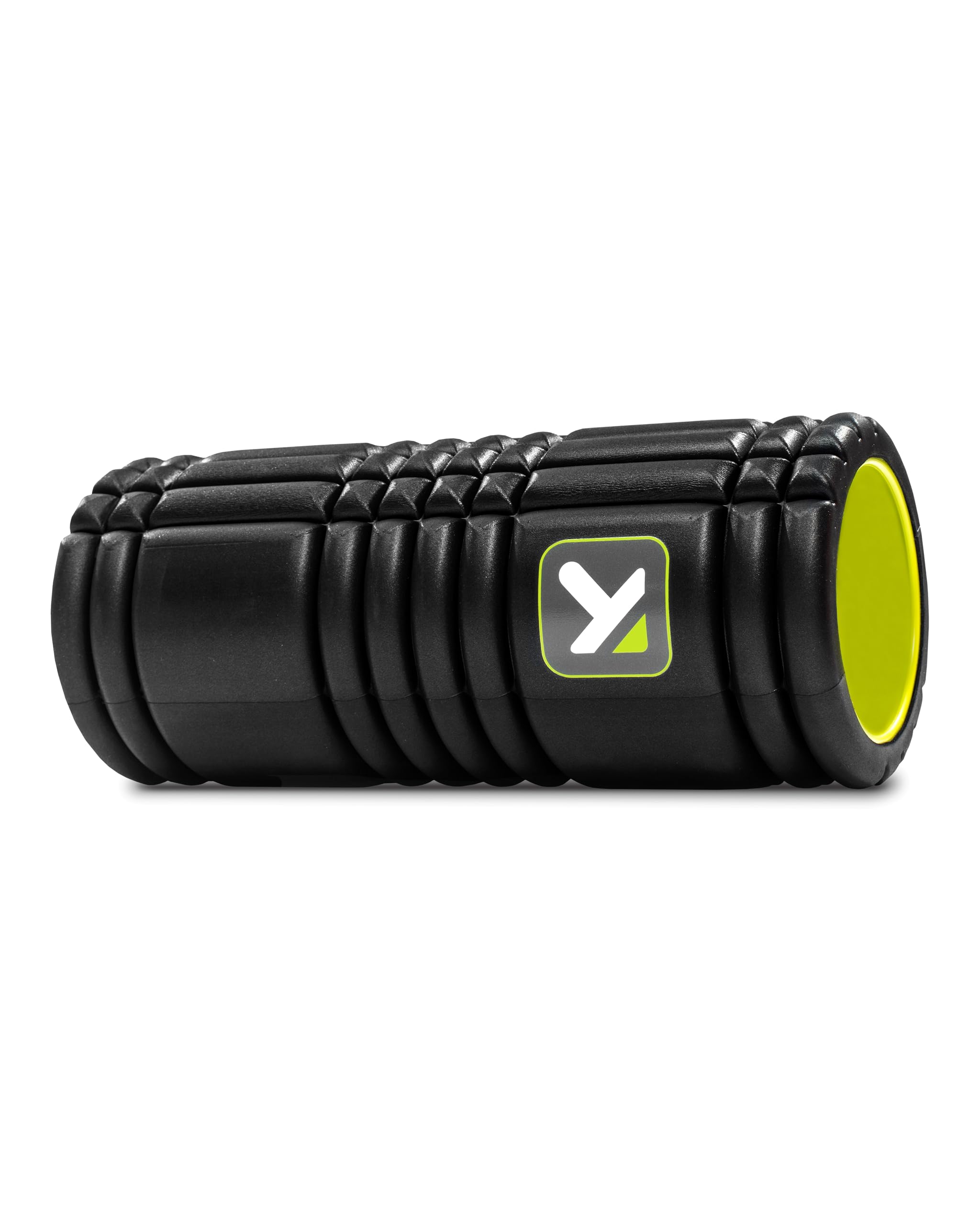
TriggerPoint GRID 1.0

TriggerPoint GRID 1.0

Travel and gyms

Our Score 9.4/10
Check Price

Worth Noting

  • 13 inches will not cover a full back in one pass
  • Hard core leaves no give over bony areas
Length
13 inches
Weight
1.1 lb
Surface
Multi-density GRID
Diameter
5.12 inches
Read the full review

Thirteen inches is not a roller you lie on for full-back work; it is the one that lives in a gym bag and gets used on a calf, a quad or a glute while you are still in your workout clothes. That job is what the GRID 1.0 does better than anything else in this group, thanks to a rigid core wrapped in a multi-density surface, so the pressure stays consistent instead of squashing away under your weight.

The surface carries the rest. Bands of ridges and nodules run from wide and flat to firm and knobbly, and you choose your intensity by shifting which band sits under the muscle rather than pressing harder. It is noticeably more sensation per square inch than smooth foam, which is the point: the same 13 inches can feel like plenty on a quad and like a great deal on a first-week IT band.

The rigid core has a second effect worth knowing about. It will not go soft in the middle the way all-foam rollers do, so what you buy in month one is what you get in year two, but it also never gets any more forgiving. At 1.1 pounds it disappears into a bag, and for someone who travels and has one recurring spot to chase, that is the whole case for it.

Bottom line: The compact one we recommend: 13 inches of grippy texture that earns its place in a gym bag or a small apartment.

#3

TriggerPoint CORE Foam Roller

TriggerPoint CORE Foam Roller

First-time rolling

Our Score 9.2/10
Check Price

Worth Noting

  • 18 inches will not cover a full spine in one pass
Surface
Textured 3D pattern
Firmness
Medium
Dimensions
18 x 5.5 inches
Weight Limit
325 lb
Read the full review

Almost everyone who gives up on foam rolling gives up in the first month, and the roller is usually why: a hard cylinder under a tight quad is a miserable introduction to something that is supposed to help. The CORE is TriggerPoint's answer to that, a solid-core EVA roller with a three-dimensional surface pattern and what the company calls moderate compression. We think it is the best first roller in this group because it is forgiving without being pointless. There is enough give that a first pass over the quads does not feel like a punishment, and enough substance that you can still find a tight spot and stay on it.

Eighteen inches long and 5.5 inches across is the shape most beginners can actually live with. The width matters more than shoppers expect: a fatter roller spreads your body weight over more surface, which is a large part of why this one feels gentler than the 4.75-inch 321 STRONG even though both are sold as medium. Eighteen inches is enough to lie along for upper-back work or to put one leg on at a time, and short enough to stand in a closet corner.

The texture earns its keep past the first few weeks. The raised zones concentrate pressure in a way smooth foam cannot, so when calves and quads stop feeling challenging you can shift onto the ridges instead of buying a second roller. Fresh out of the box the same surface can be a lot on a tender IT band. Start on the bigger muscle groups, keep a towel under the roller for the first few sessions, and the sensation stops being a surprise.

Solid rather than hollow is the quiet reason we keep this one out instead of buried in a bag. Foam rollers that compress go soft in the middle and stop doing much; this one holds its shape, and at 11 ounces it still travels fine. One number to check before ordering: the 325-pound weight limit. Above that, no amount of technique makes this the right roller for you.

Bottom line: We think this is the best first roller in the group: moderate compression, a forgiving 18-inch body, and enough texture to grow into.

#4

Amazon Basics High-Density 36-Inch

Amazon Basics High-Density 36-Inch

Full back coverage

Our Score 9.2/10
Check Price

Worth Noting

  • Too long to store upright or pack in a bag
Length
36 inches
Surface
Smooth with molded edges
Firmness
High-density (firm)
Material
Polypropylene
Read the full review

Thirty-six inches is the least fashionable size in foam rolling and the most useful one for backs. Lie along it and the whole spine is supported at once, instead of working your upper back and then shuffling down the roller. Amazon Basics sells that full length as a smooth, high-density polypropylene cylinder with molded edges, and it is one of the cheaper routes to it.

Density is the trade you make. High-density polypropylene is firm, with very little give under a tight muscle, and anyone expecting a cushion will be surprised by how much of a plank it is. What makes that workable is the geometry: on a long roller you can plant your feet, lift your hips and dial in exactly how much weight lands on your back. You are never stuck taking the full load, which is more than you can say for a short roller under one quad.

We recommend it for the back-and-shoulders crowd and for a household where two people of different sizes will share one roller. It wipes clean with a damp cloth, it is built to hold its shape rather than crumble, and it does the one thing a beginner usually wants first, which is support along the spine, better than anything shorter here.

Bottom line: Our pick for back work on a tight budget: full spine coverage and a firm surface you control with your legs.

#5

ProsourceFit High-Density 12-Inch

ProsourceFit High-Density 12-Inch

Cheapest first roller

Our Score 9.2/10
Check Price

Worth Noting

  • High-density foam gives almost no cushioning
Firmness
High-density (firm)
Material
EPP foam
Dimensions
12 x 6 inches
Weight Limit
300 lb
Read the full review

The least expensive roller here is a 12-inch cylinder of high-density EPP foam with a 6-inch diameter, and it covers the basics without fuss: a 300-pound weight rating, a water-resistant shell that wipes clean, and a material that can be recycled when you are done with it. No texture, no core, no extras.

Twelve inches is a small roller, and that is the appeal. It lives in a corner, it goes in a bag, and it works one limb at a time rather than a whole back. The 6-inch diameter is the friendlier half of the design, because a bigger barrel spreads your weight over more foam than a skinnier one at the same density.

We point people toward it when they want to find out whether rolling suits them without committing much, and when the areas they care about are quads, glutes and calves. Buy it for legs and you will be happy. Buy it for a tender lower back and you will be shopping again in a month.

Bottom line: The cheapest way to try rolling, and a fine choice if you want firm, simple foam for quads and glutes rather than a soft back roller.

#6

321 STRONG 3-Zone

321 STRONG 3-Zone

Targeted knots

Our Score 9.0/10
Check Price

Worth Noting

  • Feels firmer than the medium label suggests
Length
12.7 inches
Surface
Three massage zones
Diameter
4.75 inches
Firmness
Medium
Read the full review

Three zones on one roller is the pitch, and it is a real piece of design rather than a marketing line. The smallest projections work like fingertips on a tight calf, the wider ones like a palm across a quad, and you change the intensity by rotating the roller under you instead of pressing harder with your arms.

We think of this as the spot-treatment roller here. At 12.7 inches long and 4.75 inches across, it concentrates your weight into a smaller patch of foam than the 5.5-inch CORE does, and the three zones add to that effect. If you have one stubborn area, a glute, a calf, the outside of a hip, that focus is exactly what you want.

The build is honest: a PVC core that will not bend or sag, a one-year warranty, and 11 ounces in the hand, which is why it ends up in a lot of gym bags. The learning curve is the surface. Start on the flat zone, work up to the knobbly one over a couple of weeks, and it stops feeling like a cheese grater and starts feeling like a tool.

Bottom line: Best for one stubborn knot; the three-zone surface does real work, as long as you are ready for a firmer feel than medium implies.

#7

ProsourceFit Flex 36-Inch

ProsourceFit Flex 36-Inch

Pilates and stretching

Our Score 9.0/10
Check Price

Worth Noting

  • Density reads firmer than the beginner-friendly billing
  • 36 inches needs floor space and will not pack
Firmness
Medium
Material
EPE foam
Warranty
Limited lifetime
Dimensions
36 x 6 inches
Read the full review

Thirty-six inches changes what a roller is for. Lie along the Flex and you can work the length of your spine in one pass instead of in sections, or park both calves on it at once, which is the kind of thing that matters when you are stretching or working through a Pilates routine rather than chasing a single knot.

The rest of the specification is ordinary in a good way: a 6-inch diameter, EPE foam, two pounds, and a surface that wipes clean. It is one of the two 36-inch rollers here, and the only one in the group with a limited lifetime warranty.

Build quality is where it earns its place. The foam holds its shape through regular use, the warranty is the longest coverage of anything on this page, and two pounds is light enough to move from the living room to the mat without thinking about it.

We think it suits the buyer who wants one long roller for back stretching and post-run legs and is comfortable with a firm surface under the spine. If your back is sore rather than stiff, the OPTP is the better spend, and if you mainly want to attack one spot, a short textured roller will do more.

Bottom line: Worth it if you want a long roller for stretching and Pilates and can live with firm foam; softness is the one thing it does not offer.

How We Tested the Best Foam Rollers for Beginners

We built the shortlist by scanning beginner-friendly foam rollers, filtering out extra-firm competition models and oversized rollers that would be awkward in a small living room, then comparing listed dimensions, density, surface texture, and cost against customer reviews. A dozen made the cut, and we used them for three months—not just in a gym, but on the rug after runs, beside my desk after long workdays, and on weekend mornings when my calves and upper back felt tight.

Each roller got measured with a tape and stuffed into a gym bag to see whether its size was realistic. I pressed a thumb into the middle, then rolled my calves and hamstrings, noting whether the surface felt soft and forgiving or hard enough to make me tense up. We also handed them to first-timers and asked them to do a five-minute session, watching for wincing, fidgeting, and the telltale shift of weight away from a tender spot.

After each session, we checked whether tight spots actually felt looser and whether anyone felt bruised the next day—the difference between pain relief and plain pain. Over three months, we inspected the surfaces for dents, crumbling, and flattening, and compared how each roller held up against what it cost. The ones that earned a recommendation were comfortable enough for beginners to use consistently, firm enough to do something, and durable enough that they didn't become another piece of floor clutter.

How to Choose Foam Rollers for Beginners

Firmness decides whether you keep going

Density is the decision a beginner is really making. Soft, closed-cell EVA, which is what the OPTP uses, gives under your weight, so you can stay on a tight spot long enough for it to do something. High-density polypropylene and EPP, the materials behind most inexpensive rollers, barely move, so the same body weight lands on a much smaller patch. And medium is the least reliable word in the category: the CORE and the 321 STRONG are both sold as medium and feel quite different under a quad.

Start softer than you think you need. You can add a firmer roller later if rolling sticks, and plenty of people end up owning two.

Length and diameter, not just length

Length sets what the roller can do. Twelve or thirteen inches works one limb at a time and slips into a bag; eighteen inches covers most of a back in a couple of passes; thirty-six inches supports the whole spine at once. Diameter is the number shoppers skip, and it changes the feel as much as density does, because a 6-inch roller spreads your weight over more foam than a 4.75-inch one and lands gentler at the same firmness.

The trap: compact in a listing means it fits a gym bag, not that it is gentle. A short, slim, textured roller is often the most intense thing in the box.

Texture: smooth, ridged, three-zone

Smooth foam is the easiest place to start, because you can roll across a sore spot without flinching. Ridges and nodules concentrate pressure, which is useful on one specific knot and unwelcome everywhere else in week one. Three-zone rollers such as the 321 STRONG and the GRID 1.0 split the difference by putting a flat band and a knobbly band on the same cylinder, so you can work up to the aggressive end as your tolerance builds.

More texture does not mean better recovery. It means more pressure per square inch, and that only helps if you can relax into it.

What it actually costs to own

There is no motor, no battery and nothing to replace, so the purchase price is essentially the cost of ownership. What you pay for is the foam and the shape it holds: solid cores and closed-cell foams resist crushing, while inexpensive high-density foam can soften with daily use. Check the weight rating before you order, because the ones here top out between 300 and 325 pounds and that is a hard limit rather than a guideline.

Beyond that, a roller you will actually leave out on the floor is worth more than a better one that lives in a closet.

Frequently Asked Questions

Final Verdict

If you are buying your first foam roller, get the TriggerPoint CORE in the 18-inch size. Moderate compression, a body long enough for real back work and short enough to store, and a texture you can grow into make it the pick least likely to end up buried in a closet.

Two good reasons to go elsewhere: the OPTP PRO-Roller Soft if pressure is what stops you from rolling at all, or the Amazon Basics 36-inch if spine coverage is the whole point and you want to spend as little as possible.