Recovery

Best Back Stretchers of 2026

A back stretcher is a curved arch you lie over to decompress your spine, but the difference between one that helps and one that hurts comes down to a few unglamorous details: how firm the arch feels, whether the size fits your frame, and how easy it is to get into position. I've tried enough to know that a stretcher that's too aggressive can leave you sorer than before, while a flimsy one won't do much at all. The right one should ease tension and take the edge off pain, not add to it.

For five months, we put 12 back stretchers through daily use—morning stretches, post-work decompression, and the occasional mid-afternoon reset. We noted how each felt on the first try and after weeks of use, because comfort and durability matter as much as the initial stretch. Value for money wasn't just price; it was whether a stretcher held its shape and stayed easy to use. The picks below actually made our backs feel better.

#1

OPDEKEHA Back Stretcher

Top Pick
OPDEKEHA Back Stretcher

Pump-adjusted height

Our Score 9.2/10
Check Price

Worth Noting

  • New design; pump durability unproven
Base
Non-slip
Weight
2.12 lb
Padding
Soft sponge
Dimensions
16.2 x 3 x 10 inches
Read the full review

The arch on this one goes up with a squeeze. A small hand pump raises the height while you're lying on it, so you can start nearly flat, add a little as your back lets go, and stop the moment it's enough. Nothing else here adjusts without you getting up first, and that changes how a session feels: less like choosing a setting and more like tuning one.

The rest of it is straightforward: a 16.2-inch deck, a soft sponge layer over the frame, a non-slip base, and a cover you can lift off to clean. At 2.12 pounds it's on the heavier side for a board this size, but it sits still on a hard floor, and we'll take that over featherweight every time.

The open question is time. This is a recent design, and the pump is the one part with no track record behind it — a mechanism that can fail where a molded arch simply can't. That's the whole risk, and it's a small one at this price, but it's real.

For the money it's a clever alternative to fixed steps, and it's the one we point to when someone tells us every board they've tried was either too flat or too much. If you like the idea of dialing in the stretch rather than picking a rung, this is the pick.

Bottom line: A genuinely different take: pump the arch up while you're lying on it, with soft padding and a non-slip base — just know it's a new design.
#2

North American Arched Back Stretcher

North American Arched Back Stretcher

Deep fixed arch

Our Score 8.8/10
Check Price

Worth Noting

  • Bulky at 2.43 pounds; lives on the floor
Design
Padded arch
Weight
2.43 lb
Padding
Firm padding
Listed Dimensions
21 x 18.5 x 16.75 inches
Read the full review

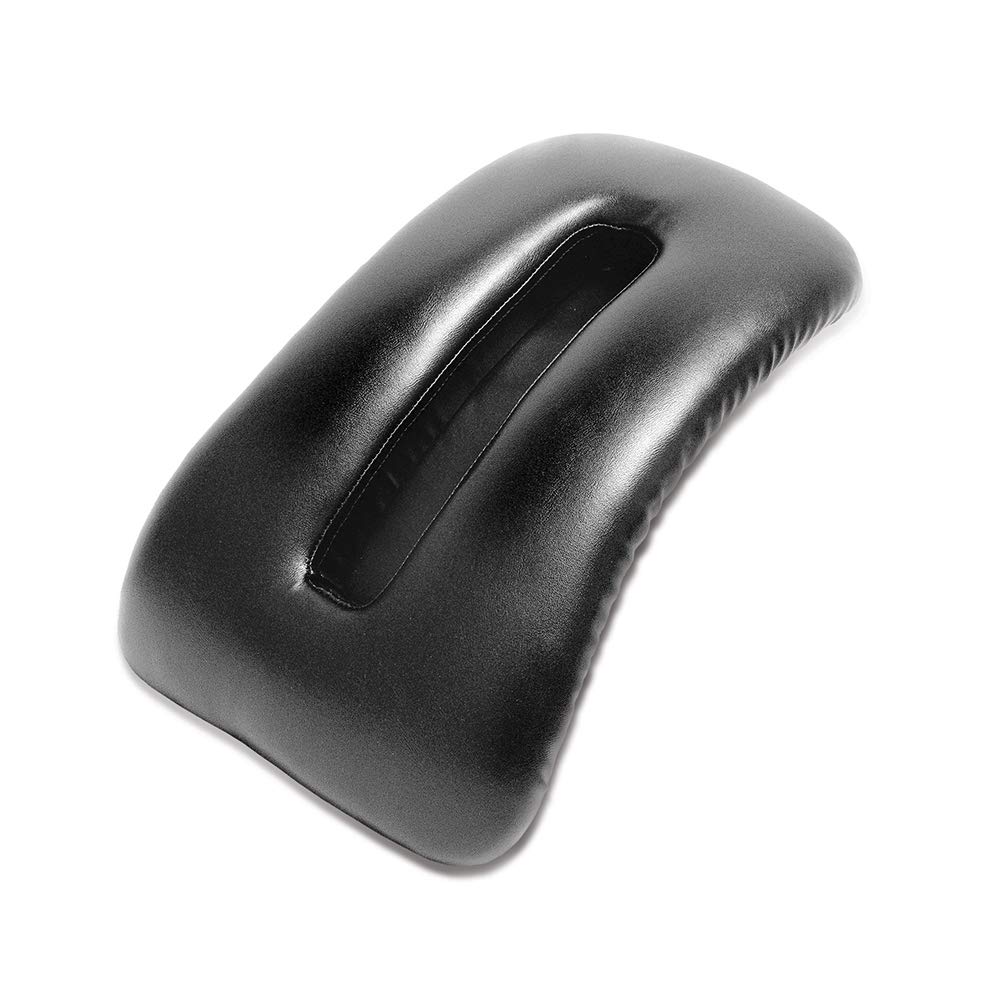
There's nothing to adjust here, and after a week we stopped counting that as a flaw. It's one padded arch: lie back over it, let gravity open the spine, and slide it up or down your back to move the stretch where you need it. The padding is firm enough to hold its shape and forgiving enough to stay on for several minutes, which is more than we can say for the bare plastic boards in this set.

The stretch itself is the deepest of the lying-down picks. The contour is pronounced, so you feel it through the lower back and mid-back at once, and shifting the arch a few inches changes the target completely. It asks nothing of you — no assembly, no pins, no levels to work out — and it carries the strongest value case in this group, costing more than the cheapest boards and earning the difference.

The catch is that there's no gentle version of it: if a pronounced arch isn't something your back tolerates yet, you have no lower rung to step onto, and no way to soften the curve. That's the trade for a contour that does the work for you rather than making you choose an angle. For a stretcher that stays at home, it's an easy trade to accept; for travel, pack a board instead.

Bottom line: Buy this one when you want a deep, hands-off arch and no settings to think about — it's the most comfortable rigid pick in this group.

#3

Backpod

Backpod

Mid-back and ribs

Our Score 8.8/10
Check Price

Worth Noting

  • Priciest pick here for a small molded piece
Care
Hand wash only
Made In
New Zealand
Thickness
5 centimeters
Dimensions
2.76 x 5.12 x 7.87 inches
Read the full review

If your tightness sits between the shoulder blades rather than at the waist, the usual arched board is aimed at the wrong part of you. The Backpod is a small rigid fulcrum — about 8 inches long and 5 centimeters thick — that you place along the spine and lie back over, so the mid and upper back opens around it. It's the pick here shaped around the thoracic spine and the rib joints, and for that particular stiffness it's the one worth owning.

We like it most for the buyer nothing else here serves: the desk worker whose mid-back feels welded, or someone dealing with costochondritis and Tietze syndrome, the rib conditions this was designed for. The shape is the entire product, and it's a good shape — it holds position under you, it keeps off the spine itself, and it lets you work one segment at a time instead of arching everything at once.

It isn't comfortable in the way a padded board is. The pressure is concentrated and deliberate, which is the mechanism rather than a fault, so plan on short sessions with a pillow under your head and build from there. Anyone expecting to lie back and relax has bought the wrong device; anyone with a specific stuck segment has bought the right one.

The change this one makes is cumulative rather than dramatic — nothing pops, nothing cracks, and then the mid-back simply moves more than it did. Give it a couple of weeks of short daily sessions before deciding it isn't working.

Bottom line: The one to buy if your stiffness sits in your mid-back or ribs rather than your lower back — a different tool from the lumbar boards.

#4

ProStretch CoreStretch

ProStretch CoreStretch

Hips and hamstrings

Our Score 8.6/10
Check Price

Worth Noting

  • Long 32-inch frame needs its own floor space
  • Most expensive pick in this set
Length
32 inches
Handles
360° rotating
Material
Aluminum
Height Settings
10
Read the full review

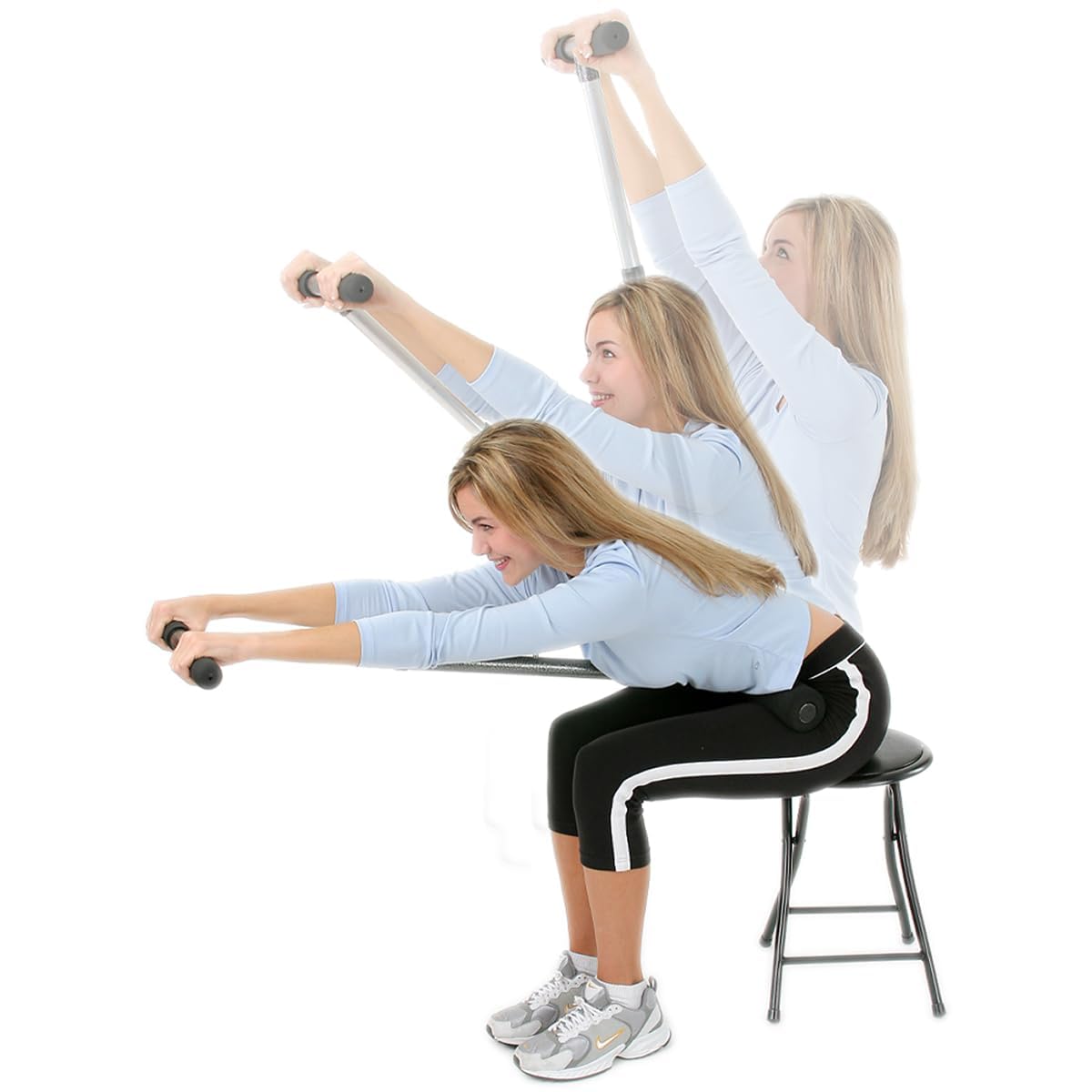
This isn't a board you lie on. The CoreStretch is a long aluminum frame with a foot plate and handles that swivel a full 360 degrees: you sit or stand into it and use your own weight and arm position to open the back, hips, and hamstrings. It's a different tool from everything else here, and the only one that stretches below the waist as well as above it.

Ten push-button height settings cover a wide range, and the rotating handles let you take the stretch up, down, or into a twist. In practice it's the most versatile thing in this roundup: one session can cover a lower-back pull, a hamstring stretch, and a shoulder opener without moving furniture.

We rate it highest for two kinds of buyer: someone building a whole lower-body routine rather than a single back stretch, and anyone who finds getting down onto and up off the floor the hardest part of the habit. Sitting into a frame is easier to face daily than lowering yourself onto a plastic arch, and that's why we keep it in the conversation.

The sliding bar takes a firm hand to move between settings, and it's the piece most likely to feel stiff after a few months; it's also the one component that separates a smooth session from a fiddly one. Think of it as a small piece of gym equipment rather than a gadget you'll stash in a drawer.

Bottom line: Worth it if you want to stretch hamstrings and hips as well as your back in one seated frame; otherwise a floor board does more for less.

#5

MINOLL Back Stretcher

MINOLL Back Stretcher

First-time buyers

Our Score 8.4/10
Check Price

Worth Noting

  • Three fixed steps with no in-between
Weight
13.8 oz
Material
PP plastic
Deck Width
15.16 inches
Arch Settings
15°, 28°, 42°
Read the full review

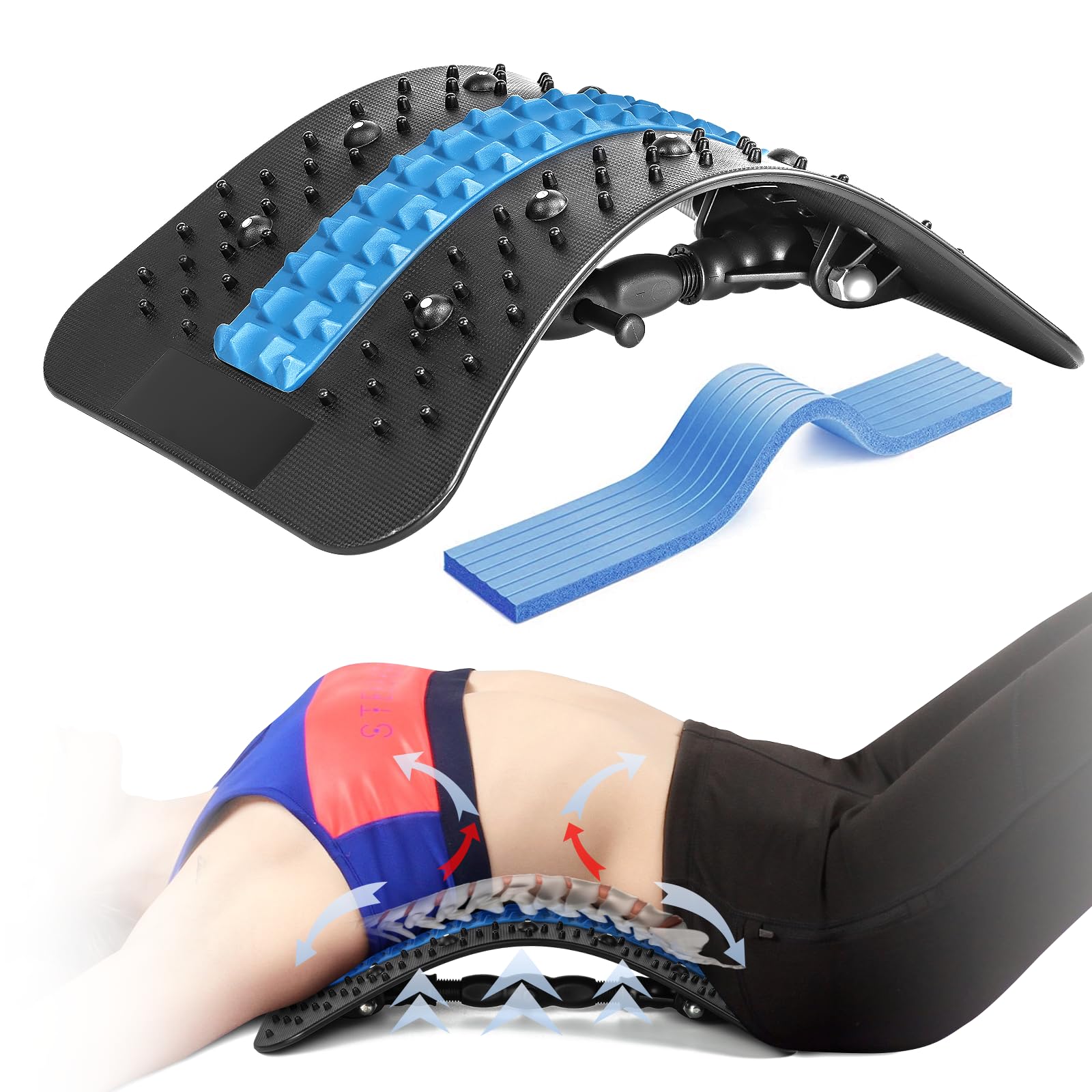
The lowest of this board's three arches — 15 degrees — is a real starting position rather than a token one, and that's the single biggest reason it's our default. You lie back, feel a stretch instead of a demand, and move up to 28 and 42 degrees as your back loosens over a few weeks. The deck is 15.16 inches wide, enough that pressure lands across your back rather than down a narrow strip of spine, and at 13.76 ounces it slides under a bed and comes back out without a thought.

What settled it for us is how little there is to go wrong. No assembly, no pins to hunt for, no straps: you set the arch, lie down, and it does its job. Across the whole set, this is the one we trust to work session after session without a cracked deck or a setting that fights back — and for something you'll use three minutes a day, that reliability is worth more than any extra feature.

The acupressure surface takes some getting used to. Lying on a field of plastic points with only a shirt between you and them is a brisk introduction, and our first sessions ended at two minutes rather than five. A folded towel over the deck fixes it, and after a week we stopped bothering. That's the honest cost of the design: those nubs are also what make it feel like it's doing something.

Two or three minutes at a setting you can breathe through beats one heroic session at the top arch, and daily use is where this kind of device earns its keep. Keep it where you'll see it — beside the couch, under the desk — because the board you use is the one that helps.

Bottom line: Our default: three honest arch heights, a wide deck, and a build we trust to keep working — start at 15 degrees and add height slowly.

#6

GUBENCI Back Stretcher

GUBENCI Back Stretcher

Fine arch tuning

Our Score 8.4/10
Check Price

Worth Noting

  • Recent design with no long-term track record
Pads
Memory foam and silicone
Arch Range
0° to 60°, stepless
Dimensions
14 x 13 x 4 inches
Load Rating
275 lb
Read the full review

Stepless adjustment sounds like a spec-sheet nicety until you've spent a week on a three-position board that goes from nothing to too much. The GUBENCI dials anywhere from flat to 60 degrees, so you can find the arch your back tolerates today and land in the same place tomorrow. Of everything here, it's the one for someone who tried a fixed-level board and found the steps too coarse.

The two pads matter more than we expected. The thick memory-foam one takes the edge off the 112 small nubs and 10 larger pressure points, and the firmer silicone one gives a more definite pull on days when you want to feel it working. It's also the only plastic board here that publishes a weight limit — 275 pounds — which is the kind of detail we like to see on something you lie your whole body onto.

The reservations are about time and length. This is a recent design, so there's no long record of how the adjustment mechanism holds up over a year of daily use, and the deck is shorter than our top pick's at 14 inches, which matters more if you're tall. Neither stopped us recommending it; both are reasons to buy it somewhere with a straightforward return policy.

Bottom line: If fixed steps have failed you, this is the pick: one smooth arch from flat to 60 degrees and two pads to soften or sharpen it.

#7

RESTCLOUD Back Stretching Cushion

RESTCLOUD Back Stretching Cushion

Softer foam surface

Our Score 8.4/10
Check Price

Worth Noting

  • Premium price for a foam block
Weight
1.8 lb
Material
Polyurethane foam
Dimensions
12.6 x 12.4 x 4 inches
Massage Nodes
8 nodes, 16 bars
Read the full review

Foam changes the whole feel. Where the plastic boards give you a hard deck and a field of points, the Restcloud is a dense block about a foot square and four inches thick, with a channel down the middle for the spine and massage nodes and bars arranged on either side. You settle into it rather than negotiate with it.

It's also the most useful one away from the floor: propped against a couch or an office chair it works as a lumbar rest, and it's the only pick here that earns a place in your day beyond the five-minute stretch. Two directions of use and a removable massage ball give you a way to change the intensity without a dial — flip it, or pull the ball out of the C-opening for a deeper arch.

The foam is dense and stays dense. It doesn't soften with body heat the way a mattress topper does and it doesn't compress much under you, which is the point: it holds the curve instead of flattening beneath your weight. At 1.8 pounds it still moves between rooms easily, and the 12.6-inch footprint fits a small apartment.

Where it lands for us: it's the pick for someone who wants a forgiving surface and doesn't need graduated levels, and the one to think about if the nubbed boards made you sore. What it can't do is start you gently — the arch is what it is — so if you're brand new to passive stretching, a board with a low first setting is the smarter first purchase.

Bottom line: The one to choose if plastic nubs left you sore and you want a firmer foam surface without graduated levels.

#8

ChiFit Back Stretching Device

ChiFit Back Stretching Device

Tight budgets

Our Score 8.0/10
Check Price

Worth Noting

  • Coarse jumps between the three gears
  • Fiddly to set up the first time
Weight
1.14 lb
Dimensions
15 x 4 x 2.8 inches
Arch Settings
3 levels
Acupressure Points
92
Read the full review

Three arch positions, 92 acupressure points, and the smallest outlay in this group — that's the ChiFit's pitch, and it largely delivers it. It's a light plastic deck with a bed of firm points, and it does the basic job: lie back, let the arch open you up, get on with your day.

What you give up is nuance. The three gears jump from mild to serious with nothing in between, and the first setting is gentle enough that it may not feel like much. There's also assembly before the first use, which took us longer than we expected — do it the night before rather than when your back is already complaining.

For a first board or a second one for the office, though, it's the right kind of cheap: nothing here feels hollowed out to hit a price, the points are laid out sensibly along either side of the spine, and at 1.14 pounds it goes in a bag or under a desk without complaint. If your back needs a finer range than three steps, spend more. If you want to find out whether this kind of stretching helps you at all, start here.

Bottom line: The budget pick we're glad to recommend: a real three-level board for very little, as long as three coarse settings are enough.

How We Chose and Tested Back Stretchers

We started by scanning the market for back stretchers with adjustable arches, weight capacities that matched real users, and enough size variety to fit different torso lengths. From that pool, we narrowed to 12 models and spent five months with them—not in a lab, but in the scenes where back pain actually shows up: morning stretches on the living room floor, post-work decompression beside a desk, and the occasional mid-afternoon reset. Each tester used their assigned stretcher daily and logged notes after the first session, the first week, and the final month.

Comfort and firmness were the first things we judged: we lay on each one for five minutes at its lowest setting, then worked up to the highest, noting whether the arch dug into the spine or felt like a dull pressure. We measured how much of our backs actually touched the floor, because a stretcher that's too short or too narrow won't stretch much of anything. Ease of use got its own test—we timed how long it took to get into position solo and whether the settings could be changed without getting up.

Pain relief was harder to quantify, so we kept a simple log: before and after each session, we rated stiffness and soreness on a 1-to-10 scale. The stretchers that scored best were the ones that eased tension without leaving us tender. Durability came down to weeks of repeated use—we checked for cracks, wobbly joints, and foam that flattened. Value for money wasn't about the lowest price; it was whether a stretcher still felt solid after five months of daily stretching.

How to Choose Back Stretchers

Match the Adjustment to Your Back

Three fixed levels is the standard design, and the gap between the first and second is often where people get stuck: level one feels like nothing, level two feels like a lot, and there's no rung between them. If you've already bounced off a fixed board, a stepless dial such as the GUBENCI's flat-to-60-degree range, or a pump like the OPDEKEHA's, lets you land somewhere specific instead of picking the least bad of three.

If you're new to passive stretching, the easier start is a board whose lowest setting is a genuine arch rather than a token one — our top pick starts at 15 degrees. Fixed levels are perfectly workable; just check where the first step sits before you buy.

The Surface Decides Whether You Keep Using It

The stretch is the easy part; lying on the thing is what people quit over. Bare plastic decks studded with acupressure nubs feel brisk at first, and a folded towel over the surface is the standard fix — use one for the first week and the nubs become useful rather than punishing. Foam cushions such as the RESTCLOUD and padded arches like the North American skip that adjustment period altogether.

One design detail is worth checking on any board: a channel down the middle keeps pressure off the spine itself and puts it into the muscles on either side, which is where the tension actually lives.

Know Which Part of Your Back You're Targeting

These devices aren't interchangeable along the whole spine. Arched boards and foam cushions open the lumbar curve, which is what most lower-back buyers are after. Stiffness between the shoulder blades, or rib pain from long days at a desk, calls for a fulcrum you lie over along the spine, like the Backpod. If you want hamstrings and hips stretched in the same session, you're looking at a seated frame rather than a floor board.

Buying a lumbar arch for a thoracic problem is the mismatch to avoid, and it's the one that sends people back to the listing convinced the device doesn't work.

Size, Load Rating, and Where It Will Live

Two measurements matter: deck length against your torso, and deck width across your back. Lengths here run from 12.6 inches to just over 16, so if you're long through the torso a short board can end up stretching the wrong segment. Check the stated weight limit where there is one — the GUBENCI rates 275 pounds and is the only plastic board here that publishes a figure — and treat it as a ceiling, not a target.

Then be honest about storage. A 2.43-pound padded arch lives on the floor; a 13.76-ounce board slides under the bed. The one you can reach without moving furniture is the one you'll actually use.

Frequently Asked Questions

Final Verdict

Start with the MINOLL. Three honest heights that begin gently, a deck wide enough to spread the pressure, and a design with nothing to assemble or adjust wrong — for most people buying their first back stretcher, that's the whole answer.

If you'd rather skip settings entirely and lie over something deep and padded, the North American arch is the better second look. And if your stiffness sits between the shoulder blades instead of at the waist, buy the Backpod; it's aimed at the part of you that hurts.