Nutrition & Supplements

Best Zinc Supplements of 2026

Zinc has a reputation problem: take it on an empty stomach and it will remind you a few minutes later. That queasy, metallic feeling is why so many bottles end up half-full in a bathroom drawer. But zinc is one of the few supplements most of us genuinely benefit from — it supports immune function and skin healing, and our bodies don't store it, so a daily top-up has to actually be daily. Which means the supplement only works if you'll keep taking it: small enough to swallow, gentle on your stomach, and dosed at a level your body can use.

The form matters more than what's printed on the front of the bottle — zinc oxide is cheap and poorly absorbed, while picolinate, citrate, and gluconate tend to be gentler. Dosage is the other trap: past 40 milligrams a day, you're not doing yourself any favors. I've abandoned my share of chalky tablets, so over four months my team and I took 14 zinc supplements daily, and the ones below are the bottles we'd buy again.

#1

Pure Encapsulations Zinc 30 mg

Top Pick
Pure Encapsulations Zinc 30 mg

Sensitive stomachs

Our Score 9.6/10
Check Price

Worth Noting

  • Highest bottle price in this roundup
Form
Zinc picolinate
Count
180 capsules
Free From
Fillers, common allergens, GMOs
Zinc Per Capsule
30 mg
Read the full review

The label is the pitch: no fillers, no binders, no artificial ingredients, no GMOs, and none of the common allergens. What's left is a small capsule holding 30 mg of zinc picolinate, and 180 of them in the bottle.

For anyone whose stomach has objected to zinc before, this is the name we give first. Picolinate is a well-absorbed form, the capsule is small enough to take with a sip of water, and the formula is as plain as it gets, nothing but the mineral. That plainness also makes it the easiest pick to stack, since there's no vitamin C and no herb to double up on when you already take a multivitamin.

The price is the obvious objection, and this is the most expensive bottle here by some distance. Per day it stings less than it looks, because 180 capsules at one a day is roughly six months of zinc. What it can't fix is a swallowing problem; that's the Garden of Life capsule or the MaryRuth's dropper.

Bottom line: We point anyone whose stomach has objected to zinc here: 30 mg of picolinate in a small capsule with no fillers, and six months of it in one bottle.
#2

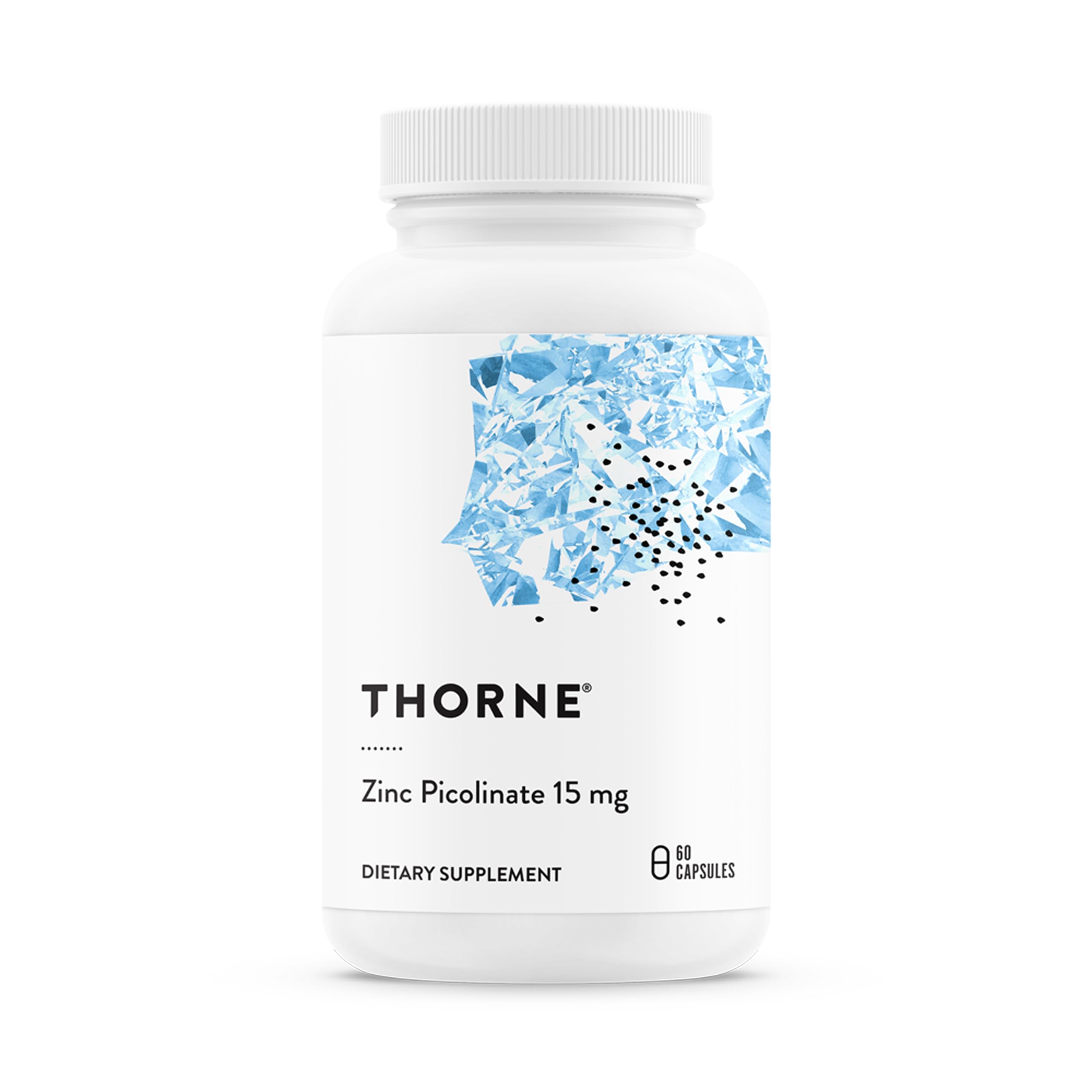
Thorne Zinc Picolinate 15 mg

Thorne Zinc Picolinate 15 mg

Low-dose routines

Our Score 9.6/10
Check Price

Worth Noting

  • 60 capsules is a short supply
  • Costs more per milligram than 30 mg picks
Form
Zinc picolinate
Count
60 capsules
Testing
Third-party contents certified
Zinc Per Capsule
15 mg
Read the full review

Fifteen milligrams is the dose to think about if you already take a multivitamin, or if you're topping up rather than filling a gap. Thorne puts exactly that in a picolinate capsule that's third-party tested and contents certified, and the capsule is small enough to swallow with half a glass of water and forget about.

Sixty capsules means two months at one a day. It's also the most expensive way to buy zinc per milligram in this roundup, which is the trade for a low dose in a small, clean capsule from a brand with a clinical following.

We rate it as the low-dose pick that does a specific job neatly: it's the only 15 mg option here, and it suits people who want zinc in the background without pushing their total intake up. If you're not already getting zinc from a multivitamin, the 30 mg picks cost less per milligram and cover more of the daily need.

Bottom line: The pick for a low dose: 15 mg of picolinate for people already getting zinc from a multivitamin, in a capsule that's genuinely easy to take.

#3

Garden of Life Raw Zinc 30 mg

Garden of Life Raw Zinc 30 mg

Most people

Our Score 9.4/10
Check Price

Worth Noting

  • Two-capsule serving lasts only a month
  • Costs more per dose than drugstore tablets
Capsule
Can be opened and mixed
Serving Size
2 vegan capsules
Zinc Per Serving
30 mg
Vitamin C Per Serving
60 mg
Read the full review

The detail that decided it for us is a small one: the capsule comes apart. Vitamin Code's zinc can be opened and stirred into water or juice, which turns a supplement plenty of people dread swallowing into something closer to a drink. Each two-capsule serving delivers 30 mg of zinc and 60 mg of vitamin C, and the capsules are vegan, Non-GMO Project Verified, NSF gluten free, and kosher.

That flexibility, plus a tolerance record that holds up against anything in this group, is why it's the bottle we point most readers to. Thirty milligrams is the useful middle of the range, enough to matter and short of the dose that starts conversations about upper limits, and the raw whole-food blend with live probiotics and enzymes reads as a sensible addition rather than a gimmick. We also appreciate that it can be taken with or without food, though a meal is still the kinder option for your stomach.

The compromise is the serving size. Two capsules a day drains a 60-count bottle in a month, the shortest run per bottle in this roundup, which is what you pay for packing in the whole-food blend and the vitamin C. If you're committing to it, order two at a time.

Pure Encapsulations is the plainer, cleaner capsule if you already get vitamin C elsewhere, and Nature Made delivers the same 30 mg for a fraction of the cost if swallowing isn't an issue. Neither can be opened. And treat the 60 mg of vitamin C as a modest top-up rather than a replacement for a separate vitamin C supplement.

Bottom line: Our default pick: 30 mg of zinc with vitamin C in a vegan capsule that pulls apart, so the daily dose is easy to take and easy to keep taking.

#4

Nature Made Zinc 30 mg

Nature Made Zinc 30 mg

Tight budgets

Our Score 9.4/10
Check Price

Worth Noting

  • Zinc form isn't stated on the label
Count
100 tablets
Supply
100 days
Free From
Gluten, artificial flavors
Zinc Per Tablet
30 mg
Read the full review

Tiny tablets are the whole argument. Nature Made gets 30 mg of zinc into a tablet small enough that people who normally avoid pills take it without drama, and the bottle holds 100 of them, a little over three months at one a day. The formula is gluten free with no artificial colors, flavors, or preservatives, and the label says to take one with water and a meal. For a first bottle, or one to leave at the office, that combination of small size and low cost is hard to beat.

Two things keep it off the top step. The label never names the zinc form, so if you've decided you want picolinate or a chelate, this bottle can't confirm it. And a tablet can't be opened, which leaves it useless to anyone who struggles to swallow. Take it with a real meal rather than a slice of toast; zinc on an empty stomach is the usual reason people end up queasy.

Bottom line: Tiny 30 mg tablets at the lowest cost per dose of the 30 mg picks, and the easiest first bottle of zinc, as long as you don't need it opened.

#5

MaryRuth's Ionic Zinc Liquid

MaryRuth's Ionic Zinc Liquid

Pill-free routines

Our Score 9.4/10
Check Price

Worth Noting

  • Metallic taste in plain water
  • Higher cost per serving than tablets
Size
4 fl oz
Flavor
Unflavored
Zinc Form
Zinc sulfate liquid
Certifications
USDA Organic, Non-GMO, Vegan
Read the full review

This is our pick for households where pills are the barrier, whether that's a swallowing problem or a flat refusal. MaryRuth's is a 4 fl oz dropper bottle of unflavored ionic zinc, zinc sulfate in a liquid base, and it's USDA Organic, Non-GMO, vegan, and free of gluten, dairy, soy, and sugar.

The dropper is what makes it work: you measure into a spoon or straight into a drink, so getting an exact amount is easy in a way capsules aren't. Third-party testing for more than 200 contaminants, plus a Clean Label Project purity award, is the reassurance that matters with a liquid you can't inspect, and it disappears into juice or a smoothie without much fuss.

Unflavored isn't the same as tasteless. Zinc sulfate has a metallic edge, and in plain water it's noticeable, so mix it into something with flavor instead. It's also no gentler on an empty stomach than a tablet, and it costs more per serving than the tablets here.

Bottom line: Our choice when pills are the obstacle: a dropper of organic ionic zinc that mixes into juice and skips the swallowing problem entirely.

#6

Solgar Chelated Zinc 22 mg

Solgar Chelated Zinc 22 mg

Long supply

Our Score 9.4/10
Check Price

Worth Noting

  • Chalky tablet needs a full glass of water
Diet
Vegan, kosher, gluten free
Form
Chelated zinc
Count
250 tablets
Zinc Per Tablet
22 mg
Read the full review

Chelated zinc is bound to an amino acid, which is supposed to make it easier to absorb, and Solgar's 22 mg tablet lands between the 15 mg low-dose pick and the 30 mg standards. The bottle holds 250 tablets, the longest supply in this roundup by a wide margin, and the formula is vegan, kosher, and free of gluten, dairy, soy, and sugar.

The tablet is the catch. It's chalky, it wants a full glass of water, and it's the sort of pill that reminds you it's there on the way down. At one a day, though, 250 tablets is most of a year, and per tablet it's one of the cheapest chelated options here.

We like it as a set-and-forget bottle: 22 mg is a middle dose for people who want more than a token amount but less than 30 mg, and one tablet a day is easy to keep on the shelf. Just don't pick it if swallowing a chalky tablet is the exact thing you're trying to avoid.

Bottom line: A chelated 22 mg tablet with the longest supply here, best for anyone who wants a mid-dose bottle that lasts most of a year.

#7

Sandhu Zinc 50 mg Chelated

Sandhu Zinc 50 mg Chelated

High-dose short courses

Our Score 9.4/10
Check Price

Worth Noting

  • 50 mg is above the adult daily upper limit
  • Strong mineral smell from the capsules
Form
Zinc monomethionine chelate
Count
120 capsules
Supply
4 months
Zinc Per Capsule
50 mg
Read the full review

Fifty milligrams is more than twice what most adults need and above the 40 mg upper limit, so this is a bottle for a short, deliberate course rather than a year-round habit. That's worth saying plainly, because 120 capsules at one a day reads like a four-month supply, and that isn't how we use a 50 mg product.

The form is why it's here at all. Sandhu uses chelated zinc monomethionine, which the label claims absorbs more efficiently than zinc oxide or citrate, and the capsules come out of a GMP-certified facility without unnecessary fillers. For a high dose, a chelate is the version we prefer.

At this dose the stomach is the limiting factor. A metallic aftertaste and a churning stomach are the risks, so take it with a substantial meal rather than a coffee, and give it a pass on an empty stomach. The capsules also have a strong mineral smell when the bottle is first opened, worth knowing before you decide they've gone off.

This is the pick if a clinician has told you to take 50 mg, or if you want a short high-dose course and prefer a capsule to a caplet. For everyday immune support, a 30 mg bottle does the same job with less stomach risk, which is why this one sits among our also-considers rather than near the top.

Bottom line: The 50 mg pick for a short course: chelated, capsule-form, and best taken with a full meal rather than a coffee.

#8

Nature's Bounty Zinc 50 mg

Nature's Bounty Zinc 50 mg

High-dose budgets

Our Score 9.4/10
Check Price

Worth Noting

  • Dry, chalky caplet that can stick in the throat
  • 50 mg is above the adult daily upper limit
Count
250 caplets
Free From
Gluten, sugar, artificial flavors
Zinc Per Caplet
50 mg
Read the full review

The caplet is the problem, and that's a shame, because everything else about this bottle is built for people who want zinc cheaply and in bulk: 250 caplets, 50 mg each, gluten free, sugar free, with no artificial flavors or sweeteners. Dry and chalky, they go down like a piece of chalk and can stick halfway.

The dose needs the same caveat as the other 50 mg option here. It's above the 40 mg daily upper limit for adults, so it suits a short course rather than a permanent habit. With a full meal it's manageable; on an empty stomach, nausea is a real risk.

Where it wins is cost. Per caplet this is the least expensive zinc in the roundup, and 250 of them go a long way, which is why the bottle turns up in so many bathrooms. The formula is simple and the label is clear about what's in it.

We keep it in the roundup for one job: a high dose at the lowest cost, for people who swallow pills easily. If the caplet is the obstacle, splitting it isn't the fix, since a halved caplet tastes worse and leaves you guessing at the dose. Take the small tablet, the openable capsule, or the drops instead.

Bottom line: We keep it for one job, the least expensive 50 mg dose here, and only for people who swallow caplets without trouble.

How We Tested the Zinc Supplements

We started with more than 30 zinc supplements sold at pharmacies, grocery stores, and supplement retailers, then narrowed the field using label math: how much elemental zinc was actually in a serving, which form it came in, whether the dose landed in a sensible daily range, and whether the brand submitted to third-party purity testing. Cost per serving of usable zinc, not cost per bottle, did most of the eliminating. That left 14 products, a mix of tablets, capsules, and gummies, which six of us took daily for four months.

Every tester kept notes on their phone. For the first two weeks we took each supplement on an empty stomach right after waking, because that's when most people remember — and that's where the differences showed up fast. We recorded how long any nausea or metallic taste lingered, whether it eased after food, and whether anyone had to stop taking one entirely. We also held each pill next to a dime, noted whether it was a tablet, capsule, or gummy, and flagged anything we had to split or crush to get down with a normal mouthful of water.

For the final two months we moved the dose to breakfast and lunch to see whether timing changed the stomach complaints, and we tracked who got sick through a long winter — imperfect data, but telling. We held each tablet on the tongue for 30 seconds to catch coatings that tasted of pennies, and read every ingredient panel for fillers, added sugars in gummies, and dyes. What's below survived all of it, and a few of us are still taking our favorites.

How to Choose Zinc Supplements

Start With the Dose, Not the Label

The bottles here run from 15 mg to 50 mg, and that spread matters more than any marketing claim on the front. For most adults, 15 to 30 mg a day covers the job of a daily supplement, especially if you eat meat, shellfish, or fortified cereal. The tolerable upper limit for adults is 40 mg a day from all sources, which puts 50 mg products in short-course territory rather than permanent habits.

If you already take a multivitamin, read its zinc line and add it to whatever bottle you buy. Two modest doses stack faster than people expect, and the total is the number that matters.

Choose a Form, Then Take It With Food

Picolinate, chelate, gluconate, sulfate: the form affects how well the zinc is absorbed, and the picolinate and chelated versions have the better reputation for tolerance. The bigger practical lever is food. Zinc on an empty stomach is the most common reason people feel queasy an hour later, and it happens with expensive capsules as readily as cheap tablets.

Take yours with a meal that has some fat and protein in it. If nausea persists at 30 mg, drop to 15 mg rather than pushing through.

Match the Format to How You Swallow

A tablet you dread is a tablet you stop taking. If swallowing is the obstacle, there are three routes: a capsule you can pull apart and stir into a drink, a liquid dropper, or a genuinely small tablet. Product photos make every pill look small, so trust the format rather than the picture and check the count and the dosage form.

Liquids solve the pill problem but add a metallic taste, so plan to mix them into juice rather than water.

Compare Cost Per Serving, Not Per Bottle

A 60-capsule bottle that asks for two capsules a day is a one-month supply. A 250-tablet bottle at one a day is most of a year. Divide before you compare, because the arithmetic flips the ranking constantly: a mid-priced 180-count of one daily capsule often costs less per day than a bargain bottle you have to double up on.

Cost per serving is also the honest way to weigh a premium label against a drugstore one, since the cheap bottle is not always the cheap habit.

Read the Rest of the Label

Zinc rarely travels alone. Vitamin C is a reasonable companion for immune support, and copper matters if you take higher doses for months, because zinc competes with it. Quercetin and herbal blends are worth paying for only if you were shopping for them anyway; for a basic zinc purchase they mostly add cost.

If label accuracy matters to you, look for third-party testing or a contents-certified seal, and check the allergen line if you react to fillers and binders.

Frequently Asked Questions

Final Verdict

If you want one bottle that covers the daily basics, buy Garden of Life Vitamin Code Raw Zinc. Thirty milligrams sits in the right part of the range, the vitamin C is a sensible companion, and a capsule you can open solves the swallowing problem that leaves so many bottles unfinished.

Change the requirement and the pick changes. Sensitive stomach: Pure Encapsulations. Tight budget and no trouble swallowing: Nature Made. Already taking a multivitamin with zinc in it: Thorne's 15 mg. Can't do pills at all: MaryRuth's dropper. The rest of this list is a set of specific tools, not a better default.