Nutrition & Supplements

Best Supplements for Marathon Runners of 2026

The cruelest thing about marathon nutrition is that a supplement can taste fine in your kitchen and still turn on you at mile 18. I’ve watched runners—myself included—practice everything except race-day fuel, then blame their legs when a gel wouldn’t dissolve or a capsule stuck halfway down. Fuel isn’t a garnish; it’s the difference between holding pace and watching it slide, and it has to deliver energy and hydration without asking your gut to negotiate.

Over a 12-week training block, our team worked through 14 options—gels, chews, drink mixes, electrolyte tabs, and capsules—on easy runs, long runs, and two miserable tempo sessions. We rated taste and flavor by whether we’d willingly choke each one down again at mile 20, then tracked stomach comfort, dissolvability in a cold bottle, swallowability mid-stride, and cost per serving. The ones worth carrying disappear into the background until you need them—and those are the ones below.

#1

CLIF BLOKS Energy Chews

Top Pick
CLIF BLOKS Energy Chews

Caffeinated long runs

Our Score 9.4/10
Check Price

Worth Noting

  • Chewing takes attention at race pace
Packs
18
Calories Per Cube
33
Carbs Per Serving
0.85 oz
Caffeine Per Serving
50 mg
Read the full review

Fifty milligrams of caffeine per serving is the figure that separates CLIF BLOKS from the other chews here, and it is why we pack them for the back half of a long run rather than the front. A serving also carries 24 grams of carbohydrate in 33-calorie cubes, so the fuel and the lift arrive together.

The cubes are soft and only faintly sticky, which matters more than it sounds when you are breathing hard and cannot afford to be picking chews out of your teeth. The foil pack is the weak point — it is fiddly with sweaty fingers, so we tear the top corner before we leave and keep the pack in a front pocket. Black cherry is tart-sweet and leaves no chemical aftertaste.

Where these beat a gel is portion control. You take two cubes now, seal the rest, and take the remainder in half an hour, which suits a long training run better than a single hit. On race day we still default to gels, because chewing costs attention you do not have. As training fuel and a caffeine delivery system, these are the strongest chews in this set.

Bottom line: We pack these when a long run needs caffeine and a break from gels; portion them out and they carry the back half.
#2

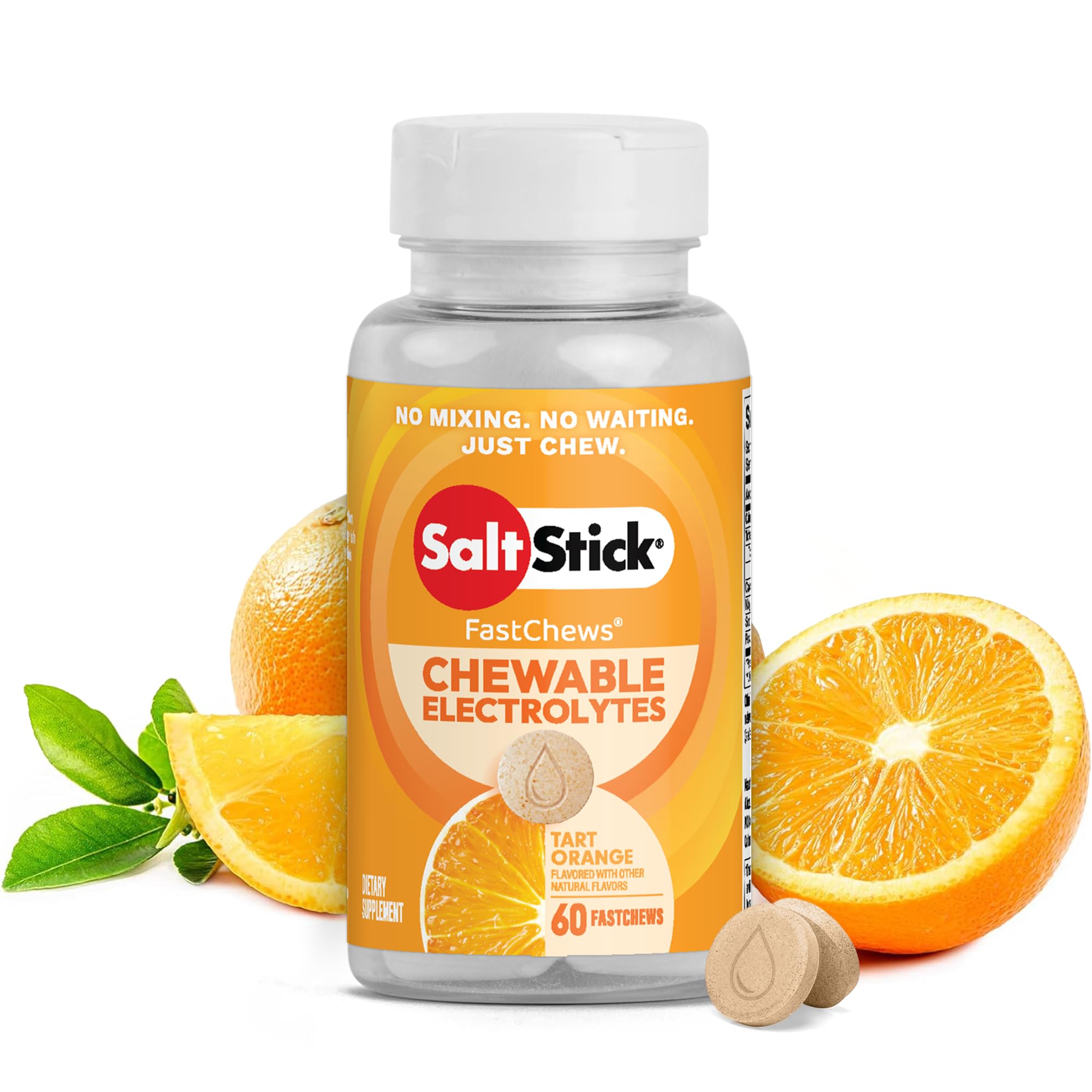
SaltStick FastChews

SaltStick FastChews

Hot-weather sodium

Our Score 9.4/10
Check Price

Worth Noting

  • No carbohydrate
Form
Chewable tablet
Flavor
Orange
Tablets
60
Read the full review

No bottle, no powder, no waiting. SaltStick's FastChews are sodium you chew and swallow, which is exactly what you want when your bottle is already full of carbohydrate and the next aid station is six miles out.

These are our pick for hot long runs and warm-weather races where drinking more is not the answer, because you need salt rather than volume. The orange tablets are mild and slightly tart, easy to chew even with a dry mouth, and low-calorie enough that they slot into a fueling plan without disturbing it. If you cramp in the last hour of a summer race, this is the format to try first.

The bottle is bigger than a gel sleeve — it fits a belt pocket or a vest compartment, but measure it against a minimal race belt before you commit. In heat we go through two or three over a long run, and the cost per tablet is low enough that doing so does not sting.

Bottom line: We carry these when the bottle is already full of fuel — chewable sodium with no mixing, and the quickest way here to top up in heat.

#3

GU Roctane Gels

GU Roctane Gels

Ultra distances

Our Score 9.4/10
Check Price

Worth Noting

  • Priciest gel per packet here
  • Assorted flavors vary a lot
Gels
24
Carbs Per Serving
19–21 g
Sodium Per Serving
125–190 mg
Amino Acids Per Serving
1,425 mg
Read the full review

Roctane is the original GU gel with the dials turned up: 125 to 190 mg of sodium per packet, roughly three times the standard gel, and 1,425 mg of amino acids including taurine and beta-alanine, all with 19 to 21 grams of dual-source carbohydrate.

The sodium figure is the one that matters. If you finish long runs with white streaks dried on your kit, or you have watched a hot race come apart in the last 10K, this is the gel built for that runner — more salt per packet means fewer separate salt chews to carry and one less thing to remember.

The 24-count box is a way to work out which flavors you tolerate in training rather than during a race. It mixes caffeinated and caffeine-free packets, so read each wrapper instead of assuming the whole box carries a lift.

Roctane is worth it when sodium is your limiter and not much otherwise. Everyone else gets the same ground covered by the original gel plus a few SaltStick chews, with more control over how much salt goes in at once. Where it earns its place is ultra distance and serious heat, where carrying fewer, stronger packets is worth something.

Bottom line: We reach for Roctane in heat and over ultra distances, where triple sodium and a bigger amino dose justify carrying fewer packets.

#4

GU Energy Original Gels

GU Energy Original Gels

Race-day fueling

Our Score 9.2/10
Check Price

Worth Noting

  • Only eight packets per box
BCAAs Per Serving
450 mg
Carbs Per Serving
21–23 g
Sodium Per Serving
60–125 mg
Read the full review

A gel is the only format here you can open and swallow without stopping, chewing, or reaching for a bottle, and GU's original is the packet we measure the others against. Each one carries 21 to 23 grams of dual-source carbohydrate — maltodextrin and fructose — with 60 to 125 mg of sodium and 450 mg of BCAAs, which is a lot of jobs for something that fits in a singlet pocket.

What keeps it at the top is how little it asks of you. There is no chewing at threshold pace, nothing to mix the night before, and no flavor so sweet that it turns your stomach with eight miles to go; the tri-berry is tart enough that we finish the packet without a grimace. It is the one we hand to first-timers and the one we still carry ourselves.

The texture is thick, closer to syrup than to a drink, and we take each one just before an aid station so there is water to chase it with. Stomach tolerance is the thing we watch hardest across a marathon block, and this is the packet that has never been the reason a long run went sideways.

Sodium is where it gives ground. 60 to 125 mg is a rounding error beside the high-sodium options in this guide, so if you finish summer runs with salt dried on your sleeves, plan a second sodium source rather than a second gel. Otherwise there is not much to think about: it is the simplest way to get carbohydrate into a marathon.

Bottom line: Our default race-day gel: carbs, sodium, and amino acids in a packet that goes down at pace without a bottle in your hand.

#5

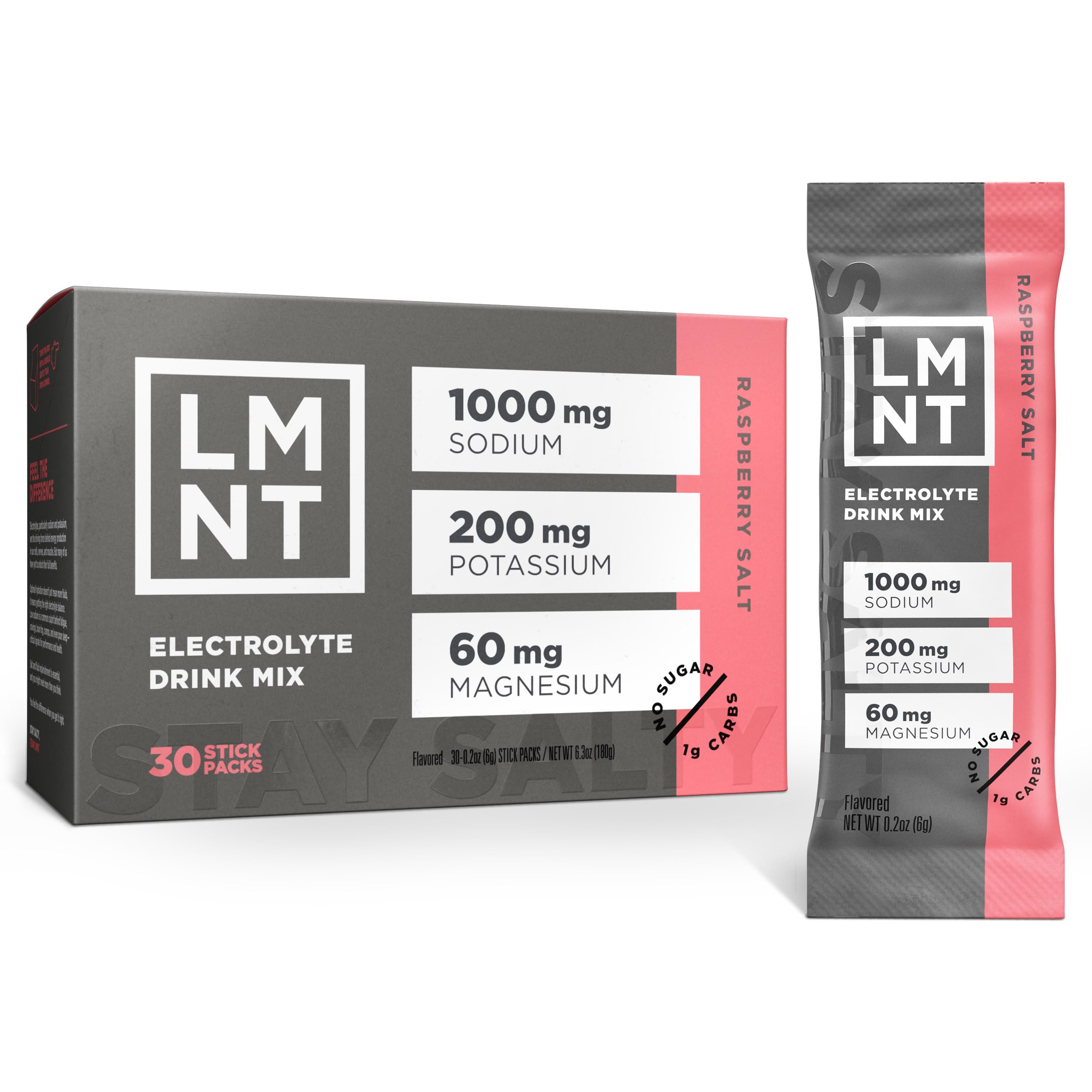
LMNT Raspberry Salt

LMNT Raspberry Salt

Heavy sweaters

Our Score 9.2/10
Check Price

Worth Noting

  • Premium price for everyday use
Sugar
0 g
Stick Packs
30
Mix Per Stick
16–32 oz water
Read the full review

LMNT costs more per serving than any other electrolyte in this guide, and we still keep a box in the cupboard for the runners who sweat like it is their job. The pitch is sodium first and sugar never: no sugar, a mix built to replace salt rather than to taste like a sports drink, and a raspberry flavor that reads salty-tart instead of candy.

Mixing is where it earns its flexibility. One stick in 32 ounces makes a drink you sip across an hour; in 16 it is a sharp, fast hit before a hot long run. That range is why it works on race morning and at a desk in July. Raspberry is our pick of the flavors, salty enough to feel like it is doing something without turning briny.

The cost is the honest sticking point, and it is why we do not drink it every day. Across a 16-week block, a stick a day is the most expensive habit in the electrolyte half of this guide. Our compromise is to save it for long runs and hot races and let the Nuun tablets cover easy days — runners who cramp badly tend to think that is a fair trade.

Bottom line: We spend the extra on LMNT because no other electrolyte here puts sodium first this way — worth it if you finish long runs salty and cramped.

#6

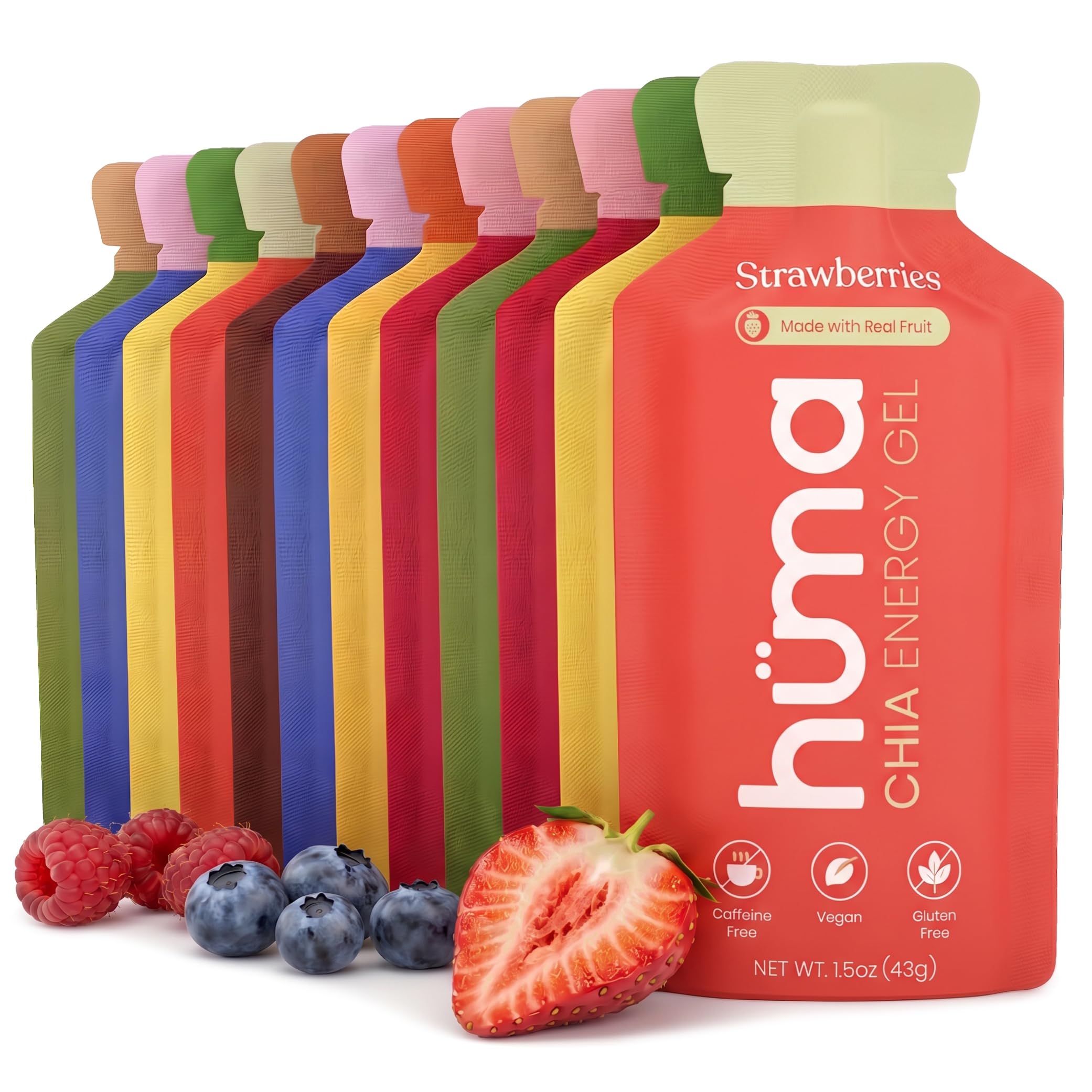
Huma Chia Energy Gel

Huma Chia Energy Gel

Sensitive stomachs

Our Score 9.2/10
Check Price

Worth Noting

  • Runny and tacky once it warms up
  • Caffeine varies by flavor
Base
Fruit puree and chia
Gels
12
Caffeine
Varies by flavor
Read the full review

Fruit puree, chia seeds, brown rice syrup. Huma's ingredient list is short enough to read out loud, and that is the pitch: no maltodextrin, no dextrose, nothing you need to look up.

You can tell from the texture. Huma is closer to apple sauce than to the thick syrup in a GU packet, and it goes down without water, which counts for something on a course where the aid stations are spread thin. The fruit flavors taste like fruit rather than candy, and the box mixes enough of them to find a favorite.

The reason to switch is your stomach. If a gel has ever sat heavy at mile 18, the chia-and-fruit base is a different proposition — this is the gel runners with sensitive guts tend to stay with. Not a cure for a bad fueling plan, but the gentlest option here on the days that matter.

These are the ones we hand to anyone whose long runs have been derailed by a gel that would not settle. Beside the GU packet at the top of this guide they are milder in every way — flavor, texture, and hit — and over four hours that mildness is the whole point.

Bottom line: Our pick for runners whose stomachs have rejected gels before: mild, fruit-based, and easy to swallow without water.

#7

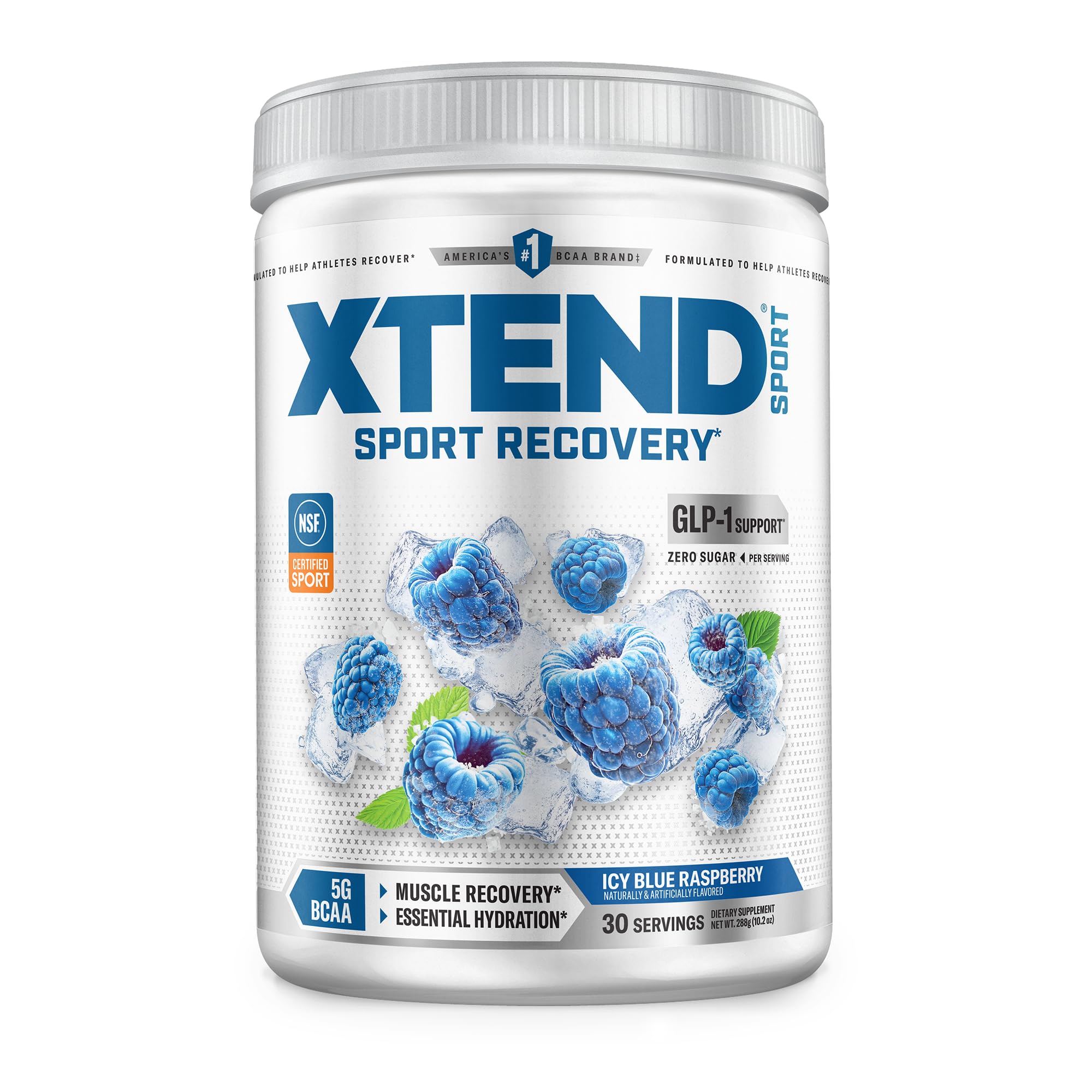
XTEND Sport BCAA

XTEND Sport BCAA

Post-run recovery

Our Score 9.2/10
Check Price

Worth Noting

  • Sweet sucralose finish divides people
Ratio
2:1:1
Sugar
0 g
Certification
NSF Certified for Sport
BCAAs Per Serving
0.25 oz
Read the full review

Seven grams of BCAAs in a 2:1:1 ratio, added electrolytes, zero sugar, and an NSF Certified for Sport mark on the tub — that mark is the first thing we look for. Supplements are not held to food standards, and if you race under anti-doping rules, a certification you can point to is worth more than any flavor.

In practice it is a drink that makes the hour after a long run more pleasant: cold water, a scoop, and something that tastes like blue raspberry rather than a recovery obligation. Shake it hard in a bottle with a ball or a shaker cup; stirred with a spoon it leaves clumps at the bottom.

We treat it as a nice-to-have rather than a staple. There is no carbohydrate in the tub, so it does not replace a gel or a proper meal, and the case for BCAAs in marathon performance is thin. What it does well is get 24 ounces of fluid and electrolytes into you when you do not feel like drinking — and for runners who like a post-run ritual, that is worth something real.

Bottom line: We use it as a post-run drink rather than fuel: 7 g of BCAAs, electrolytes, and a certification that matters if you are drug-tested.

#8

Nuun Sport Tablets

Nuun Sport Tablets

Everyday hydration

Our Score 9.0/10
Check Price

Worth Noting

  • Flavors are hit or miss across the tubes
  • Light on sodium for heavy sweaters
Tablets
40 across 4 tubes
Electrolytes
5
Sugar Per Tablet
0.04 oz
Read the full review

The tube of Nuun tablets rattling around in our gym bag is the least exciting product here and the one we use most. Five electrolytes, a gram of sugar, and enough fizz to make a lukewarm bottle of tap water disappear — that is the case, and for everyday hydration it is a good one.

Forty tablets across four flavors let you work out whether you are a citrus or a berry person without committing to a single tube. Drop one in an open bottle and let it finish fizzing before you cap it; a sealed bottle shaken mid-dissolve builds pressure and sprays when you open it. Cold water slows the tablet down, so give it a few minutes and a swirl rather than drinking around a chalky core.

What it is not is fuel. A gram of sugar barely registers as carbohydrate, so on a long run this is the drink beside your gels, not a replacement for them. What it is, is the difference between drinking enough on an easy day and not drinking at all — which, across a training block, is worth more than it sounds.

Bottom line: Our everyday hydration pick: cheap, portable tablets that make water drinkable, though they are not fuel and not heavy on sodium.

How We Chose and Tested Marathon Supplements

We started by scanning race-day nutrition guides, club forums, and the ingredient panels of dozens of gels, chews, drink mixes, electrolyte tablets, and capsules, then narrowed the list by serving size, carbohydrate and electrolyte content, cost per serving, and how easy each product was to carry. From that pool, we bought 14 options and used them through a 12-week marathon training block, rotating them across easy runs, long runs, and two tempo workouts so no single session gave one product an unfair advantage.

Every long run became a taste test with consequences: I took each gel or chew at the same point in the run, noted whether the flavor turned cloying or metallic after a few miles, and rated how willingly I reached for it again. For drink mixes and electrolyte tabs, I shook them in a cold bottle and checked for clumps at the bottom, then drank from the same bottle over the next hour to see whether the powder stayed dissolved and whether thirst actually eased. Capsules were swallowed with water mid-run, and I paid attention to size, aftertaste, and whether they sat heavily in my stomach.

Digestibility was tracked the unglamorous way: I logged stomach cramps, sloshing, and emergency stops for the rest of the day, because a supplement that works at mile 10 and ruins the afternoon isn’t a keeper. To judge energy and hydration, I compared pace, perceived effort, and thirst on similar routes, and noted whether I finished long runs feeling steady or scraped out. Value came down to cost per serving against how often I’d realistically use it in a training cycle, not the shelf price alone.

How to Choose Supplements for Marathon Runners

Fuel First, Hydration Second, Recovery Last

Most runners shopping this category need carbohydrate before anything else. A marathon drains glycogen faster than you can replace it, and no electrolyte powder fixes an empty tank. Sodium comes second, because how much you lose varies enormously from runner to runner. Recovery products, mostly BCAAs, come last and only if you enjoy them.

The trap is buying hydration and treating it as fuel. A tablet with a gram of sugar will not carry you through a long run, however good it tastes, and a gel with 60 mg of sodium is not a hydration plan. Budget your shelf in that order and you will not spend a training block hungry.

Compare Sodium and Carbs Per Serving, Not Per Package

Two gels can differ by more than a hundred milligrams of sodium per packet, and that figure is the one to match against your sweat. Salt streaks on your kit, a gritty face after a summer long run, or cramps in the closing miles all point toward the higher end — the SaltStick chews and Roctane gels sit there. Light sweaters are fine with the standard gel's 60 to 125 mg.

Ignore any claim of extra sodium that does not put a milligram figure on the label. You cannot plan a race around an adjective, and the same goes for carbohydrate: compare grams per serving, not grams per box.

Treat Caffeine as a Dose, Not a Bonus

A serving of CLIF BLOKS carries 50 mg of caffeine, roughly half a cup of coffee — enough to notice on the back half of a long run without pushing your heart rate somewhere you do not want it. The complication is assortments: the Roctane box mixes caffeinated and caffeine-free packets, so read each wrapper instead of grabbing one in the dark.

Decide your total for race morning and hold to it, including whatever you drank before the start. Caffeine is the easiest thing here to double up on by accident.

Pick a Format You Can Open With Cold Hands

A gel opens one-handed and needs no water, which is why it stays the race-day default. Chews need chewing, and their foil packs are the fiddliest thing in this guide — tear the corner before you start. Tablets need a bottle and a couple of minutes to dissolve, and they fizz, so never cap a bottle mid-dissolve. Chewable sodium is the answer when both hands are full.

Whatever you choose, rehearse it: open one with gloves on, at pace, in the rain, before you commit a race to it.

Budget for the Block, Not the Box

A marathon build is roughly 16 weeks of long runs, and a premium stick every day costs far more than a premium gel on race day. We balance it: something inexpensive for ordinary sessions, and the expensive product — LMNT, Roctane — where it earns its money, in heat and on the start line.

Buy a small pack of any flavor before committing to a tub; taste is why most supplements end up at the back of a cupboard. And if you race under anti-doping rules, look for the NSF Certified for Sport mark.

Frequently Asked Questions

Final Verdict

If you change one thing about your race-day kit, change what is in your pocket at mile 20. The GU original gel is the strongest default here: 21 to 23 grams of dual-source carbohydrate, enough sodium for a normal sweater, and a texture that goes down without chewing — and it is cheap enough to train with, not just race with.

Build the rest around your sweat rate. Runners who cramp in heat should add SaltStick chews or move to LMNT for long summer runs; anyone going past four hours, or racing somewhere hot and humid, gets more from Roctane's higher sodium and bigger amino dose.