Nutrition & Supplements

Best Fiber Supplements for Pregnancy of 2026

Pregnancy constipation is one of those things nobody puts in the announcement photos, and by the second trimester it can feel like a part-time job. A fiber supplement is a sensible assist—until you're standing in the aisle staring at tubs of powder that promise regularity and deliver grit, fake fruit flavor, and a bloated afternoon. The right one should mix clean, taste neutral enough to disappear into water or a smoothie, and deliver a fiber dose that fits your day without turning your digestion upside down.

We spent four months testing 14 fiber supplements, mixing them into water, juice, oatmeal, and smoothies at the same times of day you would, and tracking taste, dissolvability, clumping, fiber content per scoop, label transparency, price per serving, and how our stomachs felt afterward. I was surprised by how much the fiber count varied from scoop to scoop—and by how often a formula billed as gentle left us gassy by midmorning. The picks below are the ones that mixed clean, went down easy, helped, and earned a permanent spot on the counter.

#1

Metamucil Psyllium Fiber Powder

Top Pick
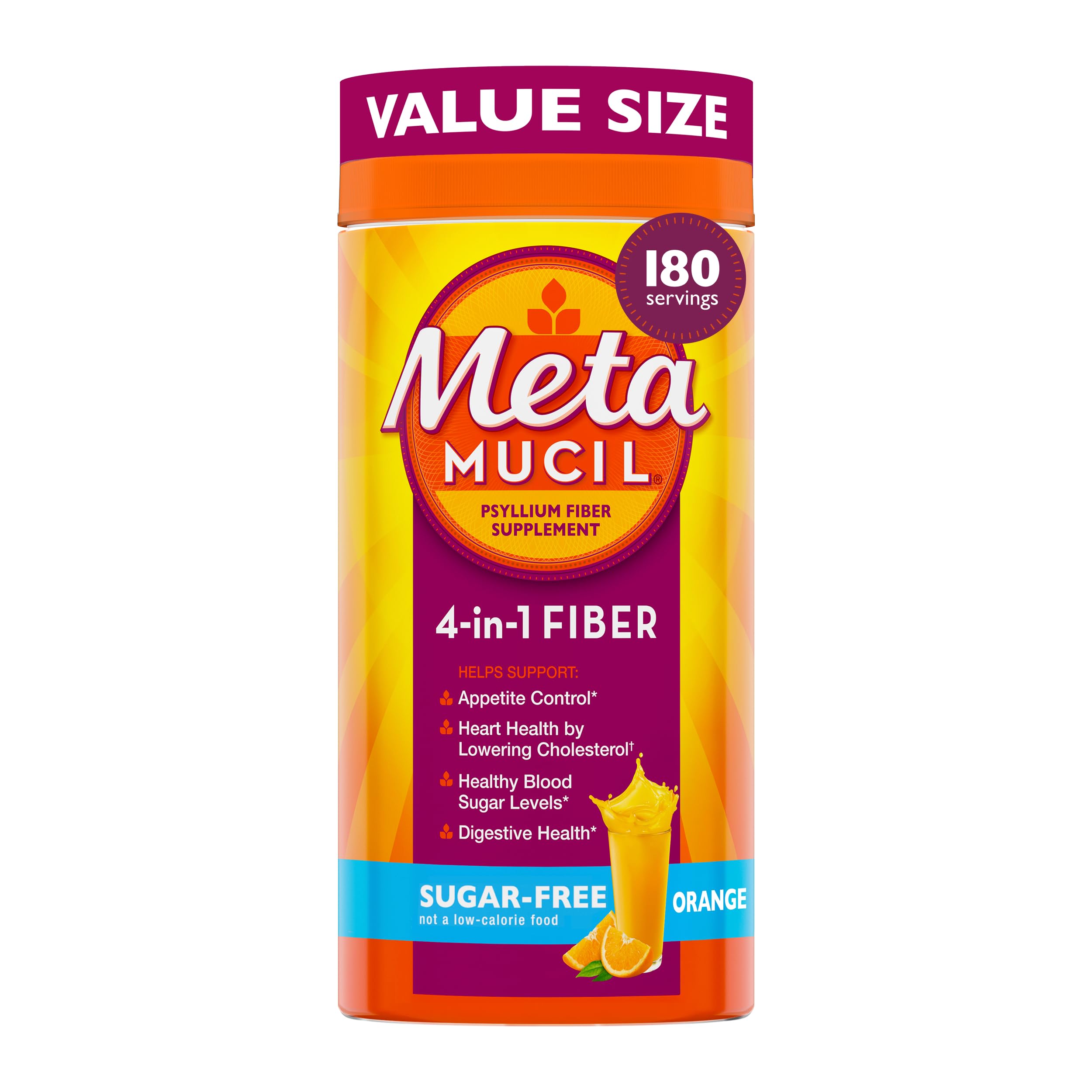
Metamucil Psyllium Fiber Powder

Daily psyllium powder

Our Score 9.4/10
Check Price

Worth Noting

  • Contains aspartame and maltodextrin
Form
Sugar-free powder
Flavor
Orange
Supply
180 teaspoons
Fiber Type
Psyllium husk
Read the full review

The first thing we noticed about this Metamucil tub is how many servings it holds: 180 teaspoons, which means you can start with a partial spoon and work up rather than committing to a fixed capsule or gummy count. That flexibility matters during pregnancy, when nausea and appetite can change week to week. The orange flavor is sweet-tart and genuinely drinkable, closer to a thin citrus drink than the chalky psyllium powders we've tried.

Mixing is the part to get right. Psyllium starts to thicken as soon as it hits water, so we stir it into a full glass and drink promptly; let it sit and you get a gel that's much harder to finish. The powder is fine enough to disperse without a shaker, but it can leave a slight texture at the bottom if you sip slowly. For a pregnant shopper dealing with constipation, the bulking action is the point—this is a fiber supplement, not a stimulant laxative—and the label's 4-in-1 claims are the usual psyllium benefits, not a pregnancy-specific promise.

We keep coming back to this one because it's the easiest psyllium powder to fit into a routine: measure, stir, drink, done. The big tub also means fewer reorders, which is one less thing to think about. If you want an unsweetened, single-ingredient psyllium instead, NOW Whole Psyllium Husks is the cleaner-label alternative; if you can't face a drink, the capsules below are the better route.

Bottom line: With your provider's OK, this is our default fiber powder: a big psyllium tub, flexible dosing, and an orange flavor that makes the daily habit easier.

#2

Benefiber On-the-Go Packets

Benefiber On-the-Go Packets

Travel and nausea

Our Score 9.4/10
Check Price

Worth Noting

  • Wheat dextrin may cause gas
  • Higher cost per serving than powder
Form
Unflavored stick packs
Count
28 stick packs
Dissolves
Clear in non-carbonated drinks
Fiber Type
Wheat dextrin
Read the full review

A stick pack earns its place in a bag. These Benefiber packets are pre-measured, unflavored, and dissolve clear in non-carbonated drinks, so you can stir one into water or a smoothie without turning it into a science project. That matters when you're traveling, working, or just too queasy to face a flavored powder. We like that there's no grit and no aftertaste; the fiber is wheat dextrin, a plant-based prebiotic fiber, so it's a different approach from psyllium.

The trade-off is that wheat dextrin is not psyllium. It feeds gut bacteria rather than bulking in the same way, so it suits a different job. Check the nutrition panel for grams per packet and count the serving against your provider's target. If you need a high-dose bulking fiber, a tablespoon of psyllium is more straightforward.

For travel and for anyone who gags at thick drinks, though, the convenience is hard to beat. Toss a few packets in a purse or carry-on, add them to a cold drink, and you're done. We keep these as the travel pick rather than the everyday default because the format is the point. If your provider has okayed wheat dextrin and you want zero fuss, this is the one.

Bottom line: The unflavored stick packs are the easiest fiber to carry and hide in a drink, which makes them our travel pick—just confirm the wheat dextrin fits your diet.

#3

Kirkland Fiber Capsules

Kirkland Fiber Capsules

Bulk capsule supply

Our Score 9.4/10
Check Price

Worth Noting

  • Several capsules per serving
  • Basic label with fewer certifications
Form
Capsules
Count
360 capsules
Fiber Type
Psyllium
Read the full review

The 360-count bottle is the headline. Kirkland's fiber capsules are a bulk buy, plain and simple, and the lower upfront cost is why they earn a place here. They compare to the active ingredient in Metamucil capsules, so the job is familiar psyllium fiber in a swallowable form.

There's no flavor and no mixing, which is the point. We take them with a full glass of water, and we spread the dose rather than swallowing a handful at once. The capsules are not tiny, and a serving can mean several of them, so this is not the form for someone who hates pills. But if you already take a handful of supplements, adding a few more is not a dealbreaker.

The label is sparse compared with the premium brands. You don't get the same detailed ingredient story or the non-GMO callouts that NOW and Metamucil provide, and the bottle is basic. What you do get is a large supply of psyllium capsules that does the same bulk-forming job, which is what matters if you're restocking a daily habit.

We keep Kirkland as the budget capsule pick rather than the overall winner because the experience is utilitarian: no taste, no fuss, no extras. For a pregnant shopper who wants to keep the cost down and has already cleared psyllium with a provider, it's a sensible bulk buy. If you want a smaller bottle or more detailed certifications, NOW's 500-count capsules are the upgrade.

Bottom line: A no-frills psyllium capsule in a big 360-count bottle, best for shoppers who want a low upfront cost and don't mind several pills.

#4

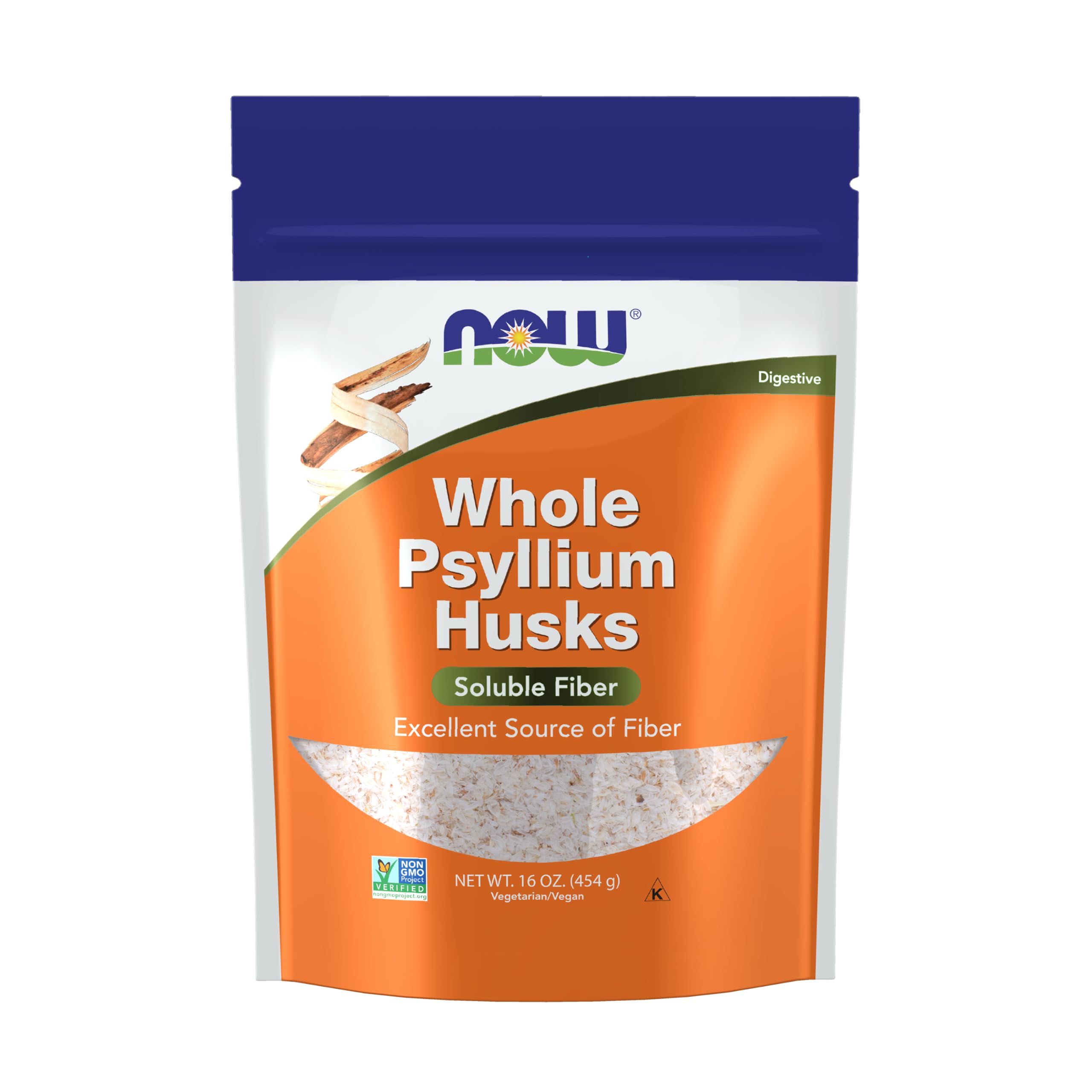
NOW Whole Psyllium Husks

NOW Whole Psyllium Husks

Unsweetened psyllium powder

Our Score 9.2/10
Check Price

Worth Noting

  • Gritty, earthy texture
  • Thickens fast; drink immediately
Supply
16 oz
Fiber Type
Psyllium husk
Fiber Per Serving
6 g soluble
Water Per Serving
12 oz
Read the full review

The ingredient list is the reason to choose this one: it's whole psyllium husk, nothing else. For a pregnant shopper who is already reading every label, that simplicity is appealing. A level tablespoon supplies 6 grams of soluble fiber, and the 16-ounce bag gives you a long runway to adjust the spoon up or down. There's no orange flavor, no aspartame, no maltodextrin—just the earthy, slightly grainy husk.

That lack of flavor is not the same as no taste. Psyllium has a mild, woody flavor, and this version is coarser than the finely milled powders, so it can feel sandy at the bottom of the glass. We mix it with at least 12 ounces of water, stir hard, and drink immediately; waiting even a minute makes it thicker. If you're prone to nausea, a gritty drink is a real hurdle, and the stick packs or capsules are easier.

Where it wins is cost per serving and control. You're not paying for flavoring or single-serve packaging, and you can stir a smaller spoon into a smoothie or oatmeal if a plain glass is too much. The trade-off is that you have to be deliberate about the water and the timing, which is exactly why it's our runner-up rather than the top pick. For an additive-free psyllium at a low per-serving cost, it's the one we reach for.

Bottom line: For shoppers who want a bare psyllium husk with no sweeteners or extras, this is the pick—just be ready to drink it fast and follow the 12-ounce water instruction.

#5

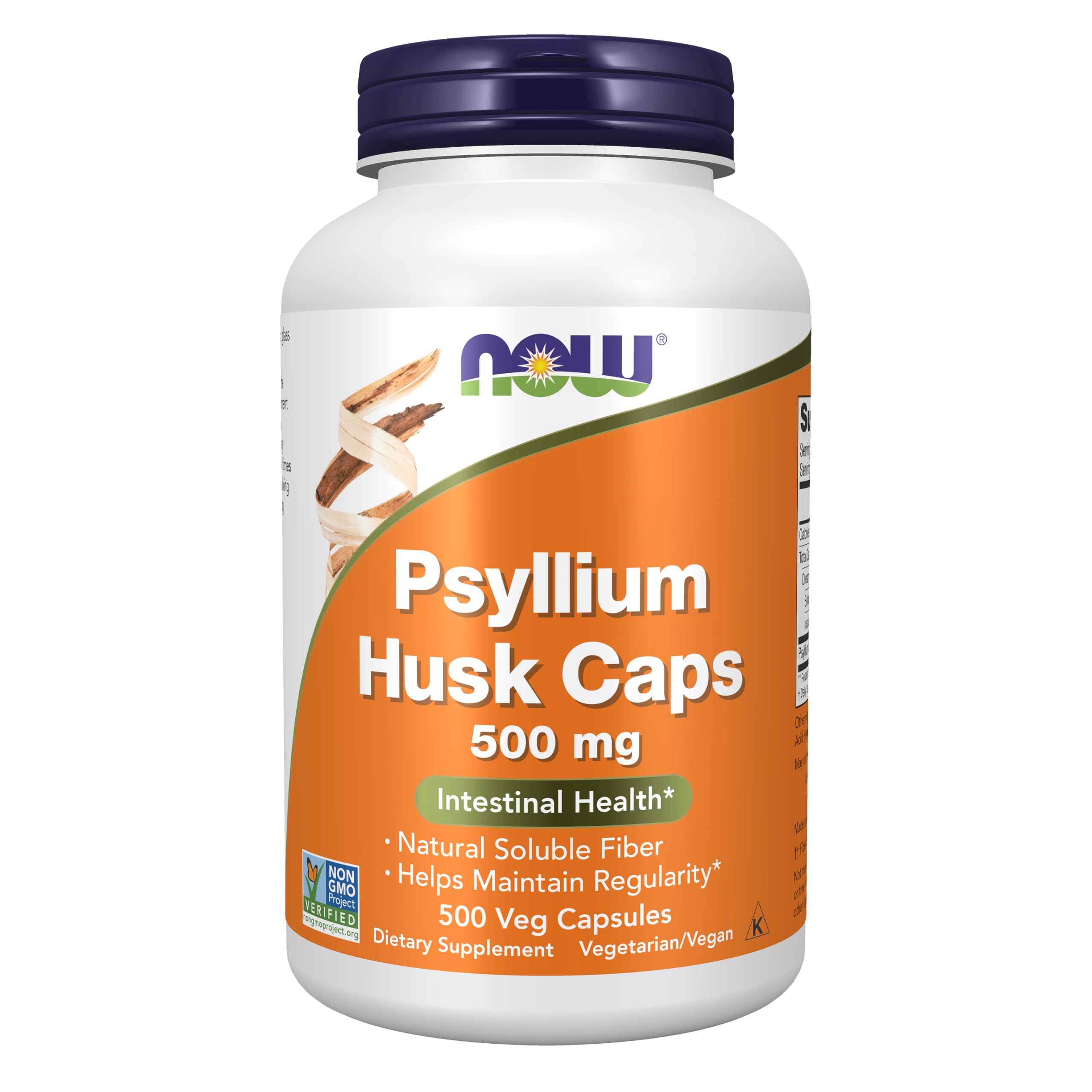
NOW Psyllium Husk Capsules

NOW Psyllium Husk Capsules

Taste-free capsules

Our Score 9.2/10
Check Price

Worth Noting

  • Requires several capsules per serving
  • Needs a full glass of water each time
Count
500 veg capsules
Fiber Type
Psyllium husk
Certifications
Non-GMO, vegan, gluten-free
Capsule Strength
500 mg
Read the full review

No scoop, no glass of orange gel, no flavor. That's the appeal of these NOW capsules: you swallow them with water and get on with your day. Each capsule is 500 milligrams of psyllium husk, and the bottle holds 500 vegetarian capsules, so you can build a dose gradually instead of committing to a full scoop. For a pregnant shopper whose nausea flares at certain smells, that can be the difference between taking fiber and skipping it.

The catch is the pill count. Psyllium is bulky, and 500 milligrams per capsule means a serving can run to several capsules. We spread ours across the day and take them with a full glass each time; dry-swallowing is not an option with psyllium. The capsules are non-GMO, vegan, gluten-free, and kosher, which is a useful label set if you're already screening supplements.

What we appreciate most is the control. If a full serving feels like too much, you can take fewer capsules and build up, which is helpful when your digestion is already unpredictable. The trade-off is that you're paying for convenience and swallowing a handful of pills, and the effect still depends on water and consistency. For anyone who cannot face a psyllium drink, this is the capsule we recommend; for the lowest cost per serving, the bulk powder is better.

Bottom line: These capsules are the pick when taste and mixing are the barrier, with 500 veg caps that let you spread doses—though you'll need several pills and plenty of water.

#6

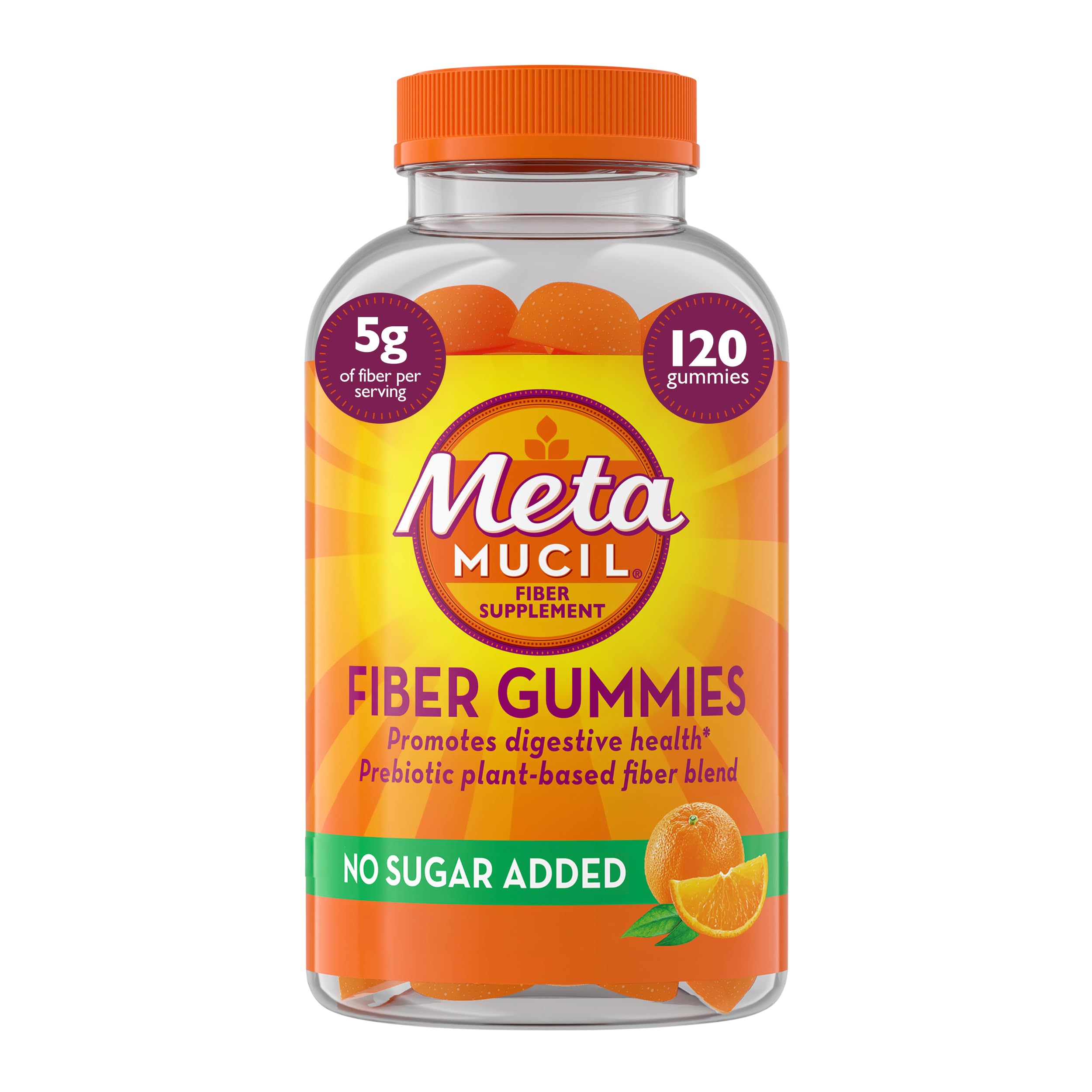
Metamucil Fiber Gummies

Metamucil Fiber Gummies

Easy gummy fiber

Our Score 9.2/10
Check Price

Worth Noting

  • Gummies clump in the jar
  • Inulin can cause gas
Count
120 gummies
Flavor
Orange, no sugar added
Fiber Type
Inulin and soluble corn fiber
Fiber Per Serving
0.18 oz
Read the full review

The first thing we noticed about these Metamucil gummies is the texture: soft, chewy, and closer to a fruit snack than the hard, rubbery fiber gummies we've tried. The orange flavor is bright and slightly tart, with no medicinal aftertaste, and each gummy delivers part of a 5-gram fiber blend made from inulin and soluble corn fiber. For anyone who dreads a chalky drink, that's a real advantage.

Inulin is the other thing to watch. It feeds gut bacteria, which is the prebiotic point, but it behaves differently from psyllium. We take a smaller portion for the first few days and drink plenty of water. The no-sugar-added formula is a plus, but it is not a low-calorie food, and the gummies are still candy-like enough to keep out of a child's reach.

For a pregnant shopper who can't face a powder, these are the gummy we recommend: pleasant to chew, easy to count, and a full 5 grams of fiber per serving. The trade-off is that you're relying on a form with more added ingredients than plain psyllium. If you want the simplest label, go with the whole husks; if you want a gummy that tastes good, this is it.

Bottom line: A 5-gram fiber gummy with no added sugar and a genuinely good orange flavor, though the jar can clump and inulin may bring gas.

#7

Benefiber Fiber Gummies

Benefiber Fiber Gummies

Large gummy bottle

Our Score 9.2/10
Check Price

Worth Noting

  • Inulin can cause gas
  • Higher cost per serving than psyllium
Form
Gummy
Count
126 gummies
Flavor
Citrus berry
Fiber Type
Inulin
Read the full review

The 126-count bottle is the reason to look at these over the smaller gummy jars. Benefiber's citrus berry gummies are soft, easy to chew, and flavored more like a fruit candy than a supplement, with inulin as the plant-based prebiotic fiber. If you're already taking a gummy vitamin, adding a fiber gummy to the same routine is low friction.

Inulin is the trade-off. It feeds gut bacteria, which is the prebiotic idea, but it behaves differently from psyllium. The gummies can be sticky or hard depending on the batch, and the bottle does not give you a simple psyllium dose. We start with a smaller amount and keep water nearby.

What we like is the format: a larger bottle, a pleasant flavor, and a soft chew that doesn't feel like a chore. What keeps it in the also-consider tier is that inulin is not the bulk-forming fiber some pregnant shoppers are looking for. If you want a gummy with a bigger supply and don't mind paying for the format, it's a solid choice.

Our reservation is the cost per serving. Gummies are convenient, but the bottle goes faster than a tub of powder, and the sticky texture can vary from jar to jar. For a pregnant shopper who has cleared inulin with a provider and wants a gummy that lasts longer between orders, this is the one we point to. For the most fiber for the money, the psyllium picks are better.

Bottom line: A big 126-count bottle of soft, fruity inulin gummies for shoppers who want a gummy with a larger supply, though the price per serving is high.

#8

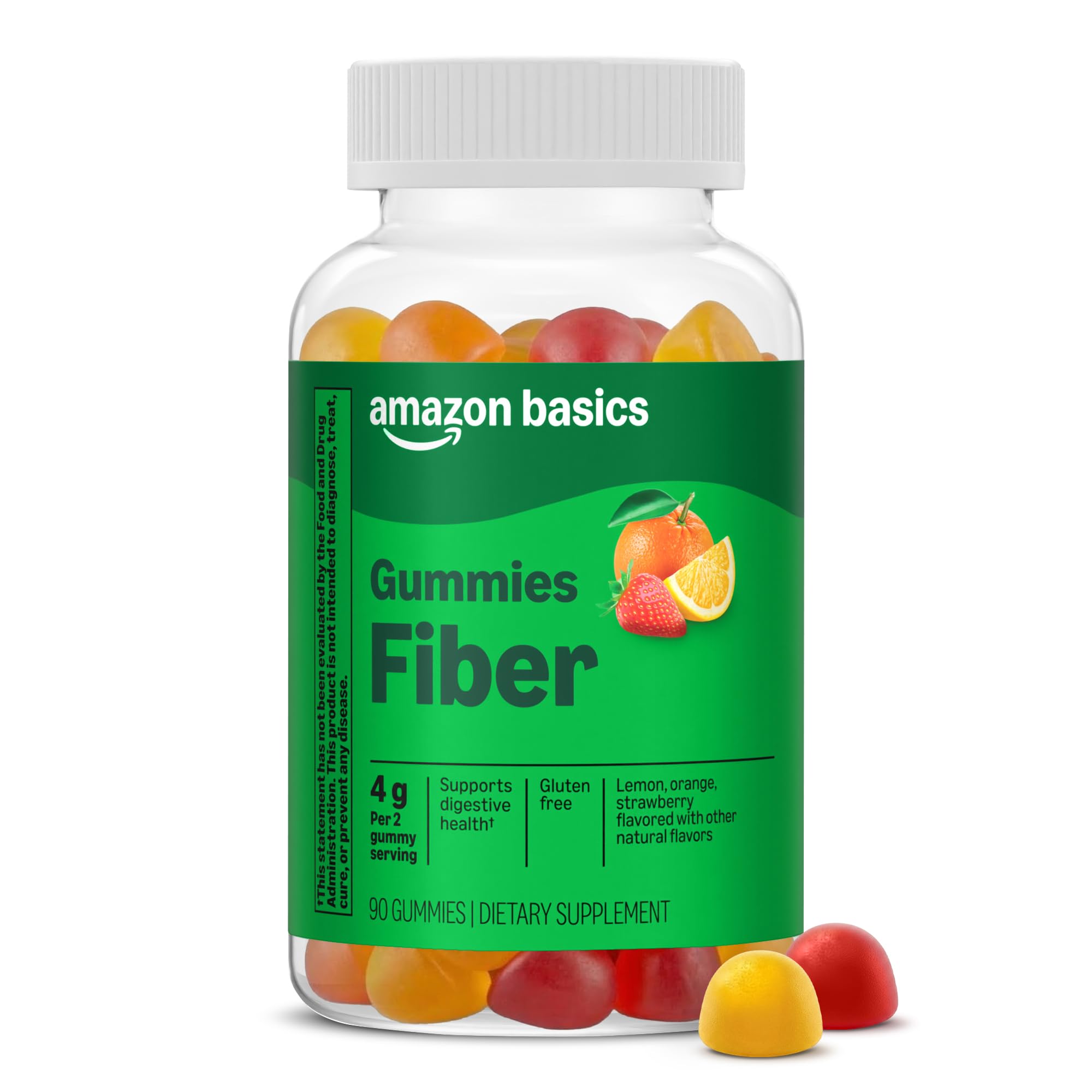
Amazon Basics Fiber Gummies

Amazon Basics Fiber Gummies

Budget gummy

Our Score 9.0/10
Check Price

Worth Noting

  • Inulin can cause gas
Count
90 gummies
Dietary
Vegetarian, gluten-free
Fiber Type
Chicory root inulin
Fiber Per Serving
0.14 oz
Read the full review

The price is what gets these into the cart, but the texture is why we keep them on the list. Amazon Basics' fiber gummies are soft and easy to chew, with orange, lemon, and strawberry flavors that taste like a generic fruit snack. Two gummies provide 4 grams of fiber from chicory root inulin, and the bottle holds 90, so it's a low-commitment way to see whether a gummy fits your routine.

The formula is vegetarian, gluten-free, and colored with turmeric, black carrot juice, and annatto rather than synthetic dyes. That's a nice detail if you're screening labels. The catch is the inulin: it behaves differently from psyllium, so we begin with one gummy and work up, and we keep them out of reach of children because they look like candy.

For a budget gummy, the trade-offs are reasonable. You're not getting a high fiber dose per gummy, and the texture can vary from soft to slightly firm depending on the batch, but the flavor is pleasant and the count is generous. If you want a gummy with more fiber per serving, Metamucil's 5-gram version is the step up; if you want the lowest upfront cost, this is the one.

Bottom line: A soft, fruity 4-gram fiber gummy at the lowest upfront cost here, though it can bring gas and the serving is two gummies.

How We Tested Fiber Supplements for Pregnancy

We started with more than 30 fiber supplements sold in drugstores, grocery aisles, and online, then narrowed the list to 14 based on fiber type, fiber per serving, added sweeteners, third-party testing, and cost per serving. We ruled out anything with a stimulant laxative herb or a label that was vague about how much fiber one scoop actually delivered.

For four months, a panel that included pregnant and postpartum testers mixed each supplement into 12 ounces of water at the kitchen counter and into oatmeal or a smoothie at breakfast, following the label's directions but starting with half a scoop for the first three days. We stirred for 10 seconds, waited five minutes, and noted whether the liquid turned uniform or formed clumps and a gel layer at the bottom; we also recorded whether it was gritty, slimy, chalky, or thin. Taste got judged plain and masked, because a powder that only works in a heavy smoothie is a powder you stop using.

Digestive effects were tracked in a simple daily log for the first week of each product—gas, bloating, cramping, and whether things moved without urgency—and we noted which formulas were easier on the stomach at a half dose versus a full one. We also weighed each scoop on a kitchen scale and compared the actual grams to the label, then calculated the cost per serving of fiber rather than the sticker price of the tub. The products that advanced were the ones testers kept reaching for after the novelty wore off.

How to Choose a Fiber Supplement During Pregnancy

Start With the Fiber Type

Psyllium is the bulk-forming fiber in Metamucil and NOW's powders and capsules; it absorbs water and adds volume to stool, which is why it is the most direct choice when constipation is the main complaint. Wheat dextrin in Benefiber's packets and inulin in many gummies work more as prebiotics, feeding gut bacteria rather than bulking. Neither is better in every situation: psyllium needs more water and can feel thick, while inulin is easier to chew but can be gassier. We start with the job you need done.

Match the Form to Your Symptoms

Powders are the most adjustable and usually the lowest cost per serving, but they require measuring, stirring, and a glass you can finish quickly. Capsules remove taste and mixing but can mean several pills per serving. Gummies are the easiest to take when nausea makes smells and textures a problem, though they are less flexible on dose. Stick packs are the travel answer: pre-measured, unflavored, and easy to toss in a bag. If your priority is simply to keep taking fiber, choose the form you will actually use.

Read the Sweetener and Additive List

Sugar-free does not mean additive-free. Metamucil's sugar-free powder uses aspartame and maltodextrin, which some pregnant shoppers prefer to avoid; plain psyllium husks or unflavored packets skip those ingredients. Gummies can carry inulin, sugar alcohols, or natural colors, and the serving may be two or three pieces. Check the nutrition panel and the ingredient list against what you already tolerate. If you are sensitive to artificial sweeteners or fermentable fibers, a single-ingredient psyllium is the simpler starting point.

Start Low and Drink Enough Water

Fiber supplements work best when you ease in. Start with half the labeled serving for a few days, then increase toward the amount your provider suggests. Psyllium in particular needs a full glass of water—NOW's label specifies at least 12 ounces per tablespoon—and you should drink it promptly before it thickens. Take fiber at a consistent time, and if you also take a prenatal vitamin or a daily prescription, ask a pharmacist about spacing. More fiber is not better if it leaves you bloated or dehydrated.

Compare the Serving Count

A big tub of psyllium looks expensive up front but can be the lowest cost per serving; a 120-count gummy bottle may disappear in a month if the serving is three gummies. Check how many servings the package actually contains, not just the total count. Capsules are the same story: 500 capsules sounds generous until a serving is several pills. We compare cost per serving, but we also weigh convenience—if the cheaper format sits in the pantry because you dread it, it is not the better buy.

Frequently Asked Questions

Final Verdict

With your provider's OK, our pick for most pregnant shoppers is Metamucil's sugar-free psyllium powder. The 180-teaspoon tub lets you start with a partial spoon, the orange flavor is easy to drink, and psyllium is the most direct bulk-forming option here.

If you want a shorter ingredient list, choose NOW Whole Psyllium Husks; if mixing a drink is the obstacle, NOW's capsules or Benefiber's stick packs are the easier habit.