Nutrition & Supplements

Best Fiber Supplements of 2026

Fiber supplements have a reputation problem, and honestly, most of it is earned: gritty powder that turns a glass of water into something like wet sand, and a first week of bloating that sends the tub to the back of the cabinet for good. But the payoff is real. Most of us get roughly half the fiber we need from food alone, and a supplement closes that gap without rebuilding every meal. The right one dissolves cleanly, tastes like something you'd actually finish, and settles your digestion instead of stirring it up.

Over the past eight weeks, my team and I have worked through 12 fiber supplements — powders, gummies, capsules, and a couple of chewables — stirring them into our morning water, chewing them at our desks, and keeping notes on what our stomachs did afterward. The thing that surprised me most is that dose and tolerance are not the same thing. A big scoop of fiber does nothing for you if you dread drinking it or if it leaves you doubled over by day three, and the labels rarely help you tell the difference. Here's what earned a permanent spot on the counter.

#1

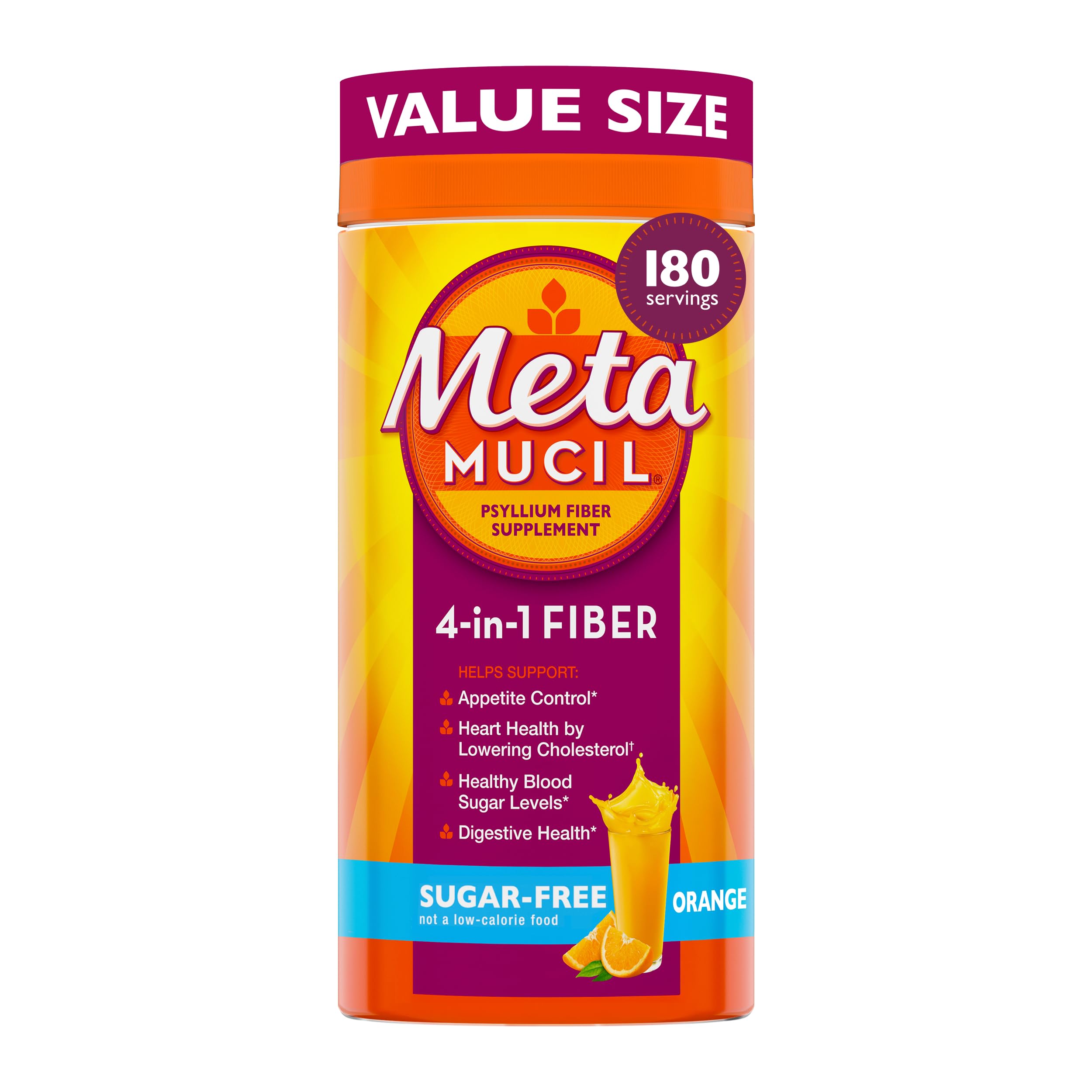
Metamucil 4-in-1 Psyllium Powder

Top Pick
Metamucil 4-in-1 Psyllium Powder

Daily regularity

Our Score 9.4/10
Check Price

Worth Noting

  • Contains aspartame and maltodextrin
Format
Orange powder
Servings
180 teaspoons
Sweetener
Sugar-free
Fiber Source
Psyllium husk
Read the full review

The orange flavor is the first thing you notice, and it's a big part of why this powder is easy to keep in the rotation. The tub holds 180 teaspoons, so it's built for a daily habit rather than a trial. We like that it's sugar-free and still tastes like a drink mix rather than a supplement.

It earns the top spot here because it combines that large supply with psyllium husk, the fiber that forms a gel in the gut and is most often used for regularity. The label also ties the fiber to digestive health, cholesterol, blood sugar, and appetite support, which gives it a broader role than a plain bulking agent. For a first fiber powder, that combination is hard to argue with.

The texture is the catch: it starts to gel as soon as it hits water, so stir hard and drink immediately. A shaker bottle helps, and so does measuring the water first. If you sip it slowly, the last third can feel like a chore. The label is also clear that it's not a low-calorie food, so don't treat it as a free drink. We keep the tub for mornings when we want a full serving without counting capsules.

Bottom line: We recommend Metamucil's orange psyllium powder as the everyday default for a large, affordable supply, provided you don't mind drinking it before it thickens.

#2

Benefiber On-the-Go Stick Packs

Benefiber On-the-Go Stick Packs

Travel and work

Our Score 9.4/10
Check Price

Worth Noting

  • Not a bulk-forming psyllium fiber
Count
28 packets
Flavor
Unflavored
Format
Stick packs
Fiber Source
Wheat dextrin
Read the full review

A stick pack disappears into coffee without leaving grit, film, or a flavor that announces itself. That's the whole case for Benefiber's On-the-Go packs: 28 pre-measured doses of wheat dextrin that you can stir into water, yogurt, or a hot drink and forget about. That portability is why it's our travel pick.

The trade-off is the serving count. Twenty-eight sticks is a month of daily use, not a bulk stash, and you're paying for the individual packaging. If you're home every day and don't mind a scoop, a tub is the better value. But for a work bag, a carry-on, or a desk drawer, the packet is the reason the habit survives.

Wheat dextrin is a prebiotic fiber, so it dissolves clear and feeds the good bacteria in your gut rather than forming a thick gel. The packet opening is narrow enough to pour into a water bottle without a funnel, which small detail matters when you're mixing on the go. The texture-free approach is the draw; the wrapper waste is the annoyance. For anyone who has abandoned fiber because of grit, this is the easiest restart.

Bottom line: We recommend Benefiber's stick packs for travel and desk drawers, where tasteless, pre-measured fiber is worth more than a bulk tub.

#3

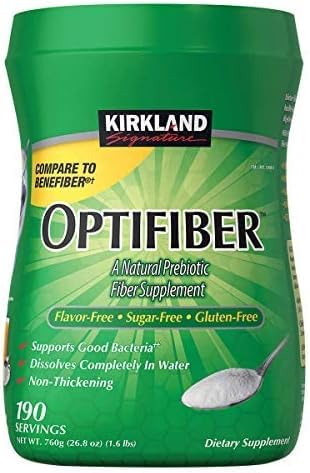
Kirkland Signature Optifiber

Kirkland Signature Optifiber

Bulk household use

Our Score 9.4/10
Check Price

Worth Noting

  • Two-tub commitment
Pack
2 tubs
Format
Powder
Servings
190 servings
Key Feature
Grit-free, non-thickening
Read the full review

The first thing to know about Kirkland Optifiber is that it's really two tubs, and the second is that 190 servings is not a typo. That package is the reason it ranks as the bulk-value pick for a household that already uses fiber every day. It's non-thickening and grit-free, and it dissolves completely in warm liquids.

Coffee and tea are the easy route. Cold water is less reliable: the powder can stick to the spoon and the glass, so you need to stir longer or use a shaker. We found the warm-drink route so much easier that we keep the tub next to the kettle, not the water filter. Each tub is 25.6 ounces, so storage matters, but the powder is light and doesn't cake the way psyllium can.

The listing doesn't name the fiber source as clearly as we want, so if you need psyllium specifically, choose a product that says so on the label. For a tasteless daily top-up in coffee, the serving count is the draw.

Bottom line: We recommend Kirkland Optifiber for households that want a tasteless, high-count powder and will use it daily in coffee or tea.

#4

Kirkland Signature Fiber Capsules

Kirkland Signature Fiber Capsules

Bulk capsule stash

Our Score 9.4/10
Check Price

Worth Noting

  • May cause stomach upset
Dose
0.52 grams per capsule
Count
720 capsules
Format
Capsules
Fiber Source
Psyllium husk
Read the full review

Two bottles of 360 capsules is a bulk-buy statement, and the price per capsule is the reason to consider it. Each capsule contains about 0.52 grams of psyllium husk, and the pack compares directly to Metamucil capsules. If you already take psyllium daily, this is a lot of doses in one order.

We like the no-taste, no-mixing format, and the two-bottle pack is easy to split between a bedroom and a kitchen. The trade-off is pill volume: you may take several capsules at a time, and 720 capsules can go faster than the bottle count suggests. That's the same math as any psyllium capsule.

The bigger issue is commitment. You're buying two bottles before you know how you tolerate psyllium. Begin with a smaller number than the label calls for and take it with a full glass of water. It's a bulk option for confirmed capsule users, not a first purchase.

Bottom line: We recommend Kirkland fiber capsules for committed psyllium users who want a two-bottle stash and a no-frills capsule routine.

#5

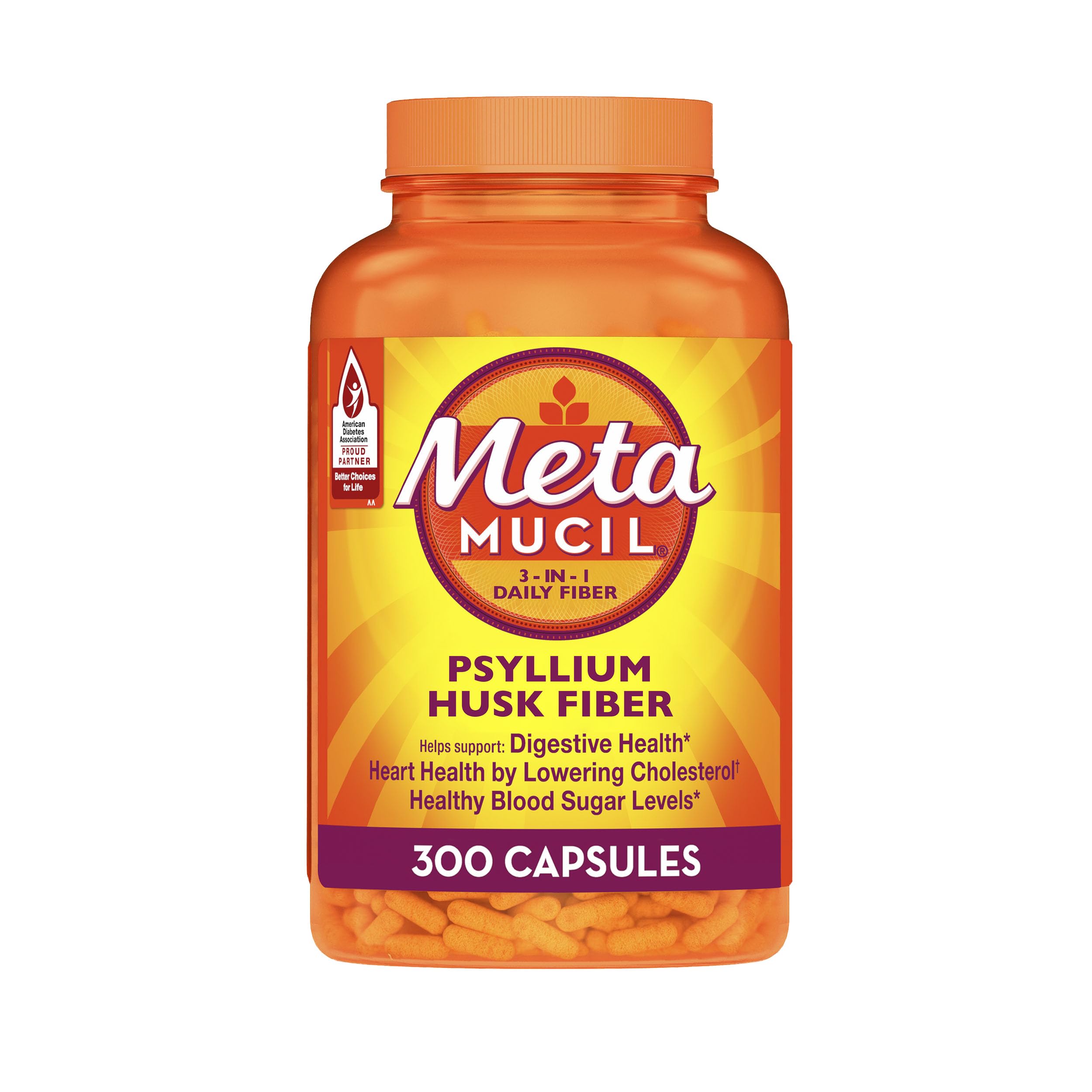
Metamucil Psyllium Capsules

Metamucil Psyllium Capsules

No-mix routine

Our Score 9.2/10
Check Price

Worth Noting

  • Multi-capsule serving
Count
300 capsules
Format
Capsules
Key Feature
No mixing required
Fiber Source
Psyllium husk
Read the full review

No scoop, no orange drink, no grit—the capsule version is for people who want fiber to be invisible. The bottle holds 300 capsules, and each one is psyllium husk, so you get the same fiber source as the powder without measuring or mixing. We like it for a work bag or a pill organizer.

The capsules are easy to swallow and have no taste. They're the least fussy way to take psyllium at work, and they pack into a pill organizer better than a tub of powder. At 8.8 ounces, the bottle is compact enough for a lunch bag, which helps on days when you're not at your own kitchen counter. For us, that's the reason to choose them over the powder on a busy morning.

Take them with a full glass of water, and don't expect the capsule to do anything the fiber doesn't; it's still psyllium, so the same gradual start applies. We keep this as the no-mix option for people who already have a pill habit.

Bottom line: We recommend Metamucil capsules for people who want psyllium without a drink and prefer a no-mix routine they can keep in a bag.

#6

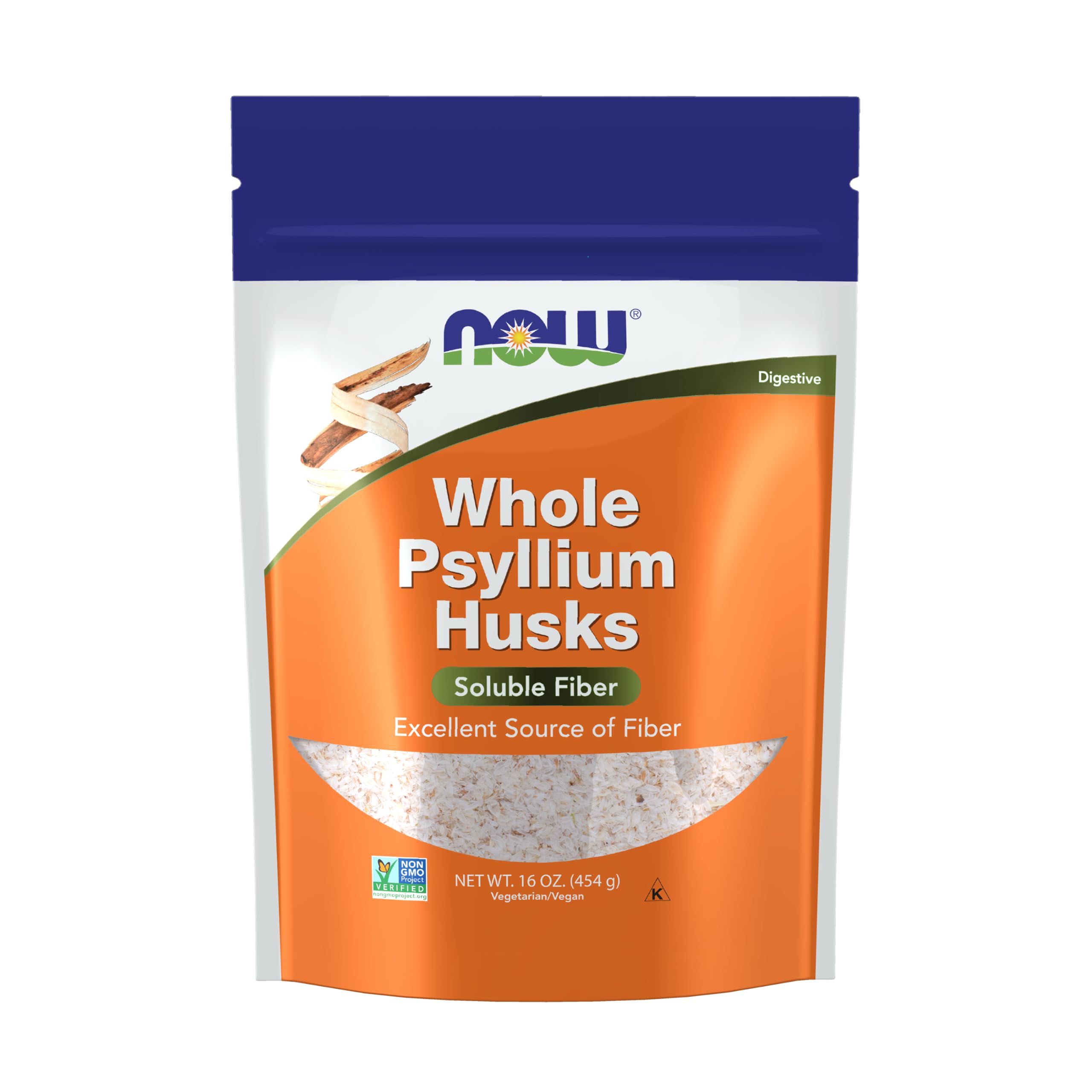
NOW Whole Psyllium Husks

NOW Whole Psyllium Husks

Plain bulk powder

Our Score 9.2/10
Check Price

Worth Noting

  • Earthy flavor can linger
Size
16 oz
Format
Whole husks
Fiber Source
Psyllium husk
Soluble Fiber
6 grams per serving
Read the full review

The directions are the review: one level tablespoon into at least 12 ounces of water, mixed hard and drunk immediately. That's not a suggestion with whole psyllium husks. The 16-ounce bag is plain, unflavored fiber with 6 grams of soluble fiber per serving, and it has no sweetener, color, or orange flavor to hide behind.

This is the plain-powder pick for people who already know they like psyllium. It's the least expensive way here to buy a big bag of the fiber, and the short ingredient list is the point. The texture is the trade-off: it's gritty, and it thickens fast enough that a slow sip turns into a chore. A shaker bottle and a chaser of water make it more manageable.

The bag is resealable, which matters because a 16-ounce bag lasts a while, and it's also fine in smoothies or baked goods if you don't want to drink it plain. If you're new to psyllium, start with less than the full tablespoon and work up; the 12-ounce liquid minimum is there for a reason. We don't reach for this one when we want a pleasant drink, but we do reach for it when we want plain fiber without additives.

Bottom line: We recommend NOW whole psyllium husks for plain-fiber loyalists who want a big bag and a short ingredient list they can mix themselves.

#7

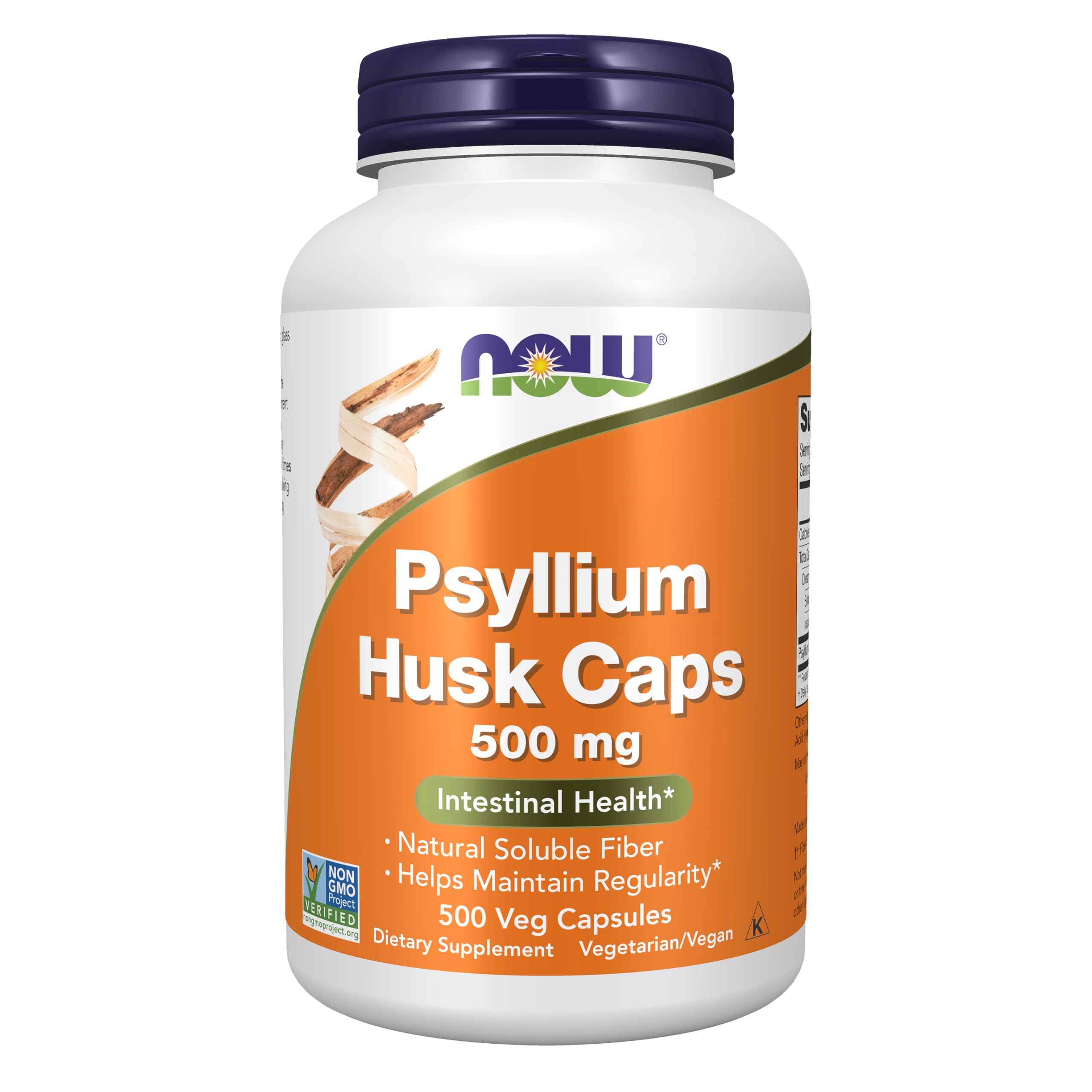
NOW Psyllium Husk Caps

NOW Psyllium Husk Caps

High-count capsules

Our Score 9.2/10
Check Price

Worth Noting

  • May cause stomach upset
Dose
500 mg per capsule
Count
500 capsules
Format
Capsules
Fiber Source
Psyllium husk
Read the full review

A 500-count bottle sounds like a year's supply until you read the serving size. These are 500 mg psyllium husk capsules, and the bottle is built for a multi-capsule routine. The capsules are easy to swallow, have no taste, and carry the non-GMO, vegan, kosher, and gluten-free certifications that make NOW a familiar name in supplements.

The appeal is no grit, no orange flavor, no mixing. We like it for a desk drawer or a gym bag because there's nothing to spill. The capsules are small enough to take without drama, and the bottle is a serious stash for someone who already has a capsule habit.

The trade-off is pill volume: the 500-count bottle is less generous than it looks, and you may take several at a time. If you're new to psyllium, start smaller than the label and take it with a full glass of water. It's a high-count option for people who already tolerate psyllium, not the gentlest first step.

Bottom line: We recommend NOW psyllium capsules for value-minded buyers who already tolerate psyllium and want a big, no-frills bottle for a capsule routine.

#8

Benefiber Fiber Gummies

Benefiber Fiber Gummies

Soft chew

Our Score 9.2/10
Check Price

Worth Noting

  • Multi-gummy serving
  • May cause gas or bloating
Count
126 gummies
Flavor
Citrus berry
Format
Gummies
Fiber Source
Inulin
Read the full review

Benefiber's gummies are the softest chew in this group, which matters more than it sounds. The 126-count bottle is citrus-berry flavored and made with inulin, a plant-based prebiotic fiber. If firm gummies have put you off before, this is the texture to try first.

Softness is the selling point here, and the citrus-berry flavor is bright without tasting medicinal. They're a pleasant daily habit, which is more than we can say for every fiber supplement. The bottle is big enough to keep in a pantry and not think about for a while.

Start with one gummy and build up; the full serving is not the place to begin if you're new to inulin. We rank these as the soft-chew option for people who want a gummy they can actually finish, not the most economical way to buy fiber.

Bottom line: We recommend Benefiber gummies for anyone who wants a soft, fruit-flavored chew that makes a daily fiber habit feel less like one.

#9

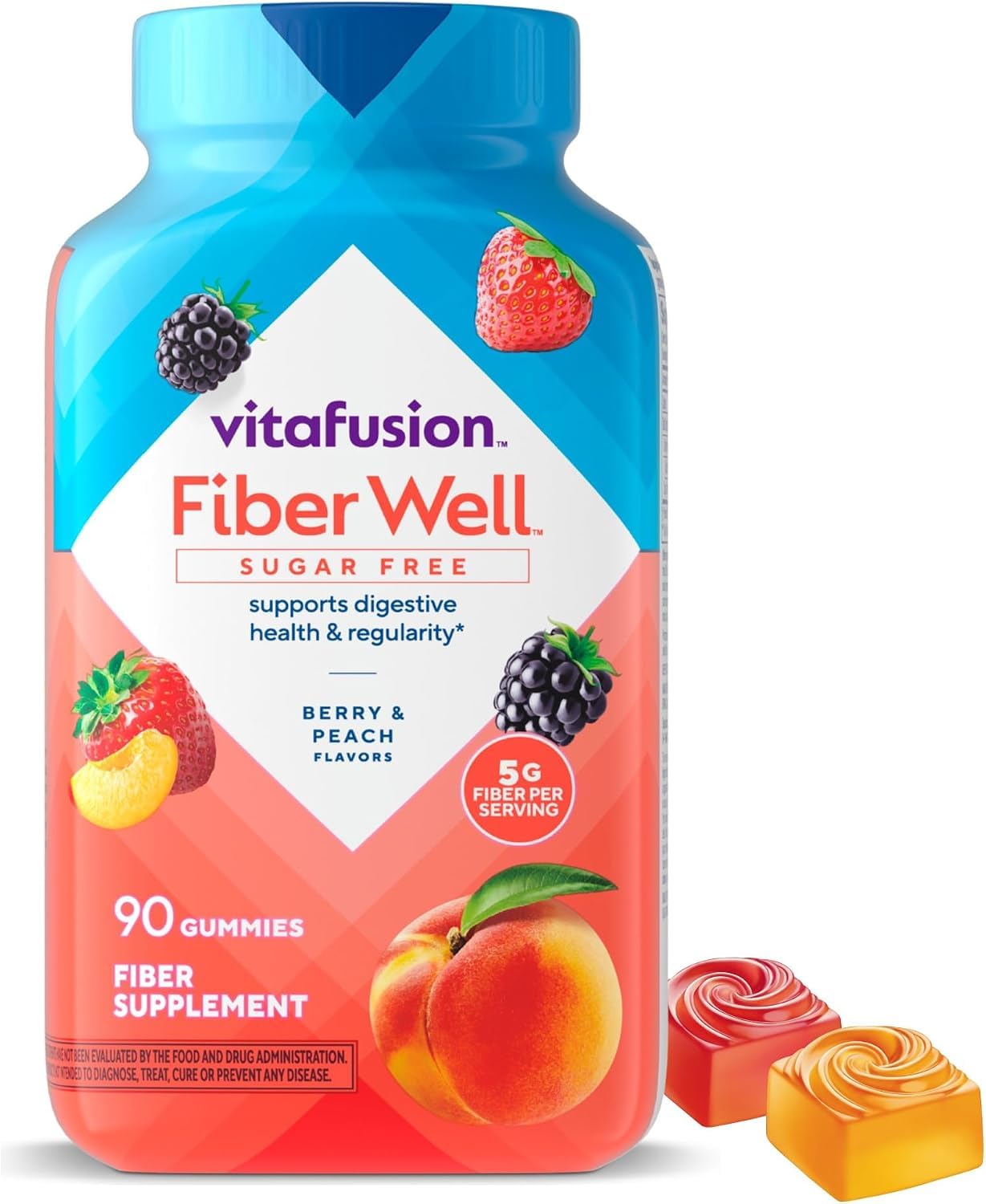
Vitafusion FiberWell Gummies

Vitafusion FiberWell Gummies

No-sugar gummy

Our Score 9.0/10
Check Price

Worth Noting

  • May cause gas or stomach cramps
Count
90 gummies
Sugar
0 grams
Flavors
Berry and peach
Fiber Per Serving
0.18 oz
Read the full review

Two gummies is a low bar until you actually chew them. FiberWell's serving is just two gummies, with 5 grams of prebiotic fiber and no sugar, which sounds like the easiest fiber habit on this list. The bottle holds 90 gummies, or 45 days at the labeled serving.

The no-sugar formula and berry-peach flavor are easy to get behind, and the two-a-day rhythm is easier to remember than a scoop. The gummies are made without gluten, high-fructose corn syrup, dairy, and synthetic FD&C dyes, which is a cleaner label than many chews. The texture is where it loses us: the gummies are firm and chewy, and they take a while to break down. If you have trouble with hard gummies, the Amazon Basics or Benefiber chews are softer.

The 45-day supply assumes two gummies a day, so a household with two people will go through it twice as fast. If you're new to fiber, start with one gummy for a few days before moving to the full serving. It's an easy format to remember, but the chew is the thing to get past.

Bottom line: We recommend FiberWell gummies for a no-sugar, two-a-day option when pill fatigue is the barrier and you want fiber to taste like a treat.

#10

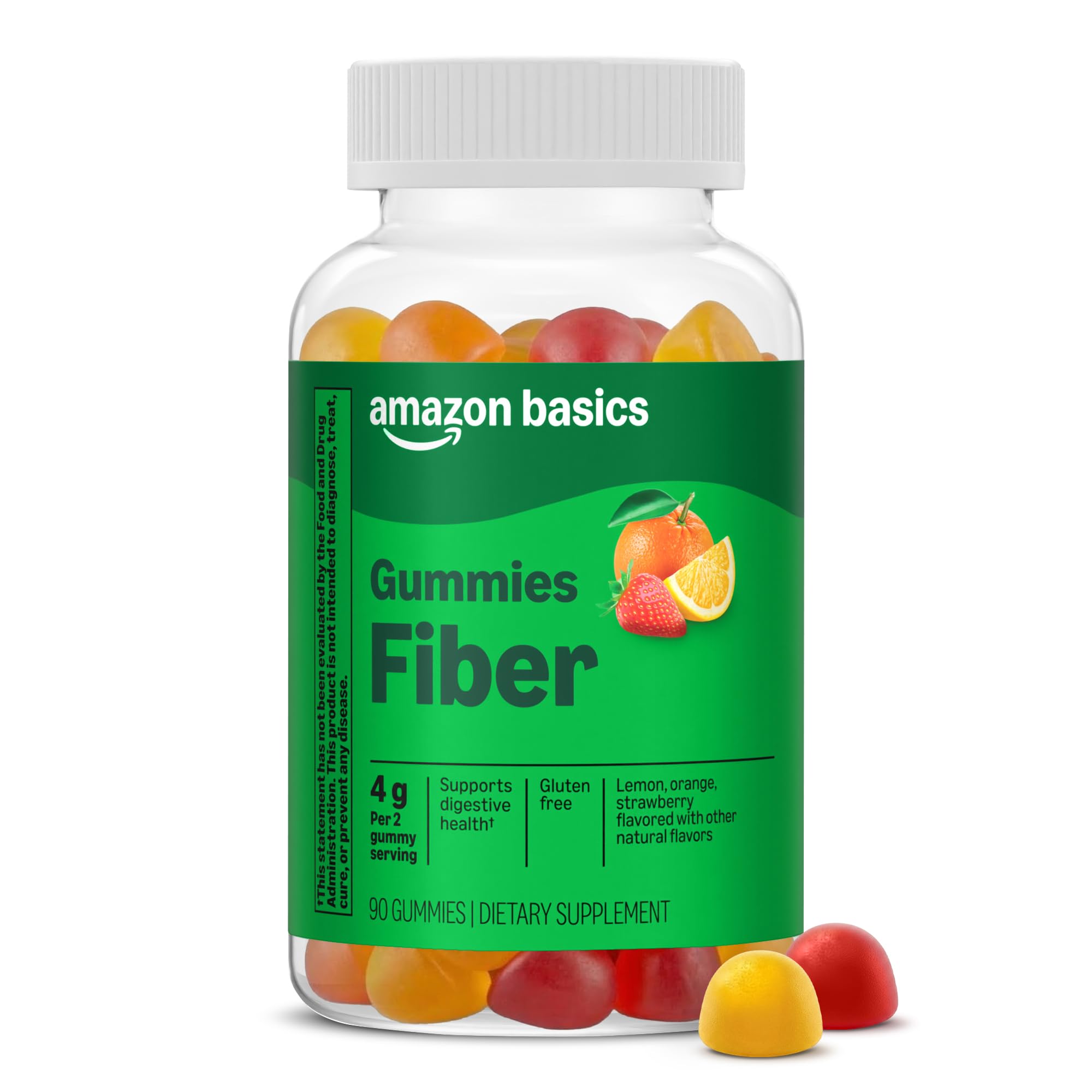
Amazon Basics Fiber Gummies

Amazon Basics Fiber Gummies

Budget gummy

Our Score 9.0/10
Check Price

Worth Noting

  • Lower 4-gram dose
Count
90 gummies
Flavors
Orange, lemon, strawberry
Fiber Source
Chicory root inulin
Fiber Per Serving
0.14 oz
Read the full review

The cheapest gummy here is also one of the easiest to recommend, as long as you're not chasing a high fiber dose. Amazon Basics packs 4 grams of fiber per two-gummy serving, with chicory root inulin and natural orange, lemon, and strawberry flavors. The bottle holds 90 gummies, so it's a 45-day supply at the labeled serving.

Softness is the selling point here. The gummies are easy to chew and don't taste like a supplement, which matters if you've tried firmer gummies and given up. The small bottle is also easy to keep in a desk drawer or a travel bag. They're vegetarian and gluten-free, and the colors come from turmeric, black carrot juice, and annatto, which is a nicer detail than the budget price suggests.

The digestive side is the catch. Inulin can cause gas and cramping, especially at the full two-gummy serving, so start with one and see how you feel. We keep this as the budget gummy for people who want a small, pleasant fiber boost rather than a therapeutic-sized dose.

Bottom line: We recommend Amazon Basics gummies as the budget pick for a small daily fiber top-up, especially if you prefer a soft chew over a capsule.

How We Tested the Best Fiber Supplements

We started by pulling every supplement we could find that named its fiber source clearly and carried a third-party purity certificate, then narrowed the field by form and cost — powders, gummies, capsules, and chewables spanning a wide price range — landing on 12 to test side by side for eight weeks.

For those eight weeks, they lived on my kitchen counter and my colleagues' desks. Each morning I stirred a full serving into eight ounces of water and timed how long it took to stop clumping, then let the glass sit five minutes to see whether it turned to gel at the bottom — the tell for a powder nobody finishes. Gummies got chewed at full dose, which is where chewability and stickiness mattered more than any claim on the front of the bottle, and capsules got swallowed with the amount of water the label recommended and no more.

Everyone kept a daily log: grams of fiber per serving against what we actually ate that day, gas and bloating in week one compared with week four, and whether things became more regular or just more urgent. We priced each option per serving rather than per container, since a cheap tub with a tiny scoop is the most expensive way to buy fiber, and we noted whether the texture held up in coffee and oatmeal or turned gluey.

What separated the winners wasn't fiber content — most landed in a similar range — but whether any of us wanted a second glass the next morning, and whether our stomachs agreed.

How to Choose a Fiber Supplement

Pick a format you'll actually use

Powders are the most flexible and usually the best value, but they need measuring and a drink you like. Stick packs remove the measuring and travel well; capsules remove taste and texture entirely, at the cost of pill volume; gummies are the easiest to remember but often carry a lower fiber dose per serving. We keep a powder for home, stick packs for travel, and capsules for days when mixing isn't practical.

If you've failed with fiber before, the format is usually the reason. A powder that turns thick or a gummy that's hard to chew won't survive a busy week, no matter how much fiber it delivers.

Know what kind of fiber you're buying

Psyllium husk is the classic bulk-forming fiber: it absorbs water and forms a gel, which is why it needs a full glass of liquid and why it's used for regularity. Wheat dextrin, the fiber in Benefiber sticks, dissolves clear and works as a prebiotic. Inulin, common in gummies, also feeds gut bacteria and can be more gas-producing for some people. None is automatically better; the right choice depends on whether you want a gel-forming effect, a tasteless add-in, or a chewable format.

Do the serving math

A 90-count gummy bottle at two gummies a day is a 45-day supply, not a 90-day one. Capsules often require several per serving, so a 500-count bottle may not be the bargain it looks like. Powders are sold by teaspoons or servings, which makes comparison clearer. Check the label's serving size and fiber grams per serving before you compare price. The cheapest bottle can be the most expensive habit if you need three or four servings a day.

Read the sweetener and additive line

Sugar-free doesn't mean additive-free. Metamucil's sugar-free orange powder contains aspartame and maltodextrin, which matters if you avoid artificial sweeteners. Unflavored psyllium and plain capsules skip those ingredients but bring their own texture or pill-volume trade-offs. If you want the shortest ingredient list, choose a product that names psyllium husk and little else, then decide whether you can tolerate the drink.

This is also where gummies can surprise you: inulin and other added fibers can cause gas, and the sugar-free label doesn't guarantee a gentle landing. Start with a smaller serving than the label calls for and build up.

Frequently Asked Questions

Final Verdict

Metamucil's orange psyllium powder is our default for most people: a large supply, a familiar flavor, and a fiber source built for regularity. It's the easiest one to picture in a daily routine, as long as you drink it before it thickens.

If texture is the hurdle, Benefiber's stick packs are the easier habit; if you want no drink at all, Metamucil's capsules are the no-mix route. The best fiber supplement is still the one you'll take daily, and these three make that decision simple.