Accessories

Best Running Waist Packs of 2026

Somewhere around mile eight, my phone started slapping my hip in time with my stride, and I spent the next two miles hitching the belt back up instead of running. That's the trouble with waist packs: the wrong one doesn't fail dramatically, it just nags at you for an hour. The right one disappears — phone, keys, gels and all — so you think about your pace, not your waistband. We ran in 14 of them over four months, from thin elastic bands to structured packs with bottle holsters.

What surprised me is how little bounce has to do with how tight you crank the strap. The quietest packs sat wide and flat across the hips and held their load close to the body; a few snug, narrow ones still crept north every time I picked up the pace. Zippers turned out to be the quiet weak point too — more of these wore out at the slider than in the fabric. Below are the ones that came through long runs, wet mornings, and the washing machine without complaint.

#1

Fitgriff Running Belt

Top Pick
Fitgriff Running Belt

Everyday runs

Our Score 9.2/10
Check Price

Worth Noting

  • Sold in sized ranges, so measure first
  • Water repellent only, not waterproof
Weight
3 oz
Reflective
Strips along the zip
Strap Length
35 in
Water Resistance
Water repellent
Read the full review

Some belts announce themselves: a bounce at the hip, a strap that needs a tug at every crosswalk. The Fitgriff is the one we stopped noticing. It sits flat, the elastic keeps its tension without a hard cinch, and a phone, a key and a card ride along without swinging out at each stride. That's the whole job of a running waist pack, and it does it for less than most of this group.

The layout is simple and, we think, right: a stretchy main pocket that takes a current iPhone in a case, and a small compartment for keys, cash and a card so metal isn't grinding against the screen. Two reflective strips run along the zip, and they're why this is the belt we grab for early starts rather than the plainer ones in the drawer.

Two things to know before ordering. It's sold in waist sizes rather than as one universal strap, so measure against the size chart instead of guessing, because the elastic forgives a little and not a lot. And the polyester handles sweat and light rain but isn't a dry bag, so a phone will get damp in a real downpour. Neither has kept it out of our rotation.

Bottom line: Buy this if you want your phone and keys to disappear for the length of a run: it stays put, holds a big phone, and costs less than the premium belts here.

#2

USHAKE Running Belt

USHAKE Running Belt

Minimal carry

Our Score 9.2/10
Check Price

Worth Noting

  • 42-inch waist is the hard ceiling
  • Snug pouch mouth for large phones
Weight
3.52 oz
Pockets
2
Waist Range
25.9-42 in
Water Resistance
Water resistant
Read the full review

At three and a half ounces, the USHAKE is a plain elastic band with a zip pouch, an earbud hole and a buckle. No expandable pocket, no second compartment, no liner. What's there works: the band adjusts from 25.9 to 42 inches, the nylon dries fast, and a phone plus cards and cash disappear inside.

We reach for it when we want nothing on us at all. It's the belt that gets forgotten, which is the highest compliment available in this category. The limits are real, though. A 42-inch waist is the ceiling, full stop, and a phone in a thick case takes a shove to get through the pouch mouth. For a slim phone and a short run neither matters; if either describes you, look at the SPIbelt instead.

Bottom line: A plain elastic band and a zip pouch, done well and priced low: the belt for runners who want their money to go on shoes.

#3

U·LANARO Slim Belt

U·LANARO Slim Belt

Night runs

Our Score 9.2/10
Check Price

Worth Noting

  • Single pocket; phone and keys share
  • Thin fabric and fittings wear with heavy use
Weight
2.4 oz
Reflective
Two strips
Waist Range
27-46 in
Water Resistance
Water resistant
Read the full review

Two reflective strips run across the front of the pouch, and they catch headlights in a way a plain black belt doesn't. That's the reason this one leaves the drawer for pre-dawn runs. At 2.4 ounces it's the lightest belt here, and the stretch fabric hugs the waist rather than sitting on it.

Inside there's a TPU liner and a water-resistant zip, and we rate that above a second pocket. Sweat and drizzle stay off the phone, and one compartment means you're not patting yourself down trying to remember where the key went. The elastic covers 27 to 46 inches and stays put without hardware digging in.

The caution is longevity. The fabric is thin, and thin fabric is where seams and fittings go first; ours has been fine, but we treat it as a light-use belt rather than the one for a full marathon block. That's the trade at the budget end: reflective, water-resistant and barely there, in exchange for some toughness.

Bottom line: Two reflective strips, a water-resistant zip and a 2.4-ounce fit: the belt we take out before sunrise.

#4

FlipBelt Classic

FlipBelt Classic

Buckle-free comfort

Our Score 9.0/10
Check Price

Worth Noting

  • Not water resistant; sweat reaches the contents
  • Sizing runs large and must be snug
Care
Machine washable
Weight
3 oz
Strap Length
48 in
Pocket Openings
4
Read the full review

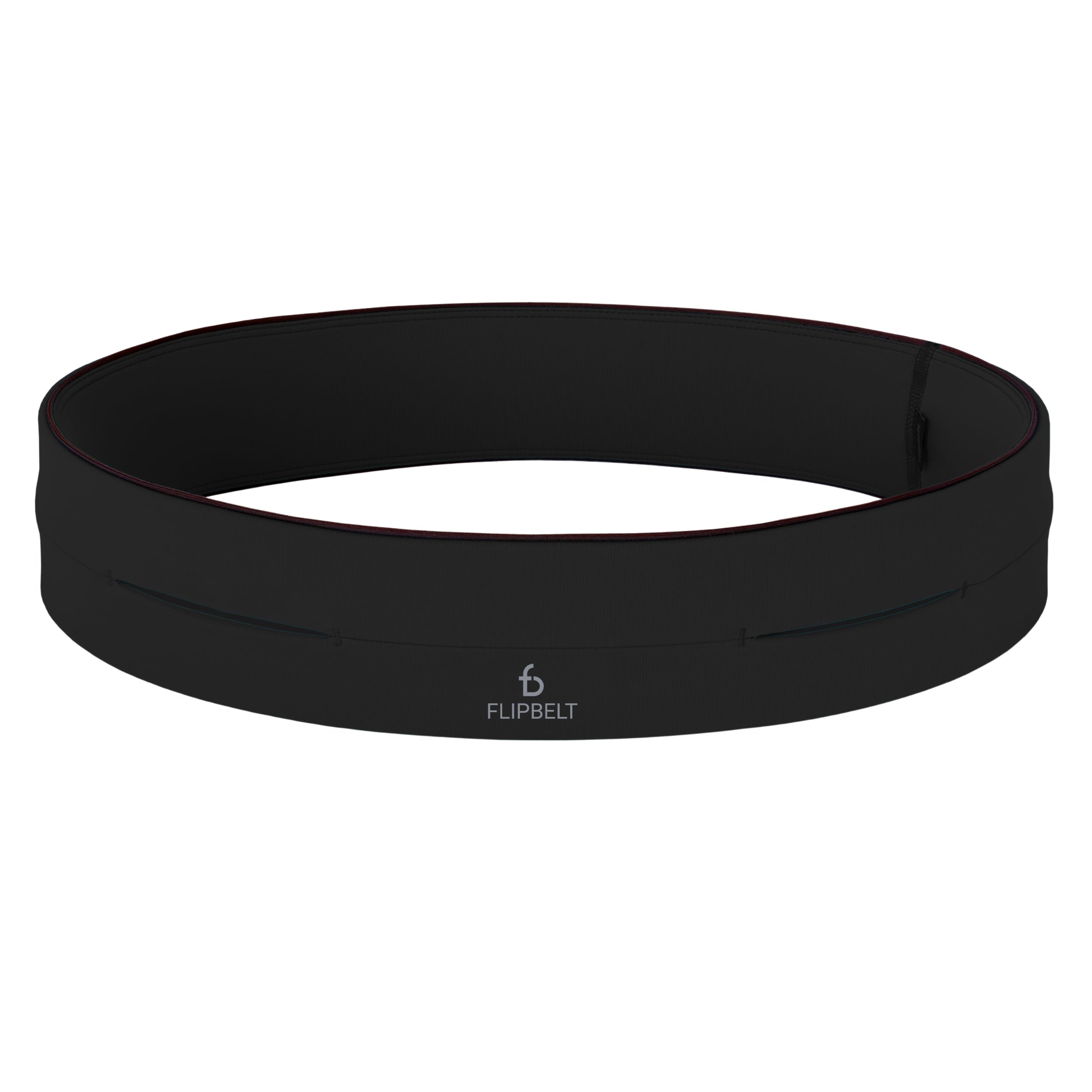
No buckle, no clip, no loose strap end: the FlipBelt is a tube of stretch fabric you pull on, with four openings to slot things through. Rotate the phone round to the small of your back and it disappears. Under a T-shirt there's nothing to see, and nothing to rub where you bend.

That flatness is what we keep coming back to. A belt with a buckle has to be positioned so the hardware misses your hip bone; this one just goes on. The interior key hook is a small thing that matters more than it sounds, because a fob that can't slide around the belt can't end up under your ribs at mile four. It also goes in the washing machine, which is more than most of the belts here can manage.

Fit is everything, and the sizing runs large, so measure your waist and size down if you're between; worn low on the hips the same band needs a bigger size again. Sweat is the other catch. The fabric wicks, but it isn't water resistant, and a humid run leaves whatever's inside feeling clammy, so a thin zip bag for the phone is worth the fuss. It's also the priciest belt here, which means the case for it rests on the fabric and the buckle-free fit rather than on features.

Bottom line: The belt for runners who hate hardware: a flat, buckle-free band that vanishes under a shirt, as long as you measure your waist before ordering.

#5

SPIbelt Original

SPIbelt Original

Large phones

Our Score 9.0/10
Check Price

Worth Noting

  • Not water resistant; sweat reaches the phone
Pockets
2
Band Width
1 in
Waist Range
25-47 in
Expanded Pocket
9" x 4" x 2"
Read the full review

The SPIbelt looks too small when it comes out of the packet. That's the trick of the expandable pocket: flat, it's a slim band; loaded with a phone in a chunky case it opens into a pouch around the size of a paperback. If your phone is the biggest thing you carry, this is the one to start with.

The 1-inch elastic band is the other half of the design. It's soft enough that we never noticed a seam after a long run, and by keeping the belt light it stays where it's put instead of sagging once something heavy goes in.

The range is unusually forgiving. It covers waists from 25 to 47 inches and closes with a side buckle, so you can snug it down or take it off without pulling it over your hips. That's the bit we appreciate most on a cold morning, when you want the belt on over layers and off again in the parking lot.

What it doesn't do is handle water. The fabric isn't resistant, so a sweaty run leaves the phone clammy and a wet one is worse. The belt is also happiest lightly loaded, with a phone, keys and a gel or two; stuff it to its limit every weekend and the stretch has more to do than it should.

Bottom line: The best belt here for a big phone in a thick case, with a side buckle that makes it quick to put on and take off over layers.

#6

AiRunTech Hydration Belt

AiRunTech Hydration Belt

Long runs

Our Score 9.0/10
Check Price

Worth Noting

  • Bottle holsters wear through first
  • Warmer, bulkier band than a slim belt
Bottles
2 x 300 ml (10 oz)
Pockets
2
Waist Strap
51.2 in
Water Resistance
Water resistant
Read the full review

Once a run passes an hour, a phone-and-keys belt stops covering it and a bottle ends up in your hand. The AiRunTech answers that with two 10-ounce bottles angled at the front and a zip pocket at the back that takes a phone, keys and a few gels.

It's a wider, heavier band than the slim belts here, and it has to be, holding 20 ounces. It closes with hook-and-loop plus a clip, so you can adjust it on the move rather than stopping to rethread anything, and there are two toggles for a race bib plus a port for a headphone cable.

We expected the front bottles to swing. They sit against the hips instead, and the weight feels lower and steadier than a handheld, which is the reason to wear this rather than carry a bottle. The rear pocket sits flat when it's empty and swallows a phone once it isn't.

The weak point is the holsters, and that's the price of the one thing this belt does that nothing else here can. The bottle sleeves take the wear, and a split sleeve takes the belt out of service, so check them after a few months of regular use rather than at the start line.

Bottom line: Buy it if your longer runs need water: two 10-ounce bottles ride at the front and a phone fits in the back, without a handheld.

#7

Molarun Running Belt

Molarun Running Belt

Backup belt

Our Score 9.0/10
Check Price

Worth Noting

  • Main pocket too snug for XL phones
  • Thin fabric lets keys press through
Weight
3 oz
Pockets
3
Waist Range
24-46 in
Water Resistance
Water resistant
Read the full review

Three pockets at the lowest price here is the pitch, and the Molarun mostly delivers: a main zip pocket for the phone, two smaller ones for keys, cards and a note, plus an earbud hole and a reflective strip across the front.

The stretch covers 24 to 46 inches, and there are several ways to wear it, at the front, at the back, or across the body, which makes it as useful for a walk to the shops as for a run.

The main pocket is where it comes unstuck. A phone in a slim case fits; a big phone in a chunky case is asking too much, and that's the compromise you're making at this price. The fabric is thin and unpadded, so a key fob presses into your hip on a longer run unless you move it to a side pocket.

Where it lands for us: a second belt. Keep it in the car or the gym bag, use it for a 5K, a dog walk or a morning at the park, and it earns its place. It's not the belt for a race you've trained months for; it's the one you won't mind losing.

Bottom line: A cheap second belt for short runs: three pockets, a reflective strip and enough stretch for most waists, as long as your phone isn't huge.

#8

WATERFLY Running Belt

WATERFLY Running Belt

Everyday essentials

Our Score 8.8/10
Check Price

Worth Noting

  • Cut runs snug at the top of the range
  • Zip is the weak point over time
Weight
3.35 oz
Pockets
3
Waist Range
27-48 in
Water Resistance
Water resistant
Read the full review

Three separate pockets is why this one stays in the rotation. The phone gets the wide main compartment, keys and cards get their own space, and nothing grinds together; there's a headphone port if you still run with a cable and a reflective logo on the front. The spandex blend wicks rather than traps heat, and at a little over three ounces it's light enough to forget.

The catch is the cut. The stated range runs to 48 inches, but it's a snug belt, and toward the top of that range you'll feel it as compression rather than fit. The zip is the other thing to keep an eye on. When a belt like this fails it's usually the slider rather than the fabric, and a stuck zip at the start of a run is a nuisance you avoid by not overloading the pocket.

Bottom line: The neatest pocket layout here: three compartments keep phone, keys and cards apart, in a light belt that sits close.

How We Tested Running Waist Packs

We started by gathering every running-specific waist pack we could find — no fashion fanny packs — and filtering by published specs: the waist circumference range each belt claimed to fit, pocket dimensions we could check against the phones we actually carry, and whether it listed a flask or bottle capacity. That narrowed the field to 14 packs, which we bought at retail and ran in for four months.

Each pack went out on at least ten runs: weekday 5Ks on pavement, a few long weekend efforts on rooty trail, one soaking-wet morning, and treadmill sessions where I could watch the belt in the gym mirror instead of guessing. I loaded every one the same way — phone, two keys, four gels — and counted how many times I touched the belt to adjust it over ten miles; more than twice counted against it. After the long runs I checked the waistband seam and strap edges for chafe lines and red marks.

For capacity and functionality, I reached for each pocket one-handed mid-run (keys while moving is the real test) and noted whether the phone sleeve swallowed a large phone in a case without stretching the fabric drum-tight. Zippers got the hardest look: I cycled every one open and shut with sweaty hands and with gloves on, then inspected the teeth and pull tabs after each wash for separation, floppy tabs, or grit stuck in the slider. Everything went through the machine after sweaty runs, and I checked whether the elastic snapped back or stayed slack.

How to Choose Running Waist Packs

Fit is the whole product

A running belt has to be snug enough not to move and loose enough not to cut in, and every other feature is secondary. Sized belts, like the FlipBelt, assume a real measurement and hold best when you match the chart. One-size elastic belts cover a stated range such as 24 to 46 inches, but the top of that range is where they feel tightest, not roomiest.

Measure where you'll actually wear it. If that's low on the hip bone rather than the narrowest part of your waist, the size changes, and the FlipBelt's own guidance is to go up a size for a hip fit. Treat any quoted maximum as optimistic.

Bounce comes from weight and slack

A phone alone in a snug band barely moves. Add a bottle and a few gels and you need a wider band or a two-point hold, which is why hydration belts look like a different animal from the slim ones. The cheapest fix is placement: the small of your back moves less than the hip bone, and a belt you can rotate there sits quieter over distance.

If a belt feels fine standing still but starts migrating at pace, it's either too loose or sitting over a part of your body that changes shape when you stride. Move it before you tighten it.

Zip, open slot, or buckle

Closure is where a running belt earns or loses trust. Open-slot belts are quick to reach into and rely on snugness to keep a phone in place. Zips secure cards and keys but add the part most likely to fail. Buckles make a belt easy to take off over layers but bring hardware that can dig into a hip when you're bent over.

If you carry a key fob or a card you can't replace, choose a zip or an internal key hook and accept the extra bulk. If you only ever carry a phone, a snug open-slot design is faster and has nothing to break.

Will your phone actually fit?

Pocket sizes are usually described in phone generations, which is no help at all. Measure your phone with the case on and compare that with the stated pocket dimensions where they're given. Expandable pouches look too small when flat and open up as you fill them, so judge them loaded rather than empty.

A pocket that takes a phone with a shove is a pocket you'll fight at every mile. If your phone is a large one in a rugged case, start with a belt built around expansion rather than a slim fixed pouch.

Sweat, rain and dark

Water resistant on a running belt generally means sweat and drizzle, not a downpour, and some of the most comfortable fabrics here aren't water resistant at all. If your phone lives in the belt, a thin zip bag is the cheapest insurance you can buy. For dark runs, reflective strips are worth having, but they're small and directional, so pair them with something on your shoes or your back.

Frequently Asked Questions

Final Verdict

For most runners the Fitgriff is the answer: it does the whole job, phone, keys and a card with no bounce, for less than the belts with the bigger reputation. Pick differently only when the requirement changes.

If you want a flat band with no hardware under a shirt, the FlipBelt is worth the premium, provided you measure first. If your long runs need water, the AiRunTech carries it without a handheld.