Accessories

Best Running GPS Watches of 2026

The worst thing a running watch can do is lie to you. A watch that reads 6.1 miles on a route you know is 6.4, or that loses the satellite the moment you turn into the trees, will quietly wreck a training block — you pace off bad numbers and then wonder why race day feels so hard. The good ones fix something simpler: they tell you at a glance whether to hold back or push, and they keep doing it for a full week of runs before they need a charger.

I've worn a watch on nearly every run for a decade, and my team and I have spent the last six months living with eight of the most-recommended models, from stripped-down pace-only units to full training computers. The lesson that surprised me most is that GPS-on battery life matters far more than the headline number on the box, which is usually quoted with the GPS switched off. The picks below are the ones that survived honest miles and still looked fine at dinner.

#1

Garmin Forerunner 265

Top Pick
Garmin Forerunner 265

Serious training

Our Score 9.4/10
Check Price

Worth Noting

  • Menu system takes weeks to learn
  • 46 mm case and 47 g suit larger wrists
Weight
1.66 oz
Display
1.3 in. AMOLED
Battery (GPS Mode)
Up to 20 hours
Smartwatch Battery
Up to 13 days
Read the full review

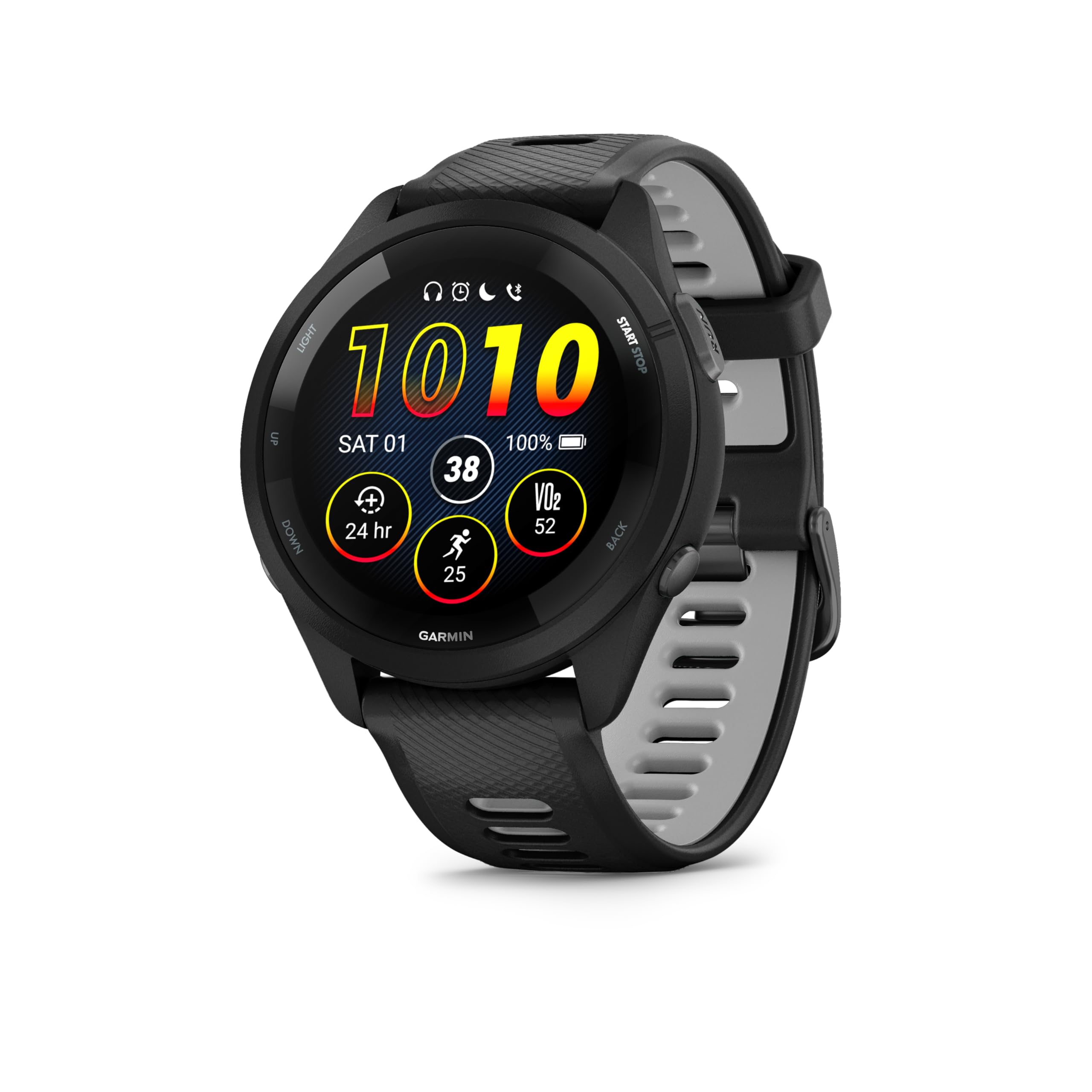
Run the same loop between tall buildings every week and any watch will eventually draw a line that cuts a corner through a wall or reads a split slightly quicker than your legs. Multi-band GPS is the fix, and it is the part of the Forerunner 265 we care about most, because it is a difference you notice on city streets and under dense tree cover rather than on a spec sheet.

The second reason to spend more is what it does with the data. Training readiness folds sleep quality, recovery, training load and HRV into one number each morning, and if you enter a race and its course in Garmin Connect, the daily suggested workouts build toward it and a race widget appears on your wrist. We found the readiness score the more useful half: it was the number that talked us out of a hard session after a bad night.

You also get a 1.3-inch AMOLED, 13 days in smartwatch mode, 20 hours of GPS and 8 GB for music, so race day happens without a phone in your pocket. That is the largest battery reserve of the two Garmins here, and the reason it costs more than the 165.

If you run mostly open roads and do not want recovery scoring, the Forerunner 165 does the same daily job for a great deal less. The 265 earns its keep in the city and on race day, not on a park loop.

Bottom line: Our pick when you train by numbers in the city: multi-band GPS steadies your pace, and training readiness tells you when to back off.

#2

Garmin Forerunner 165

Garmin Forerunner 165

Everyday running

Our Score 9.2/10
Check Price

Worth Noting

  • GPS can drift between tall buildings
  • Bluetooth pairing and syncing can stall
Weight
1.38 oz
Display
1.2 in. AMOLED, 1,000 nits
Battery (GPS Mode)
Up to 19 hours
Smartwatch Battery
Up to 11 days
Read the full review

The screen is the first thing that makes the case for this watch: a 1.2-inch AMOLED rated to 1,000 nits, which stays readable on a bright morning without you shading it with your hand. What we did not expect was to find that panel on a midrange Garmin rather than only on the expensive ones. At 43 mm and 1.38 ounces it sits close to the wrist, small enough to sleep in and light enough that we stopped noticing it on longer runs.

The coaching is what earns it the top spot. Daily suggested workouts adapt to what you did the day before, the morning report gathers sleep, recovery, HRV and weather on one screen, and the free Garmin Coach plans will take you from a first 5K to a half marathon. We ended up following the suggested sessions more often than the plan we had written for ourselves, which says something about how easy they are to accept.

Read the battery numbers in the right order. Garmin quotes up to 11 days in smartwatch mode and 19 hours with GPS running; training most days, the real charging interval lands closer to four to six days. That is still a week of runs per charge, and 19 hours of GPS covers any marathon with hours to spare.

Where it sits in this group is the sensible middle. You get the bright screen and the full coaching stack without stepping up to the multi-band positioning or the 46 mm case of the Forerunner 265, and for open roads and park paths that is money you do not need to spend.

Bottom line: We point most runners here: a bright AMOLED screen, adaptive daily workouts and 19 hours of GPS without paying for premium extras.

#3

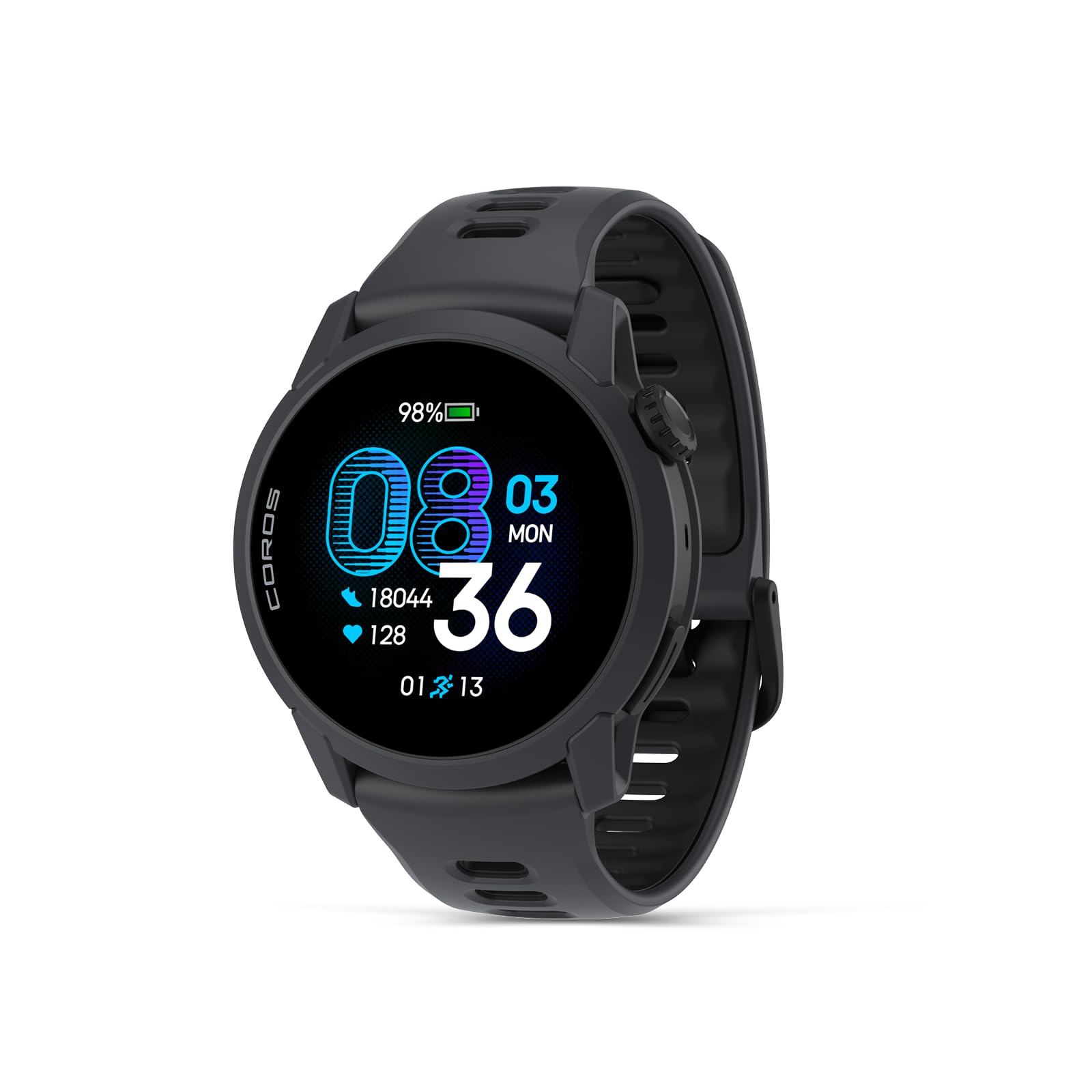
COROS PACE 4

COROS PACE 4

Ultralight long runs

Our Score 9.0/10
Check Price

Worth Noting

  • IP68 and 5 m rating point to sweat, not laps
Weight
32 g with nylon band
Display
1.2 in. AMOLED
Daily Battery
Up to 19 days
Battery (GPS Mode)
Up to 41 hours
Read the full review

Thirty-two grams is the whole argument. That is the PACE 4 with its nylon band, and the effect is out of proportion to the number: you put it on and then stop thinking about it, which is what you want at hour four of a long run and at two in the morning when it is logging your sleep.

Battery is the second thing. COROS quotes 41 hours of continuous GPS and up to 19 days of ordinary use, and 41 hours is the longest GPS figure in this group by a wide margin, enough for a hundred-mile race weekend without a charger. A digital crown and two buttons handle most of it, which we prefer to a touchscreen the moment your hands are wet or gloved.

What you give up is the ecosystem around it. Garmin Connect has years of recovery and training analysis behind it, while the COROS app is clean and straightforward but a simpler place to look at your history. That is a fair trade if what you want is the lightest thing on your wrist that will still hold a signal for two days straight.

Bottom line: The lightest watch here and the longest-lasting on GPS, and we recommend it to anyone chasing distance who hates feeling a watch.

#4

moutarlier GPS Running Watch

moutarlier GPS Running Watch

First GPS watch

Our Score 8.4/10
Check Price

Worth Noting

  • Oversized 2.06-inch case suits big wrists
  • Step counts can be inaccurate
Display
2.06 in. AMOLED
Sports Modes
170+
Water Resistance
5ATM / 50 m
Battery (heavy Use)
Up to 7 days
Read the full review

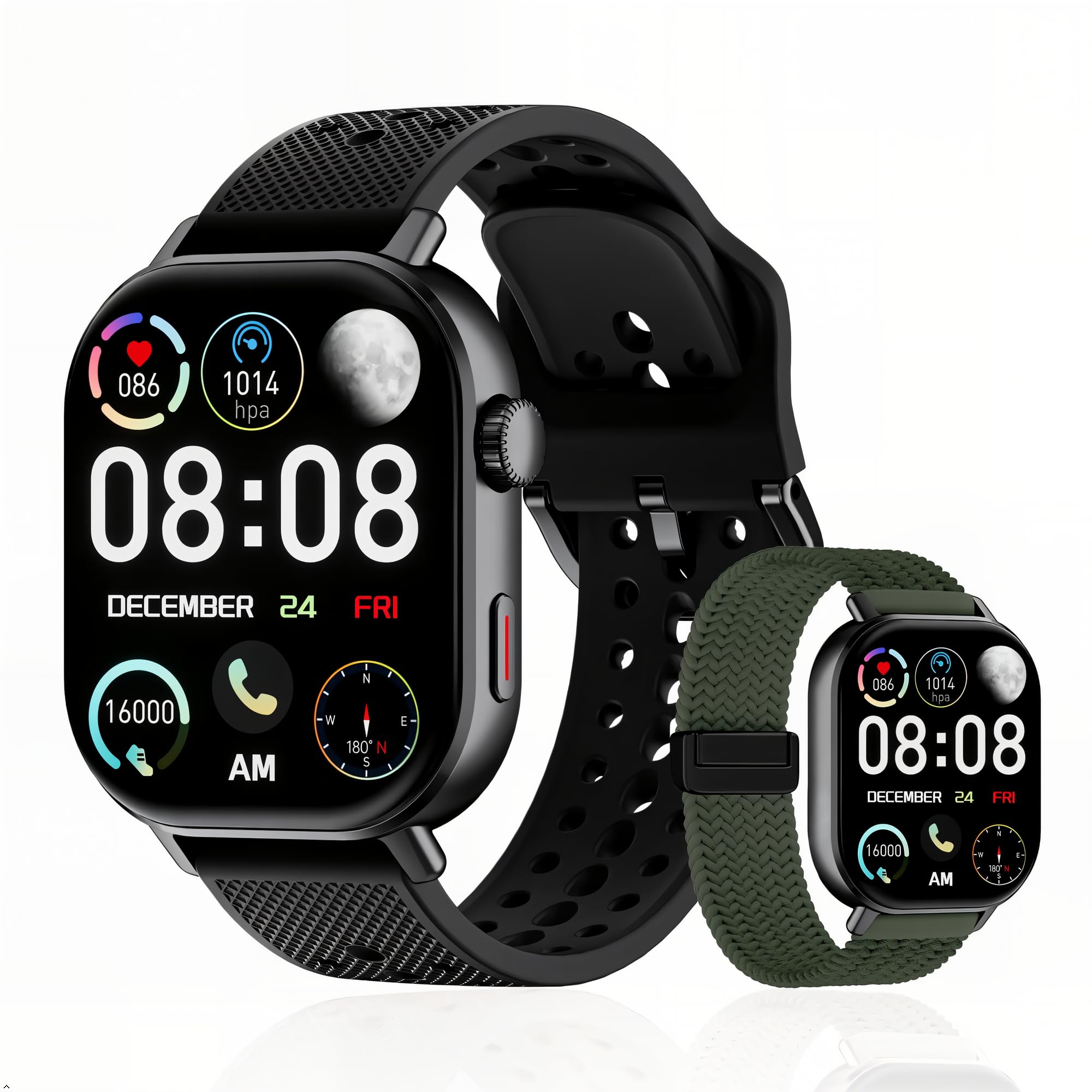
It helps to be clear about what this is: a budget smartwatch with a running mode. You get built-in GPS tracking pace, distance, speed and mileage, a stopwatch and 170-plus sport modes, and the numbers without the coaching. That is a real category of buyer, and there is no point pretending otherwise.

The screen is a 2.06-inch AMOLED, which is enormous for a watch and genuinely easy to read mid-run, and the case is aluminum. It is rated 5ATM, so pool lengths are fine, and the battery is quoted at seven days of heavy use or 20 of light. It also takes calls and notifications, which is more smartwatch than most of this group bothers with.

The satellite lock is the thing to plan around: give it open sky before you start the clock, because standing in a doorway waiting for a fix is how you lose the first minute of a run. Past that, the trade is straightforward, a bright screen and a working GPS fix without the analysis you probably will not read.

Bottom line: Worth it if you want pace, distance and a huge readable screen for very little, and can forgive a budget watch its rough edges.

#5

Suunto Run

Suunto Run

Training load focus

Our Score 8.2/10
Check Price

Worth Noting

  • Third-party app syncing is unreliable
  • Limited watch-face selection
Display
1.32 in. AMOLED
Positioning
Dual-frequency GPS
Daily Battery
Up to 12 days
Battery (training Mode)
Up to 20 hours
Read the full review

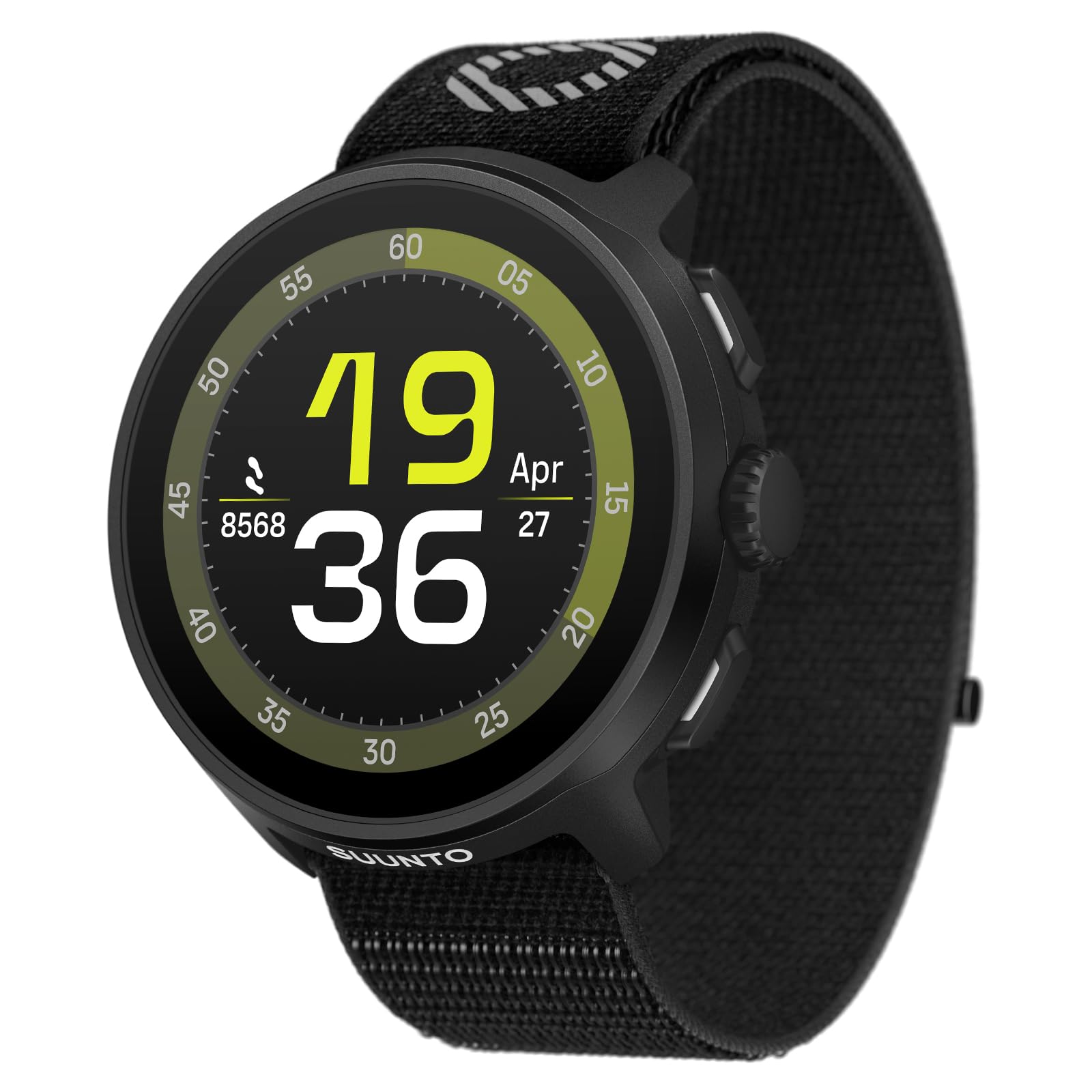
Suunto scores training rather than prescribing it. Instead of a daily workout suggestion, the Run measures training load, a Training Stress Score for each session and your post-exercise heart rate, then leaves the planning to you. If you already know what you are doing this week, that is a more useful kind of help than another coach.

The hardware holds up for the money: a 1.32-inch AMOLED at 466 x 466, dual-frequency GPS, breadcrumb navigation back to your start, offline music and a two-year warranty, with a textile strap that cinches flat and stays put. Battery is quoted at 12 days in daily use and 20 hours while training with GPS.

Our reservation is the heart rate. Readings swing high and low mid-run, and that is the one number that can waste a zone-based session, so budget for a chest strap if you train by effort rather than by feel. With a strap paired, the load scoring is the most interesting analysis in this group at the price.

Bottom line: Our pick for runners who want their training scored rather than prescribed, with load and stress numbers that make sense of a hard week.

#6

mibro GS Active2

mibro GS Active2

Budget GPS runs

Our Score 8.0/10
Check Price

Worth Noting

  • Heart-rate readings can drop out mid-run
  • Large 46 mm case
Weight
1.41 oz
Display
1.32 in. AMOLED
Positioning
Dual-band, five-satellite
Battery (GPS Mode)
About 15 hours
Read the full review

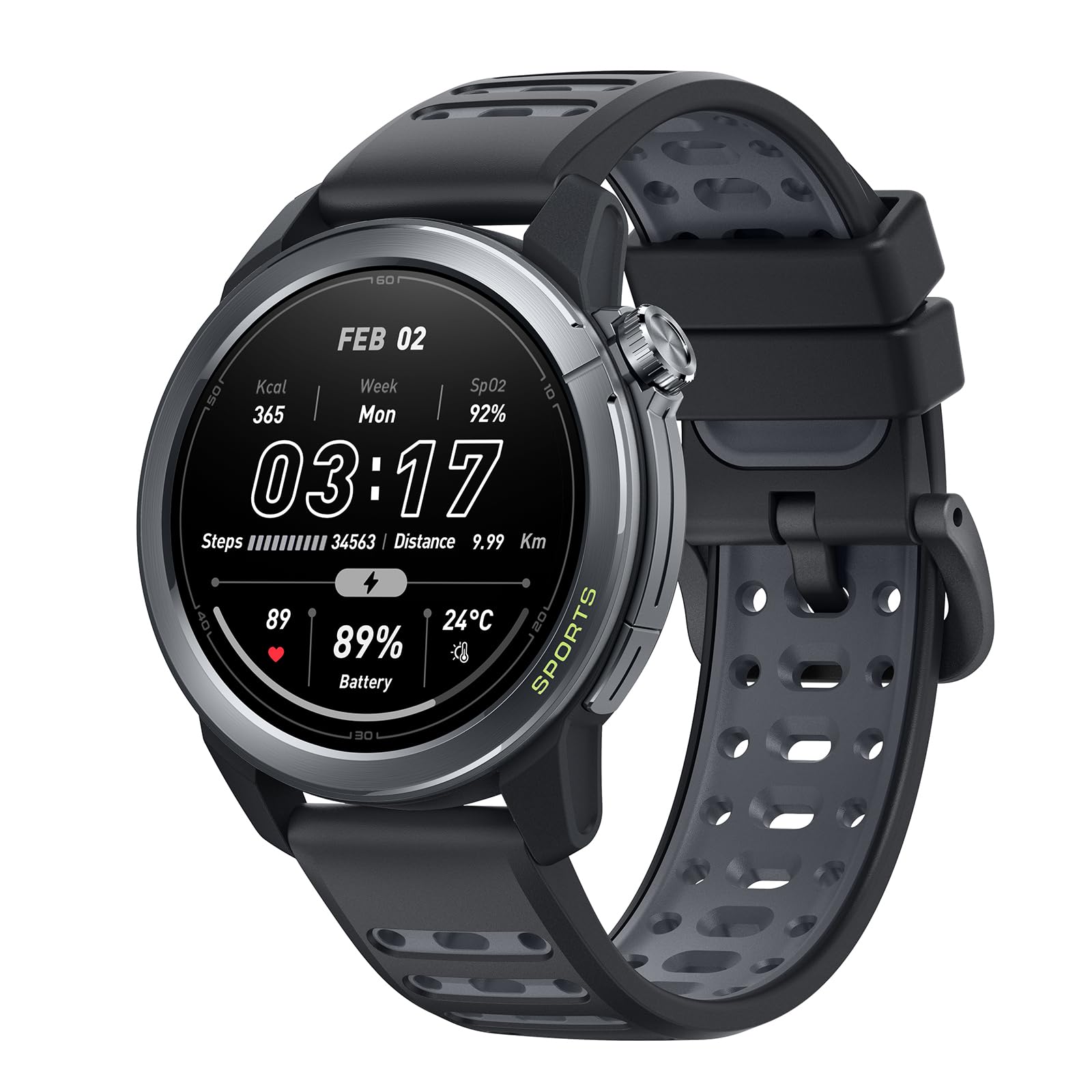
The price is the reason to read this one. At the bottom of the range sits a 46 mm watch listing five-satellite dual-band positioning, a 1.32-inch AMOLED and 15 days of battery, which is the same kind of positioning hardware the expensive picks use, at the other end of the price scale.

The running data is the surprise. Eight preset plans run from habit-building through 5K, 10K and half to full marathon, and after each session you get pace, cadence, stride length, a running ability index and VO2 max trends, which is more analysis than we expected at this end of the range. At 39.9 grams and 11.7 mm thick it is also easy to forget about between runs.

The open question is longevity. This is a smaller brand without the years of history behind it that a Forerunner carries, and the watch can shut down unexpectedly mid-session, so treat the return window as part of the purchase and put a few long runs through it early. If it holds up, it is the cheapest route to dual-band positioning here.

Bottom line: Our budget pick: dual-band positioning, a bright AMOLED and 15 days of battery for the least money in this group.

How We Tested Eight Running Watches Over Six Months

We started by gathering the watches that come up again and again in running clubs, specialty shops, and long forum threads, then sorted the list into price bands so we weren't comparing a $200 entry model against a $900 training computer. From there we filtered on the things that genuinely separate them — GPS-on battery estimates, satellite modes, sensor loadouts, and whether the companion app holds up on both an iPhone and an Android phone. That left eight watches, which we wore for six months.

Every watch went on the same runs: weekday easy loops before work, long weekend efforts on a measured route I've run for years, a few track sessions, and one downtown route where tall buildings shred a signal. We compared each watch's recorded distance against the known 6.4-mile loop and noted whether pace held steady or bounced around, then watched how long each took to lock onto satellites under tree cover and whether the track line cut corners. Mid-run, we checked whether we could read the screen in low sun and change a data field with sweaty fingers — touchscreens were a liability in the rain, and physical buttons won.

We also built data screens from scratch on each watch and set pace alerts, counting how many menus it took to get there. Every model was paired to both an iPhone and an Android phone, with the app checked for how fast a finished run synced and how readable the splits graph was afterward. Battery was tested honestly: charged to full, GPS left running, and we logged how many days of normal wear it lasted. Since you'll wear it to the office and to bed, we judged appearance on the wrist — case size, weight, and whether it read as a sports watch or something you'd wear with a shirt — and asked whether each price step bought anything you'd actually notice on a Tuesday morning run.

How to Choose a Running Gps Watch

Single-band versus multi-band GPS

Every watch here has built-in GPS; the difference is how well it holds a signal. A standard receiver is fine on open roads and park paths, and it is what the Forerunner 165 uses. Multi-band or dual-frequency receivers read more satellite signals at once, which keeps pace steadier between tall buildings, under heavy tree cover and in valley bottoms. That is the technology in the Forerunner 265, the Suunto Run and the mibro GS Active2.

The trap is that the word GPS on a spec line tells you nothing about which receiver you are getting, so look for multi-band, dual-band or dual-frequency. If your regular routes are open, put the difference into battery life or comfort instead.

Read the battery figure in the right mode

Two numbers matter and they measure different things. The day count, whether 11, 13 or 19 days, assumes smartwatch mode with notifications and step counting and little GPS. The hour count is what you get with satellites running, and it decides whether a race weekend needs a charger.

Nineteen to twenty hours, which covers both Garmins and the Suunto Run, is several times what a marathon takes. The mibro's fifteen hours is still generous. The COROS PACE 4's 41 hours is aimed squarely at ultras. Expect the day count to shrink once you train most days.

Fit, weight and controls

Sleep and recovery data only mean something if the watch stays on overnight, and that comes down to weight and case size. At 32 grams the COROS PACE 4 disappears on the wrist; at 47 grams and 46 mm the Forerunner 265 is a training tool you notice. If a 40 to 42 mm everyday watch sits comfortably on you, a 46 mm case will feel oversized.

Controls matter as much. Touchscreens are fine for scrolling, but physical buttons are what work when your hands are wet, cold or gloved. Every watch here has buttons, though the cheapest ones are the fiddliest to press.

How much coaching do you want

The watches here take three approaches. The two Garmins suggest a daily session and adapt it to your sleep and recovery. The Suunto Run scores the training you have already done and leaves the planning to you. The mibro GS Active2 gives you fixed plans from 5K to marathon, and the budget moutarlier simply gives you numbers.

Be honest about which you will follow. If you already have a coach or a plan you trust, pay for positioning accuracy and comfort rather than a coaching layer you will ignore by February.

Frequently Asked Questions

Final Verdict

Start with the Garmin Forerunner 165. It is the watch we point almost everyone to, because it delivers a bright AMOLED screen, adaptive daily workouts and 19 hours of GPS without charging premium money for positioning technology most runners never need.

Spend more only for a specific reason: the Forerunner 265 if your routes run between tall buildings and you want training readiness, or the COROS PACE 4 if weight and a 41-hour battery matter more than apps and analysis. On a tight budget, the mibro GS Active2 buys dual-band positioning for less than anything else here, as long as you put it through a few hard weeks while you can still return it.